Our readers keep the lights on and my smoothie glass nicely filled. As an Amazon Associate, I earn from qualifying purchases.
The right 8-inch chef knife is the single most-used tool in your kitchen, handling everything from mincing garlic to breaking down a whole chicken. Yet most home cooks either buy a knife that’s too heavy, one that dulls after a week, or one that costs a fortune without delivering real-world performance. The difference between a good cut and a frustrating sawing motion comes down to blade geometry, steel composition, and handle balance—not flashy marketing or a pretty box.
I’m Mohammad Maruf — the founder and writer behind WellFizz. I’ve spent years analyzing blade steel compositions, edge retention data, and handle ergonomics across hundreds of kitchen knives to separate the genuinely sharp from the merely shiny.
This guide breaks down seven carefully selected models to help you find the best 8 inch chef knife for your prep style, budget, and skill level without wasting money on a blade that looks good but cuts poorly.
How To Choose The Best 8 Inch Chef Knife
An 8-inch chef knife is the workhorse of any kitchen, but the sheer number of options—from Japanese-style VG-10 Damascus blades to German stamped stainless—can overwhelm any buyer. Instead of getting lost in marketing jargon, focus on the three pillars that actually affect your daily cutting experience: blade material, handle ergonomics, and construction method. Ignore the laser-etched patterns and focus on how the knife feels when you grip it and how long it stays sharp through a week of meal prep.
Blade Steel and Hardness
The steel determines how often you need to sharpen, how easy the knife is to hone, and whether the edge chips or rolls under heavy use. High-carbon stainless steel (used by Victorinox and Dexter-Russell) offers good corrosion resistance and easy sharpening at a lower hardness (52-56 HRC), making it forgiving for beginners. Premium options like VG-10 (used by KYOKU) and AUS-10V (used by Dalstrong) hit 58-62+ HRC, meaning they hold an edge far longer but require a whetstone rather than a pull-through sharpener. For most home cooks, a hardness of 56-60 HRC offers the best balance between edge retention and ease of maintenance.
Edge Angle and Geometry
The angle at which the blade is sharpened directly impacts cutting performance. European-style knives typically have a 20-degree edge per side, which is more durable but requires more force to push through food. Japanese-style knives often feature 12-15 degree edges, providing a noticeably sharper cut with less resistance but making the edge more prone to chipping on hard surfaces like bone or frozen food. Some knives, like the KYOKU and Dalstrong models, go as narrow as 8-12 degrees for a razor-like slicing experience. If you routinely cut through squash or chicken bones, stick with a wider angle; if you primarily slice vegetables and boneless proteins, a narrower angle transforms your prep speed.
Handle Material and Balance
A knife that feels heavy in the hand will fatigue you during long prep sessions; one that is too light may lack control for heavier cuts. The balance point should sit at or just behind the bolster (the thick junction between blade and handle) to enable a comfortable pinch grip. Handle materials vary widely: Pakkawood offers a warm, grippy feel but requires hand washing, Fibrox (on the Victorinox) provides excellent slip resistance even when wet, G10 (on the KYOKU and Dalstrong) is dense and moisture-proof, and polypropylene (on Dexter-Russell and Wüsthof) is durable but can feel cheap. Try to hold the knife before buying, or at least check the weight listed in the specs—anything between 6 and 10 ounces is generally well-balanced for an 8-inch blade.
Quick Comparison
On smaller screens, swipe sideways to see the full table.
| Model | Category | Best For | Key Spec | Amazon |
|---|---|---|---|---|
| Victorinox Fibrox Pro | Stamped | All-around kitchen workhorse | 5.2 oz, 15° edge, 56 HRC | Amazon |
| Zwilling Professional S | Forged | German precision and durability | 12.8 oz, Sigmaforge one-piece | Amazon |
| Dalstrong Kiritsuke | Forged Damascus | Japanese-style precision slicing | 8.5″, 62 HRC AUS-10V | Amazon |
| KYOKU Shogun Series | Forged Damascus | Value Damascus with VG-10 core | 8-12° edge, 58-60 HRC | Amazon |
| Wüsthof Gourmet 4-Piece | Stamped | Full knife set from trusted brand | Includes honing steel | Amazon |
| Sunnecko 8-Inch | Forged | Budget-friendly entry-level | 12-15° edge, 0.44 lb | Amazon |
| Dexter-Russell S145-10PCP | Stamped | Commercial kitchen durability | 7.2 oz, NSF Certified | Amazon |
In‑Depth Reviews
1. Victorinox Fibrox Pro Chef’s Knife, 8 Inch
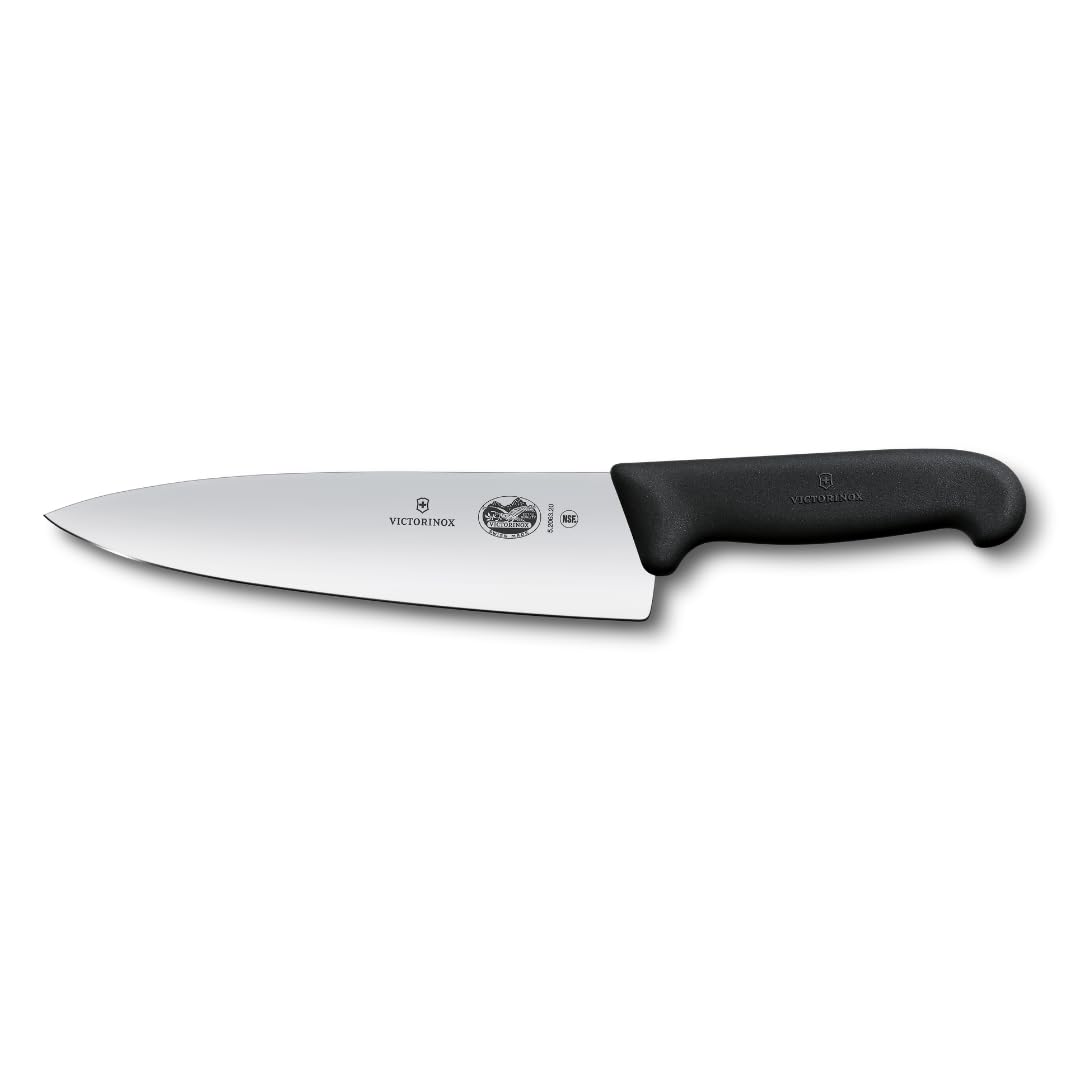
The Victorinox Fibrox Pro is the default recommendation for good reason—it has been the top-rated knife by America’s Test Kitchen for years. The stamped high-carbon stainless steel blade comes razor-sharp out of the box with a 15-degree edge that cuts through tomatoes and onions with negligible resistance. At just 5.2 ounces, it feels light and agile, reducing hand fatigue during long prep sessions.
The Fibrox handle is the standout feature here: the thermoplastic elastomer (TPE) material provides a non-slip grip that actually gets stickier when wet, a critical safety advantage over slick wood or smooth plastic handles. The blade is stamped rather than forged, which means it is lighter and thinner—ideal for home cooks who prioritize agility over brute force. The knife is also dishwasher-safe, though hand washing preserves the edge longer.
This is not a showpiece knife; it has a utilitarian look and a lightweight feel that some users mistake for cheapness. But the performance is undeniable: the edge holds up well for two to three months of daily home use before needing a touch-up on a honing rod. For anyone cooking at home who wants a knife that just works without fuss or maintenance, this is the one to beat.
Why it’s great
- Outstanding edge sharpness and retention for the price point
- Exceptional non-slip handle that feels secure when wet
- Lightweight design reduces fatigue during extended chopping
- Dishwasher-safe construction simplifies cleanup
Good to know
- Utilitarian aesthetic may not appeal to knife collectors
- Not a full tang—lacks the heft some users prefer
- Edge requires honing every few weeks to maintain peak performance
2. Zwilling Professional S 8-Inch Chef’s Knife

The Zwilling Professional S represents the pinnacle of German knife engineering. Made in Solingen, Germany, it uses the proprietary Sigmaforge process where the blade is forged from a single piece of high-carbon NO STAIN steel, then ice-hardened (FRIODUR) to create a blade that starts sharper and stays sharper longer than standard stainless. The result is a knife with superb resilience and a precision-honed edge that handles everything from paper-thin vegetable slices to breaking down poultry.
At 12.8 ounces, this is a noticeably heavier knife than the Victorinox, and that weight translates to cutting momentum—the blade practically falls through food with minimal wrist effort. The three-rivet ergonomic polymer handle is perfectly bonded to the full tang, providing a balanced, confidence-inspiring grip. The bolster sits flush against the handle, allowing a comfortable pinch grip without any sharp transitions.
The one downside is the cost: this is a premium-tier investment. However, the ice-hardened blade resists corrosion and dulling dramatically better than stamped alternatives, and the forged one-piece construction means this knife can last a lifetime with proper care. It is dishwasher-safe, though hand washing is recommended to preserve the edge and handle. For serious home cooks who want German engineering without compromise, this is the benchmark.
Why it’s great
- Exceptional edge retention due to ice-hardening process
- One-piece forged construction offers superior durability
- Heavier weight provides cutting momentum for tough ingredients
- Lifetime warranty from a family-owned German manufacturer
Good to know
- Higher price point places it in premium territory
- Heavier weight may feel cumbersome for users with smaller hands
- Polymer handle lacks the warmth of natural wood
3. Dalstrong Kiritsuke Chef Knife – 8.5 inch – Shogun Series Elite

The Dalstrong Kiritsuke is a Japanese-style hybrid that combines the flat profile of a traditional kiritsuke with the versatility of a chef knife. The blade is forged from 67 layers of high-carbon stainless steel with an AUS-10V super steel core, rated at 62+ Rockwell hardness, and hand-finished to an 8-12 degree edge using the Honbazuke method. This is a knife engineered for precision—it glides through vegetables, fish, and boneless meats with minimal resistance and exceptional edge retention.
The 8.5-inch length gives you slightly more blade than the standard 8-inch, which translates to longer slicing strokes and fewer passes through large ingredients. The black G10 handle is military-grade, moisture-proof, and ergonomically shaped to promote a natural pinch grip. The “tsunami-rose” Damascus pattern is not just visual—the layered construction helps food release from the blade, reducing drag when slicing sticky ingredients.
This is not a knife for hacking through bones or frozen foods; the thin, hard edge is prone to chipping if misused. It requires hand washing and a whetstone for sharpening—never a pull-through sharpener. But for home cooks who primarily slice vegetables, fish, and meat and want a knife that feels like an extension of their hand, the Dalstrong delivers performance that rivals blades costing twice as much.
Why it’s great
- Exceptional 62+ HRC edge retention with AUS-10V core
- 8-12 degree edge provides razor-sharp slicing performance
- G10 handle is durable, moisture-proof, and ergonomic
- Damascus layering reduces food sticking during prep
Good to know
- Thin edge is brittle—avoid bones and frozen foods
- Requires whetstone sharpening, not pull-through sharpeners
- Kiritsuke profile has less belly for rocking cuts
4. KYOKU Chef Knife – 8″ Shogun Series Japanese VG10 Damascus

The KYOKU Shogun Series brings Japanese-style craftsmanship—a 67-layer Damascus blade with a VG-10 steel core cryogenically treated—to a price point that typically requires compromise. The blade is sharpened to an 8-12 degree edge using the 3-step Honbazuke method, cutting through produce with the kind of precision usually reserved for blades costing significantly more. At 58-60 HRC, the VG-10 core offers excellent edge retention without being as brittle as the harder AUS-10V steel.
The fiberglass (G10) handle is built to withstand cold, heat, and moisture, unlike wood handles that can crack or swell. The included sheath and padded case make storage and transport safe—a detail often omitted from entry-level Damascus knives. The overall weight is well-distributed, with the balance point sitting comfortably behind the bolster for a natural pinch grip.
The main trade-off is that the Damascus pattern is laser-etched rather than fully forged from folded steel, which some purists might note. However, for practical cutting performance, the VG-10 core and narrow edge angle deliver genuine improvement over basic stainless knives. It comes in a premium gift box, making it a strong option for gifting or for home cooks who want the look and feel of a Damascus blade without the four-figure price tag.
Why it’s great
- VG-10 core provides excellent edge retention and corrosion resistance
- 8-12 degree edge enables precise, effortless slicing
- G10 handle is resistant to moisture, heat, and cold
- Includes sheath and padded case for safe storage
Good to know
- Laser-etched Damascus pattern, not traditionally folded
- Hand wash only—dishwasher will damage the handle and edge
- Limited edge angle requires careful use on hard ingredients
5. Wüsthof Gourmet 4-Piece Chef’s Knife Set

The Wüsthof Gourmet series is the entry point into the legendary Solingen brand’s lineup, and this 4-piece set provides the most essential tools: an 8-inch chef’s knife, a 2.75-inch paring knife, a 4.5-inch utility knife, and a honing steel. The blades are laser-cut stamped high-carbon stainless steel, precisely ground for a sharp edge that rivals many forged knives. For someone starting a serious kitchen toolkit or upgrading from a block of generic knives, this set covers 95% of daily prep needs.
The synthetic polypropylene handles are heat- and impact-resistant, with a textured surface that provides adequate grip. While they do not have the premium feel of the brand’s forged Classic series, they are durable, easy to clean, and won’t fade or discolor over time. The chef’s knife itself has a balanced feel, with enough heft (around 6-7 ounces for the chef’s blade) to power through vegetables without feeling heavy.
This is a stamped knife set, not forged—meaning the blades are cut from a sheet of steel rather than hammered from a single billet. That makes them lighter and less expensive, but also means they will require more frequent sharpening than forged alternatives. However, the included honing steel helps maintain the edge between sharpenings. For cooks who want a complete kit from a trusted German manufacturer without paying for individual knives, this set offers real value.
Why it’s great
- Comprehensive 4-piece set covers essential kitchen tasks
- Includes honing steel for edge maintenance between sharpenings
- Resistant polypropylene handles withstand heat and impact
- Backed by a limited lifetime warranty from Wüsthof
Good to know
- Stamped blades require more frequent sharpening than forged
- Handle material lacks the warmth of wood or G10
- Not full tang—lighter feel may not suit all users
6. Dexter-Russell 8″ Chef’s Knife – S145-10PCP SANI-SAFE Series
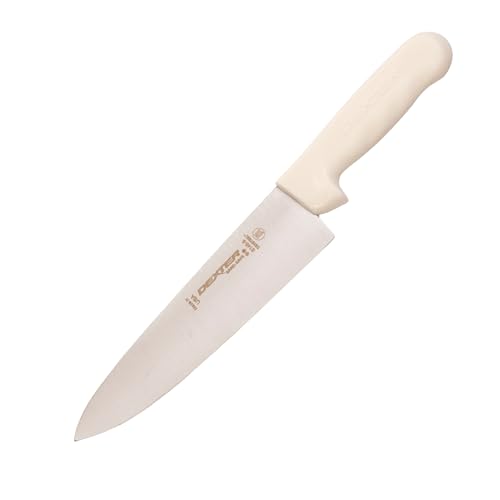
The Dexter-Russell SANI-SAFE is the knife you see in professional kitchens across America—and for good reason. Its high-carbon stainless steel blade is individually ground and honed for lasting sharpness, and the textured polypropylene handle is slip-resistant even with wet or greasy hands. At 7.2 ounces, it feels substantial enough for heavy prep work without being exhausting, and the curved blade profile enables efficient rock-chopping motion from tip to choil.
NSF certification means this knife meets strict commercial sanitation standards—the handle is fusion-bonded to the blade with no gaps for bacteria to hide. The white handle also makes it easy to spot in a busy kitchen or a cluttered drawer. The stamped construction keeps the price low enough that restaurants consider it disposable, replacing blades annually rather than resharpening, but home cooks will find the edge holds up well for months of regular use.
The trade-off is comfort: the polypropylene handle is hard plastic with pronounced texturing that some users find uncomfortable during long prep sessions. It also feels noticeably lighter and less balanced than a forged full-tang knife. However, for durability, sharpness out of the box, and sheer value, this is the knife that professional chefs trust for volume prep. If you want a blade you can beat on without worry, this is it.
Why it’s great
- NSF certified for commercial sanitation and safety
- Slip-resistant handle performs well in wet conditions
- Individually ground blade offers sharpness out of the box
- Made in the USA with proven durability
Good to know
- Hard plastic handle can cause discomfort during extended use
- Lighter weight feels less balanced than forged alternatives
- High-carbon steel may rust if not dried immediately
7. Sunnecko 8 Inch Chef Knife – Ultra Sharp 12-15 Degree Edge

The Sunnecko 8-inch chef knife is proof that you do not need to spend a lot to get a genuinely sharp, functional blade. The high-carbon stainless steel blade is hand-sharpened to a 12-15 degree angle per side, enabling it to slice through tomatoes and paper-thin cuts with ease right out of the box. The Pakkawood handle is far more comfortable and attractive than the plastic handles found on other budget knives, and the included PVC sheath protects the blade during storage.
The forged construction and full tang provide a surprising amount of heft for such a budget-friendly blade—it weighs around 0.44 pounds, giving it a balanced feel that punches above its price class. The laser-etched pattern on the blade adds visual appeal without affecting performance, making it a knife that looks more expensive than it is. Owners frequently report that it stays sharp for weeks of regular home use before needing a touch-up.
The trade-offs are predictable: the high-carbon steel requires prompt hand washing and drying to prevent staining, and the narrow edge angle means you should avoid chopping through bones or frozen ingredients. The PVC sheath is functional but basic. However, for home cooks who want a sharp, attractive knife for everyday vegetable and meat prep without spending on premium Japanese or German brands, the Sunnecko delivers exceptional value.
Why it’s great
- Sharp 12-15 degree edge cuts well out of the box
- Pakkawood handle offers comfort and attractive appearance
- Forged construction with full tang for balanced weight
- Includes protective PVC sheath for storage and travel
Good to know
- Not dishwasher safe—must be hand washed and dried
- Thin edge may chip if used on bones or frozen food
- Laser etching is cosmetic, not a functional Damascus layer
FAQ
Should I choose a forged or stamped chef knife?
How often should I sharpen an 8-inch chef knife?
Can I use an 8-inch chef knife for cutting through bones?
Final Thoughts: The Verdict
For most users, the best 8 inch chef knife winner is the Victorinox Fibrox Pro because it combines exceptional sharpness, a secure non-slip handle, and a lightweight design at a price that leaves room in your budget for a good cutting board. If you want the heft and lifelong durability of German engineering, grab the Zwilling Professional S. And for precision-focused home cooks who love the feel of a razor-sharp Japanese blade, nothing beats the Dalstrong Kiritsuke.

Mo Maruf
I created WellFizz to bridge the gap between vague wellness advice and actionable solutions. My mission is simple: to decode the research and give you practical tools you can actually use.
Beyond the data, I am a passionate traveler. I believe that stepping away from the screen to explore new environments is essential for mental clarity and physical vitality.