Our readers keep the lights on and my smoothie glass nicely filled. As an Amazon Associate, I earn from qualifying purchases.
Ankle tendonitis turns every step into a negotiation with pain. The inflammation of the peroneal or posterior tibial tendon creates a sharp, burning sensation along the outside or inside of the ankle, making walking, running, or even standing a challenge. A well-designed brace is the difference between limping through your day and moving with confidence, providing the targeted compression and stabilization needed to offload the injured tendon.
I’m Mohammad Maruf — the founder and writer behind WellFizz. My research focuses on analyzing orthopedic support hardware, from material density and strap architecture to hinge design and moisture management, to separate clinical-grade solutions from basic sleeves.
After evaluating dozens of models on compression consistency, stirrup rigidity, and low-profile fit, I’ve narrowed the field to five braces that actually manage tendonitis symptoms. This guide breaks down the best brace for ankle tendonitis based on real-world performance for recovery and daily wear.
How To Choose The Best Brace For Ankle Tendonitis
Selecting the right brace for ankle tendonitis is not about buying the most expensive or the most padded option. You need a device that specifically offloads the inflamed tendon while allowing natural range of motion. Here are the three critical factors.
Stabilizer Type: Stirrup vs. Lace-Up vs. Wrap
A basic elastic wrap provides compression but lacks the lateral control needed for tendonitis. Stirrup braces with semi-rigid plastic splints on each side prevent the ankle from rolling—this is essential for peroneal tendonitis. Lace-up braces, like the DonJoy Speed Pro, offer a custom fit that wraps the heel and ankle tightly, reducing tendon strain during walking. Wrap-style braces are better for mild cases where you need compression without rigid support.
Fit and Sizing for Tendonitis
Tendonitis braces must fit snugly without cutting off circulation. Measure the circumference of your ankle just above the malleoli (the bony bumps) and also measure your foot length. A brace that is too loose will not stabilize the tendon, while a brace that is too tight can aggravate swelling. Look for designs with adjustable straps, figure-8 wraps, or speed laces that allow micro-adjustments throughout the day as swelling changes.
Material and Breathability for All-Day Wear
Since ankle tendonitis often requires wearing a brace for extended periods, the material matters. Neoprene retains heat and can cause sweating, but it also provides better compression. Nylon and polyester blends with moisture-wicking properties are more breathable for daily wear. Some braces feature gel or foam pads that can be removed for cleaning, which helps maintain hygiene during long-term use.
Quick Comparison
On smaller screens, swipe sideways to see the full table.
| Model | Category | Best For | Key Spec | Amazon |
|---|---|---|---|---|
| DonJoy Stabilizing Speed Pro | Lace-Up | High activity & post-surgery | 800D ballistic nylon + 10-second lacing | Amazon |
| McDavid Bio-Logix 4197 | Stirrup | Competition sports | Flex-link hinge + memory foam pads | Amazon |
| Fitomo Triple-Lock | Hybrid Wrap | Versatile recovery & daily wear | Figure-8 strap + removable stabilizers | Amazon |
| Velpeau Stirrup Brace | Stirrup | Grade 1-2 sprains & tendonitis | Bi-injection gel splints + modal foam pads | Amazon |
| DRwelland Side Stabilizer | Wrap | Comfort & mild support | Neoprene + adjustable arch strap | Amazon |
In‑Depth Reviews
1. DonJoy Stabilizing Speed Pro Ankle Support Brace

The DonJoy Speed Pro is a clinical-grade lace-up brace that has become a favorite of physical therapists and surgeons for managing ankle tendonitis and instability. Its 800D ballistic nylon construction is incredibly durable, while the speed-lace system allows you to achieve a secure, custom fit in under ten seconds—no more struggling with traditional laces. The full circumferential elastic strap wraps around the tibia and fibula, adding compression that helps reduce tendon strain.
What sets this brace apart is the combination of speed laces, figure-8 cross straps, and removable articulated medial/lateral stays. This three-point stabilization system directly addresses the rolling motion that aggravates peroneal tendonitis. Users report that it reduces pain levels from a 9 to a 2-3 during daily activities, even on construction sites or while transitioning from a cam boot after a fracture.
The brace fits inside most sneakers and hiking shoes, though some users note that the heel material can bunch up slightly and the D-rings may press into the top of the foot during heavy use. Over months of daily wear, the lacing stability strip may warp, but the overall build remains supportive and reliable.
Why it’s great
- Speed-lace system for quick, secure on/off without full unlacing
- Removable medial/lateral stays provide adjustable stability
- PT and surgeon recommended for post-surgery and tendonitis
Good to know
- D-rings can create pressure points on the foot
- Heel material may bunch up for some users
- Lacing stability strip can warp after several months of heavy use
2. McDavid Bio-Logix Ankle Brace (4197)
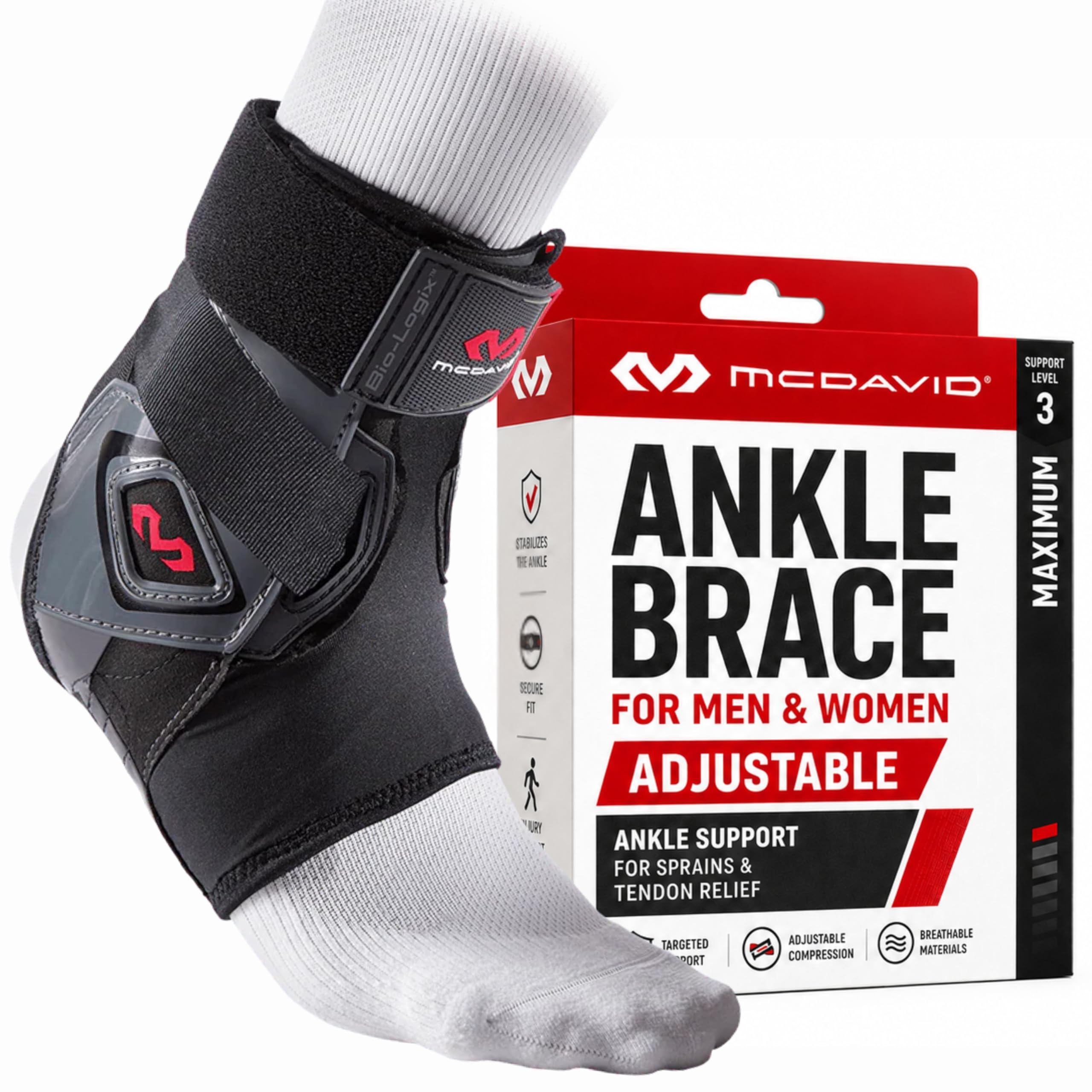
The McDavid Bio-Logix 4197 is a competition-grade stirrup brace engineered for athletes who need maximum protection without sacrificing mobility. Its flex-link hinge design connects the medial and lateral splints, allowing natural dorsiflexion and plantarflexion while resisting inversion—the motion that most often triggers tendonitis pain. The memory foam padding conforms to the ankle’s contours, and the multiple anchor straps ensure a truly adjustable fit.
This brace is anatomically specific for the left or right ankle, which improves the fit and prevents the splints from shifting. Users who work in construction or play basketball and soccer have praised its ability to prevent ankle collapse during lateral movements. The low-profile neoprene and nylon build slides into most athletic shoes without adding noticeable bulk, though it runs slightly thick compared to wrap-style braces.
Some users with smaller ankles found that the medium/large size had straps that were too long, while the small size was too short in the ankle pocket. The brace provides excellent stability for sprained ankles and impingement, but the top strap primarily tightens the splints rather than the ankle itself, so it may not suit severe instability without additional taping.
Why it’s great
- Flex-link hinge allows natural ankle motion while blocking inversion
- Memory foam padding for long-wear comfort
- Left/right specific design for a more anatomical fit
Good to know
- Sizing can be tricky between small and medium/large
- Top strap primarily tightens splints, not the ankle tunnel
- Thicker profile may feel bulky inside narrow shoes
3. Fitomo Triple-Lock Ankle Brace
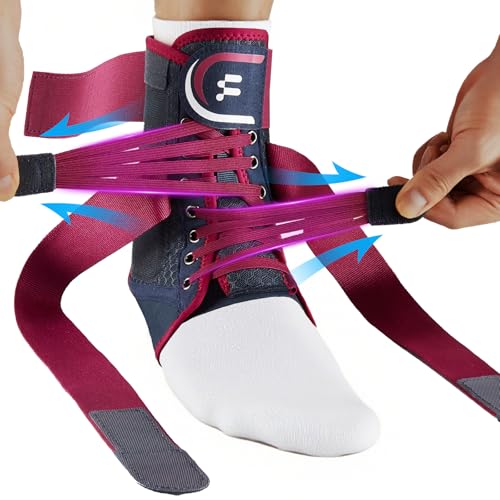
The Fitomo Triple-Lock brace bridges the gap between a simple wrap and a rigid stirrup. Its system combines a top compression strap, dual removable side stabilizers, and figure-8 cross straps that lock the ankle in place. This hybrid design allows you to remove the plastic splints for daily wear when less rigidity is needed, then reinsert them for sports or high-risk activities—a rare level of versatility in this category.
The figure-8 strap is the standout feature here: it wraps under the heel and crosses over the instep, letting you fine-tune compression directly over the tendon. Users recovering from a sprain or dealing with post-stroke inversion report that the brace stays secure without slipping, even during basketball or long workdays. The lightweight polyester and nylon blend is breathable and fits comfortably inside sneakers with ankle socks.
While the brace is durable enough to hold up after six months of daily use, the velcro straps can lose some grip over time if not washed regularly. A few users also noted that the single-pack pricing feels slightly high compared to two-pack options on the market, but the build quality and adjustability justify the investment for most people.
Why it’s great
- Removable side stabilizers offer flexibility between recovery and activity
- Figure-8 strap provides targeted compression to the tendon
- Stays secure during high-impact sports without readjusting
Good to know
- Velcro may lose grip over time without careful cleaning
- Only one brace per pack
- Not as rigid as a full stirrup for Grade 2+ sprains
4. Velpeau Stirrup Ankle Stabilizer Brace
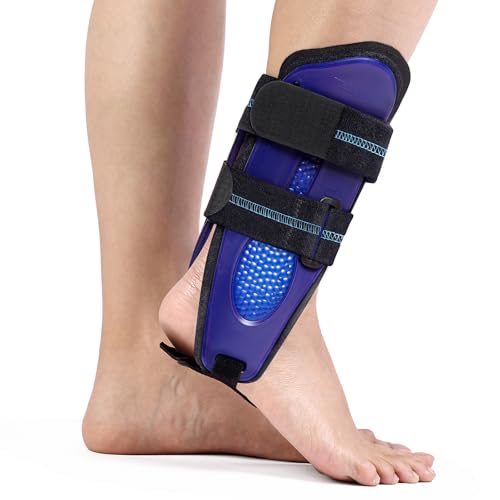
The Velpeau stirrup brace is built around a clever bi-injection plastic splint that places the medial and lateral malleolus inside shell holes protected by soft gel. This design keeps the semi-rigid splints from digging into the ankle bones, which is a common complaint with other stirrup braces. The foam pad version uses breathable Modal fabric and high-density sponge that wicks moisture and stays comfortable during all-day wear.
A unique feature of this brace is the removable gel pad that can be frozen for cold therapy to reduce acute swelling or heated for a hot compress. This dual therapy capability makes it a strong option for the early stages of tendonitis when inflammation is highest. The two large lateral straps with a buckle system are easy to adjust and provide uniform pressure without digging into the front of the leg.
Where the Velpeau falls short is in its bulk. Users report that it is significantly thicker than the product images suggest and may not fit in standard shoes without going up a half size. Additionally, the one-size-fits-most approach (22-29cm foot length) leaves little room for very thick or very thin ankles, and the permanent pin on the calf strap prevents expansion for larger calves.
Why it’s great
- Gel-padded splint holes prevent bone pressure points
- Removable pad can be used for hot or cold therapy
- Buckle system allows easy tension adjustments
Good to know
- Thicker than expected—may require larger shoes
- One-size design does not fit all ankle circumferences
- Calf strap pin prevents expansion for larger legs
5. DRwelland Ankle Brace with Side Stabilizers
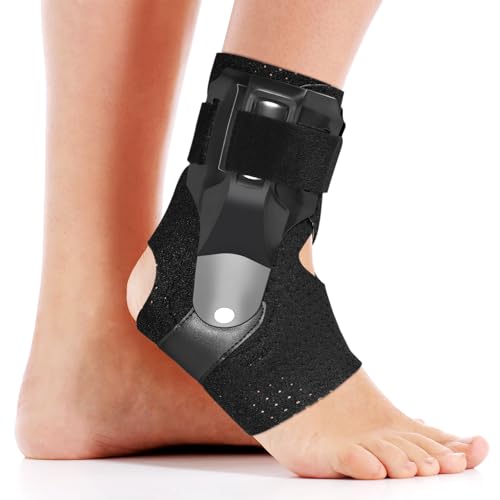
The DRwelland brace is a neoprene wrap with integrated side stabilizers, designed as an entry-level solution for mild tendonitis and post-sprain recovery. The breathable, moisture-wicking neoprene provides gentle compression that can help reduce swelling, while the adjustable straps let you target the arch and ankle position. It fits both left and right feet, making it a versatile option for households with multiple users.
Users with plantar fasciitis associated with their ankle pain find the soft fabric heel wrap particularly comfortable, as it reduces irritation over the Achilles tendon. Many reviews mention that the brace helps prevent the ankle from twisting during sleep, which is a common trigger for morning tendonitis pain. It slides easily into Hoka and other running shoes without adding noticeable bulk.
The main durability concern is the plastic buckle, which has been reported to snap after a few weeks of daily use. While the brace is comfortable and effective for basic support, it does not offer the same level of lateral stabilization as a stirrup or lace-up design. For moderate to severe tendonitis, this is best used as a compression sleeve rather than a primary stabilizer.
Why it’s great
- Soft neoprene with moisture-wicking properties for all-day comfort
- Adjustable arch strap for targeted tendon offloading
- Low-profile design fits in most shoes without bulk
Good to know
- Plastic buckle can break with heavy daily use
- Not rigid enough for moderate to severe tendonitis
- Limited lateral stabilization compared to stirrup braces
FAQ
Can I wear an ankle tendonitis brace while sleeping?
How tight should my ankle brace be for tendonitis?
Is a stirrup brace better than a lace-up brace for tendonitis?
How do I clean an ankle brace without damaging it?
Final Thoughts: The Verdict
For most users, the best brace for ankle tendonitis winner is the DonJoy Stabilizing Speed Pro because its speed-lace system and removable stays provide a perfect balance of customizable support and quick application. If you want a versatile brace that can go from recovery to sport without switching gear, grab the Fitomo Triple-Lock. And for a more affordable entry-level wrap that manages mild tendonitis and fits in any shoe, nothing beats the DRwelland Side Stabilizer.

Mo Maruf
I created WellFizz to bridge the gap between vague wellness advice and actionable solutions. My mission is simple: to decode the research and give you practical tools you can actually use.
Beyond the data, I am a passionate traveler. I believe that stepping away from the screen to explore new environments is essential for mental clarity and physical vitality.