Our readers keep the lights on and my smoothie glass nicely filled. As an Amazon Associate, I earn from qualifying purchases.
You’re standing still, but your binoculars wobble, turning a distant buck into a blurry mess. That shake isn’t your fault—it’s the optical system fighting your heartbeat. Choosing your glass for spotting game, birds, or big mammals comes down to balancing magnification power with light-gathering aperture, and the wrong spec combo costs you both clarity and usable viewing time.
I’m Mohammad Maruf — the founder and writer behind WellFizz. My research on optics focuses on lens coatings, prism materials, and exit-pupil math that separate field-grade binoculars from frustrating toys.
After combing through field tests and owner reports on dozens of models, this guide delivers the definitive analysis on the best binoculars for wildlife viewing to fit your terrain, light conditions, and budget without compromise.
How To Choose The Best Binoculars For Wildlife Viewing
Picking the right binoculars starts with understanding how magnification, objective lens size, and glass quality work together. A 10×42 model pulls animals closer but narrows your field of view, while an 8×42 gives you a steadier, wider image that’s easier to hold still. Focus on three specs before anything else: the prism type (BaK-4 preferred over BK-7), the coating level (Fully Multi-Coated is the minimum), and the exit pupil number—divide the objective lens by the magnification, and if it’s under 3mm, expect dim views in low light.
Magnification and Objective Lens Balance
A 10x magnification lets you see feather detail on a hawk at 100 yards, but it magnifies every hand tremor too. An 8x magnification is more forgiving for handheld use and offers a wider field of view, making it easier to track moving animals through brush. Pair either with a 42mm objective lens—the sweet spot for light collection without turning the binoculars into a boat anchor. Stepping up to 50mm objectives improves dawn/dusk visibility but adds significant weight that can fatigue your arms during long sessions.
Prism Quality and Coatings
BaK-4 glass prisms deliver a round, bright exit pupil, while BK-7 prisms produce clipped edges and dimmer images. Phase coating on roof-prism binoculars corrects color shifts that would otherwise reduce resolution. Dielectric coatings on the prism surfaces boost light transmission above 99%, and they matter most when you’re glassing shaded creek beds at dusk. Fully Multi-Coated lenses, with anti-reflective layers on every air-to-glass surface, are non-negotiable for avoiding glare and preserving contrast.
Build and Weather Sealing
If you’re heading out in rain, fog, or humidity, choose optics that are nitrogen-purged and O-ring sealed. Waterproof ratings like IPX7 guarantee submersion survival, and fogproof construction prevents internal lens fogging when you move between cold and warm air. Rubber armor absorbs bumps and provides a non-slip grip in wet conditions. For extended sessions, tripod adaptability via a built-in adapter socket lets you mount the binoculars for shake-free scanning.
Quick Comparison
On smaller screens, swipe sideways to see the full table.
| Model | Category | Best For | Key Spec | Amazon |
|---|---|---|---|---|
| Nikon Monarch M5 8×42 | Premium | All-purpose wildlife tracking | ED Glass, 335 ft FOV | Amazon |
| Canon 12×36 IS III | Pro | Shake-free high-magnification | Image Stabilization | Amazon |
| Celestron Nature DX ED 8×42 | Mid-Range | Budget-friendly ED glass | ED Glass, Phase-Coated | Amazon |
| Leupold BX-4 Pro Guide HD 12×50 | Premium | Long-range low-light spotting | 12×50, Guard-ion coating | Amazon |
| Canon 10×30 IS II | Pro | Portable image-stabilized travel | 10×30 IS, 315 ft FOV | Amazon |
| Sogries 10-30×50 Zoom | Mid-Range | Variable-zoom flexibility | 10-30x Zoom, 50mm | Amazon |
| Nikon TRAVELITE EX 8×25 | Value | Ultra-lightday hikes | 8×25, 11.1mm Eye Relief | Amazon |
| Vortex Copperhead HD 10×42 | Mid-Range | Hard-use all-weather hunting | HD Optical System, 334 ft FOV | Amazon |
| Bushnell H2O Xtreme 10×42 | Budget | Wet-weather budget pick | IPX7, BaK-4 Prisms | Amazon |
In‑Depth Reviews
1. Nikon Monarch M5 8×42 Binoculars
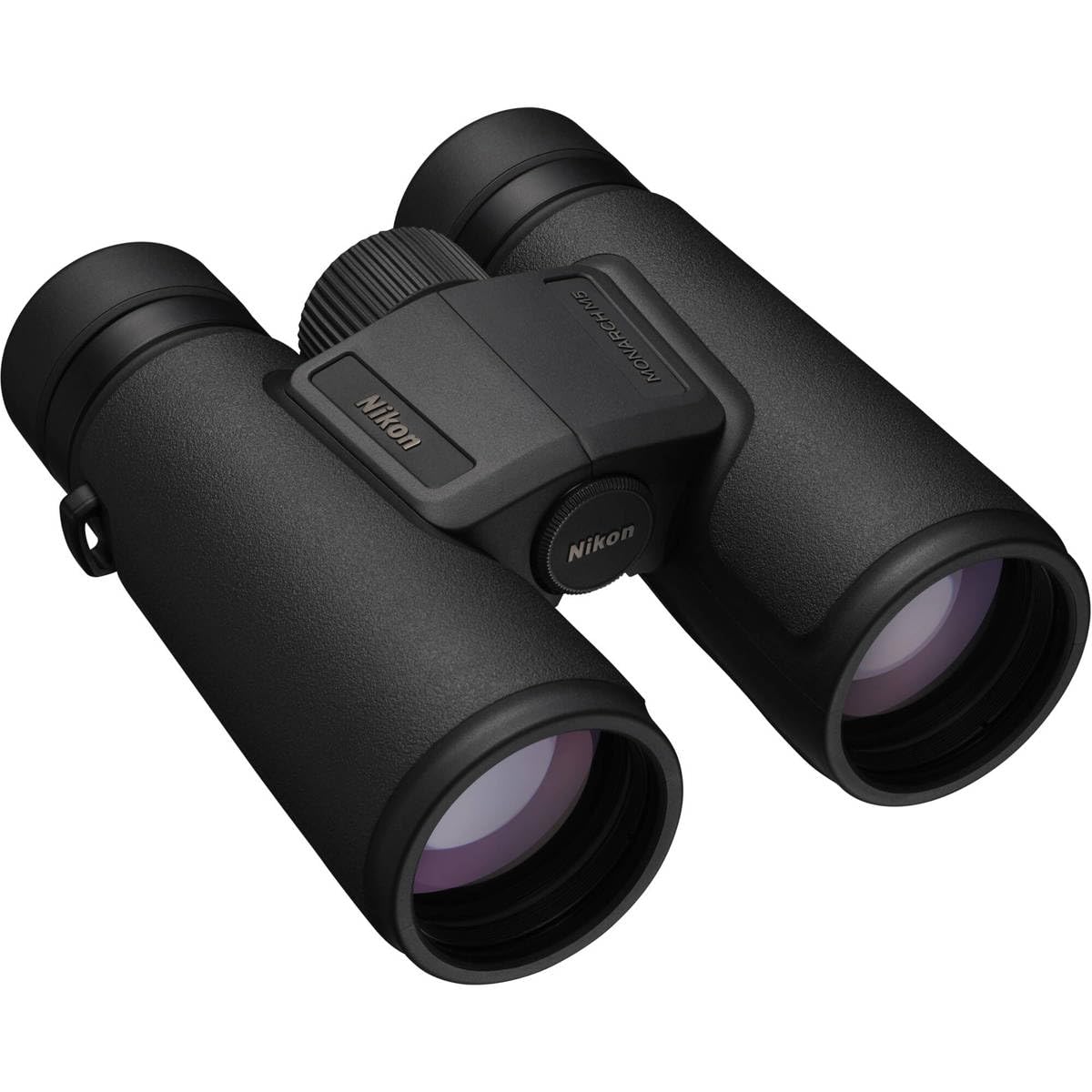
The Monarch M5 8×42 strikes the best balance in this lineup thanks to its Extra-low Dispersion (ED) glass, which virtually eliminates chromatic aberration—the purple fringing that cheap glass shows along high-contrast edges. With dielectric high-reflective coatings on the BaK-4 prisms, light transmission is maximized for bright, natural color even in the dim light of a forest understory at dawn. Its 8x magnification and 335-foot field of view make it exceptionally easy to track moving wildlife like a bounding deer or a swooping hawk without constantly refocusing.
The rubber-armored body is nitrogen-purged and O-ring sealed, giving you waterproof and fogproof reliability in rain or humidity. The large central focus knob is smooth and precise, allowing quick adjustments with gloved fingers. At 19.5mm of eye relief, eyeglass wearers can see the full field without vignetting, and the twist-up click-stop eyecups lock into position for consistent eye placement.
User reports from safari and backcountry trips consistently praise the crisp edge-to-edge sharpness and the ability to resolve fine feather patterns and distant mammal features. The close-focus capability of 8.2 feet lets you inspect butterflies or flowers up close, adding versatility beyond long-range wildlife scanning. For mid-range all-purpose performance, this glass competes with models costing hundreds more.
Why it’s great
- ED glass eliminates color fringing for true-to-life images
- Dielectric-coated prisms deliver exceptional brightness in low light
- Wide 335-foot field of view makes tracking easy
- Long 19.5mm eye relief works well with eyeglasses
Good to know
- Narrower field of view compared to some competitors at the same price
- Slightly heavier than ultralight travel bins, though well-balanced
2. Canon 12×36 Image Stabilization III Binoculars

The Canon 12×36 IS III solves the single biggest problem of high-magnification wildlife viewing: hand shake. Its Vari-Angle Prism Image Stabilization system, borrowed from Canon’s EF lens technology, cancels out the involuntary tremor that makes a 12x binocular nearly unusable without a tripod. With the IS engaged, the image locks into place, letting you read the band number on a bird’s leg or count the points on a distant bull elk at 400 yards without a support.
The Porro II prism design with Super Spectra multicoating delivers sharp, high-resolution images with minimal light loss. The doublet field-flattener lenses ensure the image stays crisp from edge to edge, eliminating the soft corners common in non-stabilized wide-angle optics. At 36mm objective lenses, it’s more compact and lighter than most 10×42 models, making it a viable companion for long hikes.
One trade-off is continuous battery drain—you must hold the IS button to keep stabilization active, which some users find fatiguing during extended scanning. The 14.5mm eye relief is adequate but may feel tight for eyeglass wearers, and the binoculars lack tethered objective lens caps. But for anyone who struggles with shaky hands or wants to push magnification beyond 10x without a tripod, the clarity and steadiness of this system is unmatched in its price class.
Why it’s great
- Image stabilization eliminates hand shake at 12x magnification
- Doublet field-flattener lenses ensure edge-to-edge sharpness
- Lightweight and compact for a stabilizer-equipped binocular
- Works well for both terrestrial and astronomical viewing
Good to know
- IS button must be held continuously, which can be tiring
- No tethered objective lens covers included
- Eye relief is tight for eyeglass users at 14.5mm
3. Celestron Nature DX ED 8×42 Binoculars

The Celestron Nature DX ED 8×42 is the most economical entry point into Extra-low Dispersion glass optics without sacrificing build quality. ED objective lenses virtually eliminate the color fringing that plagues budget binoculars, giving you razor-sharp images with accurate, true-to-life color. The phase-coated BaK-4 prisms maximize contrast and resolution, while the 5.25mm exit pupil ensures your eyes receive plenty of light even in the dim conditions of early morning birding or late-evening game spotting.
The rubber-armored polycarbonate housing is lightweight yet rugged, and the nitrogen-purged, O-ring sealed construction makes it fully waterproof and fogproof. A built-in tripod adapter thread lets you mount it for shake-free scanning across open fields or lakes. The 17.8mm eye relief is generous, and the twist-up eyecups with click stops let you dial in the perfect eye distance without guessing.
Field users consistently report crisp, bright images with quick, smooth focusing. The 8x magnification provides a wide enough field for tracking birds through tree branches, while the close-focus distance allows for inspecting nearby subjects. For the price, you’re getting ED-level sharpness and phase-coated prism performance that rivals glass costing much more.
Why it’s great
- ED glass eliminates chromatic aberration at a budget-friendly price
- Phase-coated BaK-4 prisms deliver high contrast and resolution
- Tripod adaptable for stable long-duration viewing
- Lightweight polycarbonate body reduces fatigue on long hikes
Good to know
- Ergonomics not as refined as higher-end models
- Shallow depth of field requires frequent refocusing on moving subjects
4. Leupold BX-4 Pro Guide HD Binoculars, 12x50mm

The Leupold BX-4 Pro Guide HD 12×50 is built for serious glassers who need to resolve detail at extreme distances in low light. The 50mm objective lenses gather massive amounts of light, and the 4.17mm exit pupil ensures a bright image even as the sun drops below the horizon. The open-bridge, dual-hinge design keeps the weight manageable at 1.8 pounds, while the Guard-ion hydrophobic lens coating repels water, dirt, and fingerprints so you maintain a clear image in rain or dusty conditions.
The Elite Optical System delivers outstanding light transmission and glare reduction, and the 65.2-degree apparent field of view feels immersive for a 12x binocular. The 12x magnification lets you study antler tines or feather patterns at distances where an 8x or 10x binocular would struggle. The unit is 100-percent waterproof and fogproof, backed by Leupold’s legendary customer care and lifetime warranty.
Users consistently report exceptional clarity at distances beyond 400 yards, and the 12×50 configuration often replaces a spotting scope for mid-range observation. The attached lens covers and padded case add convenience, though the 12x magnification does demand a steady hand or tripod for best results. If your priority is reaching out across open fields at dawn and dusk, this is the optic to beat.
Why it’s great
- 12×50 configuration provides extreme long-range clarity in low light
- Guard-ion hydrophobic coating sheds water and grime
- Open-bridge design keeps weight reasonable for 50mm objectives
- Backed by Leupold’s lifetime warranty
Good to know
- 12x magnification requires a steady hand or tripod for best results
- Premium price tier limits accessibility for casual users
5. Canon 10×30 Image Stabilization II Binoculars
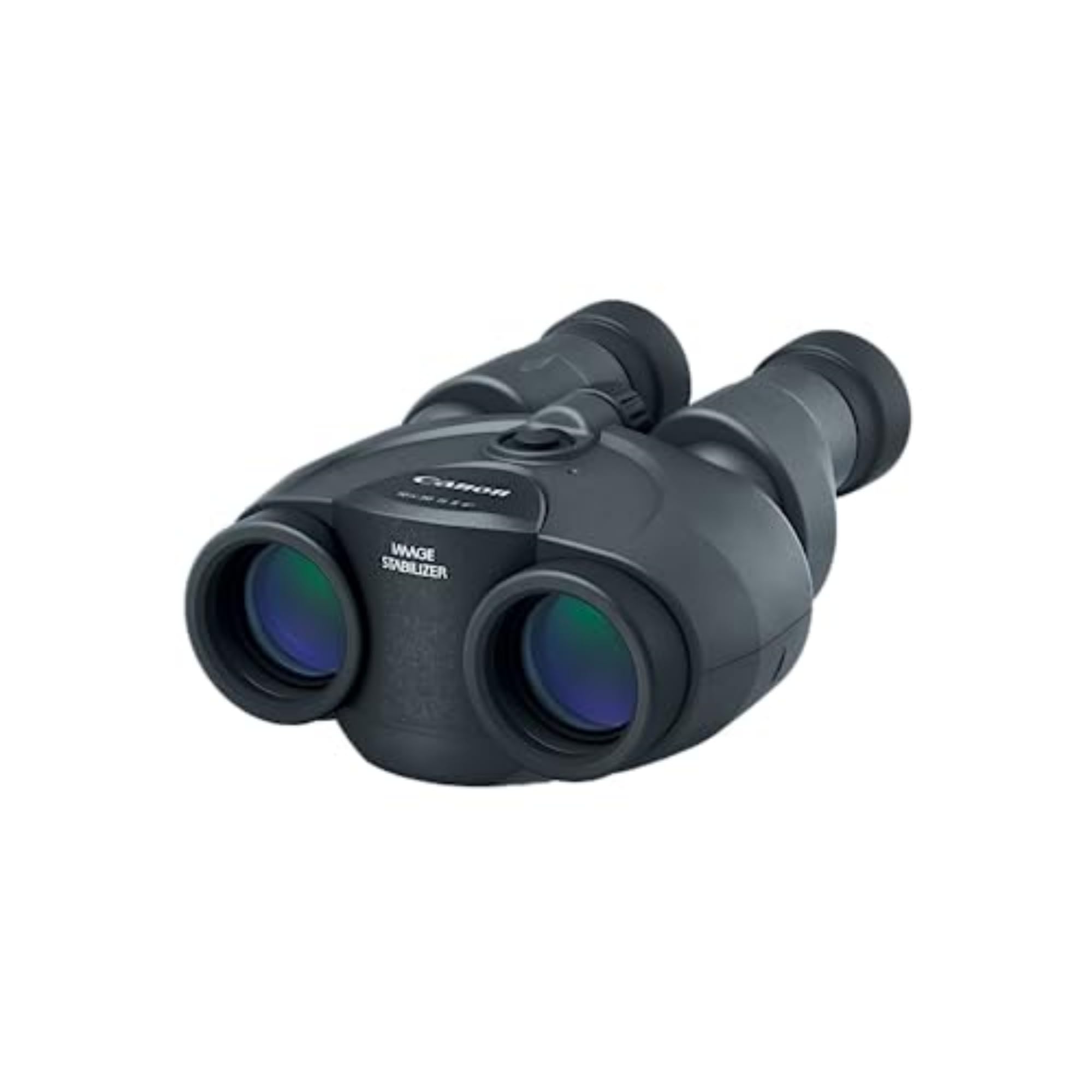
The Canon 10×30 IS II brings image stabilization into a compact, travel-friendly package that fits in a daypack without weighing you down. The Vari-Angle Prism system cancels hand tremor effectively at 10x, delivering a steady image that rivals tripod-mounted stability. The Porro II prism design with Super Spectra multicoating produces bright, high-resolution images, and the doublet field-flattener lenses ensure sharpness across the entire field of view.
At 10x magnification with 30mm objectives, the exit pupil measures 3mm—adequate for daytime and twilight use, though it struggles in deep dusk conditions compared to a 42mm lens. The 60-degree apparent field of view feels spacious, and the lead-free glass construction aligns with environmental considerations. The classic Canon body design is refined with a non-glossy front cover that reduces reflections that could spook wildlife.
Owners consistently highlight the dramatic improvement in usable detail when the stabilization is active—you can read text on distant signs, count birds on a wire, or identify subtle field marks on a perched hawk without the jitter that plagues non-stabilized 10x glass. The main compromises are the lack of tethered objective caps and the need to hold the IS button, but for a lightweight, handheld package that delivers steady 10x views, this is an excellent choice.
Why it’s great
- Image stabilization provides tripod-like steadiness in a handheld package
- Compact and lightweight for easy travel
- Doublet field-flattener lenses for edge-to-edge sharpness
- 60-degree apparent field of view feels wide for a stabilized optic
Good to know
- 3mm exit pupil limits low-light performance compared to larger objective lenses
- No tethered objective lens caps included
- IS button must be held continuously
6. Sogries 10-30×50 Zoom Binoculars
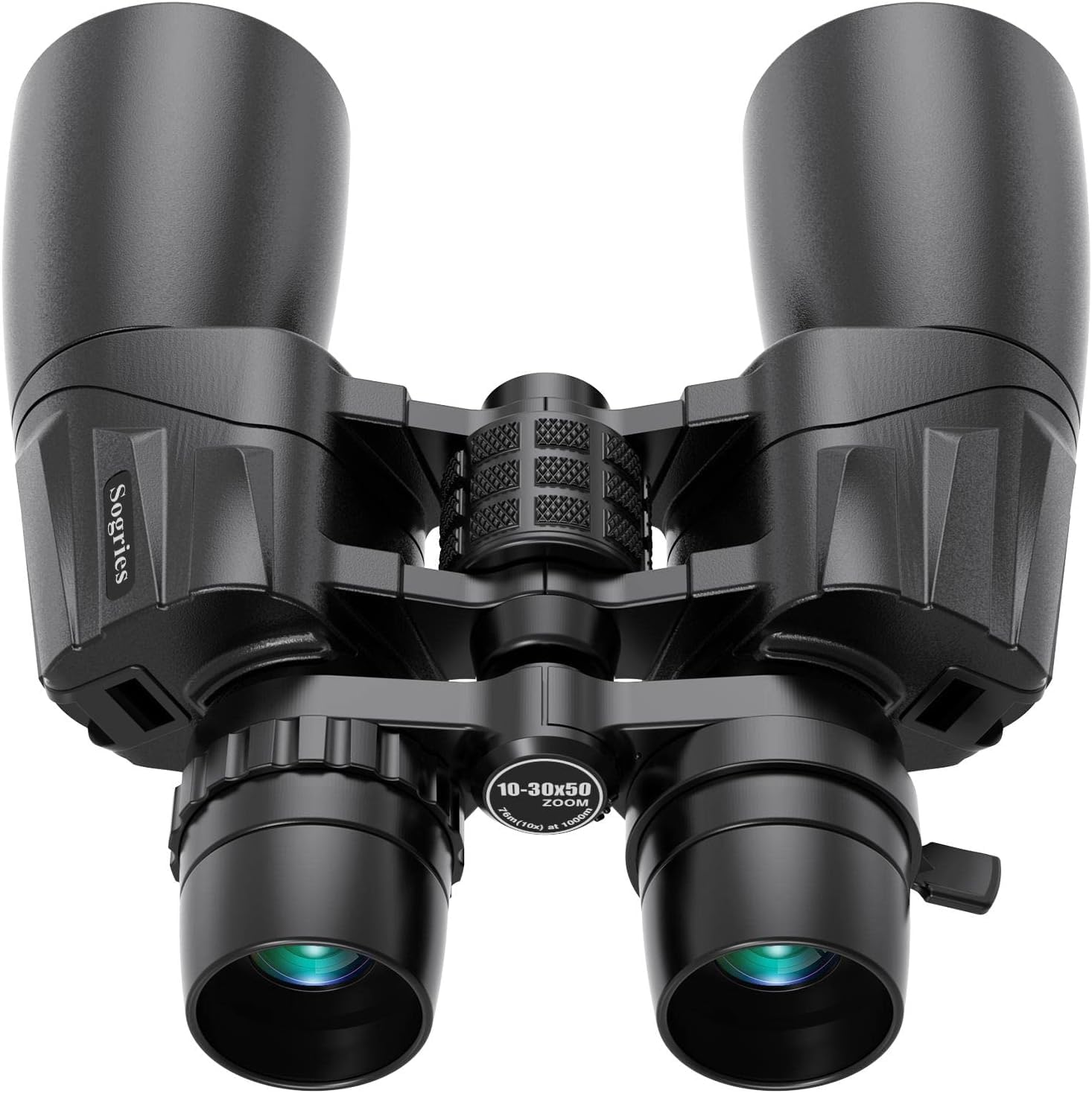
The Sogries 10-30×50 Zoom binoculars offer a variable magnification range that lets you sweep from wide-field context views at 10x to extreme close-up detail at 30x without swapping optics. The 50mm objective lenses gather ample light, and the BaK-4 prisms with fully multi-coated broadband green film deliver crisp, high-contrast images with up to 99.5 percent light transmission. The zoom joystick is smooth and positive, allowing quick transitions from scanning to inspection.
The rubber-armored body features an unscented coating with a non-slip fingerprint texture for a secure grip in wet conditions. O-ring sealing and anti-fog coatings protect the interior from moisture and dust. The 22mm eye relief is generous for eyeglass wearers, and the twist-up eyecups accommodate both glasses and bare eyes. The unit is relatively heavy due to the metal barrel needed to stabilize the zoom mechanism, so a tripod is recommended for sustained 30x viewing.
Users consistently praise the clear zoom performance at long distances—reading text on signs and identifying distant wildlife details. The included case, strap, and lens cloth add value. The variable zoom makes this a versatile tool for scenarios where you need both wide-area scanning and punch-in detail, though the weight and tripod dependency at high zoom are limiting factors for pure handheld use.
Why it’s great
- Variable 10-30x zoom provides both wide-field and close-up capability
- BaK-4 prisms with FMC coatings deliver bright, sharp images
- 22mm eye relief is excellent for eyeglass wearers
- Smooth zoom joystick allows quick magnification changes
Good to know
- Heavy design requires a tripod for stable use at 30x
- Low-light performance fades as you approach 30x
7. Nikon TRAVELITE EX 8×25 Binoculars

The Nikon TRAVELITE EX 8×25 is the lightest, most packable option in this lineup, weighing just enough to disappear into a jacket pocket or daypack. The compact 25mm objective lenses and roof-prism construction make it easy to bring on hikes, canoe trips, or summit pushes where full-size binoculars stay behind. The multilayer-coated optics and aspherical eyepiece lenses deliver bright, sharp images with good edge-to-edge clarity for the class.
The die-cast aluminum body is armored with protective rubber for shock resistance, and the nitrogen-purged, O-ring sealed construction makes it waterproof to 2 meters for 5 minutes and completely fogproof. The high-eyepoint design with turn-and-slide eyecups provides comfortable viewing with or without glasses—the 11.1mm eye relief is adequate for casual use. The click-type diopter adjustment locks in place for consistent focus.
Users consistently appreciate the balance of portability and optical quality for daytime use, with crisp views of birds on feeders, trail signs, and scenic vistas. The 8x magnification is stable enough for handheld use, and the wide field of view makes tracking subjects easy. The main limitation is the 3.13mm exit pupil, which renders the binoculars dim in low-light conditions—they’re best reserved for sunny-day adventures rather than dawn or dusk wildlife watching.
Why it’s great
- Ultra-compact and lightweight for effortless portability
- Waterproof and fogproof for use in wet conditions
- Multilayer-coated optics deliver sharp daytime images
- Turn-and-slide eyecups accommodate eyeglass wearers
Good to know
- 3.13mm exit pupil is dim in low-light conditions
- Plastic enclosure feels less premium than metal-bodied alternatives
8. Vortex Copperhead HD 10×42 Binoculars

The Vortex Copperhead HD 10×42 brings a high-definition optical system and the legendary Vortex VIP warranty into an accessible price bracket. The HD glass elements deliver improved color fidelity and edge-to-edge sharpness compared to standard glass, and the fully multi-coated lenses boost light transmission across all air-to-glass surfaces. At 10×42, you get a fine balance of reach and light-gathering for general wildlife spotting.
The rubber armor provides a secure, non-slip grip even when wet, and the chassis is waterproof, fogproof, and shockproof for hard use in all conditions. The adjustable eyecups and diopter allow a custom fit, and the tripod adaptability lets you mount the binoculars for stable scanning. The included GlassPak harness and comfort neck strap offer flexible carrying options for long days in the field.
Users who have put the Copperhead through a full hunting season of rain, snow, and mud report no issues with fogging or internal moisture. The view is bright and clear, though some note it’s slightly less crisp at the edges and in low light compared to the pricier Vortex Diamondback series. For a durable, well-supported binocular that handles weather extremes without hesitation, the Copperhead HD is a solid mid-range workhorse.
Why it’s great
- HD optical system improves color fidelity and sharpness
- Fully multi-coated lenses for good light transmission
- Waterproof, fogproof, and shockproof for all-weather reliability
- Vortex VIP unlimited lifetime warranty provides peace of mind
Good to know
- Edge sharpness and low-light performance trail higher-tier models
- Slightly heavier than some competition in its class
9. Bushnell H2O Xtreme 10×42 Binoculars

The Bushnell H2O Xtreme 10×42 is purpose-built for wet environments, with an O-ring sealed, nitrogen-purged construction that earns an IPX7 waterproof rating—meaning it can survive submersion in 1 meter of water for 30 minutes. The BaK-4 prisms and fully multi-coated glass surfaces maximize clarity and light transmission, delivering a bright, sharp image that punches above its price class. The 10×42 configuration is versatile enough for boating, hunting, and general wildlife observation.
The rugged rubber design includes soft grips that maintain a non-slip hold even when the binoculars are wet from rain or spray. The compact roof-prism form factor makes it easy to stow in a boat locker or backpack. The included case, strap, and lens covers provide basic protection, and the center focus wheel is smooth and responsive for quick adjustments.
Users consistently note the excellent clarity and brightness upgrade over older, lower-magnification binoculars. The rubberized build feels durable and secure, and the IPX7 rating gives real confidence for kayaking or coastal birding. The main limitation is the lack of a tripod adapter socket on this specific model, which prevents stable mounting. For a budget-friendly optic that can handle direct water exposure without flinching, the H2O Xtreme is hard to beat.
Why it’s great
- IPX7 waterproof rating for full submersion protection
- BaK-4 prisms and fully multi-coated glass for bright images
- Rugged rubber design with non-slip wet grip
- Compact roof-prism form factor for easy transport
Good to know
- No tripod adapter socket for stable mounting
- Slightly heavier than some alternatives in its price range
FAQ
Is 10×42 too shaky for handheld wildlife viewing?
What does ED glass actually do for wildlife viewing?
Final Thoughts: The Verdict
For most users, the binoculars for wildlife viewing winner is the Nikon Monarch M5 8×42 because its ED glass, dielectric-coated prisms, and wide field of view deliver premium-level clarity and tracking ease at a mid-range price. If you want image stabilization that turns a 12x handheld into a tripod-stable view, grab the Canon 12×36 IS III. And for budget-conscious buyers who still need ED-level sharpness, nothing beats the Celestron Nature DX ED 8×42.

Mo Maruf
I created WellFizz to bridge the gap between vague wellness advice and actionable solutions. My mission is simple: to decode the research and give you practical tools you can actually use.
Beyond the data, I am a passionate traveler. I believe that stepping away from the screen to explore new environments is essential for mental clarity and physical vitality.