Our readers keep the lights on and my smoothie glass nicely filled. As an Amazon Associate, I earn from qualifying purchases.
A tripod that weighs you down on a summit push isn’t a tool — it’s a liability. The difference between a keeper landscape shot and a missed moment often comes down to whether you’re willing to haul the support rig for miles of uneven trail. Hiking photographers face a brutal trade: extendable carbon-fiber legs and a stable ball head versus a pack that stays under 10 pounds total. The good news is that modern materials have changed the equation.
I’m Mohammad Maruf — the founder and writer behind WellFizz. I’ve spent hundreds of hours cross-referencing carbon-fiber layups, leg-section counts, ball-head torque specs, and folded lengths to find the few models that actually earn a spot in a hydration pack pocket.
Whether you shoot with a mirrorless body or a full-frame DSLR and a telephoto zoom, the right support system makes the hike feel shorter and the images sharper. This guide breaks down the seven top candidates to help you find the best camera tripod for hiking that matches your gear weight and trail style.
How To Choose The Best Camera Tripod For Hiking
The ideal hiking tripod balances three competing demands: low pack weight, short folded length, and enough leg stiffness to hold a composition steady in a breeze. You don’t need a studio-grade column, but you do need a leg lock that won’t slip after a day of trail dust and temperature changes.
Weight and Packed Length
Every additional ounce above three pounds is felt by mile five. Look for a carbon-fiber model that folds under 17 inches so it fits horizontally inside a carry-on bag or vertically against a daypack frame. The trade-off comes in leg-section count: four or five sections tuck smaller but add twist locks that slow deployment and introduce potential wobble points.
Ball Head Quality and Load Rating
A ball head with a 36mm or larger alloy sphere provides the friction surface needed to hold a body-plus-lens combo steady without micro-creep. Check that the quick-release plate uses a standard Arca-Swiss dovetail so you aren’t locked into proprietary accessories. The head’s base diameter and locking knob placement matter more than the branded name on the side.
Leg Angle Adjusters and Foot Options
On uneven talus or forest duff, independent leg-angle stops let you level the camera without extending every section fully. Removable rubber feet that reveal metal spikes give you bite on loose soil or ice. A center-column hook for hanging a stuff sack adds stability without adding permanent weight to the frame.
Quick Comparison
On smaller screens, swipe sideways to see the full table.
| Model | Category | Best For | Key Spec | Amazon |
|---|---|---|---|---|
| NEEWER N55CR | Mid-Range | Tall shooters needing 80.7” reach | 2.6 lb, 28mm leg Ø | Amazon |
| Peak Design Travel Tripod | Premium | Fast-deploy ultralight backcountry kit | 2.8 lb, 15.4” folded | Amazon |
| Benro Mach3 TMA27C | Premium | Pro stability with heavy telephoto lenses | 3.2 lb, 30.9 lb load | Amazon |
| SIRUI Traveler 7C | Premium | Versatile tripod/monopod for multi-day treks | 3.46 lb, 18.9” folded | Amazon |
| K&F CONCEPT O254C2 | Mid-Range | Lightweight carry for mirrorless kits | 2.5 lb, 16.3” folded | Amazon |
| NEEWER TP17B | Budget | Entry-level carbon fiber with phone mount | 3.2 lb, 64” max H | Amazon |
| SIRUI AM-223 | Budget | Low-angle macro and ultralight summit packs | 1.15 lb, 16” max H | Amazon |
In‑Depth Reviews
1. NEEWER Upgraded N55CR Carbon Fiber Tripod

The N55CR hits the sweet spot for hikers who are over six feet tall but still want carbon-fiber portability. The 28mm leg diameter and four-section design provide remarkable rigidity for a sub-3-pound frame, and the two-section telescopic center column pushes maximum height to 80.7 inches — tall enough to shoot over a crowd or get a high-angle landscape frame without extending the column fully.
The 36mm ball head handles a full-frame body with a 70-200 f/2.8 without drifting, though the head’s panning base does have a slight wander under load that matters more for video than stills. The center-column hook lets you hang a sandbag or loaded stuff sack for extra wind stability, and the monopod conversion removes one leg quickly to serve as a trekking pole or standalone support.
At 62 ounces, this is not the lightest option in the guide, but the combination of extreme height, convertible leg, and sturdy carbon layup makes it a versatile companion for alpine hikes where you want one tripod to handle everything from sunrise panoramas to telephoto compressions.
Why it’s great
- Tallest carbon-fiber option under this price tier
- Monopod conversion works as a walking stick
- Thick 28mm legs resist vibration well
Good to know
- Ball head has minor panning wander under heavy load
- Folded length is 22 inches with center column attached
- Unboxing requires lubrication of twist locks
2. Peak Design Travel Tripod (Carbon Fiber)

The Peak Design Travel Tripod collapses to the diameter of a water bottle and fits inside a side pocket or a 15.4-inch carry-on slot. The unique leg-deployment mechanism uses a quarter-turn lock that fans all three legs out simultaneously — no flipping or twisting individual sections. Setup from folded to shooting position takes roughly six seconds, which matters when light changes fast on a ridge line.
The single-ring ball head adjustment feels intuitive: one torque ring controls all axis movement, so you can tilt and pan without hunting for separate knobs. The built-in phone mount flips out of the center column, eliminating the need for an extra accessory. At 2.8 pounds, this is on the heavier side for an ultralight kit, but the engineering density — machined aluminum hub, carbon-fiber legs, integrated hex wrench storage — justifies every ounce for serious hikers who prioritize speed and packability above all else.
Vertical head movement requires an L-bracket for true portrait orientation, and the leg-lock tabs can pinch exposed skin if you’re not careful. For backcountry shooters who value rapid deployment and a pristine pack fit, this tripod sets the standard that others chase.
Why it’s great
- Fastest setup of any full-size travel tripod
- Collapsed size fits in a water-bottle pocket
- Built-in phone mount saves pack space
Good to know
- Ball head lacks independent vertical-only lock
- Leg-tab design can pinch fingers during folding
- Premium price reflects specialized engineering
3. Benro Mach3 Series 2 (TMA27C)
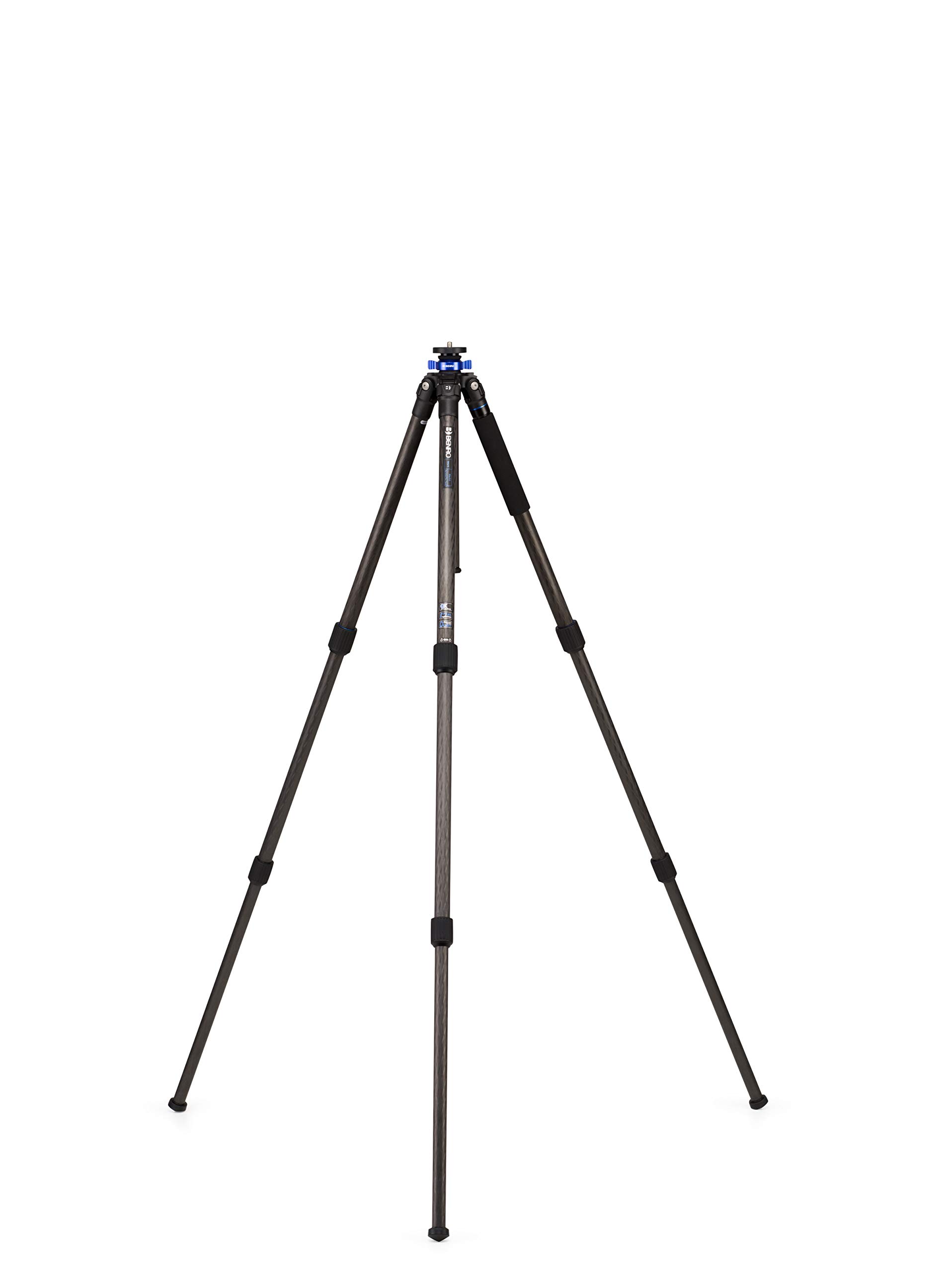
The Benro Mach3 TMA27C is built for photographers who refuse to compromise on leg stiffness. With 28.6mm carbon-fiber tubes and a magnesium-alloy casting, this tripod supports over 30 pounds — enough for a gripped DSLR, 400mm super-telephoto, and gimbal head. The twist locks use smooth-threaded collars that don’t jam in sandy or damp conditions, a real advantage on multi-day coastal or desert hikes.
Interchangeable feet switch between rubber pads for hard ground and stainless-steel spikes for mud or loose scree. The removable center column enables ground-level macro without an accessory short column, and the 63.6-inch maximum height (with column extended) covers most standing-height compositions. At 3.2 pounds, it’s heavier than pure travel tripods, but the vibration resistance and torsional stiffness beat anything lighter in this price range.
This is a legs-only system — you need to supply your own ball head. The 3/8-inch mounting stud converts to 1/4-inch, so it works with both standard and pro heads. For hikers who carry heavy glass and need absolute security in windy conditions, the Mach3 delivers studio-grade stability in a packable package.
Why it’s great
- Exceptional torsional rigidity for heavy telephoto lenses
- Interchangeable rubber/spike feet for varied terrain
- Durable magnesium hub withstands abuse
Good to know
- Requires separate ball-head purchase
- Heavier than dedicated travel tripods
- Folded length of 24.6 inches for larger packs
4. SIRUI Traveler 7C

The SIRUI Traveler 7C offers a polished balance of tall reach and a dedicated monopod conversion that actually works as a walking stick. The four-section carbon-fiber legs extend from 18.9 inches up to 65.5 inches, and the center column inverts for low-angle ground work. The 36mm E-10 ball head provides 360-degree panning with separate locking knobs for the sphere and the base, which helps frame precise panoramic stitches without accidental tilt drift.
Field reviewers consistently note the fit and finish — tactile metal knobs, smooth twist-lock rotation, and a compact folded length of 18.9 inches. The center-column hook allows hanging a bag for additional stability in wind, and the three-position leg-angle stops lock positively when you need a wide stance on uneven terrain. At 3.46 pounds, this is not the lightest travel option, but the build density gives it a planted feel that cheaper carbon tripods lack.
The monopod mode screws the center column to one detached leg, yielding a full-height walking stick that doubles as a support for panning shots. The Arca-Swiss plate is close to standard but has a slight flange that may not seat perfectly in every aftermarket head. For hikers who want one multi-use system that covers landscape, low-angle, and mobile support, the Traveler 7C delivers remarkable value.
Why it’s great
- True walking-stick monopod conversion
- Tactile metal controls and smooth twist locks
- Center-column hook for wind stability
Good to know
- Arca plate is not fully compatible with all standard clamps
- Plastic leg caps are a potential failure point
- Folded height of 18.9 inches requires a medium pack
5. K&F CONCEPT O254C2+BH-36
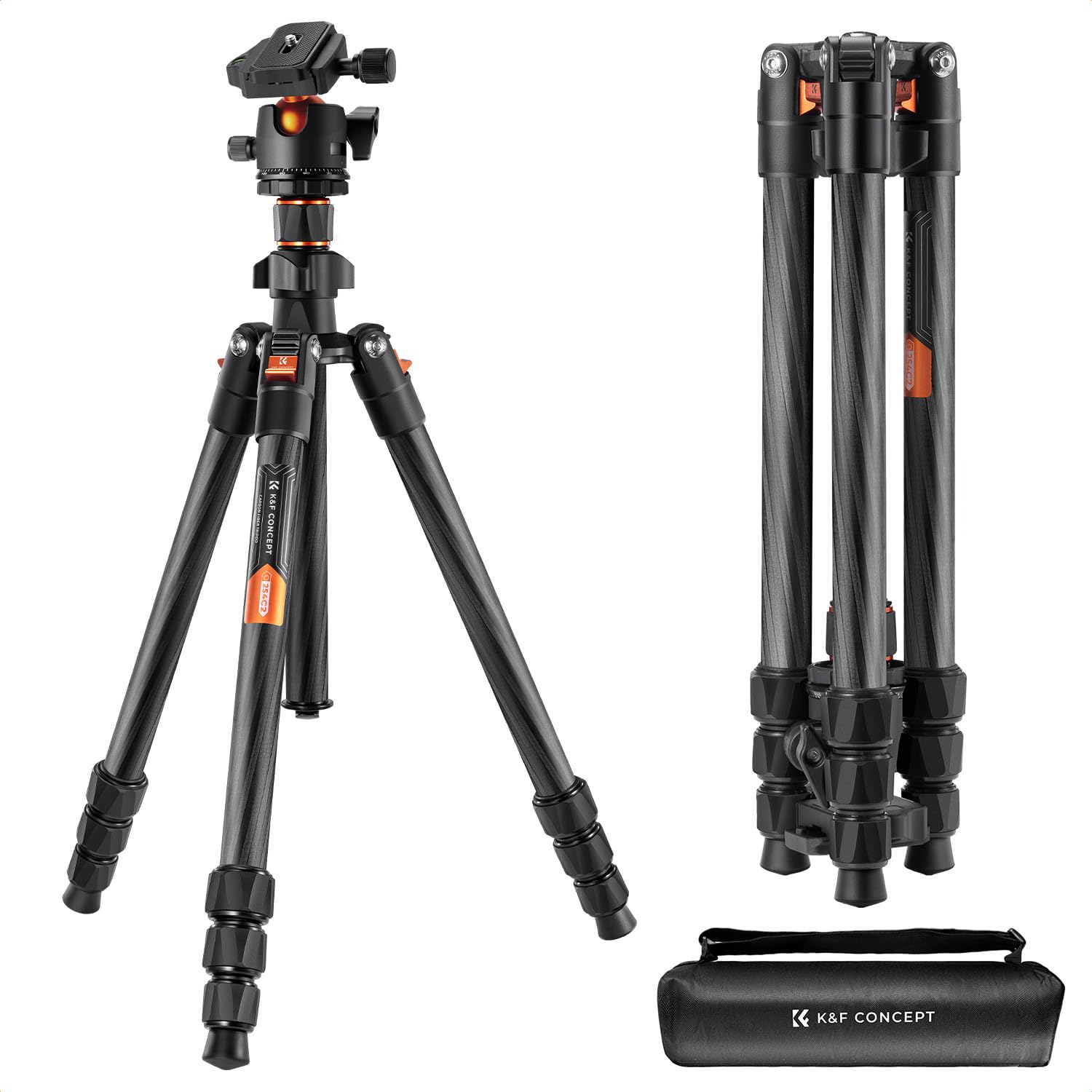
The K&F CONCEPT O254C2 is a direct competitor for hikers who want carbon-fiber weight savings without stepping into premium pricing. At 2.5 pounds, it’s one of the lightest full-height tripods here, folding to 16.3 inches to slip into a daypack or carry-on. The 36mm metal ball head offers 360-degree rotation and 90-degree tilt, and the Arca-Swiss quick-release plate works with most standard camera mounts out of the box.
The four-section legs use twist locks that feel crisp on dry days, but the synthetic nylon connecting parts — while corrosion-proof — don’t have the same reassuring heft as full-metal joints on higher-end models. Maximum height reaches 64 inches, adequate for eye-level shooting without the center column extended. The center column does have a short-column option for low-angle work, and the inverted installation lets you get the camera nearly to ground level.
Several users noted that the ball head and plate assembly use some plastic components, so photographers who regularly carry a heavy DSLR with a battery grip may want to upgrade the head separately. For mirrorless shooters or lightweight APS-C kits, this tripod provides a fantastic strength-to-weight ratio that disappears into a pack and sets up without fuss.
Why it’s great
- Extremely light at 2.5 pounds
- Folds compactly at 16.3 inches
- Short center column for ground-level macro work
Good to know
- Ball head has some plastic components
- No built-in hook for weight stabilization
- Not ideal for heavy full-frame telephoto setups
6. NEEWER TP17B Basics Carbon Fiber Tripod
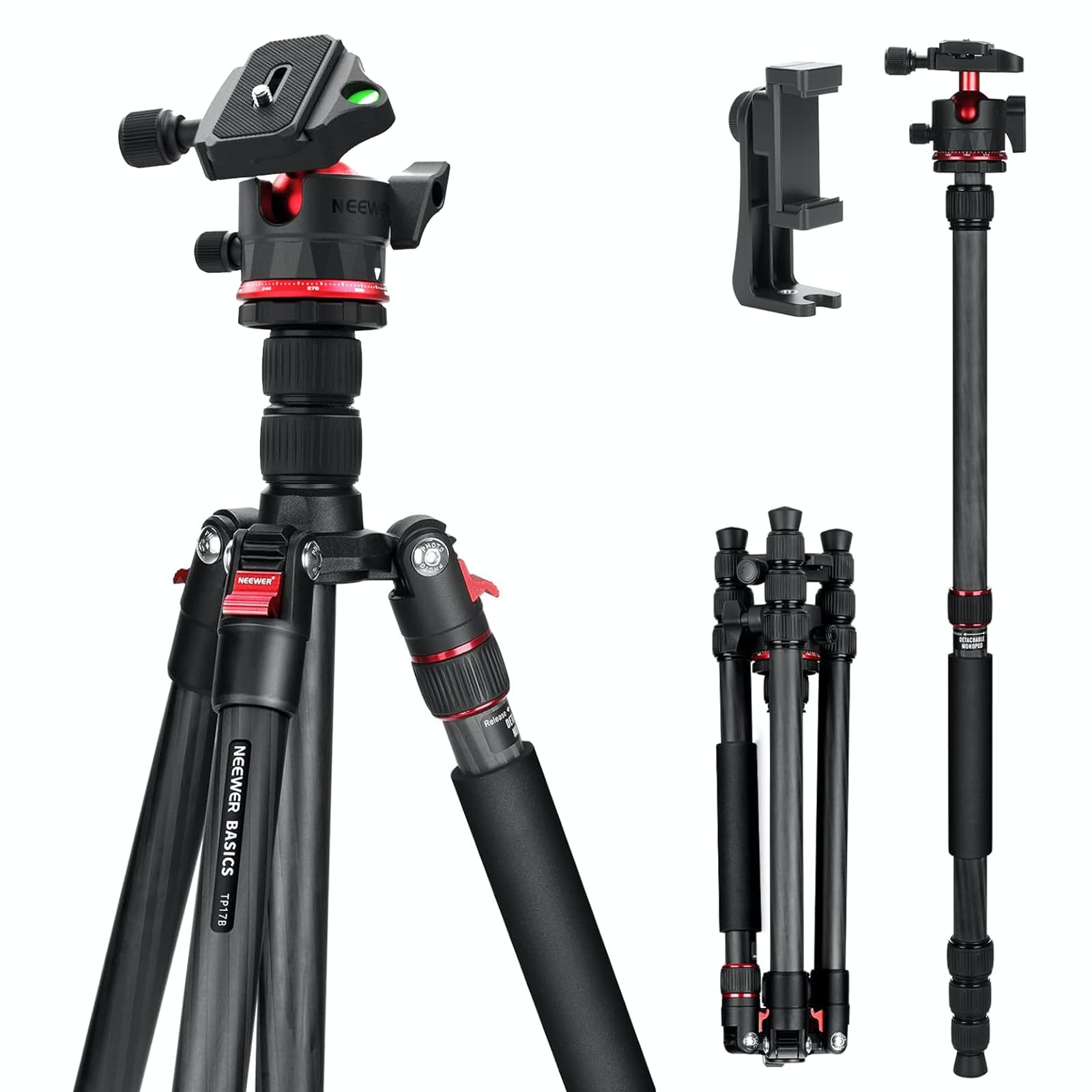
The NEEWER TP17B brings carbon-fiber construction to the entry-level price point, folding to 16.3 inches while supporting up to 13.2 pounds — enough for a mirrorless body with a standard zoom or a lightweight DSLR. The included smartphone holder mount makes this a dual-purpose option for vloggers and hybrid shooters who want to rig a phone alongside their camera on the trail.
The ball head provides 360-degree rotation and 90-degree tilt, and the Arca-type quick-release plate works with most camera plates in this tier. The three leg-angle positions press to adjust, and the reversible center column enables macro-height shooting. At 3.2 pounds, it’s not the lightest option, but the included carrying bag and monopod conversion add utility for beginners who want one kit to cover both hiking and casual studio work.
Reviewers note that the twist locks occasionally need re-tightening after extended vibration during hiking, and the center column’s rotating section can loosen during panoramic shooting if you don’t tighten the friction screw fully. For the hiker who wants to step into carbon fiber without a big investment, the TP17B offers a solid foundation that can be upgraded with a better head later.
Why it’s great
- Affordable carbon-fiber entry point
- Includes smartphone holder for hybrid shooting
- Reversible center column for low-angle work
Good to know
- Twist locks may need occasional re-tightening
- Ball head wanders slightly during panoramic pans
- Relatively heavy at 3.2 pounds for carbon fiber
7. SIRUI AM-223 Mini Carbon Fiber Tripod

The SIRUI AM-223 is a specialist tool for the ultralight hiker or macro enthusiast who prioritizes pack weight over standing height. At just 1.15 pounds with a folded length of 12.1 inches, this mini tripod disappears into a pack’s side pocket or even a large jacket pocket. The 10-layer carbon-fiber legs are stiffer than the leg diameter suggests, and the 16-inch maximum height is perfect for ground-level compositions, low-angle streams, and forest-floor detail shots.
The B-00K ball head has a surprisingly fluid feel for its size, with no detectable creep when supporting a full-frame body and a 70-200 f/2.8 in vertical orientation. Leg-angle adjustment uses a push-button stop system that locks independently for each leg, so you can set one leg flat against the ground on a slope. The removable rubber feet reveal metal spikes for dirt or ice grip. An optional SL-100 center column adds 12 inches of height if you need a higher viewpoint, but that increases weight and folded length.
This is not a tripod for shooting while standing — you must be willing to sit, kneel, or set it on a rock. For dedicated landscape and macro hikers who already carry a trekking pole and want the absolute lightest support system that still holds professional gear, the AM-223 is a revelation. The head design has a minor quirk where the safety release can gouge the sphere surface if overtightened, so gentle handling extends the ball’s smooth life.
Why it’s great
- Incredibly light at just over one pound
- Folds to fit a jacket pocket
- Holds a full-frame DSLR with telephoto lens
Good to know
- 16-inch max height requires kneeling or tabletop use
- Ball head gouging risk if over-tightened
- Optional center column is a separate purchase
FAQ
Can I use a hiking tripod with a smartphone for video?
How much weight should my hiking tripod support for a mirrorless camera?
Are carbon-fiber tripods actually better for hiking than aluminum?
How do I stabilize a lightweight tripod in windy mountain conditions?
Final Thoughts: The Verdict
For most hikers, the best camera tripod for hiking is the NEEWER N55CR because it provides the tallest working height in this class, a monopod conversion, and thick 28mm carbon-fiber legs that handle variable weights without excessive pack burden. If you prioritize absolute packability and the fastest setup on the trail, grab the Peak Design Travel Tripod. And for ultralight summit pushes where every gram counts and you shoot from ground level, nothing beats the SIRUI AM-223 — it disappears into a jacket pocket and still holds professional glass steady.

Mo Maruf
I created WellFizz to bridge the gap between vague wellness advice and actionable solutions. My mission is simple: to decode the research and give you practical tools you can actually use.
Beyond the data, I am a passionate traveler. I believe that stepping away from the screen to explore new environments is essential for mental clarity and physical vitality.