Our readers keep the lights on and my smoothie glass nicely filled. As an Amazon Associate, I earn from qualifying purchases.
Choosing between open-back and closed-back designs is the first fork in the road for any serious listener. Open-back audiophile headphones deliver a soundstage that mimics live performance, with air moving freely around the drivers, while closed-back models offer isolation for critical studio work or noisy environments. The real battle, however, is between driver technologies: dynamic drivers provide punch and body, while planar magnetic designs offer speed and micro-detail that can redefine your understanding of a recording.
I’m Mohammad Maruf — the founder and writer behind WellFizz. My research focuses on driver topology, impedance matching, and how transducer materials interact with amplification to produce audible differences in imaging and transient response.
Audiophile headphones are a long-term investment in your listening experience, and understanding the trade-offs between frequency extension, soundstage depth, and driver speed is essential. Whether you prioritize the lightning-fast transient response of planar magnetics or the natural timbre of well-tuned dynamics, this guide to the best audiophile headphones breaks down what separates good from genuinely great.
How To Choose The Best Audiophile Headphones
Audiophile headphones are defined by their ability to reproduce sound with minimal coloration, but the ideal pair depends on your listening environment, preferred genres, and amplification setup. Prioritize driver technology and impedance before considering comfort or aesthetics.
Driver Type: Dynamic vs. Planar Magnetic
Dynamic drivers use a voice coil and magnet to move a diaphragm, delivering punchy bass and a natural, warm sound. Planar magnetic drivers use a thin, conductive diaphragm suspended between magnets, offering faster transient response, lower distortion, and superior micro-detail retrieval. Planars excel at complex, fast-paced music, while dynamics often feel more cohesive for vocal-forward tracks.
Impedance and Sensitivity
High-impedance headphones (over 100 ohms) typically require a dedicated headphone amplifier to reach proper volume and dynamic range. Low-impedance models (under 50 ohms) can be driven by smartphones or laptops but may sacrifice some detail retrieval. Sensitivity, measured in dB/mW, determines how loud a pair gets per unit of power — lower sensitivity pairs need more current.
Open-Back vs. Closed-Back
Open-back headphones have perforated earcups that allow air to pass through, creating a wide, speaker-like soundstage with natural spatial cues. They leak sound and offer no isolation, making them unsuitable for public use. Closed-back designs isolate the listener from external noise and prevent sound leakage, but often have a narrower soundstage and can introduce resonances that color the frequency response.
Quick Comparison
On smaller screens, swipe sideways to see the full table.
| Model | Category | Best For | Key Spec | Amazon |
|---|---|---|---|---|
| Audio-Technica ATH-R70XA | Open-Back Dynamic | Neutral reference monitoring | 199g, 45mm driver, 5–40kHz response | Amazon |
| HIFIMAN Arya Stealth | Open-Back Planar | Expansive soundstage & detail | Planar magnetic, stealth magnets, metal headband | Amazon |
| Focal Clear MG | Open-Back Dynamic | High-fidelity with punchy bass | Perforated microfibre pads, M-shaped grille | Amazon |
| Sennheiser HD 660S2 | Open-Back Dynamic | Natural, intimate sound with deep sub-bass | 42mm driver, 27.5Hz low-end, aluminum voice coil | Amazon |
| HIFIMAN Ananda Nano | Open-Back Planar | High sensitivity planar with wide FR | Planar magnetic, stealth magnets, 5Hz–55kHz response | Amazon |
| MEZE AUDIO 109 PRO | Open-Back Dynamic | Uniquely styled, easy to drive | 50mm dynamic, 40 ohms, walnut wood cups | Amazon |
| beyerdynamic DT 1770 PRO MKII | Closed-Back Dynamic | Studio isolation & precision | TESLA.45 driver, interchangable pads, 30 ohms | Amazon |
| Audio-Technica ATH-AD900X | Open-Back Dynamic | Entry-level open-back soundstage | 53mm driver, 3D wing support, 10ft cable | Amazon |
| AKG K812PRO | Open-Back Dynamic | Reference-grade imaging & clarity | 53mm transducer, 1.5T magnet, 5Hz–54kHz response | Amazon |
In‑Depth Reviews
1. Audio-Technica ATH-R70XA
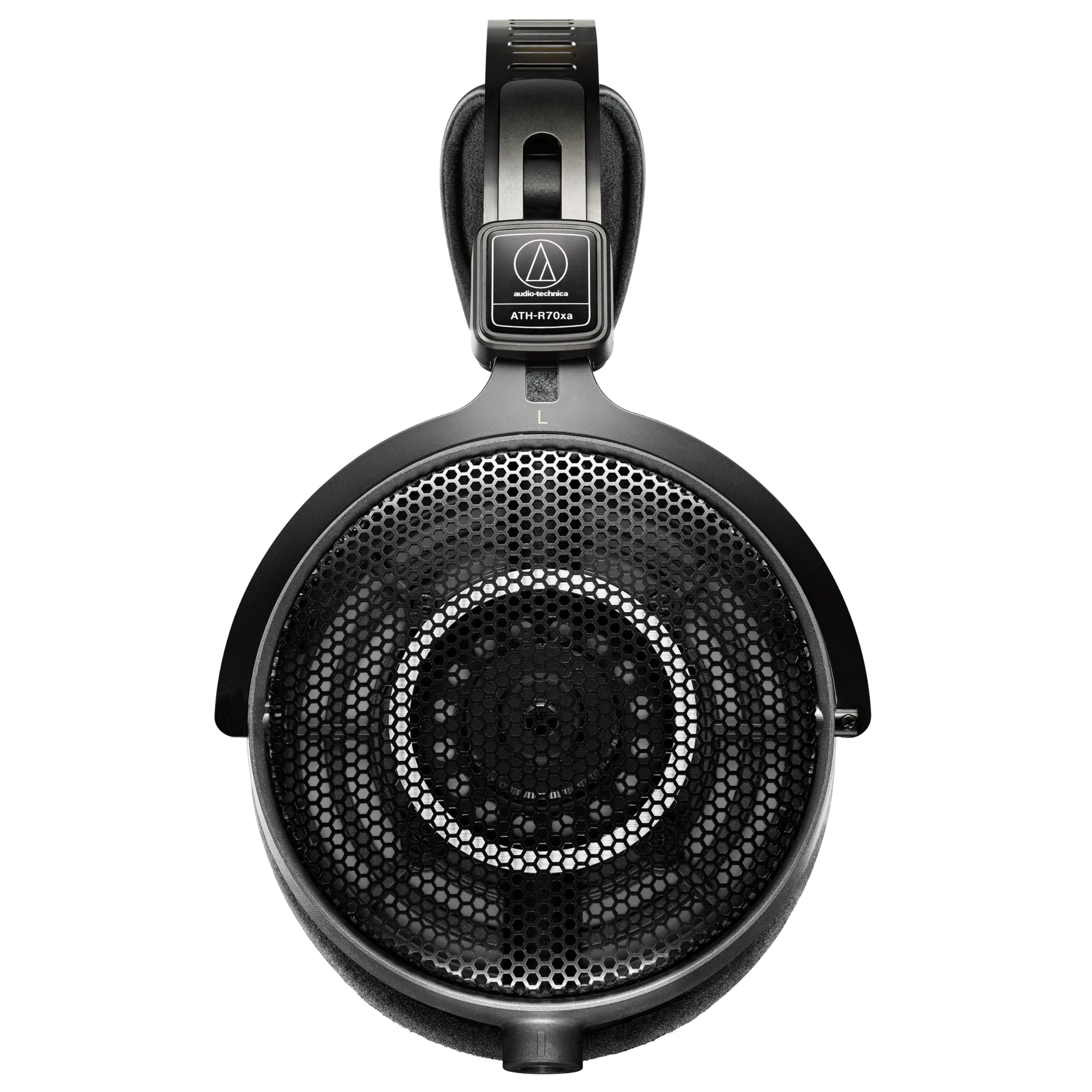
The ATH-R70XA redefines what neutral reference headphones can achieve at this level. Weighing just 199 grams, they are nearly imperceptible during extended sessions, and the carbon composite resin housing improves structural rigidity for cleaner transient response. The fully open-back design eliminates internal resonance, giving you a 5Hz to 40kHz frequency range that feels both extended and controlled.
Imaging here is among the most precise in its segment — instruments occupy distinct positions in a wide, holographic soundstage without sounding artificially spaced. The 45mm dynamic drivers deliver micro-detail like finger movements on guitar strings and subtle breath articulations without ever tipping into harshness. A dedicated amplifier unlocks the full dynamic range, revealing layers of texture that cheaper sources leave buried.
The detachable locking cable with L/R independent signal routing ensures proper stereo orientation, and the velour earpads are replaceable for long-term ownership. Some users note the clamp force is gentle, which can feel insecure during rapid head movement, but for stationary critical listening, this is a transparent window into your music.
Why it’s great
- Extremely lightweight at 199g for fatigue-free sessions
- Exceptional imaging and micro-detail retrieval
- Neutral, transparent tuning with no frequency peakiness
Good to know
- Requires a quality DAC/amp for full performance
- Light clamp may shift during vigorous head movement
2. HIFIMAN Arya Stealth Magnet Version

The Arya Stealth edition brings HIFIMAN’s stealth magnet technology to a planar magnetic chassis that delivers a soundstage rivaling headphones at double its price point. The nanometer-thickness diaphragm combined with asymmetrical ear cups eliminates wave diffraction turbulence, resulting in distortion figures that hover near immeasurable thresholds. Bass extension is authoritative and tight without any bloat, while the treble region sparkles with air and decay.
Class A hybrid tube amplification pairs beautifully with the Arya Stealth, widening an already expansive soundstage and adding a layer of musicality to its otherwise reference-grade resolution. Female vocals and percussion instruments are rendered with a tactile immediacy that reveals the harmonic complexity of recordings. However, the headphones are physically large and require some headroom — the earpads can irritate the jaw area during prolonged side-lying.
Build quality is a mixed bag: the metal headband feels robust, but the plastic housing on the yokes introduces some creaking. The included crystalline copper cable is serviceable but many users upgrade to a balanced XLR termination for improved channel separation. At its typical price point, this represents one of the best entry points into high-end planar sound.
Why it’s great
- Massive, holographic soundstage with precise imaging
- Low distortion from stealth magnet design
- Tight, authoritative bass without bloat
Good to know
- Plastic yokes feel less premium than competitors
- Large cups may cause jaw discomfort during long sessions
3. Focal Clear MG

The Focal Clear MG is a masterclass in dynamic driver engineering, offering a level of punch and immediacy that planar magnetic designs often struggle to match. The M-shaped grille follows the curve of the magnesium speaker driver to improve high-frequency reproduction, while the perforated microfibre earpads extend the soundstage beyond the ear cups. Bass is clean, impactful, and well-defined — not overwhelming, but present with a visceral slam that suits rock, electronic, and orchestral music alike.
Midrange reproduction is where the Clear MG truly shines: vocals are presented with a lifelike presence and texture that makes you feel like the performer is in the room. The treble extends smoothly without peakiness, though some users report a slight emphasis in the upper mids that can fatigue over several hours. Like many high-impedance dynamics, the Clear MG requires a capable amplifier to control the driver excursion — pairing it with a THX Onyx or Chord Mojo unlocks the full transient speed.
Build quality is impeccable, with solid aluminum yokes, real leather on the headband, and microfibre ear pads that remain comfortable across extended listening sessions. The honeycomb grille is both aesthetic and functional, allowing for an even more open sound. At this tier, the Clear MG competes directly with electrostatics in terms of speed while retaining the body that only a dynamic driver can deliver.
Why it’s great
- Excellent transient speed and punch for a dynamic driver
- Lifelike vocal presence with natural timbre
- Premium build with aluminum yoke and leather headband
Good to know
- Needs a quality amp to control driver excursion
- Upper mid emphasis can be fatiguing after hours
4. Sennheiser HD 660S2
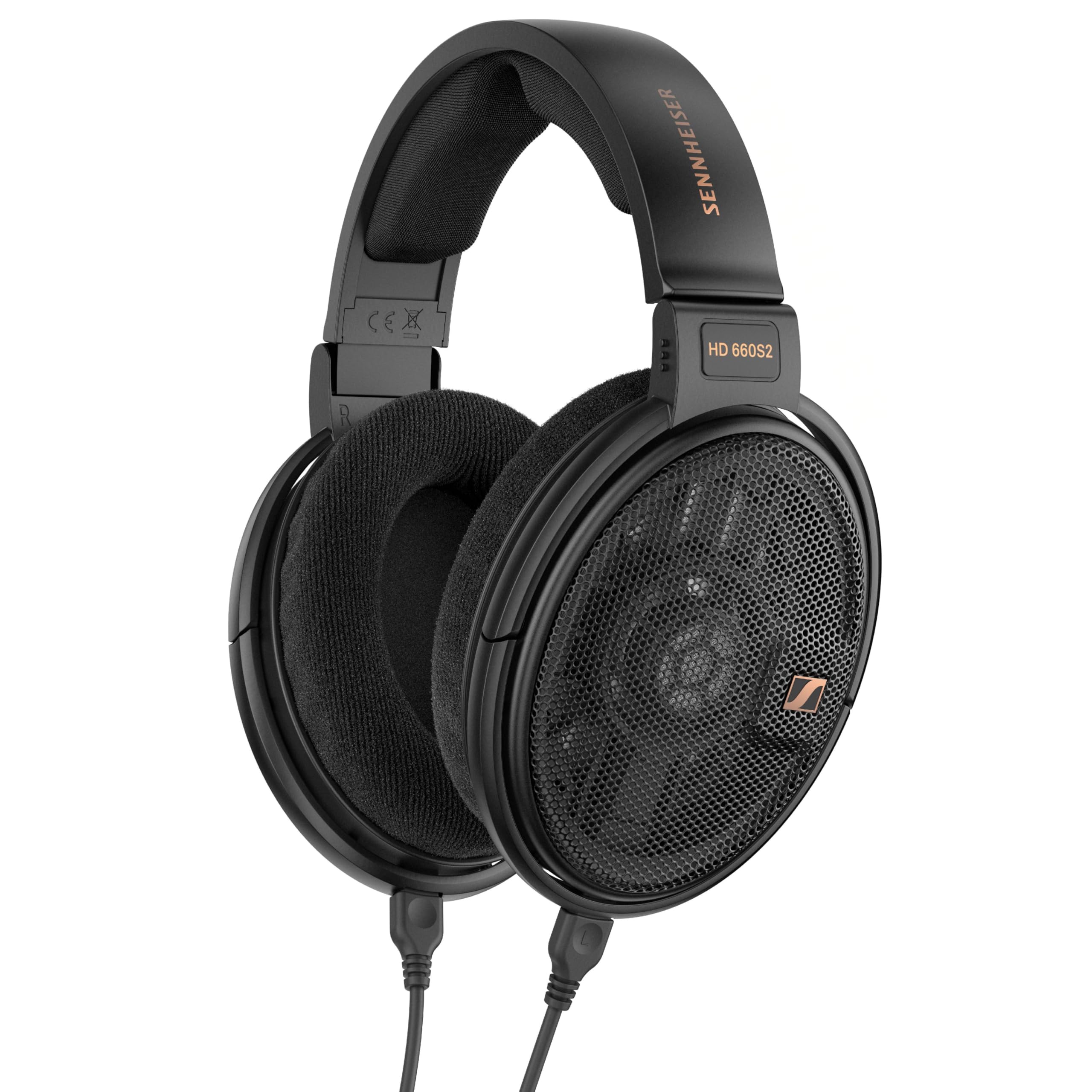
The HD 660S2 builds on Sennheiser’s legendary HD 600 lineage by adding deeper sub-bass extension without sacrificing the intimate, lifelike midrange that made the series famous. The ultra-light aluminum voice coil enables faster transient response, and the 42mm transducers now reproduce piano lows down to 27.5Hz with real clarity. Bass drums in rock recordings hit with a tactile thump that previous generations lacked, while vocals retain their natural, slightly forward presentation.
Soundstage here is more intimate than wide — unlike the HIFIMAN or Focal models, the HD 660S2 creates a centered, close-up listening experience that excels at critical music analysis. The treble region is smooth and non-fatiguing, making these ideal for long mixing sessions or extended enjoyment of vocal-heavy genres. Pairing with a neutral DAC like the Fosi Audio DS2 via the 4.4mm balanced cable tightens the imaging and reduces the noise floor.
Comfort is superb thanks to breathable velour earpads and a lightweight chassis that accommodates glasses wearers without pressure points. The included cables are short and the carrying pouch is minimal, but the overall build quality, crafted in Germany and Ireland, inspires confidence for years of daily use. The HD 660S2 is a refined evolution that fixes the primary criticism of its predecessors while preserving their musical soul.
Why it’s great
- Deeper sub-bass extension without sacrificing midrange clarity
- Smooth, non-fatiguing treble for long sessions
- Excellent build quality from Sennheiser’s German factory
Good to know
- Narrow soundstage compared to open-back competitors
- Stock cables are short and microphonic near the ear cups
5. HIFIMAN Ananda Nano

The Ananda Nano borrows diaphragm technology from the flagship SUSVARA, packing nanometer-thickness film into a planar magnetic design that costs a fraction of its predecessor. The result is a frequency response spanning 5Hz to 55kHz, with transient speeds that make percussive attacks snap into focus. Bass extension is tight and controlled — less boomy than the Edition XS, but with more slam than the Sundara, placing it in a sweet spot for listeners who want planar detail without sacrificing low-end presence.
High sensitivity means the Ananda Nano can be driven by portable audio devices, though a dedicated DAC reveals the full picture: a three-dimensional sound field where instruments occupy precise positions in space. The midrange is upfront and vocal-forward, which can sound slightly honky in the upper mids on some recordings without EQ. A gentle dip around 900Hz to 2000Hz can mute some details, but corrective EQ resolves this entirely.
The window shade grill design reduces sonic reflections, while asymmetrical ear cups follow the natural shape of the human ear. Comfort is improved over the Edition XS due to the hybrid headband strap, though the elastic does stretch over time. The padding on the stock ear cups is adequate but upgrading to memory foam variants improves long-session comfort considerably.
Why it’s great
- Exceptional transient speed from nanometer diaphragm
- High sensitivity works with portable devices
- Wide soundstage with precise instrument positioning
Good to know
- Upper mids can sound slightly honky without EQ
- Elastic headband stretches over time, affecting fit
6. MEZE AUDIO 109 PRO

The MEZE 109 PRO is as much a visual statement as it is an audio instrument, with genuine walnut wood earcups that give each unit a unique grain pattern. The 50mm dynamic drivers are tuned to deliver a warm, musical presentation that prioritizes emotional engagement over clinical accuracy. Low impedance at 40 ohms means these can be driven beautifully by smartphones, laptops, or portable DACs without any amplifier fuss — a rare convenience in the high-end open-back market.
Soundstage is wide and airy, with particularly strong performance on classical and orchestral recordings where the natural decay of string instruments is rendered with realistic body. The bass is punchy and satisfying for an open-back design, though it lacks the sub-bass extension of planar competitors. Treble is detailed but smooth, making these non-fatiguing for all-day wear. Some users note that the included cables are mislabeled for left and right channels, so double-check orientation upon arrival.
Build quality is outstanding: the self-adjusting headband distributes pressure evenly across the skull, and every component — from the ear cups to the driver — is replaceable. The hard EVA carrying pouch provides adequate protection, and the two included cables (1.5m and 3m TPE OFC) cover desktop and portable use. If you value craftsmanship and want an amplifier-free high-end experience, the 109 PRO delivers character in spades.
Why it’s great
- Low impedance (40 ohms) works without external amplification
- Beautiful walnut wood construction, each pair unique
- Warm, musical tuning ideal for classical and acoustic
Good to know
- Cables may have reversed L/R channel markings
- Sub-bass extension is limited compared to planar magnetics
7. beyerdynamic DT 1770 PRO MKII
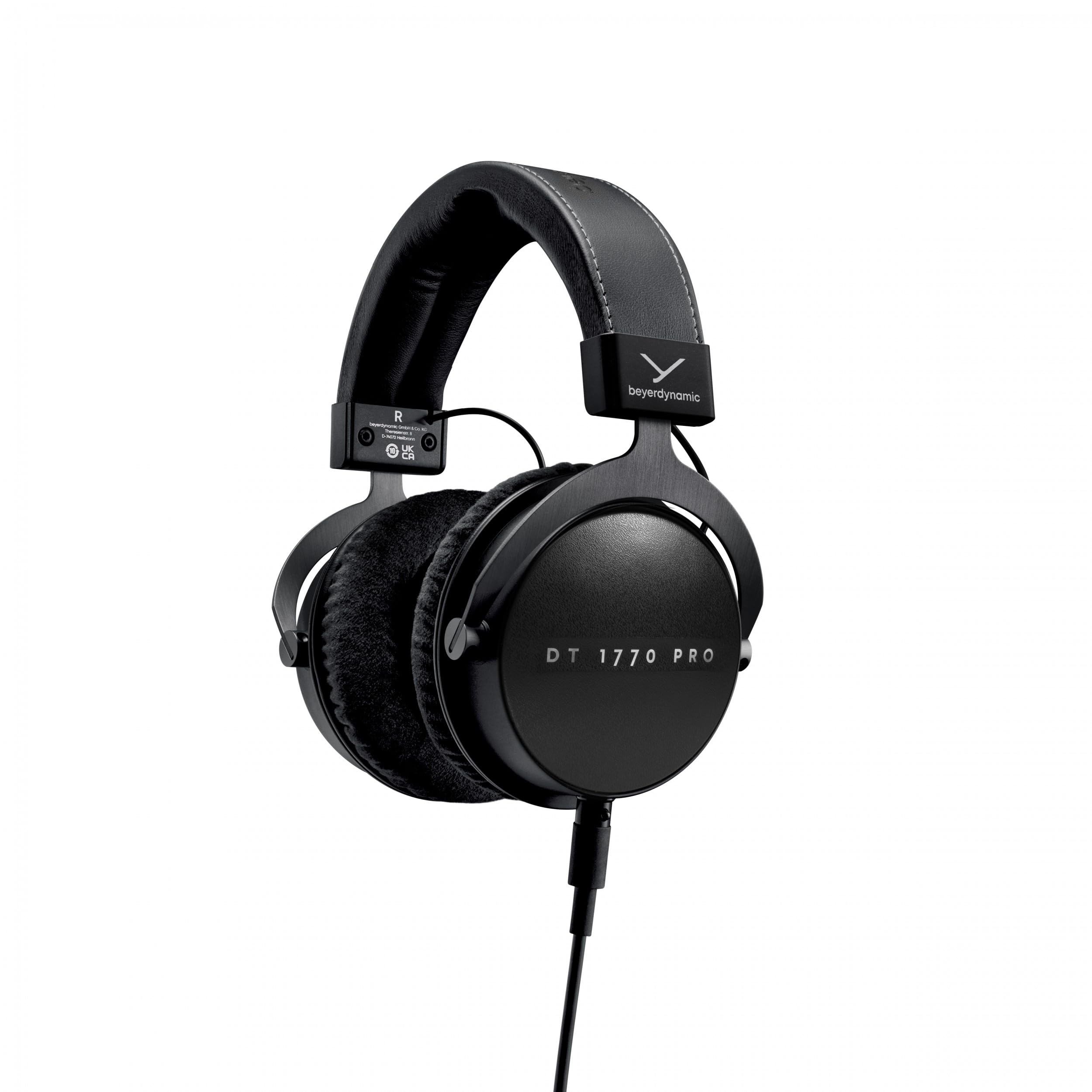
The DT 1770 PRO MKII represents the pinnacle of closed-back studio monitoring from beyerdynamic, featuring the new TESLA.45 driver technology that delivers unmatched detail retrieval while maintaining the hallmark neutrality of the DT series. The closed-back design provides superb isolation, making these ideal for tracking sessions, mixing in untreated rooms, or for audiophiles who need to listen without disturbing others.
Sound signature is balanced and neutral — it adds nothing and subtracts nothing from the source. Bass is clean and deep without being overwhelming, while the treble region is airier and more extended than the previous DT 700 Pro X. The interchangeable ear pads (velour for comfort, leatherette for maximum isolation) allow you to tune both the sound profile and physical feel. At 30 ohms impedance, these are easy to drive from audio interfaces and portable gear.
Build quality is absolutely industrial: metal construction throughout, with replaceable mini-XLR cables that come in straight (3m) and coiled (5m) variants. The hard carrying case is included and feels premium. Some users have reported unit variance with distortion at high volumes, so ensure you test within the return window. For recording engineers or anyone requiring a closed-back reference, this is a bulletproof investment.
Why it’s great
- Superb isolation for critical studio monitoring
- Balanced, neutral sound with excellent detail retrieval
- Replaceable components designed for lifelong use
Good to know
- Some units may exhibit distortion at high volume
- Stock velour pads may feel warm over extended sessions
8. Audio-Technica ATH-AD900X
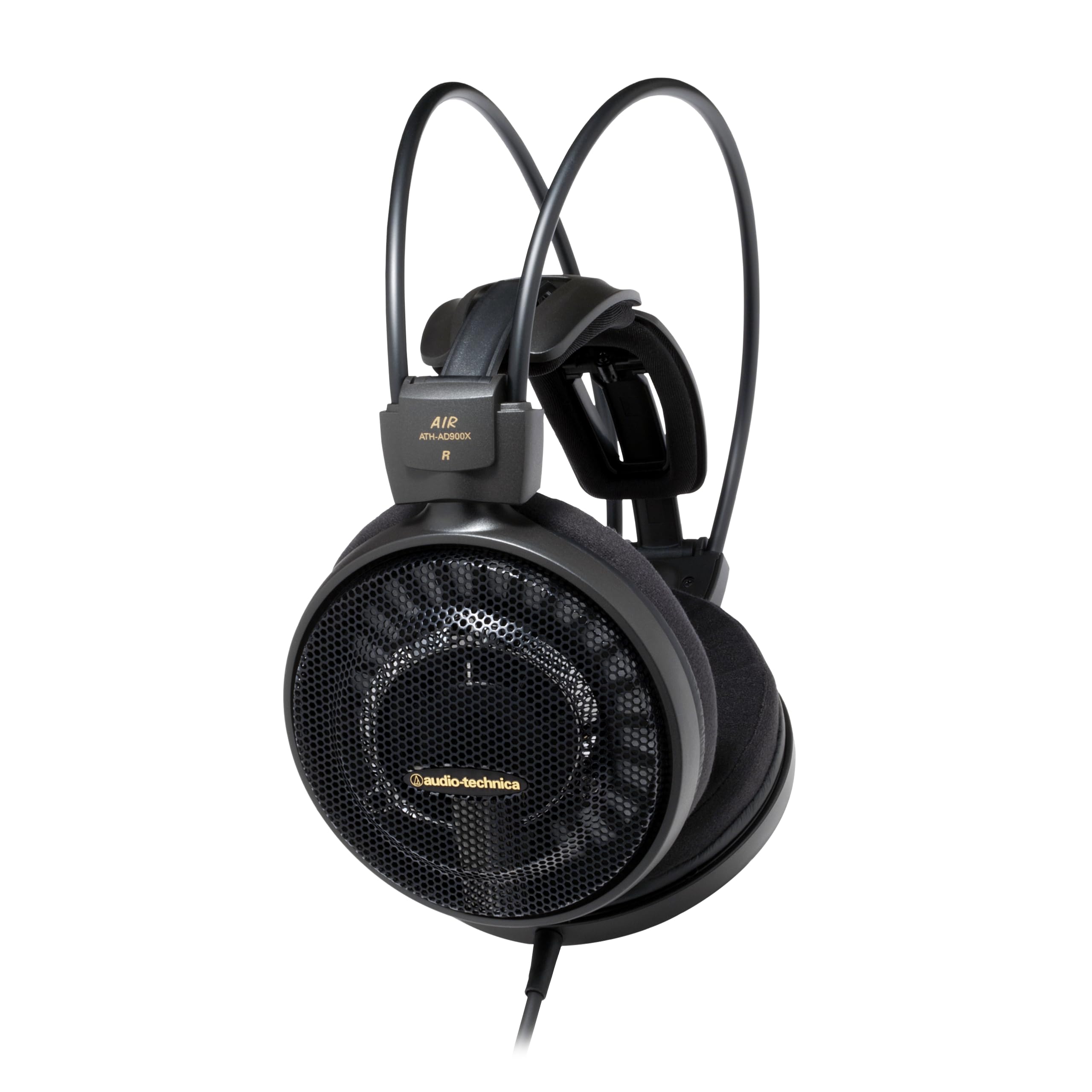
The ATH-AD900X is the gateway drug into open-back audiophile listening, offering a 53mm driver with CCAW voice coils that deliver exceptional clarity for the price point. The signature 3D wing support system eliminates traditional headband pressure, creating a floating sensation that encourages all-day wear. The result is a sound that prioritizes midrange and treble detail — vocals and acoustic instruments sound open, airy, and naturally textured.
Soundstage width is impressive for an entry-level headphone, with good spatial separation that makes gaming and classical music particularly enjoyable. However, the bass is lean and lacks sub-bass extension — these are not for bassheads or electronic music enthusiasts. The fit relies on gravity rather than clamp force, which means they can shift off your head during sudden movements, but for stationary listening, the comfort is unmatched in this bracket.
The non-replaceable 10-foot cable is a mixed blessing: great length for desktop use but inconvenient for portable setups. The ear pads are plush velour, though the cups are not deep enough for all ear shapes. Despite these quirks, the AD900X remains a benchmark for neutral, detailed sound at an accessible price point, especially for those building their first critical listening rig.
Why it’s great
- Excellent midrange and treble detail for acoustic music
- Unique 3D wing support provides exceptional comfort
- Wide soundstage competitive with higher-priced open-backs
Good to know
- Bass is lean with limited sub-bass extension
- Non-replaceable cable limits longevity
9. AKG K812PRO

The K812PRO sits at the top of AKG’s reference line with a massive 53mm transducer powered by a 1.5 Tesla magnet system — the strongest in its class. This creates imaging so precise that it borders on holographic: you can pinpoint the exact position of each instrument in a mix, making it an invaluable tool for mastering engineers and critical listeners. The frequency response stretches from 5Hz to 54kHz, covering ultrasonic overtones that contribute to spatial realism.
Soundstage is wide and intimate — chamber music and acoustic vocals feel like the performer is in your room, while orchestral works have the depth of a small concert hall. The low end is well-extended but not emphasized; the K812PRO is ruthlessly revealing, especially in the treble region. Some users find the upper frequencies too bright for prolonged listening, requiring EQ correction via software like Sonarworks to smooth out the peaks. This headphone demands high-resolution sources — compressed files expose every bit of distortion and noise.
Comfort is exceptional thanks to the over-ear design with leather ear cups and a self-adjusting headband. The included premium headphone stand and 3m detachable cable add value, though the flat cable can be prone to microphonics. If your budget allows for one headphone that does not hide flaws, the K812PRO will reveal your entire signal chain’s true character.
Why it’s great
- Unrivaled imaging precision with 1.5T magnet system
- Wide frequency response covering ultrasonic range
- Incredibly comfortable for all-day wearing
Good to know
- Bright treble can cause listening fatigue without EQ
- Exposes flaws in lower-quality recordings and sources
FAQ
What amplifier power do I need for 300 ohm headphones like the Sennheiser HD 660S2?
Do planar magnetic headphones need more power than dynamic drivers?
Can I use open-back audiophile headphones for gaming?
Final Thoughts: The Verdict
For most users, the best audiophile headphones winner is the Audio-Technica ATH-R70XA because it combines the lightest weight in its class with a neutral, transparent sound that scales beautifully with better amplification. If you want the expansive, holographic soundstage of planar magnetics, grab the HIFIMAN Arya Stealth. And for punchy, dynamic delivery with a premium build made in France, nothing beats the Focal Clear MG.

Mo Maruf
I created WellFizz to bridge the gap between vague wellness advice and actionable solutions. My mission is simple: to decode the research and give you practical tools you can actually use.
Beyond the data, I am a passionate traveler. I believe that stepping away from the screen to explore new environments is essential for mental clarity and physical vitality.