Our readers keep the lights on and my smoothie glass nicely filled. As an Amazon Associate, I earn from qualifying purchases.
Black diamonds break every rule you think you know about engagement rings. While traditional white stones are graded on their ability to refract light into a colorless spectrum, black diamonds absorb that spectrum entirely, creating a visual anchor that feels both primal and modern. The buyers I speak with aren’t compromising — they’re walking away from a century of marketing pressure to pick something that reflects their actual taste rather than tradition’s default.
I’m Mohammad Maruf — the founder and writer behind WellFizz. I’ve spent the better part of a decade analyzing the fine jewelry market on Amazon, cross-referencing IGI certification data, metal purity claims, and thousands of customer durability reports to separate genuine construction quality from marketing polish.
The stone alone isn’t enough — the setting metal, prong structure, shank width, and carat-to-band ratio determine whether a ring holds up for decades or damages the stone within months. After analyzing eleven top contenders, here is the definitive guide to finding the best black diamond engagement rings for a lifetime of daily wear.
How To Choose The Best Black Diamond Engagement Rings
Black diamonds are not an alternative to white diamonds — they are a different category with a different set of considerations. The buyer must evaluate three core elements in sequence: stone integrity, setting security, and metal durability. Most returns and complaints in this category come from ignoring the relationship between these three factors.
Stone Integrity — Natural vs. Lab-Grown and Color Consistency
Natural black diamonds achieve their color through dense graphite and hematite inclusions. This makes them tougher — less likely to chip during setting — but the color can be uneven, showing patches of gray or brown in certain light angles. Lab-grown black diamonds offer consistent, deep, saturated color throughout the stone at a lower price point, but may require thicker prongs to avoid edge chipping in a four-prong setting. Always request a stone photo in multiple light angles before purchasing.
Setting Security — Prong Count and Shank Width
Black diamonds have lower brilliance than white stones, meaning your eye focuses on the shape of the gem itself rather than its refraction. This makes prong visibility critical. Four-prong settings expose more of the stone but concentrate stress on four points; six-prong settings distribute pressure more evenly and are safer for daily wear. The shank width should be at least 1.8mm for diamonds under 1.5 carats and 2.0mm or wider for larger stones. Narrower shanks (common in budget rings) flex under the weight of a larger diamond, eventually bending prongs and risking stone loss.
Metal Durability — Gold Karat vs. Platinum
14K gold is the standard for daily-wear engagement rings because it balances hardness with malleability — the alloy resists scratching while allowing resizing. 18K gold is softer and more prone to prong wear over decades. Platinum is denser and heavier, holding stones more securely, but it scratches more easily than 14K gold (though none of the metal is actually lost in platinum scratches — it merely displaces). For black diamonds, a platinum or 14K white gold setting provides the best visual contrast against the dark stone, while yellow or rose gold creates a warmer, vintage-inspired look.
Quick Comparison
On smaller screens, swipe sideways to see the full table.
| Model | Category | Best For | Key Spec | Amazon |
|---|---|---|---|---|
| Houston Diamond District Oval IGI Certified | Lab-Grown Solitaire | Certification certainty + daily wear | IGI Certified, E-F VS1-VS2 | Amazon |
| Houston Diamond District Round Solitaire AAA | Natural Black Diamond | Bold centerpiece with natural stone | 0.5-10 Carat AAA Natural | Amazon |
| ARAIA Lab Grown Three-Stone | Lab-Grown Three-Stone | Maximum sparkle with side stones | D-E Color, VS Clarity | Amazon |
| Gem And Harmony Black Set | Natural Diamond Set | Complete bridal set on a budget | 1.39ctw Set, 10K White Gold | Amazon |
| Houston Diamond District Twisting Infinity | Designer Split Shank | Split shank pavé design | I-J I2 Round Center | Amazon |
| Diamond Domain Twisted Lab Grown | Lab-Grown Twisted | Twisted band with heirloom feel | F-G VS1-VS2, IGI Certified | Amazon |
| Houston Diamond District 3 Stone Lab Grown | Premium Three-Stone | High-color three-stone in white gold | D-E VS1-VS2, 14K White Gold | Amazon |
| Gem Stone King Solitaire Two-Tone | Two-Tone Solitaire | Two-tone aesthetic with D-E color | D-E VS1-VS2, 14K Two-Tone | Amazon |
| Houston Diamond District Vintage Oval | Vintage Lab-Grown | Vintage design with high sparkle | D-E VS1-VS2, Oval Cut | Amazon |
| Houston Diamond District Round Prong | Classic Solitaire | Classic prong solitaire, premium build | E-F VS1-VS2, 1-6 Carat | Amazon |
| Houston Diamond District 4-Prong IGI | Value IGI Certified | IGI certification at lower clarity | E-F VS2-SI1, 14K White Gold | Amazon |
In‑Depth Reviews
1. Houston Diamond District Oval Lab Grown Solitaire (IGI Certified)
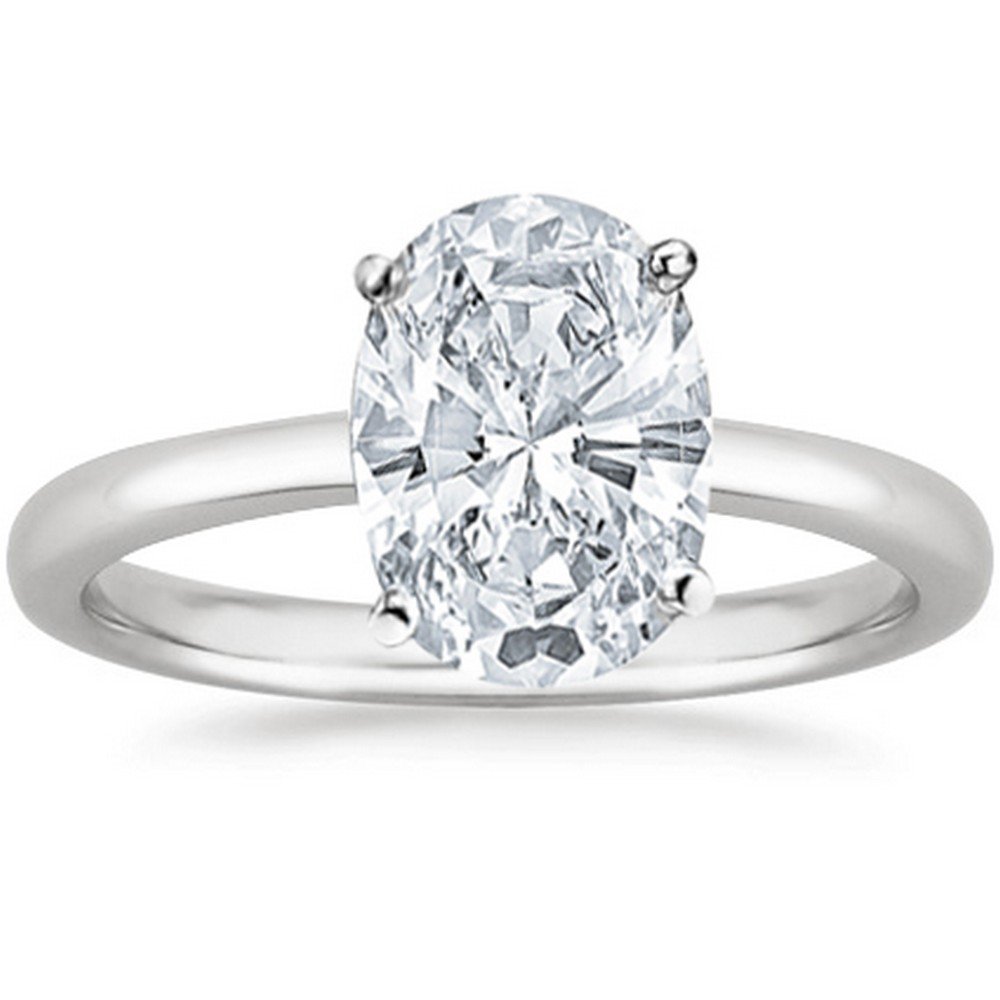
The oval cut is the fastest-growing silhouette in engagement rings right now, and Houston Diamond District delivers it with IGI certification — meaning the diamond’s origin, color grade (E-F), and clarity (VS1-VS2) are independently verified before it reaches your finger. Buyers consistently report that the ring appears significantly more expensive than its price tier suggests, with multiple reviewers noting that local jewelers appraised it well above purchase cost. The platinum band in this configuration is particularly well-regarded for its weight and feel.
Daily wear durability is strong across the board, with one reviewer reporting a year of continuous use without any visible wear on the prongs or band. The infinity-style band on some configurations adds visual interest without sacrificing metal thickness — a common failure point on cheaper rings where decorative etching thins the shank. The included certification also means insurance appraisal is straightforward, saving a – step that independent jewelers typically charge.
The single potential vulnerability is the four-prong setting on larger carat weights above 3 carats. One customer reported the stone falling out within days, citing a flimsy setting. While this appears to be an outlier based on the volume of satisfied buyers, it reinforces the rule: for stones over 3 carats, request a six-prong configuration or a thicker basket setting to distribute stress across more contact points.
Why it’s great
- IGI certification provides verifiable diamond origin and quality for insurance purposes
- Oval cut appears larger than equivalent round carat weight by approximately 10-15%
- Platinum band option offers superior long-term prong security over gold
Good to know
- Four-prong setting may be insufficient for stones exceeding 3 carats
- Several customers noted the band runs slightly narrower than expected for larger stone weights
2. Houston Diamond District Round Natural Black Diamond Solitaire (AAA Quality)
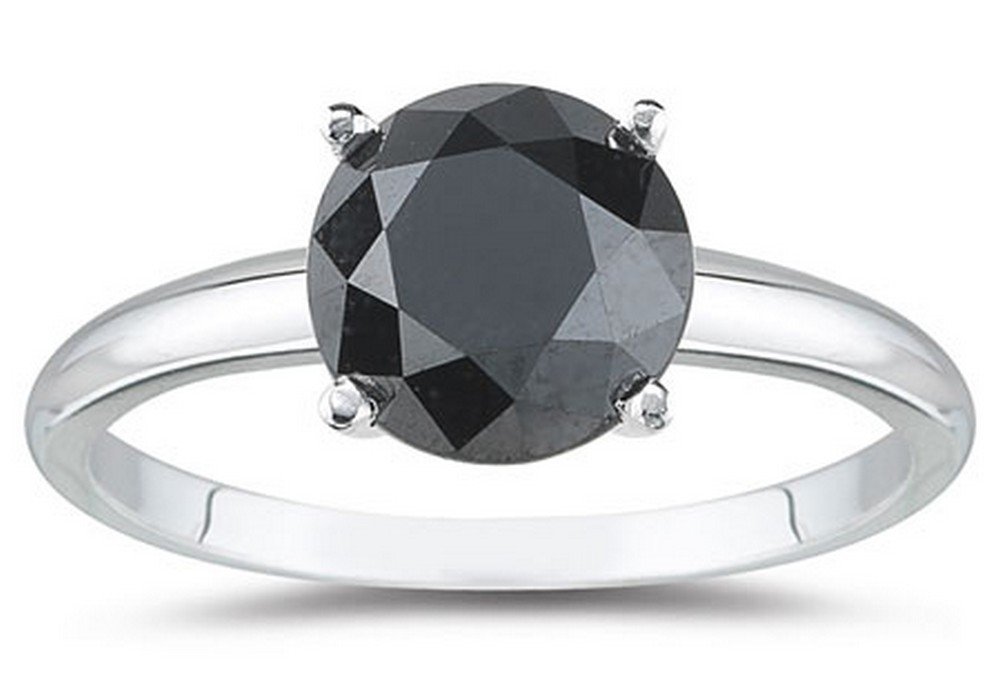
This is the natural black diamond option — not a treated or irradiated stone, but a diamond that achieved its black color through high-density graphite inclusions during formation. The AAA quality grade indicates consistent color distribution across the stone with minimal visible gray banding, a common issue in budget natural black diamonds. Buyers consistently mention that the stone photographs darker and richer than standard product images, which is typical for natural black diamonds that absorb most ambient light.
One of the most practical features here is the carat range spanning from 0.5 to 10 carats, giving buyers the ability to select a size that matches their finger proportion and budget without switching product families. Multiple reviewers who bought 2-carat versions wished they had gone larger, which is a common pattern in black diamonds — because the stone absorbs rather than reflects light, larger carat weights feel less visually overwhelming than an equivalent white diamond of the same size.
The band is notably narrow in the standard configuration, with several buyers advising a wider wedding band to balance the visual weight. This is less of a durability concern and more of an aesthetic one — a narrow band paired with a large black stone can look top-heavy. If you are selecting a 3-carat or larger stone, consider pairing this with a 3mm or wider gold band to create a visually balanced silhouette.
Why it’s great
- Natural AAA-grade black diamond offers deep consistent color without treatment
- Wide carat range from 0.5 to 10 allows precise size selection by hand proportion
- Fast shipping reported consistently — multiple reviewers received orders in under 72 hours
Good to know
- Standard band is narrow and may benefit from a wider wedding band or enhancer
- No independent gemological certification included — buyers should verify stone quality separately
3. Houston Diamond District 3 Stone Lab Grown (D-E VS1-VS2)

The three-stone configuration has psychological advantages beyond aesthetics — the center stone is flanked by two smaller diamonds that catch light from different angles, creating the illusion of continuous sparkle even when the hand is stationary. This is particularly smart for black diamond buyers because black stones lack the internal refraction of white diamonds; the side stones compensate by providing the sparkle the center stone absorbs. The D-E color grade and VS1-VS2 clarity on the side stones ensures this compensation works at maximum brightness.
Buyers at the premium tier consistently praise the 14K white gold setting for its bright, cool-toned contrast against the lab-grown diamond center stone. Several reviewers note that the ring tested as genuine diamond at independent jewelers, and the IGI certification appeared in standard formats accepted by insurance companies. One review from a buyer who compared this against retail store pricing reported saving over compared to a similar specification ring from a chain jeweler.
The main point of caution is sizing consistency across duplicate rings — one buyer who ordered two identical rings for a stacking effect found they were sized differently, preventing them from being worn together. This appears to be a quality control variation rather than a structural flaw, but it reinforces the importance of verifying ring size immediately upon delivery, especially if you plan to stack the engagement ring with a wedding band from the same collection.
Why it’s great
- Three-stone configuration delivers sparkle that a single black diamond solitaire cannot provide on its own
- D-E color side stones create bright contrast against the center stone
- Buyers report savings of several thousand dollars versus equivalent retail store pricing
Good to know
- Sizing consistency between multiple rings from the same line may vary slightly
- Some buyers noted the ring required professional cleaning to achieve maximum sparkle after shipping residue was removed
4. Houston Diamond District Oval Vintage Lab Grown (D-E VS1-VS2)
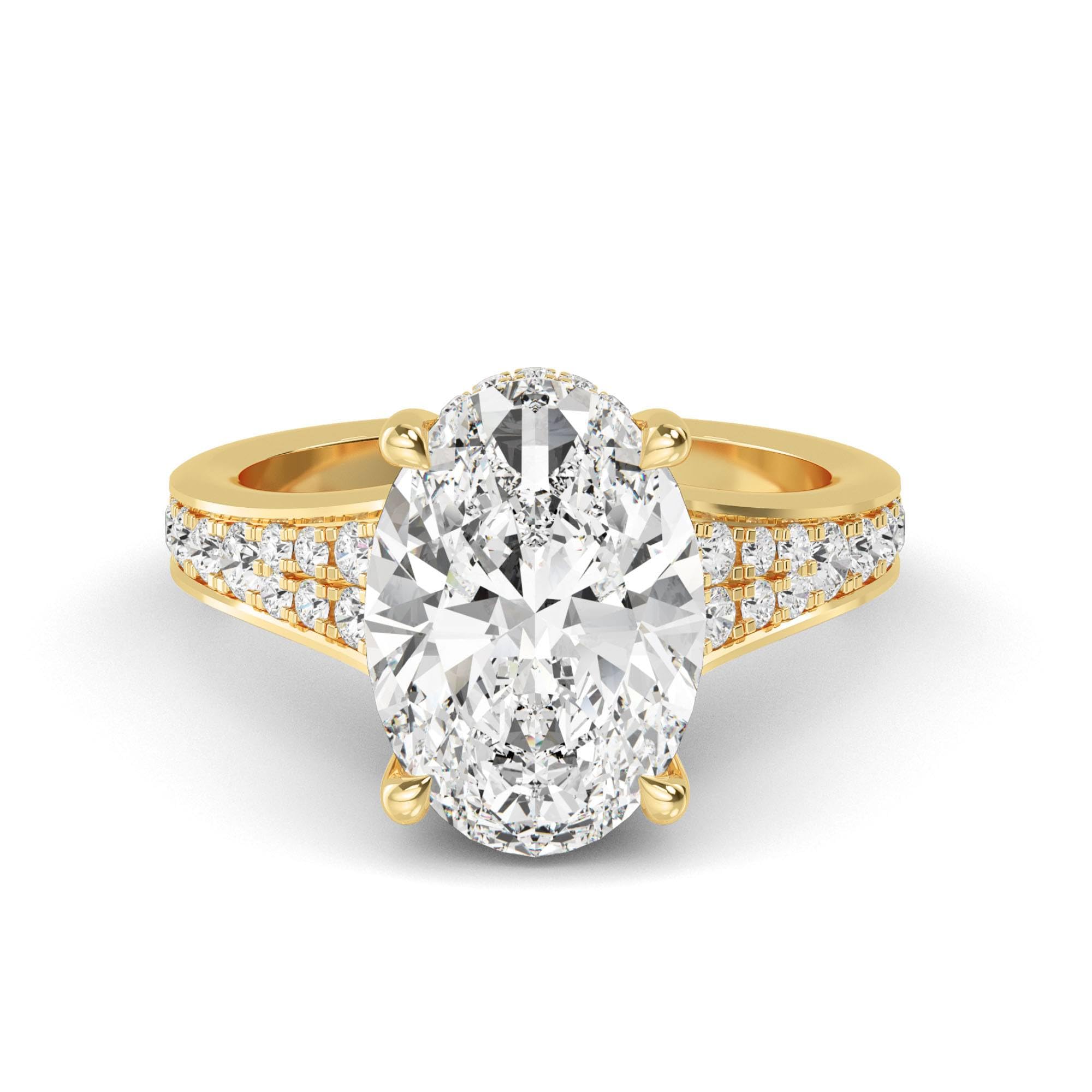
The vintage design language on this oval cut ring uses milgrain detailing and filigree-style band work that creates a softer, more romantic aesthetic than the stark modern solitaire. For buyers who want a black diamond but prefer an antique-inspired silhouette, this bridges that gap effectively. The D-E color grade on the lab-grown center stone is the highest available, meaning the stone will appear clean and bright even under direct sunlight where lower-grade diamonds can show yellow or brown undertones.
One reviewer who owns multiple diamond types — including natural diamond, moissanite, and cubic zirconia — rated this ring as the sparkliest of their collection, which is an impressive claim for a lab-grown stone. The feminine, delicate band design received consistent praise, with multiple buyers commenting that the ring photograph better than the product listing images suggested. Shipping time was reported as fast across the board, with several orders arriving in under three days.
The vintage setting uses thinner metal in some decorative sections, which is inherent to the style but worth noting for buyers who prioritize maximum structural beefiness. This ring is best suited for someone who will handle it with daily care rather than heavy manual labor. The extra shipping option for expedited delivery received mixed reviews on value, with some buyers feeling it was unnecessary given the standard shipping speed.
Why it’s great
- Vintage milgrain detailing offers a distinct aesthetic that stands out from modern solitaire designs
- D-E color grade represents the top tier for lab-grown diamond clarity and brightness
- Buyers with experience across multiple diamond types rated this as the highest sparkle in their collection
Good to know
- Vintage filigree sections use slightly thinner metal, requiring more careful daily handling
- Expedited shipping add-on received mixed feedback on value relative to already-fast standard delivery
5. Gem Stone King Lab Grown Solitaire Two-Tone (D-E VS1-VS2)
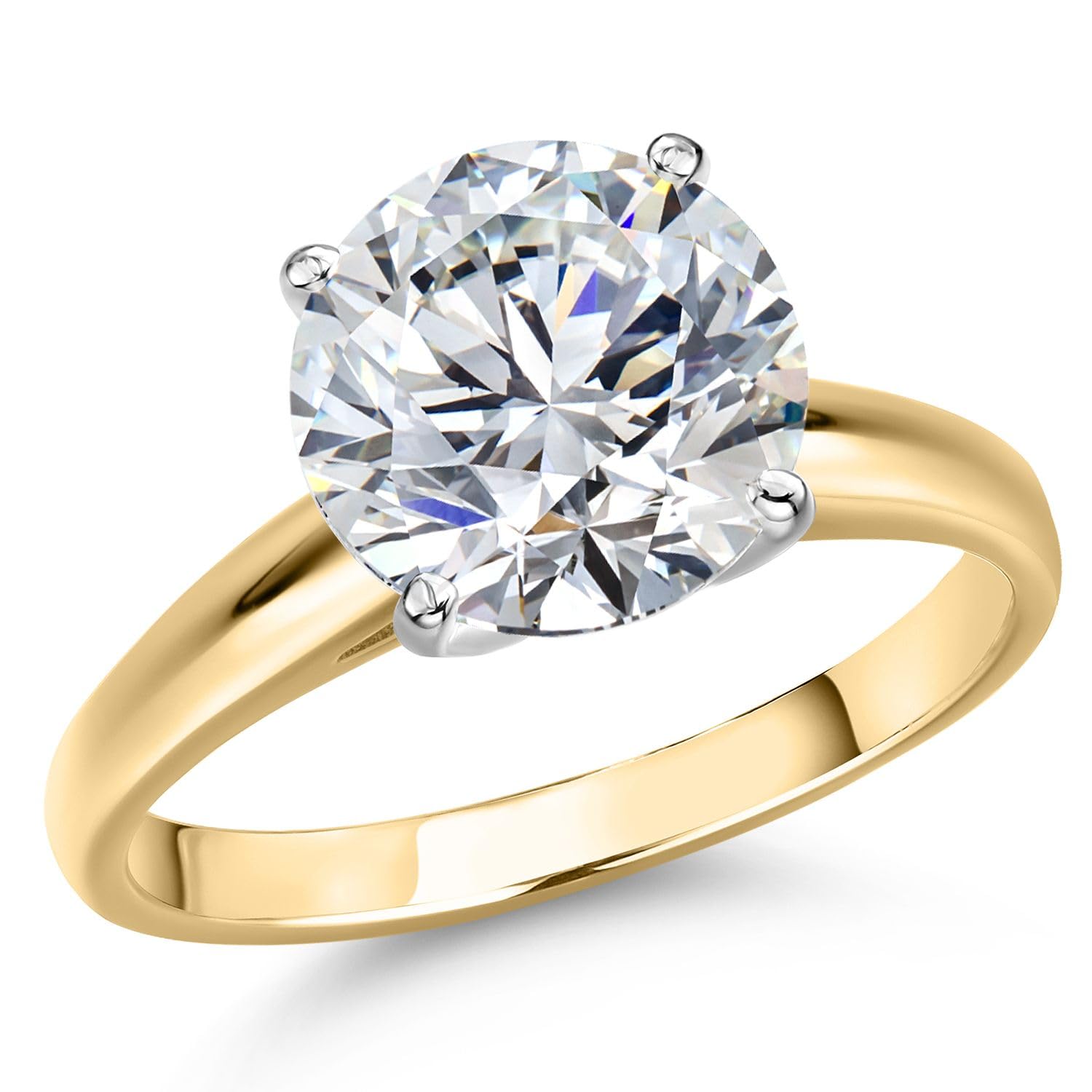
The two-tone configuration — yellow gold band with a white gold setting head — solves a specific problem that many buyers don’t anticipate until after purchase: a white gold setting makes the diamond appear brighter by contrast, but a yellow gold band is warmer on the skin and more resistant to rhodium plating wear. By combining both, Gem Stone King delivers the best of both worlds without forcing a compromise. The D-E color and VS1-VS2 clarity are consistent with premium lab-grown specifications, and the two-tone look works particularly well with black diamonds, where the dark stone needs maximum contrast from the setting metal.
Buyer reviews are overwhelmingly positive, with multiple customers noting that the ring tested as genuine diamond at local jewelers and that the company was responsive during the return and exchange process. One customer returned their original ring to purchase a larger stone directly from the manufacturer’s website and reported a smooth transaction, suggesting good internal coordination between the Amazon storefront and the parent company’s direct sales channel.
The stone shape options in this listing are broader than most competitors, including oval, round, pear, cushion, and emerald cuts within the same product family. This flexibility allows buyers to choose the silhouette that best flatters their finger shape without switching to a different listing with potentially different quality standards. The packaging was also noted as secure and gift-ready, which simplifies the proposal logistics.
Why it’s great
- Two-tone gold construction provides both brightness contrast around the stone and warm skin tone on the band
- Multiple cut shapes available within the same product family enables finger-specific silhouette selection
- Smooth return and exchange process reported by multiple buyers who upgraded their stone size
Good to know
- The two-tone look is less traditional and may not appeal to buyers seeking a classic uniform-metal appearance
- Yellow gold band requires periodic polishing to maintain the contrast between the two metal colors
6. Diamond Domain Twisted Lab Grown Diamond Ring (F-G VS1-VS2)
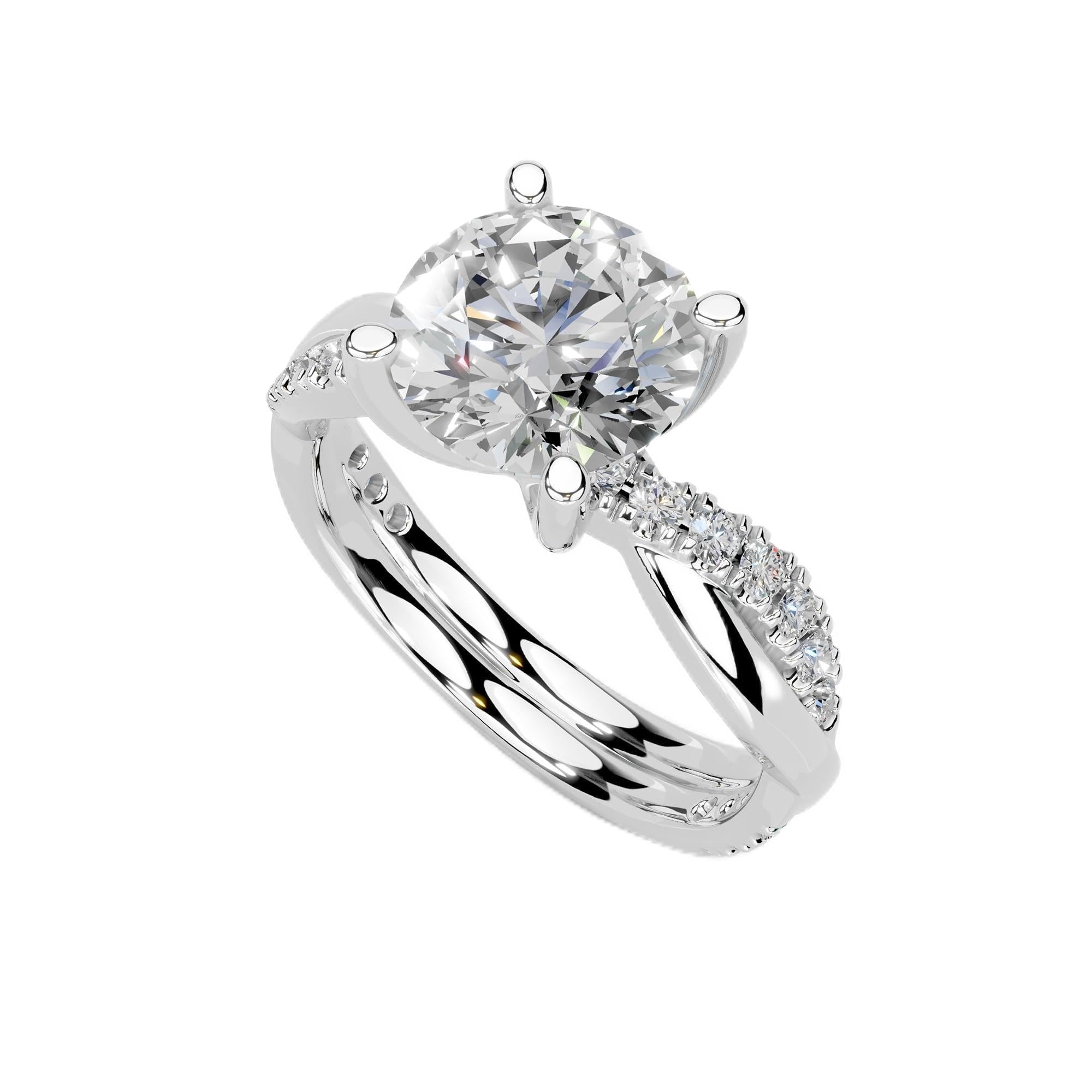
The twisted shank design is one of the most requested styles in engagement rings right now, and Diamond Domain executes it with proper metal thickness — the twist is structural rather than purely decorative, maintaining at least 1.8mm of width throughout the spiral. The F-G color grade is one step below the D-E premium tier but still appears colorless to the naked eye in most lighting conditions, making this a smart compromise for buyers who want the twisted aesthetic without paying the premium-tier markup. The VS1-VS2 clarity ensures inclusions are invisible without magnification.
Buyer reviews consistently praise the ring’s substantial weight and durable feel, with one jeweler-testing the diamond and confirming it was genuine. The company’s customer service was specifically noted for handling a size exchange quickly, which is critical for a purchase that needs to arrive before a planned proposal date. One reviewer who described themselves as a “very particular shopper” was impressed enough to write a detailed positive review, which is a strong signal in a category where buyers tend to be hypercritical.
The silver or rhodium-plated settings may require periodic replating to maintain the bright white appearance against the lab-grown diamond. This is standard for any white gold ring but is worth budgeting for — typically – every 18–24 months depending on wear patterns. The requirement for FedEx signature on delivery was reported as an inconvenience by some buyers, though it is standard practice for jewelry shipments over a certain value to prevent theft.
Why it’s great
- Twisted shank maintains structural metal thickness of at least 1.8mm despite decorative spiral design
- F-G color provides near-colorless appearance at a lower price point than D-E premium stones
- Multiple buyers confirmed the diamond tested as genuine at independent jeweler evaluations
Good to know
- Rhodium-plated settings require periodic replating to maintain optimal white color
- FedEx signature requirement may be inconvenient for buyers with daytime package delivery access
7. Houston Diamond District Twisting Infinity Split Shank Pavé

The split shank with pavé-set side diamonds creates a visual effect that reads as significantly more expensive than a standard solitaire — the eye processes two separate streams of diamond light converging at the center stone, which creates perceived complexity. This is a particularly effective strategy with black diamonds because the pavé diamonds provide the sparkle that the black center stone absorbs, giving the overall ring a more balanced light profile. The I-J color grade on the center stone is a warm white that complements the rose gold option particularly well.
Buyer reactions to this ring are emotional rather than analytical — multiple reviewers reported bringing family members to tears when they saw the ring, which is the highest possible signal that the ring delivers beyond expectations. The rose gold configuration was specifically praised for its warm tone against the diamond’s sparkle. One buyer who purchased the ring as a gift for their daughter noted that it was “absolutely beautiful” and that fast shipping was a major convenience for the planned proposal timeline.
The split shank design does mean the ring has a wider surface area on the finger compared to a standard solitaire, which can cause the ring to feel snug if sized too tightly. If you have larger knuckles relative to your finger base, consider ordering a quarter size up to account for the increased lateral width of the split shank. The pavé-set diamonds also require ultrasonic cleaning to maintain maximum sparkle — soap and water alone will leave residue between the micro-set stones.
Why it’s great
- Split shank with pavé diamonds creates a designer-level visual complexity at a mid-range price
- Rose gold configuration received particularly emotional responses from customers who saw it in person
- Pavé side stones compensate for the black center stone’s lack of internal sparkle, creating balanced light return
Good to know
- Wider split shank profile may require sizing up by a quarter to accommodate lateral finger width
- Pavé diamonds require ultrasonic cleaning to prevent residue buildup between micro-set stones
8. ARAIYA Lab Grown Three-Stone (D-E Color, VS Clarity)
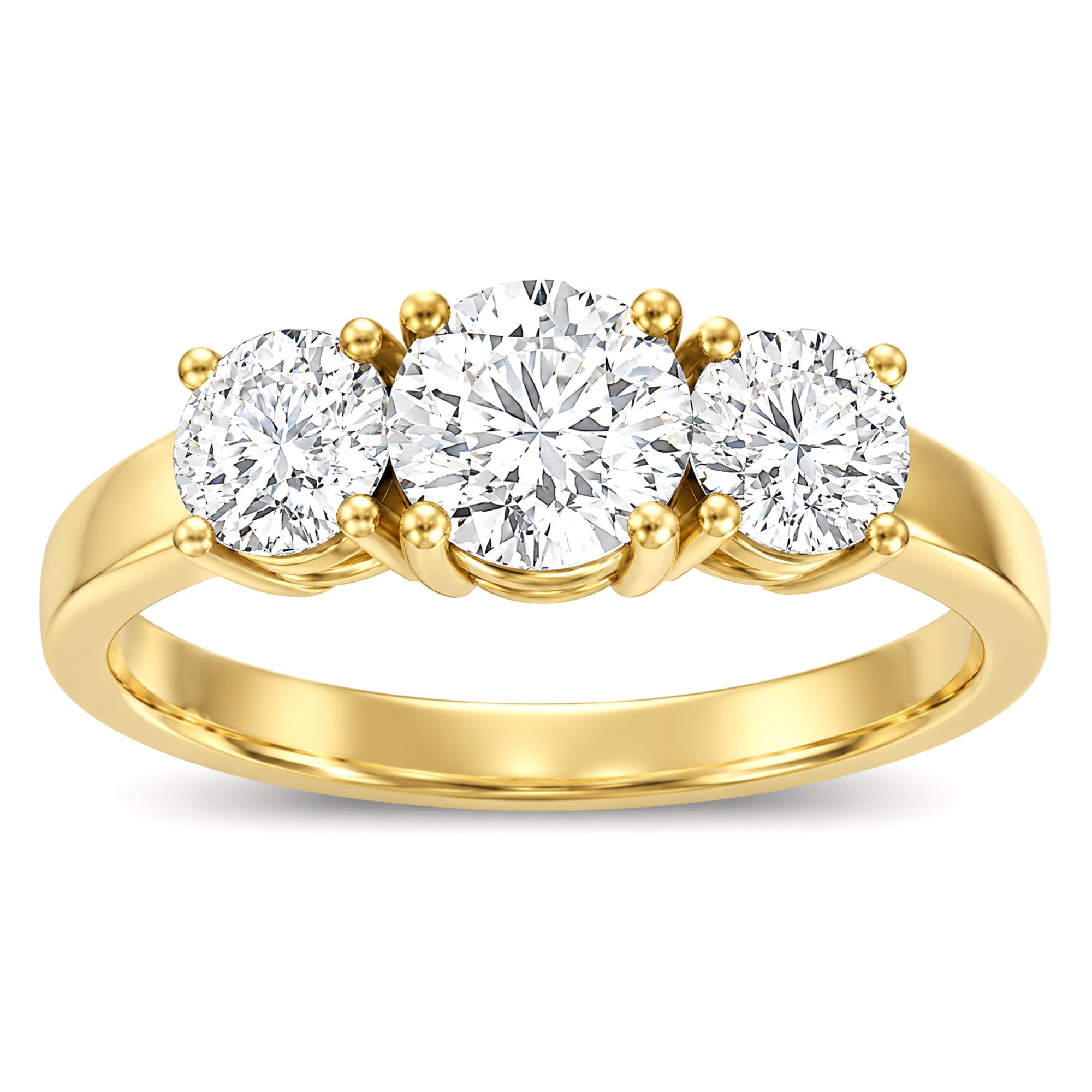
ARAIYA’s three-stone ring uses D-E color grade diamonds across all three stones, ensuring that the smaller side stones don’t appear yellow next to the center stone — a common visual flaw in three-stone rings where the side stones are graded at a lower color tier to reduce cost. The lab-grown origin means the diamonds are chemically identical to mined stones, with no treatment or enhancement, and the VS clarity ensures inclusions are invisible at standard viewing distance. This is the ring that buyers describe as “breathtakingly beautiful” in their reviews, which in the notoriously critical engagement ring category is a meaningful endorsement.
The 14K yellow and white gold options both received positive feedback, with buyers noting that the ring looks better in person than in product photography. This is common for high-quality lab-grown diamonds, which can appear flat in standard lighting in product images but come alive under natural or jewelry-store lighting. The sizing was reported as accurate, with one buyer confirming the ring was comfortable to wear from the first day without needing adjustment.
The absence of a diamond certificate in some shipments is the most significant concern here. Multiple buyers reported that they did not receive independent certification documentation with their ring, and the company was unresponsive to follow-up requests. If you require a physical certificate for insurance appraisal or personal verification, confirm before purchase that the listing includes this documentation. Some buyers were comfortable without it because the ring’s quality was self-evident, but for a purchase of this value, certification provides essential protection for resale and insurance purposes.
Why it’s great
- D-E color grade across all three stones eliminates the color mismatch problem common in lower-tier three-stone rings
- Buyers consistently report the ring looks significantly better in person than in product images
- Lab-grown diamonds are chemically identical to natural diamonds without ethical or environmental concerns
Good to know
- Several shipments did not include diamond certification documentation, and customer support was unresponsive
- Some buyers noted the clarity could be tighter than expected for the VS rating, though still clean to the naked eye
9. Houston Diamond District Round Prong Solitaire (E-F VS1-VS2)
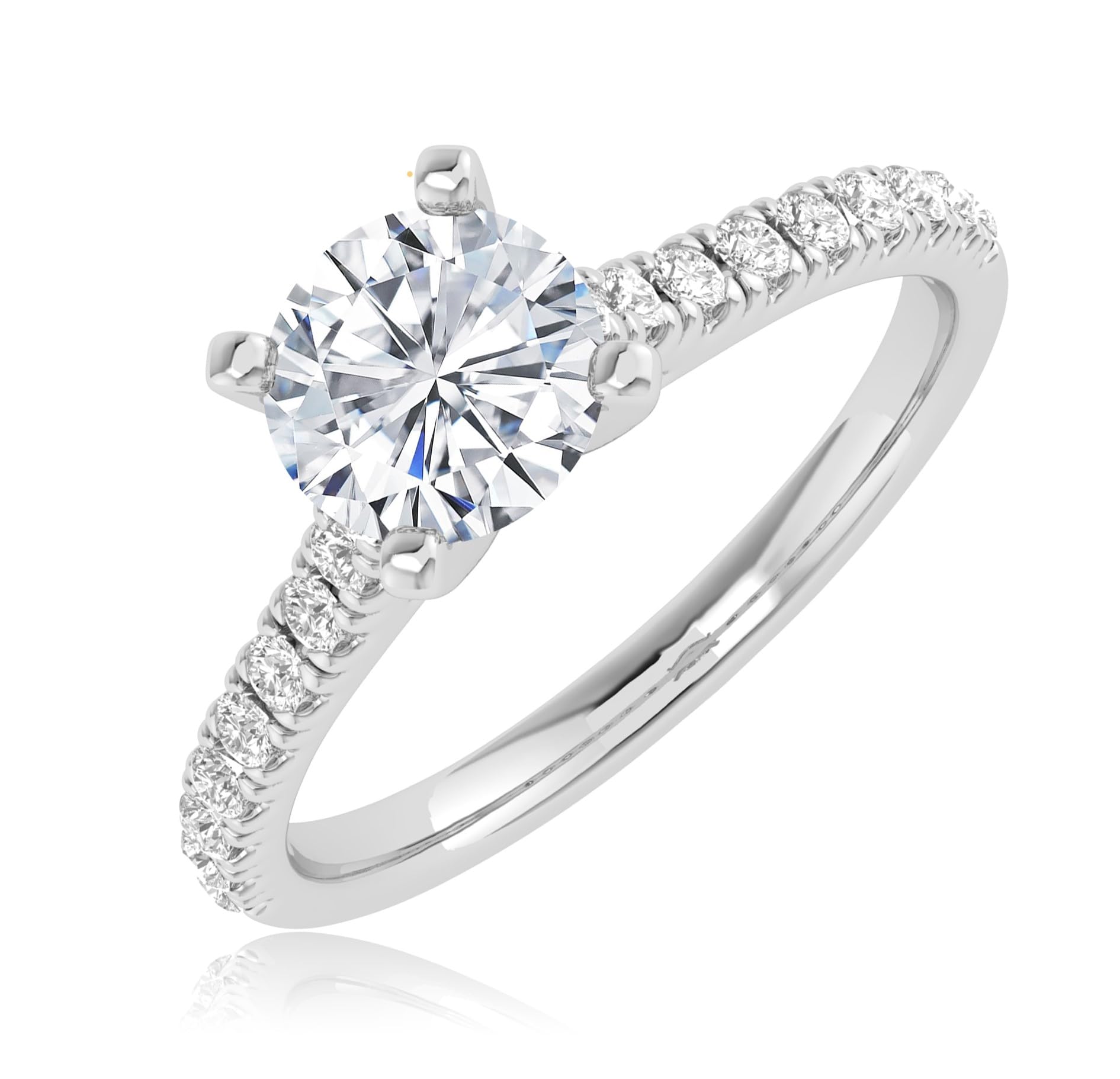
The classic prong-set solitaire is the most tested silhouette in engagement ring history, and Houston Diamond District executes it here with lab-grown diamonds graded E-F in color and VS1-VS2 in clarity. The prongs are well-proportioned to the stone size, with enough metal to secure the diamond without visually overwhelming it. The 1 to 6 carat range gives buyers significant flexibility, and the ring comes with stone traceability paperwork that includes the diamond’s origin information — increasingly important for buyers who want transparency in the lab-grown market.
Reviews emphasize the ring’s ability to sparkle in sunlight, with multiple buyers describing the diamond as an “eye-catcher” that draws compliments from strangers. The ring was purchased by one buyer as a replacement for a lost engagement ring, and they noted that it blended perfectly with their existing wedding band — a critical compatibility feature that is often overlooked until after purchase. The included presentation box was also praised as proposal-ready, eliminating the need for a separate ring box.
FedEx delivery issues were the most common negative experience, with multiple buyers reporting that FedEx mishandled the package or caused delivery delays. The seller appears to be responsive in helping track down delayed packages, but the courier experience is out of their control. If you have a specific proposal date, order at least two weeks in advance to account for potential shipping delays, and consider paying for expedited shipping with signature confirmation to minimize the risk of package mishandling.
Why it’s great
- Classic prong-set solitaire is the most structurally tested silhouette in engagement ring history
- Stone traceability paperwork provides origin documentation for ethical assurance and appraisal
- Buyers report the ring blends perfectly with existing wedding bands without visible height or width gaps
Good to know
- FedEx handling was inconsistent, with multiple buyers reporting delivery delays or misrouted packages
- The 1-6 carat range means buyers must carefully match stone size to band width for proportional balance
10. Houston Diamond District 4-Prong Lab Grown (E-F VS2-SI1)

The VS2-SI1 clarity grade is the value sweet spot in the diamond industry — inclusions are invisible to the naked eye unless you know exactly where to look, but the stone costs significantly less than VS1 or VVS-grade diamonds. Houston Diamond District pairs this with an IGI certification, giving buyers documentation of the stone’s quality even at the lower clarity tier. The E-F color grade ensures the diamond appears colorless in all lighting conditions, which is the visual factor that matters most to the casual observer.
Buyer feedback is remarkable for this ring — one independent jeweler appraised the 1.25 carat version against a similar stone in their inventory that was priced at nearly double the purchase price, confirming that the value proposition is real. Another buyer received a stone that was actually larger than what they ordered (1.32 carats vs 1.25 carats) after independent verification. This suggests that the company may be conservative in their grading, which benefits the buyer. The diamond’s sparkle was praised even at the VS2-SI1 level, with one buyer noting it appeared “flawless to the naked eye.”
One recurring note is that the 14K gold may be plated rather than solid, based on a small number of reviews mentioning color change over extended wear periods. The ring is engraved with a 14K stamp, which is standard for solid gold jewelry, but buyers who are sensitive to potential plating should verify the construction before finalizing their purchase. The VS2-SI1 grade also means a trained jeweler with a loupe will see inclusions, so if you plan to have the ring professionally appraised regularly, consider whether the slight visual compromise is acceptable.
Why it’s great
- VS2-SI1 clarity grade delivers naked-eye-clean appearance at a significantly lower cost than VVS-grade stones
- Multiple buyers received diamonds that appraised higher than the purchase price at independent jewelers
- E-F color ensures colorless appearance in all lighting conditions, which is the most visible quality factor
Good to know
- A small number of reviews suggest the 14K gold band may be plated rather than solid throughout
- VS2-SI1 clarity means inclusions are visible under magnification, which will be noted during professional appraisal
11. Gem And Harmony Black Diamond Set (1.39ctw, 10K White Gold)
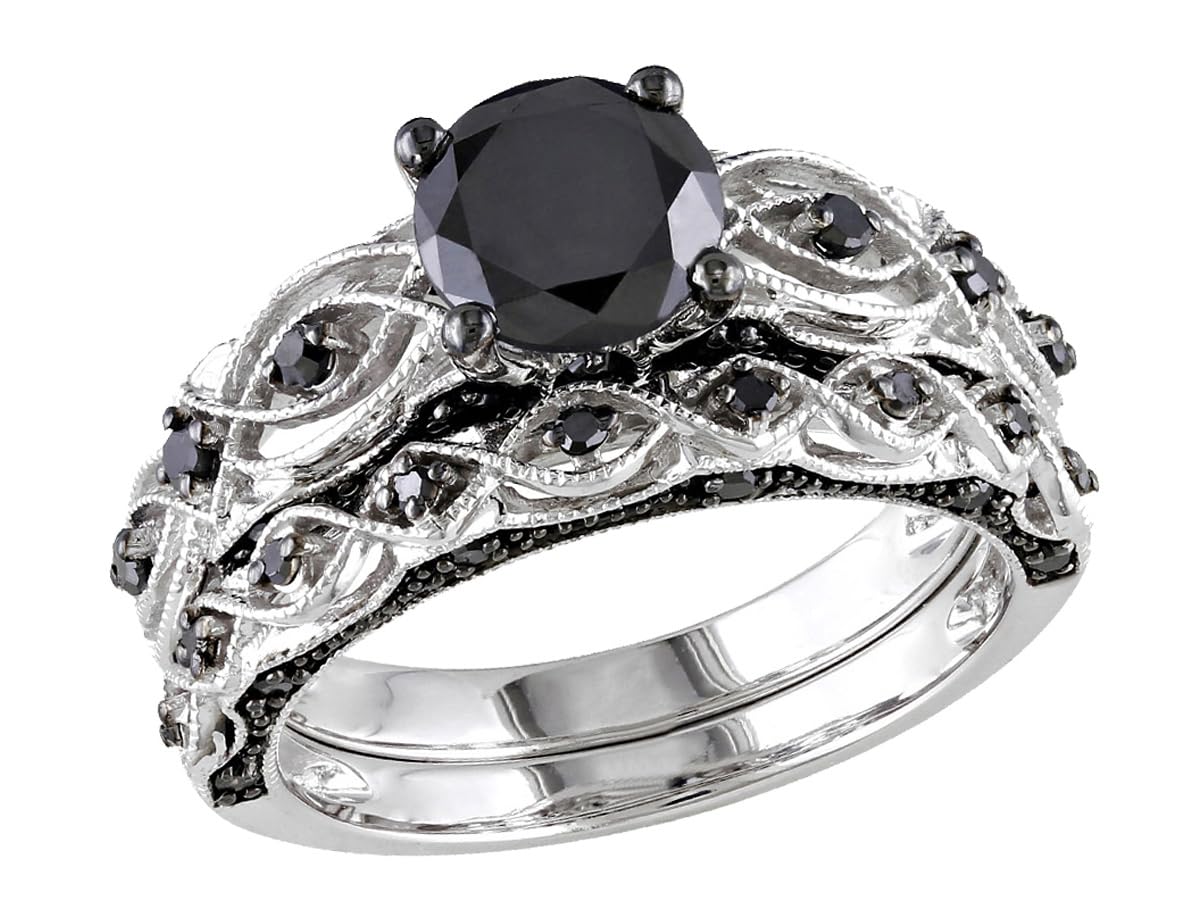
The Gem And Harmony set is the only complete bridal set — engagement ring plus wedding band — in this roundup, and it offers the most budget-friendly entry point into natural black diamond ownership. The 10K white gold setting is harder and more scratch-resistant than 14K, making it suitable for buyers who work with their hands or prefer a more durable daily-wear metal. The included wedding band means the buyer can propose with a complete-looking set and add the actual wedding ring later if desired.
Buyer response is split between enthusiastic and disappointed. Many buyers report that the ring looks exactly like the product photos and that their partner loved it, with several noting the seller’s customer service was responsive during sizing exchanges. The price advantage over competitors was specifically noted — one buyer estimated they saved about 20% compared to similar sets from other sellers. The fast replacement delivery for a buyer who lost their original ring indicates good supply chain reliability.
The durability concerns are real. Multiple reviews mention scratching within the first month of wear, and one detailed review reported that the black diamonds showed visible wear quickly and that the rings were ill-fitting and uncomfortable. The 30-day return window is critical here — if you purchase this set, inspect it thoroughly during the first week and return if any stones feel loose or the rings show unexpected wear. For a budget-priced bridal set, the value is undeniable, but the metal and stone quality reflect the cost savings compared to the premium options in this guide.
Why it’s great
- Complete bridal set eliminates the need to separately source a matching wedding band
- 10K white gold is harder and more scratch-resistant than 14K, ideal for daily wear with physical activity
- Buyers report 20% cost savings compared to similar configurations from competing sellers
Good to know
- Multiple buyers reported scratching and stone wear within the first month of daily use
- The 30-day return window requires immediate inspection upon delivery to ensure quality meets expectations
FAQ
Are black diamonds real diamonds or are they treated stones?
Do black diamonds sparkle as much as white diamonds?
What prong setting is safest for a black diamond engagement ring?
Should I buy a natural black diamond or a lab-grown black diamond for an engagement ring?
Can I get a black diamond engagement ring appraised for insurance?
Final Thoughts: The Verdict
For most buyers, the best black diamond engagement rings winner is the Houston Diamond District Oval Lab Grown Solitaire because it combines IGI certification, a versatile oval cut, and a platinum band in a package that looks significantly more expensive than its actual price tier. If you want maximum sparkle with side stone compensation, grab the Houston Diamond District 3 Stone. And for the best value in a complete bridal set, nothing beats the Gem And Harmony Black Diamond Set for buyers who prioritize the full set experience at the lowest possible entry point.

Mo Maruf
I created WellFizz to bridge the gap between vague wellness advice and actionable solutions. My mission is simple: to decode the research and give you practical tools you can actually use.
Beyond the data, I am a passionate traveler. I believe that stepping away from the screen to explore new environments is essential for mental clarity and physical vitality.