Our readers keep the lights on and my smoothie glass nicely filled. As an Amazon Associate, I earn from qualifying purchases.
Upgrading to a NextGen TV tuner means navigating a messy landscape of encrypted DRM channels, unreliable firmware, and a confusing mix of ATSC 1.0 versus 3.0 compatibility. The wrong choice leaves you with a box that locks up mid-game or fails to find stations your decade-old TV pulls in effortlessly.
I’m Mohammad Maruf — the founder and writer behind WellFizz. I’ve spent the last year dissecting tuner chipset performance, comparing DRM decoding capabilities, and analyzing real-world signal sensitivity across dozens of OTA receiver models.
The goal is simple: help you find the best atsc 3.0 tuner that actually unlocks free 4K broadcasts without buggy software or hidden subscription traps.
How To Choose The Best ATSC 3.0 Tuner
Picking the right NextGen TV receiver hinges on three factors: how many people in your home want to watch different channels, whether your local broadcasters encrypt their 3.0 signal, and how much recording buffer you need before investing in external storage.
Network Tuner vs Direct Connect Box
Network tuners like the HDHomeRun series connect to your router and stream live TV to any device on your home network — tablets, smart TVs, phones, and computers simultaneously. Direct connect boxes output to a single HDMI port and require a physical connection to one TV. Choose a network tuner for whole-home access; pick a direct box for a single legacy display.
DRM and Recording Compatibility
Many ATSC 3.0 broadcasters enable DRM encryption on their signals, which can block recording or even viewing on certain tuner models. The ADTH and Zinwell boxes support DRM decoding out of the box, while the Tablo and older HDHomeRun units may struggle with encrypted channels. Verify local broadcaster encryption before buying if you plan to record.
Quick Comparison
On smaller screens, swipe sideways to see the full table.
| Model | Category | Best For | Key Spec | Amazon |
|---|---|---|---|---|
| SiliconDust HDHomeRun Flex Quatro | Network Tuner | Multi-room whole-home streaming | 4x ATSC 1.0 Tuners | Amazon |
| ADTH NextGen TV Box Gen 2 64GB | Direct Box | Heavy DVR users needing onboard storage | 64GB Built-in Storage | Amazon |
| Zinwell NextGen TV Box | Direct Box | 4K upconversion and Dolby AC-4 audio | HD Upconvert to 4K | Amazon |
| SiliconDust HDHomeRun Flex Duo | Network Tuner | Budget whole-home streaming with Plex | 2x ATSC 1.0 Tuners | Amazon |
| ADTH NextGen TV Box Gen 2 8GB | Direct Box | Entry-level ATSC 3.0 with minimal DVR | 8GB Built-in Storage | Amazon |
| Tablo TV 4th Gen 2-Tuner | Network DVR | Simple guide-based recording on smart TVs | 128GB Onboard Storage | Amazon |
| GTMEDIA 4K Next-Gen ATSC3.0 X1 | Direct Box | Budget DRM-compatible viewing | Built-in Bluetooth 5.0 | Amazon |
In‑Depth Reviews
1. SiliconDust HDHomeRun Flex Quatro 4 x ATSC Tuners – HDFX-4US

The HDHomeRun Flex Quatro is the gold standard for whole-home OTA streaming. Its four ATSC 1.0 tuners let four different household members watch or record four separate channels simultaneously — something no direct-connect box can replicate. With Ethernet connectivity and a compact fanless chassis, it sits quietly on your router shelf and streams live TV to Roku, Fire TV, Apple TV, Android, iOS, Windows, and Mac devices without any monthly fee.
What sets this unit apart is its seamless integration with Plex DVR. Attach a USB hard drive, subscribe to the HDHomeRun DVR service or use Plex Pass, and you have a whole-home DVR with commercial skipping and remote access. The companion app loads guide data quickly, channel changes are near-instant, and setup is genuinely plug-and-play: connect coax, Ethernet, and power — the web interface handles everything else.
The limitation is ATSC 3.0 support. This unit is strictly ATSC 1.0, so you won’t get 4K NextGen TV broadcasts or DRM-decoded channels. If your local stations already broadcast in 3.0 and you need that resolution, look at a dedicated 3.0 box instead. But for reliability, signal sensitivity, and multi-user flexibility, the Flex Quatro is unmatched in its class.
Why it’s great
- Four tuners enable simultaneous multi-room viewing
- Rock-solid Plex DVR integration with commercial skip
- Compact, fanless, Ethernet-powered design
Good to know
- No ATSC 3.0 support — 4K NextGen TV not possible
- Requires separate USB hard drive for DVR recordings
2. ADTH NextGen TV Box Gen 2 ATSC 3.0 & ATSC 1.0 Digital Converter Box 64GB
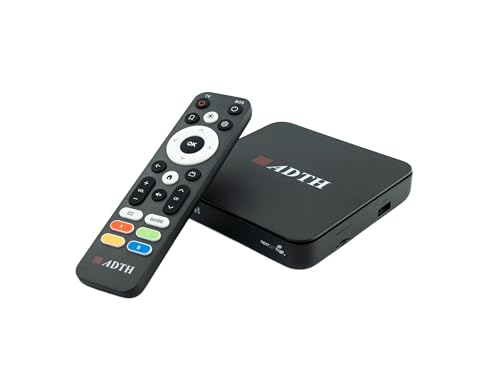
The ADTH Gen 2 with 64GB of onboard storage is the most complete direct-connect ATSC 3.0 tuner available. Unlike many competitors that require a USB drive or microSD card for DVR functionality out of the box, this unit gives you hours of recording capacity immediately — no additional accessories needed. It handles both ATSC 1.0 and 3.0 signals, supports DRM-encrypted channels, and outputs up to 4K HDR resolution on compatible NextGen TV broadcasts.
Real-world performance is solid for DXing (long-distance signal pulling) and decoding encrypted channels without an internet connection. The menu system provides a signal strength meter, on-screen guide, and straightforward USB or SD expansion if 64GB isn’t enough. Dual-band Wi-Fi and Bluetooth ensure firmware updates and future NextGen enhancements are easily applied.
The trade-off is occasional instability. Some users report random lockups, resets, or brief signal freezes — particularly on weaker ATSC 3.0 broadcasts. The channel numbering for 3.0 stations can be confusing, with duplicates hard to differentiate. If you have a rock-solid antenna signal and want a true all-in-one box with generous internal storage, the ADTH 64GB delivers.
Why it’s great
- Generous 64GB onboard storage for DVR out of the box
- Decodes DRM-encrypted ATSC 3.0 channels without internet
- Excellent DX performance for long-distance signal hunting
Good to know
- Occasional lockups or brief freeze on weaker signals
- Channel numbering for 3.0 can be messy with duplicates
3. Zinwell NextGen TV Box – ATSC 1.0/3.0 Tuner with 4K Broadcast Support

The Zinwell ZAT-600B stands out for its intelligent HD-to-4K upconversion, which enhances standard ATSC 1.0 and 3.0 broadcasts with sharper edges, richer color, and deeper contrast. Combined with Dolby AC-4 audio decoding for Voice + Dialogue Enhancement and consistent volume across channels, this box transforms the viewing experience on older 1080p content. The included universal learning remote can control your TV and soundbar, reducing clutter.
Setup is straightforward with coaxial and Ethernet connectivity, and it works without an internet connection for basic viewing — a rare feature in the modern tuner space. Users report noticeable improvements in signal stability for distant stations; one reviewer pulling 60 miles behind a mountain reported previously unwatchable CBS and ABC channels becoming stable after switching to the Zinwell.
Build quality consistency has been a concern. Some units arrive with blank screens or random screeching and rebooting, requiring replacements. The second or third unit tends to work perfectly, but the initial failure rate is higher than competitors. If you get a good unit, the upconversion and audio features make it a strong budget-friendly option for a single TV.
Why it’s great
- Intelligent upconversion improves clarity on HD broadcasts
- Dolby AC-4 audio with dialogue enhancement and consistent volume
- Universal learning remote controls TV and soundbar
Good to know
- Inconsistent quality control — some units require replacement
- ATSC 3.0 image quality can be inconsistent on weaker signals
4. SiliconDust HDHomeRun Flex Duo 2 x ATSC Tuners – HDFX-2US

The HDHomeRun Flex Duo offers the same rock-solid network streaming platform as its Quatro sibling but with two tuners instead of four. For a single-user household or couple, two tuners are sufficient — you can watch one live channel while recording another. The unit supports Power over Ethernet (PoE), so a single Ethernet cable provides both data and power, simplifying installation in media cabinets.
Device support is expansive: Roku, Fire TV, Apple TV, Android, iOS, Windows, Mac, Xbox, and even Kodi via direct URL streaming. The web interface exposes live signal strength and signal-to-noise ratio, making antenna alignment much easier than most alternatives. The DVR functionality via USB hard drive is reliable, with a free basic option and an inexpensive subscription for advanced guide features.
The main limitation is the lack of ATSC 3.0 support and the two-tuner ceiling — you can’t record three shows at once. For those on a tight budget who want whole-home streaming without monthly fees, the Flex Duo is a proven workhorse. Just know you’re capped at 1080p OTA, no 4K.
Why it’s great
- PoE support simplifies installation with single cable
- Direct URL streaming works with VLC and Kodi
- Signal strength and S/N in web UI for antenna optimization
Good to know
- Only two tuners limit simultaneous recordings
- No ATSC 3.0 — 4K broadcasts not supported
5. ADTH NextGen TV Box Gen 2 ATSC 3.0 & ATSC 1.0 Digital Converter Box 8GB
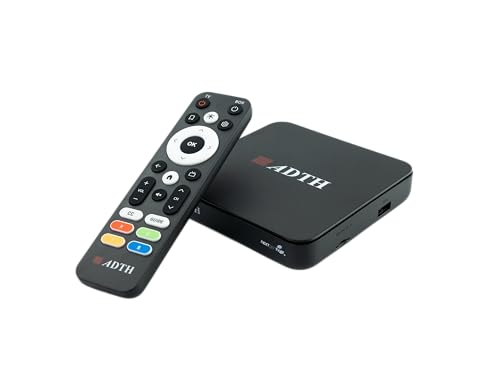
The 8GB version of the ADTH Gen 2 is the same capable ATSC 3.0 tuner as its 64GB sibling but with a smaller internal storage buffer, making it a budget-friendly entry point into NextGen TV. It supports both ATSC 1.0 and 3.0 signals, handles DRM-encrypted channels, outputs 4K HDR, and includes Dolby Digital Plus and AC-4 audio support. Dual-band Wi-Fi and Bluetooth keep firmware current and enable future broadcast enhancements.
For users with a USB flash drive or microSD card lying around, the 8GB is still functional for DVR recording — you just need external storage from day one. The box delivers the same clear, bright picture quality and signal sensitivity as the higher-capacity model, including the ability to decode encrypted channels without internet access. Customer support is notably responsive, often helping troubleshoot broadcaster-side signal issues.
The small onboard buffer means you can’t record much without external media, and the occasional lockup or reset issue persists on weaker 3.0 signals. If you already have spare storage and want the most affordable ATSC 3.0 box that actually works, the 8GB ADTH is a solid entry-level choice.
Why it’s great
- Affordable ATSC 3.0 entry with full DRM decoding
- Excellent picture clarity and signal sensitivity
- Responsive customer support for troubleshooting
Good to know
- Tiny 8GB storage requires external USB or SD for recording
- Occasional lockups on weaker ATSC 3.0 signals
6. Tablo TV 4th Gen 2-Tuner Over-The-Air (OTA) DVR – TF1282B-01-CN

The Tablo 4th Gen is the most user-friendly OTA DVR for non-technical households, prioritizing a polished guide and app-based experience over raw tuner performance. Its 128GB of onboard storage records up to 50 hours of HD content, and you can expand via USB up to 8TB. The setup pairs with any TV antenna and streams live and recorded TV to smart TVs, Roku, Fire TV, Apple TV, and mobile devices over Wi-Fi — no remote control included, as you control everything through the app.
The guide is clean and accurate, scheduling recordings is intuitive, and the whole-home streaming works reliably once configured. The two tuners let you watch one channel while recording another, and the device handles simultaneous streaming to multiple devices for the same show. It also pulls in over 100 free streaming channels to supplement OTA content.
The catch is the setup process, which can be frustrating. Many users report “Unknown Error” messages during Wi-Fi configuration that resolve only by hardwiring Ethernet temporarily. The Roku app is notably slow, with 60+ second load times, and the 100Mbps Ethernet port creates a potential bottleneck in busy networks. For a patient user with strong home Wi-Fi, the Tablo delivers a clean DVR experience — but it requires patience during initial setup.
Why it’s great
- 128GB onboard storage works out of the box
- Clean, accurate program guide with easy scheduling
- Streams to multiple devices throughout the home over Wi-Fi
Good to know
- Setup can be buggy, often requiring temporary Ethernet connection
- Roku app is slow with long load times
7. GTMEDIA 4K Next-Gen ATSC3.0 TV Converter X1
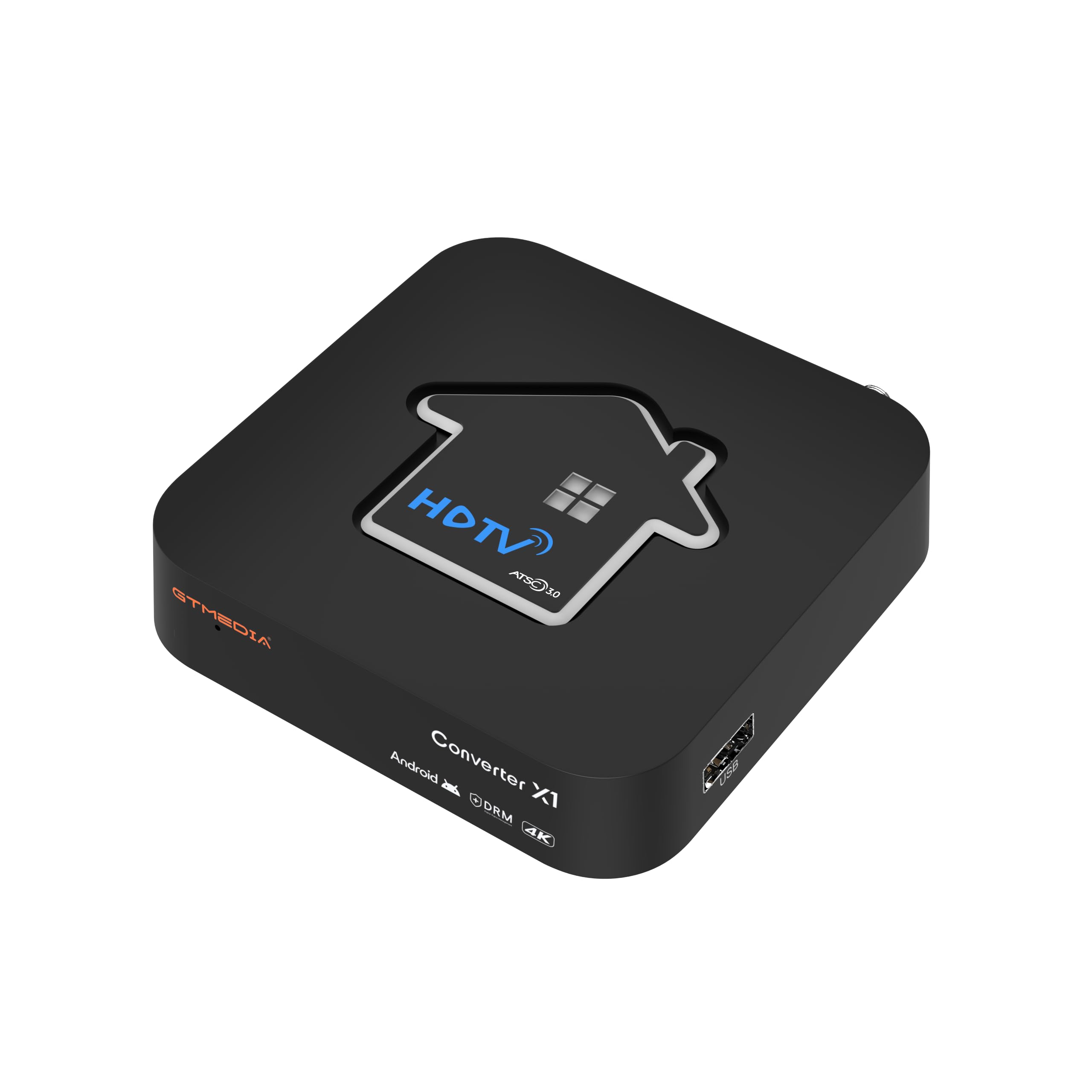
The GTMEDIA X1 is the most affordable ATSC 3.0 box on this list, offering DRM channel support and free DVR recording for a very low entry cost. It supports both ATSC 1.0 and 3.0 signals, includes dual-band Wi-Fi and Bluetooth 5.0, and connects via HDMI or RCA for older TVs. The built-in media player and dual WiFi antennas suggest it was designed as a versatile streaming and OTA hybrid box.
In practice, the X1 struggles with stability and interface quality. The manual is poorly written, the WiFi keyboard interface is buggy with no clear exit path, and channel scanning is inconsistent — one user reported scanning only 7 channels versus the TV’s built-in tuner finding 19. Scheduled recordings on DRM channels often fail, and the Netflix/YouTube/Prime apps are either non-functional or outdated and uninstallable.
The customer support is essentially unresponsive, and Amazon charges a return fee. For the absolute minimum investment to see if ATSC 3.0 works in your area, the X1 might be worth a gamble — but be prepared for frustration. Most users will be better served spending slightly more on the ADTH 8GB or a used HDHomeRun for reliability that actually works daily.
Why it’s great
- Lowest cost entry to ATSC 3.0 with DRM support
- Includes Bluetooth 5.0 and dual Wi-Fi antennas
Good to know
- Buggy interface, unreliable channel scanning, and crashes
- Customer support is unresponsive; Amazon return fee applies
FAQ
Do I need an internet connection to use an ATSC 3.0 tuner?
Why can’t I record some ATSC 3.0 channels on my tuner?
How many tuners do I need for a multi-TV household?
Will an ATSC 3.0 tuner improve my reception on distant stations?
Final Thoughts: The Verdict
For most users, the best atsc 3.0 tuner winner is the SiliconDust HDHomeRun Flex Quatro because its four-tuner whole-home streaming platform offers unmatched multi-room flexibility, Plex DVR integration, and rock-solid reliability. If you want true 4K NextGen TV with generous onboard storage, grab the ADTH NextGen TV Box Gen 2 64GB. And for a budget-friendly entry into ATSC 3.0 with upconversion and Dolby AC-4 audio, nothing beats the Zinwell NextGen TV Box.

Mo Maruf
I created WellFizz to bridge the gap between vague wellness advice and actionable solutions. My mission is simple: to decode the research and give you practical tools you can actually use.
Beyond the data, I am a passionate traveler. I believe that stepping away from the screen to explore new environments is essential for mental clarity and physical vitality.