Our readers keep the lights on and my smoothie glass nicely filled. As an Amazon Associate, I earn from qualifying purchases.
The tension between a gram-counting backpack and the fear of missing a shot is the central conflict of every backcountry photographer. You need a tool that disappears into your pack until the moment light breaks through the canopy, then delivers clean files without requiring a tripod or a second coffee. The wrong choice adds sore shoulders and missed opportunities; the right one makes the trail itself a secondary concern.
I’m Mohammad Maruf — the founder and writer behind WellFizz. I’ve spent years cross-referencing sensor performance, weather sealing ratings, and real-world battery endurance to find which models actually survive the abuse of multi-day carries without compromising image quality.
This guide is built to help you identify the best camera for backpacking by matching your specific trail priorities — whether that’s raw image quality, ruggedness, zoom reach, or system weight — to the body and lens that won’t let you down when the summit view opens up.
How To Choose The Best Camera For Backpacking
Choosing a trail camera isn’t about picking the most expensive body. It’s about finding the intersection of weight, ruggedness, and image quality that matches your specific terrain and shooting style. Every ounce saved on the camera is an ounce you can spend on water or food.
Weight and Portability
The body and lens combo should feel negligible when you’re hiking uphill. A rig over two pounds becomes a burden on day three. Compact mirrorless cameras and premium point-and-shoots (under 1.5 pounds with a lens) let you keep the camera accessible without slowing your pace. Look for a system that stows easily in a hip-belt pocket or the top lid of your pack.
Weather Sealing and Durability
Trail conditions shift without warning. A camera with weather-sealed body construction and dust-proof seals can handle light rain, dust, and freezing temperatures. Non-sealed cameras require careful bag management in wet or sandy environments. The OM System Tough TG-7 takes durability furthest with full waterproofing down to 50 feet, making it the clear choice for river crossings and alpine lakes.
Battery Life and Power Management
No power outlets exist on the trail. A camera with a CIPA-rated battery life of over 300 shots per charge is the baseline for a multi-day trip without a power bank. Models that support USB-C charging let you top off from a solar panel or battery pack during rest breaks, effectively extending your shooting window indefinitely.
Image Stabilization (IBIS)
In-body image stabilization compensates for hand shake at slow shutter speeds, letting you shoot crisp photos in low-light camp settings or under dense tree cover without a tripod. Cameras with 4.5 to 6 stops of stabilization can capture sharp images at 1/8th of a second handheld — a huge advantage when every ounce of extra gear matters.
Lens Versatility and Zoom Range
A general-purpose zoom (24-70mm equivalent) covers landscapes to camp portraits, while a superzoom (24-200mm) reaches distant peaks and wildlife without swapping glass. Fixed-lens compacts like the Ricoh GR IIIx offer unmatched image quality in a tiny package but lack reach. Decide whether you prioritize flexibility or ultimate pocketability before you buy.
Quick Comparison
On smaller screens, swipe sideways to see the full table.
| Model | Category | Best For | Key Spec | Amazon |
|---|---|---|---|---|
| Sony RX100 VII | Compact Premium | All-in-one travel zoom | 24-200mm f/2.8-4.5 1″ Sensor | Amazon |
| Fujifilm X100VI | Fixed-Lens Premium | Ultimate image quality in pocket | 40.2MP APS-C, 23mm f/2 lens | Amazon |
| Canon EOS R7 | Mirrorless APS-C | Action and wildlife on trail | 32.5MP, 15fps, IBIS, Dual Card | Amazon |
| Ricoh GR IIIx | Fixed-Lens Compact | Minimalist pocket carry | 24.2MP APS-C, 40mm f/2.8, IBIS | Amazon |
| Canon EOS R50 | Mirrorless Entry | Lightweight first mirrorless | APS-C, 4K Oversampled, 18-45mm | Amazon |
| Sony ZV-E10 | Mirrorless Vlog | Video-focused trail shooter | 24.2MP APS-C, 4K 6K Oversample | Amazon |
| Nikon Z 30 | Mirrorless Compact | Ultralight all-day carry | APS-C, 4K, 16-50mm, 0.8 lb | Amazon |
| OM System E-M10 IV | Mirrorless MFT | Compact system with IBIS | 20MP MFT, 5-Axis IBIS, 14-42mm | Amazon |
| Panasonic G85 | Mirrorless MFT | Weather-sealed value system | 16MP MFT, IBIS, 12-60mm, Sealed | Amazon |
| OM System Tough TG-7 | Rugged Compact | Extreme conditions and water | Waterproof 50ft, 4K, Macro | Amazon |
| Panasonic ZS99 | Compact Zoom | Ultra-zoom pocket travel | 30x Zoom, 24-720mm, 4K | Amazon |
In‑Depth Reviews
1. Sony RX100 VII
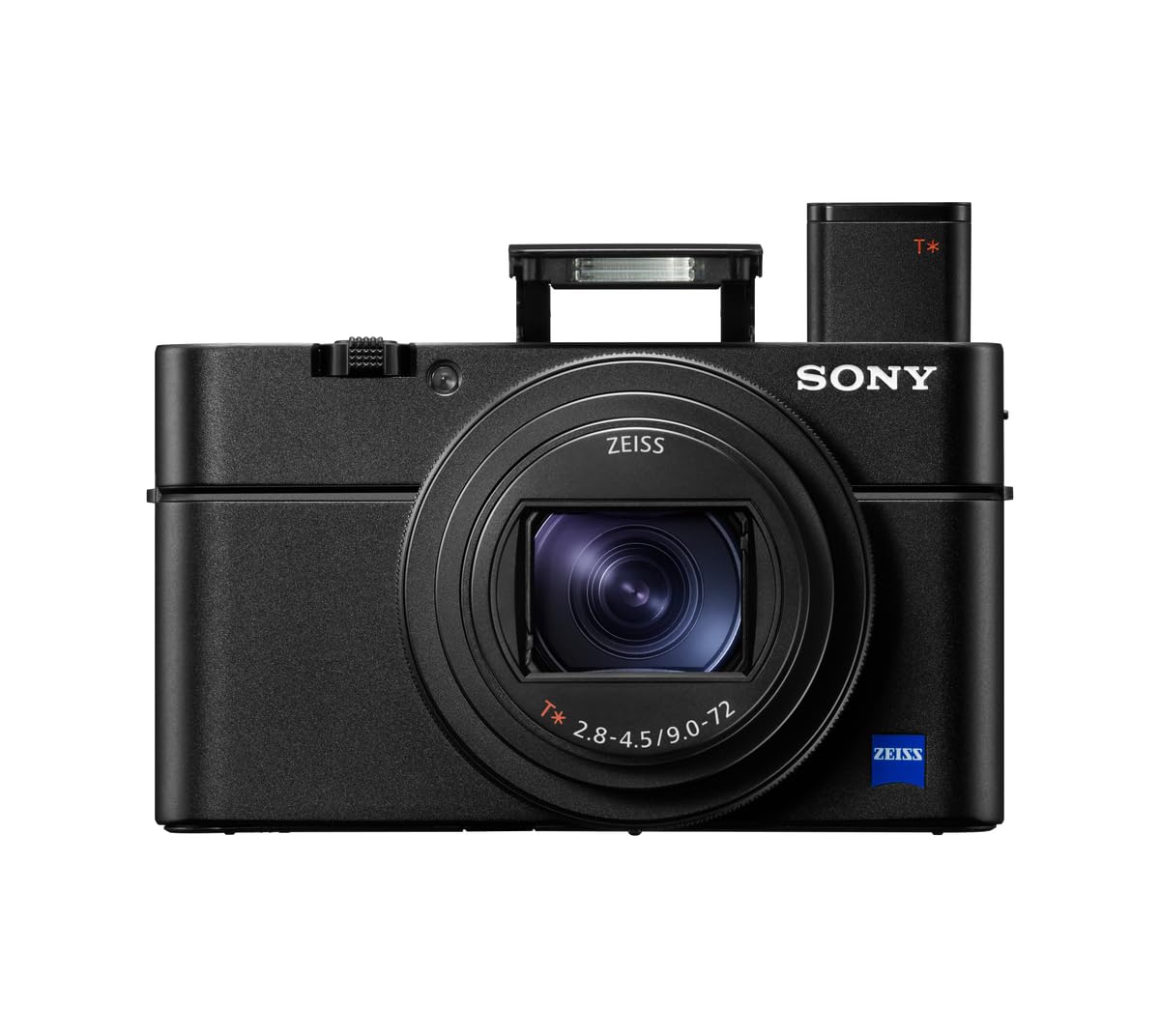
The RX100 VII packs a 24-200mm f/2.8-4.5 Zeiss zoom into a body that slips into any hip-belt pocket. That reach alone eliminates the need to carry multiple lenses, making it the single most versatile grip-and-go rig for backpackers who want to photograph everything from a sweeping valley to a distant marmot without breaking stride.
Its 20.1MP 1-inch stacked CMOS sensor delivers 4K video with a mic jack, real-time eye autofocus for humans and animals, and blackout-free shooting at 20 fps. The active-mode image stabilization smooths handheld video on the move, and the electronic viewfinder works even in harsh sunlight.
The main trade-off is the small sensor compared to APS-C cameras — low-light performance has limits, and the battery requires a backup for multi-day trips without USB-C charging. Still, for the backpacker who values flexibility above all else, this compact powerhouse remains the gold standard.
Why it’s great
- Massive 24-200mm zoom in a pocketable body
- Real-time eye AF for humans and animals
- 4K video with mic input and active stabilization
Good to know
- 1-inch sensor limits low-light performance against APS-C
- No USB-C charging; standard micro USB
- No in-body stabilization for stills (lens-based only)
2. Fujifilm X100VI

The X100VI’s fixed 23mm f/2 lens (35mm equivalent) forces you to zoom with your feet, a constraint that rewards deliberate composition. Its 40.2MP X-Trans sensor captures staggering detail, and the 6-stop in-body stabilization lets you shoot handheld in twilight without a tripod — a massive advantage for campfire scenes and dawn landscapes.
Fujifilm’s film simulations produce exceptional out-of-camera JPEGs, so you won’t spend trail hours editing later. The hybrid optical/electronic viewfinder is a joy, and the built-in 4-stop ND filter lets you shoot wide open in bright conditions. The body is compact but not pocket-sized, and battery life is average — carry two spares.
Autofocus can hunt in low contrast, and the lack of weather sealing (without a filter adapter) means careful handling in rain or dust. But for the backpacker who values image quality and the shooting experience above zoom reach, the X100VI is a masterpiece that rewards every mile.
Why it’s great
- 40.2MP sensor with class-leading detail
- 6-stop IBIS for handheld low-light shots
- Built-in ND filter and stunning film simulations
Good to know
- Fixed 35mm equivalent lens limits framing flexibility
- No weather sealing without adapter
- Battery life is average; pack extras
3. Canon EOS R7

The R7 is purpose-built for backpackers who also chase wildlife, action sports, or fast-moving subjects. Its 32.5MP APS-C sensor delivers generous crop reach, and the 15 fps mechanical shutter (30 fps electronic) with a pre-shoot buffer is unmatched for catching a hawk’s takeoff or a runner cresting a peak.
Dual Pixel CMOS AF II with 651 zones covers almost the entire frame, locking onto eyes of birds and animals as reliably as humans. The 5-axis IBIS provides up to 6.5 stops of stabilization, and the dual SD card slots offer redundancy for critical shoots. The body is compact for a DSLR-style grip but still heavier than a rangefinder or point-and-shoot, so budget the weight accordingly.
It uses the RF mount, which has excellent glass but a limited native APS-C lens range — you’ll likely use an adapter for EF lenses. Battery life is above average for mirrorless, and USB-C charging is supported. This is a serious tool for the trail-based photographer who won’t sacrifice speed or reach.
Why it’s great
- Class-leading 15fps mechanical burst with pre-shoot
- Dual Pixel AF II covers 100% of frame
- Excellent IBIS and dual card slots
Good to know
- Heavier than other APS-C options in this guide
- Limited native RF-S lens selection
- No built-in flash
4. Ricoh GR IIIx

The GR IIIx is the lightest full-featured APS-C camera you can buy, slipping into any jacket pocket as if it weren’t there. Its 40mm f/2.8 lens (in 35mm terms) delivers a natural perspective that feels incredibly sharp, and the 24.2MP sensor with IBIS produces images that rival much larger systems.
Startup is nearly instant at 0.8 seconds, making it perfect for capturing fleeting moments on the trail. The in-camera film simulations and custom image controls let you dial in your look before you leave camp. The fixed lens eliminates the need to carry glass, saving major weight.
The downsides are significant: battery life is short (plan on three spares for a multi-day trip), autofocus is slower than Sony or Canon competition, and it lacks weather sealing. There’s no viewfinder (the LCD is your only framing tool), and video is limited to 1080p. This is a specialist tool for the ultralight backpacker who prioritizes still images above all else.
Why it’s great
- Unbelievably compact with APS-C quality
- In-body stabilization for handheld low-light shots
- Fast startup and intuitive snap-focus controls
Good to know
- Short battery life demands multiple spares
- No weather sealing; keep it dry
- No viewfinder; no 4K video
5. Canon EOS R50
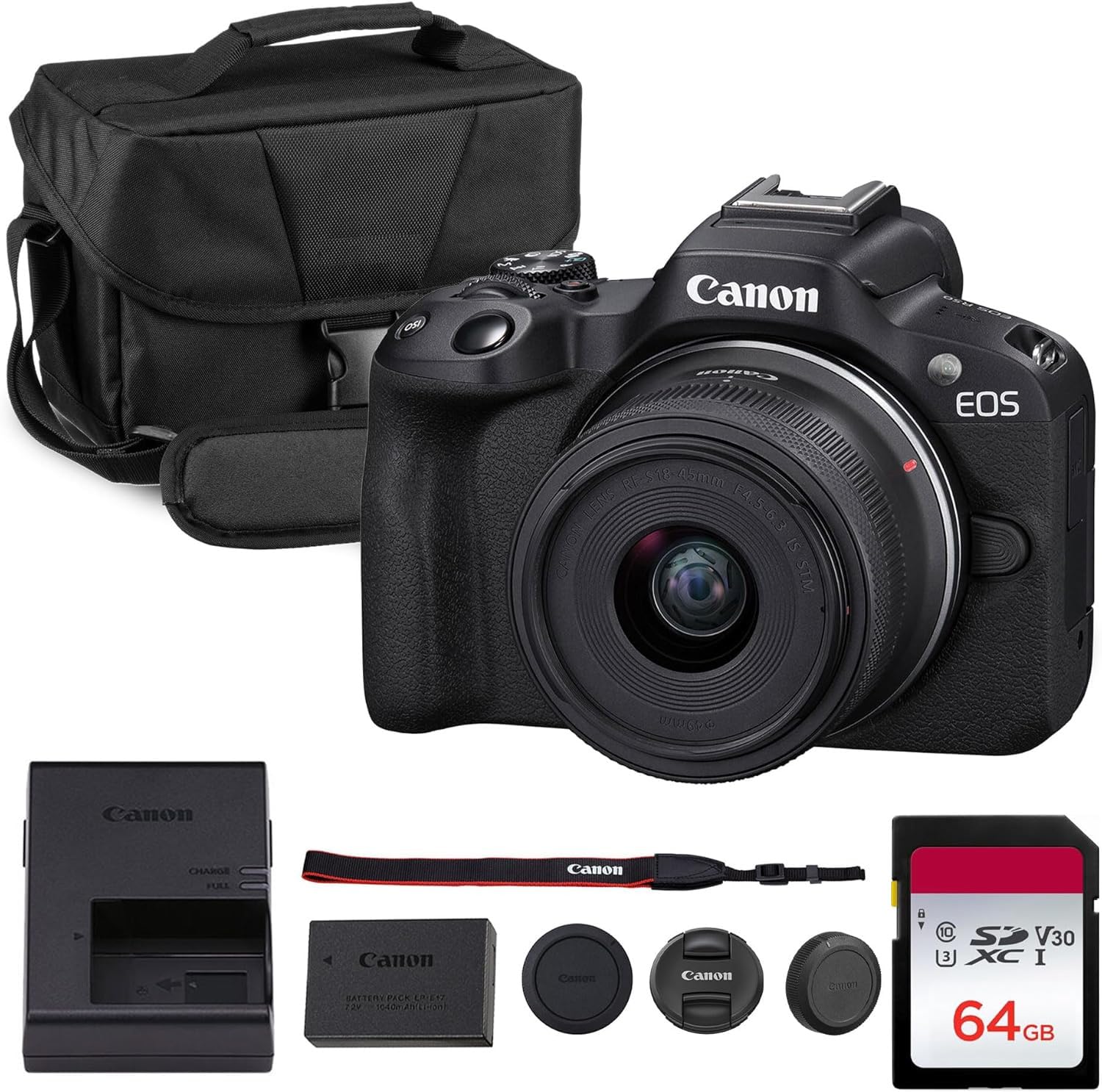
The R50 is the lightest RF-mount body Canon makes, and paired with the 18-45mm kit lens it stays under a full pound. That weight makes it a non-issue for day hikes and overnighters, yet it delivers oversampled 4K video and Dual Pixel AF II for reliable eye-tracking on people and pets.
The vari-angle touchscreen is excellent for framing awkward angles or self-recording, and the Creative Assist mode helps beginners understand exposure without deep menu diving. Battery life is respectable for an entry-level mirrorless camera, and USB-C charging keeps you topped off on the trail.
The kit lens is slow (f/4.5-6.3) and limits low-light performance, and the plastic build lacks weather sealing. Autofocus is less sophisticated than the R7, and the lack of IBIS means you rely on lens stabilization. For a lightweight, affordable entry into interchangeable-lens trail photography, the R50 is hard to beat.
Why it’s great
- Extremely light; under 1 lb with kit lens
- Oversampled 4K with Dual Pixel AF II
- Easy-to-use interface and vari-angle LCD
Good to know
- Kit lens is slow and dim in low light
- No in-body stabilization
- Not weather-sealed
6. Sony ZV-E10
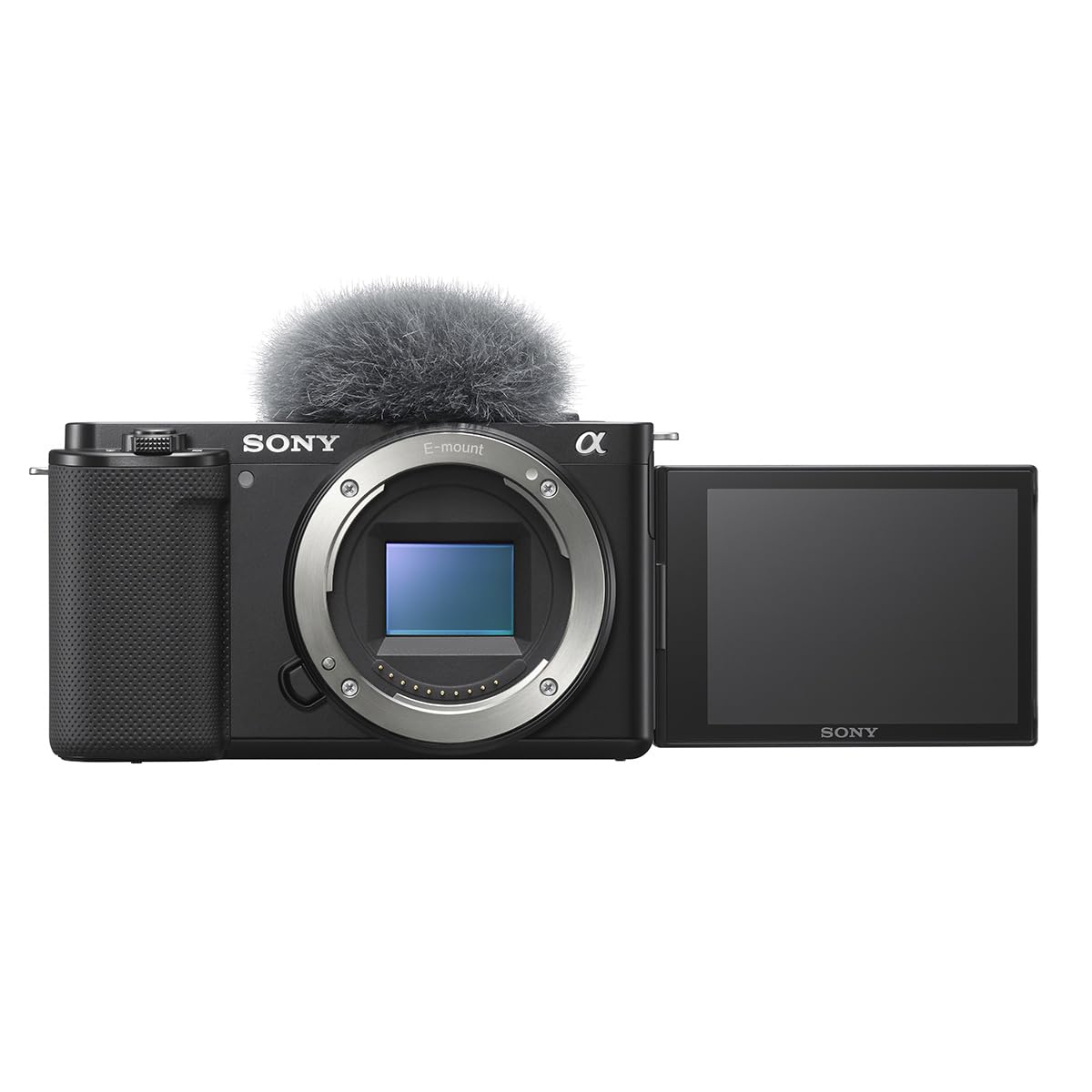
The ZV-E10 is Sony’s dedicated vlogging body, and its real-time eye AF and product showcase mode make it a natural fit for backpackers who document their trips on the move. The 24.2MP APS-C sensor provides excellent image quality, and the 4K oversampled from 6K delivers crisp footage that holds up well.
The Body is lightweight and compact, with a flip-out touchscreen and a built-in directional mic. The E-mount system offers access to a huge library of lenses, from ultra-light pancakes to fast primes. The Background Defocus button is a one-touch way to simulate shallow depth of field.
The big issues are the lack of in-body stabilization (you’ll want a lens with OSS or a mini tripod) and severe rolling shutter in 4K. Battery life is moderate, and the electronic-only stabilization introduces a crop. It’s a solid video-first hybrid, but not ideal for stills-heavy backpackers who shoot in poor light without a gimbal.
Why it’s great
- Real-time eye AF for people and animals
- 4K oversampled from 6K for sharp footage
- Lightweight body with huge E-mount lens selection
Good to know
- No in-body stabilization; needs OSS lens
- Severe rolling shutter in 4K
- No viewfinder; LCD only
7. Nikon Z 30

The Z 30 is Nikon’s lightest mirrorless body, and its compact design with the 16-50mm kit lens creates a total package that’s a joy to carry all day. It offers unlimited 4K 30p recording, making it a reliable video workhorse for backpacking vlogs and cinematic landscape clips.
The flip-out selfie screen and built-in stereo mic with adjustable sensitivity simplify on-the-go recording. The USB-C port provides constant power, so it can run indefinitely from a battery bank. Eye-tracking autofocus works on people and pets, and the 14-bit raw files offer solid editing headroom.
The lack of a viewfinder is a real drawback in bright alpine light, and there’s no in-body stabilization — you’ll need VR lenses for smooth handheld shots. The Z-mount lens library is still growing, and battery life is moderate. Still, for the weight-conscious creator who wants a dedicated hybrid for both photos and video, the Z 30 is a compelling choice.
Why it’s great
- Extremely lightweight; under 1 lb with kit lens
- Unlimited 4K 30p recording
- USB-C constant power for extended field video
Good to know
- No viewfinder; LCD can wash out in sun
- No in-body image stabilization
- Z-mount lens selection still expanding
8. OM System E-M10 IV

The E-M10 IV is OM System’s entry-level Micro Four Thirds body, and its size is its superpower. Paired with the 14-42mm EZ pancake lens, it fits easily into a jacket pocket while providing 5-axis in-body stabilization that allows handheld exposures as long as one second.
The 20MP Live MOS sensor delivers good color and detail, and the flip-down selfie mode makes trip recording effortless. The menu system is beginner-friendly but still offers full manual control for growth. The IBIS is the hero feature for backpackers — it dramatically extends usable shooting time without a tripod.
The kit lens is slow, and the Micro Four Thirds sensor shows more noise at high ISOs compared to APS-C. Autofocus uses contrast detection only, which is slower than phase-detect systems. It also charges via a proprietary cable rather than USB-C — an annoyance in the field. For the budget-conscious backpacker who wants IBIS in a truly small package, it’s a smart pick.
Why it’s great
- Compact and light; fits in a jacket pocket with pancake lens
- 5-axis IBIS for sharp handheld shots
- Easy-to-use interface with full manual options
Good to know
- No USB-C charging; proprietary cable
- Contrast-detect AF slower than phase-detect
- Smaller sensor shows more noise in low light
9. Panasonic G85

The G85 is a veteran value champion that puts weather sealing and excellent dual stabilization (IBIS + lens OIS) into a sub- kit. The 16MP sensor lacks a low-pass filter, delivering surprisingly sharp detail, and the 12-60mm kit zoom covers a useful 24-120mm equivalent range.
The magnesium alloy body with weather sealing gives you confidence in damp conditions or dusty trails, and the 5-axis stabilization produces smooth 4K video and sharp stills handheld. The controls are intuitive for DSLR upgraders, and the Micro Four Thirds lens ecosystem is affordable and compact.
The 16MP resolution is behind modern APS-C and MFT competitors, and the autofocus struggles in low light, especially during 4K video. Battery life is average, and it uses a proprietary micro USB charging cable. For backpackers on a tighter budget who still demand weather sealing and stabilization, the G85 remains a strong contender.
Why it’s great
- Weather-sealed magnesium alloy body
- Excellent dual stabilization (IBIS + OIS)
- Great value; includes 12-60mm kit lens
Good to know
- 16MP resolution lags behind newer models
- Autofocus sluggish in low light for 4K
- Battery life is average
10. OM System Tough TG-7

The TG-7 is the only camera in this guide that you can drop in a river, bury in sand, or freeze overnight and still pull out ready to shoot. It’s waterproof to 50 feet, shockproof from 7-foot drops, crushproof to 220 pounds, and freezeproof to 14°F — making it the absolute go-to for extreme environments.
Its variable macro system captures details as close as 1 centimeter from the lens, ideal for documenting trail flora, insects, or rock textures. Four underwater shooting modes (including microscope and HDR) make it the best camera here for snorkeling or creek crossings. It shoots 4K video and 120 fps slow-motion for creative flexibility.
Image quality is limited by the small sensor, which struggles in low light and produces softer images than larger sensor cameras. The controls are small and can be fiddly with cold or wet fingers, and battery life is adequate but demands spares for multi-day trips. This is not a camera for pixel-peeping — it’s a tool for capturing memories in places where other cameras would fail.
Why it’s great
- Waterproof to 50ft, shockproof, and freezeproof
- Exceptional macro capabilities (1cm from lens)
- Dedicated underwater shooting modes
Good to know
- Small sensor limits image quality and low-light performance
- Controls are small and fiddly in cold weather
- Battery life is average; carry spares
11. Panasonic ZS99

The ZS99 packs a 24-720mm Leica zoom lens (30x optical) into a body that slides into any pocket, making it the ultimate budget-friendly choice for backpackers who need extreme reach without carrying interchangeable glass. It’s ready for sweeping landscapes and zoomed-in peaks alike.
It shoots 4K video at 30p and 1080p slow-motion at 120 fps. The tiltable touchscreen and Bluetooth 5.0 connectivity make it easy to frame shots and transfer images to your phone for sharing. USB-C charging is a modern convenience that lets you recharge from a trail battery pack.
The small sensor produces noticeable noise above ISO 800, and the autofocus is slow and limited to a single point. Image quality is decent in bright light but falls apart in low-light camp scenes. Battery life is rated at a modest 2 hours of recording. As a lightweight, affordable zoom companion for day hikes where you expect good light, the ZS99 is a solid performer.
Why it’s great
- Massive 24-720mm zoom in a pocketable body
- USB-C charging for trail power management
- Easy image sharing via Bluetooth
Good to know
- Small sensor struggles in low light
- Autofocus is slow and single-point only
- Image quality degrades above ISO 800
FAQ
Is a weather-sealed camera necessary for backpacking?
Should I prioritize zoom range or image quality for a backpacking camera?
How many spare batteries should I bring on a multi-day backpacking trip?
Can a smartphone replace a dedicated camera for backpacking photography?
Final Thoughts: The Verdict
For most users, the best camera for backpacking winner is the Sony RX100 VII because it combines a versatile 24-200mm zoom, reliable autofocus, and a pocketable size that makes it easy to carry every day. If you want extreme ruggedness for water and rough conditions, grab the OM System Tough TG-7. And for the ultralight backpacker who prioritizes stunning image quality and a tiny footprint, nothing beats the Ricoh GR IIIx.

Mo Maruf
I created WellFizz to bridge the gap between vague wellness advice and actionable solutions. My mission is simple: to decode the research and give you practical tools you can actually use.
Beyond the data, I am a passionate traveler. I believe that stepping away from the screen to explore new environments is essential for mental clarity and physical vitality.