Our readers keep the lights on and my smoothie glass nicely filled. As an Amazon Associate, I earn from qualifying purchases.
Twelve-year-olds live in a world where social dynamics shift daily, and the perfect board game can bridge awkward silences, create shared inside jokes, and quietly sharpen critical thinking without feeling like homework. The challenge is finding games that feel neither too childish for a developing preteen nor too complex to learn in one sitting.
I’m Mohammad Maruf — the founder and writer behind WellFizz. After analyzing dozens of game mechanics, reading thousands of verified buyer experiences, and cross-referencing age recommendations with real-world play patterns, I’ve identified which titles genuinely hold a 12-year-old’s attention and which collect dust on a shelf.
This guide cuts through the noise to help you pick the right board games for 12 year olds, focusing on replayability, social engagement, and cognitive challenge.
How To Choose The Best Board Games For 12 Year Olds
At twelve, kids are transitioning from pure chance-based games to those requiring strategy, negotiation, and spatial reasoning. Choosing the right game means matching the play style to the group’s attention span and social comfort level.
Player Count and Social Dynamics
Games that support 2 to 4 players work for small sibling or parent-child sessions, while titles accommodating 6 or more players shine during sleepovers and birthday gatherings. The best games for this age allow flexible player counts without breaking the experience.
Playtime and Attention Span
A 15-minute card game keeps the energy high and invites repeat rounds, while a 45-minute strategy game teaches planning and patience. Look for games with clear end conditions and simple setup, as preteens lose interest when rule explanations drag.
Learning Value vs. Pure Fun
Games that sneak in problem-solving, spatial logic, or reading comprehension without feeling educational tend to get played more. The best options offer a genuine challenge that feels rewarding rather than frustrating, with progressive difficulty that grows alongside the player.
Quick Comparison
On smaller screens, swipe sideways to see the full table.
| Model | Category | Best For | Key Spec | Amazon |
|---|---|---|---|---|
| ThinkFun Gravity Maze | STEM Logic | Solo problem-solving and critical thinking | 60 progressive challenge cards | Amazon |
| Exploding Kittens Party Pack | Party Card Game | Large groups and quick-paced fun | 120 cards for up to 10 players | Amazon |
| Spin Master Tetris Board Game | Strategy Puzzle | Multiplayer head-to-head puzzle action | 128 physical Tetrimino pieces | Amazon |
| Hasbro Girl Talk | Party Social | Tween sleepovers and truth-or-dare fun | 200 question and dare cards | Amazon |
| No Escape Board Game | Strategy Traitor | Large groups wanting sabotage and maze action | Dynamic tile-laying space station | Amazon |
In‑Depth Reviews
1. ThinkFun Gravity Maze

The Gravity Maze stands apart because it converts abstract spatial reasoning into a tangible, satisfying physical experience. Twelve-year-olds who enjoy building and figuring out how things fit together will find the challenge of constructing a marble run that meets specific engineering criteria genuinely addictive. Each of the 60 challenge cards introduces a new constraint, forcing the player to think in three dimensions and plan several steps ahead.
The game’s progressive difficulty is its secret weapon — early puzzles build confidence, while advanced ones can stump adults, making it a rare game that grows with the user rather than being outgrown. Parents report that kids who normally resist designated “learning” activities happily spend an hour rearranging towers to solve the next puzzle, unaware they are sharpening planning and persistence skills. The pieces are sturdy, colorful, and stay precisely where placed, reducing frustration from unstable constructions.
The one limitation is that Gravity Maze is primarily a solo or turn-based activity, not a high-energy group game. It works best as a quiet challenge for one or two kids competing to solve the same puzzle fastest, but it lacks the social shouting and betrayal that some groups crave. For the preteen who loves logic, building, and independent play, this is the strongest option available.
Why it’s great
- Teaches spatial reasoning and planning through hands-on building
- Progressive difficulty keeps it challenging for ages 8 through adult
- High-quality pieces with stable construction
Good to know
- Not designed for large group play
- Some advanced puzzles may frustrate kids who prefer quick wins
2. Exploding Kittens Party Pack

Exploding Kittens Party Pack is the rare game that scales effortlessly from a quick two-player match to a chaotic ten-player session, making it indispensable for sleepovers and large family gatherings. The core mechanic — drawing cards and hoping not to explode — is simple enough that a 12-year-old can explain the rules in under a minute, yet the special action cards like Skip, Favor, and Shuffle introduce genuine strategic choice. The absurd Oatmeal illustrations and dark humor land perfectly with the preteen sense of irony.
What makes this Party Pack version superior to the original is the expanded card count and the inclusion of the Imploding Kittens expansion deck, which adds more depth without complicating the flow. Games average fifteen minutes, which is ideal for this age group — long enough to feel invested but short enough to replay immediately. Kids learn to bluff, read opponents, and manage risk, all while laughing at the ridiculous card art. Parents note that even non-gamers get drawn in after one round.
The biggest risk is that some adults find the humor too juvenile or the luck element too high for serious strategy, but for a 12-year-old audience, that balance is exactly right. The cards hold up well to repeated shuffling and handling, and the compact box fits easily into a bag for travel. If you need one game that works for every type of preteen gathering, this is the strongest contender.
Why it’s great
- Extremely fast to learn and play, perfect for mixed-attention groups
- Scales from 2 to 10 players without losing fun
- Encourages bluffing and risk assessment naturally
Good to know
- Luck plays a significant role; not a pure strategy game
- Humor may feel repetitive after many sessions
3. Spin Master Tetris Board Game
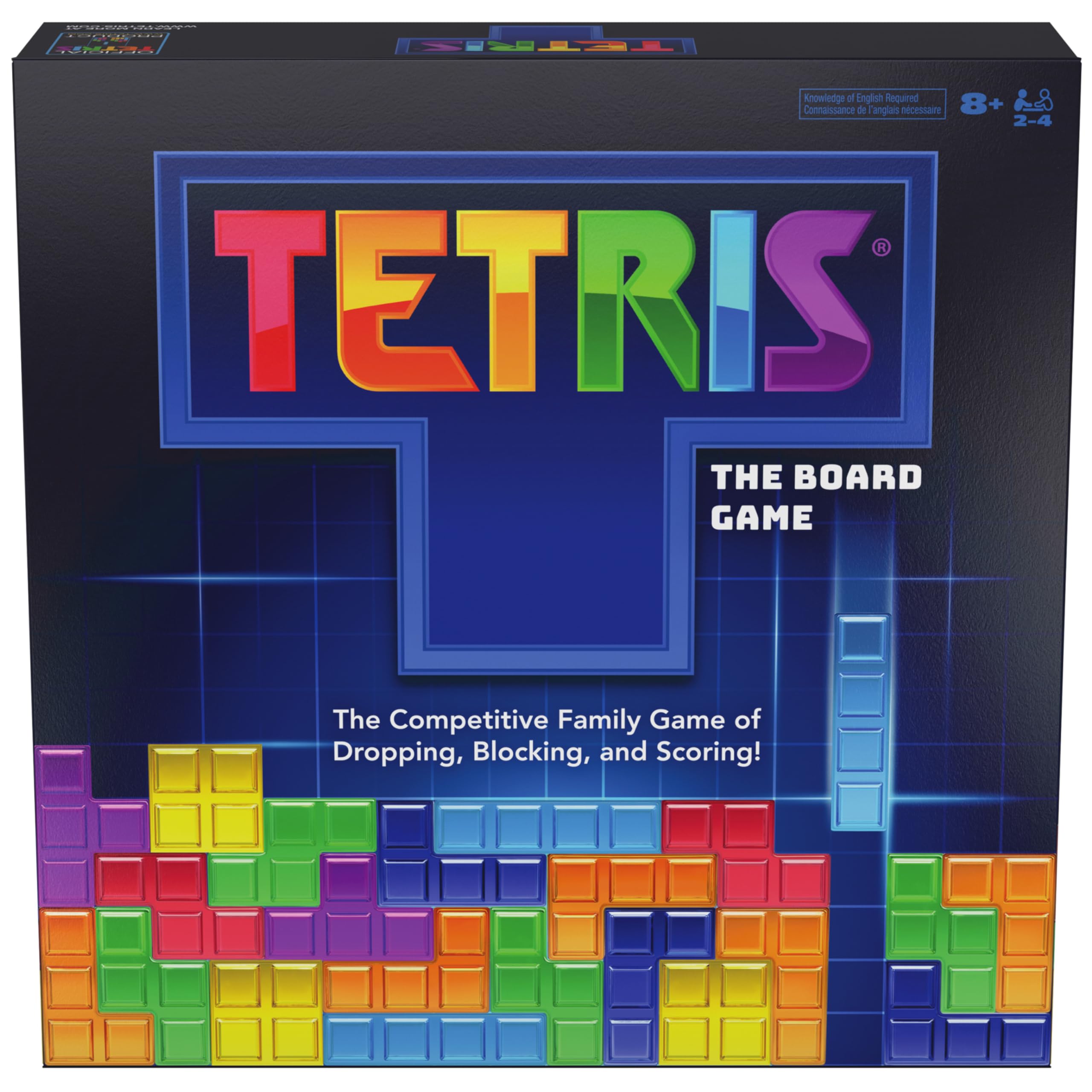
Translating the world’s most famous digital puzzle into a physical board game sounds risky, but Spin Master pulls it off with a competitive head-to-head format that respects the original’s core logic. Players physically drop semi-translucent Tetrimino pieces onto their personal grid, racing to complete lines while sabotaging opponents by sending block pieces to their board. The tactile feel of moving and rotating the plastic pieces adds a layer of physical engagement that the digital version lacks, and the competitive twist keeps the tension high.
The game shines in 2-player duels where the sabotage mechanic creates genuine strategic decisions — do you build your own lines quickly, or hold a piece to disrupt your opponent when they are closest to victory? Games clock in around twenty minutes, which matches the attention span well, and the rules are straightforward enough that a 12-year-old who has played the video game can jump in immediately. Parents appreciate that the cognitive skill development is baked into the fun, not bolted on.
The biggest drawback is that some pieces may arrive slightly bent due to manufacturing tolerances, and the game is limited to 2-4 players, making it less suitable for larger groups. Also, kids who never enjoyed the video game may not find the physical version more engaging. But for fans of Tetris or anyone who enjoys spatial puzzle competition with a social edge, this is a fresh and satisfying experience.
Why it’s great
- Faithful physical translation of a classic puzzle with real competitive tension
- Sabotage mechanic adds strategic depth beyond simple line clearing
- Quick 20-minute games encourage multiple rounds
Good to know
- Only supports 2-4 players, not ideal for large groups
- Piece quality may vary; some units arrive with minor bending
4. Hasbro Girl Talk Truth or Dare

The updated Girl Talk game taps into the classic truth-or-dare format with 200 cards specifically designed to resonate with today’s tweens, asking questions about selfies, school secrets, and friendship dynamics that feel authentic rather than forced. The large central spinner adds a physical ritual to each turn, and the portable case means it can travel to sleepovers, camping trips, or anywhere the group gathers. The score trackers are simple but add a light competitive edge to what is fundamentally a social bonding experience.
What works best for 12-year-olds is the balance between silly dares and genuine conversation starters. Questions like “How many selfies do you take a day?” feel safe enough to answer honestly without real vulnerability, while the dares are outrageous enough to produce real laughter but never cruel or exclusionary. The game works with as few as two players but truly shines with a group of four or more, where the audience reactions amplify every reveal. Parents report that even boys in the age group get drawn into the fun once the first round starts.
The main limitation is thematic — the “girl talk” branding may make some boys or mixed-gender groups hesitate, despite the content being broadly appealing. Additionally, the dares are designed for a younger tween sensibility, so 14-year-olds may find them too tame. For the target age of 10-12, however, this remains one of the most reliable icebreaker party games available.
Why it’s great
- 200 cards provide high replayability for multiple sessions
- Encourages conversation and laughter in a safe, age-appropriate way
- Portable case makes it easy to bring to sleepovers
Good to know
- Branding may limit appeal in mixed-gender groups
- Dares feel too simple for older teens
5. No Escape Board Game

No Escape combines tile-laying maze construction with a hidden traitor mechanic, creating a space station escape experience that feels different every session. The dynamic board means no two games play out the same, which directly addresses the biggest complaint 12-year-olds have about board games — boredom after the first play. Players must balance their own escape plan with the paranoia that someone at the table is secretly sabotaging the group, adding a social deduction layer that this age group finds deeply engaging.
The game accommodates 2 to 8 players, which makes it unusually flexible for both small family sessions and larger birthday parties. Setup takes minutes, and the core rules can be explained in about five minutes, though the strategic depth reveals itself over multiple rounds. Dice and tile placement introduce enough randomness to keep outcomes unpredictable, while the sabotage element rewards clever observation and bluffing. Older kids in the 12-14 range particularly enjoy forming temporary alliances and trying to identify the traitor.
The game length varies widely — some sessions wrap in fifteen minutes, while others stretch past an hour depending on player decisions. The tension can spike if a traitor plays too effectively, occasionally leading to frustration for eliminated players who must wait for the next round. The box and components are high quality, though the box may arrive damaged from shipping due to minimal internal packaging. For groups that love hidden roles and changing mazes, this is a standout choice.
Why it’s great
- Dynamic tile-laying ensures every game is unique
- Traitor mechanic adds social deduction depth
- Supports large groups up to 8 players
Good to know
- Game length varies significantly, which may frustrate some groups
- Eliminated players may have to wait through long rounds
FAQ
Are these board games appropriate for mixed-gender groups of 12 year olds?
How many players do I need for the best experience?
Which game has the highest replay value for a 12 year old?
Final Thoughts: The Verdict
For most users, the board games for 12 year olds winner is the ThinkFun Gravity Maze because it builds genuine spatial reasoning and problem-solving skills through hands-on play that stays challenging as the child grows. If you want a high-energy group game for sleepovers and parties, grab the Exploding Kittens Party Pack. And for a physical puzzle experience that brings a digital classic to life, nothing beats the Spin Master Tetris Board Game.

Mo Maruf
I created WellFizz to bridge the gap between vague wellness advice and actionable solutions. My mission is simple: to decode the research and give you practical tools you can actually use.
Beyond the data, I am a passionate traveler. I believe that stepping away from the screen to explore new environments is essential for mental clarity and physical vitality.