Our readers keep the lights on and my smoothie glass nicely filled. As an Amazon Associate, I earn from qualifying purchases.
A bloom booster that delivers on its promise is the difference between a garden that looks “okay” and one that stops neighbors mid-step. The challenge is that shelves are packed with bags and bottles that are heavy on marketing and light on the specific phosphorus-to-potassium ratio your plants actually need to set more buds. Choosing the wrong one means weeks of watering with nothing to show for it but green leaves.
I’m Mohammad Maruf — the founder and writer behind WellFizz. I spend my time dissecting fertilizer formulation sheets, cross-referencing NPK ratios with plant physiology, and analyzing real-world customer results to separate the formulas that actually push flower production from the ones that just look good on a label.
This guide breaks down the top-rated formulas on the market, from quick-acting liquids to heavy-hitting granular phosphates, so you can confidently pick the best bloom booster for your specific garden goals and growing style.
How To Choose The Best Bloom Booster
A bloom booster is only as good as its NPK balance and how that matches your plant’s growth stage. You are looking for a formula that pushes phosphorus (the middle number) high enough to signal flower initiation without starving the rest of the plant of potassium for overall health. Here is what matters most.
Decoding the NPK Ratio
The three numbers on a fertilizer bag tell you everything. For bloom boosters, the middle number (phosphorus) should be the highest. Ratios like 10-30-20 or 12-24-12 are classic bloom formulas because they flood the plant with phosphorus while maintaining enough potassium for cell wall strength and disease resistance. Avoid anything where nitrogen is the leading number — that pushes leafy growth at the expense of flowers.
Water-Soluble vs. Slow-Release vs. Liquid
Water-soluble powders, like Jack’s Classic, give you immediate control — you mix each dose fresh and can adjust strength week-to-week. Slow-release granules, like Schultz, are set-and-forget; you sprinkle them around the base and they feed for weeks. Liquid concentrates, like Neptune’s Harvest, are ideal for both soil drenching and foliar sprays, making them versatile for organic gardens. Your choice depends on how hands-on you want to be.
Micronutrients and Soil Conditioners
Beyond the big three numbers, look for chelated trace minerals, humic acids, and seaweed extract. These compounds improve nutrient uptake at the root zone, help the plant convert fertilizer into usable energy, and build soil biology that supports long-term bloom cycles. A booster like Great Big Roses works specifically by improving the soil’s ability to deliver nutrients — not just by adding more chemicals.
Quick Comparison
On smaller screens, swipe sideways to see the full table.
| Model | Category | Best For | Key Spec | Amazon |
|---|---|---|---|---|
| Jack’s Classic 10-30-20 | Powder | Bold blooms on flowering plants | 10-30-20 NPK with micronutrients | Amazon |
| Schultz Slow-Release 12-24-12 | Granules | Set-and-forget feeding for roses | 12-24-12 slow release granules | Amazon |
| Neptune’s Harvest 2-6-4 | Liquid Organic | Organic liquid feed for delicate plants | 2-6-4 with fish & seaweed | Amazon |
| Great Big Roses Compost Extract | Liquid Soil Booster | Deep soil health & rose vigor | 32oz concentrate with 70+ minerals | Amazon |
| Cz Garden Triple Super Phosphate 0-46-0 | Granular | Targeted phosphorus for heavy feeders | 0-46-0 pure phosphorus granules | Amazon |
In‑Depth Reviews
1. Jack’s Classic 10-30-20 Blossom Booster
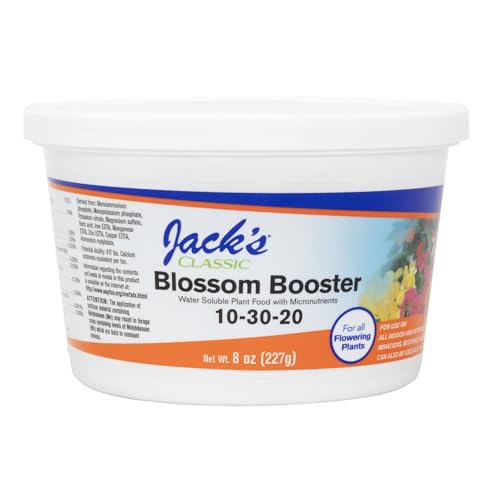
Jack’s Classic delivers the most balanced high-phosphorus punch for the serious home gardener. The 10-30-20 ratio is perfectly tuned for plants entering their bud-set phase — you get enough phosphorus to trigger heavy blooming without the potassium crash that leaves flowers looking weak. Users report visible improvements in hanging baskets and orchids within days, with blooms that are both more numerous and more intensely colored.
The powder format is incredibly concentrated. That small 8-ounce tub actually makes multiple gallons of liquid fertilizer, which keeps the cost-per-feeding very low compared to pre-mixed liquids. The included measuring spoon takes the guesswork out of mixing, and the formula works equally well as a root drench or a foliar spray. A handful of users noted minor skin irritation when handling the powder without gloves, which is a sign of potency rather than a defect.
For anyone growing flowering annuals, perennials, or container plants who wants the fastest, most reliable bloom response, this is the standard. The micronutrient package — which includes chelated iron, manganese, and zinc — ensures that the plant actually uses all that phosphorus rather than letting it sit useless in the soil.
Why it’s great
- High 10-30-20 NPK ratio is ideal for flowering plants
- Concentrated powder makes many gallons from one small tub
- Works as both a root feed and a foliar spray
Good to know
- Powder can cause mild skin irritation — wear gloves when mixing
- Container is compact but the small scoop is easy to lose
2. Schultz Slow-Release 12-24-12 Bloom Fertilizer

Schultz takes the “set it and forget it” approach seriously. The 12-24-12 ratio is a classic bloom formula, and the slow-release granule technology means you sprinkle it around your roses, annuals, and perennials once, and the plant gets a steady phosphorus supply for weeks. This is perfect for gardeners who want consistent results without mixing up a fresh batch of liquid fertilizer every weekend.
The 3.5-pound bag covers substantial ground, making it a strong choice for in-ground flower beds and larger container gardens. Users consistently note that their plants look noticeably more vibrant and produce longer-lasting blooms within a few days of application. The granules are easy to scatter by hand or with a small spreader, and they activate with normal watering — no special handling required.
The trade-off is that slow-release formulas give you less fine control than water-soluble powders. You cannot adjust the dose mid-week if a plant looks hungry, and the release rate depends somewhat on soil temperature and moisture. For the low-maintenance gardener who wants a simple, effective bloom boost without fuss, this is a solid mid-range pick.
Why it’s great
- Slow-release means weeks of steady feeding from one application
- Easy to scatter around beds and containers
- Visible results in plant health and bloom vibrancy within days
Good to know
- Less precise control compared to water-soluble powders
- Release rate can vary with soil temperature and moisture levels
3. Neptune’s Harvest Rose & Flowering Fertilizer 2-6-4
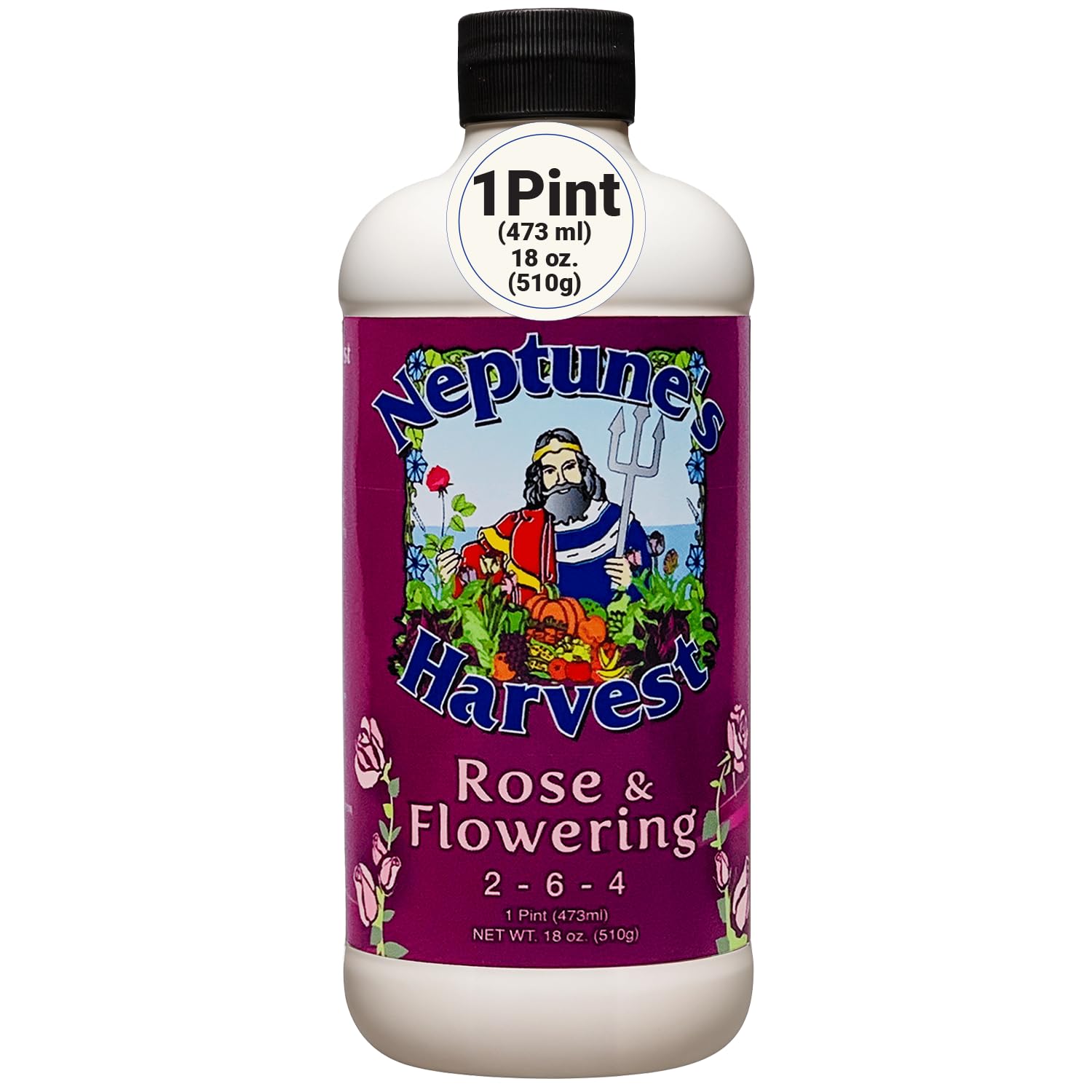
Neptune’s Harvest is the top choice for organic growers who want a potent bloom booster without synthetic chemicals. The 2-6-4 formula is built around fish, seaweed, molasses, humic acids, and yucca extract — all natural ingredients that feed soil biology as much as the plant itself. The lower overall NPK numbers are typical for organic liquids; efficacy comes from the biological activity they stimulate, not just raw nutrient density.
Users report remarkable results with indoor tomatoes and peppers, with one reviewer noting a jump from struggling plants to harvesting 102 bell peppers from nine plants. The liquid concentrate mixes at 1 ounce per gallon for most plants and is gentle enough to use as a foliar spray without burning leaves. The only consistent complaint is the smell — it has a strong ocean/fish odor that lingers until the spray dries, so indoor application requires good ventilation.
This is the right pick if you are growing edibles alongside ornamentals and want a single product that works for both. The calcium content also helps prevent blossom-end rot in tomatoes and peppers, which is a common problem with high-nitrogen synthetic feeds.
Why it’s great
- Certified organic ingredients feed soil biology, not just the plant
- Calcium content helps prevent blossom-end rot in fruiting plants
- Safe for foliar feeding on even delicate houseplants
Good to know
- Strong fish/seaweed odor during mixing and application
- Lower NPK numbers mean you need to feed more frequently than synthetics
4. Great Big Roses Compost Extract
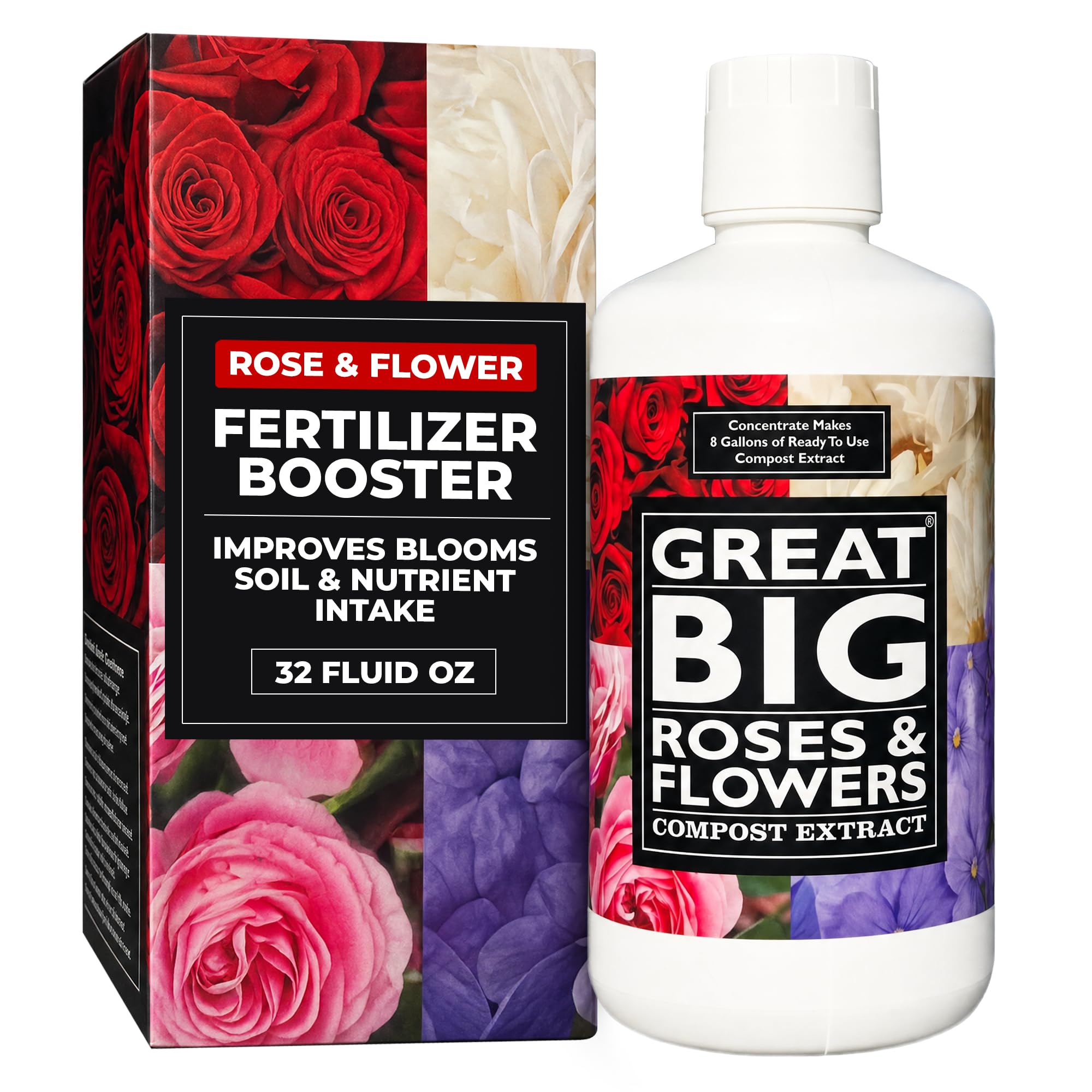
Great Big Roses takes a fundamentally different approach: instead of just dumping phosphorus on the plant, it improves the soil’s ability to deliver nutrients. This liquid compost extract supplies bioavailable humic acids, over 70 chelated trace minerals, and seaweed — all compounds that convert existing soil nutrients into forms the plant can actually absorb. Users with established rose beds see dramatic improvements, with one reviewer noting that white iceberg roses bloomed with a vigor they had never shown before.
The 32-ounce concentrate makes 8 gallons of finished solution, and each application reaches the root zone almost immediately. It is designed to work alongside your existing fertilizer, boosting its effectiveness rather than replacing it entirely. The formula is particularly strong for roses, hydrangeas, and other woody flowering shrubs that benefit from deep soil health rather than surface feeding.
The main downsides are the packaging — the wide-mouth jug makes measuring into a watering can messy, and the price is higher than standard liquid feeds. But for dedicated rose growers who want premium results from heavy-feeding shrubs, the investment pays off in the sheer volume and quality of blooms.
Why it’s great
- Improves soil structure and nutrient uptake rather than just adding chemicals
- 70+ chelated trace minerals plus humic acids for deep root health
- Shows visible results on roses and hydrangeas even after a harsh winter
Good to know
- Wide-mouth jug design makes measuring and pouring messy
- Higher cost per bottle compared to standard liquid fertilizers
5. Cz Garden Triple Super Phosphate 0-46-0
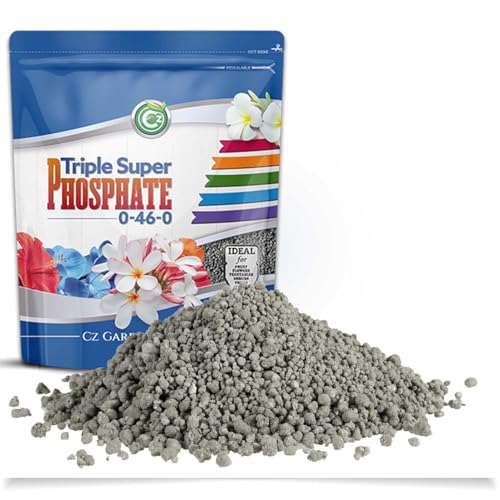
Cz Garden’s Triple Super Phosphate is the purest phosphorus source on this list. At 0-46-0, this is not a general bloom booster — it is a targeted phosphorus supplement for situations where a soil test has confirmed a phosphorus deficiency. Gardeners growing heavy feeders like tomatoes, peppers, fruit trees, and orchids use this to correct imbalances and see rapid, dramatic improvements in flower and fruit set.
The 10-pound resealable pouch provides enormous value — one bag can cover over 3,000 square feet, making it the most cost-effective option per application by a wide margin. Users report that their fruit trees look healthier and produce larger fruit after application, and orchids bloom faster with more intense colors. The granular format is easy to work into the top layer of soil around established plants or broadcast over a garden bed before planting.
The biggest caveat is that this is not a balanced feed. Using it without a complementary nitrogen and potassium source can throw your soil off balance, especially for plants that are not in a phosphorus-deficient state. Beginners should test their soil first and use this as a targeted tool rather than a general-purpose bloom booster.
Why it’s great
- Extremely high phosphorus concentration for severe deficiencies
- 10-pound bag covers thousands of square feet — excellent value
- USA-made with high-purity, premium-grade ingredients
Good to know
- Not a balanced fertilizer — requires separate nitrogen and potassium sources
- Best used after a soil test confirms a phosphorus deficiency
FAQ
Can I use a bloom booster on all my plants?
How often should I apply a water-soluble bloom booster?
Is a higher phosphorus number always better for blooms?
Final Thoughts: The Verdict
For most users, the best bloom booster winner is the Jack’s Classic 10-30-20 Blossom Booster because its balanced high-phosphorus ratio and water-soluble format give you the fastest, most dramatic bloom response with excellent value per feeding. If you want a fuss-free organic option for edibles and ornamentals alike, grab the Neptune’s Harvest 2-6-4. And for hardened rose enthusiasts looking to push their established shrubs to their genetic potential, nothing beats the Great Big Roses Compost Extract for soil health and bloom quality.

Mo Maruf
I created WellFizz to bridge the gap between vague wellness advice and actionable solutions. My mission is simple: to decode the research and give you practical tools you can actually use.
Beyond the data, I am a passionate traveler. I believe that stepping away from the screen to explore new environments is essential for mental clarity and physical vitality.