Our readers keep the lights on and my smoothie glass nicely filled. As an Amazon Associate, I earn from qualifying purchases.
A backpacking tent must vanish into your pack, not weigh you down. Every ounce saved on your shelter is energy preserved for the trail, but shaving weight often means sacrificing headroom, weather protection, or durability. The best designs strike a precise balance between packed volume, livable space, and reliable storm defense, letting you sleep soundly after a long day of miles.
I’m Mohammad Maruf — the founder and writer behind WellFizz. I spend my weeks analyzing thousands of spec sheets and owner reports to identify which tents actually deliver on their weight and weather claims across real-world trail conditions.
Whether you’re a thru-hiker counting grams or a weekend warrior seeking solid value, this guide breaks down the top contenders and trade-offs to help you pick the right backpacking tent for your next adventure.
How To Choose The Best Backpacking Tent
A backpacking tent is your mobile shelter, so every design choice — from fabric denier to pole architecture — directly impacts your trail experience. The wrong tent adds unnecessary weight or fails in foul weather, while the right one becomes an afterthought you never worry about.
Trail Weight vs Packaged Weight
Manufacturers often advertise a “minimum trail weight” that excludes the rainfly, stakes, and stuff sack, making the tent seem lighter than it really is. For realistic load planning, look for the “packaged weight” which includes everything you carry. A tent that claims 2 lbs but needs 4 lbs of accessories to function will surprise you on the scale.
Freestanding vs Trekking-Pole
Freestanding tents use pole arches to create a self-supporting structure, letting you pick up and move the tent before staking it down. This is ideal for rocky or sandy soil where stakes won’t hold. Trekking-pole tents rely on your hiking poles as uprights, saving about a pound of pole weight, but require a suitable site where stakes can tension the fabric properly. If you already carry trekking poles, the weight savings are substantial.
Material and Waterproofing
The rainfly and floor materials determine how well the tent sheds water and resists punctures. Polyester resists UV degradation and stretches less when wet than nylon, making it a common choice for budget to mid-range tents. Nylon is lighter and packs smaller, but requires a silicone or PU coating to stay waterproof. Look for a floor waterproof rating of at least PU3000mm for reliable wet- camping, and always inspect seam taping — factory-taped seams outperform field-applied sealants.
Interior Space and Geometry
A tent’s floor area tells only part of the story. The peak height, wall angle, and door placement determine real livability. Vertical or near-vertical walls maximize usable space for sitting upright, while steeply sloped walls push you into the center, reducing comfort for two sleepers. Measure your sleeping pad width — a “2-person” tent often only fits two 20-inch pads, leaving no room for gear. Look for models with two doors and two vestibules so both occupants can exit without climbing over each other.
Quick Comparison
On smaller screens, swipe sideways to see the full table.
| Model | Category | Best For | Key Spec | Amazon |
|---|---|---|---|---|
| Big Agnes Copper Spur HV UL | Freestanding | Ultralight enthusiasts needing premium space | Trail weight 2 lbs 11 oz | Amazon |
| NEMO Dagger OSMO | Freestanding | Serious backpackers wanting best livable space | Vestibule 22% larger than previous | Amazon |
| MSR Elixir 2 | Freestanding | Versatile all-around durability | All-metal corner hardware | Amazon |
| ALPS Mountaineering Tasmanian 2 | Freestanding | 4-season performance on a budget | 5000mm floor coating | Amazon |
| Featherstone Backbone | Trekking-Pole | Ultralight solo hikers | Trail weight 2 lbs 11 oz | Amazon |
| Kelty Night Owl 2 | Freestanding | First-time backpackers and car-camping crossover | Stargazer rollback fly | Amazon |
| OneTigris COSMITTO 2 | Freestanding | Budget-friendly two-door setup | All-noseeum mesh inner | Amazon |
| Naturehike Cloud Up 3 | Freestanding | Groups and families on a tight budget | PU3000mm floor + footprint | Amazon |
| Kelty Late Start 2 | Freestanding | Beginners wanting ultra-quick setup | 3-minute setup time | Amazon |
In‑Depth Reviews
1. Big Agnes Copper Spur HighVolume UL

This tent represents the gold standard for ultralight backpacking: a fully freestanding shelter that tips the scales at just 2 lbs 11 oz on the trail. The proprietary pre-bent span pole and high-volume hub create nearly vertical sidewalls, so both occupants get full shoulder room and 39 inches of headroom without touching the fly. The new awning-style vestibules expand covered living space, and the integrated mtnGLO LED lighting system provides ambient glow after dark.
The TipLok Tent Buckle combination — pole capture, rainfly attachment, and stake loop in one piece — streamlines setup to under five minutes once you’ve practiced. 8 DAC superlight aluminum J-stakes are included, though you’ll want 4 more guylines for serious wind. The nylon ripstop fly and floor are treated to PU1200mm and factory seam-taped, adequate for moderate rain but not monsoon conditions.
Owner reports praise the generous 29 square feet of floor space, enough for two 20-inch sleeping pads plus a 3-D storage bin at the foot. The biggest trade-off is price — this sits in the premium tier — and the thin nylon ripstop requires careful site selection to avoid punctures. If you prioritize ultralight weight without sacrificing freestanding convenience, this is the benchmark.
Why it’s great
- Freestanding design at sub-3-lbs trail weight
- Near-vertical walls maximize usable interior space
- Dual doors and dual vestibules for easy entry
Good to know
- Premium price reflects advanced materials
- Nylon ripstop is less puncture-resistant than polyester
- Requires 12 stakes for full storm mode, but comes with 8
2. NEMO Dagger OSMO
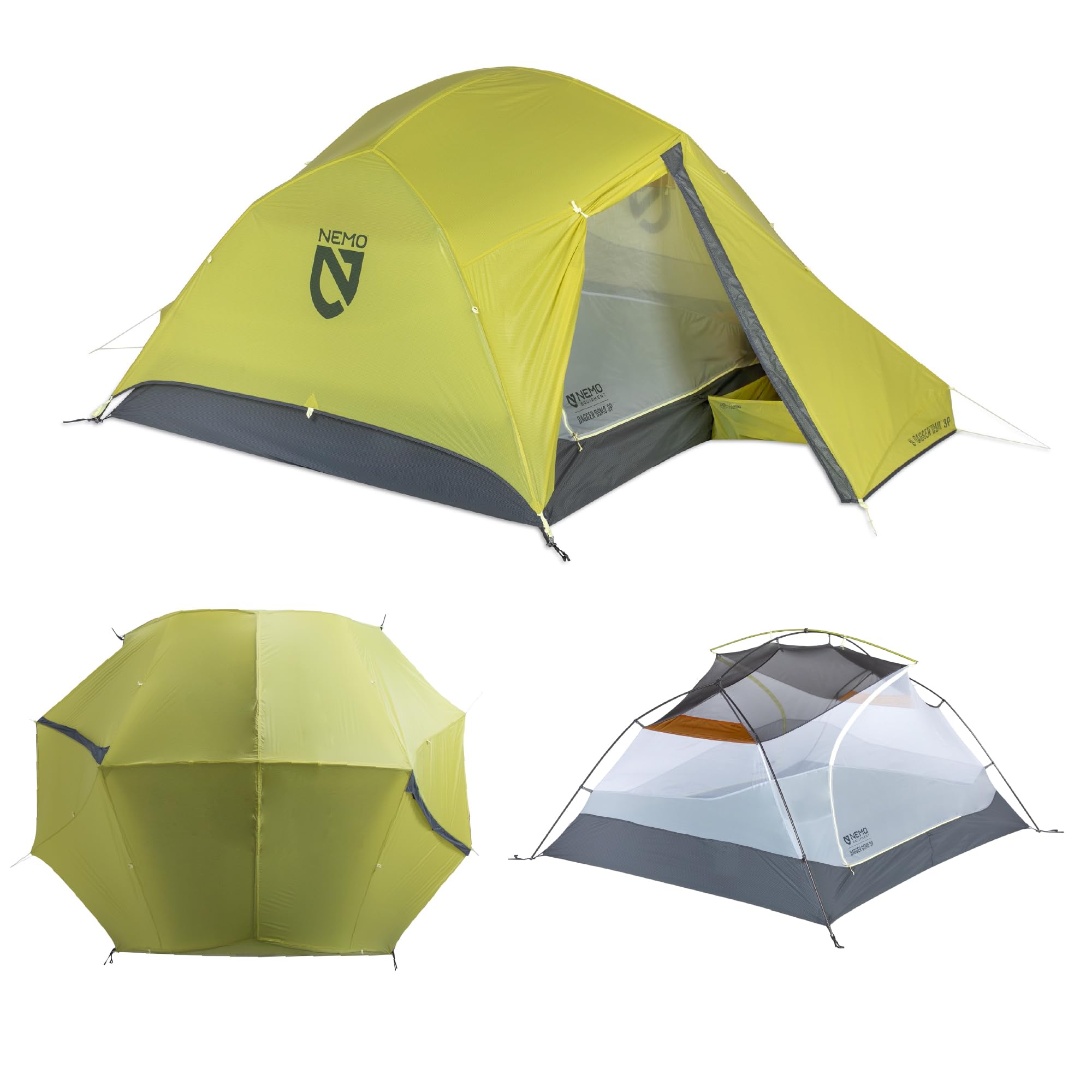
The Dagger OSMO redefines livability in a lightweight 3-season shelter. The high-performance OSMO poly-nylon ripstop fabric delivers 4 times longer water repellency and 3 times less stretch when wet compared to standard sil-nylon, meaning the fly stays taut even after hours of rain. At 4 lbs 10 oz packaged weight, it’s not the lightest, but the interior geometry is class-leading: near-vertical sidewalls and a 44-inch peak height allow most campers to sit fully upright.
The Volumizing Stash strut increases the vestibule space by 22%, creating enough room for two full backpacks plus muddy boots. Setup uses a unique Jake’s foot anchor system — one-handed tensioning that locks the pole in place. The included three-blade stakes are among the most durable in any backpacking tent, and the Divvy Cube stuff sack lets you split components between two hikers.
While the Dagger OSMO carries a premium price, the ecological credentials are unmatched: the first bluesign-certified backpacking tent, using 100% recycled yarns and PFAS-free waterproofing. Downsides include a slightly heavy packed weight for gram-counters and the learning curve on the Jake’s foot mechanism if you’re accustomed to standard grommets.
Why it’s great
- OSMO fabric repels water longer and stretches less when wet
- Best-in-class vestibule volume and interior headroom
- Bluesign-certified with 100% recycled materials
Good to know
- Packaged weight sits above lightweight competitors
- Jake’s foot anchor has a learning curve
- Premium price positions it in the high-end tier
3. MSR Elixir 2
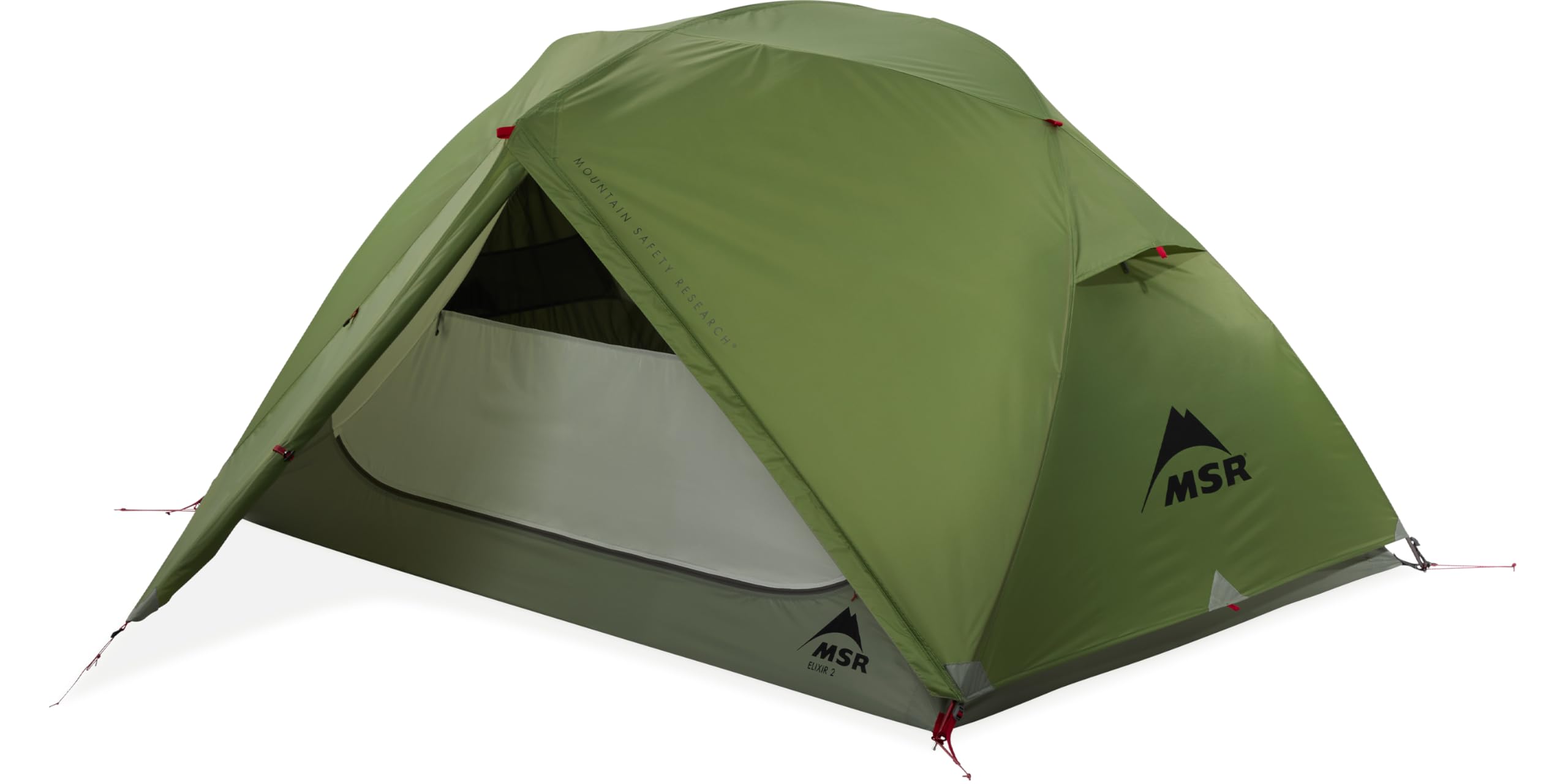
The Elixir 2 is MSR’s versatile workhorse, built to survive years of trips without developing fatal stress points. The updated all-metal corner hardware replaces plastic clips that can crack over time, and the straight-pull zippers eliminate the jamming common with curved models. The true rectangular floorplan and nearly vertical walls make it easy to fit wide rectangular sleeping pads without compressing insulation.
Ventilation is handled by strategically placed mesh panels that channel airflow across the interior to reduce condensation while retaining body heat. A gear loft and end pockets with cable ports keep small items organized. The rainfly is PFAS-free and uses polyester with a PU coating, factory seam-taped for waterproofing. The included dedicated footprint protects the floor on rough sites.
At a minimum trail weight of 5 lbs 2 oz, the Elixir 2 is heavier than dedicated ultralight tents, making it better suited for short trips or hikers who prioritize durability over grams. It also works well as a car-camping crossover tent. The metal corner hardware adds cold-weather reliability, but the round pegs included don’t hold as well in loose soil as Y-stakes.
Why it’s great
- All-metal corner hardware for extreme durability
- Rectangular floor fits wide sleeping pads easily
- Includes footprint and gear loft
Good to know
- Heavier than ultralight alternatives
- Round stakes are less effective in soft ground
- Moderate vestibule space compared to premium rivals
4. ALPS Mountaineering Tasmanian 2

If your adventures extend into early spring or late fall, the Tasmanian 2 offers genuine 4-season protection at a mid-range price point. The full-coverage rainfly and fully closable vents create a sealed environment that held up in customer reports from 8°F snowstorms and sustained 40 mph winds. The 5000mm coating on the tent floor is double the waterproofing found on most 3-season models, critical when snowmelt pools beneath the tent.
Two vestibules and two doors let both occupants stow gear and exit without crawling over each other, and the #8 zippers resist jamming in cold weather. The freestanding pole system with clips — not sleeves — allows 5-minute setup even with gloves on. The packed weight of 7 lbs 15 oz is heavy for backpacking, but manageable for short carries or winter basecamp trips.
Owners note the rainfly pole sleeves are tricky to engage, and the colorful orange/gray scheme doesn’t blend into natural environments. The large footprint also makes site selection critical in rocky terrain. If your trips involve real cold and snow rather than fair-weather camping, this tent offers exceptional storm resistance per dollar.
Why it’s great
- Genuine 4-season capability with 5000mm floor coating
- Two doors and two vestibules for gear and entry
- Free-standing pole clips allow rapid setup
Good to know
- Heaviest tent in this guide — not for gram-conscious backpackers
- Rainfly pole sleeves can be finicky in cold conditions
- Large packed size limits packability
5. Featherstone Backbone

The Backbone challenges the premium ultralight segment with a sub-3-lb trail weight at a mid-range price. As a trekking-pole tent, it sheds the weight of dedicated aluminum poles entirely — you use your hiking poles as the uprights. The 40/60 pole placement creates a tapered floor that still fits two full-size sleeping pads if you’re willing to sleep head-to-toe, though most owners treat it as a spacious one-person shelter.
Construction uses sil-nylon treated to seam-taped waterproofness, and the TPU waterproof zippers slide smoothly without snagging the lightweight fabric. Dual doors and dual vestibules provide separate entries and storage for two hikers. The stuff sack compresses the tent to a bundle that disappears into a 40-liter pack, making it ideal for long-distance thru-hikes.
The biggest trade-off is condensation management — several customer reports note heavy interior moisture in rainy or cold conditions, as the single-wall design lacks the breathability of double-wall tents. It also requires trekking poles to pitch, so you’re committed to carrying them on every trip. If you already use poles and want a lightweight shelter that won’t break your budget, the Backbone delivers impressive value.
Why it’s great
- Ultralight trail weight at a mid-range price point
- Dual doors and vestibules for two-person use
- Compresses very small for packing efficiency
Good to know
- Single-wall design can suffer from condensation in wet weather
- Requires trekking poles — not self-supporting
- Truly fits one person comfortably with gear
6. Kelty Night Owl 2
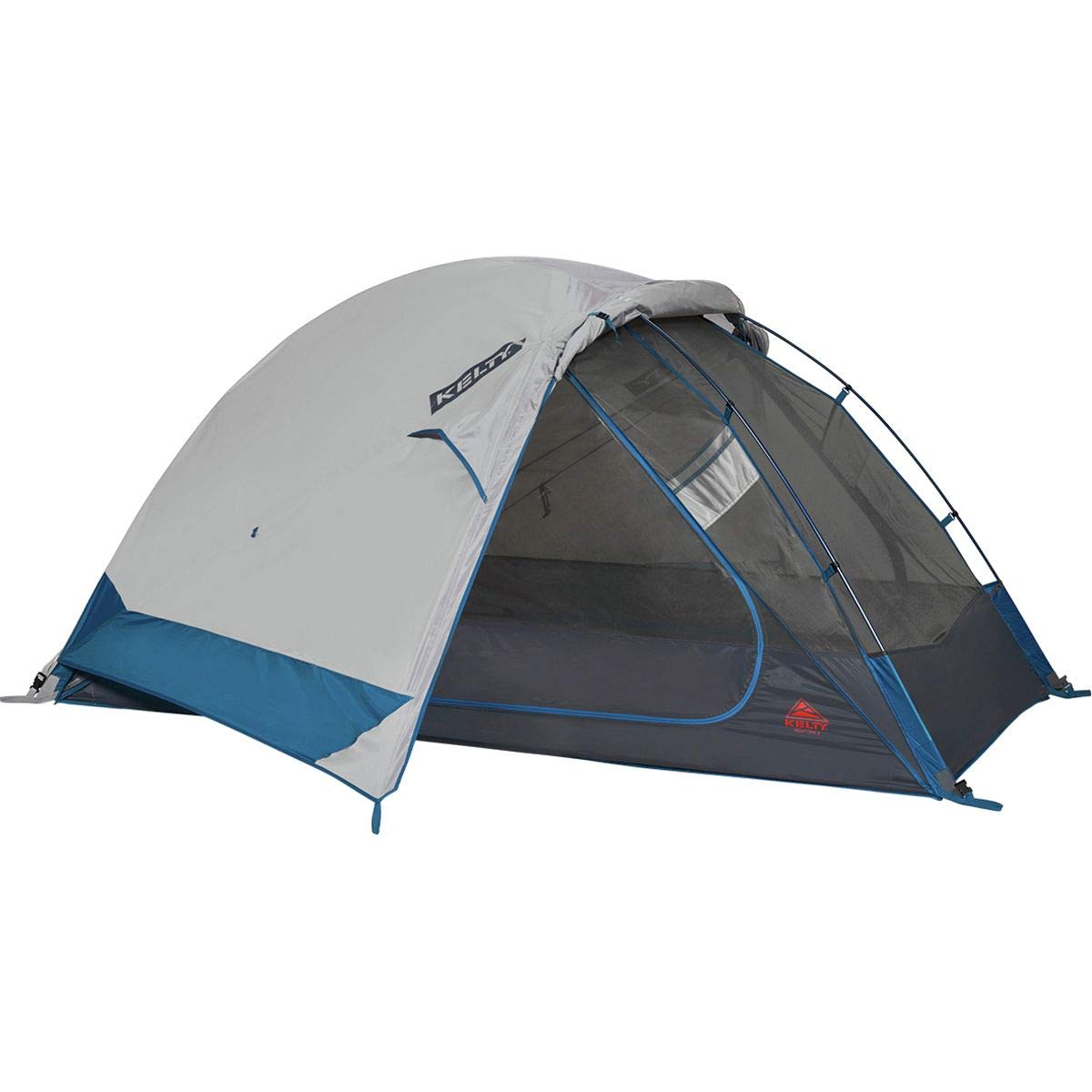
The Night Owl is designed for backpackers who want simplicity and thoughtful features without confusion. The two-hubbed aluminum pole set with corner pockets lets one person pitch the tent in under 5 minutes, and the color-coded clips eliminate guesswork. The standout innovation is the Stargazing Fly system — you roll up a portion of the rainfly and secure it with clips, creating a mesh skylight that also improves ventilation on warm nights.
Internal storage includes a ceiling pocket with the Nightlight panel: slip your headlamp inside to disperse warm light evenly across the tent, turning your shelter into a cozy living space after dark. The floor uses 68-denier polyester with an 1800mm waterproof rating and taped seams, adequate for moderate rain but not heavy downpours. At a packaged weight just over 5 lbs, it’s a comfortable choice for shorter carries.
Owners consistently praise the easy setup and rainfly convenience, but note that the mesh walls limit warmth retention in cold conditions since the tent prioritizes breathability. The low crawl-in entry also requires bending significantly, which can be inconvenient for taller campers. It’s an excellent starter tent for those moving from car camping to backpacking.
Why it’s great
- Stargazing fly system for views and ventilation
- Nightlight ceiling pocket for ambient interior lighting
- Color-coded poles and clips simplify setup
Good to know
- Mesh interior offers less warmth in chilly conditions
- Low entry height requires bending for access
- Packaged weight above ultralight territory
7. OneTigris COSMITTO 2

The COSMITTO 2 proves you don’t need to spend a lot to get a well-featured double-wall tent. The 20D plaid ripstop polyester fly is lightweight yet durable, with a 2000mm waterproof coating and factory-taped seams. The inner tent is constructed entirely of no-see-um mesh, providing 360-degree views and exceptional ventilation while keeping biting insects out. The hexagonal floor plan offers 29 square feet — roomy for one with a large sleeping pad and spacious for two with standard pads.
Setup is a true five-minute process thanks to the three-pole architecture: two #7001 aluminum alloy frame poles and one center ridge pole that creates generous headroom and steep sidewalls. The fly uses a one-hand attachment system with Line Loc 3 tensioners for quick adjustment. Two vestibules and two doors allow cross-ventilation and separate gear storage. Four guy lines with reflective line provide stability in gusty conditions.
Customer feedback is overwhelmingly positive for the price, though the included stakes are lightweight and bend on hard ground. The 75D nylon bathtub floor is relatively thin and can abrade on rough surfaces without a groundsheet. The zippers also snag easily on the rainfly cover if you’re not careful. If you’re starting out and want a functional tent that won’t disappoint, this is a solid value.
Why it’s great
- Full no-see-um mesh interior for ventilation and views
- Two doors and two vestibules at a budget-friendly price
- Quick three-pole setup with Line Loc tensioners
Good to know
- Thin floor requires careful site selection or an extra groundsheet
- Included stakes are lightweight and bend easily on hard ground
- Zippers can snag on the rainfly if not aligned carefully
8. Naturehike Cloud Up 3
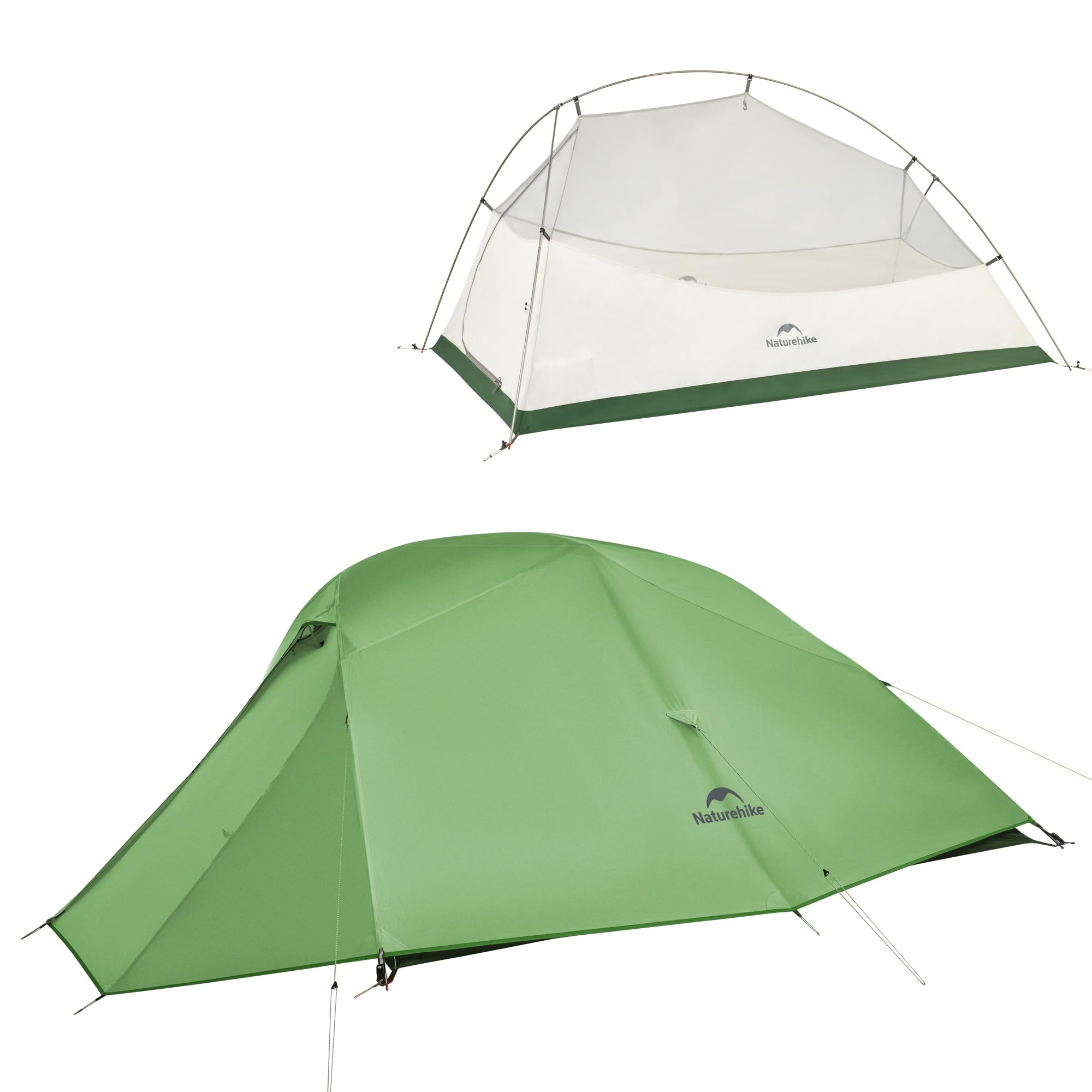
The Cloud Up 3 delivers the biggest interior volume in this guide at a price that undercuts most competitors. With 42.6 square feet of floor space, a 116-inch length, and 45-inch peak height, this freestanding dome can fit three adults in a pinch or two people with generous gear space. The upgraded dual-Y aluminum pole structure creates a stable frame that pitches by one person in under ten minutes.
Waterproofing is comprehensive: the 210T ripstop polyester fly and floor both carry a PU3000mm rating, and the included footprint adds another PU5000mm layer. The high-density B3 mesh inner tent blocks even the smallest insects while promoting airflow. The upgraded wing design increases the gap between inner and outer tents, reducing condensation on humid nights. The packed size of 16.9 by 6.7 inches fits into most backpack compartments comfortably.
The main compromise is the single-door layout — with three occupants, the middle person must crawl over others to exit, making this more practical as a spacious 2-person tent. The floor is also thin for its area and can puncture on rough ground without the included footprint. If you split the weight between two hikers, you get exceptional interior space per dollar.
Why it’s great
- Generous 42.6 sq ft of floor space for two plus gear
- Footprint included in the package at no extra cost
- Strong PU3000mm waterproof rating on fly and floor
Good to know
- Single door limits convenience when used by three people
- Thin floor requires careful site prep or footprint
- Packaged weight over 6 lbs is heavy for solo backpacking
9. Kelty Late Start 2

The Late Start is engineered for the most frustrating part of camping: setting up your tent in the dark after a late arrival. The Quickcorners pole sleeves and color-coded buckle attachment points let a single person go from bag to fully pitched tent in under 3 minutes. The two-pole architecture is idiot-proof — both poles are identical, so there’s no confusion about which goes where.
The 68D polyester fly with a 1200mm waterproof rating and taped seams provides adequate protection for summer showers, though less robust than higher-priced models. The bathtub floor uses the same 68D fabric to keep ground moisture out. The 30-square-foot floor with a 43-inch peak height offers reasonable livability for two hikers, though the single door and single vestibule force some coordination at night.
At a packaged weight just over 4 lbs, it’s heavier than dedicated ultralight options but lighter than most budget tents. Customer reviews consistently note that the materials feel serviceable rather than premium — the fabric has a lighter feel that saves weight but reduces long-term durability. It’s an ideal choice for the casual backpacker who prioritizes speed of setup and PFC-free environmental credentials over absolute weight savings.
Why it’s great
- Quickest setup in this guide — under 3 minutes
- Lightweight aluminum poles and compact pack size
- PFC-free fabrics and coatings reduce environmental impact
Good to know
- Single door and vestibule limit two-person convenience
- 1200mm floor rating is less waterproof than competitors
- Materials feel lighter and less durable than mid-range models
FAQ
How much should a backpacking tent weigh for a multi-day thru-hike?
Is a 4-season tent worth the extra weight for shoulder-season backpacking?
Can I use a trekking-pole tent without trekking poles?
How do I know if a 2-person tent will actually fit two people?
What’s the difference between polyester and nylon for tent fabrics?
Final Thoughts: The Verdict
For most backpackers, the backpacking tent winner is the Big Agnes Copper Spur HV UL because it delivers sub-3-pound freestanding weight with near-vertical walls, dual doors, and a proven track record. If you want the most livable interior space and premium eco-friendly materials, grab the NEMO Dagger OSMO. And for budget-conscious hikers who still want two doors and good weather protection, nothing beats the value of the OneTigris COSMITTO 2.

Mo Maruf
I created WellFizz to bridge the gap between vague wellness advice and actionable solutions. My mission is simple: to decode the research and give you practical tools you can actually use.
Beyond the data, I am a passionate traveler. I believe that stepping away from the screen to explore new environments is essential for mental clarity and physical vitality.