Our readers keep the lights on and my smoothie glass nicely filled. As an Amazon Associate, I earn from qualifying purchases.
Decoding what your body is reacting to can feel like a guessing game when the foods you eat every day could be the cause of ongoing fatigue, digestive issues, or skin problems. At-home allergy tests offer a direct path to identifying specific triggers without the wait and expense of a clinic visit, though selecting the right one requires understanding the difference between IgE and IgG testing, panel size, and lab certification.
I’m Mohammad Maruf — the founder and writer behind WellFizz. I’ve spent over eight years analyzing health diagnostics market trends, focusing on the science behind kit-based lab testing, sample collection protocols, and data security standards for direct-to-consumer wellness screenings.
After evaluating the available options on coverage, speed, and lab accreditation, I’ve put together this guide to help you find the best at home allergy test that matches your specific health concerns and budget.
How To Choose The Best At Home Allergy Test
Choosing the right test starts with understanding what you’re actually measuring. Most kits on the market do not test for true IgE-mediated allergies; instead, they measure IgG antibody reactivity to foods, which indicates a sensitivity or intolerance. If you suffer from anaphylactic reactions, you need a traditional IgE allergy test administered by a doctor. For general discomfort like bloating, headaches, or low energy, an IgG food sensitivity test can be an excellent starting point. The panel size, sample type, and lab accreditation are the three pillars that determine whether a test is worth your time and money.
IgG vs IgE Testing — Pick the Right Marker
IgE antibodies are responsible for immediate, severe allergic reactions like swelling or hives, and require a medical-grade blood draw. IgG antibodies indicate a delayed immune response, often appearing hours or days after eating a trigger food. Most at-home kits test for IgG, which is considered a wellness screening rather than a medical diagnosis. If you want to screen for potential food sensitivities that might be causing low-grade inflammation, an IgG test is the appropriate choice. If you suspect a true allergy, skip the home kit and see an allergist.
Panel Size vs. Relevant Coverage
Bigger isn’t automatically better. A test that screens 1,500 items often includes spices, preservatives, and niche ingredients you rarely eat, which can lead to a confusing report full of flagged items with no practical meaning. A focused panel of 100-200 items covering common trigger foods (dairy, gluten, eggs, soy, nuts, shellfish) is often more actionable. The ideal test balances broad coverage with items you actually consume on a regular basis, so you can build an elimination diet around realistic changes.
Sample Collection Method — Blood vs. Hair
Blood-based tests (finger prick) analyze IgG antibodies in your serum and are generally considered more aligned with clinical methodology. They require a few drops of blood dried on a card. Hair-based tests use bioimpedance technology, which is less scientifically validated but painless and easier to perform on children. Hair tests are popular among families because they avoid the needle anxiety, but their results are often described as “wellness insights” rather than direct antibody measurements. Choose a hair-based kit if you want a non-invasive starting point, but understand that blood-based results typically carry more weight in a medical context.
Quick Comparison
On smaller screens, swipe sideways to see the full table.
| Model | Category | Best For | Key Spec | Amazon |
|---|---|---|---|---|
| Everlywell Food Sensitivity Test | Blood IgG | Clinically-backed IgG screening | 96 foods via CLIA lab | Amazon |
| UCARI Personal Sensitivity Profiling | Hair Bioimpedance | Wide coverage non-invasive screening | 1,500+ items tested | Amazon |
| Verisana Food Sensitivity Complete Test | Blood IgG | 240-item physician-reviewed panel | 240 foods via CLIA lab | Amazon |
| AllergyHero Comprehensive Food Sensitivity Kit | Blood IgG | All-ages family-friendly test | 286 foods & beverages | Amazon |
| AFIL Primal Food & Drinks Sensitivity Test | Hair Bioimpedance | Fast results at an entry-level price | 350+ items via hair | Amazon |
| 5Strands Nutrition Test | Hair Bioimpedance | Checking vitamin/mineral absorption | 112 vitamins & minerals | Amazon |
| AFIL 1000+ Food Sensitivity Test | Hair Bioimpedance | Maximum item coverage deep dive | 1,000+ items tested | Amazon |
In‑Depth Reviews
1. Everlywell Food Sensitivity Test
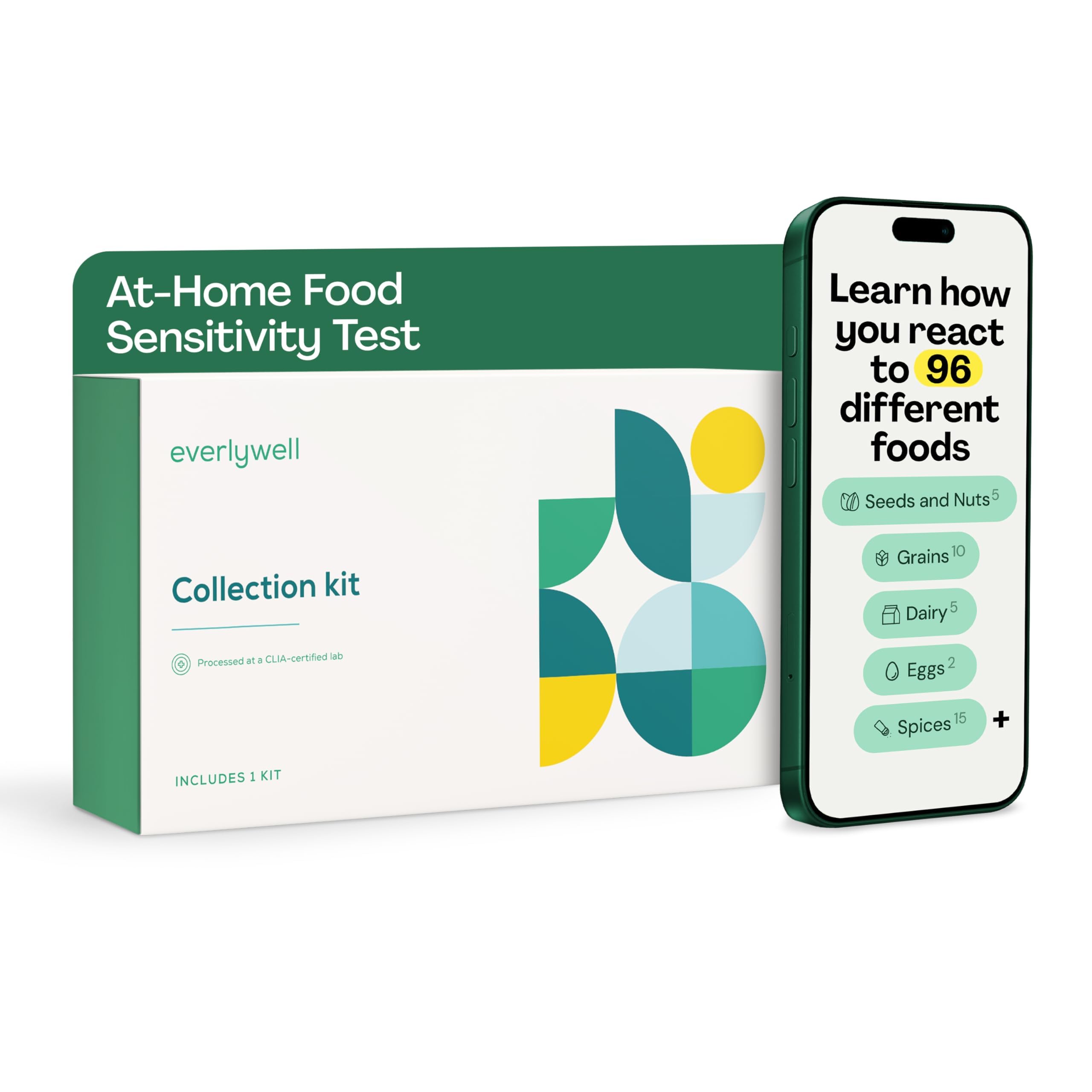
Everlywell is the most recognized name in home health testing, and their Food Sensitivity Test is the gold standard for IgG-based screening at home. The kit measures your body’s IgG antibody reactivity to 96 common foods — including gluten, dairy, eggs, shellfish, and grains — using a dried blood spot sample. The process is straightforward: you give a simple finger prick, collect a few drops of blood on the card, and mail it to their CLIA-certified lab. The results are reviewed by board-certified physicians before being released, which adds a layer of clinical accountability that is rare among home test brands. In the real-world customer accounts, the test helped one user reduce migraines from near-daily to about three per month after eliminating wheat and gluten, while another reported clearing psoriasis after discovering a yeast sensitivity. The panel is moderate at 96 foods, but the medical-grade analysis and clear digital report make it easy to translate results into a structured elimination diet. However, it is not available in New York, and you need to be 18 or older to purchase. The blood sample can be tricky for some — one customer had their sample rejected due to insufficient blood, leading to a poor service experience. For the price of a few restaurant dinners, you get a level of lab quality that provides actionable data for long-term dietary changes. This test is the most balanced choice for adults who want medically credible IgG results they can share with their doctor.
From a testing science standpoint, Everlywell’s use of ELISA (enzyme-linked immunosorbent assay) in a CLIA-certified environment is what sets it apart from many competitors that rely on non-validated bioimpedance hair scans. The 96-food panel covers all major food groups, though it lacks the sheer breadth of some 1,500-item competitors. The strength here is not quantity — it is quality control. Every step, from sample reception to result upload, is managed under federal CLIA standards, meaning the lab must participate in proficiency testing and quality assessments by CMS. This gives you a defensible dataset when planning an elimination diet. The online dashboard is clean and color-coded, showing moderate, high, and very high IgG responses, allowing you to prioritize which foods to remove first. The turnaround time of 3-5 business days is reasonably fast, and the HSA/FSA eligibility is a nice bonus for those with flexible spending accounts.
The primary downside is the panel size — if you suspect a sensitivity to a less common ingredient like spelt, tapioca, or a specific nut, Everlywell won’t cover it. There is also the ever-present risk of a failed blood draw, which can happen if you don’t warm your hand sufficiently before the finger prick. The customer service complaints in the review stream highlight that when a sample is rejected, the resolution process can be frustrating. Despite these edge cases, the overall track record is robust, with hundreds of thousands of kits sold. For most adults dealing with persistent bloating, brain fog, or skin issues, this test offers the best balance of scientific credibility, ease of use, and practical output. It is the one kit where you can point to a review, say “IgG test helped my migraines disappear,” and believe it.
Why it’s great
- CLIA-certified lab with physician review increases result credibility.
- Clear color-coded dashboard makes elimination diet planning straightforward.
- IgG measurement is clinically recognized for delayed food sensitivity screening.
- HSA and FSA eligible for flexible spending.
Good to know
- Blood draw can result in insufficient sample if not performed carefully.
- 96-food panel is limited compared to broader home tests.
- Not available in New York and restricted to ages 18 and up.
- Customer service response for failed samples can be inconsistent.
2. UCARI Personal Sensitivity Profiling Test

UCARI takes a different route from the blood-based IgG tests, using a hair sample to screen over 1,500 foods, additives, skincare ingredients, and environmental factors. This is a broad-stroke profiling tool rather than a clinical allergy test. The collection process is about as easy as it gets: snip about 10 strands of hair, place them in the provided pouch, and mail it in the prepaid envelope. No blood, no pain, and no fuss — which is why many households choose UCARI for testing both adults and children. The turnaround is fast: about two business days after your sample reaches the US-based lab. The color-coded digital report categorizes items into response levels, helping you understand which items are flagged as severe, moderate, or mild. In one remarkable case review, a user dealt with severe eye irritation that six doctors could not solve; UCARI flagged a severe reaction to potato, and after eliminating it along with several moderate items (oatmeal, eggs, tomatoes), the eye condition cleared completely. Another review from a pet owner who bought the parallel pet test noted that UCARI accurately identified beef as a dog’s trigger instead of the suspected chicken, saving money on food switching. Those are powerful anecdotes, but the system is not without major criticisms. Several users reported being flagged for 24 severe and 140 moderate intolerances, which essentially covers almost every food they eat, leaving them overwhelmed and without a clear dietary direction. The test also explicitly states it is not an allergy test and does not diagnose or treat medical conditions — it is squarely positioned as a wellness screening tool. This candid labeling is honest but means you should not rely on it for serious allergic reactions. The bioimpedance methodology behind hair analysis is less validated by mainstream medical literature compared to IgG blood testing, so while the results can be useful starting points, they are best treated as hypotheses to confirm through elimination rather than definitive lab diagnostics.
The major advantage of UCARI is the sheer scope — 1,500+ items is the largest panel in this roundup, covering not only foods but also household chemicals, skincare additives, and environmental triggers. This breadth can reveal patterns that a 100-item panel might miss. For instance, the user with eye irritation would have never tested for potato as a trigger in a narrow panel, but UCARI caught it because potato was included. However, this wide net also leads to false positives or “noise” in the data. Some reviewers noted contradictions in results (coconut water clean but coconut milk flagged, garlic flagged but garlic powder not), which suggests the bioimpedance method may not be consistent across similar items. The user interface is intuitive, and the included downloadable wellness guidance helps translate the color-coded results into structured elimination planning. UCARI also does not sell your data, which is a minor plus from a privacy standpoint, though this claim is hard to independently verify. For initial broad-spectrum screening where you are not sure what to test for, UCARI provides a massive canvas of data points. Just be prepared to sort through a lot of information and potentially consult with a nutritionist to make sense of it all. The price is mid-range, landing below the premium blood tests but above the entry-level hair kits, making it a solid choice for families or anyone looking for a comprehensive initial sweep of their dietary and environmental landscape.
The biggest practical concern is the lack of actionable specificity when too many items are flagged. If 150 of your daily foods come back as moderate or severe, the test has essentially told you that your body is reacting to everything, which is overwhelming and not helpful for designing an elimination diet. The vendor’s suggestion to use it as a “starting point” is honest but means you will need to do additional experimentation on your own. The test also does not measure actual antibody levels — it measures bioenergetic responses from hair, which is a technology that many conventional doctors are skeptical of. However, for people who have tried blood-based tests and want a different lens, or for those who simply want a non-invasive option that avoids needles, UCARI offers an unmatched number of screened items. If you are willing to accept that the results are wellness insight rather than medical diagnostic data, and you are prepared to run your own elimination experiments based on the report, this is a worthwhile kit. It is particularly good for identifying unexpected or niche triggers that standard IgG panels do not cover, such as food additives, gums, and stabilizers that are common in processed foods but rarely tested in smaller panels.
Why it’s great
- Massive 1,500+ item panel covers foods, additives, and environmental factors.
- Painless hair sample collection, ideal for children and needle-averse users.
- Fast digital results within two business days of lab receipt.
- Color-coded report with downloadable wellness guidance for elimination planning.
Good to know
- Not a medical test — results are wellness insights, not clinical diagnostics.
- Risk of overwhelming number of flagged foods, making diet planning difficult.
- Bioimpedance hair analysis has weaker scientific validation than blood IgG testing.
- Some reported inconsistencies between similar items (e.g., coconut water vs. milk).
3. Verisana Food Sensitivity Complete Test
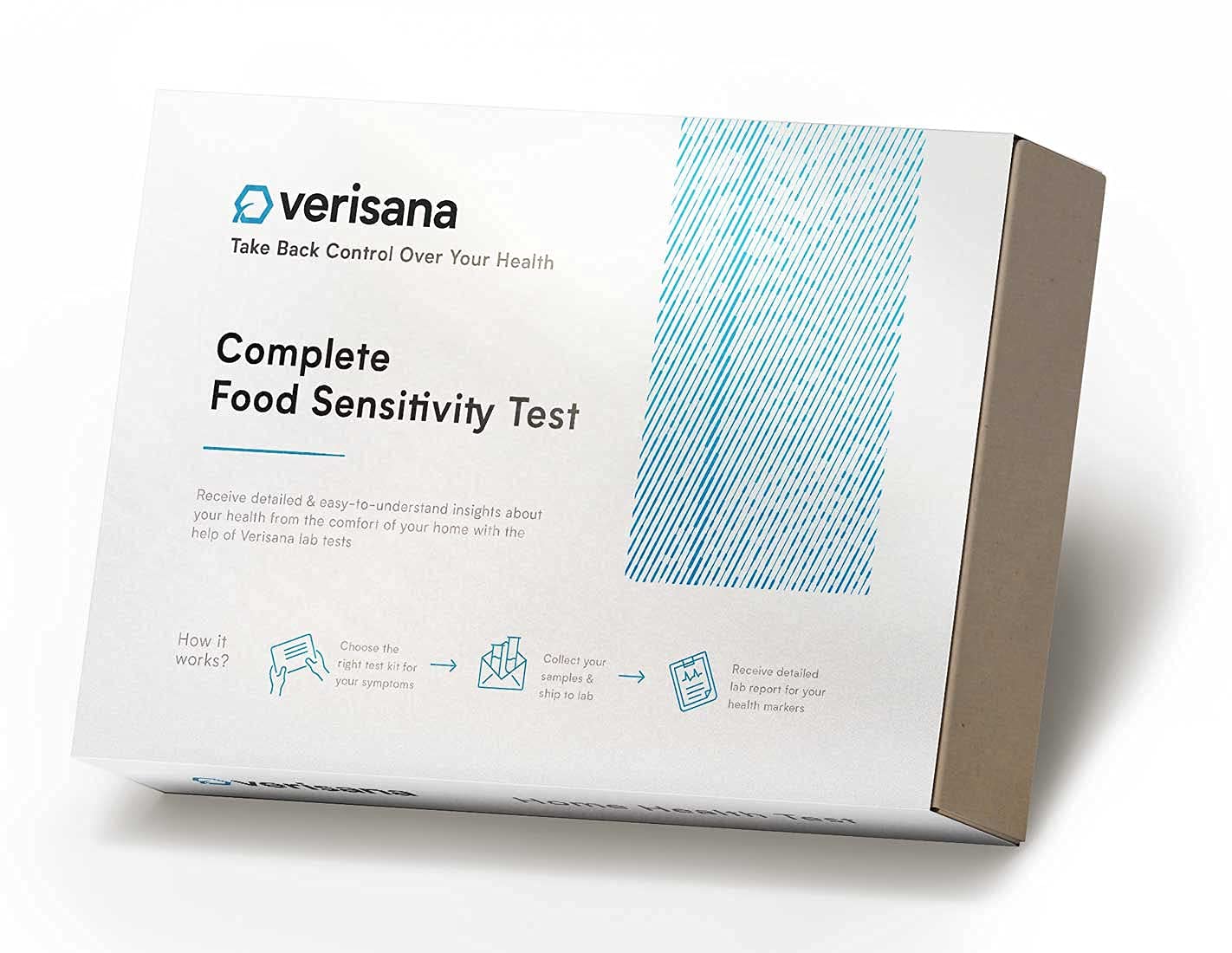
Verisana offers a complete package that combines a solid 240-food IgG panel with physician oversight, making it a compelling alternative to Everlywell for those who want a larger test menu without stepping into the less-validated bioimpedance territory. The test uses a dried blood spot method, where you collect a few drops via finger prick, and the sample is analyzed in a CLIA-certified lab. One key differentiator is that each test request and its results are reviewed and approved by an independent board-certified physician from within your state, which adds a layer of medical legitimacy that few home kits provide. The 240-food panel covers a broad spectrum of common triggers including dairy, gluten, nuts, grains, meats, vegetables, and fruits, giving you a more comprehensive picture than the 96-food Everlywell panel. The digital report is clear, organized by response level, and arrives within a few days via a secure web portal. Real-world feedback is mostly positive: one customer reported that the test identified a mozzarella intolerance and a high candida reaction, while another noted it provided “clarity to tailor nutrition” after years of unresolved issues. The kit is also HSA/FSA eligible. However, Verisana has some notable limitations. It is not available in New York, New Jersey, Rhode Island, or Maryland due to state regulatory restrictions. A few reviewers were disappointed to discover it requires a finger-prick blood sample rather than the saliva sample they anticipated. The package instructions and equipment are professional, but the blood draw can still be a barrier for users with needle phobia. Compared to Everlywell, Verisana covers more food items at a slightly higher price point, but both use the same fundamental IgG ELISA methodology. The physician review process gives Verisana an edge in terms of clinical credibility, making its results easier to present to your general practitioner. The trade-off is a slower turnaround in some cases; while many get results in under a week, a few reports mention processing times closer to two weeks. For adults who want a wider food panel screened under physician oversight and are comfortable with a finger prick, this is an excellent choice that sits comfortably in the premium segment.
From a technical perspective, Verisana uses IgG4 subclass testing, which is a more specific marker within the IgG family. IgG4 antibodies are associated with chronic exposure to foods and are less likely to cross-react with other antibody types compared to total IgG measurement. This means the test is theoretically more specific to food-related sensitivities rather than general immune activation. The 240 items are grouped into logical categories, and the report includes a food rotation guide to help you reintroduce items gradually after elimination. The physician review is not just a rubber stamp — the doctor verifies that the results are consistent with the clinical picture and can offer general guidance. This feature is particularly valuable if you plan to show the results to your own healthcare provider, as it adds a degree of professional validation. The packaging is professional and includes a detailed instruction booklet, lancets, alcohol wipes, a blood collection card, and a prepaid return envelope. One minor criticism is that the collection card requires a relatively large volume of blood compared to some other kits, which can be challenging for those who have difficulty getting enough blood from a finger prick. Warming your hand with warm water for a few minutes before the prick is strongly recommended. The manufacturer advises that the test is for ages 18 and older. For anyone who wants a blood-based, physician-reviewed IgG screening with a larger panel and is willing to accept the finger prick requirement, Verisana delivers a strong, credible product that aligns closely with what a functional medicine practitioner might order. It is a step above the entry-level hair tests in scientific rigor, and the physician oversight gives it a level of authority that the bioimpedance kits cannot match.
The main drawback is the blood sample requirement — it is an unavoidable part of the process, and some users find the finger prick and the amount of blood needed more daunting than expected. The state restrictions (NY, NJ, RI, MD) also exclude a significant population. Additionally, while the panel is larger than Everlywell’s, 240 items still leaves out some niche ingredients and spices that ultra-broad panels like UCARI cover. The price is also on the higher side, though it is comparable to other premium blood-based tests. The customer support experience appears to be generally positive, with good communication around sample receipt and results availability. There are no reports of sample rejection being a major issue, which is an improvement over some other blood-based kits. In summary, Verisana is a well-balanced option for users who want more data than the standard 96-food test, need the credibility of a CLIA lab and physician sign-off, and are okay with a finger prick. It is not the cheapest option, but it is arguably the best value when you factor in the number of foods tested, the lab quality, and the physician review.
Why it’s great
- 240-food IgG panel is larger than many direct competitors like Everlywell.
- Independent physician review adds medical credibility to each result.
- CLIA-certified lab with IgG4 subclass measurement for higher specificity.
- HSA and FSA eligible, with professional packaging and instructions.
Good to know
- Requires a blood sample via finger prick; not suitable for needle-phobic users.
- Not available in NY, NJ, RI, and MD due to regulatory restrictions.
- Results may take up to two weeks in some cases despite faster typical turnaround.
- Price is premium tier; not budget-friendly for casual screening.
4. AllergyHero Comprehensive Food Sensitivity Test Kit

AllergyHero targets a specific niche: families who want to test both adults and children with a single blood-based IgG kit. The 286-item panel covers foods, beverages, and common ingredients across broad categories, making it one of the larger blood-based IgG tests available. The kit uses the standard finger-prick blood sample, and the lab analysis is handled by a CLIA-certified facility. The primary selling point is that it is explicitly suitable for all ages, so you can test toddlers alongside parents without needing separate kits or alternative methods. Customer feedback is generally strong, with one user reporting that the test solved five years of stomach pain, nausea, and headaches within three days of starting an elimination diet after discovering high reactivity to eggs, peanuts, and dairy. Another reviewer highlighted the ease of the process and the comprehensive nature of the report. However, the reviews are somewhat polarized — while many praise the results, a significant minority report serious logistical headaches. One review described the entire process as “a pain,” with every step failing in some way, and recommended choosing a different, more reputable test. Another noted that the IgG interpretation is not straightforward; it is “soft guidance” rather than hard medical data, and foods may be fine temporarily before reintroduction. The panel size is generous but not the largest; for comparison, it falls between Everlywell (96) and UCARI (1,500+), but it uses IgG methodology which is more medically accepted than bioimpedance. The turnaround time can be a concern — some users reported it took two weeks for results, which is slower than the advertised timeline. The price is premium, reflecting the larger panel and the family-friendly positioning. AllergyHero is best suited for families who want a single blood-based test that can handle multiple household members, and who are willing to accept that the results are a starting point rather than a definitive diagnosis. The company behind the test, Better Life Science, is smaller than Everlywell, which may explain the inconsistency in customer service experiences. If you are willing to gamble on the service quality for the sake of a broad, age-inclusive IgG panel, this is a viable option. Otherwise, you may be better served by a more established brand with a slightly smaller panel but more reliable support.
From a nutritional science perspective, the 286-food panel includes a good balance of common allergens (milk, egg, wheat, soy, peanut, tree nuts, fish, shellfish) and less commonly tested items like herbs, spices, and specific fruits. This depth is useful if you have already ruled out the top eight allergens and are looking for more obscure triggers. The report is color-coded with clear guidance on which foods to eliminate first. The company recommends a two-week elimination period followed by gradual reintroduction, which aligns with standard elimination diet protocols used by dietitians. The test measures total IgG, which is a broader marker than the IgG4-specific test used by Verisana. This means it may flag more foods, potentially leading to a longer list of items to avoid during the elimination phase. However, the upside is that it may catch sensitivities that an IgG4-only panel would miss. The lab is CLIA-certified, which provides a baseline quality assurance, but the lack of independent physician review (unlike Verisana) means the results come directly from the lab without a second clinical opinion. For families, the biggest advantage is age inclusivity — most blood-based IgG kits are limited to 18+, but AllergyHero explicitly includes children. The finger prick is the same simple process, though parents will need to help younger children with the blood collection. This opens up the possibility of identifying food triggers that may be causing behavioral issues, skin rashes, or digestive problems in kids. The kit also includes a prepaid return envelope and clear instructions. The primary risk, as noted in the reviews, is the variability in customer service and sample processing speed. If you are ordering for a family and need results on a predictable timeline, this inconsistency could be frustrating. Overall, AllergyHero fills a specific role that no other test in this lineup does: a blood-based IgG test for all ages. If that describes your household’s needs, it is worth serious consideration. Just keep in mind that the company’s support infrastructure is not as mature as some competitors, so you may need to be proactive in following up if your sample is delayed.
One notable technical difference is that AllergyHero tests serum IgG using ELISA, the same method as Everlywell and Verisana. This means you get an actual quantitative antibody measurement rather than the bioenergetic “response ranking” from hair-based tests. For anyone who wants a number they can show a doctor, this is the right methodology. The 286-item panel makes it the largest blood-based IgG test in this comparison, which is a genuine advantage for comprehensive screening. However, the trade-off is that with more items tested, the chance of false positives increases. The company’s own instructions recommend treating the results as a guide rather than a ban list, which is a sensible approach. The digital dashboard is functional but less polished than Everlywell’s, and there is no mobile app integration. For families who have already run a basic elimination diet without success, the extra coverage from AllergyHero’s 286 items could uncover triggers that smaller panels miss. In the case of the user who resolved years of stomach issues by eliminating eggs, peanuts, and dairy, those items are standard on any panel, so the advantage of the larger panel may not apply to everyone. Yet for someone with a mysterious reaction to, say, chamomile or saffron, a 96-item panel would never catch it, while AllergyHero might. This kit is a calculated bet: you get more data and the ability to test children, but you accept a slightly higher risk of service issues and a bigger list of potential triggers to navigate. If you value panel size and family inclusivity above all else, it is a strong contender.
Why it’s great
- 286-food IgG panel is the largest blood-based test in this roundup.
- Suitable for kids and adults, making it a practical family screening tool.
- CLIA-certified lab analysis with quantitative ELISA methodology.
- Color-coded digital report supports structured elimination diet planning.
Good to know
- Customer service and sample processing speed have been inconsistent.
- Results can take up to two weeks, slower than the average 3-5 day tests.
- No physician review of results; provided directly from the lab.
- Premium price point for a less established brand compared to Everlywell.
5. AFIL Primal Food & Drinks Sensitivity Home Test Kit
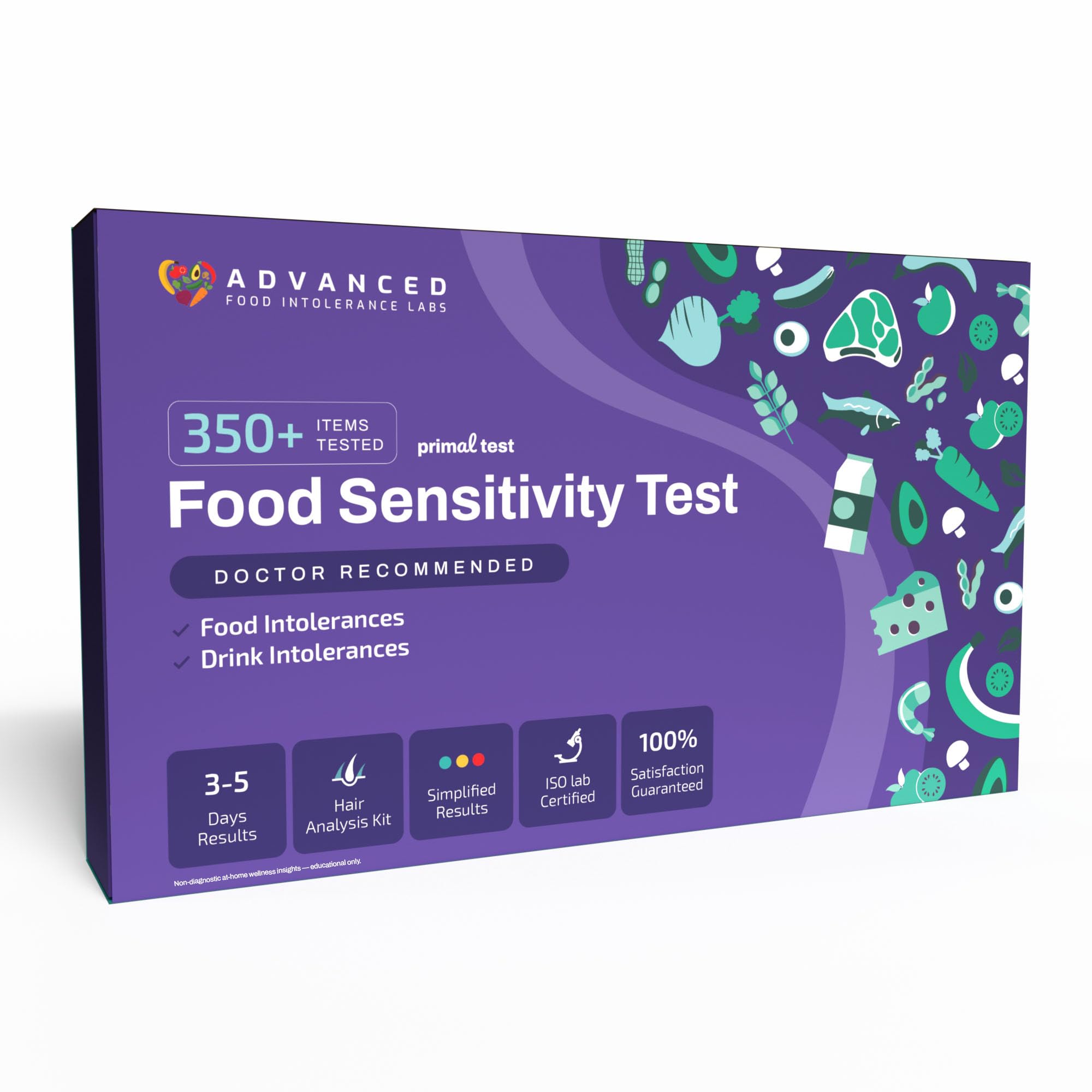
AFIL Primal enters the market as a strong entry-level option for those who want a broad hair-based screening without breaking the bank. The kit tests 350+ food and drink items, and uses the same non-invasive hair sampling approach that avoids needles entirely. The real standout feature here is the turnaround speed: results are typically delivered within three business days after your sample reaches the lab, which is faster than most blood-based kits. The process is simple: collect a small hair sample (about 10 strands), register the kit online, and mail it back using the prepaid envelope. The digital report is accessed through a personal member portal, which also includes diet plans, recipes, and access to a knowledge base. The ISO 9001 and 27001 certifications for quality management and data security add credibility that is rare at this price point. In real-world usage, the reviews are split. Many users report positive outcomes: one customer identified multiple unknown food intolerances that were causing bloating and stomach pain, and another found that coconut milk, peanut butter, and dark chocolate were exacerbating hormonal acne. However, there are also significant detractors. One user wrote a pointed one-star review titled “There’s a reason this is cheaper than others,” describing poor customer service, delayed sample processing, and contradictory emails. Another noted that delivery delays for the kit itself compounded the wait time, making the overall experience frustrating despite the fast lab turnaround. The test relies on biofeedback technology from hair, which again is less clinically validated than blood-based IgG measurements. For a budget-friendly hair-based test with quick results, AFIL Primal provides a decent first step into the world of food sensitivity screening. It is best for adults who are curious about potential triggers, want results fast, and are not overly concerned about the clinical validity of hair bioimpedance. The portal extras (diet plans and recipes) add value, though their quality depends on the accuracy of the test data itself. If you experience delays in kit delivery or sample processing, the speed advantage disappears, so paying for faster shipping is recommended if you have a tight timeline.
From a technical standpoint, AFIL Primal uses a patented biofeedback technology that analyzes the body’s cellular response to 350+ items via hair. This is the same underlying approach used by UCARI, though AFIL’s panel is smaller (350 vs. 1,500+). The ISO certifications are noteworthy: ISO 9001 deals with quality management systems, while ISO 27001 addresses information security management. This means AFIL has formal processes for both lab quality and data protection, which is a mark of operational rigor that you do not always get from small direct-to-consumer brands. The 350-item panel covers common foods, drinks, and spices, but omits many environmental and additive items that UCARI includes. The member portal is fairly comprehensive, with articles and meal planning tools that can help you implement the results. The company also offers customized supplement recommendations based on your results, which some users may find useful but others may perceive as an upsell. The color-coded report is similar to other kits: items are marked as red (avoid), yellow (monitor), or green (no issue). One reviewer specifically noted that the test helped identify triggers for hormonal acne after two weeks of kit delivery and sample shipping. The main technical limitation is the reliance on hair-based bioimpedance, which measures resistance to an electromagnetic signal rather than actual antibody levels. This is a wellness screening tool, not a clinical diagnostic, and should be treated as such. The ISO 27001 data security certification does provide peace of mind that your personal health data will not be sold, which is a genuine concern in the home testing space. For anyone who wants to dip their toes into food sensitivity testing at a low cost with quick turnaround and solid data protection, AFIL Primal is a rational starting point. Just be prepared for the possibility of shipping delays and less responsive customer support compared to premium brands.
The most common complaint is that the lower price tag correlates with operational hiccups. The lab processing itself is fast — three days — but getting the sample to the lab can take longer than expected if the post office is slow or if the kit takes time to arrive. Some customers reported that their sample was lost in transit, and the support team was not proactive about following up. The contrast between the fast lab processing and the surrounding logistical delays creates a frustrating experience for some. On the other hand, users who received their results quickly and accurately were very satisfied. The value proposition is clear: you get 350+ items tested for a fraction of the price of premium blood-based kits. The downsides are the potential for slower-than-advertised end-to-end delivery and the inherent skepticism around hair testing. For someone on a strict budget who just wants a broad screening to get started, AFIL Primal is a practical choice. It is not the most rigorous test, but it is fast, affordable, and ISO-certified for quality and data security. Just keep your expectations realistic about customer support responsiveness and the nature of hair-based bioimpedance results. If you can accept those trade-offs, this is a solid entry-level companion on your wellness journey.
Why it’s great
- Fast three-business-day turnaround after sample is received by the lab.
- ISO 9001 and 27001 certified for quality and data security.
- Painless hair sample collection, no needles needed.
- Member portal includes diet plans, recipes, and educational articles.
Good to know
- Customer service can be slow and inconsistent based on user reports.
- Hair-based bioimpedance is less clinically validated than blood IgG testing.
- Kit delivery and sample shipping can add significant waiting time.
- Some users experience contradictory emails and lack of proactive communication.
6. 5Strands Nutrition Test
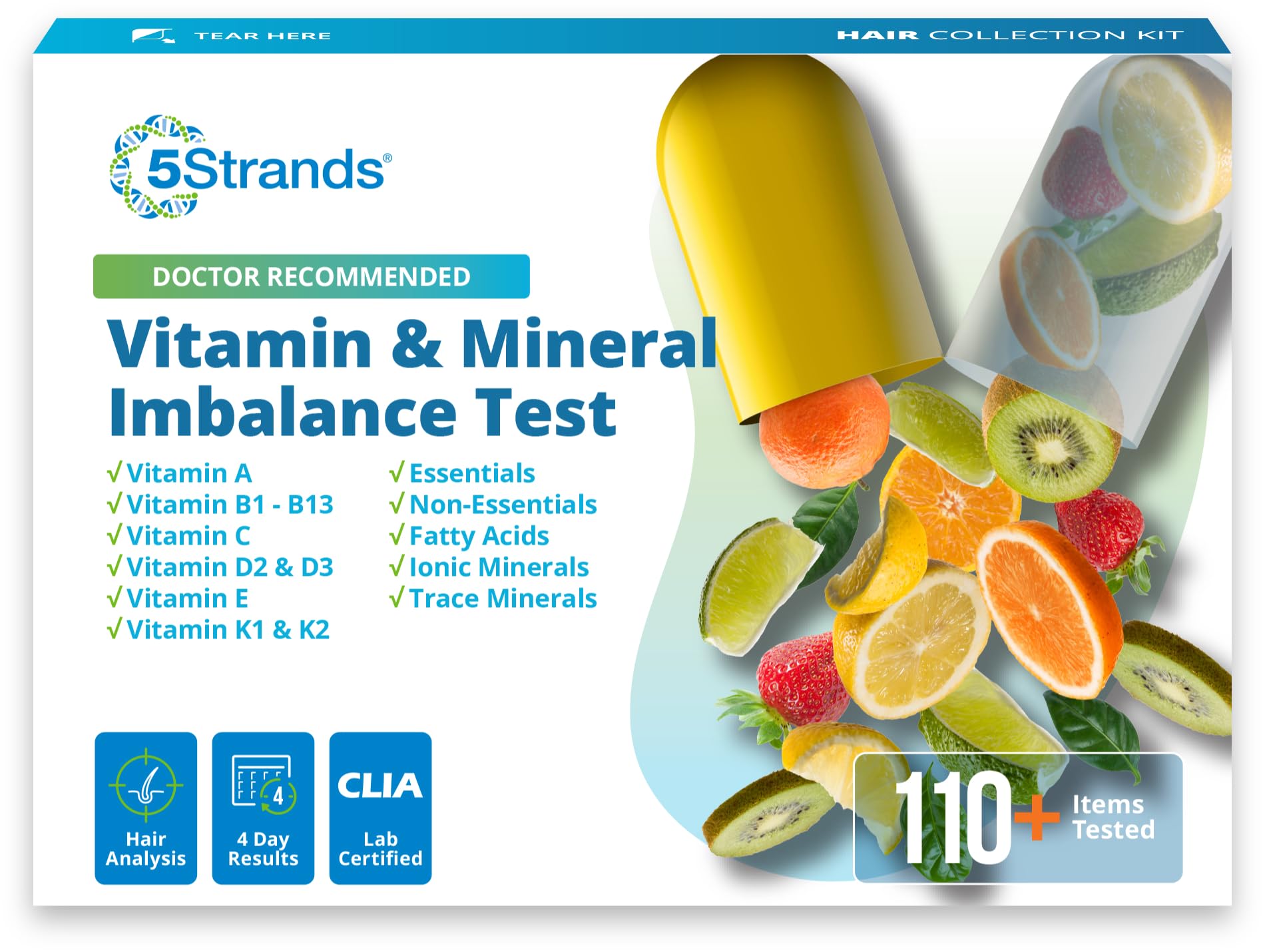
5Strands takes a different approach from the rest of the kits in this guide: rather than testing food sensitivities, it screens your body’s ability to absorb 112 vitamins, minerals, amino acids, and essential fatty acids. This is a nutrition absorption test, not a food allergy test, but it serves a complementary purpose for those who suspect their symptoms (low energy, brittle nails, dry skin, fatigue) are linked to nutrient deficiencies rather than food triggers. The test uses a hair sample, which makes it non-invasive and simple to administer. The process is the same as other hair-based kits: register online, collect 10-15 strands of hair, and mail them in the prepaid envelope. Results are delivered within four days via email and a mobile dashboard. The report organizes each nutrient into four response levels, showing which ones your body may be struggling to absorb. This allows you to adjust your diet or supplement regimen accordingly. The brand is well-established, having been trusted by over 345,000 customers, including its popular pet test. In customer reviews, one user reported that the test confirmed a B12 deficiency that doctors had dismissed, helping them address gut issues and grey hair. Another user noted it made it simple to adjust their diet based on the specific nutrient absorption findings. However, the test is not without criticism. One reviewer shared that the test showed no vitamin D issues, but their doctor’s bloodwork revealed a severe deficiency, calling into question the accuracy of the hair bioimpedance method. Another user described the results as “not as informative as expected,” noting that the test only indicates severity (low, moderate, severe) without telling you whether the result is a deficiency or an elevation. The consensus is that the test works best as a starting point, with follow-up bloodwork recommended for any flagged severe items. For anyone already considering a food sensitivity test, pairing it with a 5Strands nutrition test can give a more complete picture of what your body is reacting to and what it is failing to absorb. It is especially useful for vegans, vegetarians, or anyone with restrictive diets who worries about hidden nutrient gaps.
The technical basis of the 5Strands test is bioimpedance, the same hair-based methodology used by AFIL and UCARI. The company states that each sample is analyzed twice in a certified U.S. lab (double-scan process) for accuracy. The report focuses on absorption markers, not serum levels, so it is measuring how the body is interacting with nutrients at a cellular level rather than measuring the amount in your bloodstream. This is a fundamentally different metric from a traditional blood test. The company is transparent about the fact that the test is not a medical diagnostic and should not replace bloodwork. The 112 nutrients covered in the panel include all major B vitamins, vitamin D, vitamin A, vitamin C, vitamin E, vitamin K, calcium, magnesium, zinc, iron, selenium, trace minerals, essential amino acids, and omega-3/6 fatty acids. This panel is broad enough to cover most common nutritional concerns. One of the more practical use cases is identifying why a multivitamin is not making you feel better — the problem may not be the supplement itself but your body’s inability to absorb it. The double-scan process is a claim of quality control, though the underlying technology is still the same hair-based method that conventional medicine treats with skepticism. Reviews suggest that the results align well with symptoms for many users, but the occasional mismatch with blood tests (like the vitamin D example) indicates that the test should be used as a supporting tool rather than a standalone diagnostic. The mobile dashboard is user-friendly and provides clear charts. The brand also offers separate tests for food sensitivity, environmental items, and even the popular pet test, which means you can create a comprehensive wellness testing plan under one platform if you are satisfied with the results. The price is mid-range, making it an affordable supplement screening option that won’t break the bank.
The biggest limitation is the lack of specificity in the report. Users see a nutrient flagged as “severe,” but the report does not indicate whether the issue is a deficiency (too little absorption) or an elevation (too much accumulation). This matters because the interventions are opposite — if you are not absorbing magnesium, you need more; if your body is accumulating magnesium, you may need to reduce intake. The test simply says “this nutrient is an issue.” For the price, this is a reasonable limitation, but it means you will need to do additional investigation for any severe flags. The customer service experience appears to be generally positive, though some users have expressed frustration over the limited depth of the report. The company does provide “diet adjustment suggestions” based on the results, but these are generic rather than personalized. The test is also not suitable for diagnosing true nutrient deficiencies; for that, you need standard serum bloodwork ordered by a doctor. However, for routine wellness checks between blood tests, or for people who want a non-invasive starting point before more expensive lab work, 5Strands fulfills a specific and useful role. The pet test integration is a bonus for pet owners who want to test their dogs alongside themselves, with several reviews praising the dog test’s accuracy. For the human version, manage expectations: it is a screening tool for absorption patterns, not a clinical measurement of nutrient levels. If you understand this distinction, the 5Strands Nutrition Test can be a valuable piece of your wellness puzzle, especially when combined with a food sensitivity test from the same brand or another provider to get a comprehensive picture of both inputs and outputs.
Why it’s great
- Unique focus on nutrient absorption rather than food sensitivities — fills a gap in the testing market.
- Non-invasive hair sample with results in four days.
- Double-scan lab process adds a quality control layer.
- Mobile dashboard is user-friendly and color-coded for easy reading.
Good to know
- Does not differentiate between deficiency and elevation — flags both as “issues.”
- Bioimpedance hair testing can conflict with serum blood test results.
- Results provide limited detail; follow-up bloodwork is recommended for severe flags.
- Not a medical diagnostic; intended as a starting point for wellness adjustments.
7. AFIL 1000+ Food Sensitivity Test
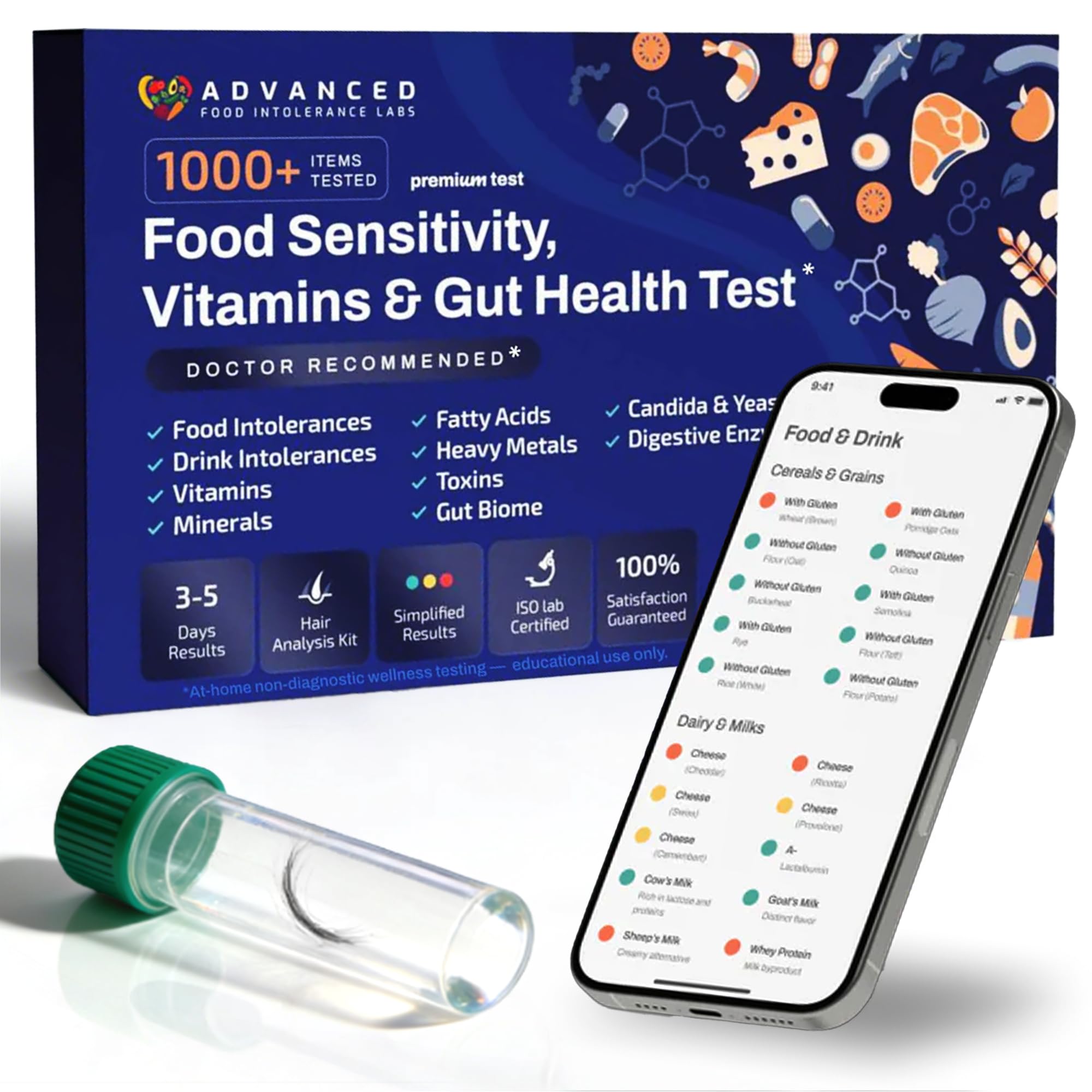
The AFIL 1000+ Food Sensitivity Test is essentially the premium sibling of the AFIL Primal kit, offering a much larger test panel of 1,000+ items at a higher cost. It uses the same non-invasive hair sampling method and is backed by the same ISO 9001 and 27001 certifications. The company, Advanced Food Intolerance Labs, positions the 1000+ kit as their premium at-home wellness tool, suitable for adults and kids who want maximum coverage. The process is identical: register your kit online, collect a hair sample, mail it back, and receive a color-coded report in about 72 hours. The company emphasizes that it is a family-run wellness brand that does not sell user data, which may appeal to privacy-conscious buyers. Customer reviews are largely positive, with users praising the ease of use, the clarity of the results, and the speed of turnaround. One reviewer described it as a “helpful, easy to use & very informative test kit” that helped reduce bloating and improve diet choices. Another called it “excellent” for providing quick, non-invasive insight into food sensitivities. However, the test has attracted significant criticism. One reviewer pointed out that the test is not clinically validated and uses a “bioenergetic wellness scan” rather than measuring actual biological markers. They reported that the test flagged “level 3” sensitivities for foods they eat regularly without symptoms, leading them to dismiss the results entirely. Another reviewer noted helpful insights but described the customer support as generic and unhelpful, unable to answer specific questions about the science behind the results. The price is higher than the 350-item Primal version, so the value depends entirely on whether you believe that screening 1,000+ items provides proportionally more useful information. The AFIL 1000+ is best for those who want the highest possible item coverage from a hair-based test and are willing to accept the inherent limitations of the bioimpedance methodology. The increased panel size compared to the Primal kit adds hundreds of additional foods, drinks, and gut-health markers, but the same caveats apply: the results should be treated as wellness insights, not medical diagnoses, and the customer support may not meet everyone’s expectations. For families on a budget who want maximum coverage without needles, this kit is one of the most comprehensive hair-based options available, but skeptical users should consider the many critical reviews before purchasing.
The technical basis of this test is the same bioenergetic hair analysis used by the Primal kit and similar products like UCARI. The lab is independently recognized to ISO/IEC 27001 for data protection, and the company states that it is used by holistic and functional wellness professionals as a complementary tool. The 1,000+ items include a wide range of foods, drinks, vitamins, and household items, making it one of the most expansive hair-based panels on the market. The interactive digital report allows you to click on every item for more information, which is a nice feature for users who want to learn more about specific triggers. The company also offers a 3-step process with zero stress, emphasizing the simplicity of the collection and the speed of the results. The brand’s focus on data privacy (no selling of user data) and family ownership may resonate with buyers who are wary of large corporate health data aggregators. The report itself uses a red/yellow/green system, with the ability to filter by category. The turnaround of 72 hours after lab receipt is genuinely fast and a selling point. However, the scientific community remains largely unconvinced about the validity of bioimpedance hair testing for food sensitivities, and the 1,000+ AFIL test is no exception. The test has been described as a “wellness indicator” rather than a diagnostic, and the company’s own materials are careful to use phrases like “explore possible wellness signals” and “complementary tool.” For users who simply want a broad, fast, non-invasive screening to inform their dietary choices, the AFIL 1000+ offers the highest item count in the AFIL lineup. The key is to approach the results with an open but critical mind: use the report to identify items to test with an elimination diet, but do not treat the red flags as absolute truths that cannot be questioned.
The most common criticism is the same one that plagues all hair-based bioimpedance tests: accuracy is not guaranteed by any major medical body, and false positives can lead to unnecessarily restrictive diets. The AFIL 1000+ kit, because it tests so many items, is particularly prone to returning a long list of flagged items. One reviewer noted that the test felt like it provided “generalized, not personalized” insight. This is a risk when you test for everything — the results can feel like noise rather than signal. On the other hand, reviewers who had clear, actionable results were very satisfied. The key is to be willing to filter the data yourself. If you are the type of person who wants maximum data and then enjoys the detective work of elimination dieting, this test gives you the most raw material to work with. If you want a clean, short, highly actionable list of items to remove, a focused IgG blood test like Everlywell or Verisana may be a better fit. The price of the AFIL 1000+ places it in the premium tier among hair-based tests, but it is still less expensive than the premium blood-based IgG kits from Everlywell and Verisana. This makes it an interesting midpoint: you get high coverage (1,000+ items) and fast results without the finger prick, but you accept lower clinical credibility. For anyone on the fence, start with the AFIL Primal 350-item version at a lower price to see if the format works for you before committing to the 1,000+ version. If you end up liking the format, the upgrade gives you triple the coverage and a more comprehensive data set to work with. The customer support concerns are worth noting — if communication is important to you, the AFIL 1000+ may test your patience when things go wrong. But if the test works as advertised, the speed and coverage are impressive for a hair-based DIY wellness tool.
Why it’s great
- Massive 1,000+ item panel for broad initial screening from a single hair sample.
- Fast 72-hour turnaround after lab receipt, one of the quickest available.
- ISO 27001 certified for data privacy, with a no-data-selling policy.
- Non-invasive hair collection is suitable for all ages.
Good to know
- Bioenergetic hair analysis has limited clinical validation compared to IgG blood tests.
- Large panel increases risk of overwhelming number of flagged items.
- Customer support can be generic and unhelpful based on user reports.
- Results are wellness insights, not medically diagnostic — treat as a starting point.
FAQ
Can an at-home IgG test replace an allergy skin prick test?
Why do hair-based tests have different results from blood IgG tests?
What should I do after I get my food sensitivity test results?
Are these tests HSA/FSA eligible?
Can I test my child with these kits?
Final Thoughts: The Verdict
For most users, the best at home allergy test winner is the Everlywell Food Sensitivity Test because it combines a CLIA-certified, physician-reviewed IgG lab process with a user-friendly dashboard and a strong brand reputation. If you want a broader 240-panel test with independent physician oversight, grab the Verisana Food Sensitivity Complete Test. And for a non-invasive, maximum-coverage screening that the whole family can use, nothing beats the UCARI Personal Sensitivity Profiling Test.

Mo Maruf
I created WellFizz to bridge the gap between vague wellness advice and actionable solutions. My mission is simple: to decode the research and give you practical tools you can actually use.
Beyond the data, I am a passionate traveler. I believe that stepping away from the screen to explore new environments is essential for mental clarity and physical vitality.