Our readers keep the lights on and my smoothie glass nicely filled. As an Amazon Associate, I earn from qualifying purchases.
The promise of a 4K ultra short throw projector is a massive, cinematic image from a box that sits inches from the wall, replacing the need for a giant television. But navigating the market means grappling with real trade-offs: laser vs. lamp, native contrast ratios, keystone correction quirks, and the ever-present risk of the distracting “rainbow effect” that can plague single-chip DLP designs. You need a guide that cuts through the marketing noise to focus on the specs that actually define picture quality and daily usability.
I’m Mohammad Maruf — the founder and writer behind WellFizz. I’ve spent months analyzing laser light engine architectures, throw ratio calculations, and real-world user reports on HDR tone mapping and input lag to identify the models that deliver on their cinematic promises.
Whether you are building a dedicated home theater or upgrading your living room, the right choice balances brightness, contrast, and color accuracy for your specific space. This guide evaluates the top contenders to help you find the best 4k ultra short throw projector for your unique setup and viewing habits.
How To Choose The Best 4K Ultra Short Throw Projector
Selecting a UST projector is a significant investment. Beyond resolution, you must consider the light source, the optical engine’s ability to produce deep blacks, its performance in ambient light, and its gaming capabilities. These are the critical factors that separate a good UST from a great one.
Light Source: Laser vs. Lamp vs. LED
The light source dictates brightness, color volume, and longevity. Traditional lamp-based projectors offer lower upfront cost but require bulb replacements every few thousand hours. Single-color laser engines deliver good brightness and long life but can struggle with color accuracy compared to tri-color laser systems (RGB) that cover a wider gamut like BT.2020. LED sources offer long life but typically have lower peak brightness, making them less ideal for living rooms with uncontrolled ambient light.
Contrast and Black Levels
Native contrast ratio is the single most important spec for perceived image depth. A high native ratio (e.g., 3000:1 or more from a good 3LCD or triple laser DLP) allows the projector to display deep blacks without washing out details in shadows. Dynamic contrast and dynamic iris technologies can further enhance this, but a strong native foundation is paramount. Be wary of marketing “dynamic contrast” figures in the millions; those rarely translate to real-world black levels.
Brightness and Ambient Light Rejection
Brightness, measured in ANSI or ISO lumens, determines how well the projector fights ambient light. For a dedicated dark room, 1800-2000 lumens is often sufficient. For a living room with windows, you’ll want 2400 lumens or more. Even the brightest UST will benefit from an ambient light rejecting (ALR) screen, which uses a specialized optical structure to reflect projected light toward the viewer while absorbing ambient light from above and the sides.
Gaming Performance: Input Lag and Refresh Rate
If gaming on a 120-inch screen is a priority, look for low input lag (under 20ms at 4K/60Hz is good, under 10ms is excellent) and high refresh rate support (1080p/240Hz or 4K/120Hz). HDMI 2.1 ports with features like VRR (Variable Refresh Rate) and ALLM (Auto Low Latency Mode) are essential for a smooth, tear-free experience on modern consoles and PCs. MEMC (Motion Estimation, Motion Compensation) also helps reduce judder in fast-moving scenes, even in non-gaming content.
Quick Comparison
On smaller screens, swipe sideways to see the full table.
| Model | Category | Best For | Key Spec | Amazon |
|---|---|---|---|---|
| Valerion VisionMaster Pro2 | Triple Laser DLP | Ultimate Contrast & Gaming | 15,000:1 Native Contrast | Amazon |
| Epson LS800 | 3LCD Laser | Bright Room, No Rainbow | 4,000 Lumens | Amazon |
| AWOL Aetherion Pro | Triple Laser DLP | Cinema Color & 1ms Latency | 6,000:1 Native Contrast | Amazon |
| Hisense PX3-PRO | Triple Laser DLP | Color Accuracy & Smart Features | 3000 Lumens / 110% BT.2020 | Amazon |
| NexiGo Aurora Pro (Bundle) | Triple Laser DLP | Bundle with ALR Screen | 2400 Lumens / 3000:1 Contrast | Amazon |
| NexiGo Aurora Pro MKII | ALPD 5.0 Triple Laser | Scene Adapt Engine & Low Latency | 30,000:1 Dynamic Contrast | Amazon |
| AWOL VISION LTV-3000 Pro | Triple Laser DLP | 3D Performance & Center Channel | 2000 Lumens / 1B+ Colors | Amazon |
| XGIMI AURA 2 | Dual Light Laser | Compact Design & Dolby Vision | 2300 Lumens / Dolby Vision | Amazon |
| Formovie Theater | ALPD 4.0 Triple Laser | Award-Winning Color & Sound | 1800 Lumens / B&W Audio | Amazon |
| WEMAX Nova Pro | ALPD Laser DLP | Built-in Google TV & 3D | 2100 ISO Lumens | Amazon |
| Sony VPL-XW5000ES | Native 4K SXRD | Reference Native 4K & Color | Native 4K SXRD Panel | Amazon |
| Samsung Premiere LPU9D | Triple Laser DLP | Smart Ecosystem & 130″ Screen | 3450 Lumens / Triple Laser | Amazon |
| BenQ TK710 | Single Laser DLP | Budget-Friendly 240Hz Gaming | 3200 Lumens / 4ms (1080p240) | Amazon |
In‑Depth Reviews
1. Valerion VisionMaster Pro2

The Valerion VisionMaster Pro2 sets a new benchmark in the mid-to-premium UST space with its triple laser engine and an extraordinary 15,000:1 native contrast ratio, achieved through its Enhanced Black Level (EBL) technology. This is not a marketing trick; it delivers the deepest, most inky blacks we have seen in a DLP projector under the three-thousand-dollar threshold, making dark scenes in movies like “Dune” truly immersive without the gray haze common to lesser units. Coupled with 3000 ISO lumens and a 110% Rec.2020 color gamut, the image is both punchy and remarkably accurate straight out of the box.
Gamers are equally well-served, with support for a 4ms input lag at 1080p/240Hz immersion and a full suite of features including VRR, ALLM, and future-proof connectivity. The OpticFlex Lens System with a 0.9-1.5x optical zoom provides installation flexibility that is rare for a standard-throw projector, meaning it does not have to sit directly below the screen like a UST, yet it still delivers a massive 300-inch image. The built-in Google TV interface is snappy and provides instant access to all major streaming apps without an external dongle.
Some users have noted a slight upward projection angle when placed on a low surface, but this is easily managed with a stand or ceiling mount. The fan noise is well-controlled, and the build quality feels premium. For those seeking a single projector that excels at both late-night movies and competitive gaming, the VisionMaster Pro2 is an outstanding choice that challenges far more expensive models.
Why it’s great
- Exceptional native contrast with EBL for deep, cinematic blacks.
- Versatile 0.9-1.5x optical zoom offers flexible placement options beyond traditional UST.
- Excellent gaming performance with 4ms lag and high refresh rate support.
Good to know
- Uses DLP technology; users sensitive to rainbow effect may occasionally notice it.
- Best performance is achieved with a high-gain or ALR screen.
- Requires careful alignment for a perfectly flat image.
2. Epson LS800
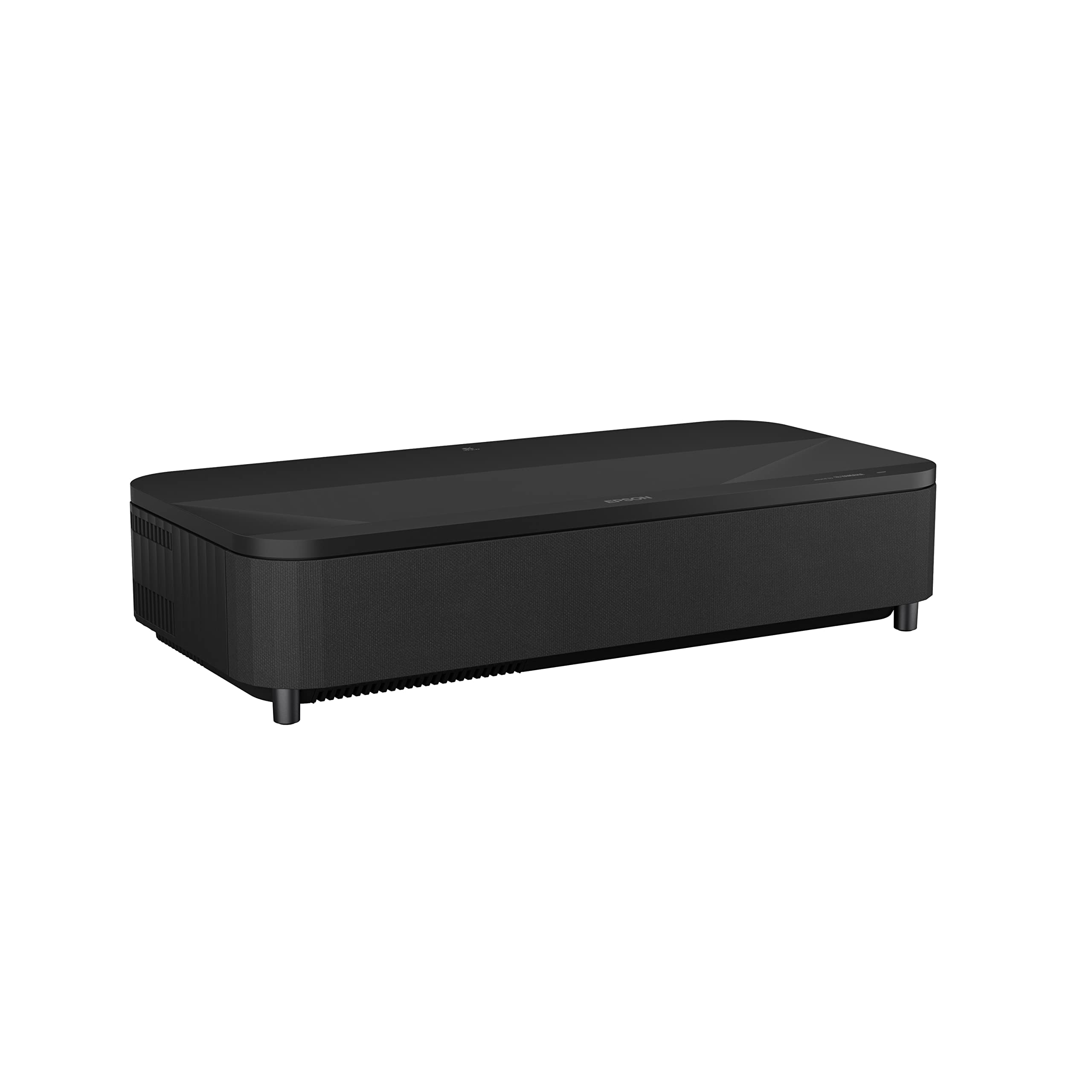
The Epson LS800 is the undisputed champion for living rooms with windows, skylights, or any ambient light. Its bright 4,000-lumen output is not a peak number—it is sustained across both color and white brightness thanks to the true 3-chip 3LCD architecture. This completely eliminates the rainbow effect (RBE) that can be a dealbreaker for some viewers on single-chip DLP units, making it the safest choice for families with varied sensitivities.
The image is genuinely watchable with lamps on or indirect sunlight, and a simple 100-inch ALR screen makes it feel like a massive television. The built-in Yamaha 2.1-channel speakers are surprisingly capable, offering more body and bass than most projector audio systems, which is a significant convenience for a living room setup. The ultra short throw ratio means it can sit almost flush against the wall, simplifying cabinet placement.
Its native contrast ratio is not as high as the best triple-laser DLP units, so purists in a fully blacked-out room may prefer a model with deeper blacks. The 4K image is achieved via pixel-shifting, which is sharp but not native 4K, and text clarity can be slightly less crisp. However, for its primary mission—delivering a bright, watchable, and RBE-free image in a typical family room—the LS800 is a superb performer.
Why it’s great
- Highest brightness in class at 4,000 lumens, ideal for rooms with ambient light.
- 3LCD technology eliminates the rainbow effect entirely.
- Powerful built-in Yamaha 2.1 speakers with decent bass response.
Good to know
- Uses pixel-shifting for 4K, not a native 4K panel; text and fine detail are less sharp.
- Native black levels are not as deep as high-contrast DLP or LCoS competitors.
- Image alignment can be finicky due to the extreme short throw ratio.
3. AWOL Aetherion Pro
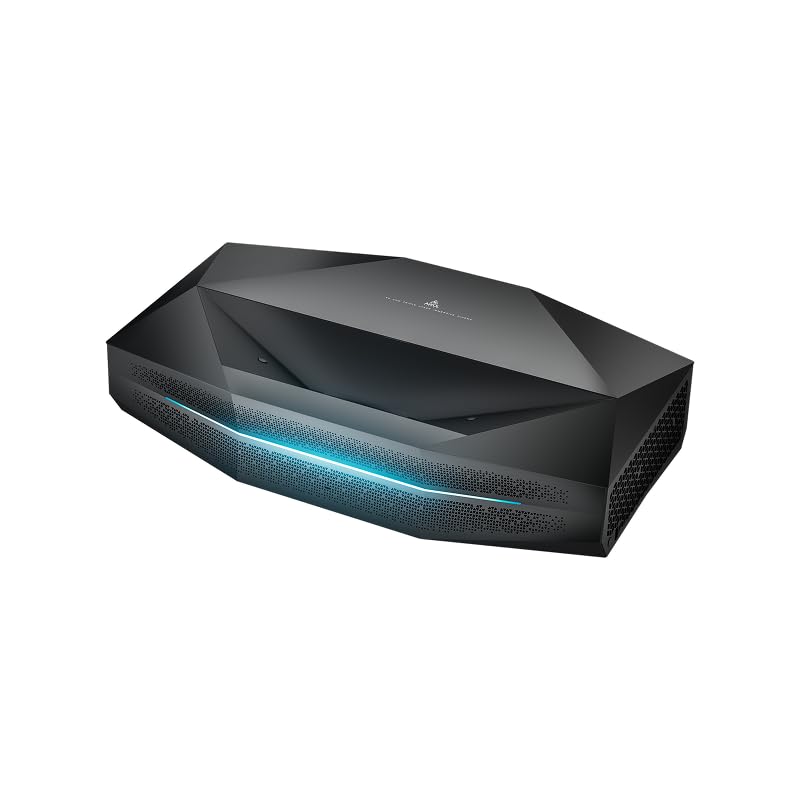
The AWOL Aetherion Pro is engineered for the discerning home theater enthusiast who prioritizes image depth and color accuracy above all else. Its standout feature is the Noirscene System II, which combines a 6-level mechanical iris and EBL algorithm to achieve a native contrast ratio of 6000:1. This is a genuine leap over typical UST projectors, producing black levels that approach those of a high-end flat panel, with exceptional shadow detail in dark scenes.
Complementing the contrast is a 2600-lumen output and 110% Rec.2020 color gamut, delivering vibrant, lifelike colors that are calibrated out of the box with ISF certification. The PixelLock technology ensures that the 4K image remains sharp and artifact-free on screens up to 200 inches. For gamers, the 1ms ultra-low latency in 1080p mode is a standout figure, making fast-paced shooters feel incredibly responsive on the big screen, with support for VRR, ALLM, and Dolby Vision Gaming.
The built-in audio is a pleasant surprise—clear, with surprising depth—potentially eliminating the need for a soundbar in smaller rooms. The design is sleek and modern, blending well into a living room aesthetic. The main consideration is its price point, which places it in the premium tier, and its need for a dark or controlled lighting environment to truly shine. For those who can provide that environment, the Aetherion Pro is a spectacular performer.
Why it’s great
- Superb 6000:1 native contrast ratio for deep, cinematic black levels.
- ISF-certified color accuracy with a wide BT.2020 color gamut.
- Excellent gaming performance with 1ms ultra-low latency and Dolby Vision Gaming.
Good to know
- Premium pricing puts it in a higher investment bracket.
- Best performance is achieved in a dark or light-controlled room.
- Built-in speakers are good but will be outclassed by dedicated systems.
4. Hisense PX3-PRO

The Hisense PX3-PRO leverages its proprietary LPU (Laser Processing Unit) TriChroma triple laser engine to deliver a color performance that is genuinely reference-grade. With a color accuracy of Delta E≈0.9 and coverage of 110% of the BT.2020 color gamut, it produces colors that are incredibly natural, nuanced, and free from the over-saturation that can plague lesser laser projectors. This makes it an exceptional choice for movie lovers who want to see content exactly as the director intended.
At 3,000 lumens, it is bright enough for a living room with some ambient light, and its AI-powered 4K upscaling does a commendable job of sharpening lower-resolution content from streaming services. The inclusion of Dolby Vision, IMAX Enhanced, and a 240Hz refresh rate for gaming means it is well-equipped for both cinematic and interactive content. The built-in Harman Kardon speakers are a cut above average, offering clear dialogue and decent soundstage without requiring an immediate soundbar upgrade.
Some users have reported that the automatic keystone correction can be finicky, sometimes requiring manual adjustment via a phone app, which is a minor workflow interruption. The projector is also on the larger side, so measuring your TV stand is essential. For those whose priority is color fidelity and a premium all-in-one smart experience, the PX3-PRO is a leading contender.
Why it’s great
- Industry-leading color accuracy with ΔE≈0.9 and 110% BT.2020 coverage.
- Bright 3,000-lumen output suitable for mixed lighting conditions.
- Built-in Harman Kardon speakers and comprehensive smart TV integration.
Good to know
- Automatic keystone correction can be unreliable, often requiring manual intervention.
- Larger physical footprint may not suit all furniture setups.
- Premium price point competitor against high-end options.
5. NexiGo Aurora Pro (with 100″ Screen)
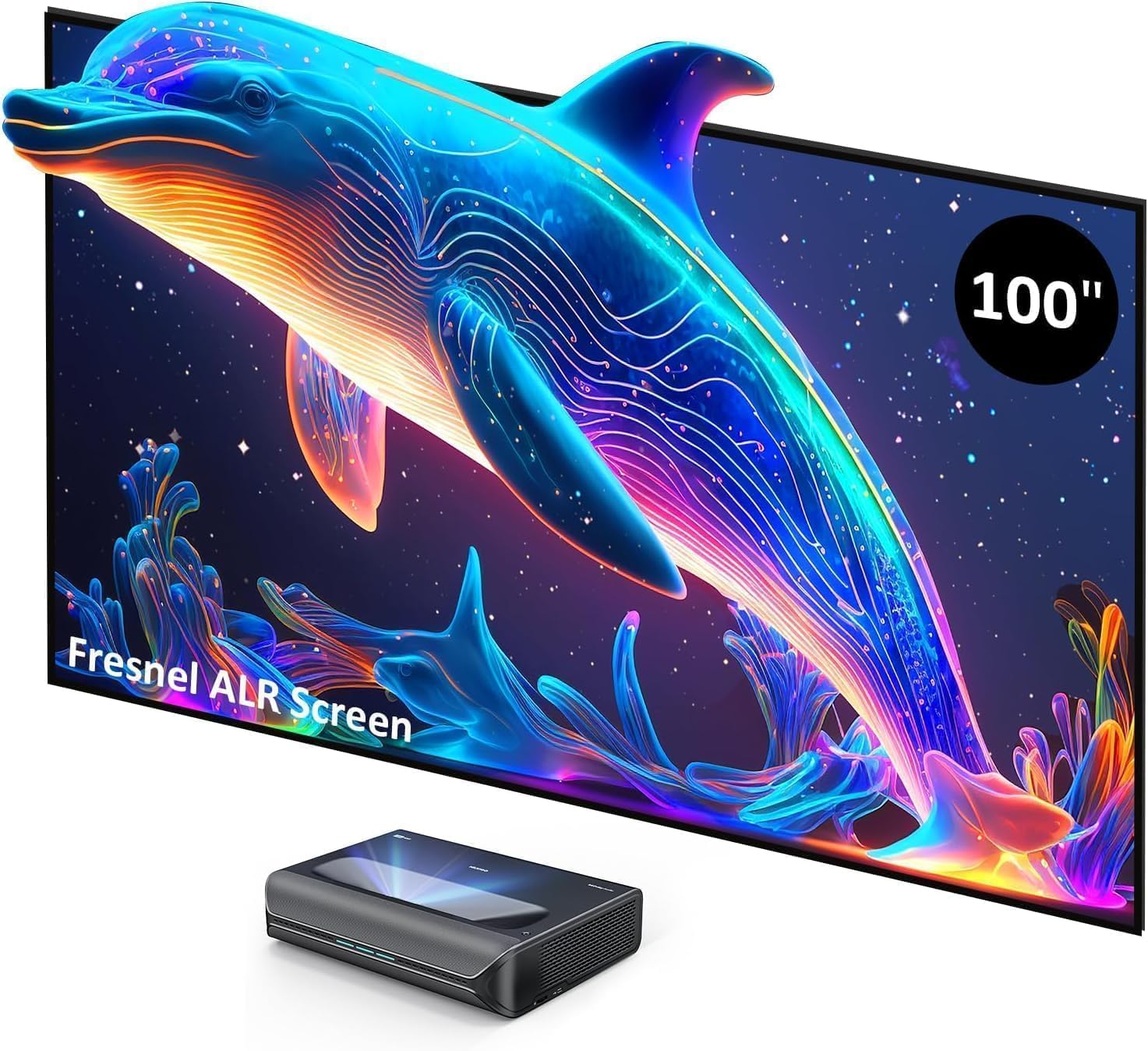
The NexiGo Aurora Pro distinguishes itself by offering a complete solution out of the box, pairing the UST projector with a dedicated 100-inch Fresnel ALR screen. This is a massive value-add, as sourcing a compatible, high-quality ALR screen separately can be a complex and expensive undertaking. The projector itself is a strong performer, featuring ALPD 4.0 RGB+ laser technology that delivers 2400 lumens of brightness, a 3000:1 native contrast ratio, and factory-calibrated color accuracy with a Delta E of less than 3.
The included Fresnel screen is specifically designed to work with the projector’s optical geometry, providing 85% ambient light occlusion. This means you can enjoy a vivid, high-contrast image even with some overhead lights on, which is a game-changer for a living room environment. The Aurora Pro also supports Dolby Vision and HDR10+, and its 120Hz MEMC ensures smooth motion for sports and action films. Gamers will appreciate the tested 8ms input lag at 4K/120Hz, making it one of the most responsive UST projectors available.
The built-in audio is serviceable but not exceptional, and some users have noted the need to manually adjust focus at each startup, which is a minor inconvenience. The remote is also reported to be somewhat directional, requiring a direct line of sight. However, for a turnkey home theater solution that delivers excellent image quality with minimal hassle, the Aurora Pro bundle is a fantastic, all-in-one package.
Why it’s great
- Comes with a purpose-built 100″ Fresnel ALR screen for a true turnkey solution.
- Factory-calibrated color accuracy (ΔE<3) for great out-of-box picture.
- Excellent gaming latency with 8ms input lag at 4K/120Hz.
Good to know
- May require manual focus adjustment on each power-up.
- Built-in speakers are average; a separate audio system is recommended for an immersive experience.
- Remote control has a narrow effective angle.
6. NexiGo Aurora Pro MKII

The NexiGo Aurora Pro MKII is an iterative upgrade that focuses intensely on image refinement and power efficiency. The centerpiece is the ALPD 5.0 laser engine and the proprietary Scene Adapt Engine (SAE). SAE combines a Dynamic Iris with Dynamic Laser Dimming to adjust brightness and black levels in real-time based on the content. This results in a dynamic contrast ratio exceeding 30,000:1, giving bright highlights more pop and dark scenes significantly deeper blacks, all while reducing energy consumption by roughly 70%.
With 2400 lumens of brightness and 107% BT.2020 color coverage, the image is vibrant and detailed. The 0.21:1 throw ratio allows it to project a very large image from a short distance, making it exceptionally space-efficient. For gamers, the low latency of 4.2-8ms at 4K/120Hz is top-tier, ensuring responsive gameplay. The 60W speakers with Dolby Atmos support are robust enough to fill a medium-sized room with clear, room-filling sound, reducing the immediate need for an external audio system.
Some user reports indicate that the unit can be prone to overheating and the auto-focus system can be inconsistent, requiring occasional manual intervention. The remote control is also a weak point, needing to be aimed precisely. As a refined second-generation product, it addresses many initial concerns while introducing new features, but its premium price means buyers should be comfortable with its debut-generation quirks.
Why it’s great
- Scene Adapt Engine delivers outstanding dynamic contrast and energy efficiency.
- Ultra-low input lag (4.2-8ms) for competitive gaming on a large screen.
- Very short throw ratio for maximum screen size in minimal space.
Good to know
- Reports of overheating and automatic shutdowns on some units.
- Infrared remote requires very precise pointing.
- Premium pricing for a product that may still have first-gen reliability concerns.
7. AWOL VISION LTV-3000 Pro

The AWOL VISION LTV-3000 Pro is a triple laser UST that carves a unique niche for itself with excellent 3D performance and a built-in center channel speaker. For enthusiasts with a library of 3D Blu-rays, this projector provides a vibrant, bright, and crosstalk-free 3D experience that surpasses most competitors, with less brightness loss than traditional DLP 3D projectors. The inclusion of Dolby Vision and HDR10+ support ensures that its 2D performance is equally strong, with a wide color gamut covering 107% BT.2020.
The built-in center channel mapping is a clever solution for dialogue clarity, sending dialogue directly toward the viewer from the projector’s position, which can significantly improve vocal intelligibility without needing a full A/V receiver. This makes it a great fit for living room setups where a traditional center channel speaker is not feasible. The ALPD RGB+ laser light source promises a long lifespan, and the industrial design is sleek and low-profile.
Its 2000-lumen brightness is lower than some competitors, meaning it is best suited for a dark or light-controlled room. Some users have reported that the smart features can be a bit glitchy, and the remote is not backlit. The image quality, however, for both 2D and 3D content in a dedicated theater space, is a standout feature that justifies its premium price for enthusiasts who value that specific capability.
Why it’s great
- Excellent 3D performance with high brightness retention for active shutter glasses.
- Built-in center channel speaker significantly improves dialogue clarity.
- Triple laser engine with Dolby Vision and HDR10+ support for vibrant 2D colors.
Good to know
- Brightness of 2000 lumens is lower than some top-tier models; a dark room is recommended.
- Smart TV interface can be occasionally glitchy.
- Premium price reflects its niche 3D and audio capabilities.
8. XGIMI AURA 2

The XGIMI AURA 2 is designed to blend seamlessly into a modern living room with its compact, minimalist footprint and a signature motorized lens cover that protects the optics when not in use. Despite its smaller size, it packs a Dual Light 2.0 laser engine that outputs a bright 2300 lumens with Dolby Vision and IMAX Enhanced certification. The image is sharp, with vibrant colors and good contrast, and it handles HDR content with a refined tone mapping.
One of its biggest strengths is the built-in audio system tuned by Harman Kardon. It delivers a surprisingly wide soundstage with clear dialogue and decent bass for a projector, often eliminating the need for a dedicated soundbar in smaller rooms. The auto-keystone and auto-focus systems are among the best in class, making setup nearly foolproof, and the wall color adaptation feature is a useful bonus for those without a projector screen. The fan noise is also exceptionally low.
Its native contrast ratio is not as high as dedicated home theater projectors, and the Android TV interface, while smooth, lacks the Google TV interface that many prefer for content recommendations. Some users have noted minor keystone geometry issues on uneven walls. The AURA 2 is the perfect choice for the design-conscious buyer who wants a simple, stylish, and good-performing all-in-one UST that looks as good as its picture.
Why it’s great
- Beautiful, compact design with a motorized lens cover for protection.
- Superior built-in Harman Kardon audio for an all-in-one solution.
- Excellent auto-keystone, auto-focus, and wall color adaptation features.
Good to know
- Native contrast could be better for a fully dark room setup.
- Runs Android TV, not the more user-friendly Google TV interface.
- Wall compensation mode requires a network connection to function.
9. Formovie Theater

The Formovie Theater is a legendary name in the UST world, having won top honors at ProjectorCentral’s Laser TV Showdown in both 2022 and 2023. It earned this reputation by delivering an exceptionally balanced image using its ALPD 4.0 RGB+ triple laser engine, which provides a wide 107% BT.2020 color gamut and smooth, speckle-free illumination. At 1800 lumens, it is not the brightest projector here, but its color accuracy and contrast produce a naturally film-like image that is visually stunning in a dark room.
A major differentiator is its partnership with Bowers & Wilkins for the audio system. The dual 15W speakers are expertly tuned to deliver a rich, detailed, and wide soundstage that is vastly superior to the generic speakers found in most projectors. For someone seeking a truly cinematic all-in-one experience, the Formovie Theater’s audio quality alone can delay the need for a separate soundbar. It runs on a certified Android TV 11.0 system, offering a clean interface with Chromecast built-in.
The biggest long-term concern for this model is reliability. A number of user reports mention the DMD chip developing dead pixels or the remote control failing after a few months. The warranty and customer service experience has been mixed for some. If you are willing to accept a potential reliability risk for what is arguably the best “default” picture quality in its class, the Formovie Theater is a compelling choice.
Why it’s great
- Superb, film-like picture quality with award-winning color and contrast.
- Exceptional Bowers & Wilkins speaker system for a projector.
- Wide BT.2020 color gamut from the ALPD 4.0 RGB+ laser source.
Good to know
- Brightness of 1800 lumens is lower; best performance is in a dark room.
- Reports of DMD chip failure and remote control quality issues over time.
- Customer service reliability is a common concern in user reviews.
10. WEMAX Nova Pro
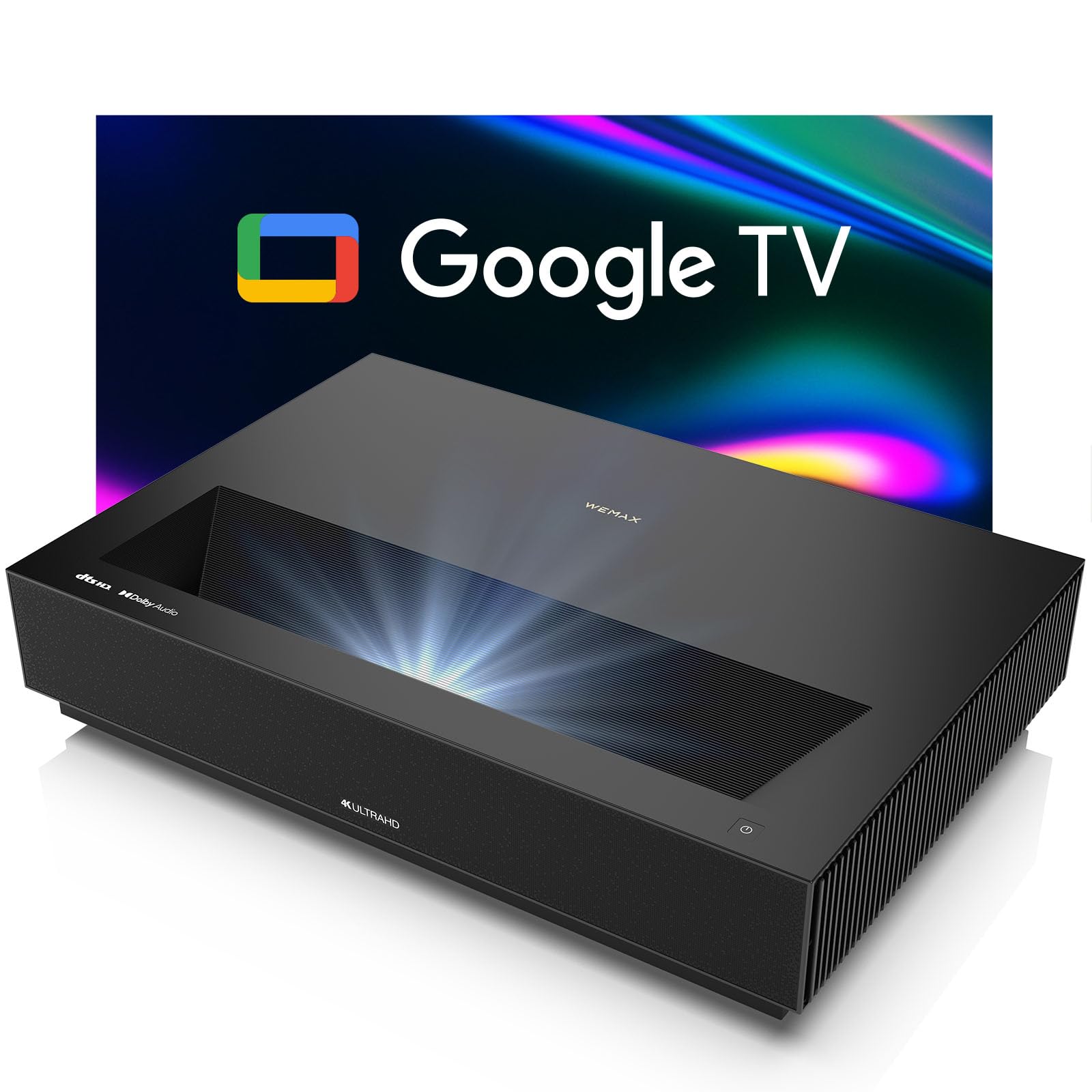
The WEMAX Nova Pro offers an impressive feature set at a competitive price point, making it a strong value proposition in the UST market. Its ALPD laser engine delivers true 4K UHD with 2100 ISO lumens of brightness and a 3000:1 contrast ratio. The 0.23:1 ultra short throw ratio allows it to cast a 150-inch image from just 19 inches away, making it incredibly space-efficient. It also includes Active 3D support and MEMC for smooth motion, features often reserved for more expensive models.
A key selling point is native Google TV with official Netflix support, providing a streamlined smart experience without needing an external streaming device. The built-in Google Assistant allows for convenient voice control. The dual 15W speakers with Dolby Audio and DTS-HD deliver a respectable audio experience that is good enough for casual viewing. The low blue light technology is a welcome addition for long viewing sessions, reducing eye strain.
Some users have reported that the smart features can occasionally be glitchy, with apps crashing on the first load. The system’s screen alignment can also be finicky, sometimes requiring physical adjustment (like foam shims) to get the image perfectly level. The remote control lacks a dedicated input button, which is an inconvenience. For a budget-conscious buyer who wants a modern smart projector with good core performance, the WEMAX Nova Pro is a solid and well-rounded pick.
Why it’s great
- Very short throw ratio (0.23:1) for big images in tight spaces.
- Built-in Google TV with official Netflix support for smart convenience.
- Includes Active 3D and MEMC for enhanced viewing options.
Good to know
- Smart interface can be glitchy, with occasional app crashes.
- Screen alignment can be difficult and may require physical adjustments.
- Remote is missing a direct input selection button.
11. Sony VPL-XW5000ES

The Sony VPL-XW5000ES is the gold standard for image fidelity, utilizing a native 4K SXRD panel—a technology that delivers true 3840 x 2160 resolution without any pixel-shifting tricks. This results in an image with unparalleled sharpness, clarity, and a total absence of digital artifacts. Combined with Sony’s flagship X1 Ultimate video processor and TRILUMINOS PRO algorithm, the color accuracy and gradation are simply breathtaking, reproducing natural shades with a lifelike quality that other projectors struggle to match.
Its laser light source provides a pure, bright 2000-lumen output, and the Wide Dynamic Range Optics achieve a 95% DCI-P3 color gamut, ensuring vibrant colors even in a moderately lit room. The black levels are deep and detailed, thanks to a high native contrast ratio and processing power. The fan noise is virtually silent, making it ideal for a dedicated home theater where noise can be a distraction. The 20,000-hour laser lifespan means it is a true fit-and-forget investment.
It is a standard-throw projector, not an ultra-short throw model, which means it requires proper ceiling mounting and a clear line of sight to the screen. Its 6,000-dollar price point places it in a different league, and it lacks built-in smart features, requiring an external streaming device. For the purist who demands the absolute best image quality, a perfectly dark room, and has a dedicated theater space, the Sony XW5000ES is the ultimate reference projector.
Why it’s great
- True native 4K SXRD panel for unmatched sharpness and clarity.
- Flagship Sony X1 Ultimate processor with TRILUMINOS PRO for reference color.
- Silent operation and long-lasting laser light source.
Good to know
- This is a standard-throw projector, not a UST; it requires ceiling mounting.
- Very high price point, making it a luxury investment.
- No built-in smart TV system; requires an external dongle or player.
12. Samsung Premiere LPU9D
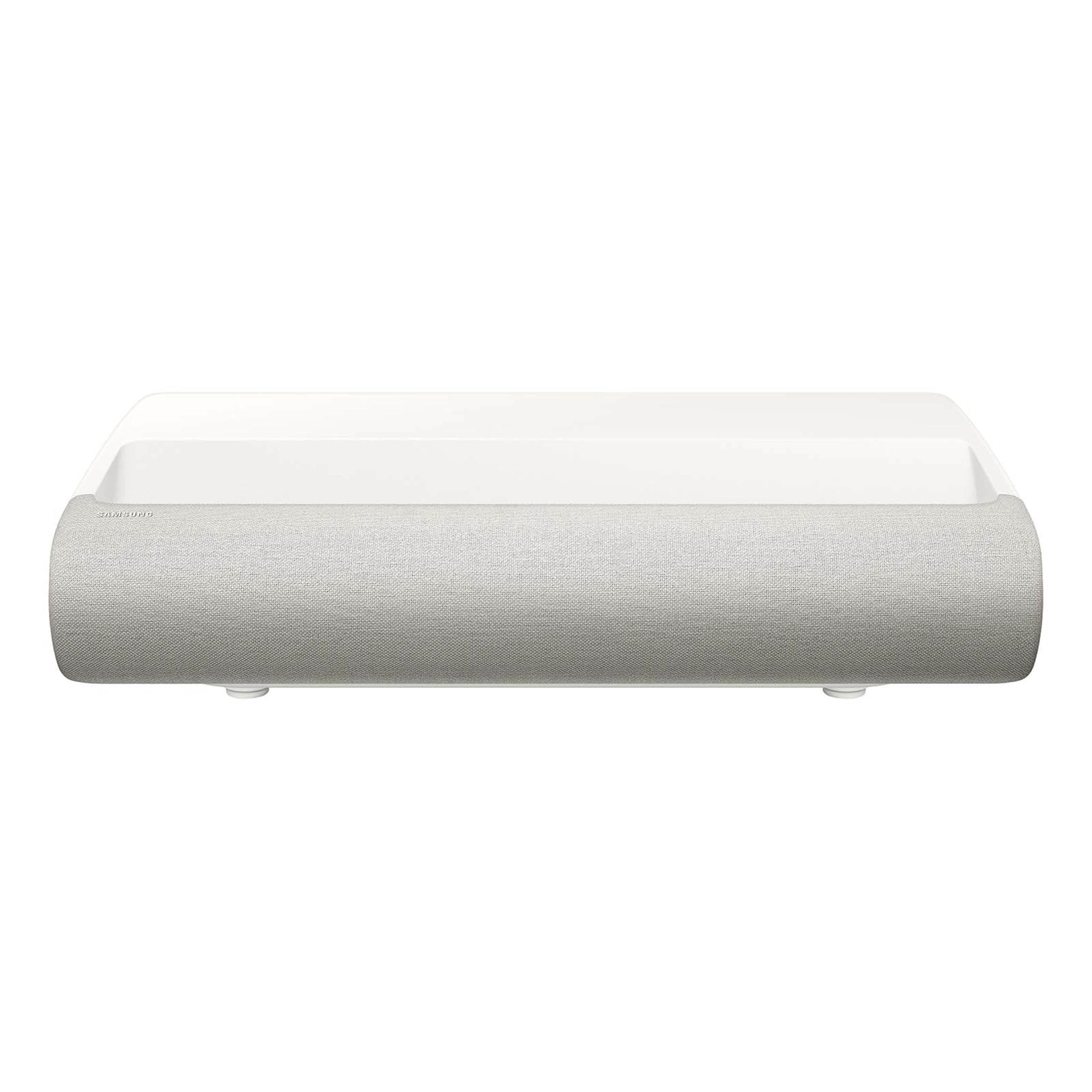
The Samsung Premiere LPU9D leverages Samsung’s display expertise and smart ecosystem to deliver a polished, all-in-one UST experience. Its triple laser technology and 3450 lumens of brightness produce a vibrant image with a wide color spectrum (a billion shades) and strong HDR performance via HDR10+. The AI-powered 4K upscaling effectively enhances lower-resolution content, and the Vision Boost feature adapts the picture to ambient light conditions, maintaining a clear and colorful image throughout the day.
The ultra short throw design allows it to project a massive 130-inch image from a compact unit placed near the wall. The built-in 40W 2.2.2-channel sound system with Object Tracking Sound and Dolby Atmos is one of the best in any UST, creating an immersive audio bubble without external speakers. The Tizen smart platform is smooth and features the Samsung Gaming Hub, giving instant access to cloud gaming services without a console. The integration with Alexa, Bixby, and SmartThings makes it a powerful smart home hub.
Some users have reported that the software can become sluggish over time as the limited RAM fills up, and that a perfectly flat, UHD-certified screen is required to avoid image distortion. Its premium price is also a significant barrier. For users deeply invested in the Samsung ecosystem who want a bright, feature-rich, and design-forward UST that works brilliantly out of the box, the Premiere LPU9D is an excellent choice.
Why it’s great
- Very bright (3450 lumens) with triple laser technology for vibrant images.
- Excellent built-in 2.2.2-channel audio with Object Tracking Sound and Dolby Atmos.
- Seamless integration with the Samsung Tizen ecosystem and Gaming Hub.
Good to know
- Software can become sluggish with low RAM over prolonged use.
- Requires a perfectly flat, certified ALR screen for best image quality.
- High price tag reflects the brand and ecosystem, not just raw specs.
13. BenQ TK710

While not an ultra short throw projector, the BenQ TK710 is a standard-throw laser projector that deserves mention for its exceptional value and gaming performance. Its single laser light source delivers a bright 3200 ANSI lumens with a 600,000:1 dynamic contrast ratio, producing a sharp and vibrant 4K UHD image. For gamers, it is a top contender, offering a blazing 4ms input lag at 1080p/240Hz and a 16ms response at 4K/60Hz, making it incredibly responsive for console and PC gaming.
The laser light source provides a long lifespan, eliminating the need for bulb replacements, and its brightness makes it suitable for rooms with some ambient light. The picture quality is excellent for the price, with good color coverage (95% Rec.709) and HDR10/HLG support. Its 1.3x optical zoom and vertical lens shift provide flexible installation options, making it easier to position in a room without a perfectly centered ceiling mount.
It lacks the ultra short throw placement convenience, requiring a few feet of distance from the wall or screen. The focus and keystone adjustment are manual, and the built-in speaker is a basic 5W unit that is best used only for initial setup. For the budget-conscious buyer who prioritizes raw brightness, gaming performance, and a reliable laser light source over the placement convenience of a UST, the TK710 is an unbeatable performer.
Why it’s great
- Exceptional gaming performance with 4ms input lag at 1080p/240Hz.
- Bright 3200-lumen laser light source for a long, maintenance-free lifespan.
- Optical zoom and vertical lens shift offer great installation flexibility.
Good to know
- This is a standard-throw projector, not a UST; requires distance from the screen.
- Manual focus and keystone adjustment require physical interaction.
- Built-in 5W speaker is inadequate for a theater-like experience.
FAQ
What is the rainbow effect (RBE) and how do I avoid it?
Do I really need a special screen for a UST projector?
What is the difference between single, dual, and triple laser projectors?
How much ambient light can a UST projector handle?
Are UST projectors good for gaming on a PS5 or Xbox Series X?
Final Thoughts: The Verdict
For most users seeking a premium, versatile home cinema upgrade, the best 4k ultra short throw projector winner is the Valerion VisionMaster Pro2 because it offers exceptional native contrast and gaming performance at a competitive price. If you need the absolute best performance in a bright living room without rainbow artifacts, grab the Epson LS800. And for those building a dedicated home theater who prioritize cinematic color and handling of the picture, nothing beats the AWOL Aetherion Pro.

Mo Maruf
I created WellFizz to bridge the gap between vague wellness advice and actionable solutions. My mission is simple: to decode the research and give you practical tools you can actually use.
Beyond the data, I am a passionate traveler. I believe that stepping away from the screen to explore new environments is essential for mental clarity and physical vitality.