Our readers keep the lights on and my smoothie glass nicely filled. As an Amazon Associate, I earn from qualifying purchases.
Getting a dedicated macro camera on a budget means you can capture the intricate veins of a leaf, the texture of a coin, or the compound eyes of an insect without spending months of savings. The challenge is finding a model that delivers genuine close-up sharpness, reliable autofocus at short distances, and sufficient resolution—all without sneaking in hidden costs for essential accessories.
I’m Mohammad Maruf — the founder and writer behind WellFizz. My research into budget macro cameras focuses on real-world close-focus performance, sensor quality at minimum focusing distances, and the durability of lens mechanisms that make or break a dedicated macro shooter.
After analyzing dozens of models, comparing sensor specifications, minimum focus distances, and macro mode capabilities at critical price tiers, this guide cuts through the confusion to help you find the very best budget macro camera for your specific close-up work, whether you shoot coins, plants, or product details.
How To Choose The Best Budget Macro Camera
A budget macro camera needs to balance close-focus capability, image resolution, and ease of use. Understanding a few key specifications will help you pick the right tool for your macro photography without overspending.
Minimum Focusing Distance
This is the single most critical spec for macro work. A camera that can focus from 1 to 5 centimeters away from a subject allows you to fill the frame with tiny details. Models with a dedicated macro mode or a macro lens attachment typically achieve the shortest distances. Avoid cameras that only offer a “macro” setting on the menu but cannot physically focus under 10 cm—they rely on digital cropping, not true magnification.
Optical Zoom vs. Digital Zoom
Optical zoom uses the lens to magnify the image without losing quality. Digital zoom simply crops and enlarges the pixels, which destroys sharpness. For a budget macro camera, look for at least 4x to 5x optical zoom. The optical zoom range directly affects your ability to capture distant subjects and achieve a shallow depth of field, both crucial for professional-looking macro photos.
Sensor Size and Megapixels
A larger sensor (like a 1-inch or APS-C sensor) captures more light and produces better image quality, especially in close-up scenarios where fine detail matters. While 20+ megapixels sounds impressive, a 16-megapixel sensor with good optics will outperform a 48-megapixel sensor with a cheap lens. For budget macro work, prioritize sensor quality and low-light performance over raw megapixel count.
Quick Comparison
On smaller screens, swipe sideways to see the full table.
| Model | Category | Best For | Key Spec | Amazon |
|---|---|---|---|---|
| OM System Olympus Tough TG-7 | Tough Macro | Rugged outdoor macro | 4 macro modes, 1 cm focus | Amazon |
| Pentax WG-90 | Waterproof Macro | Underwater & wet macro | 6 LED macro lights, 1 cm focus | Amazon |
| Panasonic Lumix ZS99 | Travel Zoom | Travel & concert macro | 30x optical zoom, 24-720mm LEICA | Amazon |
| Panasonic Lumix FZ80D | Bridge Zoom | Long range macro | 60x optical zoom, 20-1200mm | Amazon |
| Canon EOS Rebel T7 Kit | DSLR Starter | System macro upgrade path | 24.1MP APS-C sensor, EF lens mount | Amazon |
| Nikon Z 30 | Mirrorless Vlog | Macro video & streaming | 209 AF points, eye tracking | Amazon |
| Minolta ProShot 64MP | Budget Point & Shoot | Entry-level macro stills | 10x optical zoom, macro mode | Amazon |
| NBDDIGITAL True 8K 64MP | Starter Vlog | First-time macro shooter | 52mm macro lens, 16x zoom | Amazon |
| Xtra Muse Pocket Gimbal | Gimbal Camera | Stabilized macro video | 1-inch CMOS, 3-axis gimbal | Amazon |
In‑Depth Reviews
1. OM System Olympus Tough TG-7

The OM System Tough TG-7 is a purpose-built macro powerhouse for photographers who shoot in demanding conditions. Its variable macro system includes four distinct macro modes, allowing focusing as close as 1 centimeter from the lens—enough to capture the microscopic structure of a butterfly wing or the tiny bubbles in a diving shot. The 12-megapixel back-illuminated CMOS sensor keeps noise low even in the challenging lighting of close-up underwater work.
The TG-7’s F2.0 lens is notably fast for a compact camera, letting in more light for sharper macro images at higher shutter speeds. The ring of LEDs around the lens barrel provides even, shadow-free illumination for subjects just millimeters away. Underwater microscope mode adapts color and contrast specifically for submerged macro shots, making this the clear choice for divers, snorkelers, and anyone shooting in wet environments.
Its rugged build—waterproof to 15 meters, shockproof from 2.1 meters, and crushproof to 100 kgf—means you can take it into conditions that would destroy most other cameras. However, the small sensor does show its limits in very low light, and the battery tends to die without much warning, so carrying a spare is wise. For serious budget macro in rough environments, this is the most capable tool available.
Why it’s great
- Four dedicated macro modes with 1 cm minimum focus
- Built-in LED ring lights eliminate shadows on close subjects
- Rugged waterproof, shockproof, and crushproof design
- Fast F2.0 lens for better low-light macro performance
Good to know
- Small sensor struggles in very dim conditions
- Battery dies abruptly without low-power warning
- Requires some photographic knowledge to use all modes effectively
2. Pentax WG-90
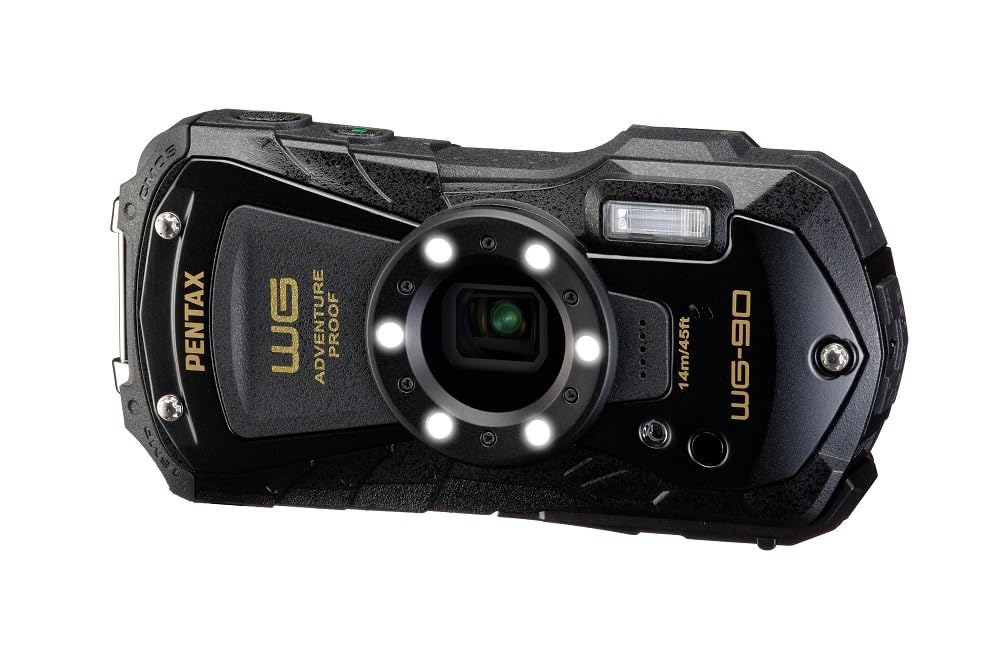
The Pentax WG-90 brings a 16-megapixel back-illuminated CMOS sensor and six LED macro lights arranged around the lens barrel for exceptionally well-lit close-ups. Its Digital Microscope mode captures details that are normally invisible to the naked eye, making it a fantastic tool for inspection work, forensic photography, or educational use. The included macro stand holds the camera at exactly 1 centimeter from the subject, removing the guesswork from extreme close-ups.
This camera is built for abuse: waterproof to 14 meters, shockproof from 1.6 meters, and freezeproof to -10°C. The 5x optical zoom (28-140mm equivalent) offers versatility beyond macro, and the dedicated Underwater shooting mode optimizes color balance for shots beneath the surface. The 2.7-inch LCD includes an Outdoor View Setting mode that boosts brightness for glare-heavy environments.
The WG-90 requires manual settings to get the best results—point-and-shoot auto mode often delivers flat images. Some users report the battery door feels less secure than on previous Pentax models, and one failure report of water ingress on day two is a caution. Still, for users who need a rugged macro camera with serious close-up illumination, the WG-90 delivers where few budget options can.
Why it’s great
- Six LED macro lights provide even, bright illumination for subjects at 1 cm
- Digital Microscope mode and included macro stand enable extreme close-ups
- Rugged build: waterproof, shockproof, and freezeproof
- Higher 16MP resolution for detailed macro stills
Good to know
- Auto mode often produces flat images; manual settings needed
- Some reports of battery door seal issues
- Viewfinder-free; relies solely on LCD for framing
3. Panasonic Lumix ZS99

The Panasonic Lumix ZS99 packs a 30x optical zoom LEICA DC lens (24-720mm equivalent) into a truly pocketable body, making it an excellent choice for travel photographers who also want macro capability. Its hybrid autofocus system with 121 focus points enables quick locking on nearby subjects for close-up flower, food, or texture shots. The 20.3-megapixel MOS sensor paired with the Venus Engine processor delivers clean images with good color accuracy.
This camera excels in versatility: you can shoot wide landscapes at 24mm, zoom to 720mm for distant wildlife, and still get within a few inches for decent close-up detail. The tiltable 1,840k-dot touchscreen helps frame low-angle macro shots without lying on the ground. 4K video at 30p and 4K Photo burst mode at 30fps let you extract sharp frames from motion—useful for macro subjects that won’t hold still.
Where the ZS99 falls short is its small 1/2.3-inch sensor, which limits low-light macro performance compared to larger-sensor cameras. The 4K video recording caps at 15 minutes, and the battery lasts about 6 hours of typical use. Some units have reported a blurry edge issue on the left side of images. For a versatile, go-anywhere camera with decent macro, it remains a solid mid-range pick.
Why it’s great
- 30x optical zoom LEICA lens covers 24-720mm for extreme versatility
- Pocketable size for everyday carry and travel
- Hybrid AF with 121 points quickly locks onto macro subjects
- Tiltable touchscreen aids low-angle macro composition
Good to know
- Small 1/2.3-inch sensor limits low-light macro quality
- 4K recording capped at 15 minutes
- Some units report blurry edges on one side
4. Panasonic Lumix FZ80D

The Panasonic Lumix FZ80D is a bridge camera with a staggering 60x optical zoom (20-1200mm equivalent) that brings distant macro subjects into clear view. Its Post Focus feature lets you touch the area you want in focus after taking the shot—invaluable for macro photography where depth of field is razor-thin. The 18.1-megapixel MOS sensor captures decent detail, and the POWER O.I.S. stabilization effectively cancels hand shake even at the 1200mm telephoto end.
4K video recording at 30p and the 4K Photo mode allow you to extract 8-megapixel stills from video clips, making it easier to catch moving macro subjects like insects in sharp focus. The 2,360K-dot electronic viewfinder provides a glare-free view even in bright sunlight, which is rare at this price tier. The F2.8-5.6 aperture range offers decent light gathering for its class.
The main compromise is image quality at the long end of the zoom: images can appear grainy even at low ISO, and low-light performance is poor. The interface is not the most intuitive, and there is no built-in Wi-Fi for quick transfers. For a budget camera that lets you shoot macro at extreme distances, the FZ80D is unmatched, but it requires good light to deliver its best results.
Why it’s great
- 60x optical zoom reaches subjects others can’t
- Post Focus feature lets you refocus after the shot
- POWER O.I.S. keeps macro shots sharp at full zoom
- High-resolution viewfinder works in bright sunlight
Good to know
- Image quality degrades at full zoom in lower light
- Poor low-light performance overall
- No built-in Wi-Fi; interface can be complicated
5. Canon EOS Rebel T7 DSLR Kit
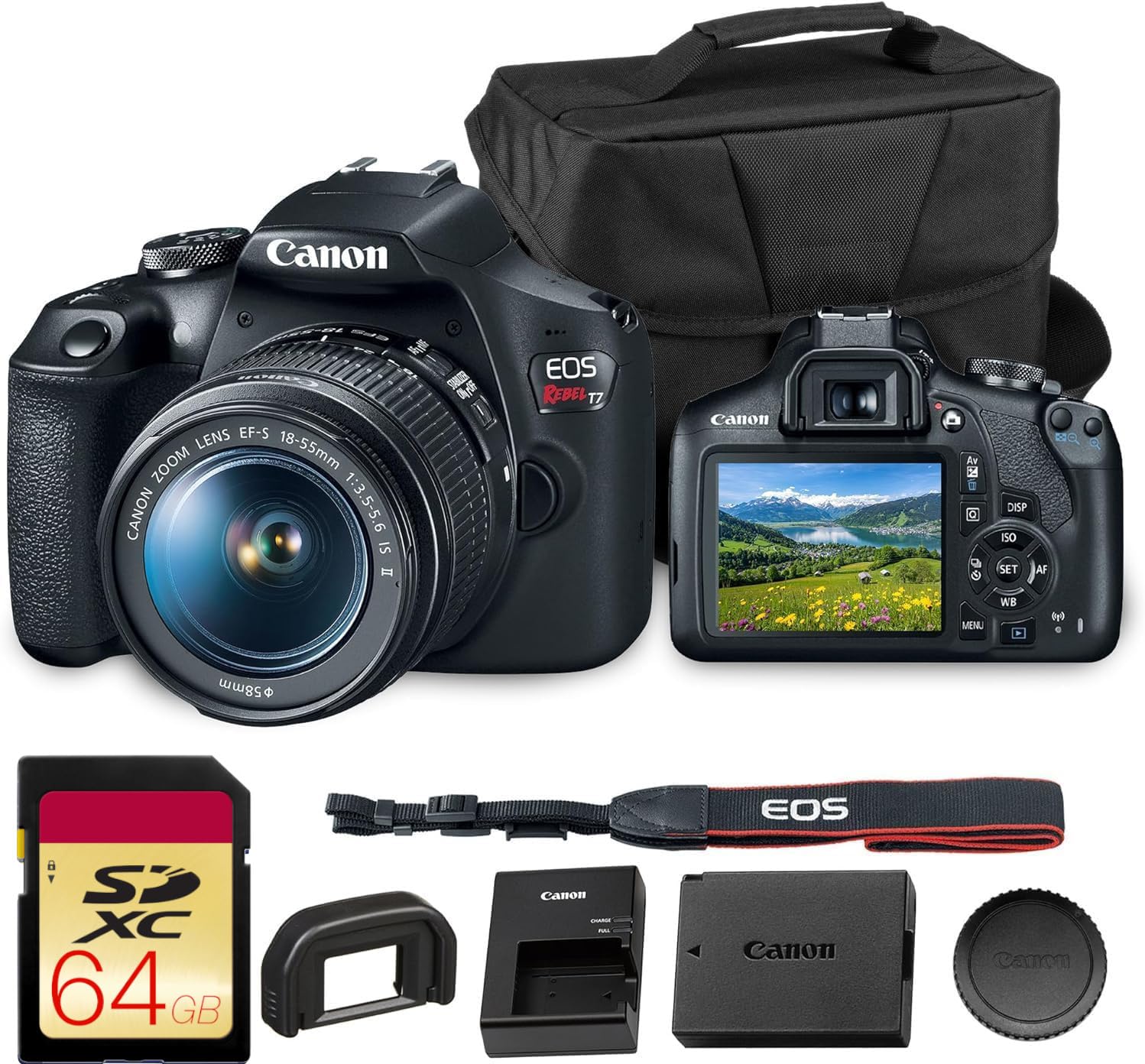
The Canon EOS Rebel T7 kit is the entry point into DSLR macro photography, offering a 24.1MP APS-C sensor that captures significantly more detail than smaller-sensor compact cameras. The included 18-55mm lens has a modest close-focus distance, but the true value here is the EF lens mount—compatible with Canon’s entire macro lens lineup, from the 60mm f/2.8 to the 100mm f/2.8L. This gives you a clear upgrade path for serious macro work.
The DIGIC 4+ image processor produces vibrant colors and low noise at moderate ISOs, which helps in macro situations where you need to stop down the aperture for depth of field. The 9-point autofocus system feels outdated compared to modern cameras, but for static macro subjects it works reliably. Built-in Wi-Fi and NFC make it easy to transfer close-up shots to your phone for editing or sharing.
This kit is best for someone who plans to grow into macro photography. The kit lens is fine for learning, but you will need to invest in a dedicated macro lens to get true 1:1 magnification. The battery lasts about two hours of continuous shooting, and the optical viewfinder still drains no power. For a future-proof budget entry into the macro world, the Rebel T7 is a solid foundation.
Why it’s great
- Large 24.1MP APS-C sensor for detailed macro images
- Full compatibility with Canon EF macro lenses for upgrade path
- Built-in Wi-Fi for easy photo transfer
- Kit bag and 64GB card included for immediate use
Good to know
- Kit lens does not offer true 1:1 macro magnification
- Aging 9-point autofocus system is basic
- Battery life limited to roughly 2 hours of shooting
6. Nikon Z 30 Mirrorless Kit

The Nikon Z 30 is Nikon’s most compact mirrorless camera, designed for content creators who need excellent video quality with macro flexibility. Its 20.9MP DX-format CMOS sensor delivers sharp, detailed images with vibrant colors, and the hybrid autofocus system with 209 phase-detection points locks onto subjects instantly. Eye tracking AF for people and pets works well for macro portraits of small animals or detailed shots of eye textures.
The 4K video up to 30p with no recording time limit (unlike many competitors) is a major advantage for shooting macro time-lapses or documentation. The flip-out touchscreen selfie monitor makes it easy to compose close-ups from awkward angles. The Z mount opens the door to Nikon’s growing lineup of Z lenses, including the Nikkor Z MC 50mm f/2.8 macro lens for 1:1 magnification. The lightweight body (approx. 405g with battery) is easy to hold steady for long macro sessions.
The lack of a viewfinder is the biggest trade-off—you must use the LCD screen for all framing, which can be challenging in bright sunlight. The 16-50mm kit lens does not provide true macro, so you will need to invest in a dedicated macro lens. Some users report overheating during long streaming sessions. For vloggers and videographers who want a portable macro system, the Z 30 offers outstanding value.
Why it’s great
- 209-point hybrid AF with eye tracking ensures sharp macro focus
- Unlimited 4K video recording for long macro sessions
- Compact and lightweight for handheld macro work
- Access to Nikon Z macro lenses for true 1:1 magnification
Good to know
- No viewfinder; relies entirely on LCD screen
- Kit lens lacks true macro capability
- May overheat during extended streaming use
7. Minolta ProShot 64MP
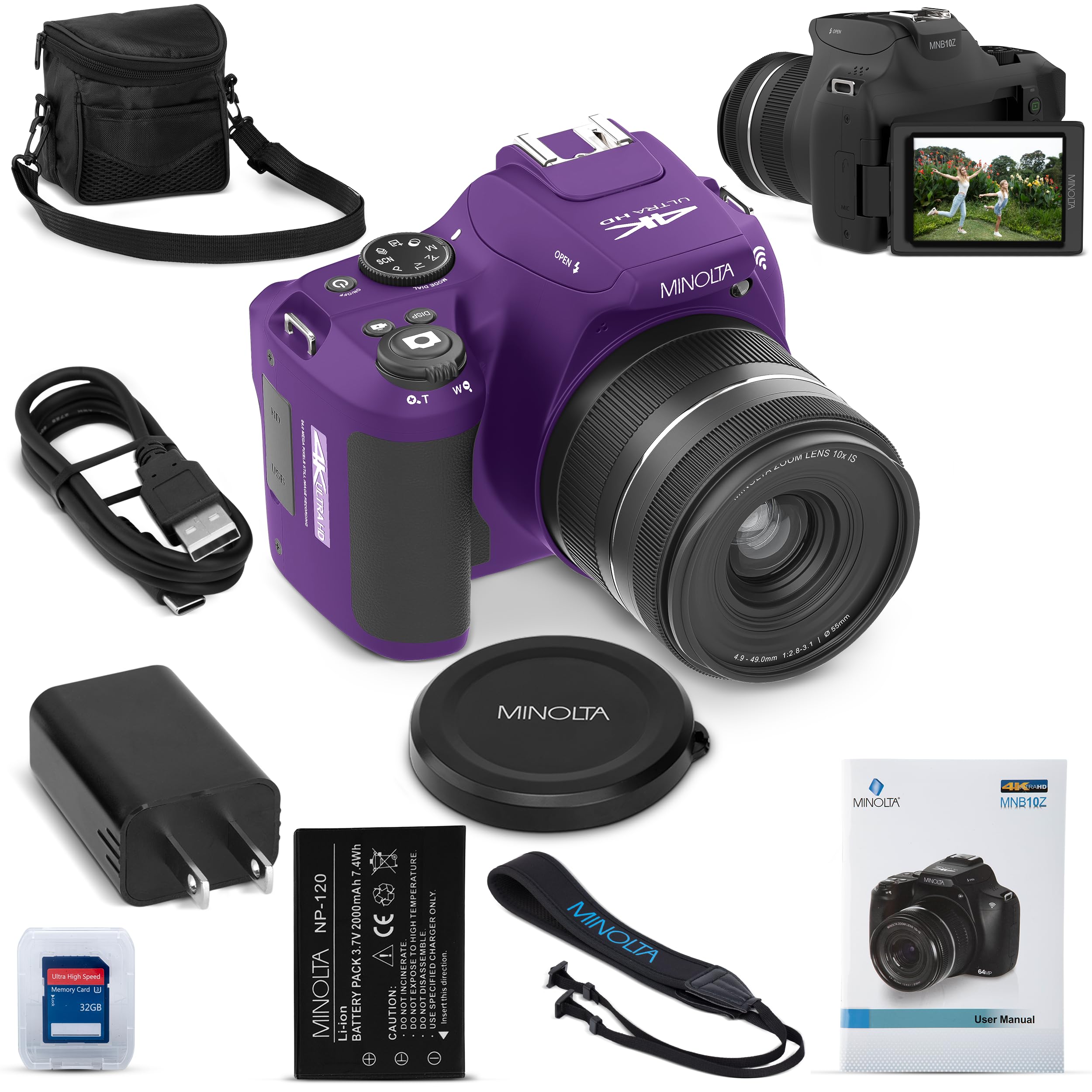
The Minolta ProShot 64MP is a budget point-and-shoot that punches above its weight for macro photography. Its 10x optical zoom combined with a dedicated macro mode enables close-up shots with decent sharpness. The 64-megapixel CMOS sensor interpolates to produce fine detail, though real-world resolution is more typical of a 16-20MP class sensor. The 3-inch LCD articulating screen helps frame low macro angles.
Anti-shake technology reduces blur in macro shots where even the slightest movement ruins focus. Face detection and burst mode assist in capturing sharp shots of moving subjects like small insects or busy pets. The included 32GB SD card, case, rechargeable battery, and charger make it truly ready out of the box. Built-in Wi-Fi allows remote control via smartphone for vibration-free macro triggers.
The build quality feels solid for the price, but some reports of blurry autofocus developing after a few months are concerning. The mode selector wheel is reportedly loose, and the camera lacks a flash for close-up fill lighting. For a first macro camera at an entry-level price, the Minolta ProShot offers good value but may not hold up for heavy daily use.
Why it’s great
- 10x optical zoom provides good reach for macro subjects
- Anti-shake technology minimizes blur in handheld macro shots
- Comprehensive kit includes SD card, case, and spare battery
- Wi-Fi remote control for shake-free macro triggers
Good to know
- Some units develop blurry autofocus after a few months
- Mode selector wheel feels loose
- No built-in flash for macro fill lighting
8. NBDDIGITAL True 8K 64MP
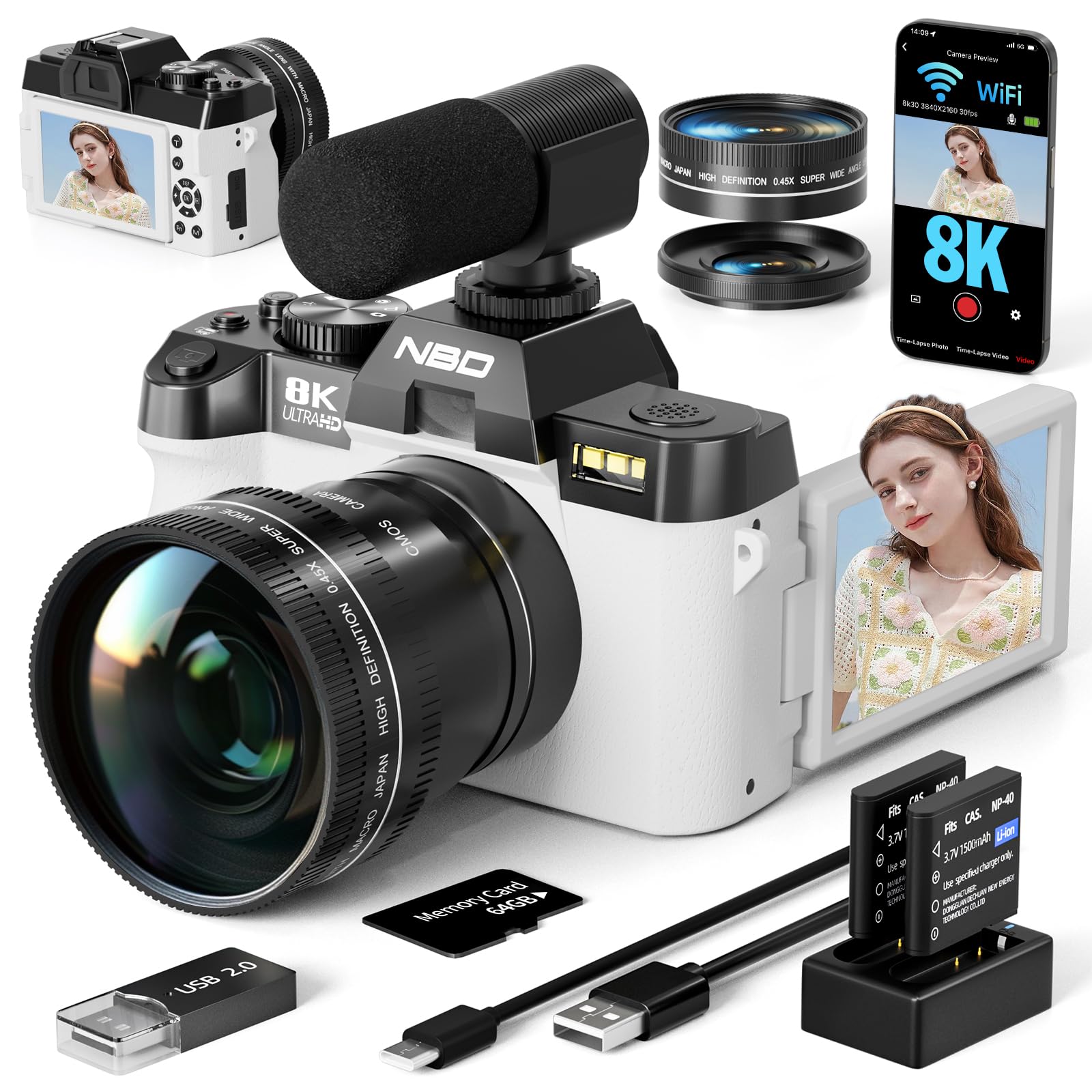
The NBDDIGITAL True 8K 64MP is an ultra-budget-friendly option that comes with a 52mm wide-angle and macro lens attachment, allowing you to get extremely close to subjects. The 64-megapixel still image mode and 8K video recording are marketing highlights, though actual performance is closer to standard 1080p/4K class. The 16x digital zoom is purely digital—optical zoom is limited, so rely on the macro attachment for close-ups.
The 180° flip 3-inch screen makes it easy for selfie-style macro shots of jewelry, flowers, or food. Built-in Wi-Fi enables quick sharing to social media. The bundle includes two batteries, a charger, a bag, a 64GB TF card, and even a microphone, so you have everything out of the box. The built-in fill light helps illuminate close subjects in low environments.
The build feels plastic and less refined than more expensive options, and the autofocus struggles in moderate light. One verified review reports the camera not working at all, highlighting inconsistent quality control. This is best for absolute beginners or children wanting to explore macro photography without a significant investment, but expect compromises in durability and image quality.
Why it’s great
- Comprehensive beginner bundle with macro lens, bag, and cards
- 180° flip screen for selfie-style macro composition
- Built-in fill light helps in dim macro conditions
- Wi-Fi for quick image sharing
Good to know
- Digital zoom only; optical zoom is very limited
- Autofocus struggles in anything less than bright light
- Build quality feels plastic; quality control is inconsistent
9. Xtra Muse Pocket Gimbal Camera

The Xtra Muse is a pocket-sized gimbal camera with a 1-inch CMOS sensor—significantly larger than the 1/2.3-inch sensors found in most budget point-and-shoots. This translates to better light gathering, superior low-light macro performance, and more natural bokeh for close-up subject isolation. It records 4K video at up to 120fps, allowing smooth slow-motion footage of macro subjects like water droplets or leaves blowing in the wind.
The built-in 3-axis gimbal stabilization is a game-changer for macro video. Handheld macro shots that would normally be unusable due to micro-jitters become smooth and professional. Master Follow mode keeps the subject centered in the frame while you move, useful for following an active insect. The 2-inch touchscreen is responsive and supports both horizontal and vertical shooting.
The battery lasts about 161 minutes, which is good for a camera this small. X-Log color grading with 10-bit color depth gives you flexibility in post-production. However, it is primarily a video camera—still photo resolution and features are secondary. The micro SD card slot supports up to 1TB, but the camera is limited to a 1/4-inch tripod mount. For creators who need ultra-stable macro video, this is an exceptional value.
Why it’s great
- Larger 1-inch CMOS sensor for better low-light macro quality
- 3-axis gimbal eliminates shakiness in macro video
- 4K/120fps for smooth slow-motion close-ups
- 10-bit X-Log color for professional-grade post-production
Good to know
- Primarily a video camera; still photo features are secondary
- Battery can be extended with external USB battery
- DJI mics may not auto-connect (recent update improved this)
FAQ
What is the minimum focusing distance I need for true macro shots?
Is a 64MP budget camera better for macro than a 16MP one?
Can I use a budget point-and-shoot for insect macro photography?
Do I need a tripod for macro photography with a budget camera?
Final Thoughts: The Verdict
For most users, the best budget macro camera winner is the OM System Olympus Tough TG-7 because it combines four dedicated macro modes, a 1 cm minimum focus distance, and a rugged waterproof build that lets you shoot anywhere—without needing an expensive macro lens. If you want ultra-stable macro video with professional color grading, grab the Xtra Muse Pocket Gimbal Camera. And for a versatile travel companion that does well with close-ups and telephoto shots alike, nothing beats the Panasonic Lumix ZS99.

Mo Maruf
I created WellFizz to bridge the gap between vague wellness advice and actionable solutions. My mission is simple: to decode the research and give you practical tools you can actually use.
Beyond the data, I am a passionate traveler. I believe that stepping away from the screen to explore new environments is essential for mental clarity and physical vitality.