Our readers keep the lights on and my smoothie glass nicely filled. As an Amazon Associate, I earn from qualifying purchases.
That sharp, stabbing heel pain about two miles into a downhill stretch isn’t just part of hiking — it’s a signal that your boot’s stock footbed is failing you. The thin foam slabs that come inside most hiking boots offer almost no structural support, leaving your arches to collapse and your heels to bruise against the sole. Replacing them with a dedicated orthotic insert changes the entire feel of a hike, turning a punishing descent into a stable, cushioned stride.
I’m Mohammad Maruf — the founder and writer behind WellFizz. I’ve spent years analyzing foot biomechanics, foam densities, and arch support geometries to understand which inserts actually hold up on uneven terrain and long approaches.
Whether you’re battling plantar fasciitis or simply want more stability on rocky trails, you need a pair of boot inserts for hiking that won’t flatten out after a few weekends. The right insert absorbs shock, maintains arch height, and keeps your foot locked in place so you can focus on the scenery instead of your soles.
How To Choose The Best Boot Inserts For Hiking
Not all insoles are built for the trail. Picking the wrong type can cause blisters, arch fatigue, or even knee pain. Focus on these three factors before you buy.
Arch Support and Your Foot Type
A flat insole won’t help a high arch, and an aggressive arch can cause pain in a naturally flat foot. Look for inserts that match your arch height — some brands offer low, medium, and high profiles. For hiking, a medium-to-high arch support is usually ideal because it prevents the foot from collapsing on uneven ground.
Heel Cup Stability
A deep, rigid heel cup wraps around your calcaneus and limits side-to-side movement. This is critical when hiking over rocks or scree, where instability can lead to rolled ankles. The heel cup should be firm enough to hold your foot in place but not so sharp that it digs into your skin.
Material Durability and Shock Absorption
Basic foam compresses after a few miles under a pack. Opt for insoles that use a combination of EVA foam, PU (polyurethane), or gel inserts in the heel. These materials resist compression and maintain their shape over long distances, protecting your knees and hips from repetitive impact.
Quick Comparison
On smaller screens, swipe sideways to see the full table.
| Model | Category | Best For | Key Spec | Amazon |
|---|---|---|---|---|
| Kinergy Hiking Boot Insoles | Premium Hiking | Rugged terrain & long treks | Carbon arch & deep heel cup | Amazon |
| Psveb Professional Heavy Duty Orthotics | Premium Orthotic | Heavy pack & 230+ lbs users | PORON cushion & deep U-heel | Amazon |
| BestHalo Heavy Duty Insoles | Mid-Range Support | All-day standing & plantar fasciitis | Deep heel cup & gel cushion | Amazon |
| Cloudflo Plantar Fasciitis Insoles | Mid-Range Value | Budget relief & flat feet | Rigid TPU arch & 220+ lbs rating | Amazon |
| OUOKK High Arch Support 3/4 Inserts | Specialty 3/4 Length | High arches & tight boots | 30mm TPU arch & thin design | Amazon |
In‑Depth Reviews
1. Kinergy Hiking Boot Insoles
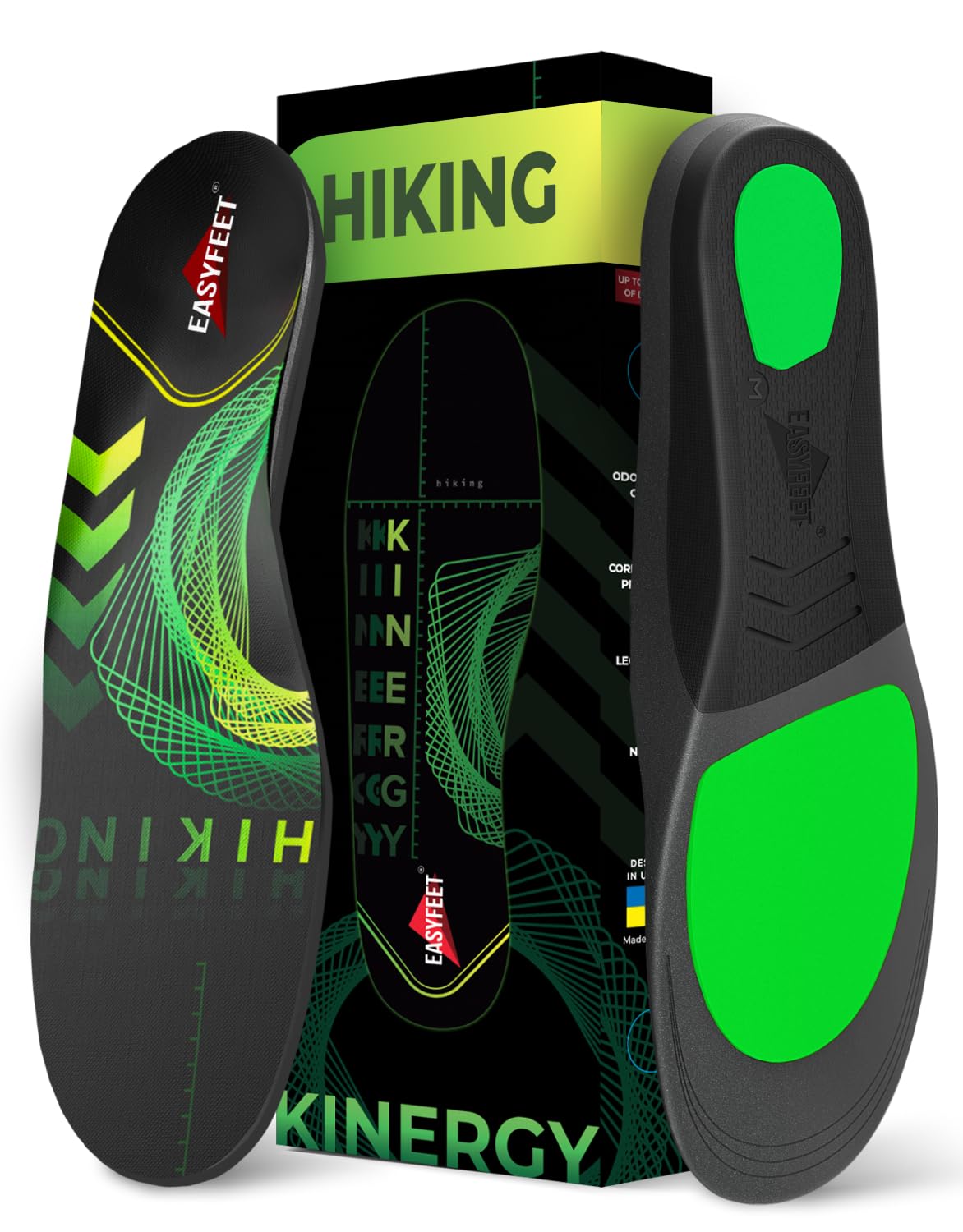
Kinergy designed these insoles specifically for hiking boots, not casual sneakers. The EnerBoost foam layer returns energy with each step, reducing the metabolic cost of a long approach. A carbon arch support runs through the midfoot to maintain proper alignment on uneven ground, and the deep heel cup keeps your calcaneus locked in place during lateral movement on loose scree. The fabric cover includes a non-sweat layer that wicks moisture, which is critical when you’re sweating through stream crossings and switchbacks.
Oilfield workers and barbers who stand all day have reported being pain-free after switching, and hikers using these in Big Bend reported a significant reduction in foot fatigue and soreness over multiple days. The inserts are lightweight at 3.84 oz, so they won’t add noticeable weight to your boot, and the trim-to-fit design means they work in both men’s and women’s boots with a quick scissor cut.
One minor note: the rigid arch may feel intense for the first few hours of wear, so break them in on short walks before a 10-mile day. Some users found them slightly less stiff than high-end custom orthotics, but for a mass-market insert, the structural support is excellent. If you’re after a true hiking-specific insole that prioritizes stability and moisture management, this is the pick.
Why it’s great
- Carbon arch provides unmatched midfoot stability for uneven terrain
- Breathable, non-sweat layer keeps feet dry on long hikes
- Lightweight at 3.84 oz, won’t bog down your boots
Good to know
- Arch may feel strong for flat-footed users during the first few wears
- Primarily designed for hiking boots, less ideal for everyday sneakers
2. Psveb Professional Heavy Duty Support Orthotics
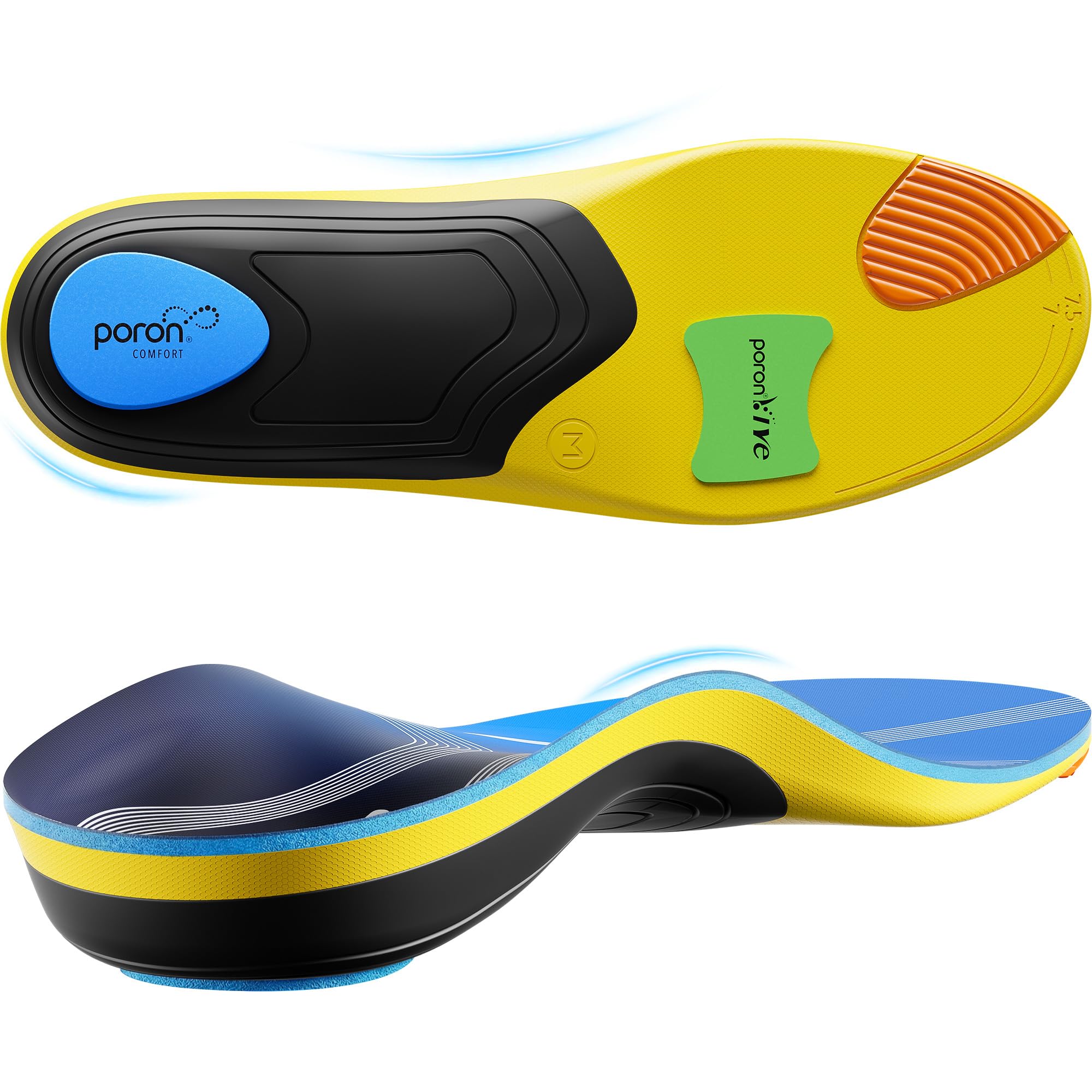
Psveb’s orthotics are built for heavy-duty use — they’re rated for users over 230 lbs and feature a double layer of PORON cushioning at the heel. PORON is a high-performance urethane foam known for retaining up to 95% of its shock absorption over time, unlike standard EVA that crushes after a few long hikes. The “Golden Triangle” design provides three-point support at the forefoot, arch, and heel, distributing weight evenly across the foot instead of concentrating pressure on the metatarsal heads.
Users who work 9-10 hour shifts on concrete floors reported that these insoles didn’t flatten after three weeks of daily wear, and hikers carrying heavy packs noted a reduction in arch fatigue on multi-mile descents. The deep U-shaped heel cup is particularly good for preventing side-to-side slippage during lateral movements on rocky trails. It requires a bit of extra volume in the boot — if your boots are already snug, you may need to loosen the laces slightly.
On the downside, the full PU layer makes these thicker than average, so they won’t fit well in low-profile trail runners or zero-drop boots. Some users found the arch height aggressive on the first wear, though it settled in after a few days. For heavier hikers or anyone carrying a loaded pack over uneven ground, this is a robust choice that prioritizes impact protection and joint preservation.
Why it’s great
- PORON cushion retains shock absorption better than standard EVA foam
- Golden Triangle design distributes weight evenly across the foot
- Deep U-shaped heel cup prevents ankle roll on uneven terrain
Good to know
- Thicker profile may not fit in low-volume or tight hiking boots
- Arch can feel strong during the first few adjustment days
3. BestHalo Heavy Duty Plantar Fasciitis Insoles
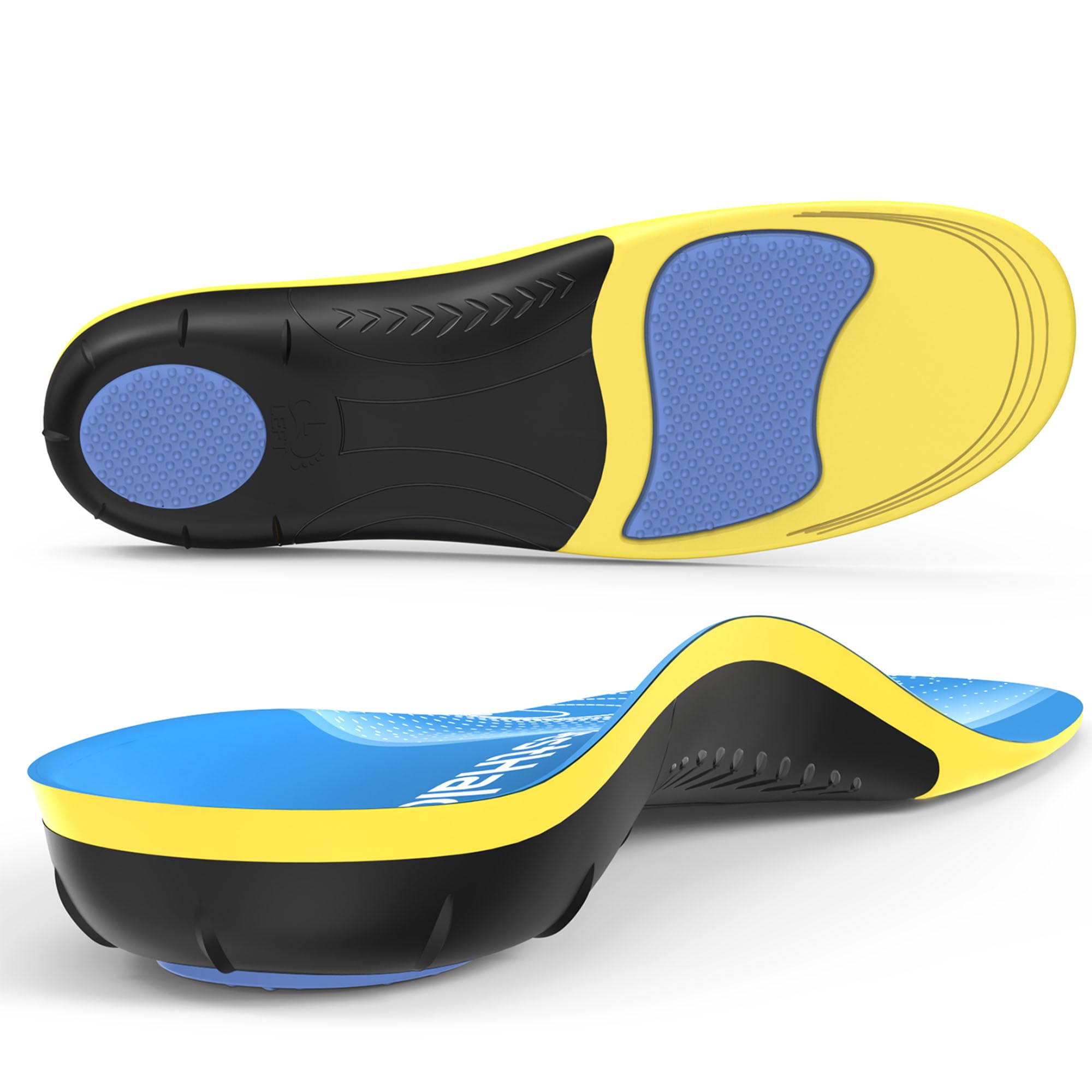
BestHalo strikes a solid balance between price and performance, with a biomechanical design that targets plantar fasciitis pain directly. The structured arch support system promotes natural alignment, and the deep heel cup controls overpronation and supination — both common issues when carrying a pack downhill. Premium EVA foam paired with gel cushioning at the heel provides good shock absorption for day hikes, and the trim-to-fit design means it fits into most work boots and hiking boots without excessive bulk.
Customer reviews are generally strong: many users found immediate relief from plantar fasciitis pain, and one post-surgery reviewer noted that the high-arch support resolved pain extending from foot to hip. A few users reported mild new discomfort during the first 3–7 days, which is typical for orthotic inserts that require adaptation. The manufacturer recommends starting with 2–3 hours daily and increasing gradually, which reduces the risk of soreness.
One concern is that the soft heel cup may cause misalignment for some users over long distances. One reviewer experienced new lower back pain after two weeks and switched to a firmer known brand (Superfeet). This suggests the gel heel may not be dense enough for heavy load carriage or very long treks. Still, for weekend hikers and those who stand all day at work, this is a comfortable, effective option that won’t break your budget.
Why it’s great
- Gel heel cushion provides excellent initial shock absorption
- Biomechanical design improves foot and leg alignment
- Trim-to-fit works well in both work boots and hiking boots
Good to know
- Gel heel may compress faster under heavy loads on multi-day trips
- Some users report a 3–7 day adjustment period for the arch
4. Cloudflo Plantar Fasciitis Insoles
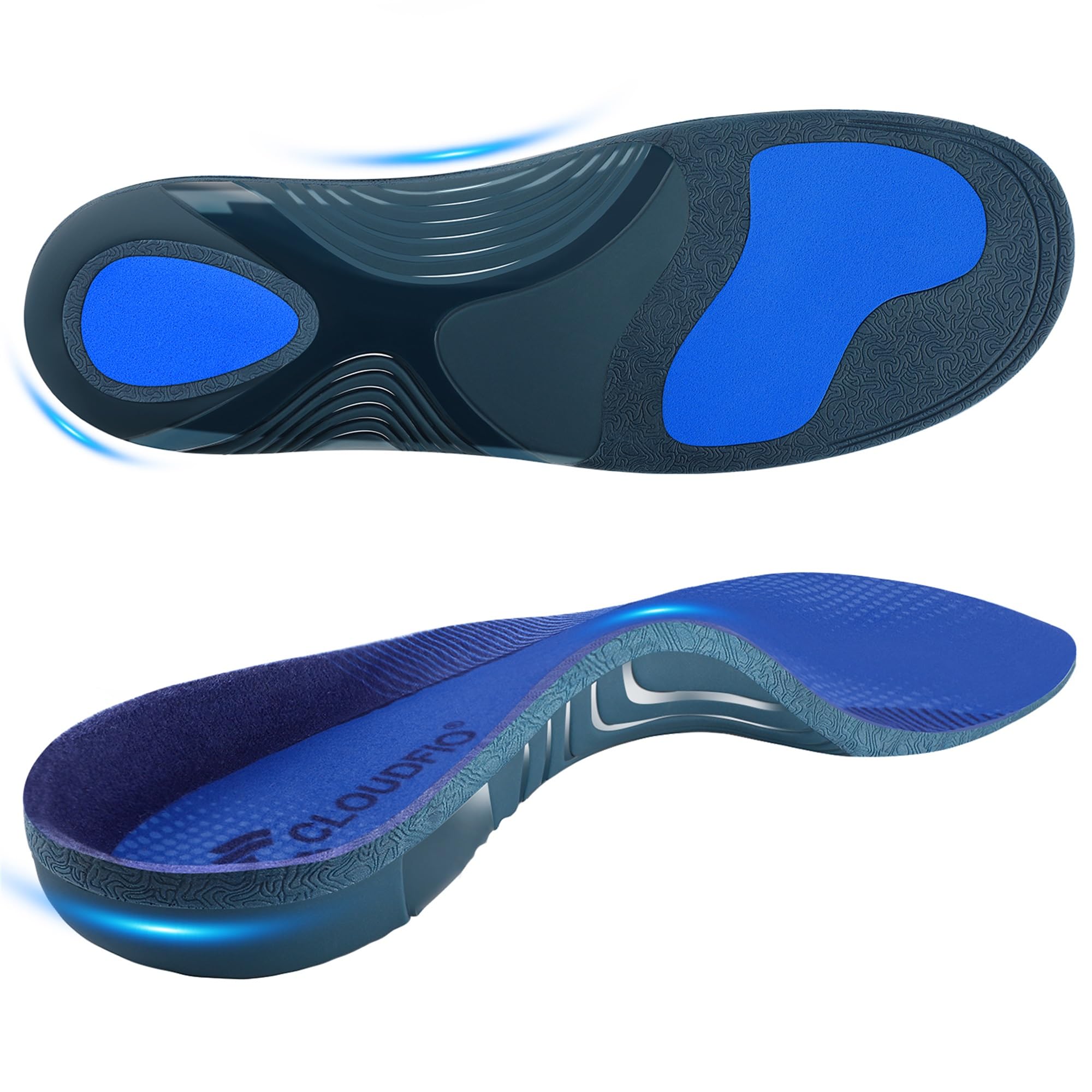
Cloudflo brings a surprisingly rigid TPU arch support at an entry-level price point. The TPU material resists deformation better than many budget insoles that rely on soft foam alone, and the thick Ortholite cushioning layer under the forefoot provides decent energy return for the price. The PU heel pad absorbs shock specifically at the strike zone, which is where most hikers experience pain on descents. These insoles are also rated for users over 220 lbs, which is unusual for a budget-tier product.
Several reviewers who stand for 10-hour shifts and work on concrete floors reported immediate pain relief and said the insoles didn’t slide around inside their boots. The fit is true-to-size and requires minimal trimming, and the breathable velvet top layer helps with odor control. A few users noted that the arch support is slightly less aggressive than premium options, but still sufficient for moderate hiking and daily wear. The built-to-last construction impressed users who expected them to flatten within weeks.
The catch is that the rigid TPU arch may not suit flat-footed hikers — one reviewer mentioned they caused new discomfort until their feet adjusted. Additionally, the overall build feels firmer than soft-gel alternatives, so if you prefer marshmallow-like cushioning, these may not be your match. For a highly affordable orthotic that actually holds its shape over long distances, Cloudflo delivers solid value.
Why it’s great
- Rigid TPU arch resists compression better than budget foam insoles
- PU heel pad absorbs shock effectively for descents and hard surfaces
- Rated for 220+ lbs, unusual at this price tier
Good to know
- Rigid arch may be uncomfortable for flat-footed users initially
- Firmer feel than gel-based alternatives — not plush
5. OUOKK 3/4 Length High Arch Inserts

OUOKK’s 3/4 length inserts are designed for hikers who need high arch support but can’t afford extra volume in their boots. Because they stop at the metatarsal heads instead of covering the toes, they don’t crowd toe boxes — a common problem when fitting full-length insoles into tight hiking boots. The 30mm TPU arch is among the tallest available in a non-custom insert, providing aggressive support for high arches and clubfoot conditions. The thin edges and soft perimeter material help them conform to the foot without creating pressure points.
Users with flat feet and long standing work days reported complete pain relief by the end of the day, and those with plantar fasciitis noted significant reduction in heel pain. The 3/4 length also means they stay in place without bunching up at the toes, which is a frequent complaint with full-length inserts that shift during descents. The manufacturer claims the TPU arch holds its shape for 2+ years, and the massage area under the foot also promotes blood circulation.
The main limitation is that 3/4 inserts offer no forefoot cushioning or toe impact protection. If your hiking includes a lot of steep downhills where you need metatarsal padding, these won’t provide it. Some users also found the arch too rigid and reported it caused new foot or lower back pain after a couple of weeks, so a gradual break-in is advisable. For hikers with very high arches or those who need support in tight boots without adding volume, these are a unique and effective solution.
Why it’s great
- 30mm TPU arch provides among the highest support in a non-custom insert
- 3/4 length saves toe box space, ideal for tight hiking boots
- Durable TPU holds shape significantly longer than standard EVA
Good to know
- No forefoot cushioning for steep downhill impact protection
- Rigid arch may cause discomfort if not broken in gradually
FAQ
How do I trim hiking boot insoles to fit my boots?
Can I use running shoe insoles in my hiking boots?
Final Thoughts: The Verdict
For most users, the boot inserts for hiking winner is the Kinergy Hiking Boot Insoles because they combine a carbon arch, energy return foam, and moisture-wicking fabric in a lightweight package purpose-built for the trail. If you need heavy-duty impact protection for carrying a loaded pack and weigh over 230 lbs, grab the Psveb Professional Heavy Duty Orthotics. And for a reliable balance of support and price on day hikes, the BestHalo Heavy Duty Insoles deliver consistent comfort without breaking your budget.

Mo Maruf
I created WellFizz to bridge the gap between vague wellness advice and actionable solutions. My mission is simple: to decode the research and give you practical tools you can actually use.
Beyond the data, I am a passionate traveler. I believe that stepping away from the screen to explore new environments is essential for mental clarity and physical vitality.