Our readers keep the lights on and my smoothie glass nicely filled. As an Amazon Associate, I earn from qualifying purchases.
Salt-laden sea air doesn’t just kiss your skin—it attacks the evaporator coils, fan blades, and condenser fins of a standard air conditioner, often causing fin corrosion within two seasons. Coastal homeowners know the sting of a unit that rusts from the inside out, and the search for a machine with factory-applied anti-corrosion coatings or marine-grade materials is the first real test of their purchase.
I’m Mohammad Maruf — the founder and writer behind WellFizz. I’ve spent years analyzing HVAC specifications for homes within five miles of saltwater, breaking down how copper-aluminum fin bonds, gold-fin coatings, and sealed compressor housings determine whether an AC survives its third summer or ends up in a dumpster.
This guide walks you through the corrosion-resistant build quality, inverter longevity, and drainage reliability you absolutely need before spending a cent. After hours of cross-referencing spec sheets and real-world coastal feedback, we’ve pinpointed the air conditioner for coastal areas that balances salt-air durability with cooling muscle.
How To Choose The Best Air Conditioner For Coastal Areas
Buying an AC for a coastal home means prioritizing corrosion resistance and moisture management above raw BTU count. A unit that chills a room but rots its own coil in two years is a bad investment. Focus on these three criteria to avoid a salty surprise.
Anti-Corrosion Coating & Fin Material
The most critical spec for coastal buyers. Standard evaporator coils use bare copper or aluminum that oxidizes rapidly in salt-humidity. Look for units that advertise “gold fin,” “anti-corrosion coating,” or “Blue Fin” protection. These factory-applied epoxy or polymer layers create a barrier that prevents salt particles from eating through the metal. Some premium portable units now use a multi-layer anti-rust paint over the entire condenser housing. Without this, your AC’s cooling efficiency drops within the first year as corrosion clogs the heat-exchange fins.
Drainage System & Self-Evaporation
Coastal air carries high ambient humidity, which means your AC produces far more condensate than a unit in a dry climate. A self-evaporating system recycles that water to cool the condenser coils, reducing how often you need to manually drain the tank. The best portable units handle up to 90% relative humidity without requiring a bucket dump. In contrast, units that rely on a gravity drain or a small internal bucket will trigger an auto-shutoff every few hours in a beachside bedroom. Prioritize models with a “drainage-free in cool mode” claim to minimize daily maintenance.
Inverter Compressor Longevity in Salt Air
Standard fixed-speed compressors cycle on and off, creating temperature swings that accelerate internal condensation and corrosion. Inverter compressors run at variable speeds, maintaining a steady temperature and reducing the total number of thermal cycles. Fewer cycles mean less moisture buildup inside the sealed compressor housing, which is a weak point for coastal units. Additionally, inverter models are quieter, and the constant low-speed operation puts less mechanical strain on the fan bearings—parts that often seize up in salt-laden environments. A rotary scroll or DC inverter compressor with a sealed electrical box is the gold standard for coastal duty.
Quick Comparison
On smaller screens, swipe sideways to see the full table.
| Model | Category | Best For | Key Spec | Amazon |
|---|---|---|---|---|
| CKEARO 16,000 BTU | Portable | Large room smart cooling | 36dB sleep mode noise level | Amazon |
| YLEOOB 16,000 BTU | Portable | WiFi scheduling & quiet sleep | 42dB sleep mode noise level | Amazon |
| Cvznsy 16,000 BTU | Portable | Ultra-quiet 36dB operation | 36dB sleep mode noise level | Amazon |
| Midea 12,000 BTU U Shaped | Window | Ultra-quiet window install | 32 dBA noise operation | Amazon |
| Confortotal 12,000 BTU Mini Split | Mini Split | Ductless heat pump flexibility | 12,000 BTU cooling / heating | Amazon |
| DREO 515S 12,000 BTU | Portable | True drainage-free cooling | 45dB quiet operation | Amazon |
| QLF 16,000 BTU | Portable | Large room up to 800 sq ft | 40dB noise in sleep mode | Amazon |
| ZAFRO Smart Inverter 16,000 BTU | Portable Dual Hose | Inverter efficiency & coastal build | 12.8 CEER rating | Amazon |
| Whynter ARC-1230WN | Portable Dual Hose | High-capacity dehumidifier + cooling | 87 pints/day dehumidifier capacity | Amazon |
| Midea Duo 14,000 BTU with Heat | Portable Dual Hose | Year-round cooling & heating | Dual hose-in-hose design | Amazon |
| DELLA Vario 18,000 BTU Mini Split | Mini Split | Permanent whole-home solution | 21 SEER2 efficiency rating | Amazon |
In‑Depth Reviews
1. CKEARO 16,000 BTU Smart Portable Air Conditioner
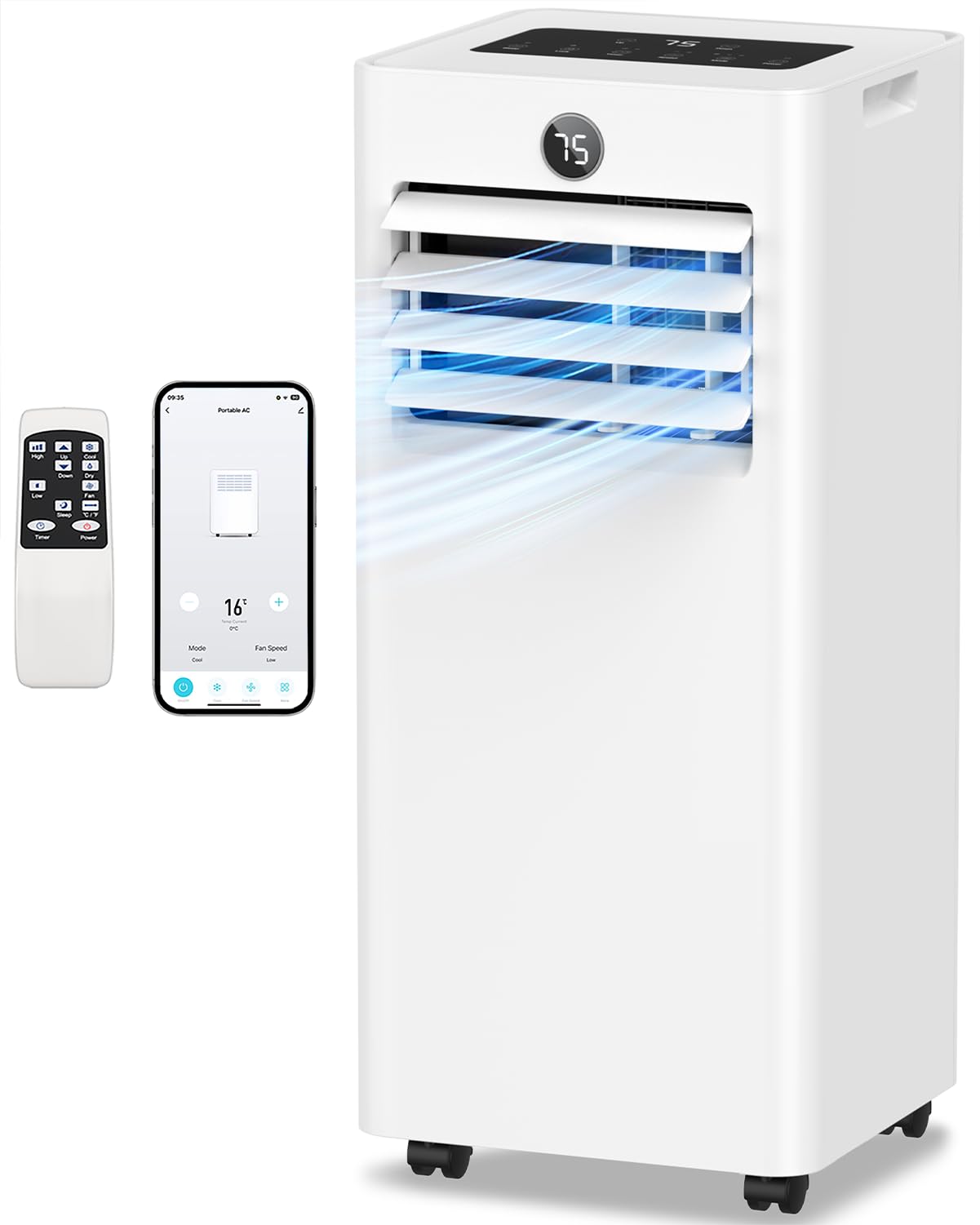
The CKEARO hits a smart sweet spot for coastal buyers: a powerful 16,000 BTU compressor paired with a self-evaporating drainage system that eliminates manual bucket emptying in most conditions. Its washable double-layer mesh filter traps salt particles and dust before they reach the coils, and the 36dB sleep mode is genuinely silent enough for a beachside bedroom. At 43 pounds with 360° wheels, you can roll it between rooms without breaking your back.
Inverter-adjacent efficiency comes from its electronic expansion valve, which reduces energy consumption by 40% compared to traditional portables. The WiFi app works with Alexa and Google Assistant, and the 24-hour timer lets you schedule cooling around incoming tide schedules. The LED touch panel and child lock add convenience for family-heavy coastal homes.
One note: in sustained humidity above 60%, the internal tank will fill every 8 hours. A drain hose is included, but it’s worth planning for if your coastal area experiences monsoon-level moisture. Overall, the combination of quiet operation, smart controls, and near-drainage-free cooling makes this the top pick for most buyers.
Why it’s great
- Truly quiet 36dB sleep mode won’t disturb light sleepers near the shore
- Self-evaporating system handles most coastal humidity without manual draining
- Washable filter design helps trap airborne salt and debris before they reach the coil
Good to know
- Requires manual drain every 8 hours in sustained humidity above 60%
- Window kit fits 25.59–50 inches but may need trimming for narrower frames
2. YLEOOB 16,000 BTU Smart Portable Air Conditioner
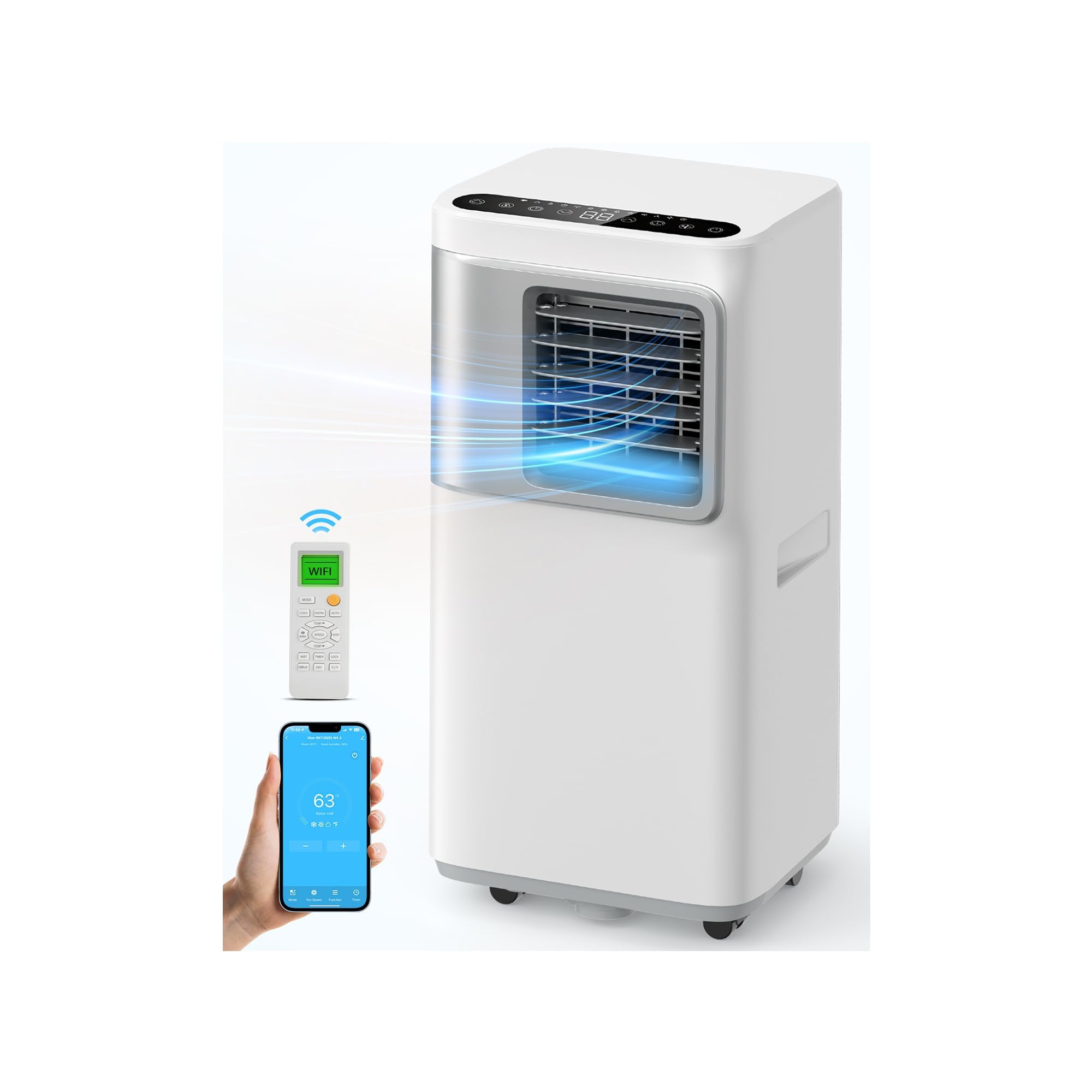
YLEOOB’s offering mirrors the CKEARO in BTU output (16,000) but leans harder into app-based scheduling, giving you precise 24/7 control over cooling cycles from your phone. The auto-swing louvers eliminate hot spots across the 730 sq ft coverage area, which matters when coastal sun blazes through large windows. Sleep mode operates below 42dB—still quiet enough for a nursery near the beach.
The drainage-free innovation is identical in concept: a built-in self-evaporation system that works well up to typical coastal humidity levels. The rotary scroll compressor is sealed and designed for multi-year use, though the brand is less established than Midea or Whynter. The included window kit fits vertical and horizontal sliders with a tool-free setup that renters will appreciate.
The main trade-off is noise floor: 42dB versus the CKEARO’s 36dB. While still quiet, it’s not library-level silent. If you need absolute silence for a home office or infant room, the CKEARO edges ahead. But for smart-home enthusiasts who want robust scheduling and energy monitoring, the YLEOOB delivers strong value.
Why it’s great
- Full WiFi app integration with 24/7 scheduling and energy tracking
- Auto-swing louvers prevent hot spots in large, sun-drenched rooms
- Tool-free window kit compatible with vertical and horizontal sliders
Good to know
- Sleep mode at 42dB is not as silent as the 36dB competitors
- Brand has limited long-term reliability data compared to established names
3. Cvznsy 16,000 BTU Smart Portable Air Conditioner
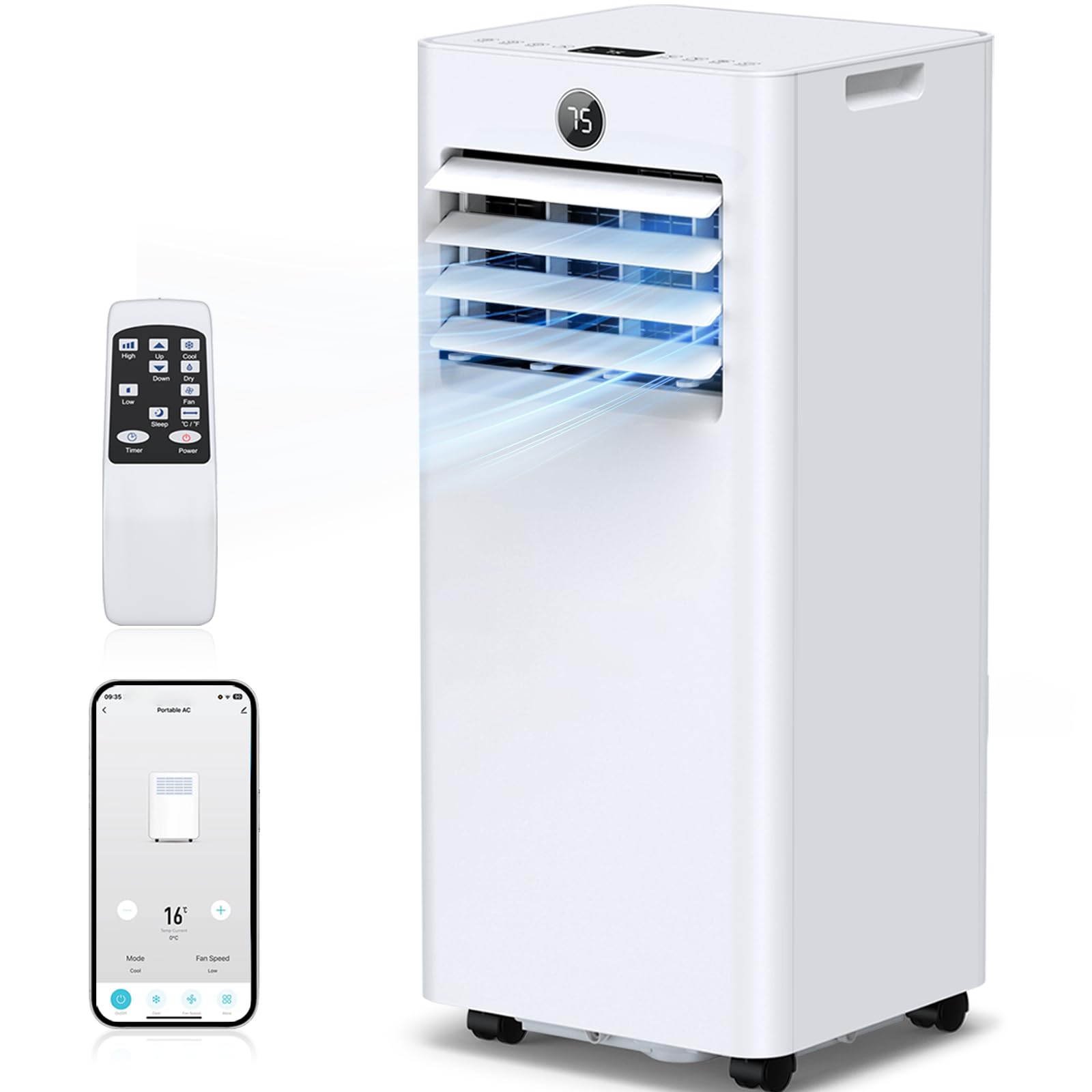
The Cvznsy matches the CKEARO’s 36dB sleep mode but adds a more aggressive dual-layer mesh filter system. The outer mesh catches larger salt particles and pet hair, while the inner layer traps finer debris—critical for coastal homes where airborne salt is constant. At 16,000 BTU, it covers 750 sq ft with a long-throw airflow that reaches corners many portables miss.
The 5-in-1 mode lineup (Cool, Fan, Dehumidifier, Sleep, 24H Timer) gives flexibility for humid coastal evenings. Its drainage-free operation works in most climates, though extended high humidity will trigger the safety shutoff. The LED touch panel is bright and responsive, and the child lock prevents accidental mode changes in homes with kids.
The annual energy consumption is listed at 1,500 kWh—higher than some competitors. That could be a factor if your coastal electricity rates are steep. Still, for buyers prioritizing the lowest possible noise floor and superior filtration, this unit delivers a genuinely quiet, clean-cooling experience.
Why it’s great
- Dual-layer mesh filter traps both coarse salt particles and fine airborne debris
- 36dB sleep mode is one of the quietest in the portable category
- Long-throw airflow design reaches far corners in large coastal rooms
Good to know
- Annual energy consumption of 1,500 kWh is higher than several similar units
- Drainage-free performance may degrade in sustained humidity above 70%
4. Midea 12,000 BTU U Shaped Smart Inverter Window Air Conditioner
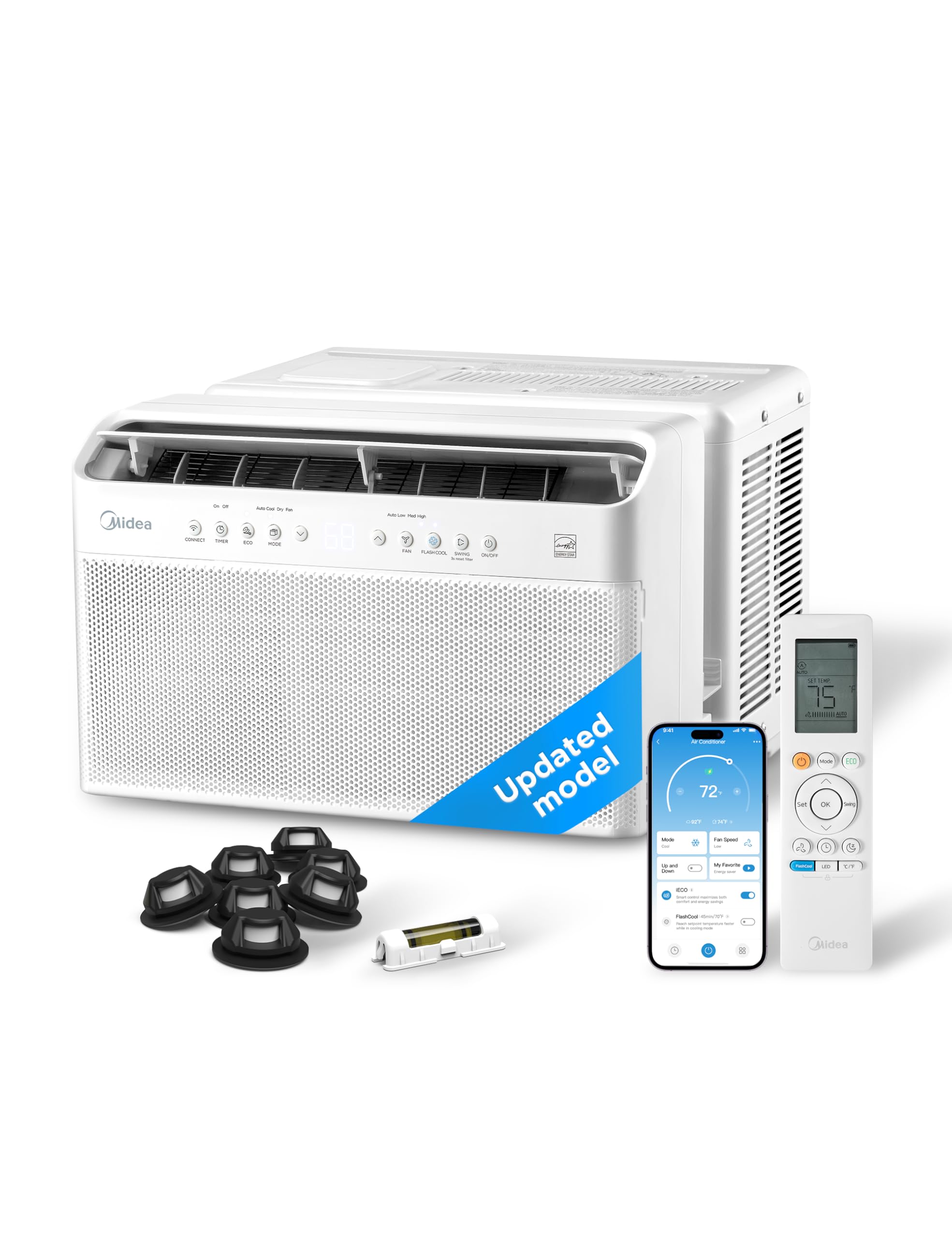
Midea’s U-shaped design changes the game for coastal window installations: the window actually closes down over the unit, creating a physical barrier that blocks external noise and salt spray from entering the room. At 32 dBA, it’s 10x quieter than traditional window units. The DC inverter technology delivers over 35% energy savings compared to standard units, and it’s ENERGY STAR certified—rare for a window AC.
For coastal buyers, the ability to close the window partially means you can let fresh air in without fully uninstalling the unit. The anti-theft mechanism locks the window for safety. The SmartHome app allows remote control and energy monitoring, and it works with Alexa and Google Assistant. Coverage is 550 sq ft, ideal for a master bedroom or small open-plan space.
Installation requires a single-hung or double-hung window 22–36 inches wide with a minimum height of 13.75 inches. The quick-snap bracket simplifies mounting, but some users report needing custom support if the exterior ledge is short. For a window-mounted solution that keeps salt air out while running whisper-quiet, this is the top choice.
Why it’s great
- U-shape allows window to close, blocking coastal noise and salt spray
- 32 dBA operation is near-silent for bedrooms
- ENERGY STAR certified with DC inverter for long-term savings
Good to know
- Installation bracket may not fit windows with limited exterior clearance
- Some units have reported high-pitched buzzing or temperature priority issues
5. Confortotal 12,000 BTU Mini Split Air Conditioner and Heat Pump

This 12,000 BTU ductless mini split offers both cooling and heating at a price point well below big-brand mini splits. It plugs into a standard 110V outlet, eliminating the need for a dedicated 230V circuit—a huge plus for older coastal homes with limited electrical capacity. The precharged compressor simplifies DIY installation if you have a vacuum pump and some HVAC knowledge. Coverage is rated up to 550–750 sq ft.
WiFi compatibility with Alexa and Google Assistant is built in, though some users find the Smart Life app finicky. The indoor unit is quiet at roughly 40dB, and the outdoor condenser is remarkably unobtrusive. For a small coastal cottage or garage workshop, this delivers solid year-round temperature control at a fraction of the cost of a full split system.
The catch: heating function reliability is inconsistent, with a few customers reporting the heat pump fails to blow warm air even after professional installation. If you need dependable winter heating in a cold coastal climate, this may not be your first choice. But for summer-dominant cooling with backup heat, it’s a compelling entry-level mini split.
Why it’s great
- Plugs into standard 110V outlet—no expensive electrical work needed
- Precharged system for DIY-friendly installation
- Quiet operation at ~40dB for the indoor unit
Good to know
- Heating function has reported failures in cold weather
- Customer support responsiveness is inconsistent
6. DREO Portable Air Conditioner 515S, 12,000 BTU ASHRAE
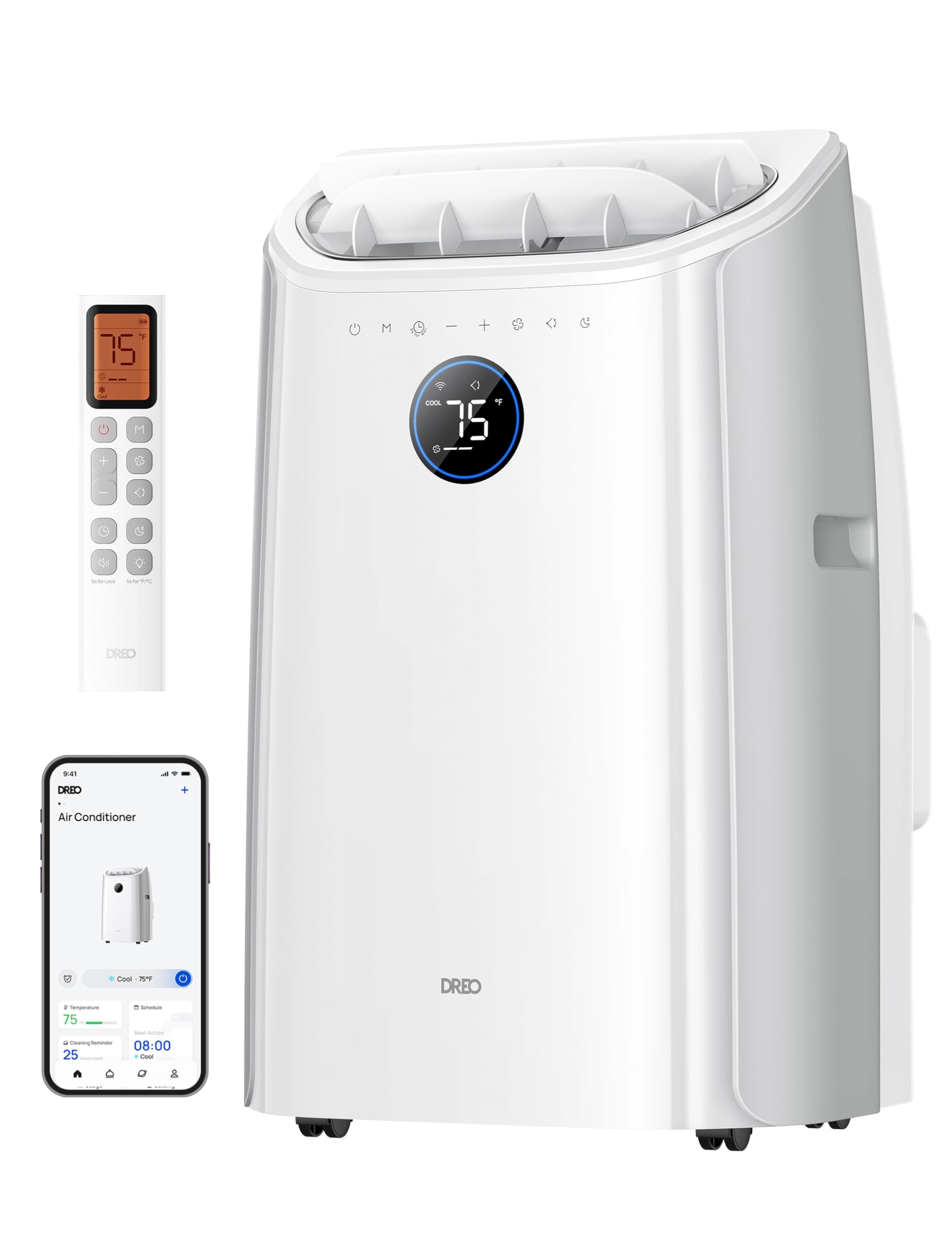
DREO’s patented IceCool system and true self-evaporating technology make this unit stand out for coastal high-humidity environments. It handles up to 90% relative humidity without requiring manual drainage—a significant advantage over units that quit at 60%. The 12,000 BTU ASHRAE (8,000 BTU SACC) rating is modest compared to the 16,000 BTU units, but the cooling reach extends 16 feet from the unit.
The noise isolation system keeps operation at 45dB, which is quiet but not class-leading. Where this unit shines is the DREO app, which offers a Sleep Curve function that adjusts temperature based on your sleep patterns. It works with Siri, Alexa, and Google Home. The build quality is noticeably higher than budget brands, with a sturdy chassis and premium-feeling remote with magnetic holder.
The main limitation is coverage: 300–550 sq ft. If your coastal space is a primary bedroom or small apartment living area, this is ideal. For an open-plan great room, you’ll need more BTU firepower. The setup can be finicky—some users recommend replacing the included foam with tape for a better seal. Overall, for worry-free drainage in humid coastal climates, few portables beat the DREO.
Why it’s great
- True self-evaporating system works up to 90% humidity—no bucket emptying
- DREO app with Sleep Curve for personalized overnight cooling
- Premium build with magnetic remote holder and dimmable display
Good to know
- Limited to 300 sq ft effective cooling despite 12,000 BTU rating
- Window sealing kit may need extra foam or tape for a tight fit
7. QLF 16,000 BTU Portable Air Conditioner
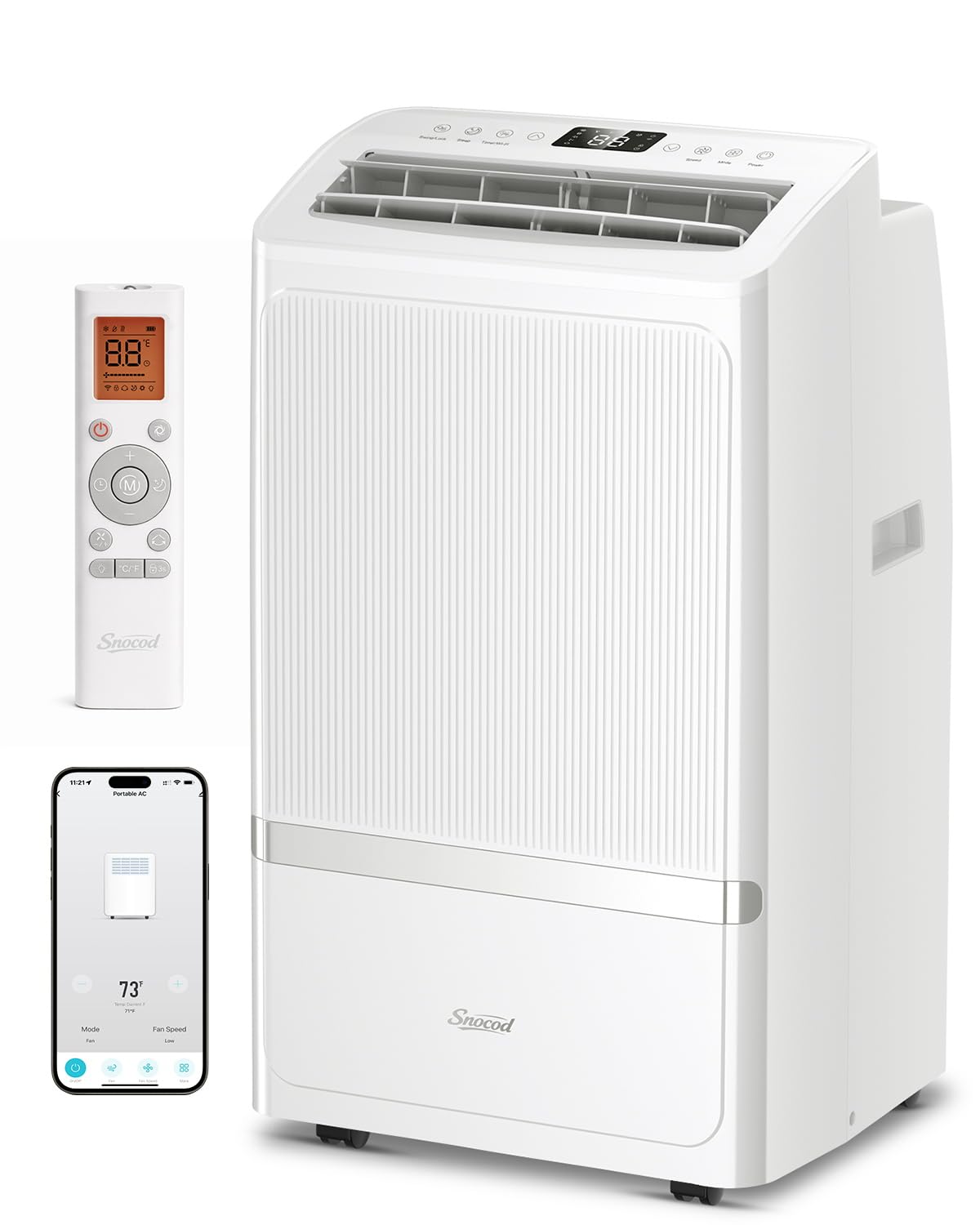
The QLF is built for coastal buyers who need to cool a large open-plan space—up to 800 sq ft. Its 16,000 BTU output and 18-foot throw distance ensure even cooling in high-ceilinged beach houses. The noise level drops to 40dB in sleep mode, a solid middle ground between the ultra-quiet 36dB units and louder budget models. The 5-in-1 modes include Cooling, Fan, Dehumidifier, Sleep, and a 24H timer.
Drainage-free technology handles typical coastal humidity, but the unit is heavier at 60 pounds. The 360° wheels and side handles make rolling it manageable, but carrying it upstairs is a two-person job. The Smart Life app and remote control offer full functionality, including customizing your sleep curve. The dehumidifier mode pulls excess moisture effectively, reducing that sticky coastal feeling.
The annual energy consumption is lower than the Cvznsy at 577 kWh, making this a more efficient choice for long summer runs. However, the brand QLF is less known than Midea or Whynter, so long-term parts availability is uncertain. For sheer cooling volume per dollar, this unit punches above its weight.
Why it’s great
- Cools up to 800 sq ft with an 18-foot throw for open-plan homes
- Low annual energy consumption (577 kWh) for a 16,000 BTU unit
- 40dB sleep mode is quiet enough for most bedrooms
Good to know
- Heavy at 60 pounds—requires two people for stair transport
- Brand is less established for long-term support
8. ZAFRO Smart Inverter 16,000 BTU Dual Hose Portable Air Conditioner
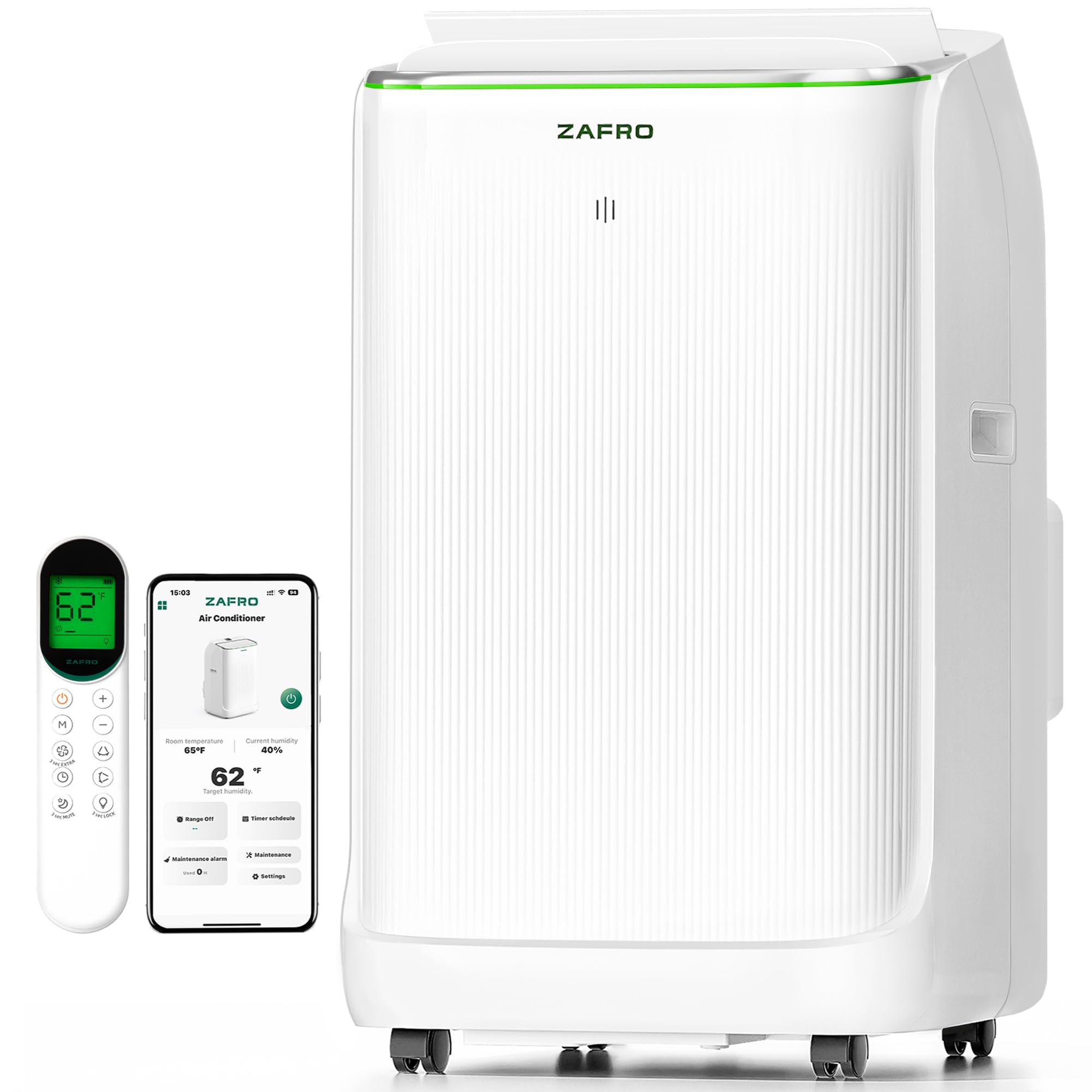
ZAFRO’s dual-hose inverter design is the standout for coastal buyers who want maximum energy efficiency and consistent temperature control. The 12.8 CEER rating (well above the standard 7.83) means it uses significantly less electricity than non-inverter units. The dual-hose system pulls air from outside for the condenser, reducing indoor air negative pressure and preventing humid coastal air from being sucked into the room through cracks.
The inverter compressor ramps up and down smoothly, avoiding the thermal shock that can accelerate corrosion. It offers six modes: Cool, Dry, Fan, Sleep, Extra, and Eco. The 4-way swing oscillates both vertically and horizontally for even air distribution. The self-evaporating system claims 72 hours of drainage-free operation in humidity below 90%. It also includes a filter-clean reminder and power-off memory.
The downside is weight and complexity: dual-hose units are heavier and the window kit setup is more involved than single-hose models. At roughly 70 pounds, moving it between rooms requires effort. But for a coastal home where you plan to leave the unit in one place for the summer, the energy savings and consistent cooling make the ZAFRO a top-tier investment.
Why it’s great
- 12.8 CEER inverter efficiency saves significantly on electricity bills
- Dual-hose design prevents indoor negative air pressure in sealed homes
- 72-hour drainage-free window in moderate coastal humidity
Good to know
- Heavy and bulky—best suited for one-room placement all season
- Window installation is more fiddly than single-hose models
9. Whynter ARC-1230WN 14,000 BTU Dual Hose Portable Air Conditioner

The Whynter ARC-1230WN was named Forbes Vetted’s “Best Portable Air Conditioner Overall” in 2024, and for coastal buyers, the dual-hose system and auto-drain dehumidifier are the headline features. It automatically exhausts up to 87 pints of condensate per day, which is critical for humid seaside homes. The NEX inverter technology delivers 20% more cooling and 40% more efficient energy use than standard portables.
The innovative extendable “hose-in-hose” dual exhaust and intake design ensures no heat leakage, which means the unit doesn’t have to work harder to compensate for hot air seeping back in. The NetHome Plus app provides remote control and scheduling, with Alexa and Google Assistant compatibility. The thermostatic control ranges from 60°F to 86°F, and the 3-speed fan gives fine-grained airflow control.
Weighing nearly 80 pounds, this is the heaviest portable on the list. The window installation kit goes up to 82 inches but may require cutting for common window sizes. Once in place, however, the Whynter delivers near-split-level performance in a portable form factor. For a coastal master suite or large living area where humidity is a constant battle, this is a powerhouse solution.
Why it’s great
- 87 pints/day auto-drain dehumidifier tackles extreme coastal humidity
- Dual hose-in-hose design prevents heat leakage for efficient cooling
- Forbes Vetted award-winner for overall portable AC performance
Good to know
- Extremely heavy at 80 pounds—needs two people to move
- Window kit may require cutting for non-standard window widths
10. Midea Duo 14,000 BTU Inverter Portable Air Conditioner with Heat

Midea’s Duo line brings the same dual hose-in-hose design found in the Whynter but adds a heat pump for year-round cooling and heating. This matters in coastal climates that stay warm in summer but can drop to chilly 40°F nights in winter. The inverter technology saves over 40% energy compared to federal standards, and the unit cools rooms up to 550 sq ft. The dual hose design prevents warm indoor air from being pulled into the compressor, maintaining better humidity control.
Smart control via the SmartHome app works with Alexa and Google Assistant. The remote control requires AAA batteries, which is a minor annoyance but standard. The build quality is premium, with a sleek black finish that resists fingerprints. Coverage is adequate for a master bedroom or small apartment, and the heating function is effective down to 41°F outdoor temperature.
The heating limitation is a dealbreaker for colder coastal regions: the heat pump stops working below 41°F, meaning it won’t help during a cold snap. Additionally, at 77 pounds, it’s heavy to move. For a coastal home with mild winters, the year-round functionality is a real space-saver, replacing both a separate heater and an air conditioner.
Why it’s great
- Integrated heat pump provides year-round cooling and heating in a single unit
- Dual hose-in-hose design maintains indoor air pressure and humidity control
- Over 40% energy savings versus federal standards with inverter tech
Good to know
- Heating function stops working below 41°F outdoor temperature
- Heavy at 77 pounds—dedicated placement recommended
11. DELLA Vario Series 18,000 BTU WiFi Mini Split AC

For coastal homeowners who want a permanent, high-efficiency solution, the DELLA Vario 18,000 BTU mini split is the definitive choice. With a 21 SEER2 rating, it far exceeds the efficiency of any portable unit, and the ductless design eliminates the air loss and salt infiltration that window units suffer from. The DC inverter technology provides up to 30% power savings, and the system can operate in heating mode down to -4°F, making it viable for cold coastal winters.
The 4D airflow (up-down, left-right) ensures even temperature distribution across spaces up to 1,000 sq ft. The precharged 16.4-foot copper line kit simplifies professional installation, though vacuuming and specialist setup are required. The unit is virtually silent at 32 dBA for the indoor blower, and the outdoor condenser is barely audible from inside. WiFi control through the DELLA app works with Alexa, and the “I Feel” mode uses the remote’s temperature sensor to adjust based on where you’re sitting, not where the unit is mounted.
The trade-off is professional installation cost and the 230V electrical requirement. This is not a DIY weekend project. But for a beach house or permanent coastal residence, the corrosion-resistant design, 21 SEER2 efficiency, and heating capability down to -4°F make it the longest-lasting, most capable solution on this list. If your budget allows and you own the property, this is the unit to install.
Why it’s great
- 21 SEER2 efficiency significantly cuts long-term energy costs
- Heating operation down to -4°F covers even harsh coastal winters
- 32 dBA indoor operation is near-silent for bedrooms and living areas
Good to know
- Requires 230V electrical and professional installation
- Remote control icons are notoriously confusing to read
FAQ
Does salt air actually corrode the coils of a standard portable AC?
How often do I need to drain a portable AC in a humid coastal home?
Is a dual-hose portable AC worth the extra cost for coastal use?
What does the “SACC” rating mean and why does it matter near the coast?
Final Thoughts: The Verdict
For most coastal buyers, the air conditioner for coastal areas winner is the CKEARO 16,000 BTU because it combines the quietest sleep mode (36dB), a self-evaporating drainage system that handles typical beach humidity, and a washable filter that traps salt particles before they reach the coils—all at a mid-range price point that doesn’t sacrifice smart features. If you want true drainage-free peace of mind in extreme humidity, grab the DREO 515S. And for a permanent, whole-home solution that outlasts any portable, nothing beats the DELLA Vario 18,000 BTU Mini Split.

Mo Maruf
I created WellFizz to bridge the gap between vague wellness advice and actionable solutions. My mission is simple: to decode the research and give you practical tools you can actually use.
Beyond the data, I am a passionate traveler. I believe that stepping away from the screen to explore new environments is essential for mental clarity and physical vitality.