Our readers keep the lights on and my smoothie glass nicely filled. As an Amazon Associate, I earn from qualifying purchases.
Apartment living often means limited square footage and lower natural light — two conditions that kill most houseplants within weeks. The right species doesn’t just survive those constraints; it actively cleans your air, boosts your mood, and adds a splash of life to every corner without demanding a green thumb.
I’m Mohammad Maruf — the founder and writer behind WellFizz. I’ve spent hundreds of hours analyzing customer feedback, growth data, and failure rates across dozens of indoor plant varieties to find the specimens that truly hold up in apartment conditions.
This guide breaks down five of the most resilient, air-purifying, and pet-safe options you can order online today — each hand-picked to help you find the best apartment plants without the guesswork or wasted money.
How To Choose The Best Apartment Plants
Apartment environments share three common challenges: inconsistent natural light, dry indoor air from HVAC systems, and limited surface or floor space. Selecting a plant that tolerates all three without demanding constant attention is the difference between a thriving mini-jungle and a series of crispy casualties.
Light Tolerance and Placement
Most apartments lack south-facing windows. Look for plants labeled “low light” or “bright indirect light” — these species evolved under tree canopies and can handle north-facing windowsills or a few feet away from an east-facing window. Direct sun through glass will scorch the leaves of Marantas and Philodendrons within hours.
Watering Needs and Root Health
Overwatering is the #1 killer of indoor plants in apartments. Choose species that let you check soil moisture by touch — Marantas prefer watering when the top half of soil feels dry, while Ponytail Palms can go two weeks between drinks. Water-grown Lucky Bamboo eliminates soil guesswork entirely, making it the most forgiving option for forgetful owners.
Pet Safety and Household Toxicity
If you share your apartment with a cat or dog, avoid true lilies, sago palms, and pothos — all toxic to pets. Prayer Plants (Maranta) and Dwarf Umbrella Trees are widely recognized as non-toxic by the ASPCA, while Philodendron species are generally safe with only mild irritation potential if ingested in large quantities.
Quick Comparison
On smaller screens, swipe sideways to see the full table.
| Model | Category | Best For | Key Spec | Amazon |
|---|---|---|---|---|
| Ponytail Palm | Premium | Bright-light apartments | Watering once every 2 weeks | Amazon |
| Lucky Bamboo 5-Stem | Premium | Desk & office decor | Grows in water, no soil needed | Amazon |
| Dwarf Umbrella Tree | Mid-Range | Low-light corners | 6-inch nursery pot, 20-25yr lifespan | Amazon |
| Lemon Lime Maranta | Mid-Range | Pet owners | ASPCA non-toxic, 12-16in tall | Amazon |
| Philodendron Brasil | Budget | First-time plant owners | Water every 1-2 weeks, partial shade | Amazon |
In‑Depth Reviews
1. Ponytail Palm — Beaucarnea Recurvata

The Ponytail Palm stands out for its dramatic silhouette — a thick, textured trunk capped with a fountain of long green foliage that resembles a ponytail. It prefers bright light conditions, making it ideal for a sunny south-facing window or a well-lit living room. The truly remarkable feature is its watering tolerance: it thrives on being watered once every two weeks, which is significantly more forgiving than most apartment plants that need weekly attention.
Customer reviews consistently highlight the plant’s health upon arrival and the impressive packaging that prevents damage during transit. Several owners noted the soil arrived moist and the plant looked vibrant even after several days in the box. At 10 inches tall in a 6-inch grower’s pot, it arrives at a size that already commands attention without overwhelming a small apartment shelf or desk.
Indoor plants like the Ponytail Palm are known to boost mood, productivity, and concentration — benefits frequently echoed in buyer feedback. The one consistent gap in the packaging is that care instructions focus on ground planting rather than indoor pot care, so beginners may need to look up watering frequency for container-grown specimens. With proper care, this plant can outlive its owner, making it a true long-term apartment companion.
Why it’s great
- Extremely low watering frequency — once every 2 weeks
- Unique architectural look that fills vertical space
- Excellent packaging with nearly zero leaf damage reported
Good to know
- Requires bright light; won’t thrive in low-light corners
- Indoor care instructions are not included in the package
2. Lucky Bamboo — 5-Stem in Ceramic Planter

Lucky Bamboo is not actually bamboo — it’s a species of Dracaena that grows naturally in water, making it the ultimate no-fuss apartment plant. This 5-stem arrangement arrives in a Contour II ceramic planter, so there is no repotting or soil to mess with. Simply top off the water every week or two, place it in indirect light, and it will produce fresh green leaves from the top of each stalk almost immediately.
The ceramic planter is a genuine highlight — buyers consistently describe it as “stunning” and “pretty,” with a clean white finish that fits modern apartment decor without looking like a generic nursery pot. At roughly 16 inches tall including the planter, it works perfectly on a desk, coffee table, or home office shelf without taking up valuable floor space. The roots stay submerged, which eliminates the risk of overwatering that kills soil-based plants.
One trade-off is that the stems are smaller than they appear in product photos — several reviewers noted the plant looked “cute but small” relative to the price. The packaging is excellent, with extra padding ensuring the planter arrives intact, though water can spill during transit if the securing wrap is disturbed. For apartment dwellers who want a near-zero maintenance plant that also carries symbolic meaning of good fortune, this is the most practical pick on the list.
Why it’s great
- Zero soil required — grows entirely in water
- Comes in a decorative ceramic planter, ready to display
- Excellent packaging with no damage reported by buyers
Good to know
- Stems are shorter than product photos suggest
- Cannot ship to Hawaii due to agricultural restrictions
3. Lemon Lime Maranta Prayer Plant

The Lemon Lime Maranta, also called the Prayer Plant, earns its nickname from a fascinating daily rhythm — its leaves fold upward at night like hands in prayer, then open flat during the day. This living clock adds a layer of engagement that static houseplants simply can’t match. With vivid green leaves brushed in yellow and dark-green veins, it brings instant tropical warmth to any room without needing direct sunlight — bright indirect light is all it asks for.
This is the strongest pick on the list for pet owners. The ASPCA lists all Prayer Plants as non-toxic to both cats and dogs, which means you can place it on low shelves or plant stands without stressing about curious noses. Customers consistently describe it as “beautiful,” “healthy,” and “large” upon arrival, with praise for the protective packaging that keeps leaves intact even after shipping delays. The 12-to-16-inch height in a 4-inch nursery pot makes it ideal for windowsills, desks, or floating shelves.
Watering is straightforward — every 1-2 weeks when the top half of the soil feels dry to the touch. The plant also naturally purifies indoor air, helping reduce common household toxins. The only real complaint among buyers is that two leaves occasionally arrive with minor edge damage, though the plant quickly outgrows these cosmetic blemishes once established. For the combination of movement, pet safety, and low-light tolerance, this is the most complete apartment plant available in this price tier.
Why it’s great
- ASPCA recognized as non-toxic for cats and dogs
- Leaves fold at night — a living interactive feature
- Thrives in bright indirect light, not direct sun
Good to know
- Occasional minor leaf edge damage during shipping
- Prefers humidity above 50% — misting recommended
4. Dwarf Umbrella Tree — Schefflera Arboricola
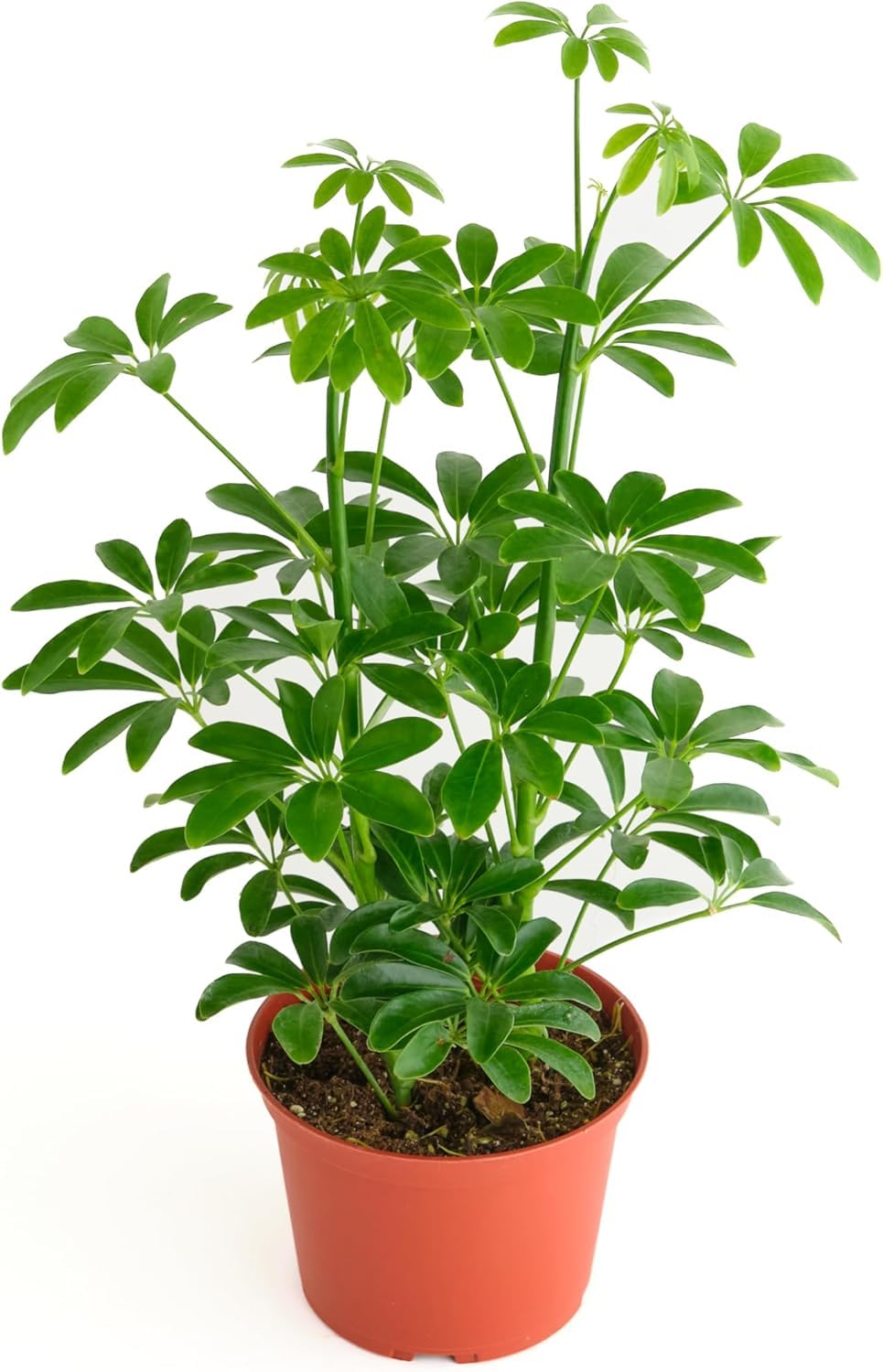
The Dwarf Umbrella Tree (Heptapleurum Arboricola, also known as Schefflera) is one of the most forgiving apartment plants you can buy. Its glossy, segmented leaves fan out like umbrella spokes, creating a dense canopy that fills visual space without needing to be large. This plant tolerates a wide range of light conditions, from bright indirect light to lower-light areas near north-facing windows, making it extremely versatile for apartments with inconsistent daylight.
At 2 pounds total weight including the 6-inch nursery pot, it has some heft compared to lighter houseplants, which gives it a sense of established maturity. Customers report the plant arrives looking “full & beautiful” with moist soil and little leaf drop. Multiple reviews mention the plant’s impressive 20-to-25-year lifespan potential, meaning this isn’t a throwaway decoration — it can grow with you and become a statement floor plant over time. The low maintenance watering needs make it a strong contender for busy professionals or frequent travelers.
The main concern reported across buyer feedback is that the 6-inch nursery pot does not include a drainage tray, so you will need to buy one separately unless you plan to repot immediately. One review also noted a cracked pot bottom upon arrival, though this appears to be an isolated shipping issue rather than a design flaw. For apartment dwellers who want a full, bushy plant that doesn’t demand perfect conditions, the Dwarf Umbrella Tree delivers reliability at a fair price point.
Why it’s great
- Thrives in low to bright indirect light conditions
- Can live 20-25 years with basic care
- Full, bushy appearance right out of the box
Good to know
- No drip tray included — must purchase separately
- Branches may droop if underwatered for too long
5. Philodendron Hederaceum Brasil

The Philodendron Brasil is a trailing variety that grows horizontally as well as vertically, making it a fantastic choice for hanging baskets, shelf edges, or plant stands where the vines can cascade downward. The leaves feature striking dark-green centers with chartreuse-to-yellow variegation along the edges — a color pattern that pops against neutral apartment walls. It requires only partial shade or bright indirect light, and watering is simple: once every 1-2 weeks when the top half of the soil feels dry.
Hopewind Plants Shop has earned strong customer trust for this specific cultivar. Reviews repeatedly call it “the best plant bought on the internet,” with buyers impressed by how full and healthy the plant arrives. The variegation is solid — not washed out or mostly green — which is a common complaint with cheaper Philodendron clones. One reviewer noted the plant was “moist and securely packed,” with multiple stems already established in the 4-inch nursery pot, giving it a head start on growth.
The primary trade-off is that this Philodendron is not ASPCA-certified as completely non-toxic. While it’s generally considered mild in toxicity compared to true lilies or sago palms, pet owners with nibblers may want to keep it elevated on a high shelf. The plant also prefers temperatures between 65 and 70 degrees Fahrenheit, which aligns well with typical apartment thermostat settings. For the price, you get a robust, fast-growing vine that rewards minimal effort with continuous new leaves throughout the growing season.
Why it’s great
- Trailing growth habit perfect for shelves and hanging baskets
- Striking variegation with solid pink and yellow tones
- Arrives full and moist with excellent packaging
Good to know
- Not fully non-toxic — keep elevated around pets
- Prefers consistent 65-70°F temperatures
FAQ
Which apartment plant is safest for cats and dogs?
How often should I water a Ponytail Palm in an apartment?
Can Lucky Bamboo grow in an apartment with no natural light?
What does it mean when Maranta leaves fold up at night?
Final Thoughts: The Verdict
For most apartment dwellers, the best apartment plants winner is the Lemon Lime Maranta Prayer Plant because it combines pet safety, interactive leaf movement, air purification, and low-light tolerance in one affordable package. If you want a zero-maintenance plant that never needs soil, grab the Lucky Bamboo 5-Stem. And for bright-light apartments where you want a long-lived sculptural statement, nothing beats the Ponytail Palm.

Mo Maruf
I created WellFizz to bridge the gap between vague wellness advice and actionable solutions. My mission is simple: to decode the research and give you practical tools you can actually use.
Beyond the data, I am a passionate traveler. I believe that stepping away from the screen to explore new environments is essential for mental clarity and physical vitality.