Our readers keep the lights on and my smoothie glass nicely filled. As an Amazon Associate, I earn from qualifying purchases.
Nothing destroys a fresh paint job on new baseboards faster than a caulk line that cracks, shrinks, or refuses to stick. The wrong sealant pulls away from the wall, leaves fisheyes in your finish, and turns a weekend trim project into a constant touch-up headache. Choosing the right caulk for baseboards means balancing adhesion, paintability, and flexibility—all while keeping the job low-odor and easy to tool.
I’m Mohammad Maruf — the founder and writer behind WellFizz. I’ve analyzed chemical formulations, cure times, and real-world application data across dozens of sealant categories to identify the products that deliver a clean, lasting finish without the frustration.
Whether you are a pro trim carpenter or a DIY homeowner tackling a weekend refresh, this guide breaks down the top options for caulk for baseboards that actually hold their line and take paint like a dream.
How To Choose The Best Caulk For Baseboards
Baseboard caulking fills the tiny gap between the trim and the wall, hiding imperfections and preventing drafts. The right choice hinges on three factors: the material family (acrylic latex vs. silicone), the paintability window, and the product’s resistance to shrinking as it cures.
Acrylic Latex vs. Silicone
For baseboards, acrylic latex caulk is the go-to material. It cleans up with soap and water, tools smoothly with a wet finger, and accepts most paints without a separate primer. Pure silicone, while more flexible and waterproof, repels paint and often requires a specialty primer, making it a poor fit for trim work unless the area is constantly wet.
Paintability and Shrinkage
A good baseboard caulk should be paintable within two hours and resist shrinking as it cures. High-shrink formulas pull away from the edge of the trim, creating a visible depression that ruins a clean paint line. Look for products that advertise “non-shrinking” or “low shrink” in their specifications.
Odor and Indoor Safety
Since baseboards are interior work, low odor and low VOCs matter. Water-based acrylic latex options produce minimal smell compared to solvent-based adhesives, allowing you to stay in the room during application and avoiding the need for heavy ventilation.
Quick Comparison
On smaller screens, swipe sideways to see the full table.
| Model | Category | Best For | Key Spec | Amazon |
|---|---|---|---|---|
| Kraken Bond Premium All Purpose | Premium | DIY & Pro finishing | 12-pack, waterproof, screw-on caps | Amazon |
| Akfix AS606 White Acrylic Latex | Mid-Range | Flexible sealing & trim | 12-pack, 15% movement tolerance | Amazon |
| Stanley S501 Acrylic Latex | Mid-Range | LEED projects, low odor | 12-pack, siliconized, low VOC | Amazon |
| DAP Alex Painter’s Acrylic Latex | Value | Bulk contractor work | 12-pack, 10.1 oz tubes | Amazon |
| Flex Caulk, Silicone, Waterproof | Specialty | Small touch-ups, no gun | 6.5 oz squeeze tube, 100% silicone | Amazon |
In‑Depth Reviews
1. Kraken Bond Premium All Purpose Acrylic Latex Caulk
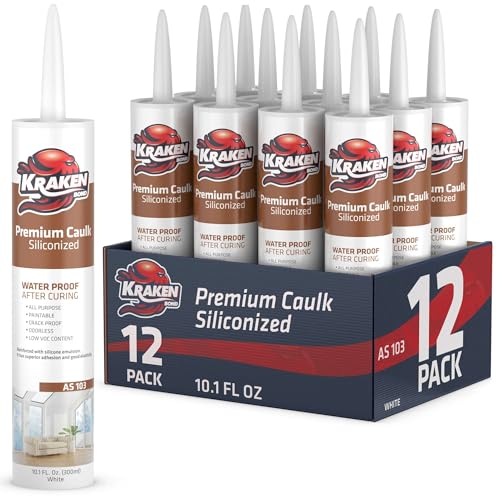
The Kraken Bond formulation is siliconized acrylic latex, giving it the paintability of a standard painter’s caulk with added flexibility for minor structural shifts. The 12-pack covers an entire house of trim work, and the screw-on caps let you store partially used tubes without the tip drying out—a small feature that saves significant waste on multi-day jobs.
Users consistently note the smooth consistency that stays put without sagging on vertical baseboard gaps. The low odor formula is comfortable for indoor use, and the paintable finish blends invisibly with latex and oil-based paints alike. Cured results show minimal shrinkage, leaving a flat, even seam that does not require a second pass.
For homeowners and pros who want a reliable, one-stop caulk for baseboards that won’t crack or discolor over time, this pack delivers on both value and performance. The waterproof rating also makes it viable for baseboards in bathrooms or kitchens where moisture splashes are a concern.
Why it’s great
- Screw-on caps preserve leftover caulk for weeks
- Tools smoothly without sagging on vertical gaps
- Low odor and water cleanup simplify indoor work
Good to know
- Over-gunned pressure can cause blowouts on the tube seam
- Not ideal for fully submerged or underwater applications
2. Akfix AS606 White Acrylic Latex Caulk
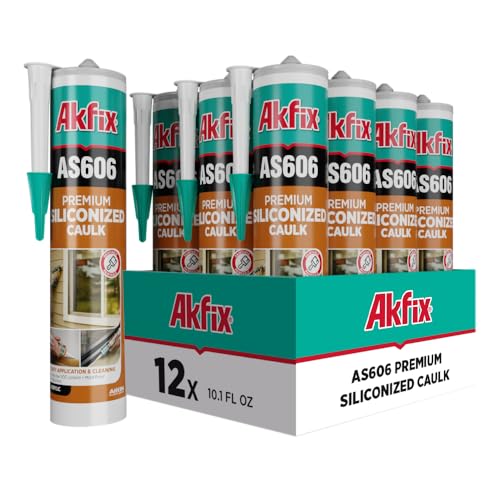
The Akfix AS606 stands apart with its 15% movement tolerance, meaning the cured caulk stretches and compresses without pulling away from the substrate. That elasticity is a genuine advantage for baseboards installed over wooden subfloors that expand seasonally, preventing hairline cracks from appearing after the heating season shifts.
Application feedback highlights the excellent flow control—the material stops immediately when you release pressure on the gun, reducing the messy drip common with cheaper store-brand tubes. The water-based formula cleans up easily and produces very low odor during application, which is appreciated in occupied homes.
A small number of users reported that tubes can split if the caulking gun applies excessive force, and the product is best kept to gaps under 3/16 inch to avoid shrinkage. For standard baseboard clearances, however, the performance is strong and the paintable finish accepts paint without priming.
Why it’s great
- 15% movement tolerance handles seasonal wood expansion
- Flow stops cleanly when gun pressure is released
- Low odor and easy water cleanup for indoor use
Good to know
- Some tubes have been reported to split under high gun pressure
- Shrinkage noticeable on gaps larger than 3/16 inch
3. Stanley S501 Acrylic Latex Caulk

The Stanley S501 is a siliconized acrylic emulsion that earns LEED credit EQc4.1 for low-emitting materials, making it a top choice for green renovations and allergy-conscious households. The reinforcement with silicone emulsion improves adhesion on slick surfaces like painted trim without sacrificing the paintability that acrylic latex is known for.
Users describe the application as quick and the cure as reliable, with the caulk drying to a solid, non-shrink finish within 24 hours. The formula is solvent-free and produces virtually no odor during application, which is a meaningful comfort advantage when caulking a whole floor of baseboards in a single day.
While the 12-pack provides excellent coverage for a full house, the tubes lack storage caps, so partial tubes must be sealed manually with tape or a nail. For pros who finish entire pumps in one session, this is a minor inconvenience, but DIY users tackling a room at a time should plan to use each tube completely.
Why it’s great
- LEED compliant for low VOCs and emissions
- Siliconized formula bonds to painted trim easily
- Non-shrink cure leaves a flat, paintable seam
Good to know
- No protective caps included on the tubes
- Not recommended for fully submerged or exterior wet zones
4. DAP Alex Painter’s Acrylic Latex Caulk
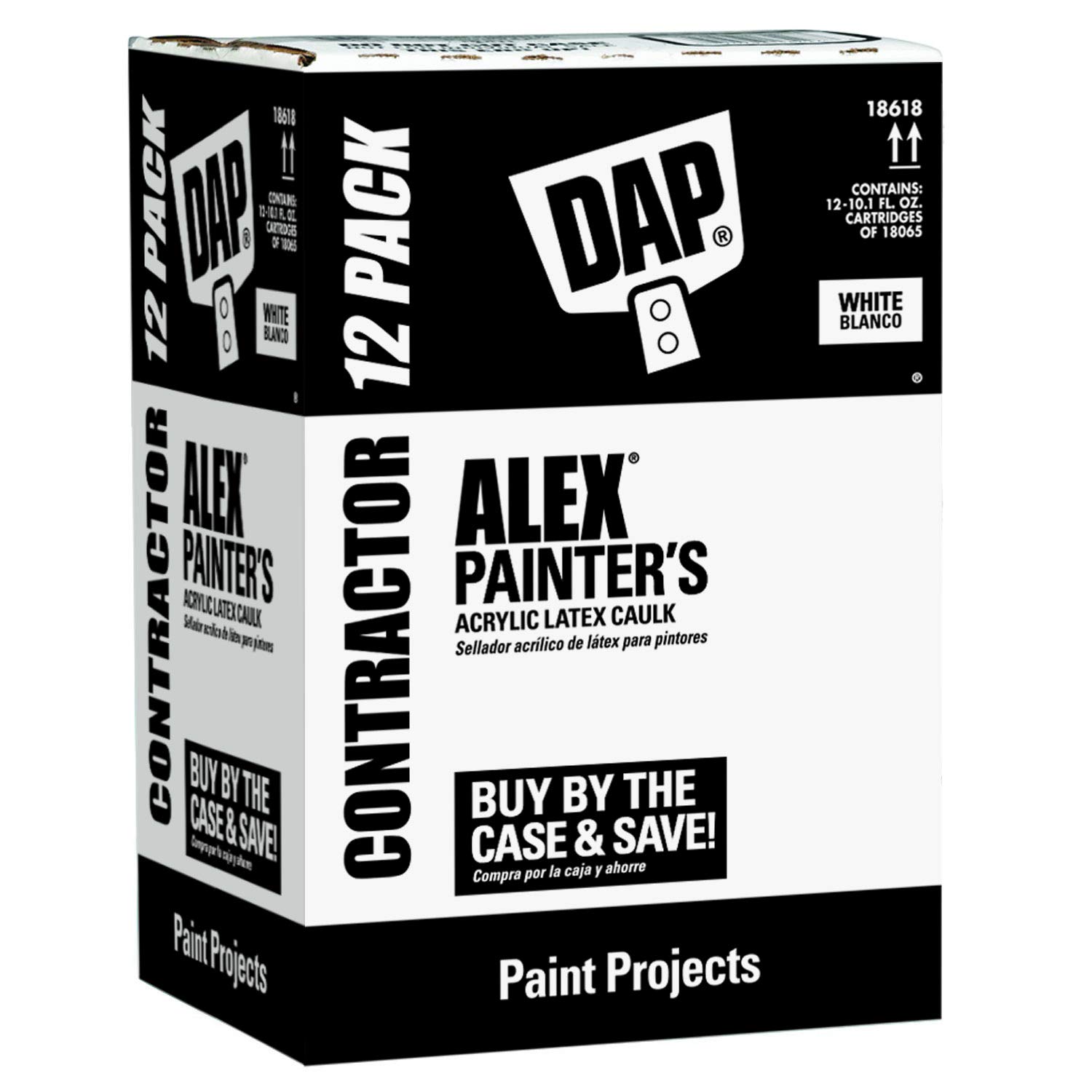
DAP Alex Painter’s is the industry standard that most painters reach for first. The 12-tube contractor pack brings the per-tube cost down significantly compared to single-tube hardware store pricing, making it the budget-conscious choice for whole-house trim work. The acrylic latex formula dries paint-ready in just two hours, keeping your project moving on a tight schedule.
The caulk applies smoothly and cleans off hands and tools with plain water before it cures. Users appreciate the low odor and the forgiving nature of the formula—it tools easily with a wet finger and sands well if you need to smooth out any rough spots after drying. The white shade blends into most white baseboards immediately.
The trade-off is that standard Alex is not siliconized, so it has less flexibility than premium competitors. On baseboards installed over expansive wood subfloors, the cured line may crack over time. For stable surfaces and quick, high-volume projects, however, it remains a reliable workhorse.
Why it’s great
- Paintable in just two hours for fast project turnover
- Bulk 12-pack delivers lowest cost per tube
- Low odor and simple water cleanup
Good to know
- Not siliconized, less flexible than premium options
- May crack on baseboards over expansive wood subfloors
5. Flex Caulk, Silicone, Waterproof

The Flex Caulk is an entirely different tool from the others—it comes in a squeeze tube with a precision nozzle and requires no caulking gun. This makes it ideal for small touch-ups, tight spots behind toilets, or renters who do not own a caulking gun. The 100% silicone formula is fully waterproof and remains flexible indefinitely, so it will never crack or shrink.
Users report that the material applies smoothly and adheres aggressively to most surfaces, including tile, glass, and wood. The strong vinegar odor typical of silicone is present during cure, but it dissipates within 24 hours. Cleanup requires a solvent rather than water, as silicone is not water-soluble.
Because it is pure silicone, this caulk is not paintable. For baseboard applications where you intend to paint the trim, you would need to mask off the caulk line or accept a glossy, unpainted seam. It works best as a quick fix for small gaps on painted baseboards where the existing paint color already matches.
Why it’s great
- No caulking gun required for application
- 100% silicone will never crack or shrink
- Excellent adhesion to multiple surfaces
Good to know
- Not paintable—leaves a glossy, unpainted seam
- Strong vinegar odor during cure
FAQ
Can I use pure silicone caulk on baseboards that will be painted?
How long should I wait before painting over acrylic latex baseboard caulk?
Why does my baseboard caulk crack after a few months?
Final Thoughts: The Verdict
For most users, the caulk for baseboards winner is the Kraken Bond Premium All Purpose Acrylic Latex Caulk because it combines waterproof performance, easy water cleanup, and screw-on caps that prevent tube waste. If you need maximum flexibility for baseboards over wooden subfloors, grab the Akfix AS606. And for quick, small touch-ups without a caulking gun, nothing beats the Flex Caulk squeeze tube.

Mo Maruf
I created WellFizz to bridge the gap between vague wellness advice and actionable solutions. My mission is simple: to decode the research and give you practical tools you can actually use.
Beyond the data, I am a passionate traveler. I believe that stepping away from the screen to explore new environments is essential for mental clarity and physical vitality.