Our readers keep the lights on and my smoothie glass nicely filled. As an Amazon Associate, I earn from qualifying purchases.
You’ve traced the water leak to a spot behind the shower, dropped a bolt into the intake manifold, or need to confirm a blocked HVAC run—but the access hole is the diameter of a pencil. A standard borescope lets you *look*, but an articulating inspection camera lets you *steer*. That ninety-degree bend inside a cylinder wall or a pipe elbow is the exact scenario this tool was built to solve.
I’m Mohammad Maruf — the founder and writer behind WellFizz. I’ve spent months analyzing build specs, sensor quality, and articulation mechanics across dozens of models to find the units that actually hold a position and deliver clear, diagnostic-grade imagery in tight, dark spaces.
Whether you are a mechanic inspecting valve seats or a plumber tracing a slab leak, choosing the right tool matters. This guide walks through the critical specs and compares the top contenders to help you find the best articulating inspection camera for your specific workflow.
How To Choose The Best Articulating Inspection Camera
An articulating inspection camera is a diagnostic tool first and a camera second. If the probe can’t navigate the bend, the screen resolution doesn’t matter. The sections below cover the four specs that separate a usable tool from a frustration.
Probe Diameter and Cable Construction
The probe diameter directly dictates where the camera can go. A 0.24-inch (6.2mm) probe slides into a spark plug hole and most automotive ports. A 0.33-inch (8.5mm) probe may block entry to tighter passages like small engine crankcases or narrow pipe elbows. Cable construction matters as well: a semi-rigid gooseneck cable holds its shape when you bend it, whereas a stainless-steel snake tube resists kinking under repeated flexing but requires more effort to set.
Articulation Range and Control Mechanism
Articulation is typically measured in degrees of travel—most quality units offer 180° to 220° of two-way steering. Higher range means you can look backward or navigate an S-curve in a single pass. The control mechanism also matters: a thumb-wheel or joystick that moves the tip smoothly without electronic lag is preferable over a stiff cable that fights your hand. A smooth, damped lever allows you to park the tip exactly where you need it and keep it there.
Display Quality and Illumination
A 4.3-inch to 5-inch IPS HD screen provides enough real estate to spot cracks and debris without squinting. Look for a display that offers at least 1080P resolution and a manual focus or digital zoom (2X-4X) for close-up inspection of valve seats and gasket surfaces. Adjustable LED intensity is critical—too much light washes out reflective metal surfaces, while too little leaves dark cavities invisible. Three to four brightness levels give you the control to match the environment.
Durability and Data Management
Water and oil resistance (IP67 rating) is non-negotiable when poking into wet, oily engine bays or sewer drains. A built-in high-temperature warning or auto-shutoff protects the internal sensor during extended engine diagnostics on a hot block. Battery life of 4–7 hours covers a full day of inspections. Onboard storage (a 32GB micro SD card is standard across most models) allows you to capture photo and video evidence without relying on Wi-Fi or a phone app.
Quick Comparison
On smaller screens, swipe sideways to see the full table.
| Model | Category | Best For | Key Spec | Amazon |
|---|---|---|---|---|
| DEPSTECH DS660 | Mid-Range | General DIY & Automotive | 0.24 in. Probe, 210° Art. | Amazon |
| FOXWELL Y400 | Mid-Range | Pro Diagnostics | 220° Art., 5–7 hr Battery | Amazon |
| DEPSTECH DS650 | Mid-Range | Long-Reach Inspections | 10 ft Cable, Dual Lens | Amazon |
| Teslong TD450S | Premium | Versatile Dual-View | Dual Lens, 4.5 in. Screen | Amazon |
| DXZtoz AGC500L | Premium | Image Clarity Priority | 5 in. Screen, 10X Zoom | Amazon |
| Acoath Dual-Lens | Budget | Entry-Level & Value | Dual Lens, 210° Art. | Amazon |
| Ralcam 3.9mm | Premium | Ultra-Tight Access | 3.9 mm Probe, Steel Cable | Amazon |
In‑Depth Reviews
1. DEPSTECH Articulating Borescope DS660
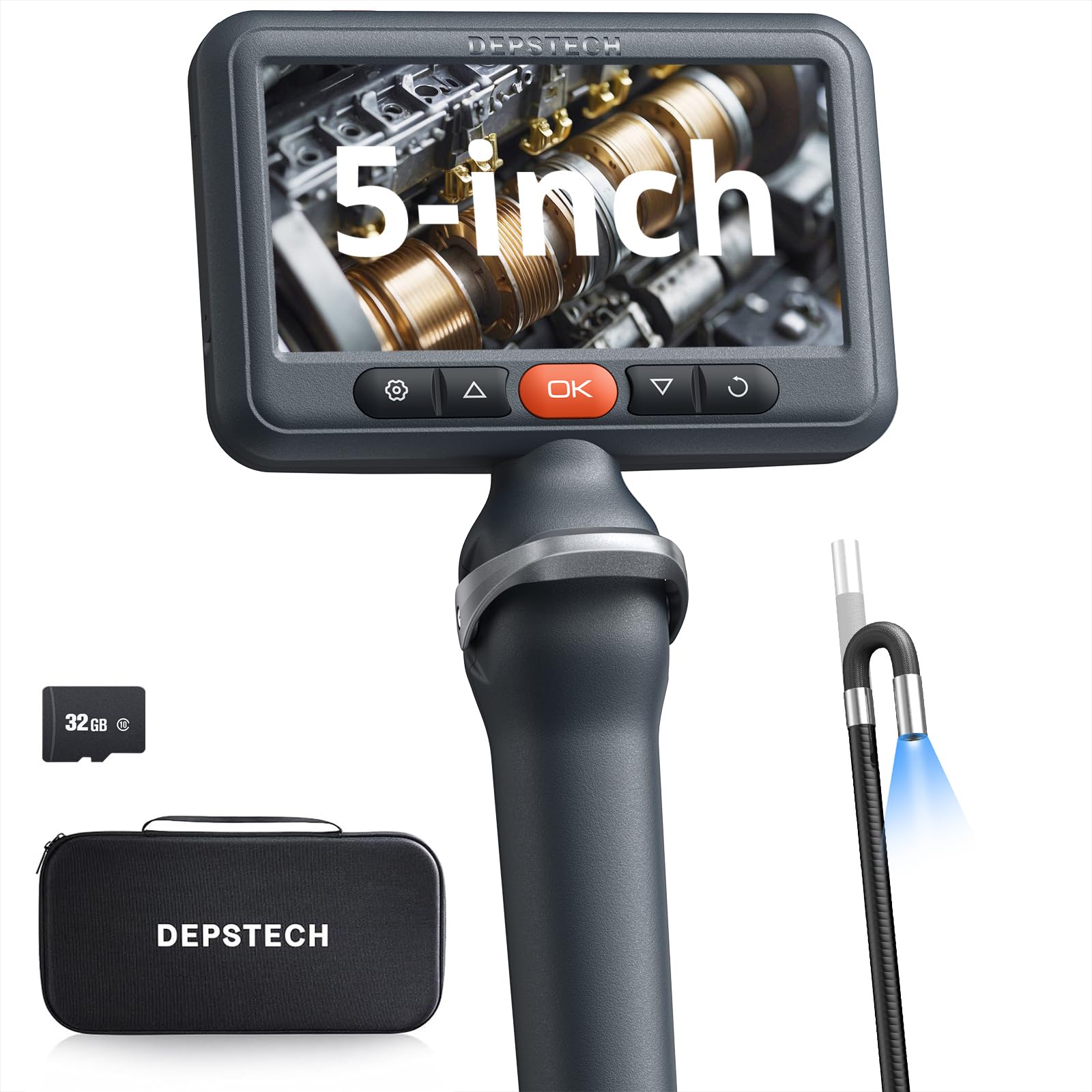
The DEPSTECH DS660 hits the sweet spot between capability and cost. Its 0.24-inch probe is slim enough to slide past a spark plug electrode and into a cylinder bore, while the 210° two-way articulation lets you inspect valve faces and the top of the piston without pulling the head. The 5-inch IPS HD screen delivers crisp 1080P imagery, and the 4-hour battery covers a full morning of diagnostics without needing a charge.
Build quality is noticeably good for the mid-range—the metal gooseneck holds its position even after repeated bending, and the IP67 rating means you can poke into oily, wet areas without worrying about the camera. The ergonomic joystick allows one-handed operation, which matters when you are bracing a 5-foot cable with your other hand.
Users consistently report that the light intensity is bright enough to illuminate dark wall cavities and engine blocks, and the included 32GB card captures photo/video evidence on the spot. The only recurring note is the lack of a digital zoom, though for most diagnostic checks—looking for cracks, debris, or corrosion—the fixed lens resolution is sufficient.
Why it’s great
- Slim 0.24-inch probe accesses spark plug holes and tight ports
- Joystick control is smooth and responsive for one-hand steering
- Excellent battery life and comes with a rugged carrying case
Good to know
- No digital zoom for extreme close-up detail
- Single lens only—no side camera for perpendicular viewing
2. FOXWELL Y400 Two-Way Articulating Borescope
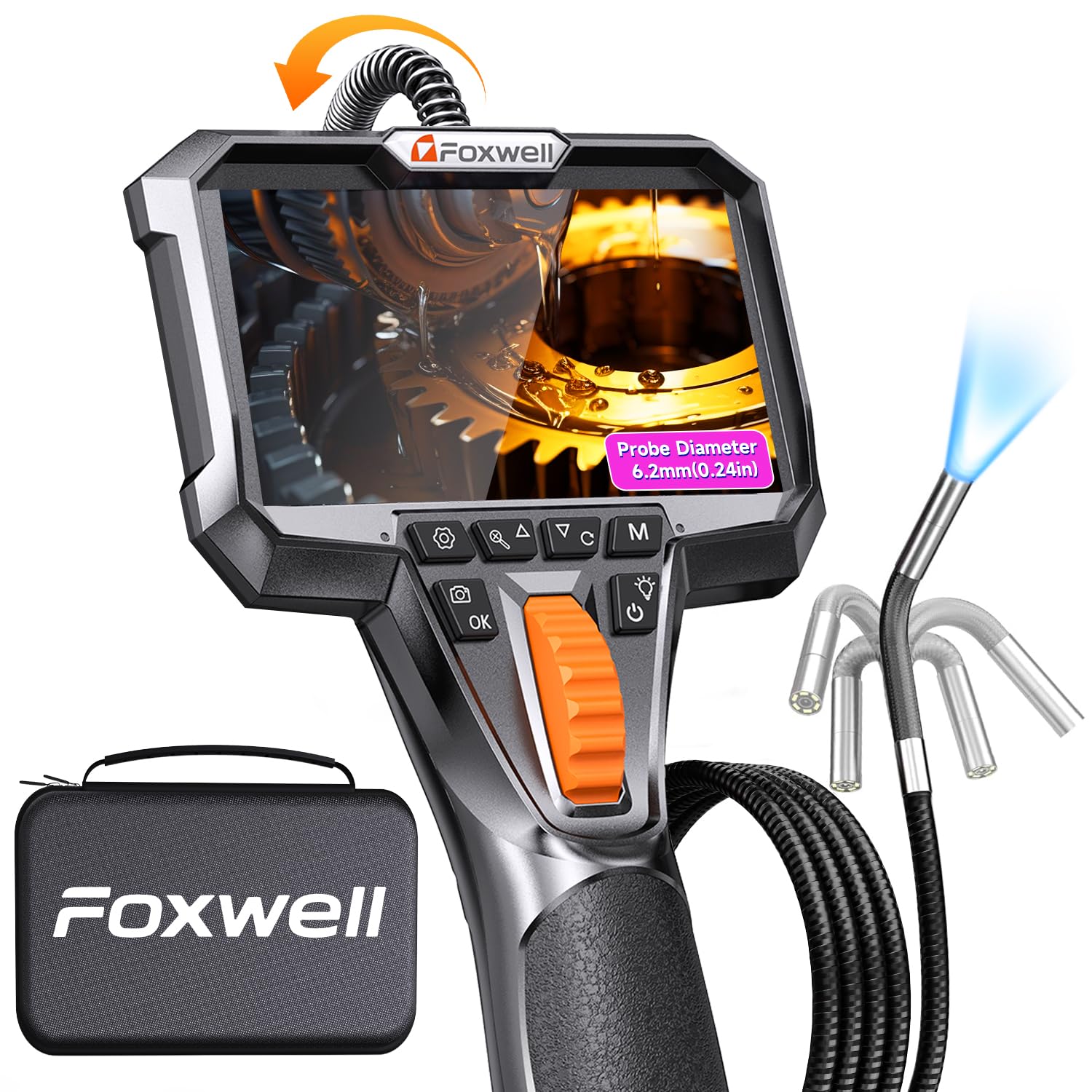
The FOXWELL Y400 is designed for mechanics who spend their days diagnosing internal engine issues. The 0.24-inch probe and a class-leading 220° articulation range give you the ability to look not just around corners, but backward—a genuine advantage when inspecting cylinder walls, oil galleys, and the underside of valve seats. The thumb-wheel control tracks precisely without electronic lag, letting you park the tip exactly where you need it.
The display is a 4-inch IPS HD panel with 4X digital zoom, which is useful for spotting hairline cracks and carbon buildup that a standard 1X view might miss. FOXWELL also includes an overheat protection circuit that shuts down the probe at 158°F—a thoughtful safety feature when you are inspecting a block that has been running. The semi-rigid cable is 5.3 feet long, giving you a bit more reach than standard 5-foot cables.
User reviews are overwhelmingly positive, with many mechanics calling it a daily-use tool. The only drawback is that the 4-inch screen is slightly smaller than the 5-inch panels found on some competitors, though the clarity more than compensates. Battery life is rated at 5–7 hours, which is among the best in this tier.
Why it’s great
- 220° articulation range for backward-viewing capability
- Overheat protection and IP67 rating for tough environments
- 4X digital zoom for detailed crack and wear inspection
Good to know
- Screen is 4 inches rather than 5 inches
- No dual-lens side camera option
3. DEPSTECH DS650 Dual-Lens Articulating Borescope (10ft)
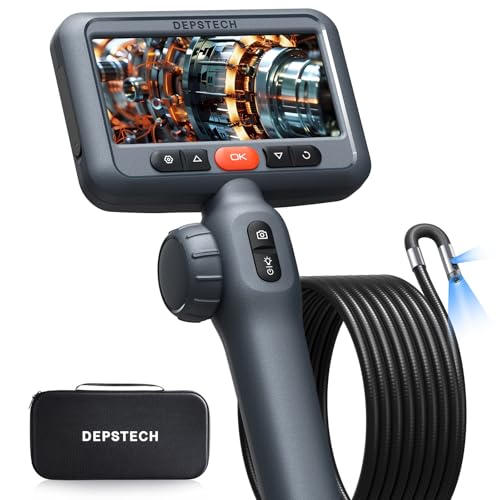
When you need to snake a camera ten feet into a wall cavity, pipe run, or HVAC duct, the DEPSTECH DS650 is the tool to reach for. The extra cable length does not sacrifice control—the semi-rigid gooseneck still holds its shape, and the 210° bidirectional articulation works the same as on the shorter DS660. The DS650 also adds a dual-lens camera system with a side-viewing lens, which eliminates the need to rotate the cable to see perpendicular surfaces.
The 4.5-inch IPS display uses what DEPSTECH calls Blaurt 3.0 technology for improved clarity in low-light conditions. With three LED brightness levels, you can dial in the lighting to avoid washout on reflective metal or wet pipe interiors. The cable-exit design is ergonomic, with the cable coming out of the bottom to avoid interfering with the joystick control.
Weighing in at a very manageable weight for a 10-foot unit, the DS650 is comfortable for extended inspections. The included 32GB card and carrying case are standard, but the manual focusing (3–8 cm optimal distance) is a nice addition for getting sharp close-ups of gasket faces and weld joints.
Why it’s great
- 10-foot semi-rigid cable for deep-wall and long-pipe access
- Dual-lens system with forward and side cameras
- Manual focus for sharp close-up imaging
Good to know
- Probe is 0.33 inch, may not enter smaller ports
- 1.5X digital zoom is modest compared to some rivals
4. Teslong TD450S Dual Lens Articulating Borescope

The Teslong TD450S offers a dual-lens system where both a forward-facing and a side-viewing camera are built into the articulating tip. This eliminates the blind spot entirely—you can press the side-camera button without moving the probe and instantly see perpendicular surfaces inside a pipe or engine gallery. The combination of a 180° articulating head and dual lenses makes this one of the most versatile viewing solutions in its segment.
The 4.5-inch IPS screen is clear and vivid, with adjustable LED brightness to match the environment. Teslong includes audio recording, so you can narrate your findings while capturing video—a feature many competitors omit. The 1.5X digital zoom is modest, but the manual exposure control gives you more creative lighting adjustment than the automatic-only cameras on budget models.
Professional users, especially automotive technicians with over two decades of experience, have called the TD450S the best borescope they have used, specifically praising the articulation lever for its smooth, precise travel. The only omission is a built-in temperature warning, so you may need to be mindful of probe temperature during extended engine block inspections.
Why it’s great
- Dual-lens system with forward and side cameras eliminates dead spots
- Audio recording for narrated video evidence
- Smooth articulation lever praised by professional mechanics
Good to know
- No overheat protection for the probe
- Digital zoom limited to 1.5X
5. DXZtoz AGC500L Dual-Lens Articulating Borescope
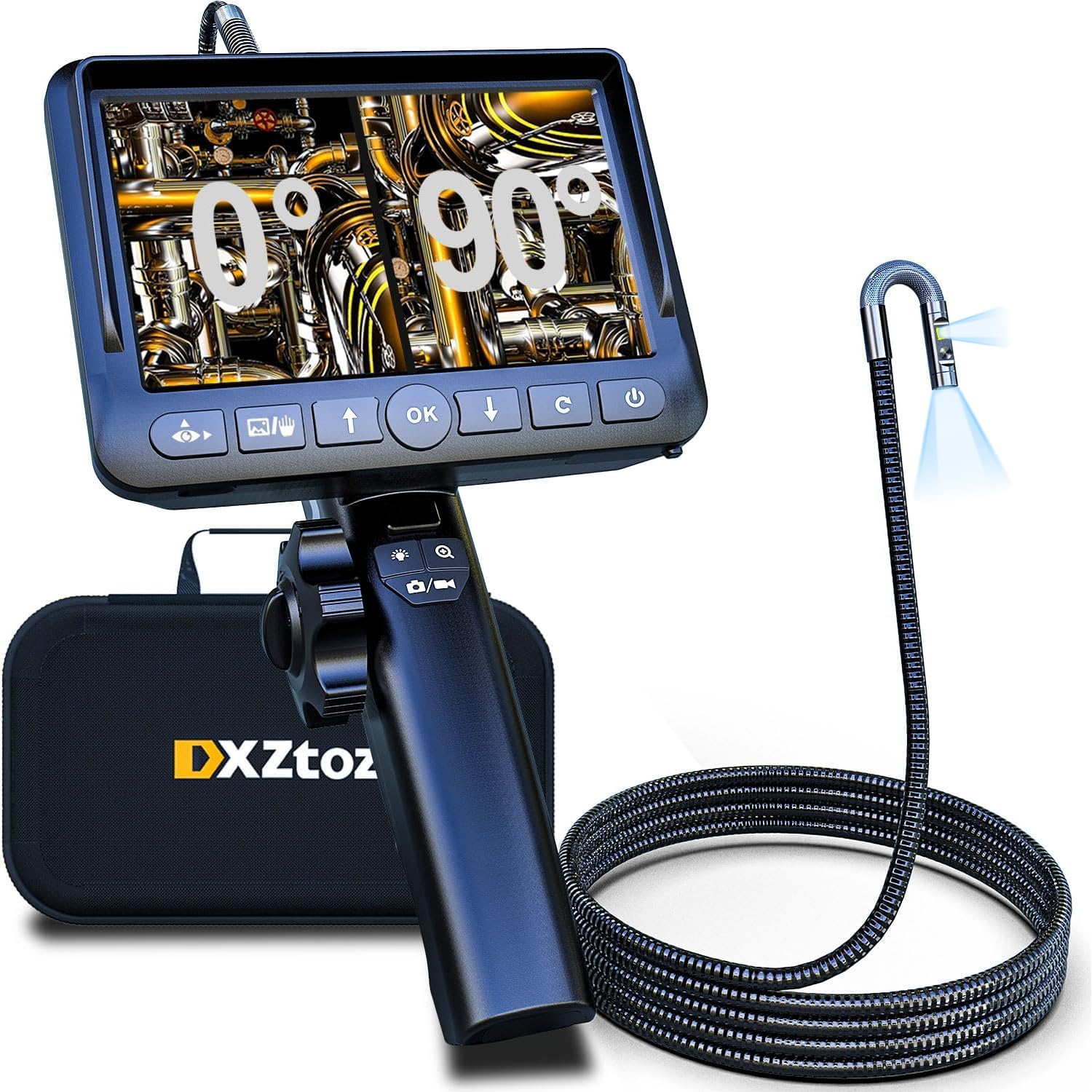
The DXZtoz AGC500L prioritizes image clarity above all else. It features the largest display in this lineup—a 5-inch 1080P IPS panel that is 30% larger than a 4.5-inch screen, making every pixel noticeably bigger and easier to see at a glance. For inspectors who rely on spotting hairline cracks, pitting, or debris, the larger screen reduces eye strain during extended sessions.
The dual-lens system includes a 90° side camera on a rotatable probe tip. The rotatable tip is a standout feature: rather than rotating the entire cable, you can spin the tip independently to survey the full perimeter of a pipe or cylinder. The 10X digital zoom is the highest magnification in this comparison, though zooming past 4X does start to pixelate. The 5-foot semi-rigid gooseneck holds its shape reliably.
Customer support is notably responsive—one reviewer reported a minor issue after six months and received an immediate replacement from a support rep named Layla. The only real shortcoming is that the effective resolution (2MP) is the same as most competitors, so the term “HD” is more about screen quality than raw sensor detail.
Why it’s great
- 5-inch IPS screen offers the largest viewing area in this roundup
- Rotatable tip with 90° side camera and 10X digital zoom
- Strong customer support with documented replacement history
Good to know
- Zoom beyond 4X shows pixelation
- Sensor resolution is standard 2MP
6. Acoath Two-Way Articulating Borescope
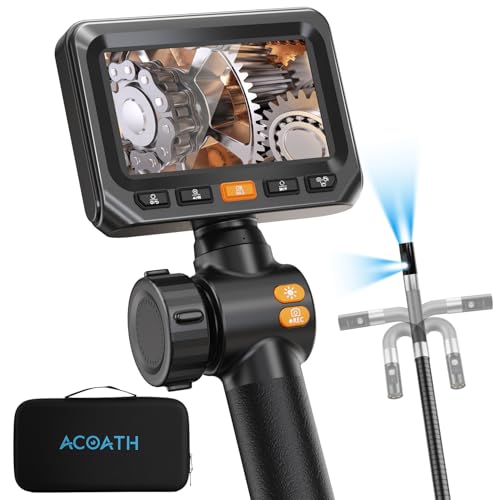
The Acoath Dual-Lens borescope proves you do not need to spend top dollar to get articulation and a side camera. With 210° of two-way steering and a 420° range of motion, it offers more rotational coverage than many models costing more. The 4.3-inch IPS screen is smaller than the premium units, but it still delivers 1080P resolution adequate for general inspection work.
What makes this unit particularly compelling is the feature set for its price tier: dual lenses (70° main, 60° side), eight adjustable LEDs with four brightness levels, audio recording, autofocus, and an ISO range of 100-6400 that helps in low-light scenarios. The semi-rigid cable is 5 feet long and IP67-rated, and the kit includes a hook, magnet, and mirror attachments.
Owners have compared it favorably to units costing over , though some note the lack of a charging indicator makes it hard to know when the battery is full. The image quality is genuinely good for the price, but the build feels less substantial than the metal-bodied premium units. For a weekend DIYer or a mechanic on a budget, this is a smart entry point.
Why it’s great
- Dual-lens system at a very accessible price point
- Includes hook, magnet, and mirror attachments
- Autofocus and broad ISO range for dark environments
Good to know
- No charging indicator light on the unit
- Build quality is functional but not industrial-grade
7. Ralcam 3.9mm Two-Way Articulating Borescope
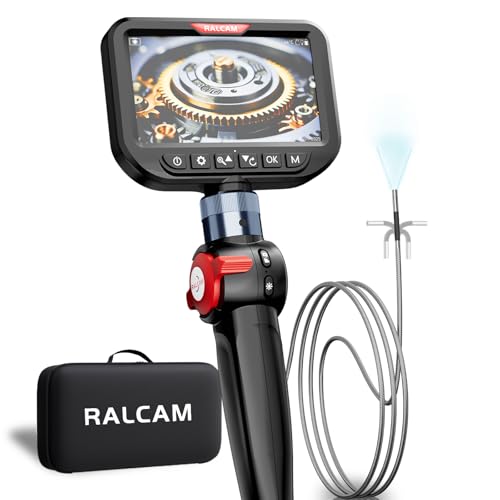
When the access hole is smaller than a standard spark plug opening, the Ralcam 3.9mm is the specialized tool that gets the job done. At 3.9 millimeters (0.15 inches), this probe is dramatically thinner than the 0.24-inch standard—it can fit into gas pilot orifices, small engine fuel passages, and tightly packed wiring conduits. The trade-off is that the 3.9mm sensor cannot pack the same light sensitivity or resolution as a 6mm sensor, but for access rather than image quality, it excels.
The Ralcam uses a full-length stainless steel snake tube rather than a semi-rigid gooseneck. This construction resists kinking under extreme bending and holds its shape more precisely, which is critical when you are threading the probe through a complex path. The 5-inch HD IPS display is paired with 4X digital zoom and a high-temperature warning that shuts down the probe above 158°F—a critical safety feature for engine diagnostics.
Owners in niche fields such as beekeeping have found unique uses for the ultra-slim probe, locating wall cavities before cutting. The articulation is 210° two-way, and the 180° image rotation allows you to flip the display orientation without moving the tool. The included 32GB card and padded case round out a premium package built for precision work.
Why it’s great
- Ultra-slim 3.9 mm probe accesses spaces no 6mm probe can enter
- Stainless steel snake tube resists kinking and holds position
- High-temperature warning and 4X digital zoom
Good to know
- Smaller sensor means lower image quality vs larger probes
- No audio recording or side camera option
FAQ
What is the difference between a borescope and an articulating inspection camera?
Can a 0.33-inch probe fit into a spark plug hole?
What does IP67 mean for an inspection camera?
Why does my inspection camera image look blurry in tight spaces?
Final Thoughts: The Verdict
For most users, the best articulating inspection camera winner is the DEPSTECH DS660 because it combines a slim 0.24-inch probe, smooth 210° articulation, and strong battery life at a price that works for both pros and serious DIYers. If you need a longer reach for wall and duct inspections, grab the DEPSTECH DS650 with its 10-foot cable and dual-lens system. And for ultra-tight access where every millimeter matters, nothing beats the Ralcam 3.9mm with its stainless steel cable and overheat protection.

Mo Maruf
I created WellFizz to bridge the gap between vague wellness advice and actionable solutions. My mission is simple: to decode the research and give you practical tools you can actually use.
Beyond the data, I am a passionate traveler. I believe that stepping away from the screen to explore new environments is essential for mental clarity and physical vitality.