Our readers keep the lights on and my smoothie glass nicely filled. As an Amazon Associate, I earn from qualifying purchases.
The problem with camping in summer is that by 9 a.m. your tent is a solar oven, and by midnight you’re sleeping on top of your sleeping bag, drenched. You don’t need a home-sized window shaker—you need a portable, power-conscious unit that can knock the edge off the heat inside a tent, RV, or truck cab without forcing you to run a generator all night.
I’m Mohammad Maruf — the founder and writer behind WellFizz. I analyze portable cooling hardware for a living, sifting through compressor specs such as BTU ratings, running wattage, and start-up surge currents to separate the units that actually deliver from the ones that leave you sweating.
This guide breaks down the real-world performance data across nine different models so you can select the right ac for camping based on your power source, space size, and tolerance for noise and weight.
How To Choose The Best AC For Camping
Camping ACs aren’t bedroom window units—they have to survive transport, run on limited power, and cool an uninsulated space. Three specs separate the keepers from the duds.
Power Source & Wattage Compatibility
Your generator, solar generator, or vehicle alternator dictates which AC you can run. Compressor units have a start-up surge that can be 2–3 times their rated running wattage—a unit that pulls 400W while running may need 1200W to kick on. If your power station can’t handle that spike, the unit will kick into an error code loop. Evaporative coolers, by contrast, draw under 15W and work off any USB battery pack, but they only function well in dry climates.
Physical Form Factor
Split-system units mount the compressor outside the tent, keeping the interior quiet and compact. Single-box portables require you to vent hot exhaust air outside through a hose, which means you need a sealed tent port or an open window. Weight matters too—anything over 30 pounds becomes a chore to carry from your vehicle to a walk-in campsite.
Effective BTU for Uninsulated Spaces
A 5,000 BTU window unit cools a 150 sq ft bedroom easily, but that bedroom has insulation, curtains, and a stable roof. A tent has none of that. In direct sun, a tent can cook at 110°F even when it’s 85°F outside. You generally need 5000–7000 BTU for a roof-top tent or small RV, while a 3500 BTU unit can handle a small ground tent at night. Go too low, and the unit runs continuously without ever catching up.
Quick Comparison
On smaller screens, swipe sideways to see the full table.
| Model | Category | Best For | Key Spec | Amazon |
|---|---|---|---|---|
| Cybertake S2 Pro | Premium | Off-grid with battery/solar | 5100 BTU / 40 dB / 8 hrs on 1kWh | Amazon |
| OUTOHOME 5200BTU | Premium | Roof top tent/RV overnight | 5200 BTU / 400W / 31 lbs | Amazon |
| BAYKUL 6800BTU | Premium | Year-round (cool + heat) | 6800 BTU cool / 7500 BTU heat | Amazon |
| OUTOHOME 5100BTU | Mid-Range | Truck camping / small tent | 5100 BTU / 35 lbs / 46 dB | Amazon |
| BAYKUL 5000BTU | Mid-Range | Garage backup / tent use | 5000 BTU / 27.7 lbs / 400W | Amazon |
| BougeRV PC35 | Mid-Range | App-controlled small RV | 3500 BTU / 34.2 lbs / strong mode | Amazon |
| UAHKPA 9000BTU | Mid-Range | Large truck / van install | 9000 BTU / 12V DC / split system | Amazon |
| Deodak 4-in-1 | Budget | Desk / small tent spot cooling | 1.7L tank / 45 dB / 120° osc. | Amazon |
| Evapolar evaCHILL | Budget | Dry-climate car/tent desk | 10W / USB / 1.65 lbs | Amazon |
In‑Depth Reviews
1. Cybertake S2 Pro Portable Camping Air Conditioner
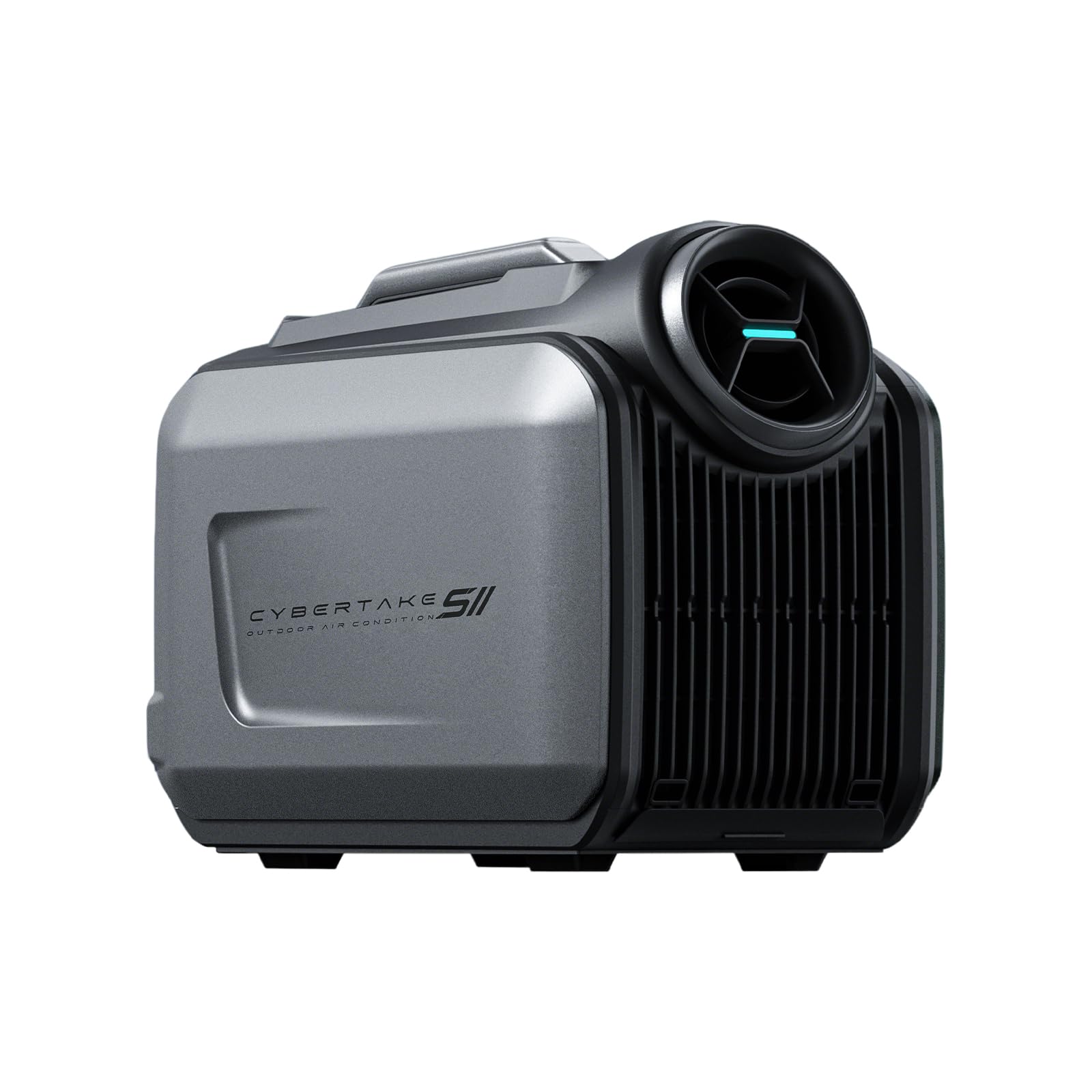
The Cybertake S2 Pro is the only unit in this roundup that accepts three power inputs—standard 110V wall, vehicle 12V/24V, and 48V DC from a solar generator—without requiring an external inverter. That direct 48V DC path eliminates the 10-15% efficiency loss of DC-to-AC conversion, which explains its claim of 8 hours of cooling on just 1 kWh. The 5100 BTU compressor and 6100 BTU heater make it genuinely dual-season capable, and the 40 dB noise floor is noticeably quieter than any other portable compressor model here.
The IPX4 water-resistant shell means it survives rain splashes and dusty campsite conditions without issue. Owners consistently report that it cools a roof-top tent or small RV bunk from 90°F to 68°F in under 20 minutes on high, and the Bluetooth app control lets you adjust settings from inside a sleeping bag without fumbling for a remote.
There are two caveats. The 12V adapter cable is sold separately, which caught several buyers off guard. And at 21 pounds, it’s the lightest full-compressor unit here, but a handful of users report that the included installation kit could be more robust for permanent mounting in a van.
Why it’s great
- Triple power input (AC, vehicle 12-24V, 48V solar generator)
- 8-hour run time on a single kWh in Eco+ mode
- IPX4 weather resistance for outdoor use
- Quietest compressor unit at 40 dB
Good to know
- 12V adapter cable not included
- App connectivity can be buggy beyond 30 feet
2. OUTOHOME 5200BTU Portable Camping Air Conditioner
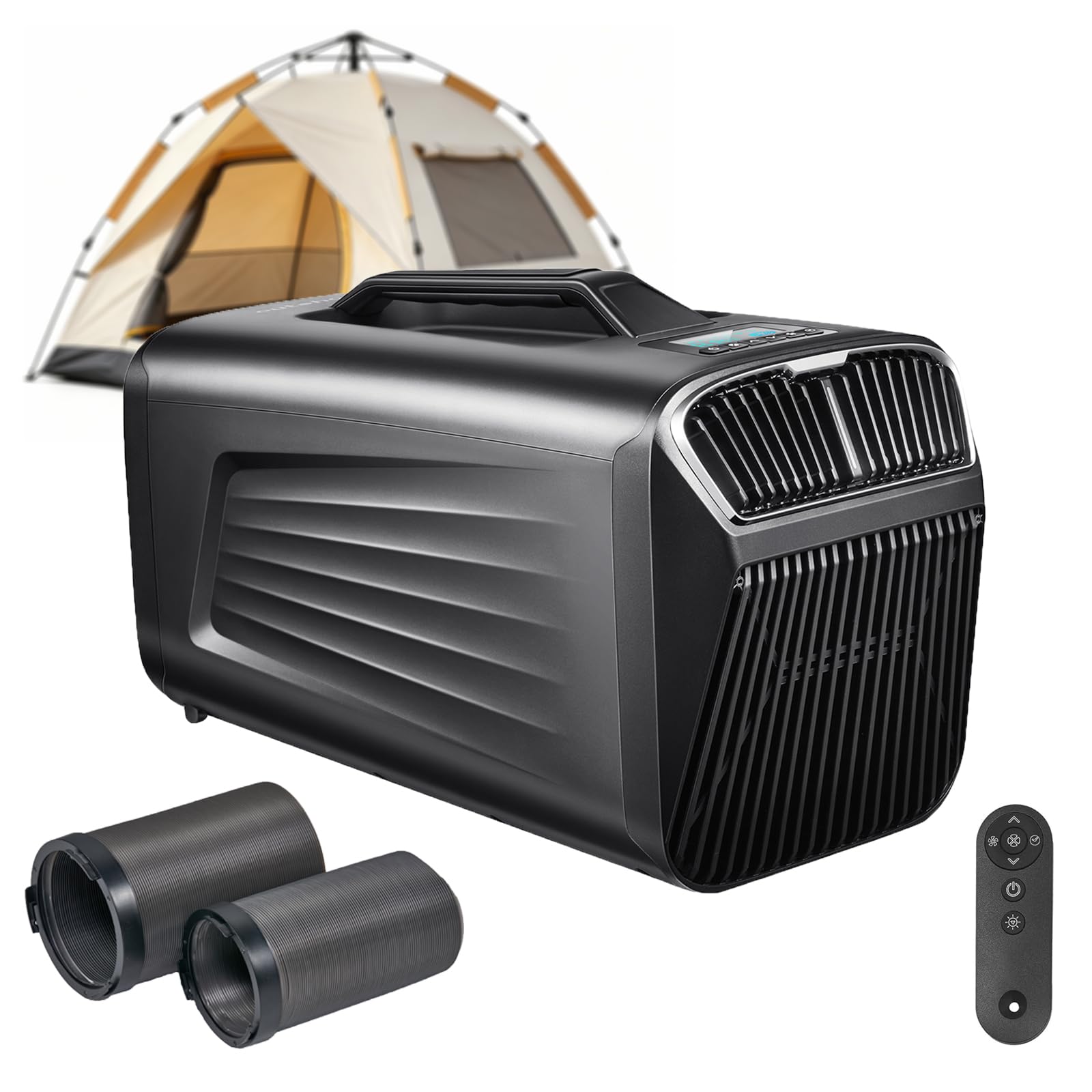
The OUTOHOME 5200BTU strikes a near-perfect balance between cooling power and portability. At 31 pounds and 22.4 x 11.2 x 13.8 inches, it’s the lightest sub-30-pound 5000+ BTU unit you can reasonably carry one-handed with the built-in handle. The GMCC rotary scroll compressor delivers a real-world 270W draw on high cool (under its rated 400W) in dry conditions, which opens up compatibility with midsized power stations like the EcoFlow Delta 2 or Jackery Explorer 1000.
Sleep mode drops the noise to about 46 dB, which is quieter than a residential window AC and unobtrusive inside a tent or RV. The drainage-free cooling mode works when humidity stays below 70%—above that, you’ll need to attach the included drain hose, but the dehumidifier function handles the moisture effectively.
One structural concern: the plastic side panels feel thinner than the premium BAYKUL and Cybertake units. It also defaults back to Celsius after every power cycle, which is a minor annoyance for US buyers. The remote control uses a small coin-cell battery that may not last a full season.
Why it’s great
- Measured draw as low as 270W on high cool
- Light enough at 31 lbs to carry one-handed
- Drainage-free cooling in low humidity
- Works reliably with inverter generators
Good to know
- Panel plastic feels less durable than premium rivals
- Defaults to Celsius after power loss
3. BAYKUL 6800BTU Portable Tent Air Conditioner
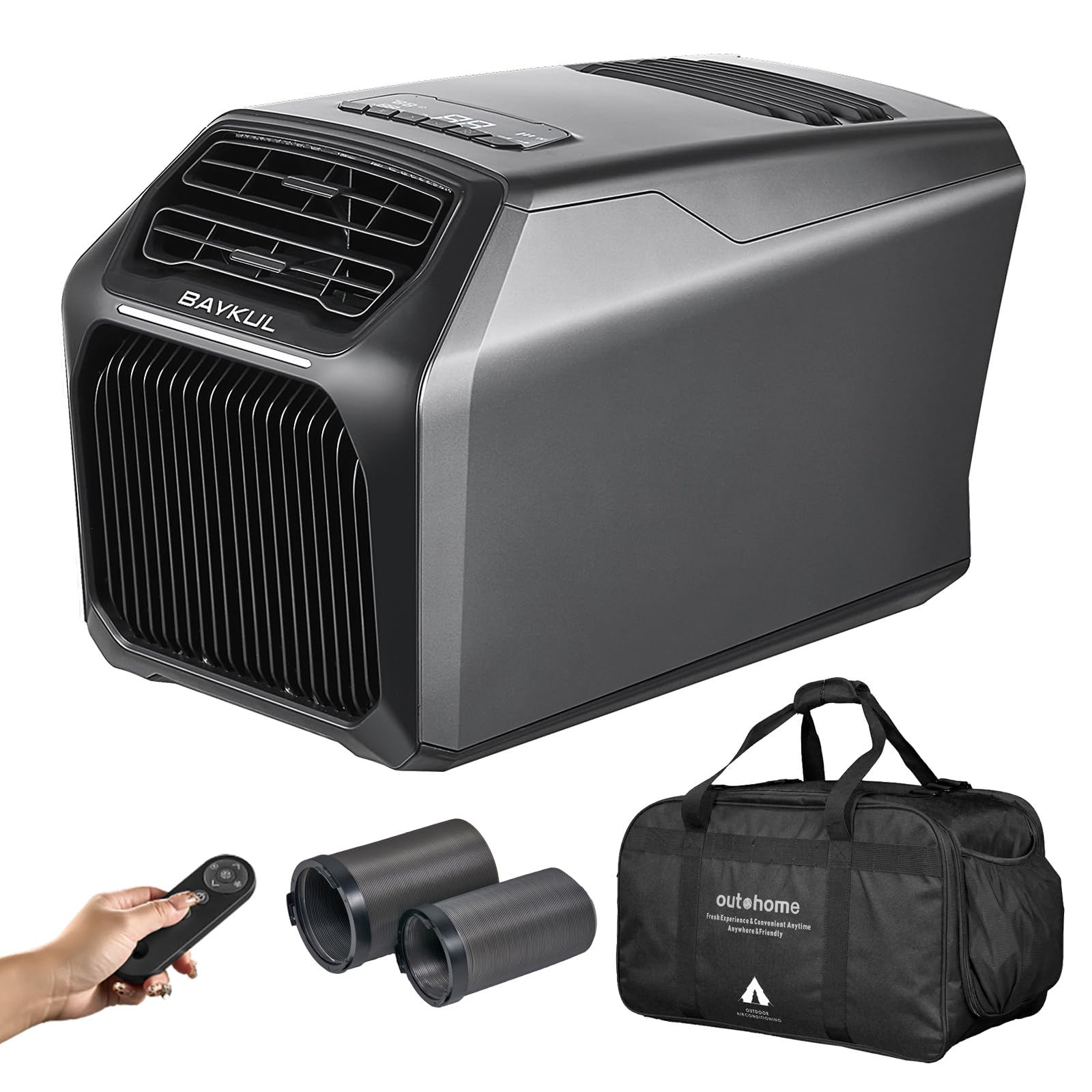
The BAYKUL 6800BTU is the most powerful single-box portable in this comparison, and its heating mode makes it a true four-season tool for vanlifers and RV dwellers. The 7500 BTU heating capacity is enough to keep a small RV comfortable down to freezing, and the R-32 refrigerant is more energy-efficient and environmentally friendly than the R-410A found in many competitors. The unit includes a soft-sided carrying bag, two exhaust ducts, a window seal kit, and a drain port—everything you need in the box.
User feedback consistently highlights the RF remote that works through walls, which is invaluable if you mount the unit outside and run the cool air duct inside. At 550W average power consumption, it matches the 400–500W sweet spot for pairing with a 1500W+ inverter generator or a large solar generator.
At 35.7 pounds, it’s one of the heavier units here, and a few buyers report that a loose internal rattle developed after several weeks of use. The foam window insert included is also undersized for most standard sliding windows, so you may need to improvise with extra insulation.
Why it’s great
- Dual cooling and heating with R-32 refrigerant
- RF remote works through walls and interior dividers
- Complete accessory kit included (bag, ducts, seal)
- Inverter-based power adjustment saves energy
Good to know
- Heavier and bulkier than other 5000+ BTU portable units
- Window seal kit is undersized for full-sized windows
4. OUTOHOME 5100BTU Portable Tent Air Conditioner
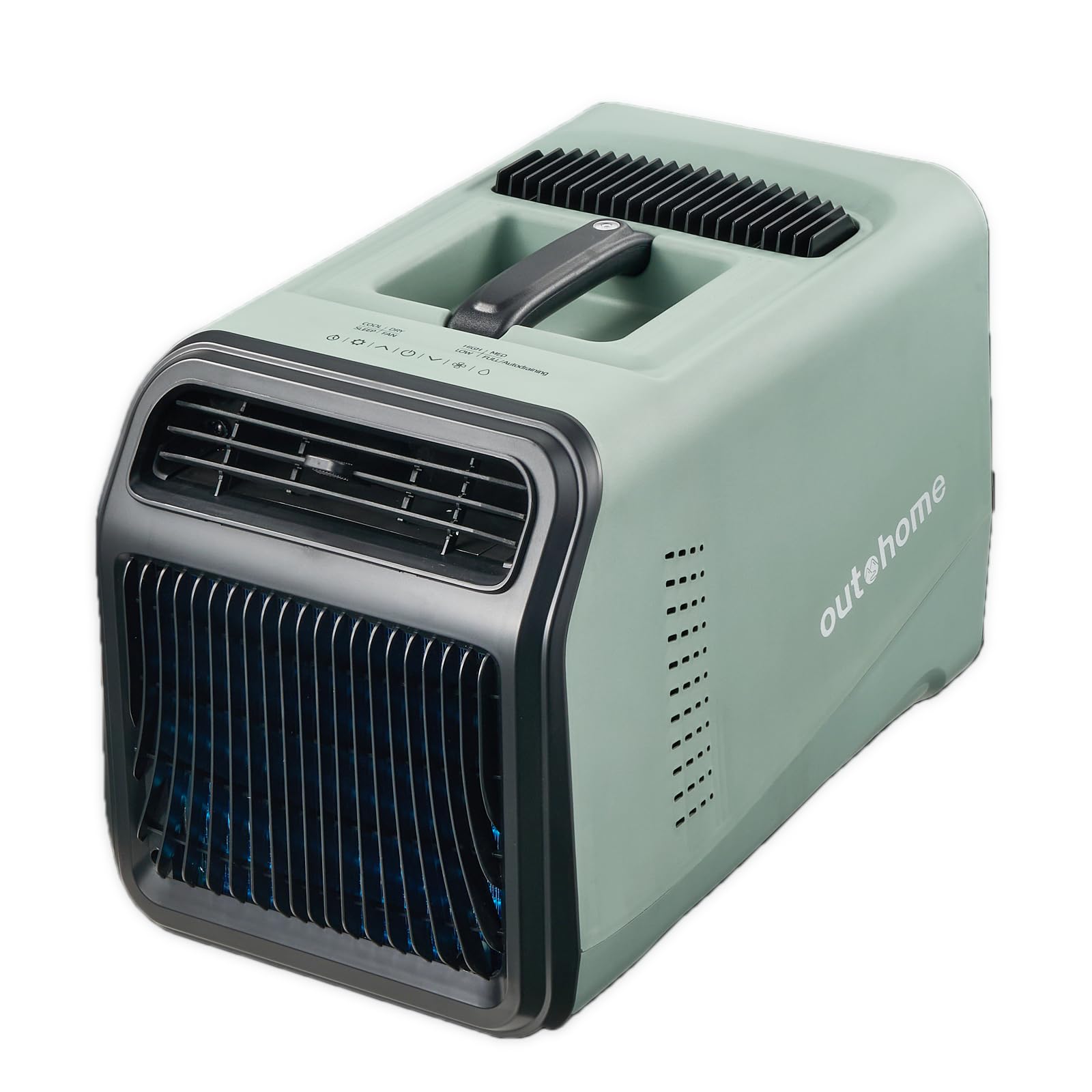
This OUTOHOME sibling to the 5200BTU model trades a tiny bit of cooling power for a lower price point while keeping the same core compressor architecture. It measures 20.3 x 12.0 x 13.2 inches and weighs 35 pounds—heavier than the 5200BTU version but still manageable for short carries. The 5100 BTU rating cools a small tent or truck sleeping area effectively; one truck camper reported dropping the interior from 80°F to 65°F in under 20 minutes.
The smart auto-evaporation system recycles condensate to improve cooling efficiency, so you rarely need to empty a bucket unless you’re running it in a very humid environment. The 24-hour timer and sleep mode are intuitive, and the noise level stays at 46 dB, which is perfectly acceptable for overnight use inside a vehicle.
The most frequent complaint is handle reliability—several owners report that the handle detached after a few weeks of use, which is a deal-breaker for portability. The unit also appears to struggle with starting on lower-capacity inverters (below 2000W surge), so pairing it with a robust generator or power station is essential.
Why it’s great
- Compelling price for a 5100 BTU compressor unit
- Smart auto-evaporation reduces drain maintenance
- Quick cooling performance in truck caps and small tents
- Sleep mode maintains steady temperature overnight
Good to know
- Handle reported as fragile by multiple users
- High startup surge requires robust power source
5. BAYKUL 5000BTU Portable Air Conditioner
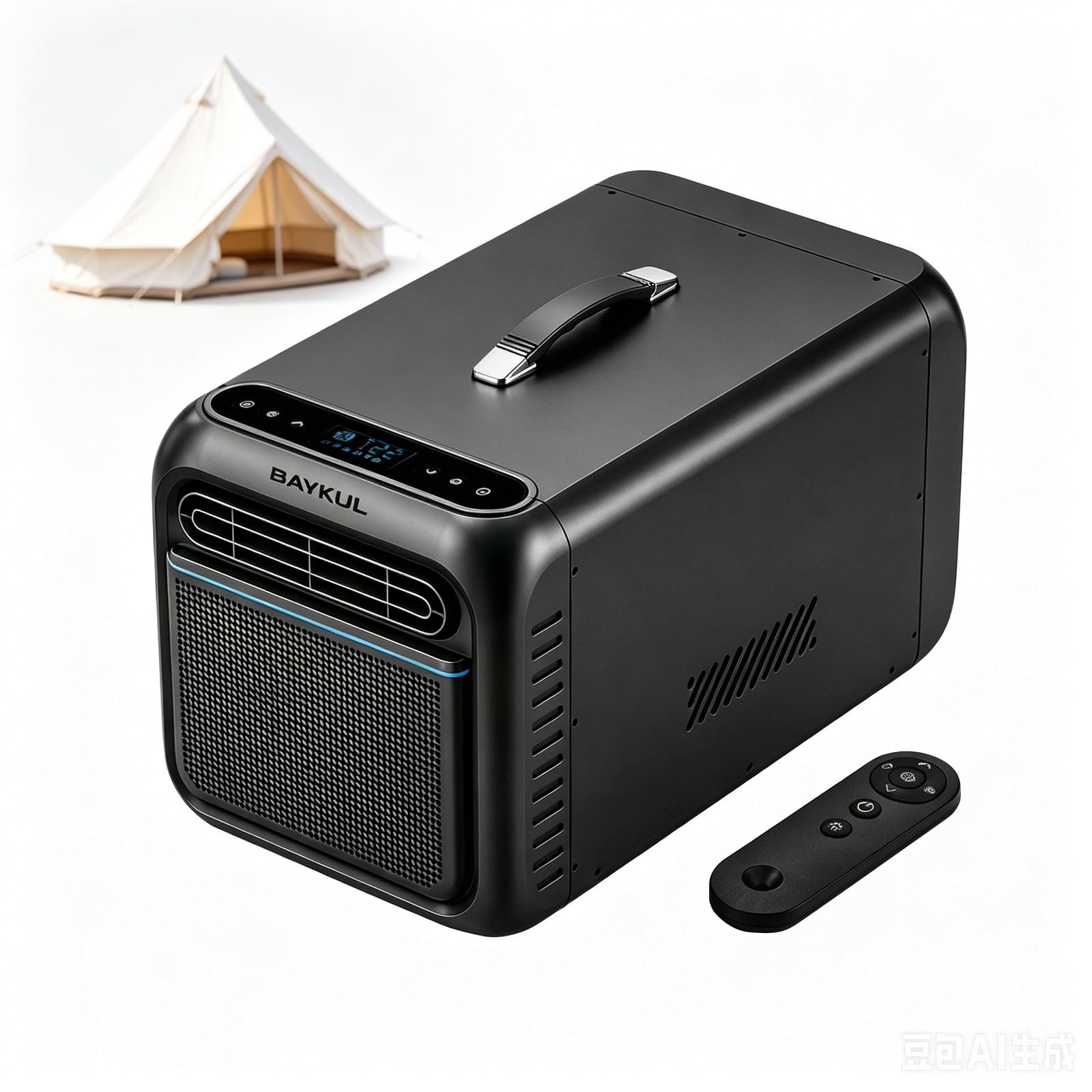
The BAYKUL 5000BTU is the lightest full-compressor portable AC in this guide at just 27.7 pounds, making it one of the few genuine one-hand carry options. Its dual-hose design means it draws outside air for condenser cooling instead of using conditioned interior air, which improves efficiency in a sealed tent or RV. The 400W running draw (about 3.3 amps at 120V) pairs well with a 1500W inverter generator, and the rotary scroll compressor starts reliably even on slightly underpowered supplies.
Users living in extreme heat (Miami, Florida) report that this unit produces genuinely cold—not just cool—air, dropping a small bedroom from 88°F to comfortable sleeping temps within 30 minutes. The sleep mode at 46–50 dB is barely audible over a typical box fan. The included foam window insert is small, but the dual-hose setup means you can instead run both hoses out a single partially opened window.
Noise levels are about average for this class—fine for sleeping but noticeable during conversation. The remote control is small and has no backlight, which makes it hard to find in a dark tent. A few early buyers reported loose internal screws that caused rattling, though the overall reliability trend is positive.
Why it’s great
- Lightest compressor unit at 27.7 lbs
- Dual-hose design avoids pulling conditioned air from your tent
- Delivers genuinely cold air even in 88°F+ environments
- Low 400W running draw works with most inverter generators
Good to know
- Remote control is small and has no backlight
- Occasional reports of loose internal components
6. BougeRV PC35 Portable Air Conditioner 3500BTU
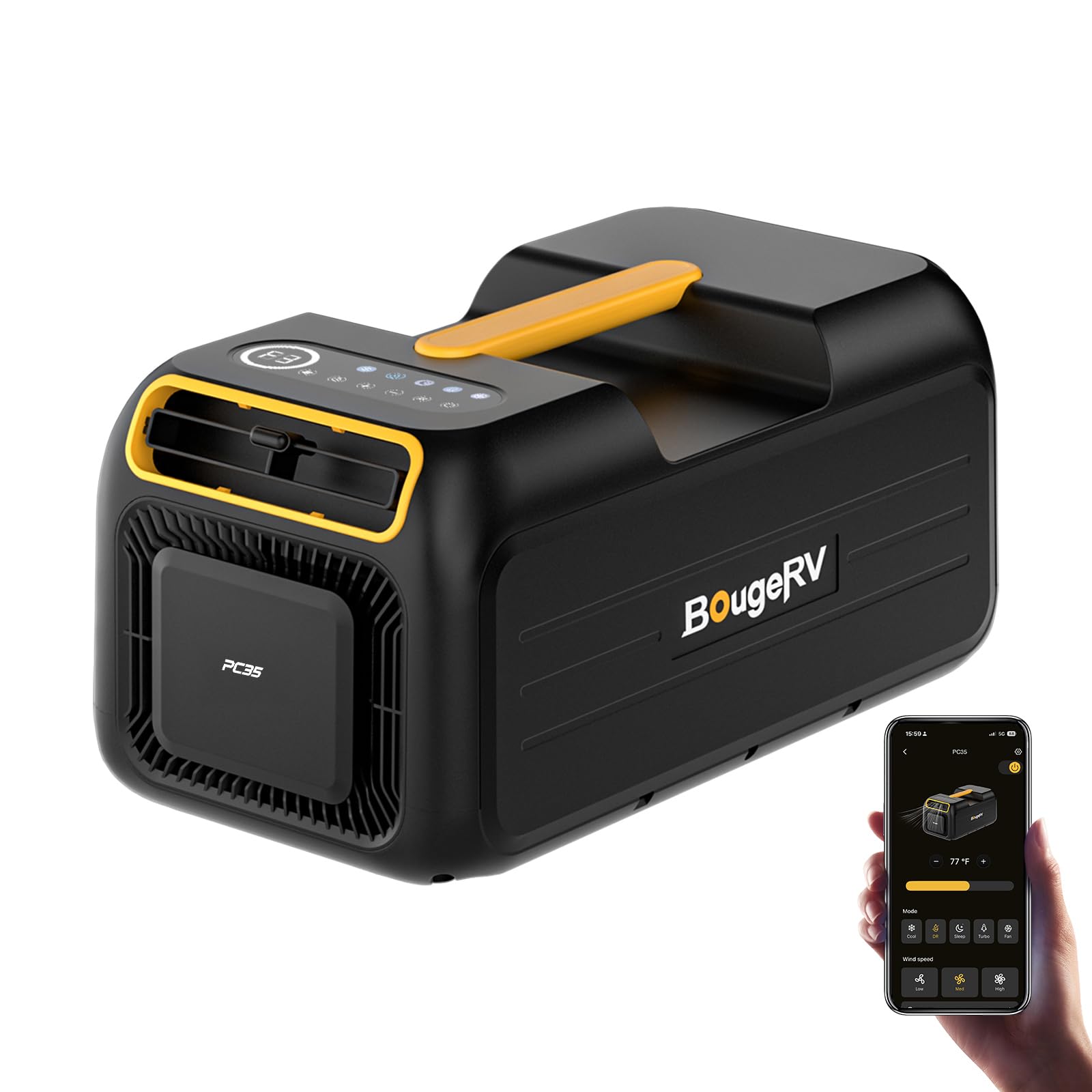
BougeRV’s PC35 is the only unit here with dedicated smartphone app control, letting you change modes, fan speed, and temperature from up to 33 feet away. That’s genuinely useful when you’re already zipped into a sleeping bag or sitting by the campfire. The 3500 BTU rating is on the lower end, but BougeRV claims an 18°F temperature drop in 10 minutes on strong mode, which several users confirmed for spaces around 64 sq ft—roughly a 6-person tent or small RV bunk.
At 34.2 pounds, it’s not light, but the ergonomic handle makes it easier to carry than the boxy dimensions suggest. The 5-in-1 functionality includes cooling, dehumidifying, fan, strong mode, and a 24-hour timer. The included adapter and exhaust ducts mean you can set it up in about 5 minutes.
The biggest limitation is that 3500 BTU is barely adequate for anything larger than a small tent in daytime heat. In high-humidity climates like Florida, several users reported that the unit struggled to keep a comfortable temperature. The startup surge also trips some smaller inverters, so plan for a 1000W+ continuous source.
Why it’s great
- Smartphone app control (33 ft range)
- Fast 18°F drop in strong mode
- Compact footprint fits small tents well
- Excellent customer support from BougeRV
Good to know
- 3500 BTU is underpowered for large tents or humid climates
- Startup surge can overwhelm small inverters
7. UAHKPA 9000BTU 12V RV Air Conditioner

The UAHKPA 9000BTU is the only split-system unit in this roundup, meaning the compressor sits outside your tent or vehicle and only the slim evaporator unit goes inside. This arrangement dramatically reduces interior noise and frees up floor space. Running on pure 12V DC, it’s designed for vehicles with large auxiliary battery banks—if you have 200+ Ah of lithium capacity, you can run this for 6+ hours without starting your engine. The 9000 BTU rating is overkill for a small tent but perfect for a large van or camper trailer.
The 5-gear fan speed adjustment and digital display give you precise control, and the remote works reliably from across a medium-sized RV. The aluminum alloy construction and scroll compressor suggest decent build quality for the price point, and the R-134a refrigerant is serviceable by any standard auto AC shop.
Reliability is the main concern here. The English manual is poorly translated, and error codes (E2) that indicate low voltage are mislabeled as under-pressure, causing confusion during troubleshooting.
Why it’s great
- True split-system design keeps interior footprint tiny
- 9000 BTU is potent enough for large vans and trailers
- Pure 12V DC operation avoids inverter losses
- Serviceable R-134a refrigerant
Good to know
- High failure rate in the first month for some units
- Return shipping from China is expensive and difficult
- Poor manual and error code translations
8. Deodak 4-in-1 Portable Air Conditioner (1700ml Tank)
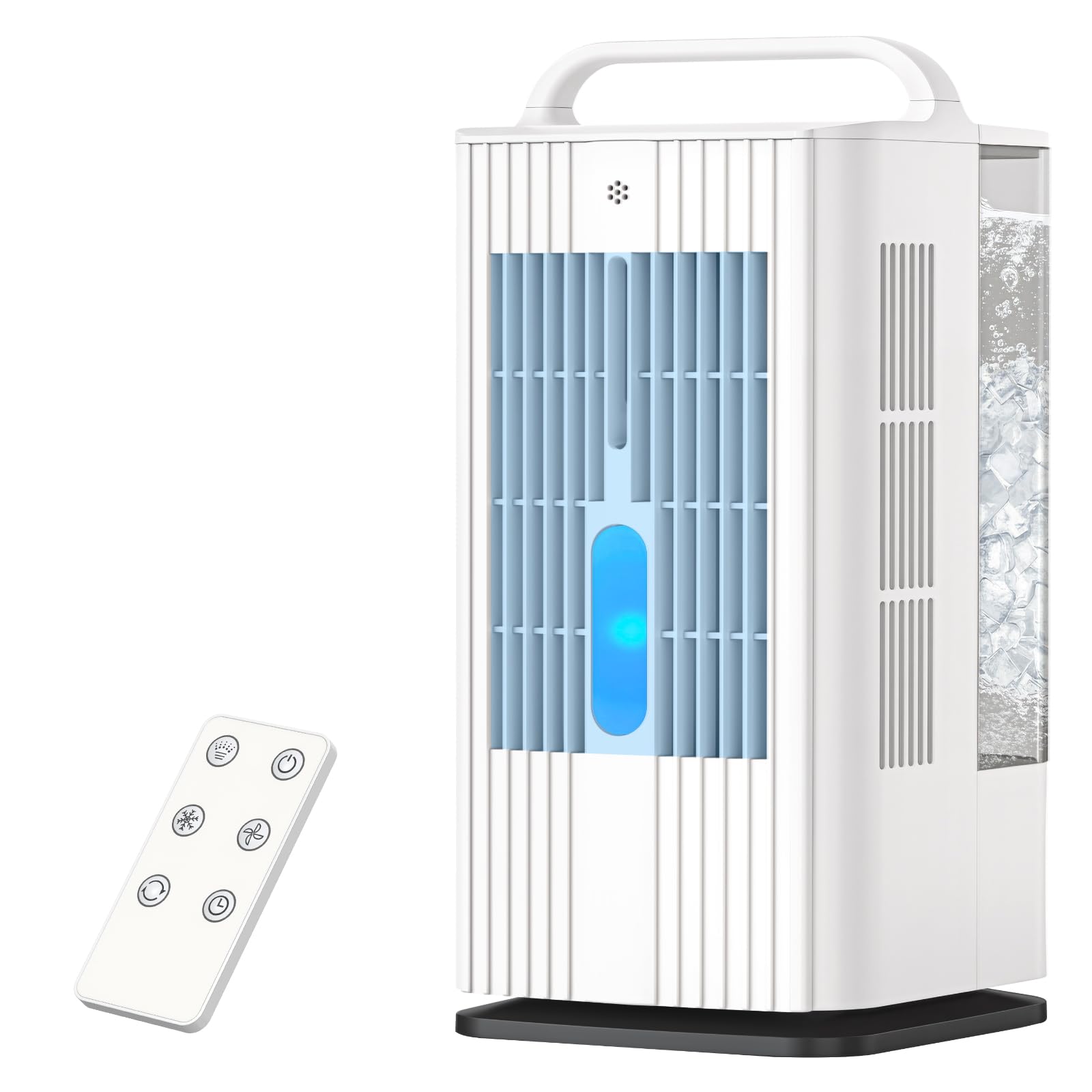
The Deodak 4-in-1 is an evaporative air cooler, not a compressor-based AC. It works by pulling air through a wet pad, lowering the temperature through evaporation. In dry climates (humidity under 50%), this can drop the air temperature 8–12°F directly in front of the unit. The 1700ml water tank provides up to 15 hours of continuous operation on the low mist setting, and the 120° oscillation spreads the cool breeze across a wide area.
The dual brushless DC motors are impressively quiet at 45 dB, making this a good choice for sleeping if you can position it close to your cot. The 7-color night light is a nice bonus for kids in a tent. At 4.8 pounds, it’s trivial to pack and can be powered from any USB battery bank that delivers at least 2A at 5V.
The fundamental limitation is that evaporative coolers do not work in humid environments. If your campsite has humidity above 60%, you’re just blowing warm moist air. The 3-foot effective cooling radius means it’s a personal cooler, not a room cooler. The water tank will also leak if the unit tips over in a tent.
Why it’s great
- Ultra-quiet at 45 dB—perfect for sleeping
- Large 1700ml tank lasts up to 15 hours
- 120° oscillation for wider coverage
- Extremely lightweight and USB-powered
Good to know
- Ineffective in humidity above 60%
- Only cools a 3-foot radius directly in front
- Water tank leaks if unit is tipped over
9. Evapolar evaCHILL Portable Air Conditioner

The Evapolar evaCHILL is the most portable option in this list at just 1.65 pounds and 6.7 inches cubed. It uses an evaporative basalt fiber cartridge that you soak in water, then blows air through it with a USB-powered fan. It draws only 10 watts, meaning any power bank can run it for 15+ hours. The cooling effect is real—several users measured an 8–10°F temperature drop directly in front of the unit in dry climates.
It’s designed strictly for personal spot cooling, not space cooling. Position it on your camp desk or nightstand, and you’ll feel the breeze within 3–5 feet. The 4 fan speeds give you some flexibility, and the basalt cartridge material is safe for breathing and dust-capturing. The unit is quiet enough for a library.
The review data is split: happy owners use it in Arizona or Colorado and swear by it, while disappointed buyers expected room-sized cooling. The cartridge has a lifespan of about 3–6 months with regular use and can develop a musty smell if not dried properly between uses. It’s also prone to water leaks if knocked over or tilted during transport.
Why it’s great
- Ultra-portable at 1.65 lbs—fits in a daypack
- Only 10W power draw—any power bank works
- Real 8-10°F drop in dry climates
- Near-silent operation
Good to know
- Ineffective in humidity above 60%
- Limited to spot cooling at 3–5 feet
- Cartridge needs regular replacement and can smell if not dried
FAQ
Can I run a compressor camping AC from a Jackery or EcoFlow power station?
Will an evaporative cooler work in a tent at the beach?
How do I vent a portable camping AC in a tent without a window?
Final Thoughts: The Verdict
For most users, the ac for camping winner is the Cybertake S2 Pro because it combines a quiet 40 dB compressor, true triple-power input (12V/24V/48V/110V), and 8-hour run time on a single kWh—making it the only unit that works equally well with a solar generator, vehicle battery, or campground hookup. If you want a lighter, budget-friendly option, grab the BAYKUL 5000BTU at 27.7 pounds. And for dry-climate campers who prioritize weight and simplicity, nothing beats the Evapolar evaCHILL at 1.65 pounds.

Mo Maruf
I created WellFizz to bridge the gap between vague wellness advice and actionable solutions. My mission is simple: to decode the research and give you practical tools you can actually use.
Beyond the data, I am a passionate traveler. I believe that stepping away from the screen to explore new environments is essential for mental clarity and physical vitality.