Our readers keep the lights on and my smoothie glass nicely filled. As an Amazon Associate, I earn from qualifying purchases.
Behind-ear headphones bridge a specific gap in personal audio: they keep your ear canals open so you remain aware of traffic, announcements, or workout buddies, while still delivering music and calls. The category spans bone-conduction sport headsets, flexible neckbands with magnetic buds, and over-ear hooks designed for active commutes—each balancing sound quality against situational awareness.
I’m Mohammad Maruf — the founder and writer behind WellFizz. I’ve spent years analyzing audio hardware, decoding chipset specs, battery endurance tests, and ergonomic failure points to help buyers cut through the marketing noise and find a secure, reliable fit.
This guide breaks down the top models by real-world performance, battery life, connectivity, and the critical comfort factors that define the best behind ear headphones for active listening.
How To Choose The Best Behind Ear Headphones
Behind-ear headphones aren’t a one-size-fits-all category. The right choice depends on your primary activity, tolerance for ear-canal insertion, and how much ambient sound you need to let through. Here are the three factors that separate a smart buy from a return.
Body Style: Neckband vs. Over-Ear Hook vs. Bone Conduction
Neckbands (like the Beats Flex) drape a flexible band behind your neck with earbuds that magnet together when not in use. They’re ideal for office commutes and casual listening because the buds hang conveniently. Over-ear hooks (like the occiam models) wrap a rigid hook around the pinna, locking the earbud in place for high-impact workouts. Bone-conduction headsets (SHOKZ OpenMove, OpenRun) sit on your cheekbones just in front of your ears, leaving the entire ear uncovered — the best choice for runners who need 360-degree environmental hearing.
Battery Life and Charging Speed
Behind-ear headphones vary wildly in stamina. A typical neckband offers 8–12 hours per charge, while hook-style earbuds get 6–8 hours per bud with another two or three full charges from the case. Bone-conduction models range from 6 to 8 hours. Pay attention to quick-charge features: the SHOKZ OpenRun gives 1.5 hours of play with a 10-minute charge, which matters when you forget to plug in overnight.
Connectivity and Codec Support
Bluetooth version affects audio sync, latency, and range. Many budget-friendly behind-ear headphones still use Bluetooth 5.0, but the latest models (5.1, 5.4, or even 6.1 in the Soundcore Liberty 5 Pro) improve pairing stability and reduce audio lag during video calls or gaming. For seamless Apple ecosystem use, the Beats Flex’s W1 chip offers iCloud-level auto-switching. For multipoint pairing — simultaneous connection to a phone and laptop — check the product specs explicitly, as not all models support it.
Quick Comparison
On smaller screens, swipe sideways to see the full table.
| Model | Category | Best For | Key Spec | Amazon |
|---|---|---|---|---|
| SHOKZ OpenRun | Bone Conduction | Runners and outdoor training | IP67 waterproof, 8 hrs | Amazon |
| Soundcore Liberty 5 Pro | True Wireless | Premium ANC with world-class call quality | Bluetooth 6.1, 12 hrs | Amazon |
| SHOKZ OpenMove | Bone Conduction | Entry-level situational awareness | Bluetooth 5.1, 6 hrs | Amazon |
| Beats Flex | Neckband | Apple ecosystem daily carry | W1 chip, 12 hrs | Amazon |
| occiam ANC Earbuds | Over-Ear Hook | Secure gym and commute audio | ANC, 90 hrs case, IPX7 | Amazon |
| Walker’s Razor Slim | Shooting Earmuff | Range safety with clear coms | Gunshot suppression | Amazon |
| GOLREX ANC Earbuds | Over-Ear Hook | Budget-friendly fitness pair | 80 hrs case, LED display | Amazon |
In‑Depth Reviews
1. SHOKZ OpenRun

The SHOKZ OpenRun represents the mature, eighth-generation bone-conduction design. A featherweight titanium wraparound frame secures the transducers against your cheekbones, leaving both ear canals completely unobstructed. That open architecture makes it the safest choice for road running, cycling, or any environment where you need full 360° awareness of traffic or other hazards. The IP67 rating means it survives heavy rain, mud, and even an accidental rinse — though you should not swim with it.
Battery life clocks in at eight hours of continuous playback, and the magnetic induction charging cable snaps on with a satisfying click. A ten-minute quick charge provides enough juice for 1.5 hours, which is a lifesaver for pre-run panic charges. The bundled waterproof carrying case and sweat headband add tangible value that budget bone-conduction models often omit. Audio quality is typical for bone conduction: mids and highs are clear enough for podcasts, audiobooks, and vocal-forward music, but bass is noticeably absent — a physical limitation of the technology, not a flaw of this unit.
Connectivity is stable with Bluetooth 5.1, supporting multipoint pairing so you can stay tethered to your phone and watch simultaneously. The volume ceiling is moderate; in very loud environments the transducers may cause a slight tickle at maximum output. For active users who prioritize safety and comfort over thumping sub-bass, the OpenRun is the most complete behind-ear package available.
Why it’s great
- IP67 waterproof with no ear occlusion
- 8-hour battery, 10-minute quick charge delivers 1.5 hrs
- Featherlight titanium frame stays secure during sprints
Good to know
- Bass response is minimal due to bone conduction physics
- Volume cannot compete with loud ambient noise (metro, traffic)
2. Soundcore Liberty 5 Pro
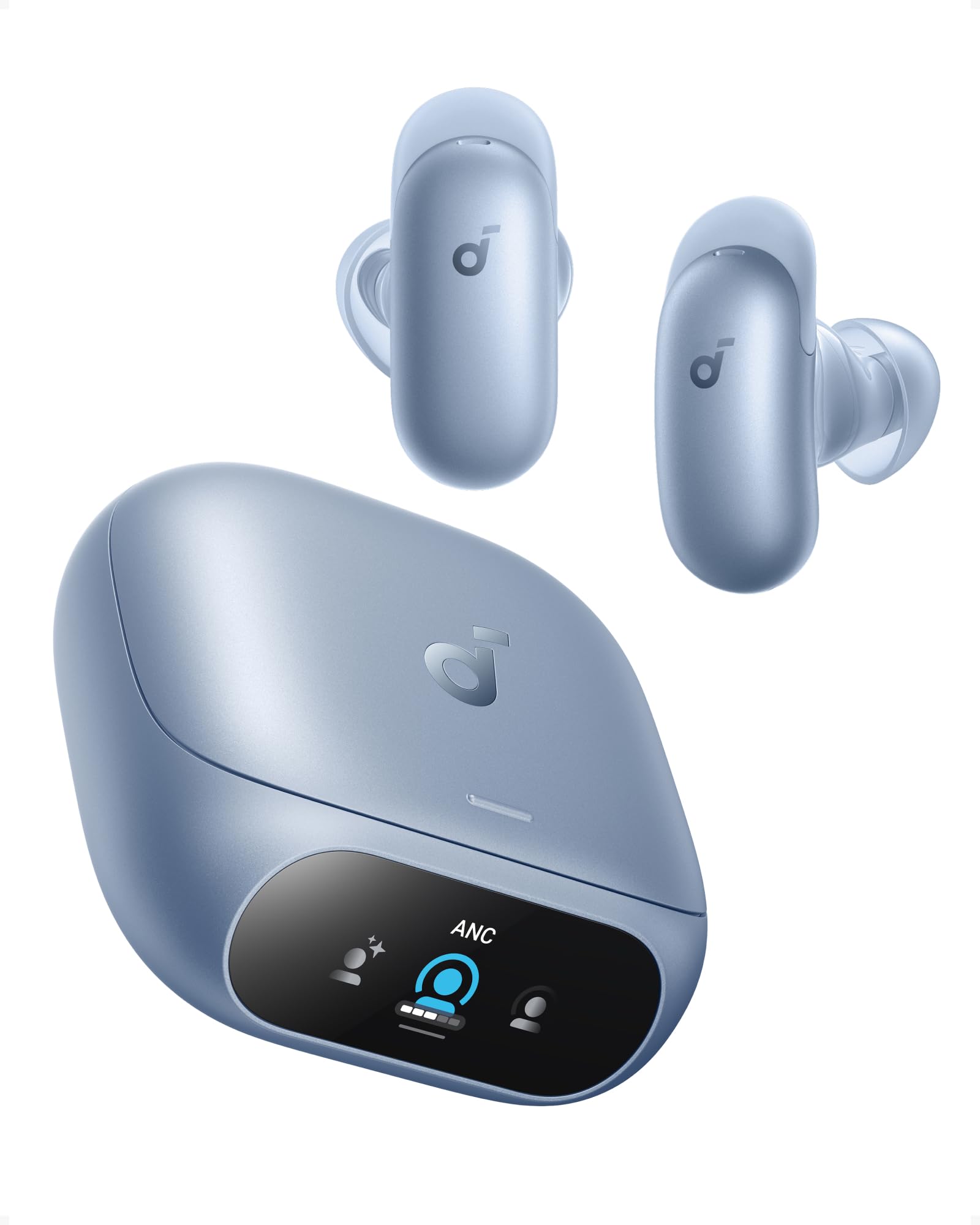
The Liberty 5 Pro earned a Guinness World Record for call quality — not a marketing gimmick, but an objective G-MOS score measured in a controlled lab. Ten microphones combined with Anker’s Thus AI chip process speech in real-time, isolating your voice from 100 dB+ background noise such as open-plan offices or subway cars. The same eight-sensor array drives adaptive ANC that adjusts suppression level by level, blocking up to 99.8% of ambient chaos. It rivals the noise cancellation of Sony and Bose flagships while outperforming them on voice pickup.
The shell fits securely with interchangeable ear tips (XXS through L) and optional ear fins, making it comfortable for small and large ears alike. Battery life sits at roughly 6–7 hours with ANC active, and the wireless charging case with a tiny screen shows remaining power for both case and earbuds. HearID 5.0 builds a personalized EQ profile by playing tones into your ear canal and measuring your hearing sensitivity — resulting in a frequency response tuned specifically to you. The out-of-box sound is V-shaped (boosted bass and treble), but the app’s parametric EQ lets you flatten or shape it precisely.
The transparency mode is slightly below the latest AirPods Pro, and the case’s touchscreen, while functional, feels like a solution in search of a problem for most users. Google Assistant voice activation is not natively supported — you must use Anker’s “Hey Anka” command or map a tap gesture to trigger the phone’s assistant. For iOS-heavy users who take many calls, this is the best behind-ear headphone on the market today.
Why it’s great
- Guinness-certified call quality in noisy environments
- Adaptive ANC rivals Sony/Bose flagships
- HearID personal EQ for custom frequency response
Good to know
- Transparency mode slightly inferior to AirPods Pro 3
- No native Google Assistant voice trigger
3. SHOKZ OpenMove

The OpenMove is SHOKZ’s entry-level bone-conduction headset, and it borrows heavily from the more expensive AfterShokz lineage. The wraparound titanium frame is lightweight and flexible, though it uses a softer silicone coating that feels less premium than the OpenRun’s matte finish. It delivers the same open-ear safety benefit: you hear traffic, train announcements, and conversations while still enjoying audio. Three EQ modes (standard, vocal booster, and an extra bass profile) let you nudge the sound signature toward your preference, although bone conduction remains fundamentally sub-bass-light.
Battery life is rated at six hours, which is adequate for daily commutes and lunch-break runs but falls short of the OpenRun’s eight-hour stamina. Charging is via USB-C (a welcome modern touch), and the Bluetooth 5.1 connection pairs easily with Android, iOS, Windows, and Mac. The physical buttons are small but distinct enough to press during exercise without accidental inputs. Sweat resistance is rated at IP55, meaning it handles rain and gym perspiration but should not be worn in a shower or submerged.
Where the OpenMove truly shines is price-to-performance. It costs less than half the OpenRun while delivering 90% of the same situational awareness and call clarity. The biggest trade-off is the inferior water protection and shorter battery life. For someone new to bone conduction who wants to test the format without a major investment, the OpenMove is the right choice.
Why it’s great
- Excellent entry price for bone conduction technology
- USB-C charging with universal device pairing
- Three EQ modes for sound customization
Good to know
- Sweat resistant (IP55) only, not swim-safe
- 6-hour battery may require mid-day recharge for heavy users
4. Beats Flex

The Beats Flex is a neckband-style behind-ear headphone that leverages Apple’s W1 chip for instant pairing and iCloud syncing across all your Apple devices. The Flexible neckband is covered in soft silicone and houses the battery and electronics, keeping the earbuds ultra-light. The buds themselves are tiny and sit shallow in the ear, making them comfortable for extended wear — many users report using them in bed without discomfort. The magnetic earbuds auto-pause playback when they click together and resume when separated, a small but genuinely handy convenience.
Battery life is rated at 12 hours, though real-world endurance with moderate volume and both buds active hovers closer to 10–11 hours. The Class 1 Bluetooth range is noticeably wider than the standard Class 2 found in most earbuds — you can walk to the other side of a three-bedroom house before the signal drops. Sound quality is warm and bass-forward, typical of Beats tuning, but the overall balance is surprisingly natural for this price tier. The inline remote with a microphone handles volume, playback, and call management with physical feedback that touch controls cannot match.
The Flex-Form cable has micro-adjustable cinches near each earbud, letting you dial in the perfect cable length for your neck — a detail most neckbands skip. The only frustration: no active noise cancellation and no sweat-resistance rating, so these are strictly for casual indoor or office use. If you live in the Apple ecosystem and want a simple, affordable behind-ear companion, the Flex is hard to beat.
Why it’s great
- Seamless Apple W1 chip pairing and device switching
- Auto-play/pause with magnetic earbuds
- Warm, bass-rich sound with up to 12-hour battery
Good to know
- No ANC or official water resistance rating
- Neckband may annoy some users during high-movement activities
5. occiam Active Noise Cancelling Earbuds

The occiam T19 wireless earbuds anchor behind your ear with rigid, flexible hooks that wrap around the pinna — a design that remains locked during burpees, sprints, and side-to-side head movements. The active noise cancellation reduces ambient noise by up to 45dB, which is sufficient to mute most gym background and street noise without requiring extreme clamping force. The physical press buttons on each earbud provide positive tactile feedback, avoiding the accidental-pause problem common with touch-only controls during sweaty workouts.
Battery performance is unusual: each earbud lasts eight hours per charge, and the case holds enough extra power for up to 90 total hours if you use a single earbud at a time. With both buds in stereo mode, the case refills roughly four full charges, giving about 40 hours total before you need to plug in. The charging case includes a digital battery percentage display that shows remaining power at a glance. The IPX7 waterproof rating means the earbuds survive immersion in one meter of water for 30 minutes — safe for heavy rain and post-workout rinsing.
Sound quality emphasizes clarity in vocals and treble, with bass punch that is present but not overwhelming. The Bluetooth 5.4 connection is rock-solid and reconnects instantly thanks to the integrated hall-effect sensor that auto-pairs when the case opens. The one catch: the ear hooks cannot be removed, so these headphones occupy a specific physical shape that may not fit every ear anatomy equally. Users with small ears should trial the three included silicone tip sizes carefully.
Why it’s great
- Physical buttons prevent accidental inputs during exercise
- IPX7 waterproof rating for post-workout rinsing
- Strong ANC with 45dB passive/active suppression
Good to know
- Over-ear hooks are non-removable and may not fit small ears
- Bass response is moderate, not subwoofer-level
6. Walker’s Razor Slim Electronic Muff
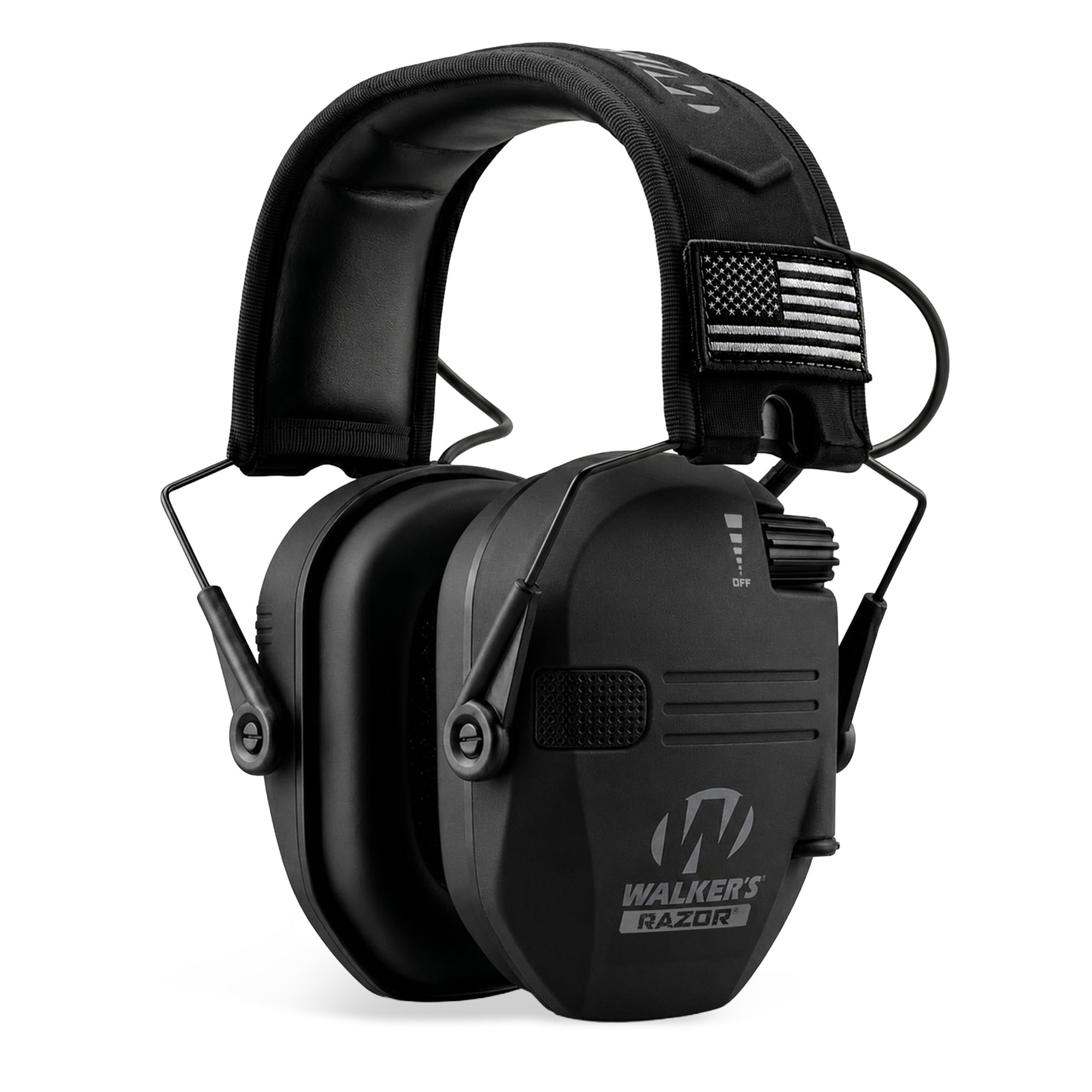
The Walker’s Razor Slim is not a music headphone — it is a hearing protection headset with electronic microphones that amplify ambient sounds to a safe level while instantly suppressing transient gunshots. The behind-ear design uses a padded headband and low-profile earcups that sit close to the head, maintaining a proper cheek weld on a rifle stock. The active noise suppression reacts faster than human reflexes, cutting the sound of a 9mm or .223 round down to a safe level before it reaches your eardrum, while allowing instructor commands and range conversations to pass through clearly.
Battery life is excellent on two AAAs (not included), lasting well over a hundred hours of continuous use. The fit accommodates thick-frame sunglasses without breaking the acoustic seal — a common failure point with budget muffs. The volume adjustment dial and mode switch are chunky enough to operate with gloved hands. For indoor ranges, many users double up with foam earplugs underneath, achieving a noise reduction rating (NRR) of about 22 dB from the muffs alone.
The Razor Slim excels at its intended job: protecting hearing without isolating you from the environment. It is not suitable for music, podcasts, or general daily wear outside a shooting range, construction site, or hunting blind. If your behind-ear headphone need is specifically hearing protection with environmental awareness, this is the safest, most reliable option.
Why it’s great
- Instant gunshot suppression with clear range communication
- Low-profile cups maintain cheek weld on rifles
- Long battery life (100+ hours on two AAAs)
Good to know
- Not designed for music or general audio
- May cause ear fatigue for large ears after 1-2 hours
7. GOLREX Active Noise Cancelling Wireless Earbuds

The GOLREX ANC earbuds bring adaptive hybrid noise cancellation and over-ear hooks to a notably affordable price point. The ANC performance is rated to block up to 99.8% of ambient noise with a 50dB suppression depth, a spec that competes with earphones costing significantly more. In practice, the ANC effectively tames subway rumble, gym music, and office chatter, though it leaves a faint white-noise floor that is common at this tier. The transparency mode allows you to hear traffic and announcements without removing the earbuds, a practical safety net for commuters.
The charging case is the standout feature: an integrated LED display shows exact percentage for both earbuds and the case, and the total playback can reach 80 hours when you count the case’s reserves. The earbuds themselves deliver about eight hours per charge. Wireless charging support is included — just place the case on any Qi pad. Bluetooth 5.4 keeps the connection stable at 30+ feet, and the 35ms low-latency mode makes these usable for mobile gaming where audio sync matters.
The flexible earhooks evenly distribute weight, and the three silicone tip sizes accommodate most ear shapes. Sound signature is consumer-friendly: boosted bass with clear mids, well-suited for pop, hip-hop, and workout playlists. The downsides are typical for the price bracket: the touch controls on the earbuds are sensitive enough to pause accidentally when adjusting the fit, and the microphones, while adequate for calls, pick up noticeable background wind outdoors. For a budget-conscious gym-goer, this is a compelling package.
Why it’s great
- 80-hour total playback with LED percentage display case
- Adaptive hybrid ANC with 50dB suppression depth
- Wireless charging case included
Good to know
- Touch controls can trigger accidental pauses during fit adjustments
- Microphone picks up wind noise outdoors
FAQ
Do behind-ear headphones hurt after long wear?
Can I use behind-ear headphones for swimming?
Which behind-ear headphone has the best call quality?
How do I clean behind-ear headphones after workouts?
Final Thoughts: The Verdict
For most users, the best behind ear headphones winner is the SHOKZ OpenRun because it delivers proven situational safety, an IP67 build that survives outdoor abuse, and reliable eight-hour battery life — all without ever entering your ear canal. If you need world-class call quality and premium noise cancelling, grab the Soundcore Liberty 5 Pro. And for a budget-friendly entry into bone conduction, nothing beats the SHOKZ OpenMove.

Mo Maruf
I created WellFizz to bridge the gap between vague wellness advice and actionable solutions. My mission is simple: to decode the research and give you practical tools you can actually use.
Beyond the data, I am a passionate traveler. I believe that stepping away from the screen to explore new environments is essential for mental clarity and physical vitality.