Our readers keep the lights on and my smoothie glass nicely filled. As an Amazon Associate, I earn from qualifying purchases.
Finding a carrier oil that hydrates eczema-prone skin without triggering a flare is a balancing act. The wrong oil can lock in irritants or feed fungal overgrowth, worsening the very condition you’re trying to calm. The right one, by contrast, mimics the skin’s natural lipid barrier and delivers targeted anti-inflammatory fatty acids directly to compromised tissue.
I’m Mohammad Maruf — the founder and writer behind WellFizz. I’ve spent years parsing the clinical literature on skin-barrier repair and analyzing the fatty-acid profiles, comedogenic ratings, and molecular weights of dozens of carrier oils to separate genuine therapeutic value from marketing fluff.
After evaluating fatty-acid composition, extraction methods, and real-user feedback on flare reduction, I’ve narrowed the field to the five most effective options. Read on for my complete analysis of the best carrier oil for eczema.
How To Choose The Best Carrier Oil For Eczema
Eczema leaves the skin barrier porous and easily irritated. The right carrier oil can help replenish lost ceramides and reduce transepidermal water loss, but the wrong one can clog pores or feed yeast. Here are the three factors that matter most.
Fatty Acid Profile: Linoleic vs. Oleic Acid Ratio
Oils high in linoleic acid (an omega-6) are structurally similar to the skin’s own lipids and help repair barrier function. Oils high in oleic acid (an omega-9) can be occlusive but may disrupt the barrier if used undiluted on very damaged skin. For active eczema, aim for a carrier with at least 50% linoleic acid.
Extraction Method and Purity
Cold-pressed, unrefined oils retain their natural vitamins and antioxidants. Hexane-extracted or refined oils lose beneficial compounds and may introduce chemical residues that aggravate sensitive skin. Always look for “cold-pressed” or “expeller-pressed” on the label, and third-party organic certification when possible.
Comedogenic Rating and Absorption Rate
Eczema-prone skin does not tolerate heavy, pore-clogging oils. Choose carriers with a comedogenic rating of 0–2 (jojoba, grapeseed, safflower) over higher-rated oils like coconut or wheat germ. Fast-absorbing oils also reduce the “sticky” sensation that many with eczema find uncomfortable.
Quick Comparison
On smaller screens, swipe sideways to see the full table.
| Model | Category | Best For | Key Spec | Amazon |
|---|---|---|---|---|
| Nature’s Brands Calendula Carrier Oil | Premium | Inflamed, weeping eczema | 3.4 fl oz, olive-oil base | Amazon |
| MAYJAM Jojoba Oil | Mid-Range | Daily barrier maintenance | 16 fl oz, USDA Organic | Amazon |
| Viva Naturals Fractionated Coconut Oil | Mid-Range | Dry, non-oozing patches | 16 fl oz, USDA Organic | Amazon |
| Nature’s Oil Sweet Almond Oil | Value | Large-body moisturizing | 15 fl oz, pure & natural | Amazon |
| Plant Guru Carrier Oil Variety Set | Value | Experimenting with multiple oils | 4 x 4 fl oz, cold-pressed | Amazon |
In‑Depth Reviews
1. Nature’s Brands Calendula Carrier Oil

This is not a cold-pressed seed oil; it is a macerated infusion of calendula flowers in organic olive oil, which gives it a distinct therapeutic profile for active eczema. The 26 phytochemicals present in calendula — including triterpenoids and flavonoids — are well-documented for reducing erythema and calming the cytokine response that drives the itch-scratch cycle. Users report visible calming of inflamed, weepy patches within days, not weeks.
The olive-oil base is rich in oleic acid, which some with severely compromised barriers may find slightly occlusive. However, the anti-inflammatory benefits of the calendula infusion usually outweigh this concern for acute flare management. The 3.4-ounce biophotonic glass bottle protects the oil from UV degradation, preserving the active compounds longer than a plastic container would.
This is a premium product intended for targeted spot treatment rather than full-body slathering. A few drops massaged into irritated areas twice daily is enough. If you are dealing with a stubborn, red flare that other oils have not touched, this is the one to try.
Why it’s great
- Clinically recognized anti-inflammatory compounds from calendula
- USDA organic, hexane-free, and packaged in protective glass
- Fast absorption with noticeable itch reduction
Good to know
- Small 3.4 oz bottle; not ideal for full-body use
- Olive oil base may feel heavy on very oily skin types
2. MAYJAM Jojoba Oil Organic
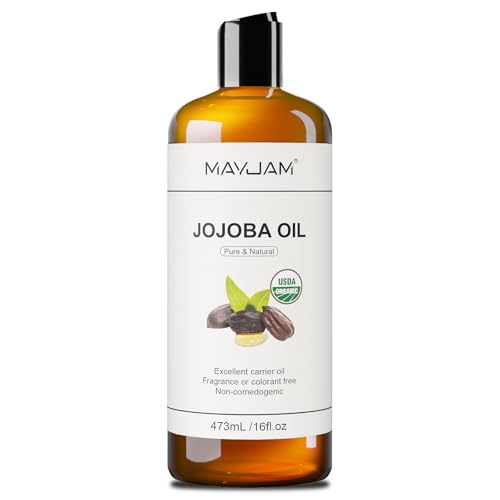
Jojoba is not technically an oil — it is a liquid wax ester whose molecular structure is nearly identical to human sebum. This means it penetrates the stratum corneum without sitting on top of the skin, making it an exceptional choice for eczema where the barrier needs reinforcement but not occlusion. MAYJAM’s version is cold-pressed from Israeli jojoba seeds and carries USDA organic certification, with no additives or hexane residues.
Clinically, jojoba’s high vitamin E content and anti-inflammatory properties help reduce the redness and scaling associated with mild to moderate atopic dermatitis. Multiple user reports note that regular application decreased the frequency of flare-ups when used as a daily moisturizer. The 16-ounce bottle offers excellent value for those who need to apply oil to large body areas several times a day.
The only caveat is that jojoba works best as a maintenance oil rather than an acute rescue treatment. If you are in the middle of a severe, weeping flare, you may need a targeted anti-inflammatory oil like calendula first, then switch to jojoba for long-term barrier support.
Why it’s great
- Molecularly identical to skin’s natural sebum for deep absorption
- USDA organic and cold-pressed; zero comedogenic rating
- Large 16 oz bottle at a fair per-ounce cost
Good to know
- Less effective for acute, weeping flares than infused oils
- Pump bottle design can leak if stored on its side
3. Viva Naturals Organic Fractionated Coconut Oil

Fractionated coconut oil is virgin coconut oil that has been steam-distilled to remove the long-chain triglycerides, leaving only medium-chain triglycerides (MCTs) that stay liquid at room temperature. This processing gives it a very different profile from standard coconut oil: it is odorless, non-comedogenic, and absorbs almost instantly without leaving a greasy film. For eczema, this means you can hydrate dry patches without trapping heat or bacteria against the skin.
Users specifically report that this oil works well on non-oozing, flaky patches on the arms, legs, and scalp. The MCTs contain lauric acid, which has mild antimicrobial properties — a useful bonus given that eczema-prone skin is often colonized by Staphylococcus aureus. The 16-ounce size is economical for daily full-body application.
The main limitation is that fractionated coconut oil lacks the fatty-acid diversity of whole plant oils. It provides moisture and a light protective layer but does not actively repair the skin barrier the way jojoba or grapeseed oil does. It is best used as a supplementary moisturizer or as a carrier for essential oils like lavender or tea tree.
Why it’s great
- Ultra-light, non-greasy absorption ideal for daytime use
- USDA organic and hexane-free
- Antimicrobial lauric acid content
Good to know
- Low linoleic acid content; limited barrier-repair benefit
- Not suitable for weeping or severely broken skin
4. Nature’s Oil Sweet Almond Oil

Sweet almond oil is a classic choice for eczema because of its high vitamin E content and balanced fatty-acid profile (roughly 70% oleic, 20% linoleic). It is slightly more occlusive than jojoba oil, which can be beneficial for very dry, thickened eczema plaques that need a heavier seal. Nature’s Oil supplies bulk oils to commercial brands, and this consumer bottle reflects that same quality standard: cold-pressed, no adulterants, and a clean, unscented finish.
User feedback highlights its effectiveness for large-body areas — one reviewer noted that a mix of this almond oil with spearmint oil cleared their dog’s itchy skin within a month, suggesting that the base oil itself has a soothing effect even before adding essential oils. On human skin, it absorbs within a few minutes and leaves a soft, non-sticky feel that is tolerable for daytime use.
The 15-ounce bottle is generous, but sweet almond oil has a shorter shelf life than jojoba or fractionated coconut oil — about 6–12 months once opened. Store it in a cool, dark cabinet to prevent rancidity. Also, those with nut allergies should avoid this oil entirely.
Why it’s great
- High vitamin E content supports skin healing
- Good occlusivity for very dry, thickened eczema plaques
- Large 15 oz bottle at a budget-friendly per-ounce rate
Good to know
- Shorter shelf life; prone to rancidity if not stored properly
- Not safe for individuals with tree nut allergies
5. Plant Guru Carrier Oil Variety Set

If you are new to using carrier oils for eczema and want to experiment without committing to one large bottle, this four-pack is the perfect entry point. It includes cold-pressed sweet almond, avocado, fractionated coconut, and grapeseed oils — each in a 4-ounce amber bottle. Grapeseed oil, in particular, is high in linoleic acid (around 70%) and has a comedogenic rating of 1, making it an excellent choice for eczema on oily or acne-prone areas.
Users consistently praise the quality of the oils, noting that they blend well with essential oils and absorb without leaving a heavy residue. The variety allows you to rotate oils based on the state of your skin: grapeseed for oily patches, avocado for extremely dry plaques, and sweet almond for general body moisturizing.
The only downside is that 4-ounce bottles run out quickly if you are applying oil to large areas multiple times a day. This set is best for those who want to sample different oil textures and effects before committing to a larger single-oil purchase.
Why it’s great
- Four different fatty-acid profiles to match skin condition
- Cold-pressed and unrefined; no synthetic additives
- Great value for experimenting with multiple oils
Good to know
- Small 4 oz bottles require frequent reordering for full-body use
- Bottles lack pump tops for easy dispensing
FAQ
Can I use coconut oil on eczema-prone skin?
Should I dilute essential oils with a carrier oil for eczema?
How often should I apply carrier oil to eczema patches?
Final Thoughts: The Verdict
For most users, the best carrier oil for eczema winner is the MAYJAM Jojoba Oil because its molecular structure mimics human sebum, it has a zero comedogenic rating, and the USDA organic 16-ounce bottle offers the best balance of therapeutic value and daily-use economy. If you need acute anti-inflammatory relief for a red, weeping flare, grab the Nature’s Brands Calendula Carrier Oil. And for an ultra-light, non-greasy daytime moisturizer that layers well under clothing, nothing beats the Viva Naturals Fractionated Coconut Oil.

Mo Maruf
I created WellFizz to bridge the gap between vague wellness advice and actionable solutions. My mission is simple: to decode the research and give you practical tools you can actually use.
Beyond the data, I am a passionate traveler. I believe that stepping away from the screen to explore new environments is essential for mental clarity and physical vitality.