Our readers keep the lights on and my smoothie glass nicely filled. As an Amazon Associate, I earn from qualifying purchases.
Finding a pacifier that stays in your baby’s mouth past the newborn phase often feels like a losing game. The 6-18 month window is when babies become mobile, teeth start pushing through, and every plastic shield seems to leave a red mark on their cheek. One wrong design choice means you’re fishing a spit-out binky off the floor at 2 AM or watching your child toss the pacifier aside after five seconds.
I’m Mohammad Maruf — the founder and writer behind WellFizz. I’ve spent years analyzing the material properties, nipple geometries, and shield ventilation patterns that separate pacifiers babies actually keep. This guide focuses on the specific design elements that matter once your child reaches the 6-18 month stage.
The right choice prevents mid-night wake-up calls and keeps your baby’s oral development on track. After comparing the five best-selling designs, this is the definitive guide to the best pacifier for 6-18 months on the market right now.
How To Choose The Best Pacifier For 6-18 Months
Between six months and eighteen months, a baby’s mouth grows, their teeth emerge, and their grip strength improves dramatically. A newborn pacifier won’t cut it anymore. You need a design that addresses three core challenges: staying in place during active play, surviving teething bites, and not irritating the skin during extended use.
Nipple Material and Shape
Two materials dominate this category: silicone and natural latex. Silicone is firmer, holds its shape longer, and is easier to sterilize. Latex is softer and more flexible, closely mimicking the feel of a mother’s breast during nursing. For babies who reject firm silicone nipples, latex often solves the acceptance problem. The nipple shape matters just as much — orthodontic symmetrical nipples reduce pressure on emerging teeth and gums, while round nipples support the natural sucking instinct more closely.
Shield Design and Ventilation
The shield is the surface that contacts your baby’s face 24/7. A poorly ventilated shield traps moisture against the skin, leading to irritation and rash. Look for large air holes or a curved shield that follows the natural contours of the face. A heart-shaped shield that fits under the nose allows unrestricted breathing. The shield material also determines whether lint and pet hair stick to the pacifier — plastic shields repel debris far better than rubber or silicone shields.
One-Piece vs Multi-Piece Construction
One-piece pacifiers have no crevices where saliva or bacteria can pool. They’re easier to clean and less likely to trap water during sterilization. Multi-piece pacifiers often have a handle that can pinch or break, but they also offer the ability to attach a pacifier clip without discomfort. For hygiene reasons, a one-piece silicone design is generally the safest choice for this age group.
Quick Comparison
On smaller screens, swipe sideways to see the full table.
| Model | Category | Best For | Key Spec | Amazon |
|---|---|---|---|---|
| Philips Avent Ultra Air Nighttime | Glow/Orthodontic | Nighttime soothing & sleep | Glow-in-the-dark cap | Amazon |
| Philips Avent Ultra Soft | Flex/Orthodontic | Sensitive skin & fewer marks | Flexible curved shield | Amazon |
| NUK Orthodontic Space | Value/Orthodontic | Daily use & lint repellent | Heart-shaped shield | Amazon |
| Tommee Tippee Ultra-Light | Ultra-Light | Active toddlers (18-36m) | One-piece silicone (3.5g) | Amazon |
| BiBS Liberty | Designer Latex | Breastfed babies & style | Natural latex round nipple | Amazon |
In‑Depth Reviews
1. Philips Avent Ultra Air Nighttime Pacifiers (6-18 Months)

The standout feature here is the glow-in-the-dark cap that stays illuminated long after lights-out. Parents consistently report finding the pacifier in the crib at 2 AM without turning on a lamp, which directly reduces sleep disruption for both baby and caregiver. The extra-large airholes promote airflow around the mouth, helping to keep the skin drier during extended nighttime use — a critical detail for preventing the dreaded pacifier rash.
The orthodontic symmetrical nipple features a narrow neck design that reduces pressure on emerging teeth and gums. This matters more at 6-18 months than at any other stage because the first molars are coming in. The textured silicone nipple surface also helps with acceptance, with Philips reporting 98% nipple acceptance in their internal testing. The reusable carrying case doubles as a microwave sterilizer, making sanitation convenient without requiring a separate appliance.
One parent noted that the glow lasts all night, which makes finding a dropped pacifier in the dark effortless. Another reviewer said this was the only pacifier their baby consistently took, and they specifically appreciate the breathable design compared to other shields. The set includes 4 pacifiers and 2 sterilizing cases, providing enough backup for a full day’s rotation.
Why it’s great
- Glow-in-the-dark feature lets you find it in the crib without turning on lights
- Extra-large airholes prevent moisture buildup and skin irritation
- Microwave-sterilizable case included with every set
Good to know
- Glow effect is on the cap only, not the entire pacifier
- Some babies may reject the symmetrical nipple if used to round nipples
2. Philips Avent Ultra Soft Pacifiers (6-18 Months)
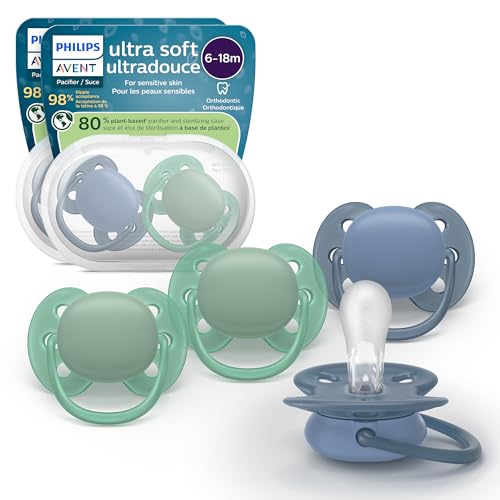
If your baby develops red marks on their cheeks after using a standard pacifier, the Ultra Soft design specifically addresses that issue. The shield is made from a softer, more flexible material that follows the natural curves of the face rather than pressing flat against the skin. The rounded edges minimize pressure on the cheeks, which is especially important during the 6-18 month period when babies are more likely to clench their jaws around the shield during teething.
The orthodontic symmetrical silicone nipple is identical in shape to the Ultra Air version, so acceptance rates remain high at 98%. The narrow neck reduces pressure on the gums, and the textured surface encourages the baby to hold it in place. The shield also includes ventilation holes to allow some airflow, though not as many as the Ultra Air variant. The sterilizing case is the same microwave-friendly design, using 80% plant-based materials to reduce environmental impact.
Parents consistently praise the lightweight feel. One reviewer mentioned that the ventilated shield prevents irritation and the pacifiers withstand frequent washing without warping or discoloration. Another parent who said their baby wasn’t big on binkies found that playing with the pacifier led to acceptance. The flexible shield appears to reduce the “thrown on the floor” frustration that some toddlers exhibit with rigid shields.
Why it’s great
- Ultra-flexible shield reduces facial marks and irritation
- Rounded edges minimize pressure on cheeks during teething
- Withstands dishwasher and microwave sterilization cycles
Good to know
- No glow-in-the-dark feature
- Shield collects lint more readily than hard plastic shields
3. NUK Orthodontic Pacifier, Space Boy (6-18 Months)
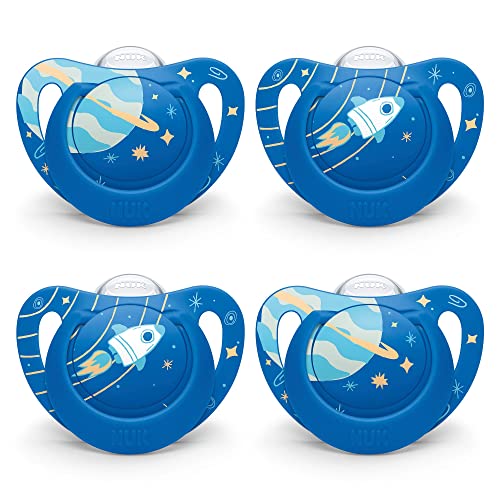
The NUK design stands out for its heart-shaped shield that fits perfectly under the baby’s nose, ensuring the baby can breathe freely while the pacifier is in use. This is a practical detail that matters during sleep when the baby’s face is pressed against a mattress or blanket. The plastic shield also has a practical advantage — it repels pet hair and lint far better than silicone or rubber shields, which is a surprisingly common frustration among parents in households with pets.
The breast-like nipple shape is designed to soothe like a mother’s breast while preventing nipple confusion. NUK claims 95% acceptance rate. The orthodontic design promotes healthy oral development, and the material is BPA-free and dishwasher-safe. The handle is easy for a 6-18 month old to grip, helping them practice self-soothing by putting the pacifier in and out of their own mouth.
Reviewers consistently rate this as their go-to brand across multiple children. One parent noted that the plastic frame prevents lint sticking, and the dark color makes the pacifier easy to spot in a crib at night. Another called it the only binkie their daughter could keep in her mouth.
Why it’s great
- Heart-shaped shield ensures unobstructed nasal breathing
- Plastic frame repels lint and pet hair
- Easy-grip handle helps baby self-soothe
Good to know
- No glow-in-the-dark or sterilizing case included
- Multi-piece design can trap moisture if not dried properly
4. Tommee Tippee Ultra-Light Silicone Pacifier (18-36 Months)

Tommee Tippee markets this as their lightest pacifier ever, and at roughly 3.5 grams per unit, it genuinely stays in the baby’s mouth longer than heavier designs. The one-piece silicone construction means zero crevices where saliva or bacteria can pool, making it the most hygienic option for parents who are diligent about sterilization. The symmetrical nipple design ensures the pacifier is always oriented correctly in the mouth, eliminating the “upside down” frustration of some multi-piece designs.
The curved shield follows the contours of the face between the nose and chin, maximizing comfort during extended use. Air holes in the shield allow skin to breathe and prevent moisture buildup. The glow-in-the-dark effect is integrated into the silicone material itself, not just a separate cap, providing visibility throughout the night. The set is sized for 18-36 months, which makes it suitable for the upper end of the 6-18 month range and beyond.
Parents report that children who never accepted other pacifiers finally accepted these. One reviewer noted the glow effect helped their child self-soothe during the night because the bright color caught the baby’s attention. The one-piece design eliminates water trapping, and the pacifiers withstand teething chewing without breaking down quickly. Some parents recommend replacing these every 4-6 weeks due to silicone wear from aggressive biting.
Why it’s great
- One-piece silicone prevents bacteria buildup
- Extremely lightweight design stays in the mouth longer
- Integrated glow effect helps night wakings
Good to know
- Rated for 18-36 months, not ideal for younger 6-month-olds
- No sterilizing case included
5. BiBS Liberty Pacifier 2-Pack (6-18 Months)
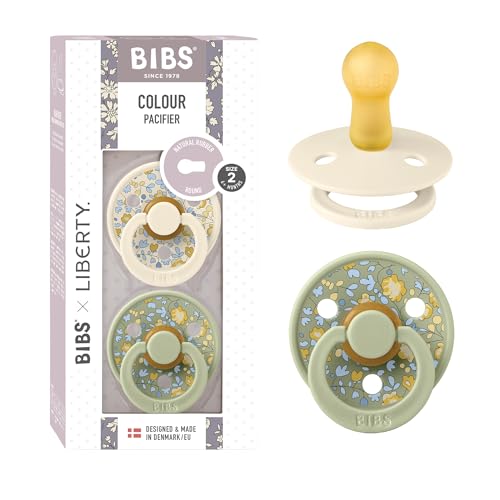
BiBS is the choice for parents who prioritize natural materials and aesthetic design. The round nipple is made from natural rubber latex, which is softer and more flexible than silicone. This flexibility more closely mimics the sensation of breastfeeding, which is why many breastfed babies who reject silicone pacifiers accept the BiBS design. The round shape also supports the natural sucking instinct better than orthodontic nipples.
The lightweight plastic shield features ventilation holes to reduce moisture buildup and skin irritation. The Liberty print designs make this a statement accessory, but the real value is in the material quality. BiBS is manufactured in Scandinavia with strict safety standards, and the latex nipple is 100% BPA and phthalates-free. The recommended replacement interval is every 4-6 weeks because latex degrades faster than silicone under repeated sterilization.
Parents who have tried multiple brands report that this is the only pacifier their baby accepts. One reviewer called it the “best pacifier out there” after wasting money on other brands. Another noted that the latex withstands teething chewing without breaking. The 2-pack provides fewer units than the 4-pack options, but the higher material quality justifies the premium tier positioning for parents whose babies are picky about nipple feel.
Why it’s great
- Natural latex nipple is softer and more flexible than silicone
- Closely mimics breastfeeding for sensitive babies
- Scandinavian manufacturing with strict safety standards
Good to know
- Only 2 pacifiers per pack — fewer than most competitors
- Latex degrades faster and needs replacement every 4-6 weeks
- Some units have a slightly crooked nipple
FAQ
How often should I replace a pacifier for a 6-18 month old?
Will an orthodontic pacifier help prevent dental issues?
Why does my baby keep spitting the pacifier out at 8 months?
Can I boil a pacifier with a glow-in-the-dark feature?
Final Thoughts: The Verdict
For most parents, the best pacifier for 6-18 months winner is the Philips Avent Ultra Air Nighttime because it combines orthodontic support, exceptional breathability, and a long-lasting glow effect that genuinely helps during night wakings. If your baby has sensitive skin and you want fewer facial marks, grab the Philips Avent Ultra Soft with its flexible curved shield. And for a parent on a budget who still wants a reliable pacifier that repels lint and stays put, the NUK Orthodontic delivers outstanding everyday performance at a lower cost.

Mo Maruf
I created WellFizz to bridge the gap between vague wellness advice and actionable solutions. My mission is simple: to decode the research and give you practical tools you can actually use.
Beyond the data, I am a passionate traveler. I believe that stepping away from the screen to explore new environments is essential for mental clarity and physical vitality.