Our readers keep the lights on and my smoothie glass nicely filled. As an Amazon Associate, I earn from qualifying purchases.
That moment when a sudden gust of wind turns your carefully positioned beach umbrella into a runaway sail is the moment most beachgoers quickly learn that standard umbrellas are not designed for the coast. The combination of loose sand, strong ocean breezes, and cheap materials creates a frustrating cycle of chasing, re-setting, and barely enjoying the shade. Solving this requires more than just a heavier base—it demands a specific engineering approach to aerodynamics, anchor design, and frame construction that only a true wind-resistant umbrella delivers.
I’m Mohammad Maruf — the founder and writer behind WellFizz. My product research focuses on analyzing real-world performance data and customer reviews across hundreds of units to find the hardware specifications that actually separate effective, wind-rated beach umbrellas from the standard models that end up cartwheeling across the sand.
After combing through thousands of verified reviews and comparing over 40 models on anchor depth, frame materials, venting, and fabric density, I’ve compiled the definitive list of the best beach umbrella for wind that actually delivers on its promise of staying planted when the breeze picks up.
How To Choose The Best Beach Umbrella For Wind
Not every umbrella labeled “heavy duty” can survive a beach afternoon with 15 mph gusts. The key is understanding the engineering that keeps the canopy grounded, not just the marketing claims. Below are the three most critical factors to evaluate before buying.
Anchor Mechanism: The Real Foundation
The single most important feature for wind resistance is how the umbrella connects to the sand. Screw-in sand anchors or auger-style bases that thread deep into the sand provide significantly more holding force than flat base plates or simple spike poles. Look for an anchor with wide, deep threads and a separate turning handle—this allows you to bury the anchor a full foot or more into compacted wet sand, creating resistance against lateral wind forces that would uproot a standard pole.
Frame Material and Rib Count
Fiberglass ribs are the gold standard for wind-prone environments because they flex under load rather than snap or permanently bend like steel. A minimum of six fiberglass ribs is baseline, but eight ribs distribute wind pressure more evenly across the canopy. The central pole should be thick-gauge steel (1.2 inches or more in diameter) for rigidity without adding excessive weight that makes carrying a burden.
Canopy Venting and Fabric Tension
A wind vent—a small open section near the top of the canopy—allows gusts to pass through rather than push against the full surface area of the umbrella. This reduces the uplift force that tries to pull the anchor out of the sand. The fabric itself should be at least 150 denier polyester with a tight weave and UV-resistant coating; lighter fabrics flutter and catch the wind like a sail, increasing stress on the entire frame.
Quick Comparison
On smaller screens, swipe sideways to see the full table.
| Model | Category | Best For | Key Spec | Amazon |
|---|---|---|---|---|
| Solbello Shade | Premium | Lightweight wind resistance | Auger anchor, 4.52 lbs | Amazon |
| AMMSUN 8ft Heavy Duty | Premium | Maximum shade coverage | 8 ft diameter, 11 lbs | Amazon |
| Tommy Bahama 6′ | Mid-Range | Brand trust + portability | 300 denier polyester | Amazon |
| AMMSUN 6.5ft Fringe | Mid-Range | Style + wind performance | 8 fiberglass ribs | Amazon |
| 6.56 FT Tilt Umbrella | Mid-Range | Built-in table pockets | 6.5 ft span, 5.9 ft dia | Amazon |
| Rhino Valley Beach Tent | Specialty | Group shade + wind stability | 10×10 ft, 8 sandbags | Amazon |
| 8ft Heavy Duty (Dekero) | Premium | Versatile high-wind use | 8.38 lbs, pivot top | Amazon |
In‑Depth Reviews
1. Solbello Shade Wind-Driven Beach Umbrella
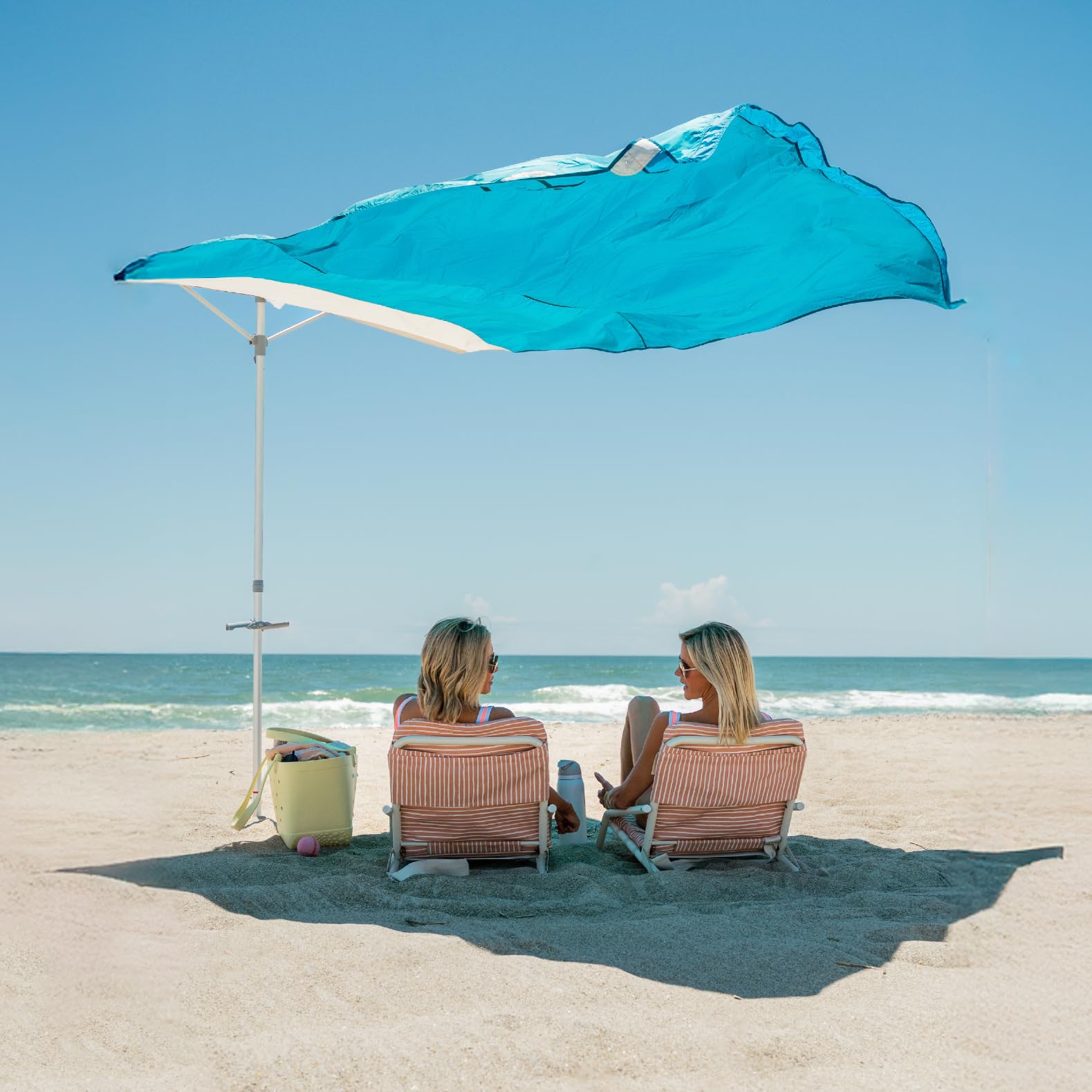
The Solbello Shade redefines what a wind-resistant beach umbrella can be by swapping the traditional canopy-and-pole structure for a tensioned sail design that rotates with the wind direction. This eliminates the primary failure mode of conventional umbrellas—side-loading that yanks the anchor loose. The auger-style screw anchor threads deep into the sand in under three minutes, and the entire setup weighs just 4.52 pounds, making it the lightest truly wind-capable option here without sacrificing stability.
Real-world tests from owners confirm it survived gusts up to 30 mph near Lake Michigan, with the sail swiveling to align with the breeze rather than fighting it. The UPF 50+ fabric delivers full shade for 1–2 people, and the shoulder strap makes carrying from car to shoreline effortless. Some users noted the plastic twist knob can be fragile; a simple cotter pin replacement resolves this. The ability to reposition as the tide changes without full teardown is a major practical advantage over fixed-pole umbrellas.
If you prioritize a setup that stays put in real wind without requiring a packed carry bag that weighs as much as a small child, the Solbello is the clear category leader. Its wind-adaptive design philosophy makes it suitable for novice beachgoers and seasoned regulars alike.
Why it’s great
- Swiveling sail design handles multidirectional wind without pulling anchor
- Ultralight at 4.52 lbs with fast 3-minute setup and takedown
- Auger-style anchor provides deeper sand penetration than spike poles
Good to know
- Plastic twist knob reported fragile by some users; mod recommended
- Shade area is limited to 1–2 people
- Higher initial investment than traditional umbrella designs
2. AMMSUN 8ft Large Beach Umbrella Heavy Duty

When shade coverage for two adults and gear is non-negotiable, the AMMSUN 8ft Heavy Duty delivers commercial-grade size without compromising wind resilience. Its 96-inch diameter canopy uses six thick fiberglass ribs that flex under load rather than snap, paired with a 1.26-inch diameter steel pole that resists bending. The included screw-in sand anchor and separate sandbag give you a dual-anchoring system that owners report held steady even in 30 mph gusts on Lake Michigan.
The air-vented canopy is a critical design element here—it allows gusts to pass through the top rather than push the entire umbrella surface upward, reducing the lifting force that typically pulls anchors free. At 11 pounds, this is a heavier unit, but the padded carrying strap and thoughtful pockets on the bag make transport manageable. The sand anchor’s turning handle is wide enough to generate good torque, and the included sandbag can be filled on-site for extra weight on the base.
For anyone who wants a traditional large umbrella that actually stays put, this AMMSUN model is the benchmark. It lacks a tilt mechanism, which some users miss for afternoon sun tracking, but the stability gain from a fixed pole at this size is a meaningful trade-off in windy conditions.
Why it’s great
- 8-foot canopy provides generous shade for two adults and gear
- Sand anchor plus sandbag creates redundant wind resistance
- Air-vented canopy reduces uplift pressure significantly
Good to know
- 11-pound weight is on the heavier side for carrying distances
- No tilt adjustment for tracking the sun’s movement
- Sand spike is wide and may require a PVC pipe for easier insertion
3. Tommy Bahama 6′ UPF 50+ Tilt Beach Umbrella
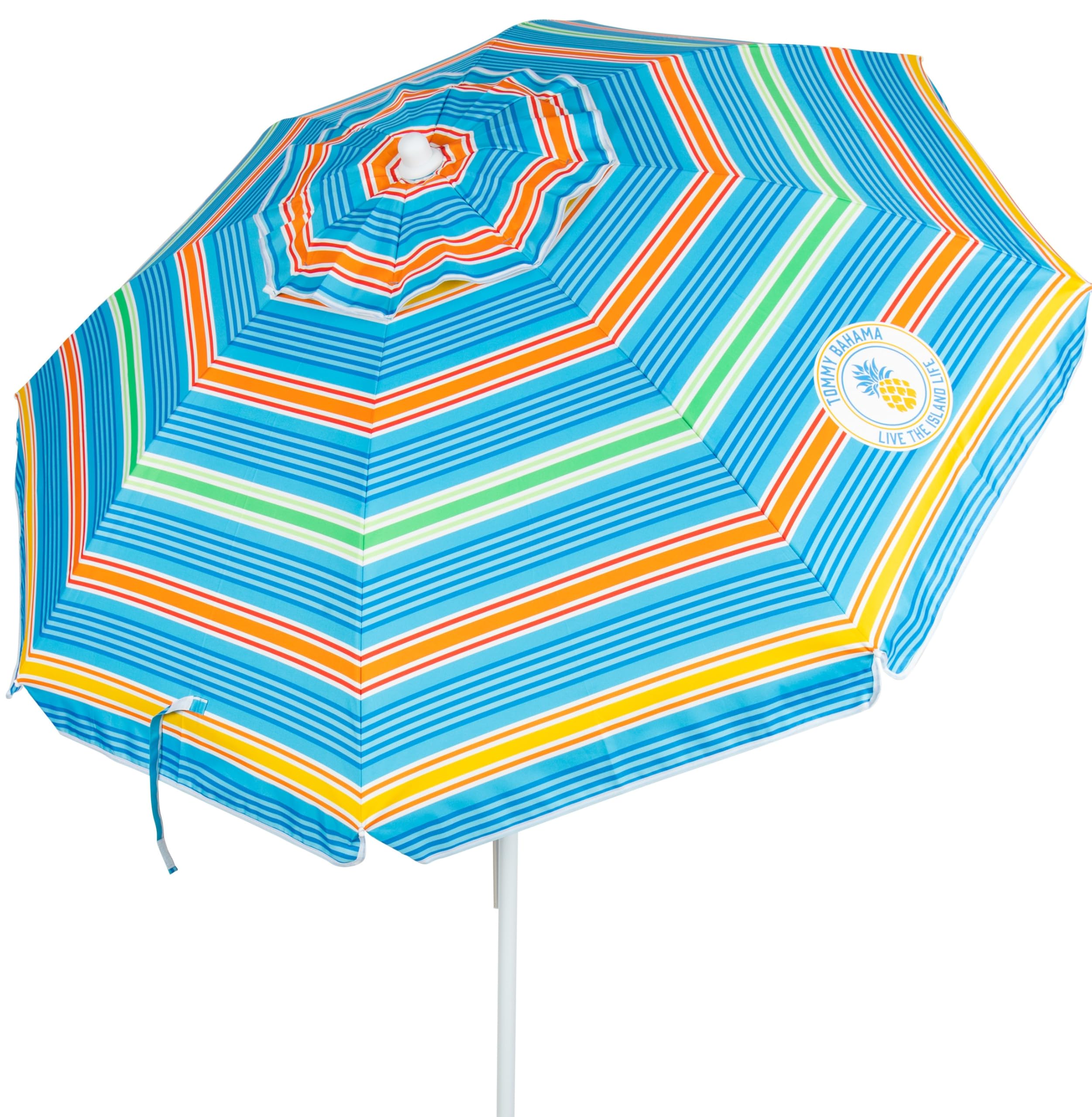
The Tommy Bahama name carries weight in beach gear, and this 6-foot model justifies the reputation with sensible wind-fighting features at a mid-range entry point. The powder-coated steel pole and ribs form a durable skeleton, while the 300 denier polyester canopy is noticeably thicker than the 150–200 denier fabrics found on budget competitors. The integrated wind vent at the top provides the pressure relief needed to keep the umbrella from inverting during moderate gusts, and the tilt mechanism lets you follow the sun without repositioning the entire anchor.
Customer feedback consistently notes that this umbrella handles “fairly strong winds” in Florida and coastal settings, though it is not designed for extreme storm conditions. The included sand anchor is integrated into the pole, which simplifies setup but offers less thread depth than aftermarket auger-style anchors. The carry bag is well-stitched and makes transport easy, and the UPF 50+ rating comes with a Skin Cancer Foundation recommendation—a meaningful endorsement for UV-conscious users.
For the buyer who wants a balanced combination of brand reliability, decent wind performance, and straightforward setup without overpaying, the Tommy Bahama is the most trusted mid-range option available. It is best suited for beachgoers who face breezy but not extreme conditions and want a name they recognize.
Why it’s great
- Thick 300 denier polyester fabric resists fluttering and tearing
- Wind vent reduces inversion risk in moderate gusts
- Skin Cancer Foundation recommended for UPF 50+ protection
Good to know
- Integrated sand anchor has shallower thread depth than dedicated augers
- Not designed for extreme high-wind conditions beyond 20 mph
- Some users find the open/close mechanism stiffer than older versions
4. AMMSUN 6.5ft Heavy Duty HIGH Wind Fringe Beach Umbrella

Standing out visually on a crowded beach without sacrificing wind performance is a rare combination, but the AMMSUN 6.5ft fringe umbrella delivers both. Its eight fiberglass ribs—two more than most competitors at this size—provide superior wind load distribution, while the powder-coated steel pole and removable sand anchor keep the unit planted in conditions up to 15+ mph as confirmed by Lake Michigan owners. The fringe trim adds a playful tropical aesthetic that draws compliments, and the fabric is fade-resistant with UPF 50+ coating.
The push-button tilt mechanism offers two-way adjustment, allowing you to redirect shade as the sun moves without un-anchoring the base. The air vent at the canopy top is present but less aggressive than vent-only designs; the real wind resistance comes from the deeper-threaded screw anchor that digs into compact sand. At 6 pounds, it is light enough for a single person to carry, and the included bag has a sewn-in strap for hands-free transport.
If you want a beach umbrella that looks festive but functions seriously in the wind, this AMMSUN model is the only fringe-backed option that passes the performance test. The shade area is comfortable for one person with gear but tight for two adults side by side.
Why it’s great
- Eight fiberglass ribs provide excellent wind load distribution
- Deeper screw anchor holds securely in loose sand
- Two-way tilt allows sun tracking without repositioning
Good to know
- Shade area is best suited for one person with gear
- Fringe may catch debris in very gusty conditions
- Requires weighting down at the base in sustained high wind
5. Beach Umbrella with Tilt Pole and Drink Pockets

This umbrella proves that wind resistance and convenience features can coexist without breaking the budget. The screw-end shaft and fold-out pin make sand insertion straightforward, and the thick steel pole paired with a reflective underside keeps the canopy stable in gusty conditions reported by owners in Michigan and coastal areas. The 6.5-foot arc provides a 5.9-foot diameter shade footprint that is adequate for one adult plus a chair and cooler.
What sets this model apart is the integrated table with two drink holders and two phone pockets built into the pole—a feature usually found on much pricier units. The tilt hinge allows angle adjustment, and the height can be lowered close to the ground for windier days. The fabric quality is described as thick and non-flimsy compared to cheaper alternatives, and the included carry bag adds portability.
For the practical beachgoer who wants a functional umbrella that handles moderate wind while keeping a drink and phone organized, this mid-range option delivers surprising value. Some users noted the circumference is smaller than expected, so check the diameter spec carefully against your planned setup area.
Why it’s great
- Integrated drink holders and phone pockets reduce sand mess
- Screw-end shaft and pin make sand insertion easy and secure
- Thick fabric holds up well compared to budget-tier alternatives
Good to know
- Shade circumference is smaller than some buyers expect
- Not designed for extreme wind beyond 15 mph
- Table surface is small; not suitable for meal setup
6. Rhino Valley Beach Tent, 10 x 10 FT Canopy

When your beach group exceeds four people, a traditional umbrella no longer cuts it, and the Rhino Valley 10×10 beach tent fills that gap with wind stability engineered for coastal environments. The system uses eight sandbags that you fill on-site, combined with four thickened aluminum poles and four windproof ropes, creating a multi-point anchoring setup that owners confirm survives steady winds with minimal flapping. The Lycra fabric is triple-stitched at stress points and provides UPF 50+ protection across the entire 100-square-foot shaded area.
Setup takes 5–10 minutes with one person—spread the canopy, fill sandbags, insert poles, and tension the ropes—and the included shovel makes bag-filling less tedious. The 6.5-foot peak height allows most adults to stand comfortably inside, and the open sides provide ventilation while still blocking direct sun. At 8.7 pounds packed, it is heavier than a single umbrella but still manageable for one person to carry to the beach.
This is not a conventional umbrella, but for groups that need serious wind-resistance in a large format, the Rhino Valley tent is the most stable option evaluated. It requires more setup effort than a pole umbrella, but the payoff is shade stability that no single-canopy product can match.
Why it’s great
- Eight sandbags create redundant wind anchoring for high stability
- 100 sq ft of UPF 50+ shade accommodates 4–8 people
- Lycra fabric with triple stitching resists tearing in wind
Good to know
- Setup takes 5–10 minutes; more effort than a pole umbrella
- Lower peak height than pictured; 6-foot person cannot stand fully
- Plastic sand scoops can break; consider bringing a larger shovel
7. 8ft Heavy Duty Beach Umbrella with Sand Anchor (Dekero)
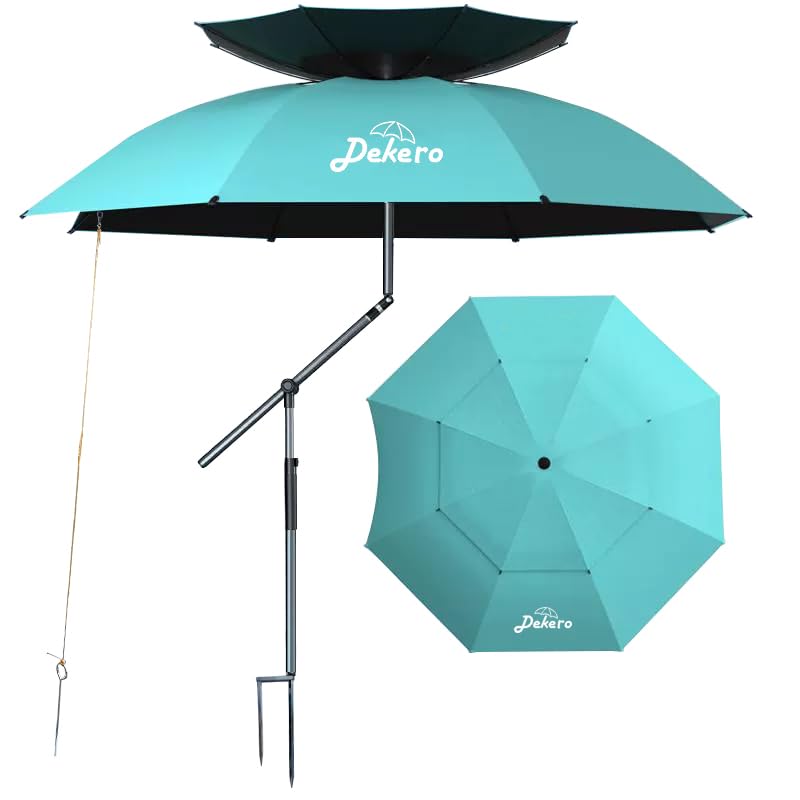
The Dekero 8-foot umbrella targets buyers who want premium wind resistance in a larger canopy without the weight penalty of commercial-grade units. At 8.38 pounds, it splits the difference between lightweight portability and structural heft, using a pivot top that adds versatility for angling the canopy on a boat, table, or beach setup. The screw-in sand anchor is included and provides the deep-thread engagement necessary for staying planted in gusty conditions.
Owner feedback highlights the umbrella’s ease of assembly and attractive design, with multiple reports of it weathering strong winds at the beach and on boats without pulling loose. The ventilated canopy helps reduce inversion stress, and the overall build quality is described as “outstanding” by repeat buyers who purchased multiple units. The lack of a tilt mechanism is a trade-off, but the pivot top partially compensates by allowing the pole to be angled in its base mount.
For buyers who need one umbrella that works equally well at the beach, on a boat, or at a park table, the Dekero offers the broadest versatility among premium options. It is not the absolute best in any single category, but its across-the-board competence with wind resistance makes it a strong all-rounder.
Why it’s great
- Pivot top adds versatility for boat, beach, and tabletop use
- 8.38 lbs strikes a good balance between portability and stability
- Ventilated canopy reduces inversion risk in gusty conditions
Good to know
- No traditional tilt mechanism for sun tracking
- Lacks sand stand for non-digging scenarios like hard-packed sand
- Shade area is adequate for two but tight for three adults
FAQ
Does a wind vent really help keep a beach umbrella from blowing away?
Is a heavier umbrella always more wind-resistant?
Can I use a regular patio umbrella at the beach?
Final Thoughts: The Verdict
For most users, the beach umbrella for wind winner is the Solbello Shade because its swiveling sail design and auger anchor provide unmatched wind stability in a lightweight, fast-setup package. If you want maximum shade coverage for two people, grab the AMMSUN 8ft Heavy Duty. And for a socially trusted mid-range option with solid wind venting, nothing beats the Tommy Bahama 6′.

Mo Maruf
I created WellFizz to bridge the gap between vague wellness advice and actionable solutions. My mission is simple: to decode the research and give you practical tools you can actually use.
Beyond the data, I am a passionate traveler. I believe that stepping away from the screen to explore new environments is essential for mental clarity and physical vitality.