Our readers keep the lights on and my smoothie glass nicely filled. As an Amazon Associate, I earn from qualifying purchases.
Choosing the right engine oil is the single most impactful decision you can make for your car’s longevity, yet most drivers grab whatever bottle has the brightest label. The reality is that the wrong 5W-30 viscosity—or the wrong additive package—can silently accelerate wear, increase oil consumption, and leave sludge deposits that no future flush will fix.
I’m Mohammad Maruf — the founder and writer behind WellFizz. I’ve spent thousands of hours analyzing motor oil formulations, comparing base stock quality, additive chemistry, and real-world wear protection data to help drivers make an informed choice for their specific engine.
After evaluating dozens of formulations on viscosity stability, seal conditioning, and deposit control, these are the top contenders for the best 5w30 oil available today for everything from high-mileage workhorses to modern turbocharged daily drivers.
How To Choose The Best 5W30 Oil
The label “5W-30” only tells you the viscosity grade at cold and operating temperatures. What matters most is the base stock (conventional, synthetic blend, or full synthetic) and the additive package that determines wear protection, sludge resistance, and oil change intervals. Matching these to your engine’s age and driving conditions is the key to long-term reliability.
Full Synthetic vs. Synthetic Blend vs. Conventional
Full synthetic oils use chemically engineered base stocks that resist thermal degradation, flow better at sub-zero temperatures, and maintain viscosity under high heat far longer than conventional oils. Synthetic blends mix conventional oil with a synthetic base to offer a mid-point—better protection than dino oil at a lower cost. For modern turbocharged engines or extreme driving, full synthetic is the only safe choice. For older engines over 75k miles, a synthetic blend with seal conditioners often provides the best value.
High-Mileage Additives and Seal Conditioners
Engines with over 75,000 miles develop microscopic gaps between seals and moving parts. High-mileage oils contain ester-based seal conditioners that swell rubber seals back to size, reducing oil leaks and consumption. They also include extra detergents to clean existing sludge and friction modifiers to compensate for worn surfaces. If your engine burns oil or leaves drips on the driveway, a high-mileage formula is a direct fix.
Certifications: API SP, ILSAC GF-6, and OEM Approvals
API SP and ILSAC GF-6 are the latest industry standards, specifically designed to protect against low-speed pre-ignition (LSPI) in turbocharged engines and timing chain wear. Some manufacturers like Ford (WSS-M2C971-A1) and Chrysler (MS-13340) have their own stricter specs. Always cross-reference your owner’s manual with the oil’s certifications—using the wrong spec can void your warranty.
Quick Comparison
On smaller screens, swipe sideways to see the full table.
| Model | Category | Best For | Key Spec | Amazon |
|---|---|---|---|---|
| Mobil 1 Extended Performance | Full Synthetic | Extended drain intervals up to 20k miles | 20,000-mile protection | Amazon |
| Valvoline MaxLife High Mileage | Synthetic Blend | Engines over 75k miles | 20% better wear protection | Amazon |
| Liqui Moly Special Tec LL | Synthesis Tech | European and BMW engines | 5L jug, 169.1 fl oz | Amazon |
| Motorcraft 5W-30 | Conventional | Ford/Lincoln vehicles | Flash point 446°F | Amazon |
| Pennzoil High Mileage 5W-30 | Synthetic Blend | Budget-friendly high-mileage | 6-quart case, 192 fl oz | Amazon |
In‑Depth Reviews
1. Mobil 1 Extended Performance Full Synthetic 5W-30

Mobil 1 Extended Performance is the benchmark for drivers who want maximum protection between oil changes. Its Triple Action+ Formula controls oxidation at temperatures up to 500°F, preventing viscosity breakdown even under sustained highway or towing loads. The ILSAC GF-6 certification means it provides low-speed pre-ignition protection for modern turbocharged engines, a critical safety feature not all synthetic oils offer.
Real-world users report exceptionally clean oil at 5,000 to 7,000 miles—the oil comes out looking used but not burnt or darkened, indicating that the additive package is effectively suspending contaminants rather than letting them settle into sludge. The cold-flow performance down to -40°F is outstanding for cold climate starts, reducing startup wear on bearings and rings.
The price premium over synthetic blends is justified by the extended drain capability. For owners who change oil annually or every 10,000 miles, the Mobil 1 Extended Performance delivers measurable wear protection that conventional oils cannot match. It works across a wide range of vehicles from daily sedans to high-performance V8s.
Why it’s great
- Proven 20,000-mile protection with Triple Action+ Formula
- Excellent high-temp stability up to 500°F
- ILSAC GF-6 certified for LSPI protection in turbo engines
Good to know
- Higher upfront cost than synthetic blends
- Overkill for vehicles on short, 3,000-mile OCI schedules
2. Valvoline MaxLife High Mileage 5W-30 Synthetic Blend
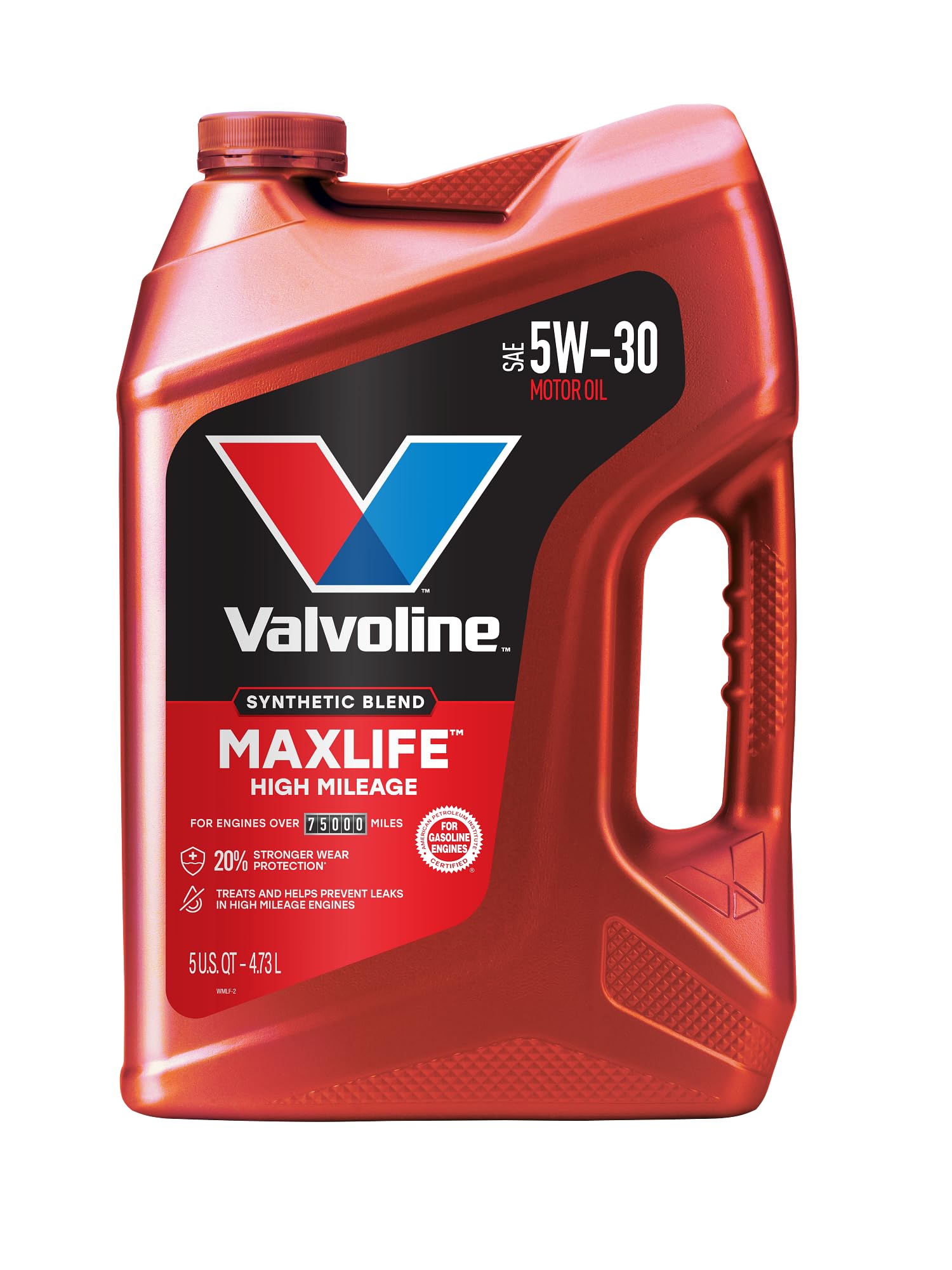
Valvoline MaxLife is the go-to choice for drivers with engines past the 75,000-mile mark. The seal conditioners in this synthetic blend actively rehydrate dried-out rubber seals, which is the single most effective way to reduce external oil leaks and internal oil consumption. Users with 150,000+ mile engines report noticeably quieter operation and less oil burned between changes after switching to this formula.
The additive package provides 20% better wear protection and 15% better sludge defense compared to the API SP minimum requirements. Extra detergents keep piston rings and valve trains clean, which is crucial for high-mileage engines that have accumulated varnish over years of conventional oil use. It meets Ford WSS-M2C971-A1 and Chrysler MS-13340 standards, covering a broad range of American and Asian vehicles.
At a mid-range price point for a 5-quart jug, this oil strikes an excellent balance between the cost of full synthetic and the basic protection of conventional oil. It works equally well in new or rebuilt engines, but its true strength is reviving tired, leaky engines without breaking the bank.
Why it’s great
- Seal conditioners reduce leaks in high-mileage engines
- 20% better wear protection than API SP minimum
- Excellent value for a synthetic blend formula
Good to know
- Not a full synthetic—shorter drain intervals than premium synthetics
- Flash point of 394°F is lower than full synthetics
3. Liqui Moly Special Tec LL SAE 5W-30

Liqui Moly Special Tec LL is a synthesis technology oil engineered specifically for European vehicles, particularly BMW and Mercedes-Benz engines that demand a Long Life (LL) specification. The 5-liter jug is tailored to the sump capacity of many German cars, eliminating the need for a second quart at change time. The low to medium viscosity profile ensures optimal flow through tight oil galleries and variable valve timing systems common on modern Euro engines.
Owners of BMWs running tuned or boosted setups report that the oil maintains stable viscosity even under extra boost, keeping the engine smooth and quiet years after initial use. The additive chemistry also appears to improve fuel economy, with multiple users noting a measurable MPG improvement after switching from conventional options. The -40°F cold-flow protection ensures reliable startup in northern climates without excessive thickening.
For non-European vehicles, this oil works well as a premium option, though the vehicle-specific fitment note on the label suggests it is optimized for the additive tolerance of European engines. The price reflects its specialized formulation, making it a niche choice for drivers who prioritize OEM-spec compliance over universal compatibility.
Why it’s great
- Optimized for European Long Life (LL) engine specs
- 5-liter jug matches common Euro sump capacity
- Excellent viscosity stability under boost and high RPM
Good to know
- Premium pricing compared to universal synthetics
- Vehicle-specific fitment may not suit all non-Euro engines
4. Motorcraft 5W-30 Engine Oil
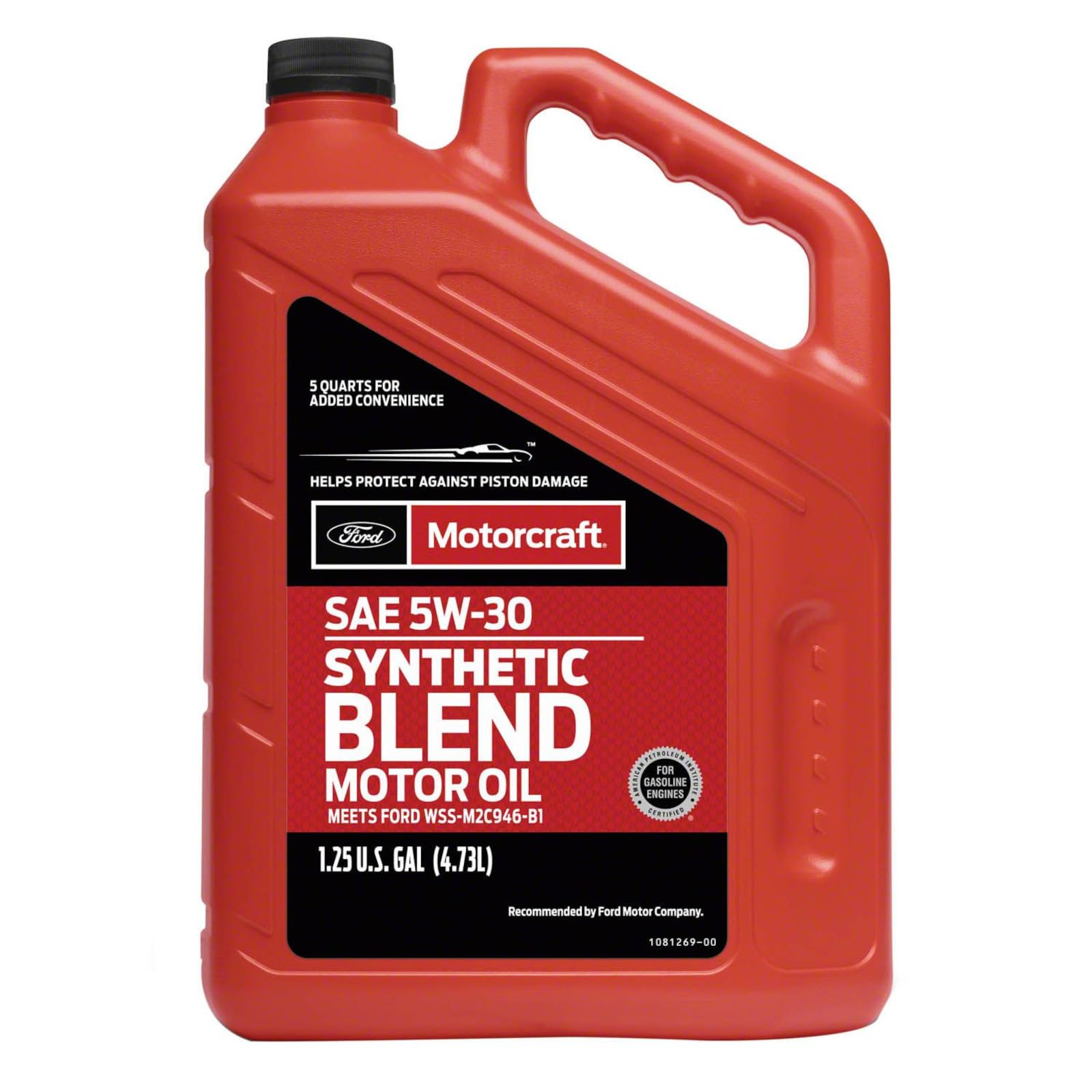
Motorcraft 5W-30 is the factory-fill oil for Ford and Lincoln vehicles, and for owners who want to maintain their warranty or simply trust the original equipment spec, this is the safest choice. It is a conventional oil with a flash point of 446°F, indicating robust thermal stability for a conventional base stock. Users consistently report smooth operation, quick cold starts in winter, and excellent gas mileage long after the change.
The most compelling feature is the peace of mind that comes from using the exact oil the engine was designed around. For modern Ford EcoBoost turbo engines or older Triton V8s, Motorcraft has been tested to meet Ford’s specific wear and deposit control targets that generic oils may not match. The 5-quart jug makes single-change purchases simple without leftover quarts.
As a conventional oil, it cannot match the long drain intervals or extreme-temperature performance of full synthetics. For owners who change oil every 3,000 to 5,000 miles and drive under normal conditions, it is a reliable, low-cost choice. The universal fitment note confirms it works in cars, SUVs, trucks, and vans, though its additive package is clearly optimized for Ford platforms.
Why it’s great
- OEM specification for Ford and Lincoln engines
- High flash point of 446°F for a conventional oil
- Consistent cold-start performance year-round
Good to know
- Conventional base stock—shorter drain intervals than synthetics
- Additive package tailored to Ford platforms
5. Pennzoil High Mileage 5W-30 Motor Oil (6 Pack)
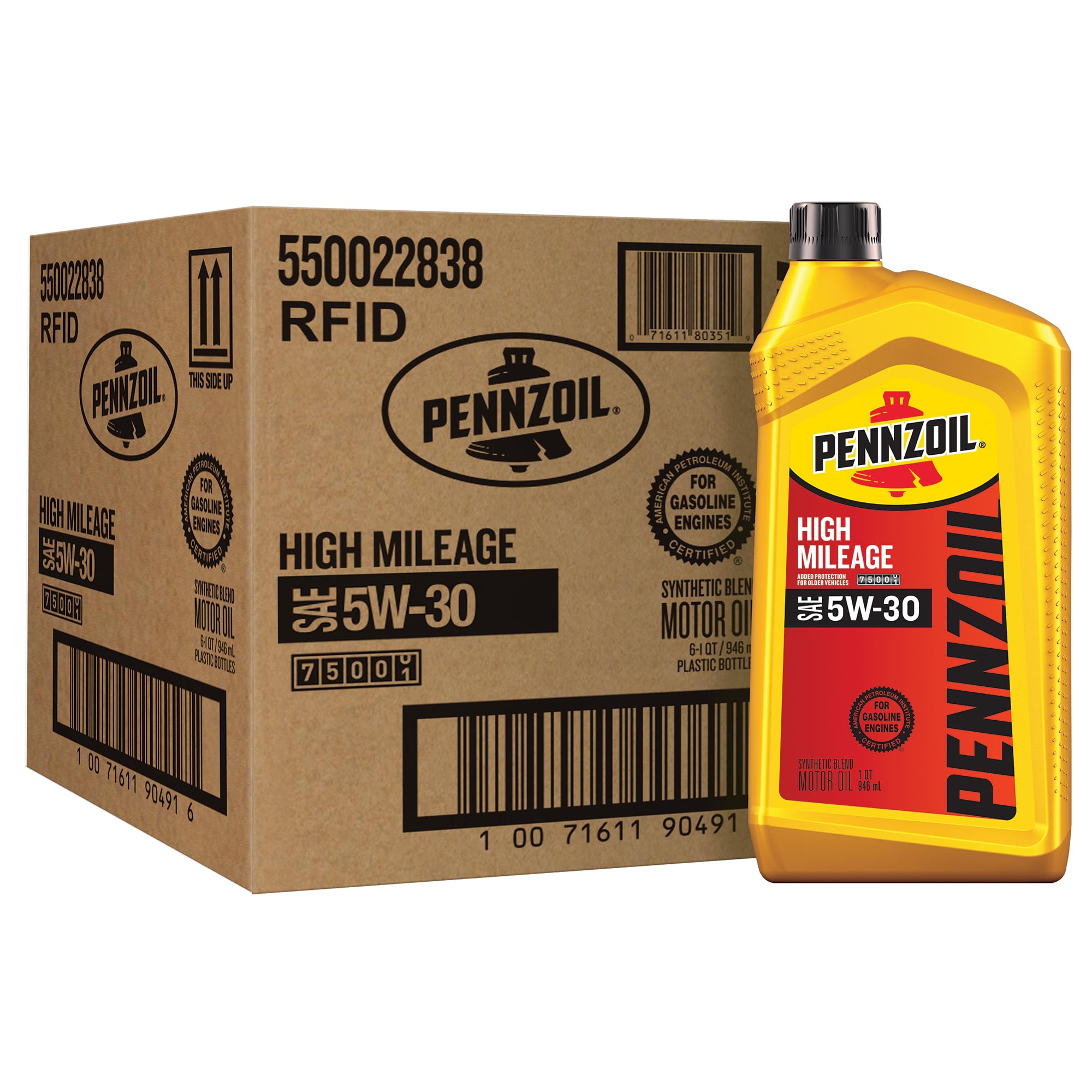
Pennzoil High Mileage 5W-30 is a synthetic blend engineered for vehicles with more than 75,000 miles, offering a budget-conscious upgrade from conventional oil. The seal conditioners in this formula work to stop existing leaks and reduce oil consumption in worn engines, similar to the Valvoline MaxLife but at a lower per-quart cost when buying the 6-quart case. Users report decent results for older vehicles like the Chevy HHR and Lexus IS300, noting that the oil keeps engines running smoothly without excessive burn-off.
The additive package also includes protection against low-speed pre-ignition, making it suitable for modern turbocharged engines that require the latest API SP standards. This is a notable feature for a budget-tier synthetic blend, as LSPI protection is often reserved for more expensive full synthetics. The 192 fluid ounce case provides enough oil for two changes on smaller engines or one change plus a top-up for larger V6 and V8 engines.
While the additive count is solid, the base stock quality is not as refined as premium full synthetics, and the oil may not maintain viscosity as long under extreme heat or extended drain intervals. For drivers on a strict budget who change oil regularly, Pennzoil High Mileage delivers reliable protection without the premium price tag.
Why it’s great
- LSPI protection for modern turbo engines at a budget price
- Seal conditioners reduce leaks in high-mileage engines
- 6-quart case provides excellent value per quart
Good to know
- Synthetic blend—shorter drain interval than full synthetics
- Feels thinner than premium synthetics at operating temp
FAQ
Can I use 5W-30 in an engine that requires 5W-20?
How often should I change 5W-30 synthetic oil?
Is high-mileage 5W-30 worth the extra cost?
Final Thoughts: The Verdict
For most drivers, the best 5w30 oil winner is the Valvoline MaxLife High Mileage because it delivers synthetic-blend protection, seal conditioners for aging engines, and a price that keeps regular oil changes affordable. If you want maximum drain intervals and top-tier thermal stability, grab the Mobil 1 Extended Performance. And for European vehicle owners who need OEM-spec compliance, nothing beats the Liqui Moly Special Tec LL.

Mo Maruf
I created WellFizz to bridge the gap between vague wellness advice and actionable solutions. My mission is simple: to decode the research and give you practical tools you can actually use.
Beyond the data, I am a passionate traveler. I believe that stepping away from the screen to explore new environments is essential for mental clarity and physical vitality.