Our readers keep the lights on and my smoothie glass nicely filled. As an Amazon Associate, I earn from qualifying purchases.
The right adhesive for wood is the difference between a joint that lasts decades and a repair that fails under the first bit of stress. Whether you’re building furniture, repairing a chair leg, or crafting a mosaic, the wrong glue means clamping nightmares, brittle bonds, or finishes that look cloudy. The best choices are specific to the project—waterproof for outdoor use, fast-setting for quick fixes, or super-strong for load-bearing joints.
I’m Mohammad Maruf — the founder and writer behind WellFizz. I’ve spent years analyzing woodworking adhesives, studying cure times, bond strength tests, and material compatibility to help you avoid the frustration of a joint that simply doesn’t hold.
After evaluating dozens of formulas, I’ve narrowed the field to five standout options. This is the definitive guide to finding the best adhesive for wood for your specific workshop or home repair need, whether you are clamping, gluing indoors, or building for the outdoors.
How To Choose The Best Adhesive For Wood
Choosing the right adhesive for wood comes down to understanding three key factors: the environment the bond will face, the materials being joined, and the time you have for assembly. Wood glues are not all the same—some are water-resistant, others are fully waterproof, and some cure in seconds without any clamping.
Type of Adhesive: PVA, Polyurethane, or Cyanoacrylate?
Polyvinyl acetate (PVA) glues, like standard wood glue and waterproof variants, are the workhorses of woodworking. They bond wood fibers together, are sandable and paintable, and clean up with water. Polyurethane glues expand into materials, creating incredibly strong and waterproof bonds, but they foam and require moisture to cure. Cyanoacrylate (CA) glues are instant-bonding gels that eliminate clamping, perfect for small repairs and trim work but with no gap-filling capability.
Waterproof Rating: ANSI/HPVA Type I vs. Type II
If your project goes outdoors—a planter, a garden bench, or a fence repair—you need a glue that passes ANSI/HPVA Type I, meaning the bond withstands boiling water and extreme humidity. Type II glues are water-resistant but not fully waterproof, suitable for indoor kitchens and bathrooms. Standard PVA will fail if repeatedly exposed to moisture.
Working Time vs. Clamp Time vs. Cure Time
For complex assemblies like dovetail joints, you need a longer open time (15 minutes or more) to get everything aligned before the glue sets. If you are repairing a broken spindle with a tight joint, a CA glue that sets in seconds saves hours of clamping. Fast-setting formulas also help in cold shops where standard PVA slows down significantly.
Quick Comparison
On smaller screens, swipe sideways to see the full table.
| Model | Category | Best For | Key Spec | Amazon |
|---|---|---|---|---|
| Gorilla Ultimate Waterproof Wood Glue (8oz, Pack of 2) | Waterproof PVA | Outdoor furniture and repairs | ANSI/HPVA Type I waterproof, 15 min working time | Amazon |
| Gorilla Original Polyurethane Glue (18 oz Bottle) | Polyurethane | Bonding wood to non-porous materials | Waterproof, expands 3x, 24 hr full cure | Amazon |
| Titebond Instant Bond Wood Adhesive Thick (2 oz) | Cyanoacrylate Gel | No-clamp repairs and small pieces | 18-second full cure, bonds stronger than wood | Amazon |
| Weldbond Multi-Surface Adhesive (14.2 oz Bottle) | Multi-Surface PVA | Mosaics, crafts, and porous surfaces | Dries clear, water resistant, 20 min set time | Amazon |
| Weldbond Non-Toxic Adhesive (2 fl oz Bottle) | Non-Toxic PVA | Kids’ crafts and school projects | Non-toxic, odorless, dries crystal clear | Amazon |
In‑Depth Reviews
1. Gorilla Ultimate Waterproof Wood Glue (8oz, Pack of 2)

This is the most versatile waterproof PVA glue on the market. The ANSI/HPVA Type I certification means the bond survives boiling water, freezing temperatures, and months of rain, making it the standard for outdoor furniture, planter boxes, and fence repairs. The natural tan color blends seamlessly with hardwoods like oak and walnut, and it sands and paints beautifully without foaming.
With a 15-minute working time, it gives you plenty of room to align complex joinery before the bond sets. The two-pack of 8-ounce bottles is a smart value, covering multiple projects without the waste of a single huge container. Users confirm it holds through extreme temperature swings, and the “no foaming” formula means clean glue lines that require minimal sanding.
For the serious woodworker who needs a reliable waterproof bond for indoor and outdoor projects, this Gorilla glue is the clear winner. It is thick enough to fill minor gaps but not so thick that it becomes difficult to spread. The one caution is to clean the nozzle before first use, as some units arrive with dried glue blocking the tip.
Why it’s great
- Passes ANSI/HPVA Type I for full waterproof performance
- Natural wood color blends with most hardwoods
- Sands and paints without foaming or residue
Good to know
- Requires 24 hours for full cure strength
- Check nozzle for dried glue before first squeeze
2. Gorilla Original Polyurethane Glue (18 oz Bottle)

The classic polyurethane formula that made Gorilla famous. This glue expands three times into the pores of the materials it bonds, creating a mechanical lock that is incredibly strong and 100% waterproof. It bonds wood, stone, metal, ceramic, glass, and foam—truly an all-purpose adhesive when you need to join wood to non-porous surfaces that PVA cannot handle.
The 18-ounce bottle is the most economical way to buy this glue, and it is ideal for big projects like building patio furniture, repairing concrete molds with wooden forms, or attaching wood to metal brackets. A pea-sized drop is enough—using too much causes excessive foaming that can squeeze out of the joint and stain the wood surface.
You must dampen one surface with water before applying, as the glue needs moisture to catalyze. It takes 24 hours to fully cure, but the bond becomes incredibly durable. Be aware that it stains skin and clothing permanently, so wear gloves and protect your work surface. The foaming action can also make cleanup messy, but it sands off cleanly once cured.
Why it’s great
- Waterproof polyurethane bonds wood to almost any material
- Expands into pores for a mechanical lock stronger than wood
- Excellent for outdoor use and extreme temperature resistance
Good to know
- Requires moisture activation—dampen one surface before applying
- Foams if overused and can stain surfaces permanently
3. Titebond Instant Bond Wood Adhesive Thick (2 oz)

When you need a bond in seconds without clamps, this cyanoacrylate gel from Titebond is the answer. It cures in just 18 seconds and bonds stronger than the wood itself, making it perfect for small repairs, trim work, and model building where clamping is impractical. The thick gel formula stays exactly where you put it—no running or dripping into unwanted areas.
It bonds wood, MDF, acrylic, granite, natural rubber, and PVC, offering versatility beyond just wood-to-wood joints. The integrated applicator tip delivers precise drops, reducing waste and mess. Users consistently report that a few drops hold oak trim instantly without nails, and the bond is so strong that trying to separate the pieces will break the surrounding wood first.
This is not a gap-filler—it requires tight-fitting joints to work effectively. It also cures so fast that you must have your alignment perfect before the pieces touch. It works best for small projects like fixing a hairline crack in a chair spindle, attaching a wooden inlay, or bonding a broken drawer front where clamping is hard to set up.
Why it’s great
- 18-second cure eliminates need for clamps and nails
- Thick gel formula stays put on vertical surfaces
- Bonds wood to non-porous materials like acrylic and stone
Good to know
- Not a gap-filler—joints must fit tightly
- Fast set means zero room for repositioning
4. Weldbond Multi-Surface Adhesive (14.2 oz Bottle)
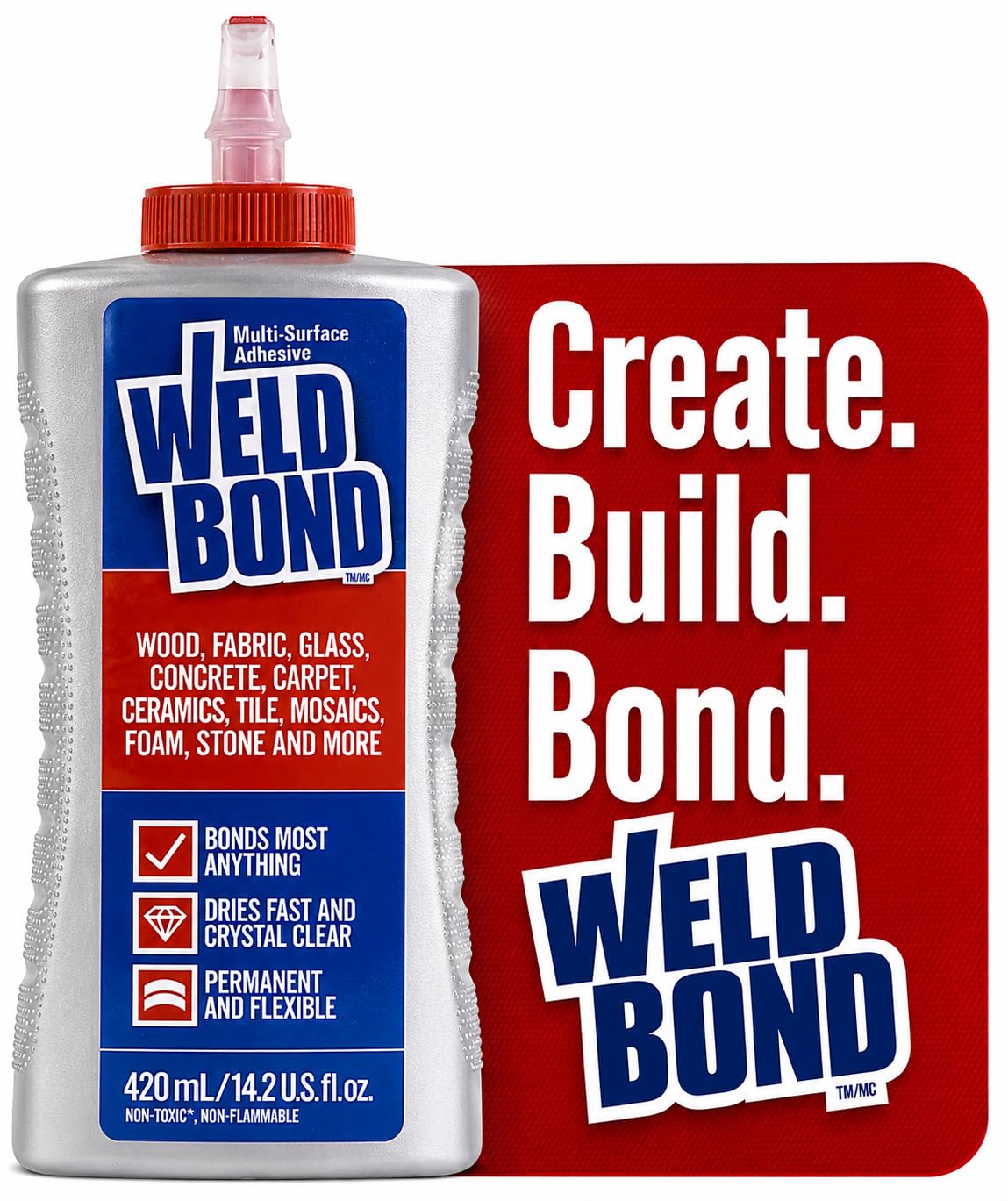
This PVA-based adhesive is a fantastic all-arounder for crafts, mosaic work, and bonding wood to other porous surfaces like glass, ceramic, and stone. The 14.2-ounce bottle is economical for frequent use, and the formula dries crystal clear, making it ideal for projects where the glue line is visible, like glass mosaics on wooden trays or transparent repair jobs.
It has a 20-minute set time, which is fast enough to hold pieces in place without sliding, but still gives you enough working time to arrange complex designs. It is water resistant, weatherproof once fully cured, and remains flexible rather than brittle, which helps prevent cracking in projects that experience slight movement. Users love it for securing glass tiles to wooden backsplash panels without any cloudiness interfering with the design.
For the crafter or hobbyist working with mixed materials, this is a satisfying single-bottle solution. It bonds wood, ceramic, glass, fabric, and foam without requiring separate specialized glues. The flip cap stays clean between uses, though you should ensure it is fully sealed after each session to prevent the tip from drying out.
Why it’s great
- Dries crystal clear for visible joints and mosaic projects
- Water resistant and flexible when fully cured
- Bonds wood to glass, ceramic, stone, and fabric
Good to know
- Not fully waterproof like Type I PVA or polyurethane
- Tip may dry if bottle is left open for long periods
5. Weldbond Non-Toxic Adhesive (2 fl oz Bottle)
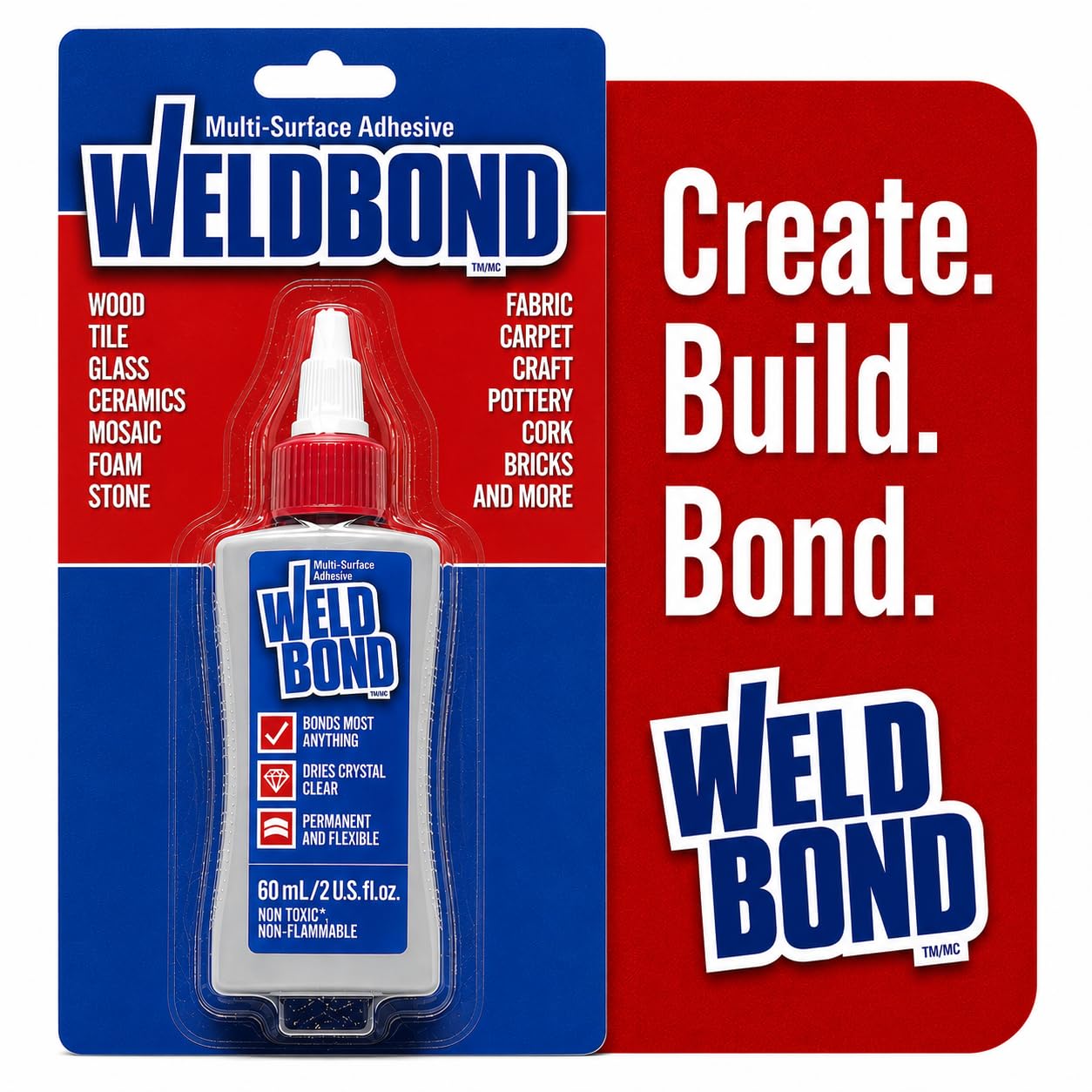
For projects involving kids, schools, or anyone sensitive to chemical fumes, this non-toxic PVA glue is the safest choice. It is odorless, non-flammable, and emits no fumes, making it perfect for indoor crafts, school projects, and repairing toys. The 2-ounce bottle is compact enough for a craft drawer but still a good size for small repairs.
Despite the small size, the formula bonds strongly to wood, fabric, ceramic, glass, and Styrofoam. It sets in 20 minutes with no clamping required, which is very helpful for children’s projects where patience is limited. It dries crystal clear, so it won’t ruin the look of a finished craft, and it cleans up easily with soap and water when still wet.
This glue is best used for small-scale tasks like gluing wooden birdhouses, fixing a loose piece of veneer, or assembling popsicle stick structures. It is not a high-strength structural adhesive for furniture joints, but for day-to-day home and school projects, it delivers reliable performance without the toxicity concerns. The self-sealing tip keeps the glue fresh between uses, but store it upright to prevent leakage.
Why it’s great
- Non-toxic and odorless, safe for kids and schools
- Dries crystal clear without yellowing over time
- Fast setting in 20 minutes with no clamping
Good to know
- Small 2-ounce bottle is not economical for large projects
- Not suitable for structural or weight-bearing wood joints
FAQ
Can I use wood glue on outdoor furniture?
How long should I clamp wood glue?
What is the strongest type of adhesive for wood?
Is polyurethane glue better than PVA for wood?
Final Thoughts: The Verdict
For most users, the best adhesive for wood winner is the Gorilla Ultimate Waterproof Wood Glue (Pack of 2) because it combines ANSI/HPVA Type I waterproof performance with a natural color that blends with hardwoods, plus a 15-minute working time that suits both beginners and pros. If you need to bond wood to metal or plastic with instant waterproof strength, grab the Gorilla Original Polyurethane Glue (18 oz). And for no-clamp instant repairs on tight-fitting joints, nothing beats the Titebond Instant Bond Wood Adhesive Thick (2 oz).

Mo Maruf
I created WellFizz to bridge the gap between vague wellness advice and actionable solutions. My mission is simple: to decode the research and give you practical tools you can actually use.
Beyond the data, I am a passionate traveler. I believe that stepping away from the screen to explore new environments is essential for mental clarity and physical vitality.