Our readers keep the lights on and my smoothie glass nicely filled. As an Amazon Associate, I earn from qualifying purchases.
Nothing ruins a crisp afternoon of deadheading like a pruner that jams halfway through a pencil-thick stem. A bypass pruner with a dull blade or a sloppy pivot forces you to squeeze harder, crushing the cambium layer and leaving ragged tears where clean cuts should be. That muscle strain compounds fast when you’re moving through a bed of roses or a row of overgrown shrubs.
I’m Mohammad Maruf — the founder and writer behind WellFizz. I spend my days scrutinizing blade geometry, pivot bolt tolerances, and handle ergonomics to separate garden tools that earn their keep from those that just take up space in the shed.
After evaluating dozens of models against branch-thickness claims, hand-size accommodation, and real rust reports, I’ve narrowed the field to the five shears that deliver reliable, scissor-clean cuts for every gardener’s wallet. This is the complete data-backed guide to finding best bypass pruners that actually hold an edge season after season.
How To Choose The Best Bypass Pruners
Choosing the right bypass pruner isn’t about flashy color or brand nostalgia — it’s about how the blade meets the branch and how the handle meets your palm. A poor match leads to crushed stems, blistered hands, and a tool that gets left in the rain. Focus on these three factors to land a pair that feels like an extension of your arm.
Blade Material and Edge Geometry
High-carbon tool steel blades, often hardened to 57–62 HRC, take a finer edge and hold it longer than stainless steel. That edge matters because a bypass pruner relies on two blades sliding past each other — if the primary blade is soft, it rolls after a few dozen cuts. Look for a “precision ground” or “single bevel” edge, which creates a scissor-like slice rather than a crush. Titanium coatings add corrosion resistance but don’t sharpen the actual cut.
Cutting Capacity and Leverage
The stated cutting capacity — usually from ¾ inch up to 1 inch — is the maximum branch diameter the pruner can sever cleanly. In practice, you want a model that handles ½-inch wood effortlessly so the occasional ¾-inch limb doesn’t strain the joint. Longer handles (8 to 10 inches) multiply your grip force via leverage, making thick cuts easier on arthritis-prone hands, but they add weight and reduce portability.
Ergonomics and Hand Fit
Ergonomics is more than a padded grip. The handle shape, overall length, and wrist angle determine whether you can prune for an hour without pain. Some models angle the cutting head relative to the handle so your wrist stays neutral. For smaller hands, look for a narrower grip circumference and a shorter overall length. Ambidextrous designs let left-handed users access the same precise cut, though most dedicated right-hand models have a thumb rest that improves control.
Quick Comparison
On smaller screens, swipe sideways to see the full table.
| Model | Category | Best For | Key Spec | Amazon |
|---|---|---|---|---|
| Felco F5 | Premium | All-day professional pruning | 2.25″ Alloy Steel Blade | Amazon |
| Corona BP 6250 | Mid-Range | Heavy home-garden cutting | 1” Cutting Capacity | Amazon |
| Bahco PX-L2 | Premium | Ergonomic wrist-friendly use | Angled Head Design | Amazon |
| Haus & Garten EnduroPRO | Mid-Range | Lightweight daily trimming | Titanium-Coated Blade | Amazon |
| ARS HP-130DX | Budget-Friendly | Small hands / floral work | 2” Blade Length | Amazon |
In‑Depth Reviews
1. Felco F5 Pruning Shears
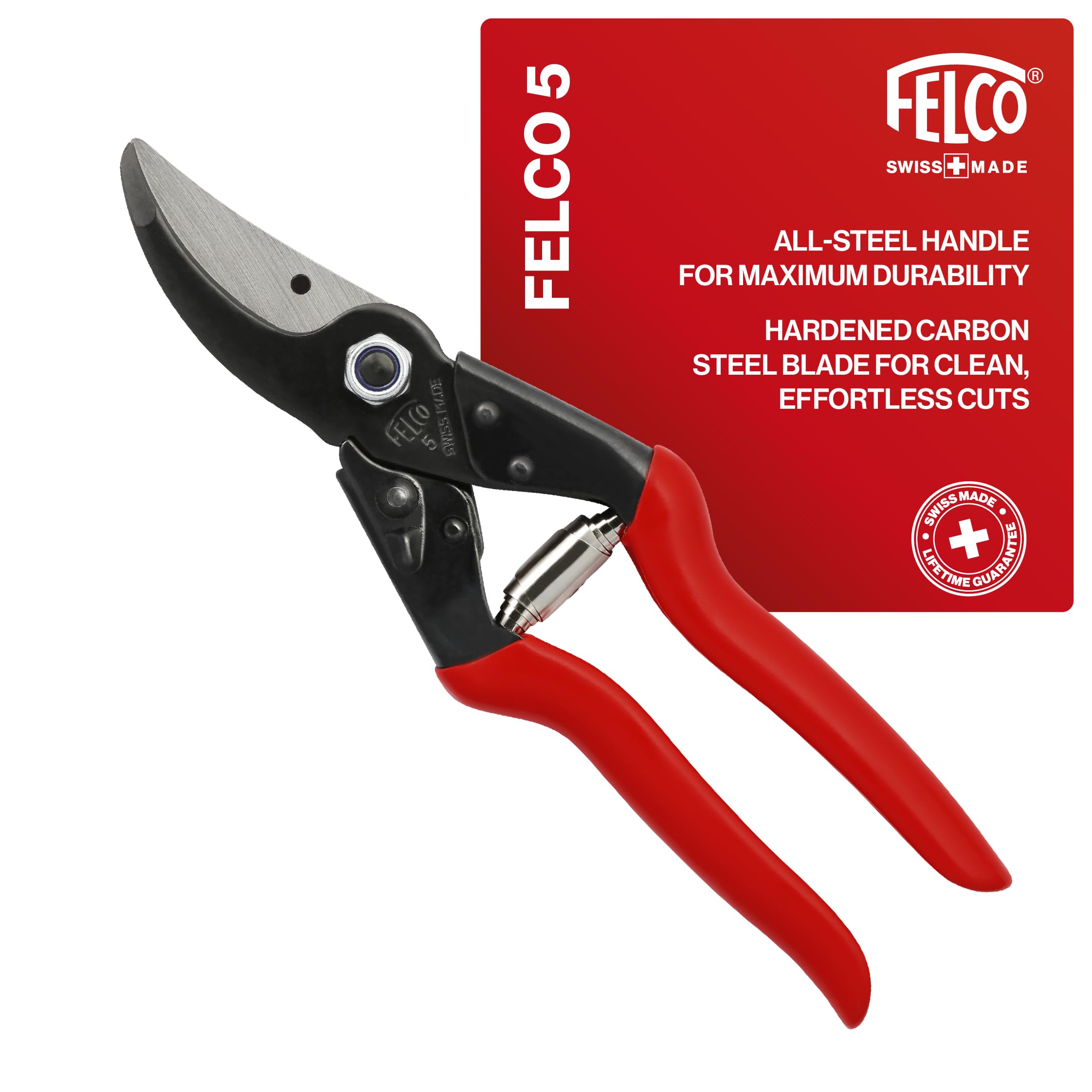
The Felco F5 is the benchmark that other pruners are measured against, and for good reason. Its solid steel handles and 2.25-inch alloy steel blade deliver the stiffest, most confidence-inspiring cut in this lineup. The bypass action feels precise from the first squeeze, and the rubberized grip stays secure even when your palms are damp from morning dew. Every part — blade, spring, bolt — is replaceable, which means this tool can outlast a decade of hard pruning with basic maintenance.
At 8.9 inches long, the F5 provides enough leverage to slice through woody stems up to 1 inch without excessive hand pressure. The serrated blade edge reduces slipping on smooth bark, and the sap groove along the blade prevents gummy residue from locking the pivot. Users consistently report that the F5 performs identically out of the box to how it performed a year later, as long as the blade is wiped clean and oiled after each session.
The trade-off is weight — the all-steel construction makes it heavier than aluminum-handled competitors, which can fatigue smaller hands during marathon pruning sessions. The grip is also optimized for medium to large hands; those with smaller palms may find the handle circumference a bit wide. But for anyone looking for a single pruner that will handle everything from rose canes to ¾-inch oak suckers with professional-grade reliability, the F5 is the standard.
Why it’s great
- Fully replaceable parts extend tool life indefinitely
- Alloy steel blade holds a sharp edge through hundreds of cuts
- Sturdy build delivers clean bypass cuts without blade deflection
Good to know
- Heavier than aluminum competitors at about 10 ounces
- Handle ergonomics favor medium-to-large hands
2. Corona Tools BP 6250 MAXFORGED
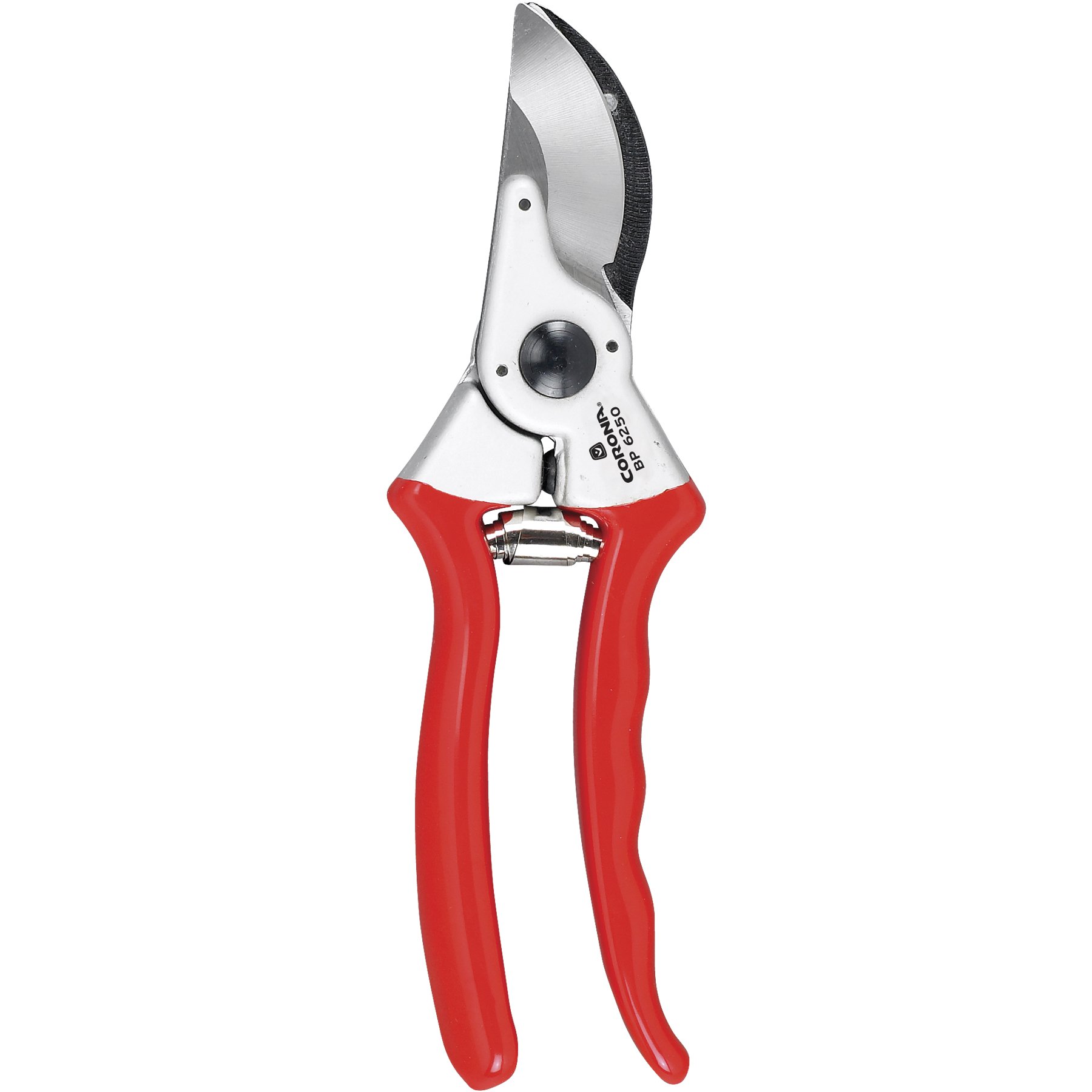
The Corona BP 6250 is the rare pruner that matches Felco F2-level performance at roughly half the price. Its forged aluminum handles keep the weight down to 9.6 ounces, making it significantly lighter than the steel-bodied Felco F5 while still offering a full 1-inch cutting capacity. The high-carbon steel blade arrives sharp enough to slice through paper, and the slant-ground hook profile with a self-cleaning sap groove keeps the pivot moving freely even after cutting through pine or maple branches.
Ergonomically, the BP 6250 shines during extended use. The contoured non-slip red grips are easy to locate if you drop them in mulch, and the volute spring resists the sap and debris that gum up coiled springs. The built-in thumb lock engages positively without being stiff, and the adjustable pivot bolt lets you tighten the blade gap as the tool wears. Users with arthritis or hand pain report being able to prune for four hours straight without fatigue, which speaks to the leverage-to-weight ratio.
The main concession is blade care — the carbon steel is more prone to rust than stainless or coated alternatives if left wet. A quick wipe with an oily rag before storage prevents corrosion, and the blade can be replaced when it eventually dulls beyond sharpening. The BP 6250 is the smart choice for home gardeners who want professional-grade cuts without paying the Swiss-made premium.
Why it’s great
- Lightweight aluminum handles reduce fatigue during long trimming sessions
- Replaceable high-carbon steel blade extends tool life
- Self-cleaning sap groove prevents pivot binding
Good to know
- Carbon steel blade requires drying and oiling to prevent rust
- Blade replacement instructions not included in packaging
3. Bahco BAHPX-L2 ERGO Large Bypass Secateurs
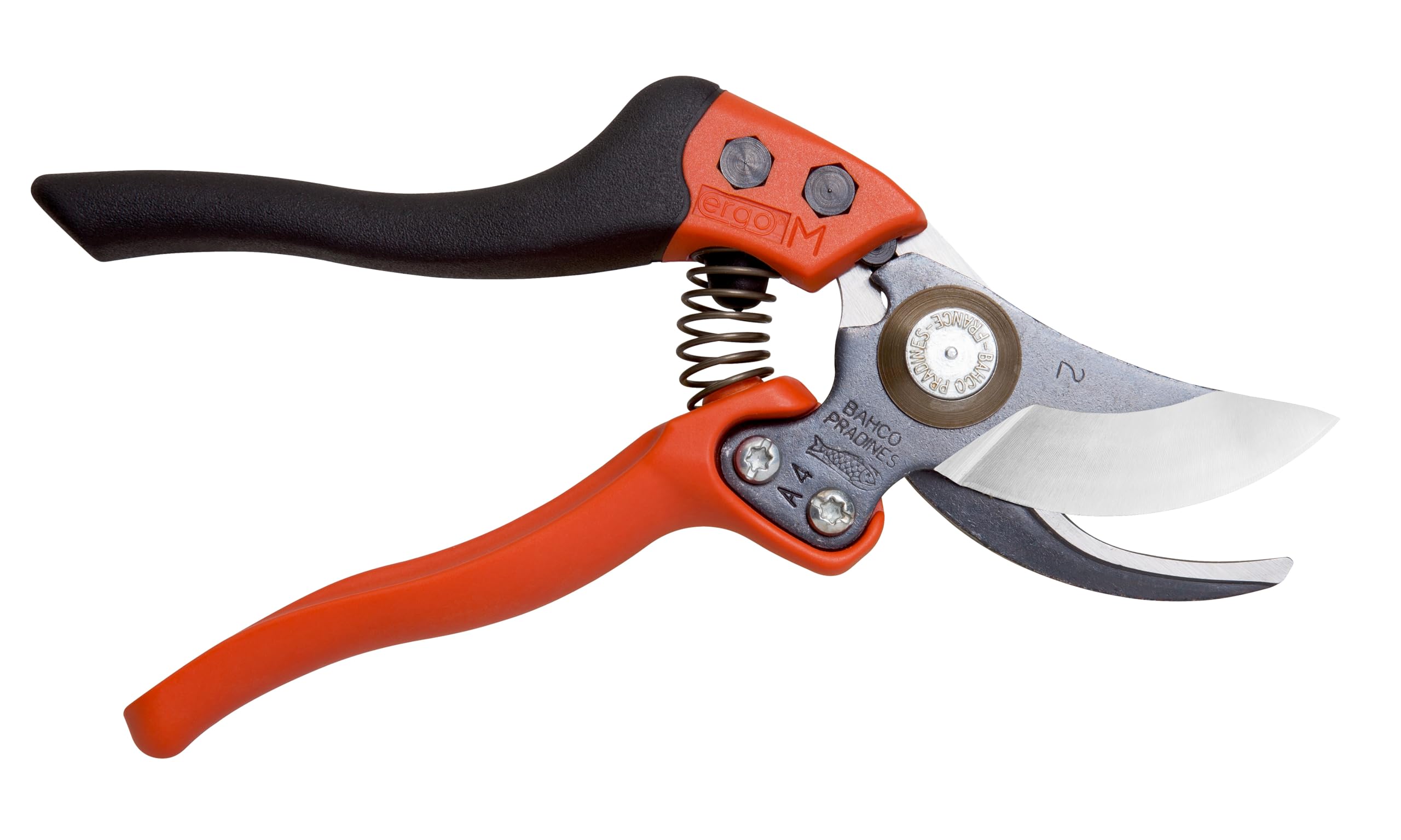
Bahco’s PX-L2 ERGO takes a different approach to pruning comfort. Instead of just padding the handle, Bahco angles the cutting head both vertically and laterally relative to the handle, keeping your wrist in a neutral posture while you snip. This design reduces the kind of repetitive strain that builds up in the carpal tunnel after an afternoon of deadheading perennials. The large handle version fits bigger palms well, and the elastomer coating provides a tacky grip that won’t slip even when wet.
The cutting capacity is rated at ¾ inch, which is modest compared to the Corona’s 1-inch claim, but the PX-L2 handles that range with impressive efficiency. The bypass blade is finely ground and stays sharp through regular use — users note that a quick pass with a diamond paddle restores the edge. At 10.24 ounces, it’s among the heavier pruners here, but that weight is distributed well along the composite and rubber handle, so it doesn’t feel unwieldy. Replaceable parts mean you won’t toss the whole tool when the blade dulls.
The biggest practical drawback is maintenance frequency. The sap groove is less effective than the Corona’s at clearing sticky residue, so the blade needs cleaning more often — a spray of degreaser followed by silicone lubricant keeps the action smooth. The packaging is also notoriously difficult to open without damaging the tool. If your priority is reducing wrist fatigue during repetitive pruning, the Bahco PX-L2 is the most thoughtfully engineered option on this list.
Why it’s great
- Angled head keeps wrist neutral to reduce strain
- Elastomer-coated handle provides secure grip in wet conditions
- All parts are replaceable, supporting long-term use
Good to know
- Requires more frequent cleaning to maintain smooth pivot action
- Cutting capacity limited to ¾ inch compared to competitors
4. Haus & Garten EnduroPRO Ergonomic Bypass Pruners
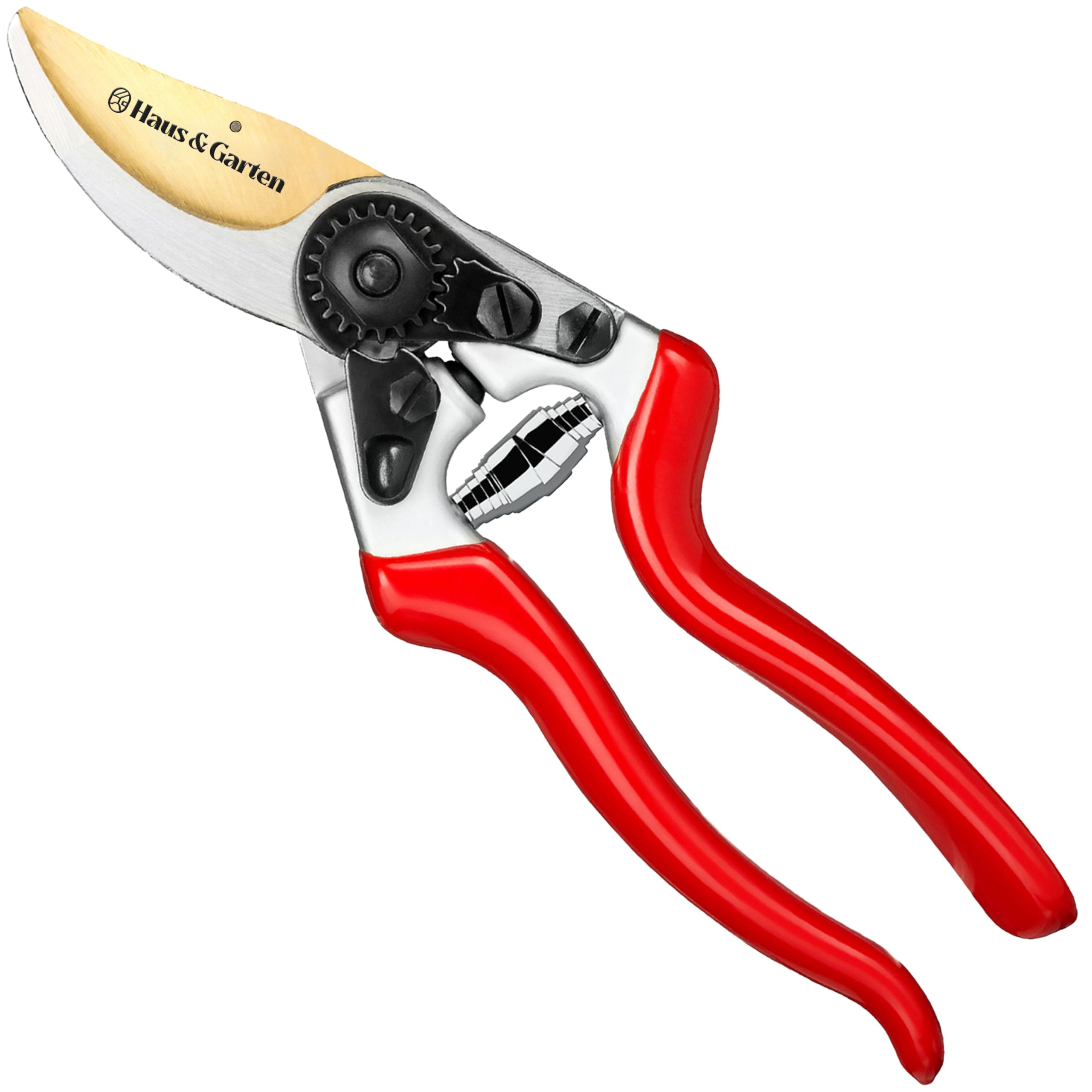
The Haus & Garten EnduroPRO is built around the idea that a pruner should feel like nothing in your hand. Its drop-forged aluminum body and anodized finish keep the weight at just 8.6 ounces, making it the lightest full-size pruner in this group. The titanium coating on the high-carbon steel blade isn’t just for looks — it reduces friction during the cut and provides a corrosion-resistant layer that keeps the edge from rusting when you forget to wipe it down.
The ergonomics are ambidextrous, with soft red grips that absorb shock well. The cutting head is straight on, so there’s no angled-wrist benefit like the Bahco, but the overall profile is slim enough to slip into a pocket or apron. It handles 1-inch branches cleanly for the first few cuts, though repeated heavy use on hardwood branches reveals some flex in the pivot joint over time. For routine deadheading, rose pruning, and slicing through soft green growth, the EnduroPRO is almost effortless.
Where it falls short is long-term durability under heavy loads. Several users report that the titanium coating can wear thin after a season of frequent use, and the aluminum handles, while light, are more prone to flexing than forged steel when cutting dense wood near the 1-inch limit. This is a fantastic tool for light-to-moderate daily pruning, but gardeners who regularly cut through thick branches should look at the steel-handled options.
Why it’s great
- Extremely lightweight at 8.6 ounces for fatigue-free trimming
- Titanium coating prevents rust and reduces friction during cuts
- Ambidextrous design accommodates left-handed users easily
Good to know
- Aluminum handles flex under repeated heavy branch loads
- Titanium coating may wear off after a single intense season
5. ARS HP-130DX 7-Inch Ideal Light Pruner

The ARS HP-130DX proves that you don’t need a 10-inch handle to make clean cuts. At just 7 inches long and 136 grams (4.8 ounces), it’s the smallest and lightest pruner here, purpose-built for floral work and gardeners with smaller hands. The high-carbon tool steel blade is hard chrome plated, which gives it impressive rust resistance for its price tier, and the precision-ground single-bevel edge produces that signature ARS clean scissor cut on stems up to ½ inch.
Floral designers and home gardeners alike praise the HP-130DX for its ability to cut through thick flower stems and pencil-thin greenwood without crushing. The soft PVC handle fits snugly into smaller palms, and the simple slide lock is intuitive enough to operate one-handed. One reviewer reported using the same pair for three years of weekend and wedding-flower cutting without noticeable dulling — a testament to how well the blade holds its edge for light-duty work.
The limitation is obvious: this pruner struggles with branches larger than ½ inch. Trying to force it through a ¾-inch oak limb will strain the pivot and risk blade deflection. It’s also a right-hand specific tool, so left-handed users won’t get the same clean cut. For dedicated flower snips, precision deadheading, or anyone who finds standard pruners too bulky, the ARS HP-130DX is an unbeatable budget-friendly specialist.
Why it’s great
- Ultra-light at 4.8 ounces with small-diameter handle fits small hands perfectly
- Hard chrome plating provides excellent corrosion resistance on carbon steel
- Precision ground blade stays sharp for years on soft stems and flowers
Good to know
- Max cutting capacity of ½ inch limits use to light pruning and floral work
- Right-hand specific design; not suitable for left-handed users
FAQ
What is the difference between bypass and anvil pruners?
How often should I sharpen my bypass pruner blade?
Why does my pruner keep getting stuck halfway through a cut?
Final Thoughts: The Verdict
For most users, the best bypass pruners winner is the Felco F5 because its replaceable parts and alloy steel blade deliver professional-grade clean cuts that outlast cheaper tools by years. If you want a lightweight option that still handles 1-inch branches, grab the Corona BP 6250. And for reducing wrist strain during long pruning sessions, nothing beats the ergonomic angled head of the Bahco PX-L2.

Mo Maruf
I created WellFizz to bridge the gap between vague wellness advice and actionable solutions. My mission is simple: to decode the research and give you practical tools you can actually use.
Beyond the data, I am a passionate traveler. I believe that stepping away from the screen to explore new environments is essential for mental clarity and physical vitality.