Our readers keep the lights on and my smoothie glass nicely filled. As an Amazon Associate, I earn from qualifying purchases.
That alligator crack snaking across your driveway isn’t just an eyesore—it’s a gateway for water to undermine the base layer, turning a simple repair into a full resurface job. An asphalt cold patch is the quickest way to stop that destruction without firing up a hot box or waiting days for a crew.
I’m Mohammad Maruf — the founder and writer behind WellFizz. I’ve spent years analyzing asphalt repair formulations, comparing polymer blends, and reading hundreds of verified buyer reports to understand which cold patch solutions actually bond and which wash out after one freeze-thaw cycle.
After combing through concrete elasticity data, self-leveling cure times, and waterproofing claims, I found the five most reliable options. Here is the definitive guide to the best asphalt cold patch for lasting driveway repairs.
How To Choose The Best Asphalt Cold Patch
Not all cold patches are equal. The key factors that separate a temporary fix from a permanent bond include the material base, the curing mechanism, and the product’s ability to handle thermal expansion. Here is what to look for before you squeeze the trigger on a tube or pour a gallon.
Material Base — Polymer vs. Cement vs. Rubber
The backbone of the patch determines adhesion and flexibility. Cement-based formulas (often polymer-modified) harden like mortar and excel in deep potholes where compression strength matters. Rubber-based and silicone-gel formulas remain flexible after cure, making them ideal for hairline cracks that expand and contract with temperature swings. For asphalt surfaces, a polymer-modified rubber or silicone compound usually provides the best bond without becoming brittle.
Cure Time and Self-Leveling Action
Fast-curing patches (touch-dry within 2-3 hours and full cure in 24-48 hours) let you drive or walk on the repair sooner, but they require precise application because they stop flowing quickly. Self-leveling compounds flow into the crack bottom and create a smooth surface without troweling—critical for wide cracks where air pockets would otherwise form. Slow-cure patches (48+ hours) often produce a denser, more waterproof seal but demand patience and dry weather.
Waterproofing and Freeze-Thaw Resistance
Water infiltration is the primary killer of asphalt repairs. A cold patch must form a watertight barrier that prevents moisture from seeping beneath the pavement and expanding during freezing. Look for explicit “waterproof” or “water-resistant” ratings and polymer blends that remain flexible at low temperatures (down to -20°F or colder). Elastomeric sealants that maintain elasticity after cure are significantly more reliable in northern climates than rigid cementitious fillers.
Quick Comparison
On smaller screens, swipe sideways to see the full table.
| Model | Category | Best For | Key Spec | Amazon |
|---|---|---|---|---|
| Jetcoat Premium Elastomeric | Liquid Gallon | Large driveways with multiple cracks | 128 fl oz per gallon | Amazon |
| Dalton Enterprises PLI-STIX 2-Pack | Thermoplastic Rod | Permanent deep-crack repairs | 60 ft length per pack | Amazon |
| MuzeFansi Concrete Crack Filler 3-Pack | Polyurethane Gel | Precision sealing of narrow gaps | 3.3 lb total weight | Amazon |
| Wadities High Elasticity Crack Filler | Rubber-Based Liquid | Budget-friendly general crack repair | 2.65 lb total weight | Amazon |
| MuzeFansi Asphalt Crack Filler 2-Pack | Silicone Gel | Small cracks under 0.5 inches | 2.2 lb total weight | Amazon |
In‑Depth Reviews
1. Jetcoat Premium Elastomeric Asphalt Crack Filler

The Jetcoat Premium Elastomeric formula is fortified with plasticizers that give it exceptional flexibility, meaning it won’t track or crack under high summer temperatures. Its polymer-modified, emulsion-based chemistry self-heals minor stress fractures, making it one of the most forgiving cold patches for DIY users. The included pour spout and handle simplify application across long driveway stretches without needing a caulking gun.
This cold patch dries to a true black finish that blends nearly invisibly with existing asphalt. Customers report covering entire driveways with multiple gallons, with many noting it cost roughly one-third of a professional contractor quote. The 128-ounce volume provides excellent value for homeowners tackling broad surface cracking rather than single-point potholes.
One trade-off: the liquid consistency can settle, requiring vigorous stirring during application to maintain uniform viscosity. In freezing mountain climates, some users observed separation after winter, suggesting the patch may not be ideal for regions with extreme freeze-thaw cycles unless layered with a flexible sealant topcoat.
Why it’s great
- Large 1-gallon volume covers extensive cracking
- Self-healing polymer emulsion resists tracking in heat
- Easy pour spout simplifies application without extra tools
Good to know
- Requires thorough stirring during use to keep consistency even
- May separate and crack in severe freezing climates
2. Dalton Enterprises 36099 PLI-STIX 60 Ft. Asphalt and Concrete Crack Filler
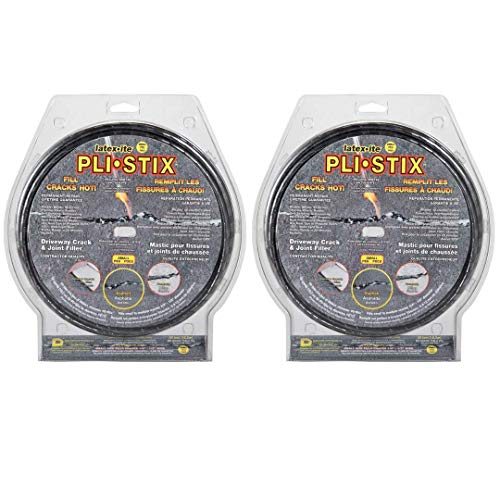
PLI-STIX is a fundamentally different cold patch: a solid thermoplastic rubber rod that you melt into the crack using a propane torch or heat gun. This creates a 100% watertight, self-leveling seal that bonds at the molecular level with the surrounding asphalt. It’s the same material contractors use for highway joint repairs—far more permanent than any liquid filler.
The 60-foot length per pack covers a lot of linear cracking, and the 1/4-inch diameter is ideal for standard residential driveway cracks. Users report the seal remains intact through an entire winter with zero cracking or pull-away, which is rare for cold-patch products. The heat application ensures deep penetration into the crack walls, anchoring the repair against vehicle loads.
Be aware that this method requires a heat source and patience. A propane torch can cause flare-ups if held too close; a heat gun is safer but slower. The initial investment is higher than tube fillers, but for homeowners who want a permanent fix and own a torch, the longevity easily justifies the cost.
Why it’s great
- Creates a watertight, molecular-level bond with asphalt
- Survives freeze-thaw cycles without cracking
- Self-leveling when heated for a smooth surface
Good to know
- Requires a propane torch or heat gun for application
- Length may vary slightly from advertised 60 feet
3. MuzeFansi Concrete Crack Filler Premium 3-Pack
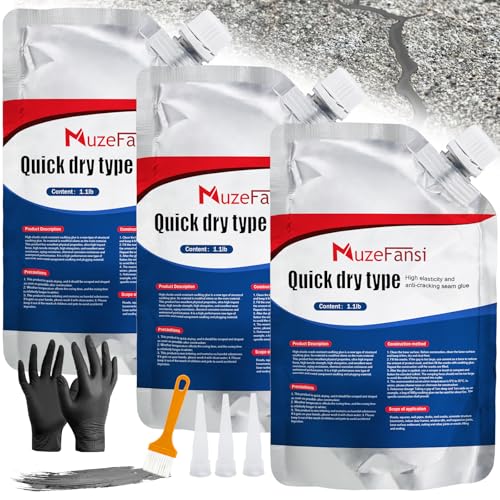
MuzeFansi’s premium polyurethane gel formula is designed for precision repairs where you need a controlled flow into cracks under half an inch wide. The self-leveling action ensures the gel settles to the bottom of the gap without leaving air pockets, and the fast-curing polymer resin achieves touch-dry in about three hours with full cure in 24-48 hours depending on temperature and humidity.
Customers consistently praise its adhesion to concrete and asphalt in expansion seams, noting the cured material remains flexible enough to accommodate seasonal movement without reopening. The 3-pack format provides three individual tubes (3.3 lb total), which is a smart quantity for repairing multiple moderate cracks without overbuying a full gallon that would harden before use.
One limitation: the formula is runnier than some gel fillers when applied above 75°F, which can cause downward seepage if the crack bottom is open to a void. For best results, use a foam backer rod to fill deep gaps before applying the gel. The cure time also extends beyond the advertised window in cooler weather—plan for at least 48 hours before heavy foot traffic.
Why it’s great
- Self-leveling polyurethane gel fills narrow cracks without bubbles
- 3-tube pack prevents waste from partially used containers
- Excellent adhesion to concrete and asphalt expansion seams
Good to know
- Runs thin in hot weather—use backer rod for deep voids
- Full cure may take over 48 hours in cool conditions
4. Wadities High Elasticity Cement Crack Filler
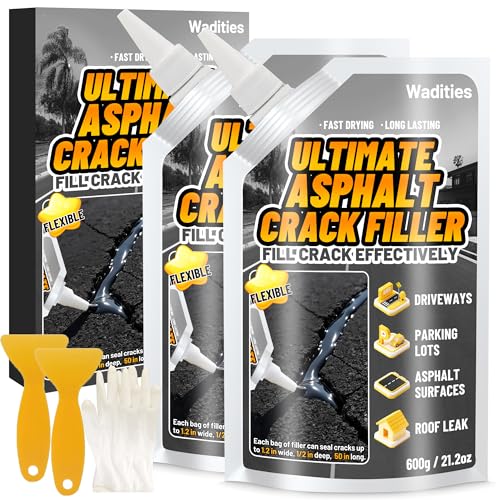
The Wadities formula focuses on high elasticity and crack resistance at a price point that makes it accessible for homeowners who need to patch multiple spots without a huge investment. Its rubber-based liquid composition cures into a flexible membrane that resists UV rays and temperature swings, and the included scraper and gloves make the application kit complete right out of the box.
Users report solid adhesion to asphalt driveways and concrete patios, with many noting the patch held up through rain and light traffic within the first 24 hours. The self-leveling behavior works well on horizontal cracks, creating a smooth finish without requiring troweling. For the price, the 2.65-pound twin-pack provides enough material to seal dozens of linear feet of standard-width driveway cracks.
The main drawback is depth capacity: because it is a liquid rather than a thick gel, it may require multiple passes for cracks deeper than half an inch. Allow each layer to cure for 4-6 hours before applying the next. The cure time to full waterproofing is 24-48 hours, so plan for dry weather during the repair window.
Why it’s great
- High-elasticity rubber formula resists UV and temperature changes
- Includes scraper and gloves for immediate use
- Self-leveling for smooth, professional-looking repairs
Good to know
- Liquid consistency requires layered application for deep cracks
- Full waterproof cure takes 24-48 hours
5. MuzeFansi Asphalt Crack Filler 2-Pack
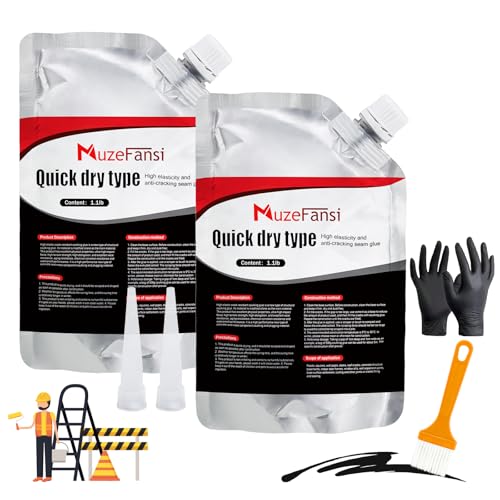
This silicone-based cold patch from MuzeFansi is about as straightforward as asphalt repair gets: no mixing, no heating, just load it into a standard caulking gun and apply. The self-leveling gel flows into gaps and cures to a smooth, flat layer that bonds to concrete, brick, metal, and even wood surfaces. Its quick tack-free time of 2-3 hours means you can walk on the repair the same day.
The cement-adhesive blend provides strong bonding to asphalt, and the waterproof finish prevents water infiltration from undermining the pavement. Customers report good results on narrow driveway cracks and concrete railing bases, with the cured material holding securely for weeks under normal conditions. The twin-pack format gives you two 2.2-pound tubes, which is sufficient for a handful of moderate cracks.
The coverage area is the primary constraint—each tube does not cover large surfaces, and users who underestimated crack width had to order additional tubes. The gel thickens as the tube empties, so warm the tube slightly or massage the bag to maintain flow. For large-scale driveway repairs, a gallon-sized liquid filler like the Jetcoat is more economical.
Why it’s great
- No mixing required—load into a caulking gun and apply
- Touch-dry in 2-3 hours for same-day light foot traffic
- Waterproof seal prevents water infiltration damage
Good to know
- Limited coverage per tube; order extra for wider cracks
- Gel thickens as tube empties—warm slightly for smoother flow
FAQ
Can I apply asphalt cold patch when rain is forecast?
How deep should I fill a crack with cold patch?
Will cold patch hold up to snowplow scraping?
Final Thoughts: The Verdict
For most users, the best asphalt cold patch winner is the Jetcoat Premium Elastomeric Crack Filler because it combines broad coverage, easy pour application, and flexible polymer chemistry that resists tracking and self-heals minor cracks. If you want a truly permanent repair that survives snowplow scraping and freeze-thaw cycles, grab the Dalton Enterprises PLI-STIX 60-Foot 2-Pack. And for precision sealing of narrow cracks on a budget, nothing beats the Wadities High Elasticity Crack Filler.

Mo Maruf
I created WellFizz to bridge the gap between vague wellness advice and actionable solutions. My mission is simple: to decode the research and give you practical tools you can actually use.
Beyond the data, I am a passionate traveler. I believe that stepping away from the screen to explore new environments is essential for mental clarity and physical vitality.