Our readers keep the lights on and my smoothie glass nicely filled. As an Amazon Associate, I earn from qualifying purchases.
A scar is a stubborn reminder that skin tissue has been injured and repaired in a rush. The dense, fibrous collagen structure of scar tissue feels hard and restricted — it pulls, itches, and limits movement. The right pure castor oil, rich in ricinoleic acid, can soften and break down that rigid collagen over time, restoring suppleness and reducing the cosmetic appearance of the mark.
I’m Mohammad Maruf — the founder and writer behind WellFizz. I’ve spent years analyzing pure botanical oils, comparing pressing methods, and scrutinizing third-party test results to separate legitimate, high-potency products from diluted commodity oils that can’t deliver real tissue-level results.
Understanding which extraction method preserves the most ricinoleic acid and which packaging actually prevents light degradation is critical when choosing a castor oil for scar tissue that will actually affect the dermal layer over consistent nightly application.
How To Choose The Best Castor Oil For Scar Tissue
Scar tissue is dense and poorly organized collagen fiber. To soften it, you need castor oil with high ricinoleic acid content and zero chemical adulteration. The wrong oil — refined, hexane-extracted, or stored in clear plastic — will sit on top of the skin without penetrating the dermal layers where the scar lives.
Prioritize Cold-Pressed and Hexane-Free Production
Cold pressing at low temperatures preserves the full fatty acid profile of the castor bean, especially the ricinoleic acid that gives this oil its anti-inflammatory and tissue-penetrating properties. Hexane extraction, used in industrial-grade oils, strips these beneficial components and can leave chemical residues that irritate scar tissue. Every oil on this list is hexane-free.
Focus on Packaging Integrity
Ricinoleic acid is vulnerable to photo-degradation. Clear plastic bottles allow UV light to break down the active molecules over weeks or months. Amber or dark cobalt glass blocks this damage, keeping the oil effective for the duration of your scar treatment regimen. A pump dispenser also prevents contamination from dipping fingers into the bottle.
Consider Ricinoleic Acid Concentration Over Brand Claims
Unrefined, cold-pressed castor oil naturally contains about 85-90% ricinoleic acid. Refined or blended oils may drop below 50%, which means less penetration into dense scar tissue. Check for unrefined, 100% pure labeling. If the label says “blend” or mentions a carrier oil, the scar-softening potential is diluted.
Quick Comparison
On smaller screens, swipe sideways to see the full table.
| Model | Category | Best For | Key Spec | Amazon |
|---|---|---|---|---|
| Balm of Gilead Organic Castor Oil | Premium Unrefined | Deep scar tissue and castor oil packs | USDA Organic, 16 oz, amber glass with pump | Amazon |
| Baar Products Castor Oil | Mid-Range Pure | Joint-adjacent scar massage | 16 fl oz, cold pressed, hexane free | Amazon |
| Kate Blanc Cosmetics Castor Oil 16oz | Mid-Range Bulk | Full-body scar coverage on a budget | 16 oz, USDA organic, cold pressed | Amazon |
| Kate Blanc Cosmetics Castor Oil 4oz | Entry-Level Pure | Targeted scar spot treatment (starter) | 4 oz, USDA organic, glass with dropper | Amazon |
| Bio-Oil Skincare Body Oil Serum | Specialty Serum | Fading cosmetic appearance of scars | 4.2 oz, vitamin E, chamomile, lavender | Amazon |
In‑Depth Reviews
1. Balm of Gilead Organic Castor Oil
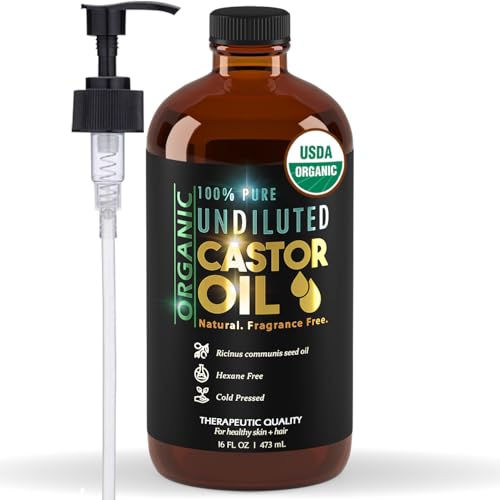
This is the premium choice for anyone serious about disrupting scar tissue at the dermal level. Balm of Gilead is USDA Certified Organic, unrefined, and hexane-free — meaning full ricinoleic acid potency. The 16-ounce amber glass bottle with pump protects the oil from light degradation and contamination, a critical feature for long-term nightly use on stubborn scars.
User feedback confirms its ability to heal dry patches overnight and fade dark spots, with one reviewer reporting filled-in edges and longer lashes after two months of nightly scalp application. The texture is thick and non-sticky, ideal for castor oil packs on surgical scars or deep tissue adhesions. The pump dispenser allows easy, clean application for large scar surface areas.
This is a strategic purchase for the scar-tissue warrior: the large volume, pure sourcing, and glass protection mean you get a consistent therapeutic dose of ricinoleic acid over months of consistent application. A minor concern is pump compatibility, but this does not affect the oil’s quality for scar breakdown work.
Why it’s great
- Full ricinoleic acid profile preserved by cold pressing
- Amber glass with pump prevents UV damage and contamination
- Large 16 oz size for sustained scar treatment regimen
Good to know
- May require an alternative pump if the original breaks
- Premium price point for a single-ingredient product
2. Baar Products Castor Oil
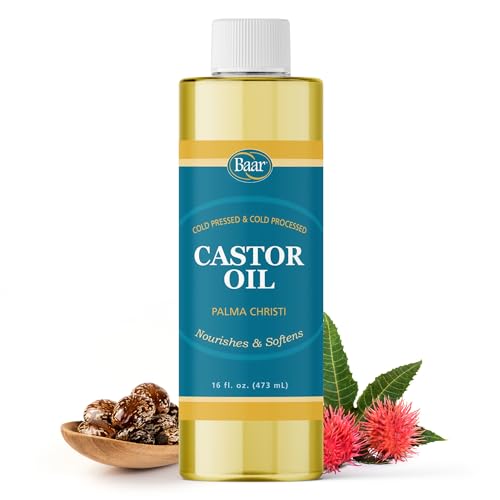
Baar has been a trusted name in the holistic castor oil community for decades, and this 16-ounce bottle delivers unrefined, hexane-free oil ideal for scar massage and castor oil packs. The thick consistency glides well for muscle-adjacent scar tissue work, and the cold-pressed extraction preserves the fatty acids needed to soften fibrous adhesions.
Users report remarkable results with bruise breakdown — one review describes a week-old bruise shrinking to bandage size after two nights of application. For scars, the oil is often used with a flannel pack and gentle heat to drive the ricinoleic acid deep into the tissue. A 30-year veteran user confirms its efficacy for circulation and lymph flow improvement.
This is a mid-range workhorse that balances purity and volume. It comes in a clear bottle, so users concerned about light degradation should store it in a dark cabinet. The lack of a pump on this specific size means careful pouring is required, but the price-per-ounce makes it viable for full-body scar management over months.
Why it’s great
- Decades of category trust from holistic wellness users
- Excellent for castor oil packs on surgical or injury scars
- Large bottle supports extended daily use without repurchase
Good to know
- Clear bottle may allow light degradation over long storage
- Lacks a pump dispenser for this specific volume
3. Kate Blanc Cosmetics Castor Oil (16 oz)
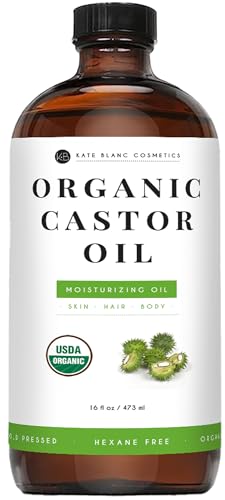
This 16-ounce bottle from Kate Blanc is USDA certified organic and cold-pressed, making it a legitimate candidate for scar tissue work where volume matters. The oil is unrefined and hexane-free, so you get a full concentration of ricinoleic acid. Users report significant softening of dry skin patches and improved digestion when used in abdominal compresses — both signs of deep tissue penetration.
For scar tissue, this oil works well either as a direct massage oil or as part of a castor oil pack. The glass bottle preserves the oil’s integrity better than plastic, though it lacks a pump mechanism, which can make dispensing messy. Some users noted eye irritation when used around the lash line, but this is irrelevant for body scar applications.
At this volume, it’s a strong value for someone managing multiple scars — post-surgical, athletic, or acne — who wants organic certification without paying a premium per ounce. The oil’s thickness is typical for pure castor oil, meaning it sits well on scar tissue for overnight absorption without running off.
Why it’s great
- USDA organic certification ensures no pesticide residues
- Generous 16 oz size at a reasonable per-ounce cost
- Cold-pressed extraction preserves high ricinoleic acid content
Good to know
- No pump dispenser; requires careful pouring
- May cause eye irritation if applied near the lash line
4. Kate Blanc Cosmetics Castor Oil (4 oz)
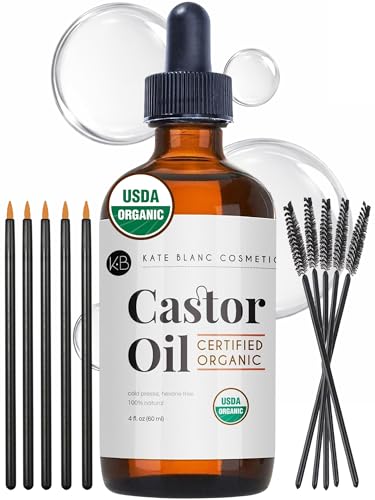
This entry-level 4-ounce bottle is USDA certified organic, cold-pressed, and hexane-free — all the baseline requirements for scar tissue treatment. It comes with a dropper, which makes precise application to small scar areas (such as a surgical incision or a single acne scar) much easier than pouring from a large container. Users consistently report that it fills in thinning brows and conditions lashes, indicating strong fatty acid delivery.
For scar tissue, the key advantage here is the ability to test the oil’s effect on your skin without committing to a large bottle. One reviewer applied it to a knee injury and reported welcome relief from discomfort. The thick, pure texture is confirmed by users who note the oil is not mixed with cheaper carriers, a common problem in discount castor oils.
The trade-off is volume — at 4 ounces, you’ll need to repurchase more frequently if you’re treating multiple or large scars. However, the glass packaging with dropper actually protects the leftover oil from contamination and light, which supports consistent potency across the life of the bottle. This is a smart pick for first-time users of castor oil for scar tissue.
Why it’s great
- USDA organic and hexane-free in a portable size
- Dropper allows precise spot treatment for small scars
- Pure, thick consistency with no carrier oil dilution
Good to know
- 4 oz size requires frequent repurchase for multiple scars
- Contains a starter kit, which adds packaging waste
5. Bio-Oil Skincare Body Oil Serum

Bio-Oil is a different tool for the toolbox. It is not a pure castor oil — it is a formulated serum containing vitamin E, chamomile, lavender oil, and a base of mineral oil and fragrance. It has no ricinoleic acid, which means it cannot penetrate dense scar tissue the way pure castor oil can. However, as a dermatologist-recommended product for surface scar appearance, it is effective for fading the discoloration of fresh or surgical scars.
User feedback confirms its lightweight, non-greasy texture absorbs quickly without clogging pores. One long-term user healed cat bite wounds and smoothed claw marks by following application directions. Another found it resolved hormonal acne marks after a year of consistent use. Its advantage is pleasant sensory experience — subtle lavender scent, easy spread, and no sticky residue.
Use Bio-Oil if your primary goal is the cosmetic fading of existing scar color and texture, but understand it works on the epidermal surface rather than restructuring the collagen below. It is best used in sequence: use pure castor oil packs to soften the underlying fibrous tissue, then apply Bio-Oil as a daytime serum to reduce red or pink discoloration.
Why it’s great
- Dermatologist recommended for scar fading and stretch marks
- Lightweight, non-greasy formula absorbs instantly
- Pleasant lavender and chamomile scent
Good to know
- Contains no ricinoleic acid — cannot remodel deep scar tissue
- Small 4.2 oz bottle is expensive per ounce for limited function
FAQ
How long does castor oil take to soften scar tissue?
Can I use castor oil on a fresh surgical incision?
Should I use a castor oil pack for deep scar adhesions?
What is the difference between Jamaican black castor oil and regular castor oil for scars?
Can castor oil help keloid scars?
Final Thoughts: The Verdict
For most users, the castor oil for scar tissue winner is the Balm of Gilead Organic Castor Oil because its USDA organic certification, amber glass protection, and pump dispenser deliver consistent therapeutic-grade ricinoleic acid for the deep collagen remodeling required by scar tissue. If you want a budget-friendly bulk option for full-body scar coverage, grab the Kate Blanc Cosmetics Castor Oil (16 oz). And for cosmetic fading of scar discoloration on the surface, nothing beats the Bio-Oil Skincare Body Oil Serum.

Mo Maruf
I created WellFizz to bridge the gap between vague wellness advice and actionable solutions. My mission is simple: to decode the research and give you practical tools you can actually use.
Beyond the data, I am a passionate traveler. I believe that stepping away from the screen to explore new environments is essential for mental clarity and physical vitality.