Our readers keep the lights on and my smoothie glass nicely filled. As an Amazon Associate, I earn from qualifying purchases.
Finding footwear when your feet tingle, burn, or have lost sensation is a different animal. The wrong boot adds pressure points that turn a short errand into a day of pain. You need a construction that prioritizes volume, a seamless interior, and a sole that communicates with the ground without punishing your foot.
I’m Mohammad Maruf — the founder and writer behind WellFizz. I analyze customer durability reports and therapeutic boot specifications, focusing on how extra-depth construction, rocker soles, and adjustable closure systems affect long-term wear for neuropathic feet.
After combing through hundreds of verified reviews and manufacturer data, I’ve built a clear picture of which models actually reduce symptoms rather than adding irritation. This guide covers the best boots for neuropathy by evaluating the metrics that matter most: internal volume, seam placement, cushion density, and ease of entry.
How To Choose Boots For Neuropathy
Neuropathy changes the rules. Standard boots are built for support and style, but when your feet are hypersensitive or numb, the priority shifts to internal volume, seam placement, and closure adjustability. Here is the criteria that separates a therapeutic boot from a decorative one.
Extra Depth and Volume
Most boots are built to a standard last that assumes a normal foot volume. Neuropathy often involves swelling (edema) or structural changes that require more vertical space. An extra-depth construction (typically 3E or wider, with a higher toe box) prevents the top of the boot from compressing the instep. Look for manufacturers that explicitly market a “therapeutic depth” or “X-Wide” fit that accommodates a custom orthotic without crowding the toes.
Internal Seam and Lining Strategy
A boot that feels fine in the store can become unbearable after two hours due to internal seams rubbing against hypersensitive skin. The best neuropathy boots use a smooth, seam-free lining—often a moisture-wicking fabric or a padded collar that doesn’t dig into the ankle. Avoid boots with prominent stitching or leather edge folds inside the heel cup, as these create friction points that can lead to ulceration in insensate feet.
Closure System and Adjustability
Laces, zippers, and Velcro straps each have a role. For neuropathy, the ideal closure allows micro-adjustments throughout the day as swelling fluctuates. Fully adjustable Velcro straps (like those on the Propet Cliff Walker) let you loosen or tighten specific zones without affecting others. Rear zippers on boots like the Orthofeet Ryder are excellent for those with limited hand dexterity, but they must be paired with a lace or strap that still allows width adjustment.
Sole Flexibility and Ground Feel
When you lose sensation in your feet, the brain relies more on proprioceptive feedback from the sole. A rigid hiking boot sole can mask subtle changes in terrain, increasing fall risk. The ideal boot has a mildly rockered sole that promotes a natural heel-to-toe gait while maintaining enough flexibility to feel the ground. Look for outsoles that offer moderate tread depth—deep lugs are not necessary for most neuropathy patients and can actually catch on uneven pavement.
Quick Comparison
On smaller screens, swipe sideways to see the full table.
| Model | Category | Best For | Key Spec | Amazon |
|---|---|---|---|---|
| Orthofeet Ryder | Mid-Range | Arch support & AFO compatibility | 4 removable insoles, dual zippers | Amazon |
| Orthofeet Hunter | Mid-Range | All-day standing & shop work | Premium ergonomic arch support | Amazon |
| Dr. Comfort Ranger | Premium | Diabetic-friendly hiking | Extra depth design, 2 insoles | Amazon |
| Dr. Comfort Boss | Premium | Maximum ankle support | Full-grain leather, buckle closures | Amazon |
| Orthofeet Granite | Premium | Heavy labor & 12-hour shifts | Waterproof slip-resistant work boot | Amazon |
| Propet Cliff Walker | Mid-Range | Waterproof outdoor work | X-Wide (3E/5E), 3 Velcro straps | Amazon |
| Propet Troy | Mid-Range | Dressy casual winter boot | Side zipper, fur lining | Amazon |
| Propet Cronus | Budget | Swelling & edema management | Adjustable heel strap, Velcro | Amazon |
| Orthopedic Wide Snow Boot | Premium | Winter warmth & post-surgery | Fleece lining, removable insole | Amazon |
In‑Depth Reviews
1. Orthofeet Men’s Orthopedic Ryder Slip-Resistant Dual-Zip Leather Boot

The Orthofeet Ryder hits the sweet spot of deep therapeutic engineering. It includes four removable insoles that let you tailor the arch height and heel cushioning, which is critical when neuropathy causes both pain and numbness in different parts of the same foot. The rear zippers make entry effortless, and the leather upper stays durable after two years of consistent wear according to multiple verified reports.
What stands out is the roomy toe box and the fact that the boot accommodates lace-attaching ankle-foot orthoses (AFOs) thanks to metal grommets. The slip-resistant outsole provides confident traction on slick surfaces, addressing the balance concerns that often accompany peripheral neuropathy. The internal lining is smooth and doesn’t create friction points that lead to irritation.
The only recurring complaint centers on the zipper pulls, which can wear out after roughly two years, though the company warranty covered replacement for one user. The arch support can feel firm initially but softens to match the foot’s contour. If you need a boot that blends dress-casual aesthetics with serious therapeutic features, this is the most complete package.
Why it’s great
- Four removable insoles allow custom arch and cushioning adjustment
- Rear zippers make on/off effortless for limited dexterity
- Metal grommets compatible with AFO braces
- Durable leather and sole hold up over two years
Good to know
- Zipper pulls may wear out and need replacement
- Arch support is firm initially and requires a short break-in
2. Propet Mens Cliff Walker Tall Hiking Casual Boots Ankle

The Propet Cliff Walker is a workhorse for those who need extreme width without sacrificing durability. With a 3E to 5E width rating, it accommodates the most swollen neuropathic feet while allowing room for thick diabetic socks. The three Velcro straps provide zonal adjustability so you can loosen the forefoot while tightening the ankle, a feature that matters when edema fluctuates throughout the day.
Verified users report this boot surviving four to five years of yard work and wooded terrain, with the leather uppers holding up against water and abrasion. The sealed construction offers genuine water resistance, and the outsole provides solid traction on loose soil and wet grass. Several podiatrists have recommended this model to diabetic patients specifically for its tall profile and large toe box.
The main drawbacks are aesthetic: this is a utilitarian boot, not a fashion statement. The Velcro straps can be overly long for some users, and the tongue leather may show friction wear where the straps meet it. Additionally, the insole fabric can loosen over time, requiring a replacement insert. For pure function and value, however, it is a top contender.
Why it’s great
- Extremely wide 3E/5E fit accommodates significant swelling
- Three Velcro straps offer zonal adjustability throughout the day
- Waterproof construction holds up to yard work and wet conditions
- High durability reported at four to five years
Good to know
- Velcro straps may be too long for some ankle circumferences
- Tongue leather can show wear from strap friction
- Aesthetic is purely utilitarian
3. Orthofeet Men’s Orthopedic Hunter Waterproof Lug Sole Hiking Boot

The Orthofeet Hunter is designed explicitly for neuropathy relief during extended periods on your feet. Its premium ergonomic arch support redistributes pressure away from sensitive metatarsal heads, which is where burning pain often originates. The waterproof lug sole provides reliable grip on uneven terrain, making it suitable for light hiking and workshop environments alike.
Users with peripheral neuropathy report being able to work in their shop all day without foot pain, a claim supported by multiple reviews citing dramatic reduction in morning discomfort. The boot runs wide, even in the medium width option, which is a benefit for those with wider feet but can be a problem for narrow-footed buyers. The overall construction feels premium, with dense cushioning that doesn’t bottom out after several hours of standing.
The durability concern is real: one verified buyer reported the insoles and stitching coming apart within months, while others had no issues. This suggests batch variability, but the return process is reportedly slow. The Hunter is best suited for those who prioritize immediate comfort and arch support over long-term toughness.
Why it’s great
- Ergonomic arch support relieves neuropathic foot pain during long standing
- Waterproof lug sole provides reliable outdoor traction
- Runs wide, offering ample room for swollen feet
Good to know
- Some durability concerns with insoles and stitching
- Refund/return process reported as slow by some users
- Very wide fit may not suit narrow feet
4. Dr. Comfort Ranger Men’s Therapeutic Diabetic Extra Depth Hiking Boot

Dr. Comfort is a clinical brand often sold through podiatry offices, and the Ranger lives up to that reputation. The extra depth design comes with two removable insoles, allowing you to create more vertical space for orthotics or to accommodate swelling. The stretchy elastic band across the midfoot provides a snug fit without constricting circulation, a subtle but crucial detail for neuropathic feet.
Users consistently praise the Ranger for its all-day comfort and lack of foot fatigue, even after a full workday. The boot is lightweight compared to traditional hiking boots, which reduces the energy cost of walking for those with reduced strength or stamina. The included plastic shoehorn is a thoughtful addition for those with limited bending ability.
The downsides are notable: the sole is thin and flat, meaning rocks and gravel can be felt distinctly underfoot. The non-adjustable bungee lace system eliminates the need for tying but removes the ability to fine-tune fit across different foot volumes. For those with high arches, the stiff arch support may require a gel insole addition to feel comfortable.
Why it’s great
- Extra depth accommodates orthotics and swollen feet
- Lightweight construction reduces walking fatigue
- Stretchy elastic band prevents circulation restriction
- Comes with a plastic shoehorn for easy entry
Good to know
- Thin flat sole transmits ground textures like rocks
- Non-adjustable bungee laces limit fit customization
- Stiff arch may need additional cushioning for high arches
5. Orthofeet Men’s Orthopedic Granite Waterproof Slip Resistant Work Boot

The Orthofeet Granite is built for the neuropathy sufferer who works a physical job. With a wide toe box that eliminates the crushing feeling of standard steel toes, it allows toes to splay naturally while still meeting safety standards. The slip-resistant outsole handles oil, grease, and mud without losing traction, making it viable for construction or industrial environments.
One highway laborer reports wearing these for 10-to-12-hour shifts with no heel pain or arthritis aggravation, and the boots outlasted a competitor brand that fell apart in five months. The softer leather breaks in quickly and remains comfortable on day one. The waterproof membrane keeps feet dry in wet conditions, which is important when sensation loss means you might not notice moisture immediately.
The primary criticism is that the insoles feel thin after a few weeks of heavy use on concrete floors, requiring aftermarket orthotic replacement. The tread depth is also modest for genuine off-road work, and some users wish for a taller ankle version. For the price, however, it competes well with brands costing twice as much.
Why it’s great
- Wide toe box eliminates pressure on sensitive forefoot nerves
- Durable enough for 10-12 hour shifts in heavy labor
- Slip-resistant and waterproof for industrial environments
- No break-in period; comfortable on first wear
Good to know
- Insoles may compress and feel thin after weeks on concrete
- Tread depth is modest for serious off-road use
- Some users want a higher ankle version
6. Women’s Orthopedic Wide Snow Boot: Warm Insulated Diabetic Walking Boot
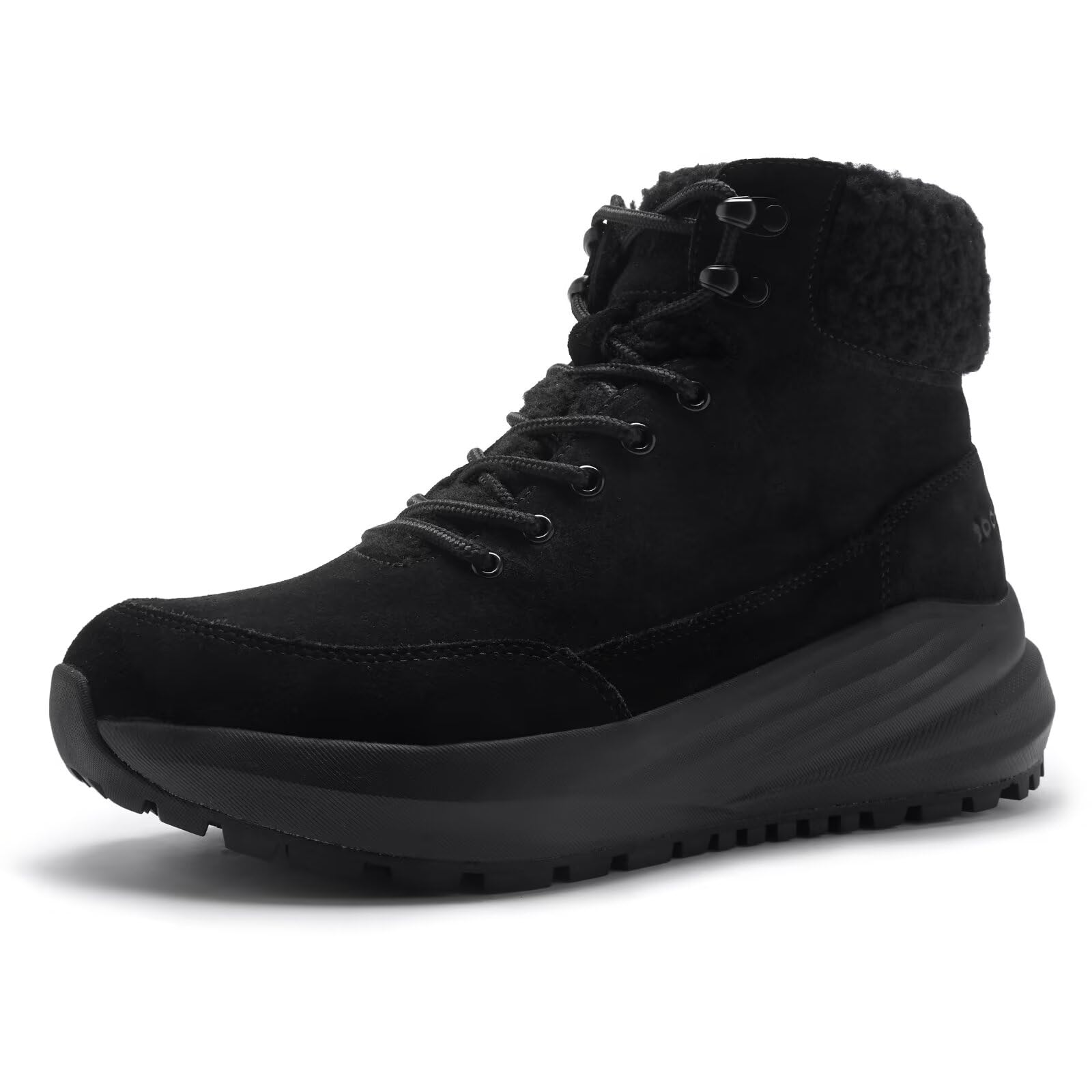
This women’s snow boot is a standout for winter neuropathy care. The fleece lining provides consistent warmth without overheating, and the wide toe box allows thick socks without compressing the toes. The boot’s heel stabilization feature is a critical addition for those with drop foot or balance issues, as it prevents the heel from sliding inside the boot during gait.
Users recovering from foot surgery report that this boot gave them back mobility, with one describing it as the first boot to meet all their needs: high instep accommodation, firm arch support, and a roomy fit that doesn’t create pressure on surgical sites. The outsole handles snow and slush for hours without wetness penetrating, though it is not fully submersible Amazon.
The neutral styling allows the boot to work with both casual and slightly dressier winter outfits, spanning from October to May in colder climates. A minor issue is that the ankle area can chafe if laces are not adjusted carefully, but this resolves with proper tightening. Overall, it is a top-tier cold-weather option for women with neuropathy.
Why it’s great
- Fleece lining provides warm, non-irritating insulation
- Wide toe box accommodates orthotics and thick socks
- Heel stabilization prevents slipping and improves balance
- Excellent for post-surgery recovery and high insteps
Good to know
- Ankle area may chafe before lace adjustment
- Not fully waterproof for deep puddles
- Neutral style may not suit all fashion preferences
7. Dr. Comfort Men’s Boss Diabetic Boots

The Dr. Comfort Boss is a heavy-duty leather boot designed for maximum ankle support. For neuropathy patients with drop foot or significant ankle instability, the full-grain leather upper provides structure that softer boots cannot. The buckle closure system allows a secure, non-slip fit that stays consistent throughout the day, unlike laces that may loosen.
One user with partial foot loss confirms these boots work daily with custom insoles, providing non-slip support even for motorcycle riding. The boot is soft and comfortable internally while remaining supportive externally. The quality of the leather and construction justifies the price for those who need a boot that can withstand heavy use without collapsing.
The major trade-off is weight: the Boss is notably heavier than most neuropathy boots, which can fatigue the legs over long periods. The leather also requires a break-in period, and one user reported the ankle rubbing painfully before softening. Additionally, the boot runs very wide, and the high arch shape may cause cramps for those with flat feet.
Why it’s great
- Full-grain leather provides maximum ankle support and durability
- Buckle closures ensure secure fit without loosening
- Soft interior lining reduces friction on sensitive skin
- Works well with custom orthotics and AFOs
Good to know
- Heavy construction may cause leg fatigue over long wear
- Requires break-in period; may rub ankle initially
- High arch shape may cause cramps in flat feet
8. Propet Mens Troy Zippered Round Toe Casual Boots
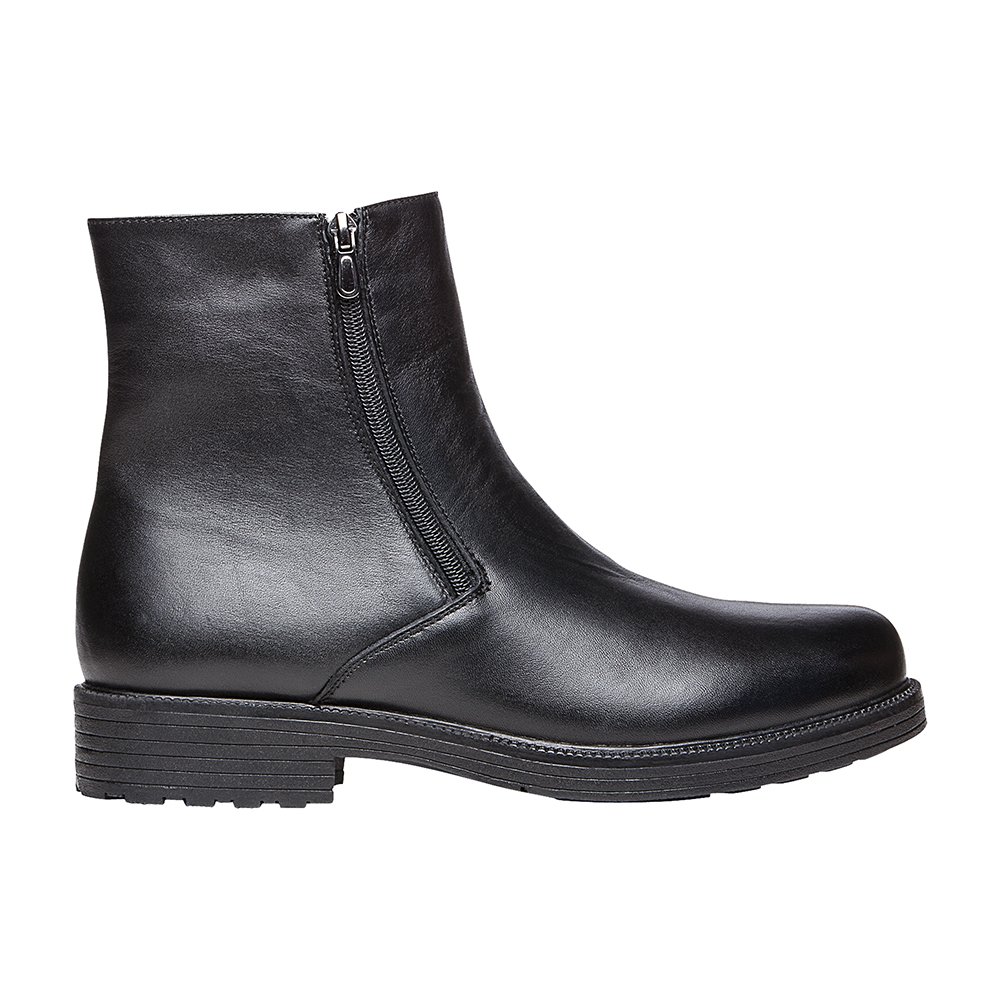
The Propet Troy is one of the few boots that combines therapeutic fit with dress-boot aesthetics. The side zipper makes entry easy, and the fur lining adds warmth for winter wear. Available in extended widths up to 4E, it fits wide diabetic feet without requiring a custom order. The round toe profile leaves ample space for toes to spread, reducing pressure on interdigital nerves.
Multiple users report that these boots fit perfectly for hard-to-fit sizes like 13 4E, and that the non-slip sole provides good traction on icy surfaces. The boot looks dressy enough for business casual settings and suits, making it a versatile option for professional environments where athletic shoes would be inappropriate.
The durability is a concern: after 16 months of office-level wear, the heels can split and the uppers may separate from the soles. This makes the Troy a temporary rather than long-term solution. Additionally, those with wide calves may find the zipper cannot close all the way, limiting use for some anatomies.
Why it’s great
- Side zipper offers effortless entry for limited dexterity
- Fur lining provides warmth in cold conditions
- Round toe design gives ample space for neuropathic feet
- Dressy appearance suitable for business casual wear
Good to know
- Heel sole may split after 12-16 months of regular wear
- Zipper may not close fully for users with wide calves
- Not built for daily heavy use
9. Propét Mens Cronus Medicare/Hcpcs Code A5500 Diabetic Shoe
The Propet Cronus is an entry-level therapeutic shoe that qualifies for Medicare reimbursement under code A5500, making it an accessible option for those on a fixed income. The Velcro closure and adjustable heel strap allow daily fit adjustments for fluctuating edema. Users describe it as soft, lightweight, and moldable to the foot’s shape after a short wear period.
For those who cannot bend over to tie laces, the Cronus is a relief. The flexible sole provides good ground feel, which is beneficial for balance when neuropathy has reduced foot sensation. The shoe is also washable, a practical feature for those prone to foot perspiration or wound drainage.
The durability is minimal: some users report the neoprene material feeling bulky and non-breathable, and there are complaints of poor construction. This is not a year-round daily driver. It works best as a house shoe or for short errands where maximum adjustability and low cost are the priorities.
Why it’s great
- Medicare-reimbursable under code A5500
- Velcro and heel strap allow micro-adjustments for swelling
- Lightweight and machine washable
- Soft material molds to foot shape quickly
Good to know
- Neoprene material may feel bulky and non-breathable
- Limited durability for heavy daily use
- Some customer reports of poor construction consistency
FAQ
Should I buy boots with or without laces for neuropathy?
How much extra depth do I need for custom orthotics?
Final Thoughts: The Verdict
For most users, the boots for neuropathy winner is the Orthofeet Ryder because it combines therapeutic arch support, dual-zip convenience, and AFO compatibility in a durable leather package. If you need extreme width for significant swelling, grab the Propet Cliff Walker. And for winter warmth and post-surgery recovery, nothing beats the Women’s Orthopedic Wide Snow Boot.

Mo Maruf
I created WellFizz to bridge the gap between vague wellness advice and actionable solutions. My mission is simple: to decode the research and give you practical tools you can actually use.
Beyond the data, I am a passionate traveler. I believe that stepping away from the screen to explore new environments is essential for mental clarity and physical vitality.