Our readers keep the lights on and my smoothie glass nicely filled. As an Amazon Associate, I earn from qualifying purchases.
That dull ache in your lower back after a long day at the desk is not just fatigue—it is the direct result of a chair that refuses to work with your spine. A quality ergonomic chair actively adapts to your body, distributing pressure evenly and maintaining the natural S-curve of your back through hours of focused work.
I’m Mohammad Maruf — the founder and writer behind WellFizz. I have spent years analyzing hardware specifications and biomechanical support systems in the office furniture market, comparing foam densities, lumbar tracking mechanisms, and frame durability to separate genuine ergonomic engineering from marketing fluff.
After evaluating dozens of models across price tiers and thousands of real user experiences, I have assembled the definitive guide to finding the best ergonomic chair for your body type, work habits, and long-term spinal health.
How To Choose The Best Ergonomic Chair
Selecting an ergonomic chair is more complex than picking a color or checking a box labeled “lumbar support.” Your spine, hip width, and thigh length determine which specifications actually matter. Here are the critical factors serious buyers evaluate before purchasing.
Dynamic vs Static Lumbar Support
Static lumbar pads—common in budget-tier chairs—press a fixed bump into your lower back regardless of how you sit or shift. Dynamic lumbar support, found in mid-range and premium models, uses a spring-loaded or ratcheting mechanism that adjusts in height (up/down) and depth (forward/back). Some advanced systems, like the auto-following design, track your spine as you recline, maintaining contact throughout the entire range of motion. If you suffer from chronic lower back tension, a dynamic system is non-negotiable.
Seat Depth and the Waterfall Edge
A seat that is too short leaves your thighs unsupported, forcing your pelvis to tilt backward. A seat that is too long crushes the back of your knees and restricts circulation. The ideal seat depth allows two to three finger-widths of space between the back of your knee and the front edge of the cushion. Models with a sliding seat mechanism—typically offering 50 to 60 millimeters of range—accommodate both shorter and taller users. A waterfall front edge, which curves downward, further relieves pressure behind the knees.
Mesh Density and Foam Quality
Full-mesh chairs breathe better than foam, preventing heat buildup during long sessions, but the mesh must be taut enough to resist sagging over time. High-density mesh with a tight weave—often imported from Korea or Japan—maintains its tension for years. Foam seats should use high-resilience polyurethane foam with a density rating above 55 kilograms per cubic meter; lower-density foam compresses irreversibly within months. Some premium chairs offer a choice between mesh and foam so you can prioritize cooling or plushness.
Armrest Adjustability
Fixed armrests are a dealbreaker for anyone who types, reads, or uses a mouse for extended periods. At minimum, armrests should adjust in height and width. For true ergonomic benefit, look for 3D armrests (height, forward/back, and swivel) or even 4D armrests that add width pivot. The armrest should support your elbows at a 90-degree angle while your shoulders remain relaxed. Cheap armrests may feel stable at first but often develop wobble after a few months—a detail that separates durable chairs from disposable ones.
Quick Comparison
On smaller screens, swipe sideways to see the full table.
| Model | Category | Best For | Key Spec | Amazon |
|---|---|---|---|---|
| FLEXISPOT ErgoX | Premium | All-day comfort with dynamic lumbar | Adjustable seat depth 17″-20″ | Amazon |
| Newtral Ergonomic Office Chair | Premium | Auto-following lumbar tracking | KGS Class 4 gas lift from Korea | Amazon |
| ProtoArc EC300 | Mid-Range | High-density foam seat cushion | 55 kg/m³ foam density | Amazon |
| Vonesse Ergonomic Chair | Mid-Range | Budget-friendly adjustable lumbar | 300 lbs weight capacity | Amazon |
| COLAMY Mesh Office Chair | Mid-Range | Breathable mesh with footrest | Korean imported mesh fabric | Amazon |
| ELABEST Mesh Office Chair | Mid-Range | BIFMA 5.1 commercial-grade build | Synchro-tilt with 3 lock positions | Amazon |
| MOLENTS Mesh Desk Chair | Mid-Range | Full mesh seat with 3D armrests | Seat depth 18.9 inches | Amazon |
| Branch Ergonomic Chair | Premium | Modern design with anodized aluminum | High-density foam cushion | Amazon |
| WorkPro Quantum 9000 | Premium | Long-lasting commercial durability | 15-minute assembly, 8 bolts | Amazon |
In‑Depth Reviews
1. FLEXISPOT ErgoX Premium Ergonomic Office Chair
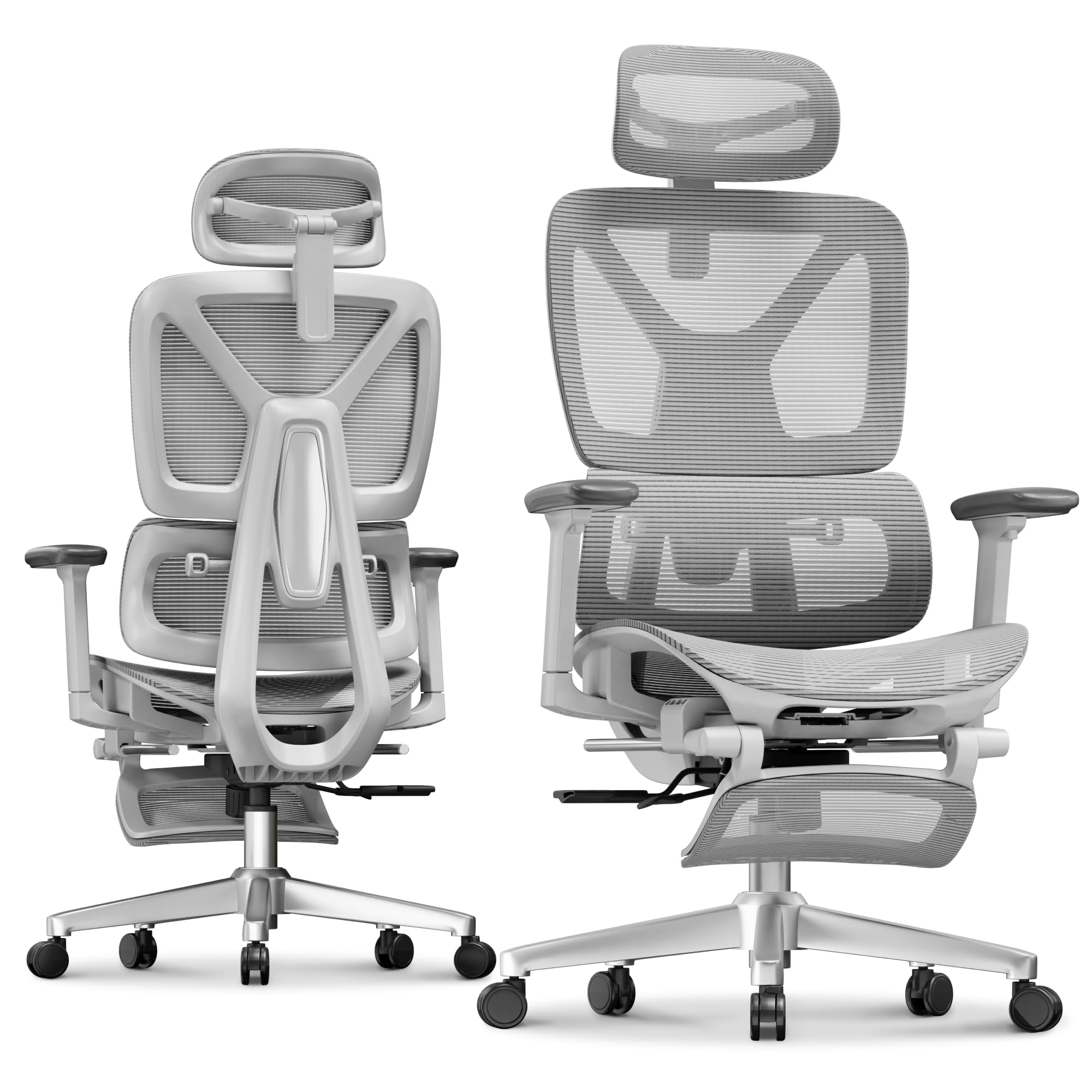
The FLEXISPOT ErgoX bridges the gap between premium adjustability and accessible pricing with a spec sheet that rivals chairs costing twice as much. Its dynamic lumbar support is not a fixed pad—it is a spring-loaded plate that follows your lower back as you shift from upright typing to reclined reading. The backrest offers five height positions, so the lumbar curve lands exactly at your belt line rather than somewhere in the middle of your shoulder blades.
Seat depth adjusts from 17 to 20 inches, a range that comfortably fits users between 5-foot-1 and 6-foot-2. The AeroWeave mesh seat option prioritizes breathability without sacrificing tautness—the weave is dense enough to resist sagging over extended use. Armrests move in three dimensions (height, forward/back, and swivel), letting you dial in elbow support for typing versus mouse-heavy workflows. A retractable footrest tucks under the seat when not needed, converting the chair into a lounger during breaks.
Build quality is reinforced nylon with a Class 4 gas lift, tested for over 100,000 cycles. Users consistently report no squeaking after months of daily use, which is rare in chairs at this tier. The main tradeoff is the lack of a seat cushion option for those who prefer foam—the mesh seat is excellent for cooling but may feel firm to users accustomed to plush padding.
Why it’s great
- Dynamic lumbar support tracks movement across recline range
- Wide seat depth adjustment fits short and tall users
- Retractable footrest adds relaxation versatility
Good to know
- Mesh seat may feel too firm for users preferring cushioned foam
- No seat cushion option currently available for this model
2. Newtral Ergonomic Home Office Chair

The Newtral Ergonomic Chair is built around one distinctive innovation: an automatic lumbar tracking system that moves with your spine. Unlike chairs where lumbar support is static or requires manual adjustment, Newtral’s mechanism uses a spring-loaded plate that shifts forward as you recline, maintaining constant lower back contact. The lumbar strength is also adjustable, giving you control over how aggressively the support presses into your spine. American ergonomist Iris Sokol called it one of the most unique lumbar designs she has seen in decades.
Beyond the lumbar system, the chair offers three back height positions, a seat that slides forward and back, a 3D adjustable headrest, and 3D armrests. The backrest tilts and locks between 96 and 126 degrees with adjustable tension. The seat cushion uses a 7-centimeter high-density foam core wrapped in waterproof, flame-retardant fabric—a practical choice for both home office and gaming environments. The mesh on the back is Korean-made Filo fabric, which combines breathability with enough tension to hold your upper back in proper alignment.
User feedback over eight months shows the chair holds up well: back pain decreased, the gas cylinder maintained height, and the seller promptly replaced armrests when a lock failed. The headrest feels slightly plasticky but remains functional. The main complaint is that the armrests can shift unintentionally with light pressure—they lack a locking mechanism, so if you tend to lean on your elbows, you may need to readjust frequently.
Why it’s great
- Auto-following lumbar tracks spine during recline
- High-density 7cm foam seat resists compression
- Korean Filo mesh back for durable breathability
Good to know
- Armrests lack locking mechanism and shift easily
- Headrest feels less premium than the rest of the build
3. ProtoArc Ergonomic Office Chair – EC300
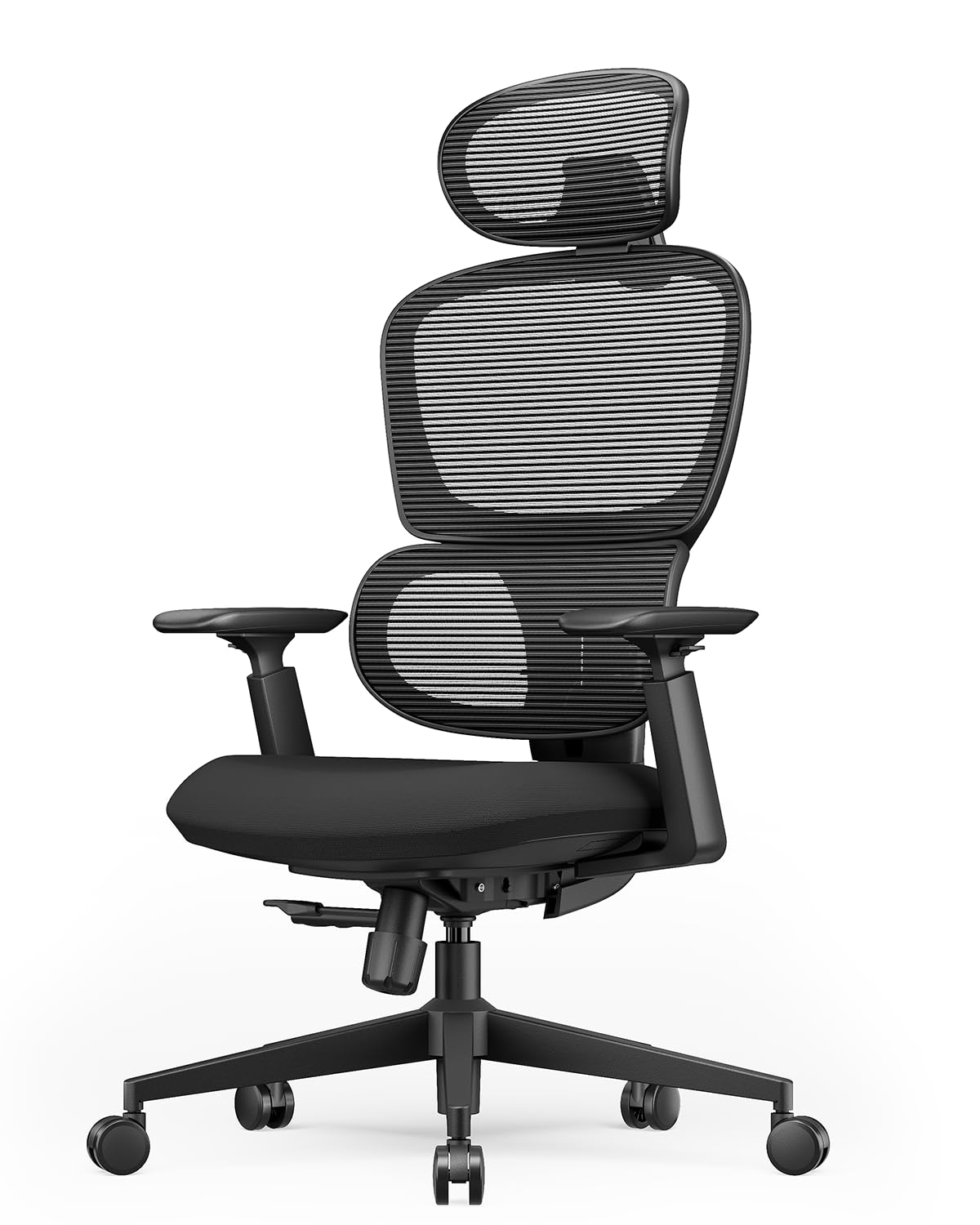
The ProtoArc EC300 stands out in the mid-range for one reason: a premium 55-density high-resilience foam seat cushion that offers a balanced feel between soft comfort and firm support. Many chairs in this tier skimp on foam quality, resulting in bottoming out after six months. The EC300’s foam core uses a density that maintains its shape even after eight-hour shifts, and the waterfall front edge prevents pressure behind the knees—a detail that shorter users will appreciate immediately.
The backrest is split into two zones: a height-adjustable upper section and an independent lower lumbar panel that supports both the lumbar spine and sacrum. The lumbar surface is wider than standard designs, which helps distribute pressure across a larger area rather than concentrating it on a single point. Seat depth slides forward and backward across 50 millimeters with a five-position locking mechanism, giving you precise control over thigh support. The 3D dual-axis headrest adjusts in height, forward/back tilt, and rotation, offering micro-adjustments that are rare at this price.
Four locked recline positions—90°, 105°, 120°, and 130°—allow seamless transitions between typing, reading, and lounging. The alloy base and SGS Class 4 gas lift provide stability for users up to 350 pounds despite the stated 220-pound rating. Assembly takes roughly 30 minutes and parts arrive labeled. The only downside is that the headrest installation requires a bit of finesse—the instructions are clear but the alignment can be finicky on the first attempt.
Why it’s great
- 55-density foam seat cushion resists sagging long-term
- Wider lumbar panel supports both spine and sacrum
- Dual-axis headrest offers micro-adjustments
Good to know
- Headrest alignment can be fiddly during assembly
- Listed weight capacity (220 lbs) is conservative despite real-world higher tolerance
4. Vonesse Ergonomic Office Chair with Footrest
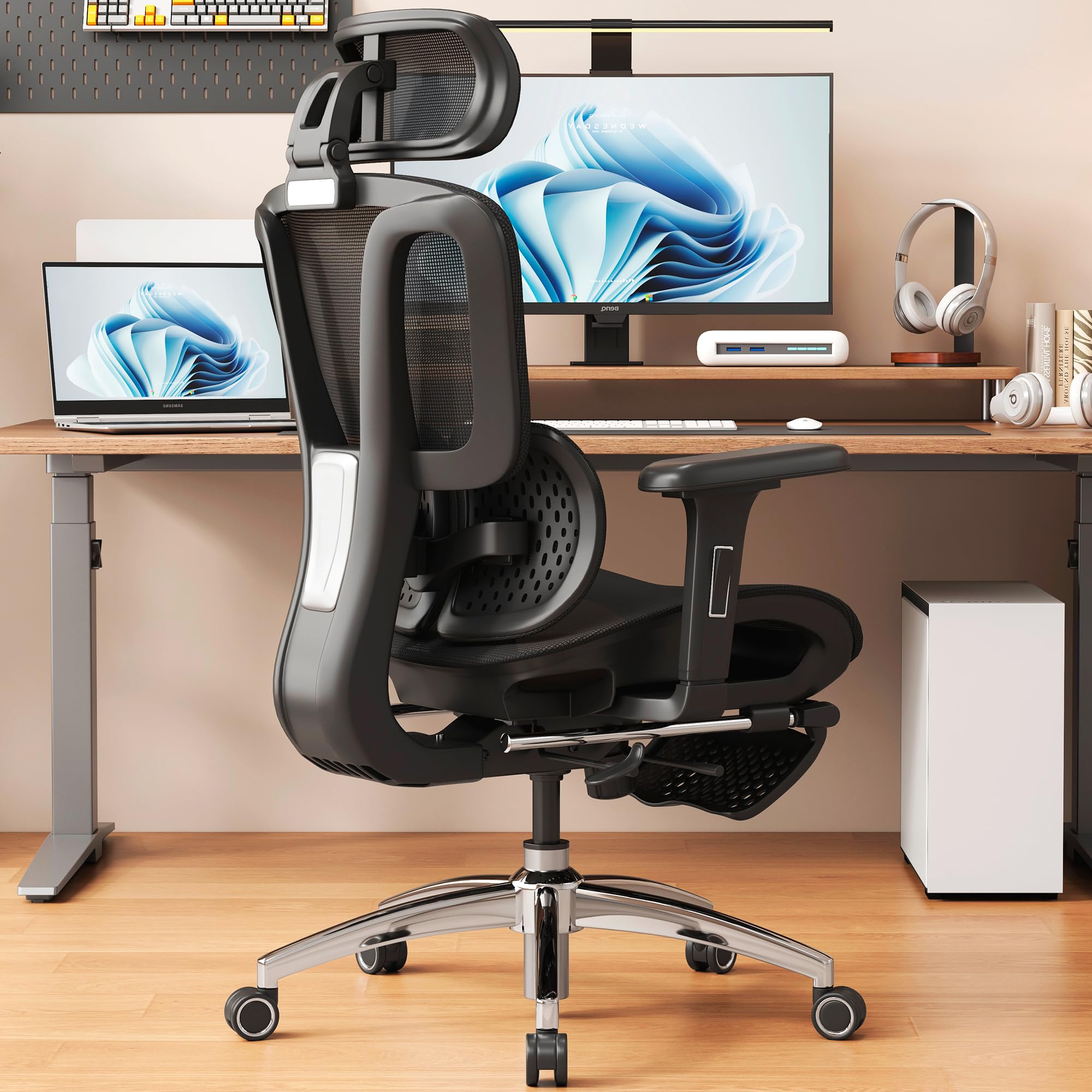
The Vonesse Ergonomic Chair packs an unusual amount of adjustability into its entry-level price bracket, making it a strong candidate for budget-conscious buyers who refuse to compromise on spinal alignment. Its lumbar support offers three height levels and two depth positions—forward and backward—with a locking mechanism that keeps the plate pressed against your lower back curve. The seat depth adjusts 60 millimeters, which is generous for chairs at this tier and helps accommodate both shorter and taller users without thigh pressure.
The chair uses high-density ventilated mesh throughout the back and seat, promoting airflow during extended sessions. The mesh is reinforced with enough elasticity to maintain shape, though users report the mesh seat may stretch slightly over time with heavy daily use. The Grade 4 explosion-proof gas lift and nylon base support a 300-pound weight capacity, a solid safety margin that exceeds many competitors in the same range. The footrest extends forward and back, pairing with three lockable recline positions (90°, 110°, and 135°) to create a relaxation mode that works well for midday breaks.
Assembly takes about 15 minutes with included tools, and the 3D headrest and 3D armrests add basic customization for neck and arm support. The most common complaint is cosmetic: the chrome paint on the back trim tends to peel when the protective film is removed, leaving a slightly dingy appearance that does not affect function. Customer service has been responsive, offering replacements and partial refunds when this issue arises.
Why it’s great
- 60mm seat depth adjustment rare in this price tier
- Grade-4 explosion-proof gas lift for safety
- Retractable footrest adds relaxation versatility
Good to know
- Chrome paint on back trim may peel with protective film removal
- Mesh seat may stretch slightly over extended use
5. COLAMY Ergonomic Mesh Office Chair with Footrest

The COLAMY Ergonomic Mesh Chair uses imported Korean high-elasticity mesh fabric that sets it apart from chairs using generic nylon mesh. The Korean material offers a tighter weave and greater flexibility, conforming to the curve of your spine without stretching loose over the first few months. The backrest and seat are both mesh, ensuring continuous airflow even during warm days or long gaming sessions.
The chair features a partitioned back and lumbar support system—the upper back and the lower lumbar adjust independently. The backrest height is also adjustable, so you can raise or lower the entire back panel to match your torso length. This is a meaningful upgrade over fixed-back chairs where the lumbar curve sits too high or too low depending on your height. The 3D armrests adjust in height, forward/back, and rotation, though some users note the armrest foam is firm rather than plush.
Recline tension is adjustable with a fixed tilt lock up to 130 degrees, allowing you to set a preferred resistance and then lock into position. The footrest is hidden under the seat and extends when needed. Assembly is straightforward at 10 to 15 minutes with labeled hardware. The main issue reported by taller users is that the standard gas cylinder may leave the seat height too high for people under 5-foot-4—your feet may dangle rather than rest flat on the floor. COLAMY offers a shorter cylinder replacement, so contacting customer service before assembly is advisable for petite users.
Why it’s great
- Korean imported mesh resists stretching and improves airflow
- Independent back height adjustment fits different torso lengths
- Hidden footrest for break-time lounging
Good to know
- Standard gas cylinder may be too tall for users under 5’4″
- Armrest foam is firm, not cushioned
6. ELABEST Ergonomic Mesh Office Chair

The ELABEST Ergonomic Chair is built to BIFMA 5.1 commercial-grade standards, which means it underwent rigorous testing for durability, stability, and safety in multi-shift work environments. This certification matters if you plan to use the chair for eight-plus hours daily and expect it to survive years without developing wobble, squeaks, or component failure. The frame uses a metal base rather than the nylon bases common at lower price points, and the mesh is high-grade stretch-resistant fabric that does not bag out.
The bionic-curve backrest mimics the natural S-shape of the spine, and the adjustable lumbar support moves up and down as well as forward and back. The synchro-tilt mechanism has three lockable positions with adjustable tension, meaning the seat angle changes as you recline, keeping your thighs supported rather than lifting your knees. The “Golden Triangle” back design widens at the shoulder blades to provide targeted upper back support, which is particularly useful for people who spend all day typing or coding and develop tension between the shoulder blades.
The 3D armrests adjust in height, width, and angle, and the waterfall mesh seat promotes circulation. Users between 5-foot-5 and 5-foot-10 and under 200 pounds seem to fit the chair’s proportions best. The ELABEST customer support team is responsive—multiple reviews mention quick resolution of issues and even replacement of components like armrests that felt too wide for smaller frames. The chair does not come with a headrest or footrest as standard, though optional accessories are available.
Why it’s great
- BIFMA 5.1 certified for commercial-grade durability
- Synchro-tilt keeps thighs supported during recline
- Golden Triangle back reduces shoulder fatigue
Good to know
- Best suited for users under 200 lbs and 5’10”
- No headrest or footrest included with standard model
7. MOLENTS Ergonomic Mesh Desk Chair

The MOLENTS Ergonomic Chair offers a full-mesh seat and back design combined with a customer service experience that sets a benchmark for the category. Multiple users report that Alice from the MOLENTS team proactively reached out after purchase to confirm comfort, offer a free foam seat cover, and even provide upgraded wheels at no charge. This level of after-sale attention is rare in the mid-range chair space and adds tangible value when potential fit issues arise.
The lumbar support adjusts both vertically and in depth (forward/back), allowing you to dial in the exact pressure point for your lower back. The 3D armrests adjust in height, forward/back, and rotate left and right—the rotation feature is unusual at this price and helps align your forearms with your keyboard tray or desk surface. The full-mesh seat uses skin-friendly premium mesh fabric that remains taut and supportive without sagging, as confirmed by users who have had the chair for two months without visible wear.
The recline system offers three positions between 90 and 120 degrees, and the tilt tension is firm enough that heavier users (200-plus pounds) do not feel like they are tipping backward. The seat depth measures 18.9 inches, accommodating taller users without thigh pinch. A few users noted that the armrests do not lower enough to slide under most desks, so if you prefer to tuck your chair fully under your work surface, you may need to consider an alternate model or remove the armrests entirely.
Why it’s great
- Proactive customer service with free accessories and upgrades
- Full-mesh seat resists sagging and keeps you cool
- Armrest rotation aids keyboard tray alignment
Good to know
- Armrests do not lower enough to clear most desks
- Tilt tension may feel too firm for lighter users
8. Branch Ergonomic Chair
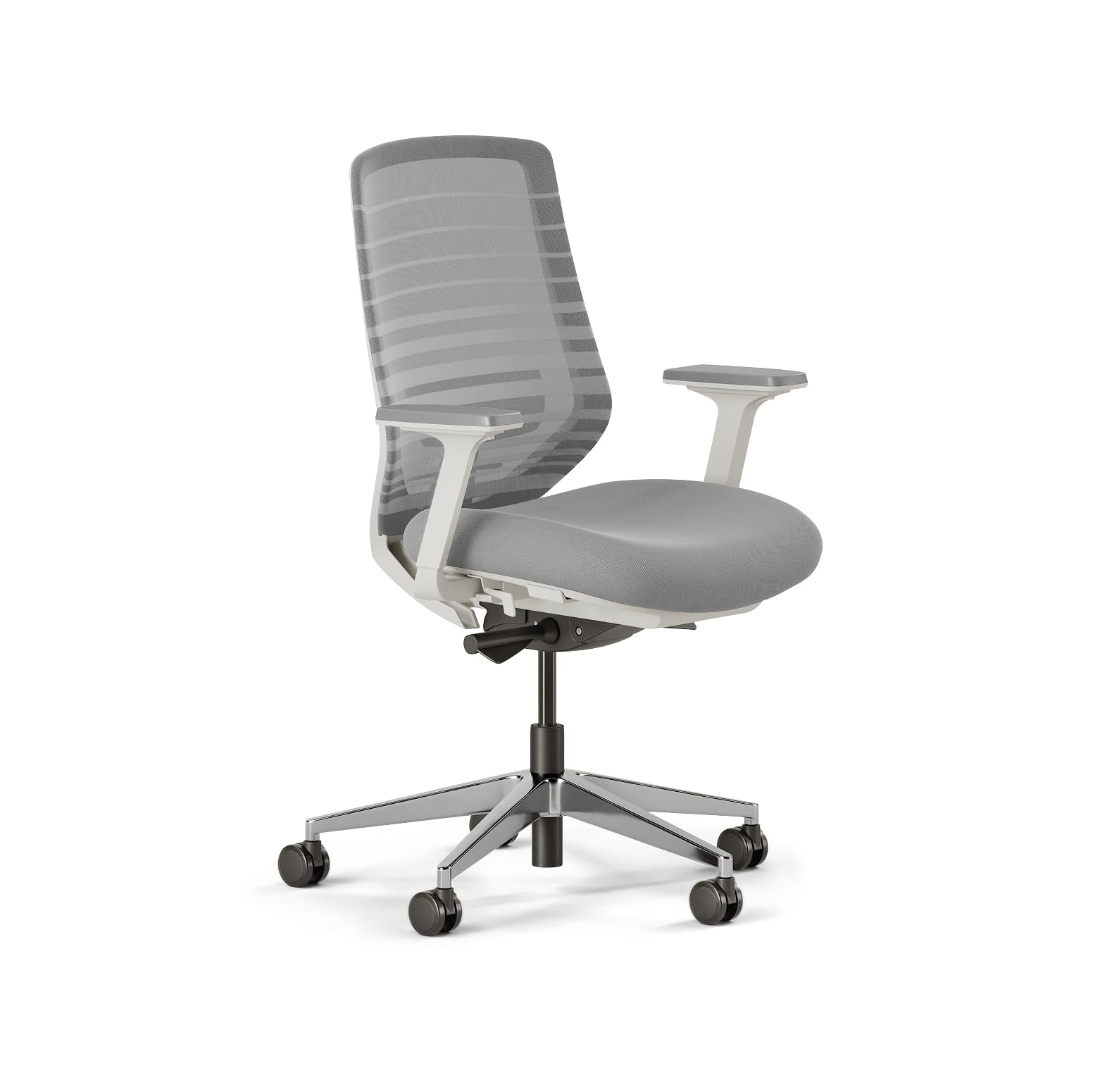
The Branch Ergonomic Chair prioritizes minimalist design without stripping away essential ergonomic features. Its anodized aluminum frame and pebble-white finish give it a modern, clean aesthetic that blends into professional office environments and home workspaces alike. But the aesthetics are backed by a serious adjustability package: eight points of adjustment including seat height, seat depth, backrest height, backrest tilt, armrest height, armrest width, armrest rotation, and lumbar depth.
The seat uses high-density foam cushioning wrapped in breathable mesh on the backrest. The foam is dense enough to avoid premature compression, and the mesh back promotes airflow—no sweaty shirt by lunchtime. The seat depth is adjustable, which allows shorter users to maintain proper back contact without their knees digging into the seat edge. Users as short as 5 feet report excellent fit, which is uncommon for chairs in this tier that often assume a 5-foot-8 minimum height.
The base is a mix of metal and plastic, with smooth-rolling casters that work well on both carpet and hard floors. Assembly takes about 30 minutes with clear instructions. The main ergonomic omission is seat tilt—you can adjust the backrest angle but not the seat pan angle, which means the chair lacks the synchro-tilt found on some competitors. The armrests also slide forward and backward more easily than some users prefer, so you may need to tighten them firmly to maintain position during active work.
Why it’s great
- Anodized aluminum frame offers premium aesthetic and durability
- Eight points of adjustment fit a wide range of body sizes
- Works well for petite users down to 5 feet tall
Good to know
- No seat tilt adjustment for synchro-recline
- Armrests slide forward too easily if not fully tightened
9. WorkPro Quantum 9000 Series Ergonomic Chair

The WorkPro Quantum 9000 has been on the market long enough to accumulate genuine long-term user reviews spanning six years of daily use—a rarity in the chair category where most reviews cover the first few weeks of ownership. Users report that after half a decade of eight-hour days, the mesh seat still holds its shape, the back support remains effective, and the only wear is on the armrest cushion fabric. That level of durability is the benchmark that budget chairs aspire to but rarely reach.
The chair uses a ratchet mechanism for back height adjustment, allowing you to raise or lower the back panel in discrete increments rather than a continuous friction slide. The seat depth adjusts separately, as do the armrests (height and angle). The lumbar support is built into the mesh back rather than using an external pad, which means it does not slip out of position. The waterfall seat front reduces pressure behind the knees, and the mesh construction keeps you cool throughout the day. The chair is rated for professional use of 8 to 10 hours per day and supports up to 275 pounds.
Assembly is refreshingly simple—eight bolts and a 15-minute setup. Components click together with tongue-in-groove precision, and the nylon base is stable without excessive wobble. The main downside is aesthetic: the Quantum 9000 looks utilitarian, with a no-frills black mesh design that blends into the background. The armrests pivot too easily for some users, though this can be mitigated by removing them if preferred. At this price point, you are paying for proven longevity rather than flashy features, and for many buyers, that tradeoff is exactly right.
Why it’s great
- Proven six-year durability with daily 8-hour use
- Ratchet back adjustment for precise torso fit
- Simple 15-minute assembly with eight bolts
Good to know
- Utilitarian design lacks premium aesthetic options
- Armrests pivot easily and may need removal for stability
FAQ
How much lumbar adjustment do I actually need?
Is a full-mesh seat better than a foam cushion?
What does BIFMA certification mean for an ergonomic chair?
Final Thoughts: The Verdict
For most users, the best ergonomic chair winner is the FLEXISPOT ErgoX because it offers dynamic lumbar support, adjustable seat depth for a wide height range, and a retractable footrest at a price that undercuts premium rivals by hundreds. If you want a chair with proven six-year durability and no-nonsense adjustability, grab the WorkPro Quantum 9000. And for the best blend of value and comfort with a high-density foam seat, nothing beats the ProtoArc EC300.

Mo Maruf
I created WellFizz to bridge the gap between vague wellness advice and actionable solutions. My mission is simple: to decode the research and give you practical tools you can actually use.
Beyond the data, I am a passionate traveler. I believe that stepping away from the screen to explore new environments is essential for mental clarity and physical vitality.