Our readers keep the lights on and my smoothie glass nicely filled. As an Amazon Associate, I earn from qualifying purchases.
Bringing a living bonsai into a dim apartment or low-humidity office often ends in crispy leaves and guilt—unless you start with a species that actually wants to live indoors. The difference between a tree that thrives and one that declines is not your skill level but the match between the species and your home’s light, airflow, and watering rhythm.
I’m Mohammad Maruf — the founder and writer behind WellFizz. I’ve spent years analyzing indoor gardening product lines, comparing germination rates, and studying the failure patterns beginners report with live plants versus seed kits across dozens of home environments.
This guide breaks down the most reliable options available today, from pre-grown trees that need only bright indirect light to complete seed kits that teach the art from the ground up. Whether you want instant greenery or a slow meditative project, you’ll find the right bonsai trees for beginners indoors.
How To Choose The Best Bonsai Trees For Beginners Indoors
Indoor bonsai selection is not about decoration—it is about matching a tree’s biological limits to your home’s microclimate. A ficus that thrives in 70°F with moderate humidity will rot in a drafty corner, and a jade that loves bright sun will etiolate on a north-facing windowsill. The decision starts with species, container design, and whether you want instant maturity or the patience of growing from seed.
Species tolerance for indoor conditions
The most forgiving indoor bonsai is the Golden Gate Ficus (Ficus microcarpa), which tolerates lower light than almost any other tree and recovers quickly from missed watering. The Dwarf Jade (Portulacaria afra) is a succulent that needs brighter light but can go weeks without water. Avoid junipers and pines marketed as indoor trees—they require winter dormancy and outdoor exposure, and they will die slowly on a bookshelf.
Starter format: pre-grown tree vs. seed kit
A pre-grown tree, like the Brussel’s Bonsai offerings, gives you an immediate display tree with a trained trunk and canopy. The trade-off is a higher upfront cost and the risk of transit stress. A seed kit costs less but demands 30 to 60 days of cold stratification for some species, followed by months of seedling care before you see anything that resembles a bonsai. Choose the format that fits your patience level and your desire for instant gratification.
Pot and humidity tray quality
The ceramic pot must have a drainage hole—without it, root rot is almost inevitable. A matching humidity tray catches runoff and raises local moisture around the foliage, which matters in dry homes during winter heating months. The best kits include a glazed ceramic pot that resists wicking moisture away from the soil, unlike porous terracotta that dries out the root ball too quickly for a beginner’s schedule.
Quick Comparison
On smaller screens, swipe sideways to see the full table.
| Model | Category | Best For | Key Spec | Amazon |
|---|---|---|---|---|
| Brussel’s Bonsai Golden Gate Ficus | Pre-grown tree | Instant indoor display | 7 years old, 8-16 in | Amazon |
| Brussel’s Bonsai Dwarf Jade | Pre-grown succulent | Low-water homes | 3 years old, 5-8 in | Amazon |
| Planter’s Choice Bonsai Kit | Seed kit | Variety & low prep | 5 seed types, no stratification | Amazon |
| HOME GROWN Deluxe Kit | Seed kit | Traditional growing journey | 4 species, stratification required | Amazon |
| LUOJIBIE Wood Box Kit | Seed kit | Gift-giving & beginners | Wooden box, 4 seed types | Amazon |
In‑Depth Reviews
1. Brussel’s Bonsai – Live Golden Gate Ficus Bonsai Tree
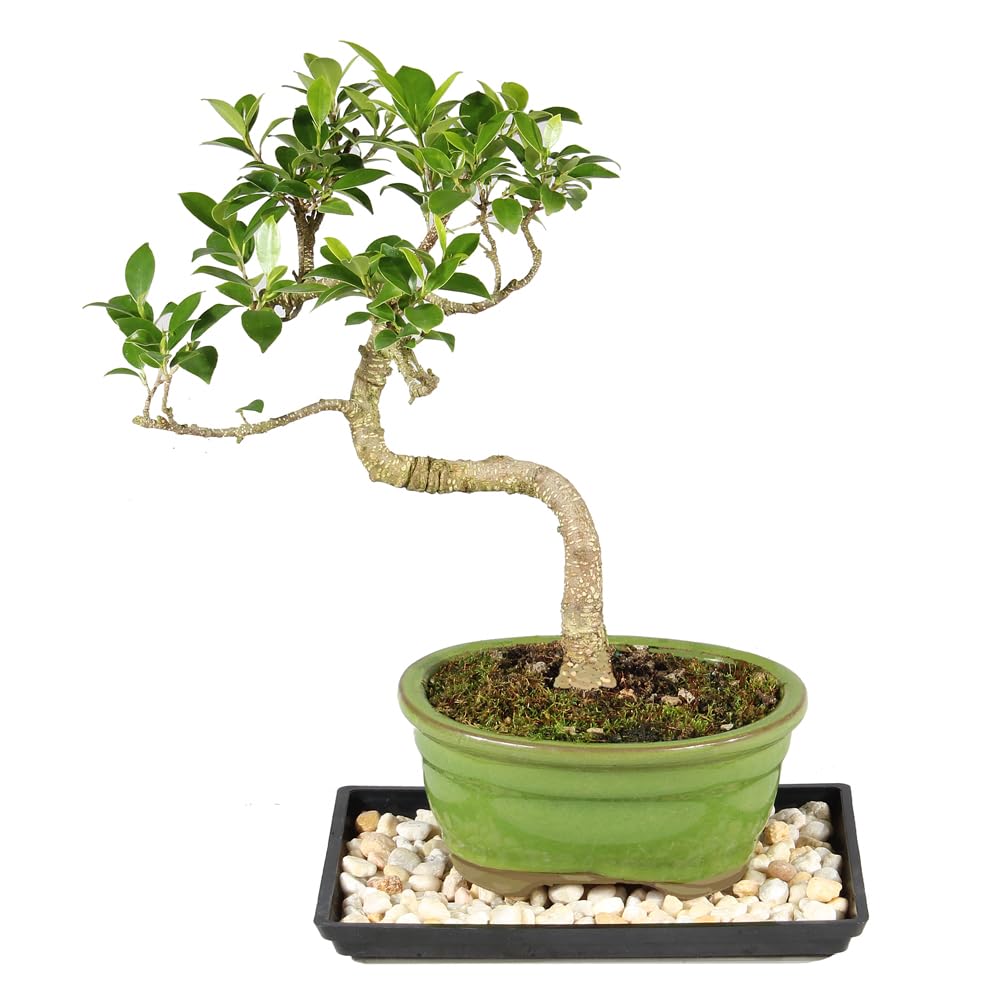
The Golden Gate Ficus from Brussel’s Bonsai is the closest thing to a bulletproof indoor bonsai for absolute beginners. At 7 years old and 8 to 16 inches tall, this tree already has a thick, spiraling trunk and dense dark-green foliage that survives the low light and dry air of most apartments. The moyogi (informal upright) style is already wired, so you get a trained aesthetic without needing to learn pruning or shaping immediately.
The tree ships in a glazed ceramic bonsai pot with a matching humidity tray, which means you can place it on a desk or shelf without worrying about water rings. Customer reports consistently note excellent packaging and healthy arrivals—though a minority of shipments in freezing weather arrived with damaged foliage, so avoid ordering during extreme cold snaps if possible. The ficus responds well to regular watering when the top inch of soil dries out and appreciates a bright spot without direct afternoon sun.
For the beginner who wants a living tree that looks like a bonsai from day one, this is the most forgiving option. The ficus back-buds readily if you prune, drops leaves only when overwatered, and recovers quickly if you forget a watering cycle. It is the safest choice in this review for anyone who has never kept a bonsai alive before.
Why it’s great
- Pre-trained 7-year-old tree with mature trunk and canopy
- Includes glazed ceramic pot and humidity tray
- Ficus microcarpa tolerates low indoor light and irregular watering
Good to know
- Shipping risk in freezing weather—leaves may blacken if temps drop below 50°F in transit
- Pot color and shape vary by availability
2. Brussel’s Bonsai – Live Dwarf Jade Bonsai Tree
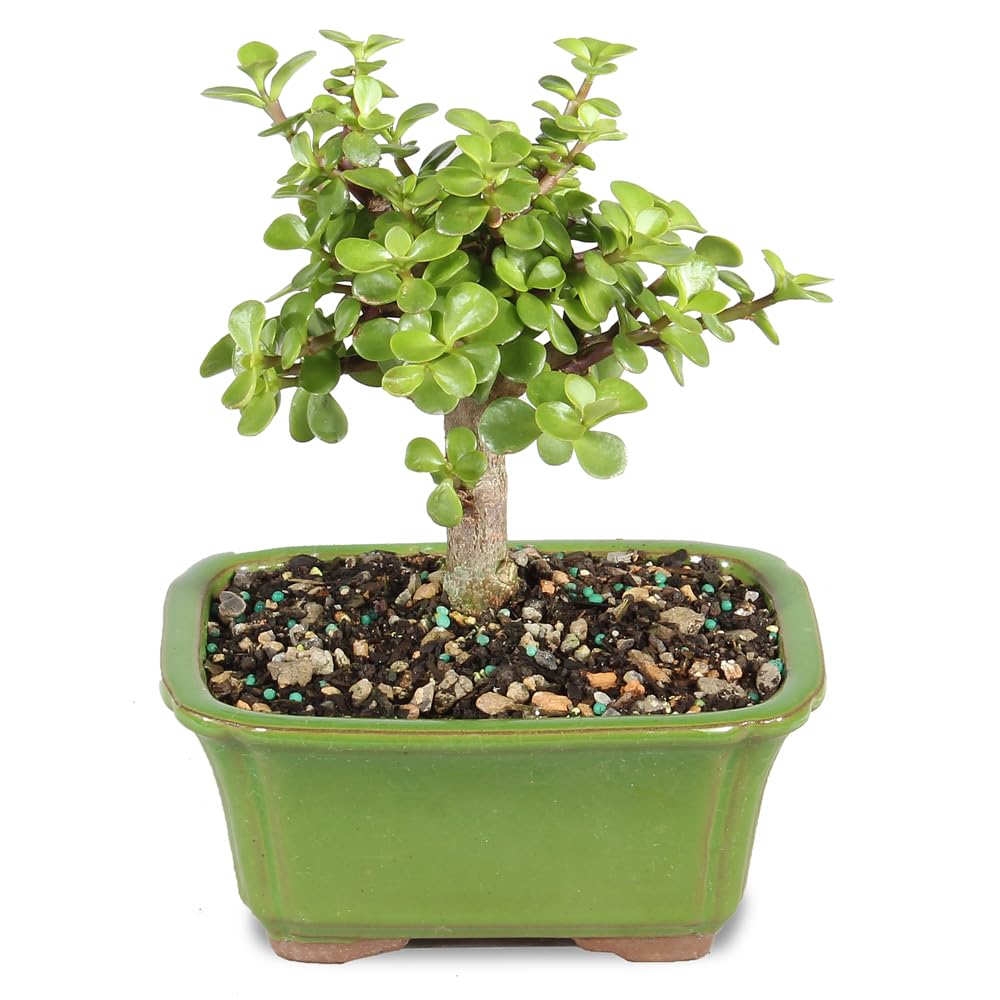
If your home is bright but you travel frequently or simply forget to water, the Dwarf Jade (Portulacaria afra) from Brussel’s Bonsai is the indoor bonsai that forgives neglect. This 3-year-old succulent has a thick woody trunk and small glossy leaves that store water, letting it survive weeks between drinks. At 5 to 8 inches tall in a ceramic bonsai pot, it fits on a sunny windowsill or under a grow light without dominating the space.
The jade thrives on bright indirect light and actually prefers the soil to dry out completely between waterings—the opposite of a ficus. Overwatering is the single fastest way to kill this tree, and a minority of buyers reported that the peat-heavy soil arrived oversaturated, leading to leaf drop. If you receive one with wet soil, repot immediately into a gritty mix with 80 percent perlite or lava rock to prevent root rot. Most shipments arrive healthy, well-packaged with styrofoam, and the pot and saucer are high quality.
For forgetful waterers or homes with strong southern light, this jade is an ideal match. It does not drop leaves from underwatering like a ficus would, and it rewards infrequent care with steady growth and a classic bonsai silhouette.
Why it’s great
- Succulent nature tolerates weeks of missed watering
- Compact size perfect for bright windowsills
- Thick woody trunk gives mature bonsai look at 3 years
Good to know
- Needs bright direct light—will stretch in low light
- Soil may arrive oversaturated; repot if leaves drop
3. Planter’s Choice Bonsai Tree Starter Kit
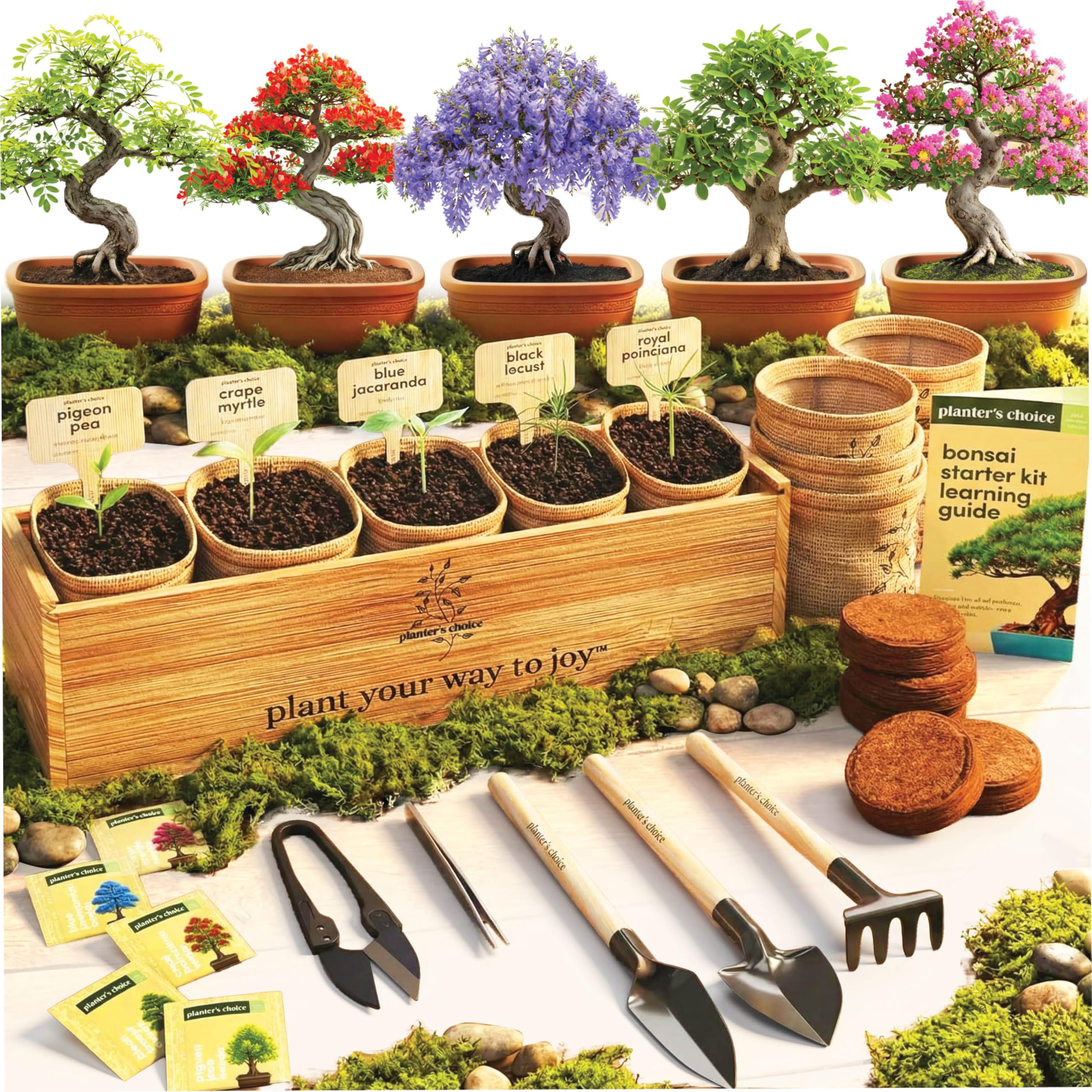
The Planter’s Choice kit stands apart from other seed kits because it eliminates the cold stratification step that trips up most beginners. Five species—Black Locust, Blue Jacaranda, Crape Myrtle, Pigeon Pea, and Delonix Regia—come in a wooden box with burlap growing pots, pre-fertilized expanding soil discs, bamboo markers, and a detailed illustrated guide. You add water, expand the soil, plant, and wait. No refrigerator phase, no timing charts.
Buyers report that germination starts within one to two weeks for most varieties, with the Red Fire (Delonix Regia) being the trickiest. The kit includes a complete tool set in a burlap storage bag, which adds real utility for later pruning and repotting. The rustic burlap pots are breathable but will dry out faster than plastic or ceramic, so check moisture daily during the seedling stage. The instruction booklet covers the history and care of each species, making it an educational experience as much as a gardening project.
For anyone who wants to grow multiple bonsai from seed without the hassle of refrigeration, this kit offers the best balance of variety, ease, and packaging quality. It also makes a strong gift—the wooden box presentation is impressive, and the zero-stratification requirement means the recipient can start immediately.
Why it’s great
- No cold stratification needed—plant immediately
- Five distinct species in one kit for variety
- Includes full tool set and burlap storage bag
Good to know
- Burlap pots dry quickly—requires daily moisture checks
- Delonix Regia (Red Fire) has lower germination success in some batches
4. HOME GROWN Bonsai Tree Kit – Deluxe Kit

The HOME GROWN Deluxe Kit is for the beginner who wants a traditional bonsai experience with a broader botanical education—but only if they are willing to follow the stratification instructions precisely. The kit includes Blue Jacaranda, Crepe Myrtle, Chinese Elm, and Hinoki Cypress seeds, each requiring a specific cold treatment period: Chinese Elm and Hinoki need 60 days at 31-41°F, while Crepe Myrtle needs 30 days. Skipping this step virtually guarantees zero germination.
Beyond the stratification curve, the kit components are solid: four reusable plastic pots with trays, peat pellets, perlite, bamboo markers, and a guide that explains the symbolism and care of each species. The Chinese Elm, once germinated, produces a twisted trunk and small textured leaves that respond well to pruning. The Hinoki Cypress is the slowest grower and requires patience—some buyers reported no sprouts after months, which is consistent with the species’ natural pace.
This kit rewards the beginner who reads directions thoroughly and respects the dormancy requirements. It is not a same-week gratification project. But for someone who enjoys the process and wants the deepest connection to traditional bonsai cultivation, the HOME GROWN kit delivers four genuinely distinct trees with real potential for shaping later.
Why it’s great
- Four classic bonsai species with distinct growth habits
- Includes perlite, peat pellets, and full starter accessories
- Chinese Elm and Hinoki Cypress are rewarding long-term projects
Good to know
- Three of four species require 30-60 day cold stratification
- Hinoki Cypress germination is slow and inconsistent
5. LUOJIBIE Bonsai Tree Starter Kit – Wood Box

The LUOJIBIE kit targets the gift giver who wants a beautiful presentation and a low-friction entry point for someone who has never grown anything. The wooden box itself is the standout feature—laser-etched, hinged, and sturdy enough to be reused as storage after the seeds are planted. Inside, four seed varieties (the exact species vary by batch), expanding soil discs, four pots, and a step-by-step guide make the unboxing experience impressive.
Buyer reports indicate that three out of four seed types typically germinate, with the red fire or similar flowering variety being the least reliable. The guide covers basic care and the meditative aspects of bonsai, which appeals to creative or mindfulness-oriented recipients. The kit does not require extensive stratification for most included species, making it more forgiving than the HOME GROWN kit. However, the pots are basic plastic rather than ceramic, and the long-term planter quality is lower than the pre-grown options.
If you are buying this as a white elephant gift, a birthday present for a teen, or a holiday surprise for a parent who enjoys crafts, the visual appeal of the wooden box justifies the purchase. For someone who wants a serious bonsai with longevity, the pre-grown Brussel’s trees or the Planter’s Choice seed kit offer better long-term value.
Why it’s great
- Beautiful wooden gift box with premium presentation
- Four seed types with easy-to-follow instructions
- Great for white elephant exchanges and craft-oriented recipients
Good to know
- Plastic pots are less durable than glazed ceramic
- One seed variety tends to have lower germination rates
FAQ
Can a ficus bonsai survive in a room with no direct sunlight?
How often should I water a Dwarf Jade bonsai indoors?
Why did my bonsai seed kit produce no sprouts after two weeks?
Final Thoughts: The Verdict
For most users, the bonsai trees for beginners indoors winner is the Brussel’s Bonsai Golden Gate Ficus because it arrives as a mature 7-year-old tree that survives low light and beginner watering mistakes. If you want a forgiving succulent that handles neglect and bright sun, grab the Brussel’s Bonsai Dwarf Jade. And for the seed-kit experience with the least frustration, nothing beats the Planter’s Choice Starter Kit with its no-stratification approach and five species in one box.

Mo Maruf
I created WellFizz to bridge the gap between vague wellness advice and actionable solutions. My mission is simple: to decode the research and give you practical tools you can actually use.
Beyond the data, I am a passionate traveler. I believe that stepping away from the screen to explore new environments is essential for mental clarity and physical vitality.