Our readers keep the lights on and my smoothie glass nicely filled. As an Amazon Associate, I earn from qualifying purchases.
A twig snaps, a beetle scuttles under a log, and an owl calls from deep in the dusk — every kid wants to see the hidden corners of the outdoors, but standard toy cameras flatten that magic into blurry pixels. The challenge is finding gear that survives the trail, works in low light, and magnifies things too small for the naked eye, all while being simple enough for small fingers to operate without frustration.
I’m Mohammad Maruf — the founder and writer behind WellFizz. For years I have analyzed children’s STEM optics, digital microscopes, and exploration cameras to identify which hardware specs actually translate into curiosity-driven play rather than broken screens.
We have put together this evaluation to sort through scopes, binoculars, and instant-print cameras to identify the strongest tools for the backyard and beyond. This guide will help you choose the right camera for kids nature exploration so young naturalists can document every bug, feather, and hidden nest.
How To Choose The Best Camera For Kids Nature Exploration
Kids are eager explorers, but a fragile camera with poor zoom or a dim screen will kill momentum fast. To keep young naturalists engaged outdoors, focus on four traits: optical reach, durability, screen visibility in daylight, and whether the tool captures stills or video for later study.
Optical zoom versus digital zoom
A true 10X optical zoom lets a child see a bird feather or a squirrel’s ear from twenty feet away without pixelation. Cheap digital zoom simply crops and stretches the image, turning distant details into blurry blocks. For bird watching or scanning treetops, optical magnification is non-negotiable.
Screen brightness and viewfinder quality
A 2.4-inch IPS display with good brightness helps kids frame shots under direct afternoon sun. Models with a detachable sun visor or an adjustable screen angle make it easier to compose photos without squinting. For binocular-style tools, adjustable interpupillary distance ensures the image stays single and clear for different face widths.
Water resistance and rugged build
Ponds, damp grass, and sudden rain are part of the adventure. An IP67 rating or a waterproof probe allows safe dipping into streams and fish tanks without destroying the electronics. A shock-absorbent rubber casing or a lanyard also reduces the chance of one drop ending the exploration session.
Storage and sharing ability
Kids who can save photos and watch them later will engage more deeply. An included microSD card (or at least support for one) and a USB connection to a computer let families build a nature journal together. Instant-print models add a tactile reward, though print resolution is lower than what a screen displays.
Quick Comparison
On smaller screens, swipe sideways to see the full table.
| Model | Category | Best For | Key Spec | Amazon |
|---|---|---|---|---|
| OAEBLLE Kids Binoculars | Night Vision Binoculars | Bird watching & low-light spying | 10X optical zoom / 48MP stills | Amazon |
| LeapFrog Magic Adventures Binoculars | Educational Binoculars | Young learners (ages 4+) | 10X optical zoom / BBC media library | Amazon |
| BMDSAE 1000X Digital Microscope | Handheld Microscope | Magnifying tiny bugs & plant cells | 1000X digital magnification / 2.0″ IPS | Amazon |
| Little Experimenter Snake Scope | Borescope | Looking into holes & underwater | 22-inch waterproof tube / LED light | Amazon |
| Daxiongmao Borescope Camera | Borescope | STEM introduction for ages 3-8 | 2.6ft flexible probe / IP67 rated | Amazon |
| HiMont Kids Instant Print Camera | Instant Print Camera | Creative kids who want physical prints | 1080P video / 32GB card included | Amazon |
| ZUODUN 1080p Kids Camera | Digital Point‑and‑Shoot | Everyday outdoor snapshots | 32GB card included / 1080P video | Amazon |
In‑Depth Reviews
1. OAEBLLE Kids Binoculars with Night Vision Camera
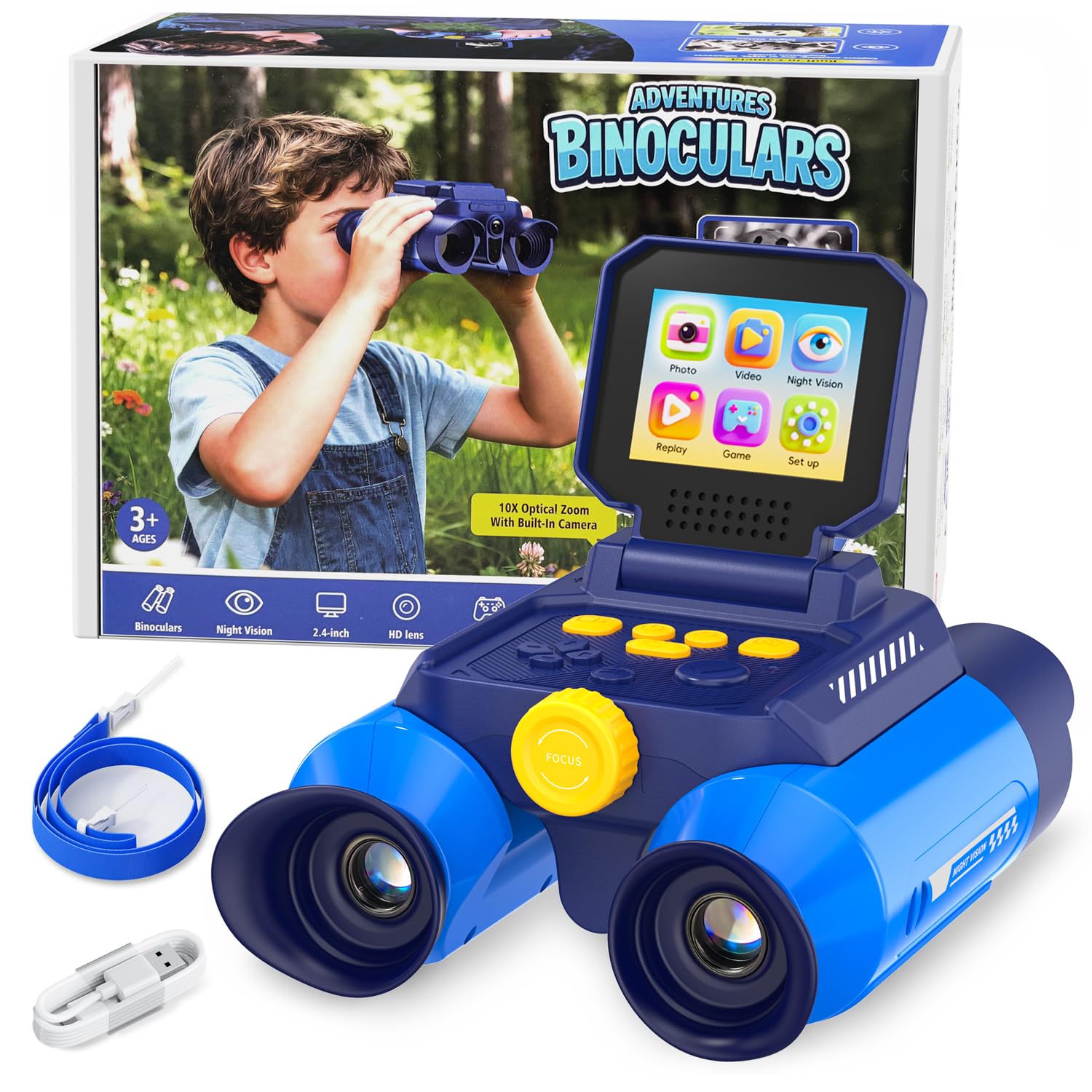
This binocular set combines true 10X optical magnification with a 2.4-inch IPS screen, so kids can watch a hawk’s wing movement from across the field without squinting through a single eyepiece. The built-in 48MP camera and 1080P video loop recording let them document sightings without needing a separate device.
Seven adjustable IR levels make night vision usable up to 25 meters in full darkness — perfect for spotting raccoons or fireflies after sunset. The 2000mAh rechargeable battery and Type-C charging eliminate the need for AA swaps, and the smart Parent Mode allows screen-time limits directly on the device.
Interpupillary distance adjusts for different face widths, and the included lanyard gives young explorers a hands-free way to carry it on a trail. With a durable plastic build and manual focus wheel, this is the most versatile all-in-one tool for daytime scouting and nighttime stealth missions.
Why it’s great
- True 10X optical zoom preserves detail at distance.
- Seven-level IR night vision reveals nocturnal wildlife.
- Large 2000mAh battery charges via USB-C.
Good to know
- MicroSD card required for saving (not included).
- Small hands may need help adjusting focus wheel initially.
2. LeapFrog Magic Adventures Binoculars

LeapFrog’s offering is the only model on this list that comes pre-loaded with 340+ BBC-licensed photos and videos about animals, plants, fungi, and habitats — turning every walk into a guided lesson. The 10X monocular view through a 2.4-inch screen works in both day and night vision modes, with manual focus that even a four-year-old can rotate.
The built-in adventure game and Field Guide Quiz reward kids for spotting real animals, while audio narration supports pre-readers who cannot yet navigate text menus. The body is lightweight and survives multiple drops on grass or carpet, and the included wrist strap keeps it from swinging off during a run.
Parents should note that the demo mode requires a specific button exit to prevent battery drain, and four AA batteries are recommended for regular use. Despite that, the educational depth and intuitive controls make this the top choice for preschoolers and kindergartners just starting nature exploration.
Why it’s great
- 340+ BBC nature videos teach habitat facts on the trail.
- Night vision works for early-evening exploration.
- Audio menus allow non-readers to play independently.
Good to know
- Runs on 4 AA batteries — no rechargeable pack included.
- Playback can freeze occasionally and requires a reset.
3. BMDSAE 1000X Handheld Digital Microscope
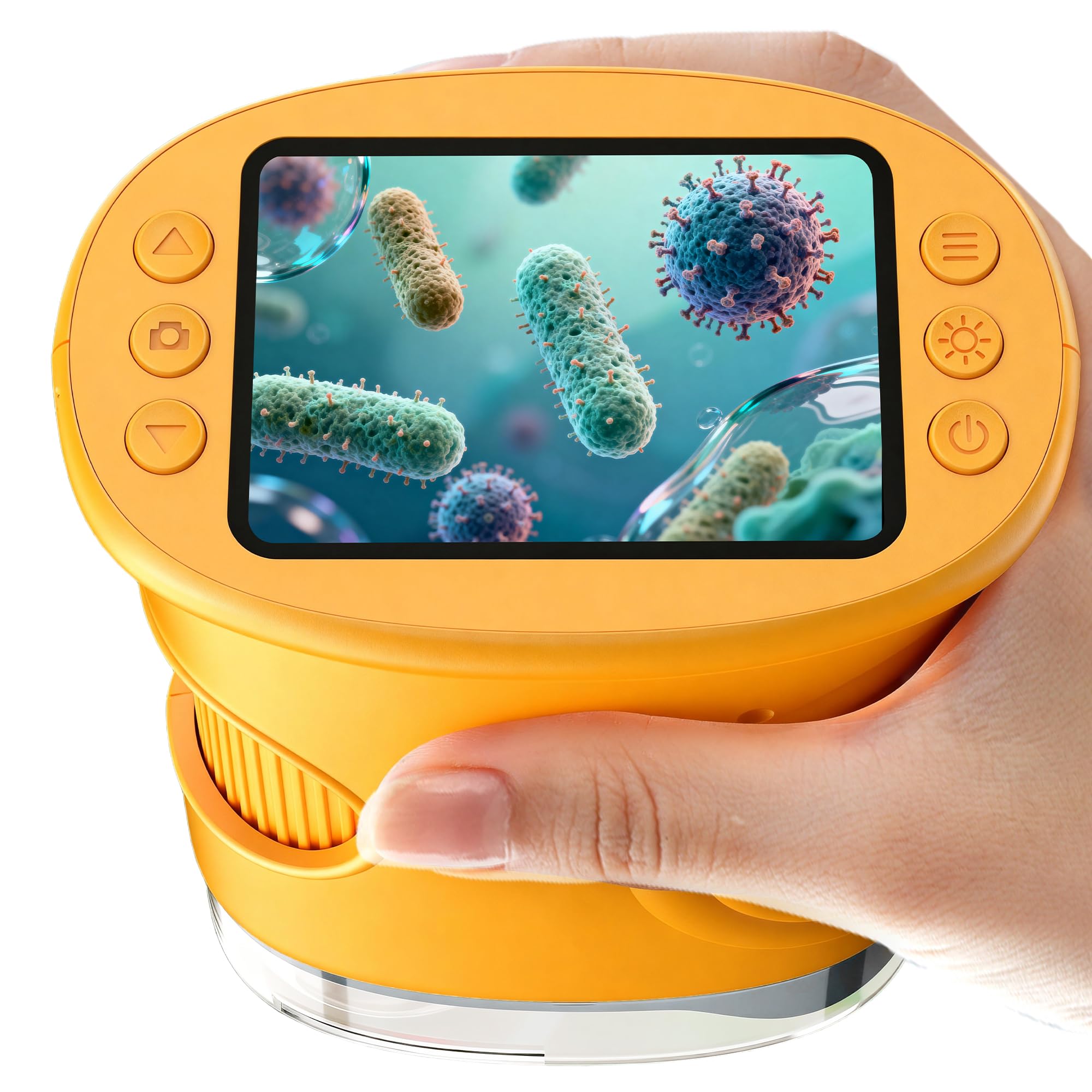
When a leaf’s vein pattern or a butterfly wing scale becomes the main attraction, this 1000X handheld microscope delivers lab-quality imaging in a 200-gram package. The 2.0-inch IPS screen shows real-time 2MP views, and the manual focus wheel gives precise control over depth — something fixed-focus toy scopes cannot replicate.
Eight adjustable LEDs with three brightness levels eliminate glare while illuminating specimens, and the anti-shake rubber casing keeps the image steady in excited little hands. The 600mAh battery provides about two hours of continuous discovery, and USB-C charging means a power bank can keep the session going on a long camping trip.
Photo and video capture onto 32MB internal storage (expandable via microSD) lets kids build a digital nature portfolio. CE, FCC, and CPC safety certifications confirm the ABS plastic is free of sharp edges, and 92% of test users aged 3-12 operated it solo within minutes of opening the box.
Why it’s great
- Manual focus achieves crisp images of plant cells and insect parts.
- 8-LED diffuser prevents glare on shiny specimens.
- Lightweight 200g body with lanyard for trail use.
Good to know
- No slides included — you will need to bring your own.
- Yellow-on-yellow icon labeling can be hard to read in sunlight.
4. Little Experimenter Snake Scope Camera
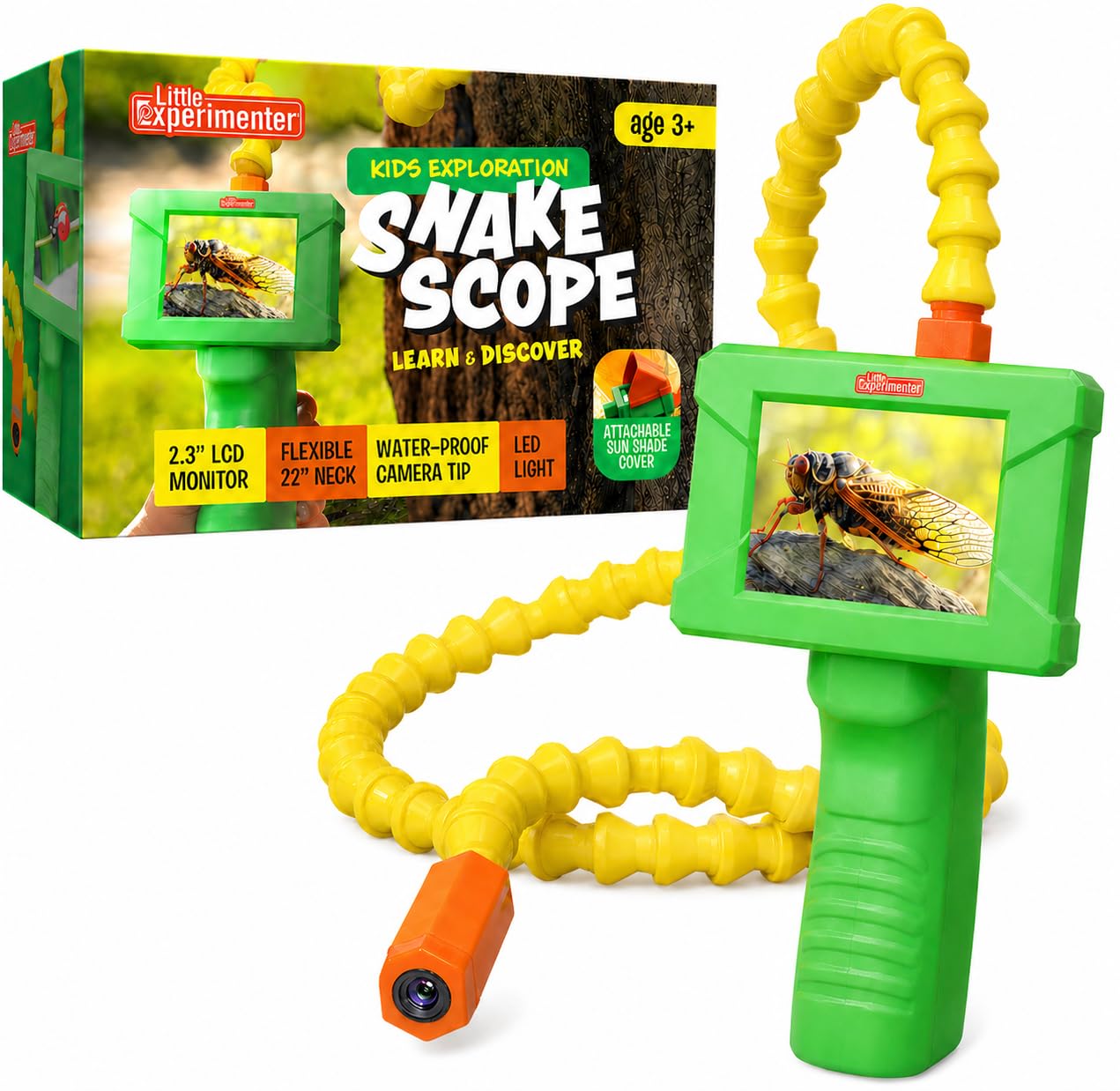
This snake-style borescope uses a 22-inch flexible tube with a waterproof camera and built-in LED light, letting kids peer into squirrel nests, under rocks, and even into shallow ponds without getting wet. The 2.3-inch LCD screen streams live video, and the detachable sun visor helps maintain visibility on bright afternoons.
The LED ring around the camera tip illuminates dark crevices and murky water, making it possible to see crayfish hiding under stream banks or the inside of a hollow log. The tube is short enough for small children to manipulate but long enough to reach into typical backyard hiding spots.
Three AAA batteries are required but not included, which is a slight inconvenience compared to rechargeable rivals. Still, the rugged build and simple push-button controls mean minimal adult coaching, and the 90-day warranty gives peace of mind for outdoor use where drops are inevitable.
Why it’s great
- Waterproof camera lets kids explore streams and puddles safely.
- Detachable sun visor improves screen visibility in daylight.
- 22-inch flexible tube reaches into nests, logs, and holes.
Good to know
- Runs on 3 AAA batteries — no rechargeable option built in.
- The probe length is too short for deep water or tall trees.
5. Daxiongmao Borescope Camera with Light for Kids
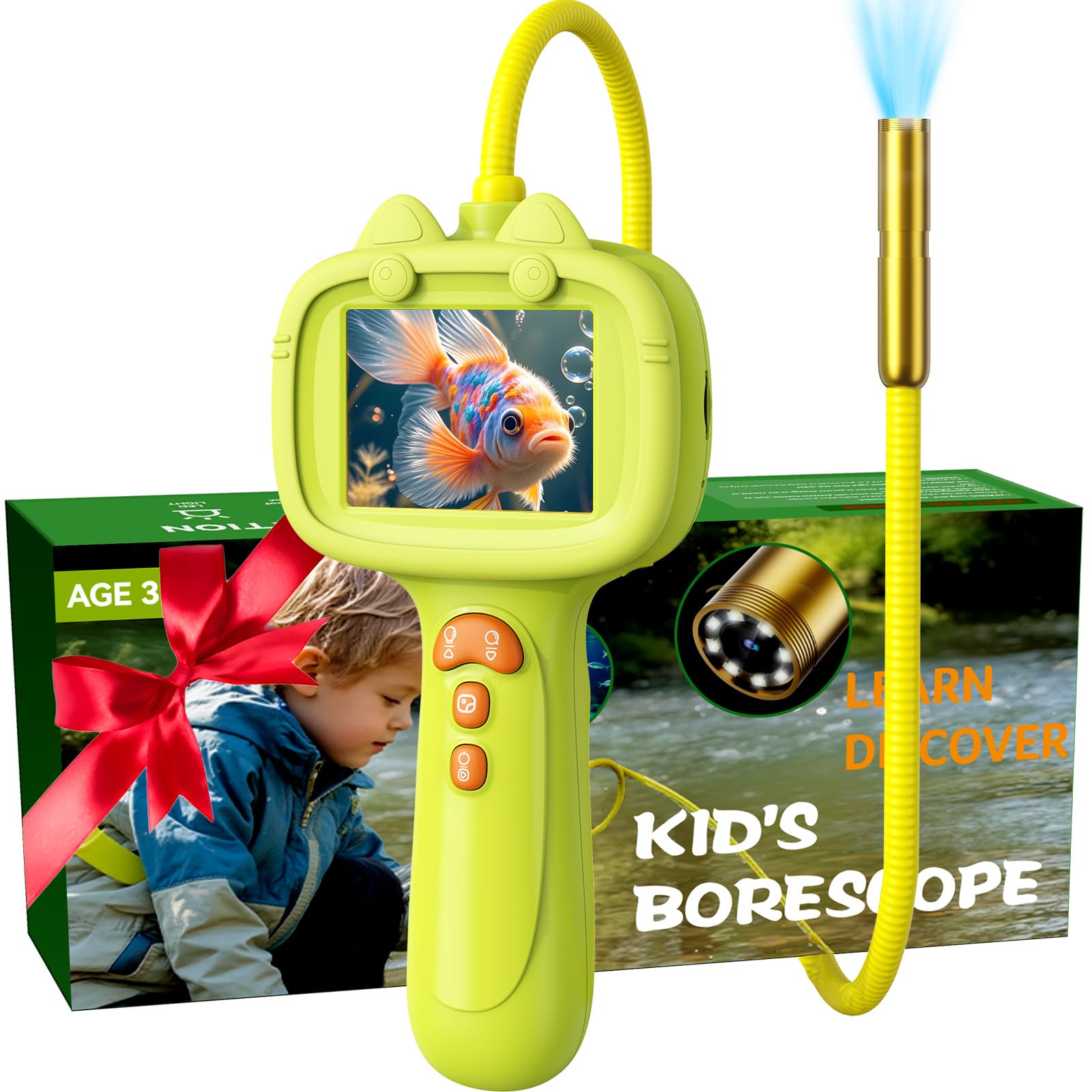
With a 2.6-foot flexible snake tube and 1080P HD camera, this borescope gives younger children (ages 3-8) access to micro-worlds hidden inside tree crevices, under porch decks, or inside ant hills. The eight adjustable LED lights make close-up viewing possible in shadows, and the IP67 waterproof rating means the probe can be dunked in a fish tank or creek without worry.
The 650mAh rechargeable battery lasts about 3.5 hours per charge, and USB Type-C charging keeps the cable standard rather than proprietary. The package does not include a microSD card, which is needed for saving images, but the live-feed nature of a borescope means kids often prefer watching the screen in real time anyway.
Customer feedback highlights that the design is durable enough for regular drops by a curious five-year-old, and the 180-day warranty covers defects that may arise from active play. It is an ideal first exploration tool for a kindergarten-age child who is not yet ready for binocular focusing or microscope adjustments.
Why it’s great
- Long 2.6-foot flexible probe reaches deep into tight spaces.
- IP67 waterproof for safe underwater viewing.
- Rechargeable 650mAh battery with USB-C port.
Good to know
- SD card not included — purchase separately to save images.
- Optimal focus distance of 2-8cm limits wide-area shots.
6. HiMont Kids Instant Print Camera

For kids who want to hold a physical souvenir the moment they snap it, this instant-print camera uses inkless thermal technology to produce dot-matrix or grayscale prints on ZINK-style paper. Three rolls of paper and a set of color pens are included, allowing children to draw on their prints and create a nature journal on the trail.
Beyond printing, the device functions as a standard 1080P digital camera and video recorder with a 2.4-inch screen. Built-in cartoon frames, color filters, and mirror effects add creative variety, while five puzzle games offer entertainment during car rides to the trailhead. The 4-hour battery life and 32GB internal memory card reduce the need for frequent charging or file management.
Print quality is not photo-lab sharp — it is closer to a receipt-grade image with nostalgic charm. The lightweight body and included lanyard make it easy for small hands to carry, and parents report that the combination of instant physical output and digital capture keeps children engaged much longer than a standard point-and-shoot.
Why it’s great
- Instant thermal prints give immediate physical keepsakes.
- 32GB card and 3 paper rolls included out of the box.
- Fun built-in filters and games add entertainment value.
Good to know
- Print resolution is low — dot-matrix quality, not photo-grade.
- Extra paper rolls must be replenished after the first three.
7. ZUODUN 1080p Kids Camera
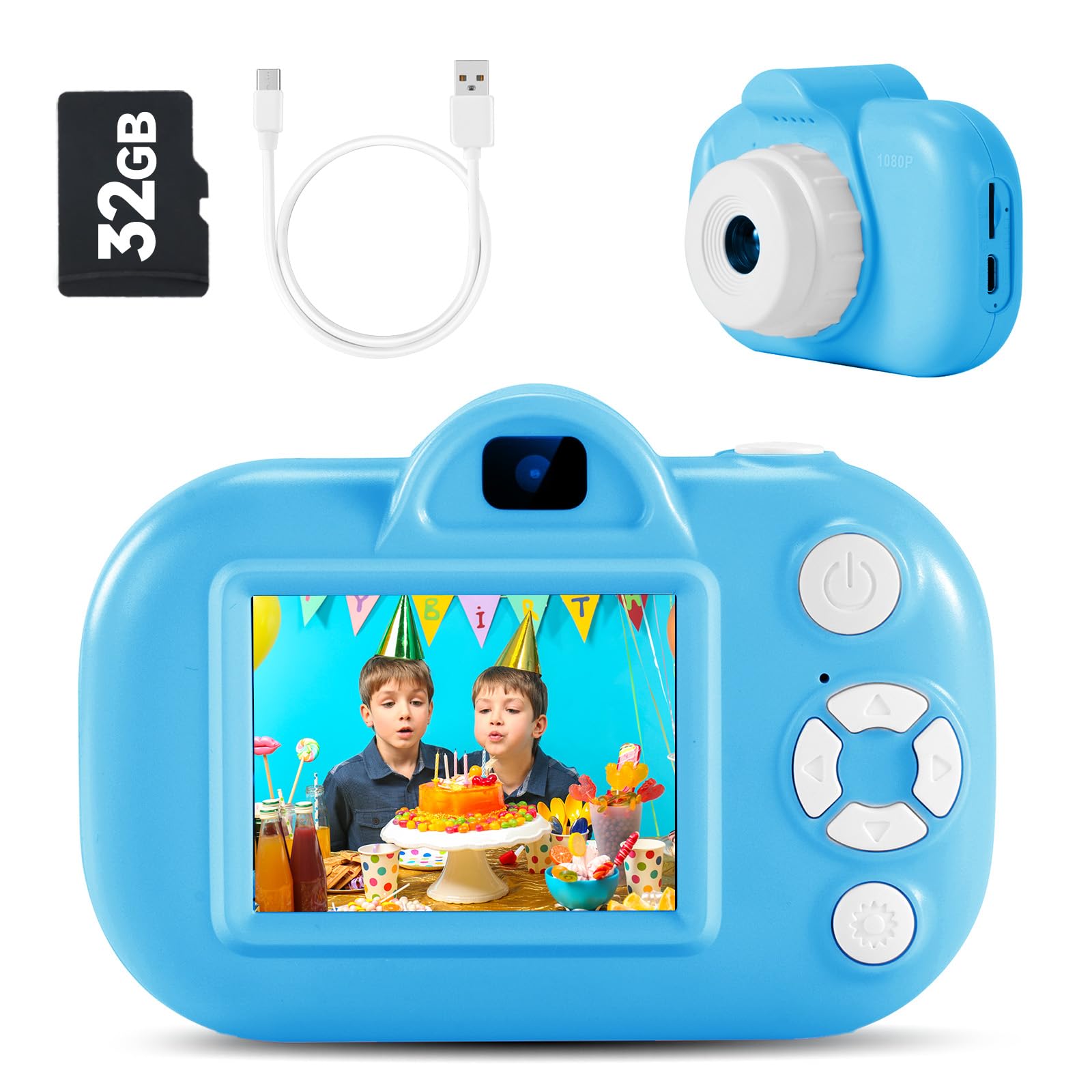
This compact digital camera is a straightforward point-and-shoot designed for ages 3 through 8, packing 1080P video recording and a F2.8 aperture into a body that fits small palms. The silicone protective cover adds grip and drop protection, while the included 32GB microSD card means the camera works right out of the box without extra purchases.
Stylish photo filters and cute frames let kids add personality to their nature shots without needing a smartphone or app. Buttons are large and labeled clearly, and the lithium-ion battery charges via a micro cable, though users recommend charging after each use since standby drain can leave the camera flat mid-adventure.
The viewfinder is largely decorative — kids actually compose shots using the rear screen. Image quality is bright and vibrant for outdoor scenes, but low-light performance is limited by the fixed-aperture lens. For a no-fuss camera that lets a toddler or preschooler start documenting leaves, rocks, and bugs immediately, this is the most accessible entry-level option on the list.
Why it’s great
- 32GB card included — no additional purchase needed.
- Large buttons and silicone bumper suit small, clumsy hands.
- Fun filters and frames encourage creative composition.
Good to know
- Viewfinder is cosmetic — all composing happens on the screen.
- Battery drains in standby; charge after each use.
FAQ
How young is too young for a nature exploration camera?
Can I use a regular action camera instead of a kids nature camera?
Why does a borescope matter for nature play?
Do I need a memory card for every camera?
Final Thoughts: The Verdict
For most users, the camera for kids nature exploration winner is the OAEBLLE Kids Binoculars with Night Vision because its 10X optical zoom, 48MP camera, and seven-level IR night vision cover the widest range of outdoor scenarios from dawn hikes to backyard night missions. If you want a pure educational tool with built-in BBC content for preschoolers, grab the LeapFrog Magic Adventures Binoculars. And for micro-world discovery — leaf cells, insect anatomy, and hidden burrows — nothing beats the BMDSAE 1000X Handheld Digital Microscope.

Mo Maruf
I created WellFizz to bridge the gap between vague wellness advice and actionable solutions. My mission is simple: to decode the research and give you practical tools you can actually use.
Beyond the data, I am a passionate traveler. I believe that stepping away from the screen to explore new environments is essential for mental clarity and physical vitality.