Our readers keep the lights on and my smoothie glass nicely filled. As an Amazon Associate, I earn from qualifying purchases.
Resawing on a bandsaw is the most efficient way to turn thick lumber into thin veneers or dimension stock, but the wrong blade turns that process into a fight against drift, burning, and constant retensioning. A blade built for general curve cutting simply lacks the beam strength and tooth geometry needed for straight, deep cuts through dense hardwoods.
I’m Mohammad Maruf — the founder and writer behind WellFizz. I’ve spent years analyzing the metallurgy, tooth geometry, and tension characteristics that separate a capable resaw blade from one that wanders and dulls prematurely.
After evaluating dozens of models on tooth hardness, kerf width, and cutting stability, I’ve narrowed the field to the seven most reliable options in the market today to help you find the best bandsaw blade for resawing that will handle your shop’s toughest stock.
How To Choose The Best Bandsaw Blade For Resawing
Selecting a resaw blade is about matching tooth count, blade width, and steel type to your saw’s wheel diameter and the species of wood you typically cut. A mismatch in any of these three variables will cause drift, excessive heat, or premature dulling.
Tooth Geometry and TPI
Resawing works best with a hook tooth profile and low teeth per inch — typically 2 TPI or 3 TPI. Hook teeth have a deep gullet that clears chips efficiently, preventing the blade from overheating in dense material. A 3 TPI blade works well on most 14-inch saws cutting hardwoods up to 8 inches tall, while 2 TPI is better suited for thick stock above 8 inches and for fast feed rates in large commercial saws.
Blade Width and Beam Strength
A 3/4-inch wide blade provides the rigidity needed to stay straight under load. Narrower blades flex laterally, causing drift in tall resaw cuts. Verify that your saw’s wheel flanges and upper guide assembly can accept a 3/4-inch blade — some 14-inch saws require modification or are limited to 5/8-inch blades.
Steel Type and Edge Longevity
High-carbon silicon steel blades (like Timber Wolf’s proprietary alloy) stay sharp longer than standard carbon steel and can be resharpened. Carbide-tipped blades cost more upfront but maintain their edge significantly longer in abrasive woods like oak and mahogany, though the small carbide tips on some budget models may not be resharpable. Bi-metal blades (M42 high-speed steel teeth welded to a flexible alloy backer) are best for metal cutting, not resawing wood.
Quick Comparison
On smaller screens, swipe sideways to see the full table.
| Model | Category | Best For | Key Spec | Amazon |
|---|---|---|---|---|
| Timber Wolf 3/4″ x 93-1/2″, 3 TPI | Low-Tension Carbon Steel | Fine finish on thick hardwoods | 3 TPI, 0.025″ kerf, low-tension silicon alloy | Amazon |
| Dark Stone DS23293 Carbide-Tipped | Carbide-Tipped Premium | Heavy-duty hardwood resawing | 2 TPI, carbide-tipped, 93.5″ length | Amazon |
| Dark Stone DS23295 Carbide-Tipped 105″ | Carbide-Tipped Long Length | Large saws with 105″ blade path | 2 TPI, carbide-tipped, 105″ length | Amazon |
| Timber Wolf 3423VPC 93.5″ | Induction-Hardened Carbon Steel | Budget-friendly resawing on 14″ saws | 3 TPI, 0.025″ kerf, induction-hardened teeth | Amazon |
| FOXBC 116″ x 3/4″ 3 TPI | High-Carbon Steel | Jet 14″ saws and thick resaw up to 13″ | 3 TPI, 0.025″ kerf, induction-hardened teeth | Amazon |
| Olson All Pro PGT 1/2″ x 105″ | Precision Ground Tooth | Light resawing on smaller 6″ saws | 3 TPI, 0.025″ kerf, 1/2″ width | Amazon |
| Imachinist M42 Bi-Metal 93″ | Bi-Metal for Metal | Cutting stainless steel and metal | 10/14 TPI variable, 0.035″ thick | Amazon |
In‑Depth Reviews
1. Timber Wolf Bandsaw Blade 3/4″ X 93-1/2″, 3 Tpi

The Timber Wolf 3/4″ resaw blade is the gold standard for 14-inch bandsaws that can tension a wide blade. Its high-silicon, low-carbide steel runs at significantly lower tension than standard carbon steel blades, which reduces stress on the saw’s bearings and trunnions while still delivering straight cuts through 6-inch cherry and 8-inch oak with minimal drift. Users report cut variations as low as 1/100-inch over 28 inches of travel.
The thin kerf (0.025″) wastes less material per cut — a meaningful advantage when resawing expensive figured wood. The 3 TPI hook tooth geometry clears chips efficiently and produces a surface that often requires only light sanding rather than full planing. The blade tracks true out of the box and maintains its edge through multiple resaw sessions before needing a touch-up with a Dremel.
One caveat: some 14-inch Porter Cable and Delta saws require a slight guide adjustment to accommodate the full 3/4-inch width without rubbing. Once dialed in, this blade cuts quieter and smoother than any general-purpose blade in the same price tier.
Why it’s great
- Low-tension design cuts motor strain and bearing wear
- Thin kerf reduces material waste on expensive hardwoods
- Produces smooth finish needing minimal post-cut sanding
Good to know
- May require guide adjustment on some 14″ saws for 3/4″ width
2. Dark Stone 93-1/2″ Carbide-Tipped Resaw Bandsaw Blade
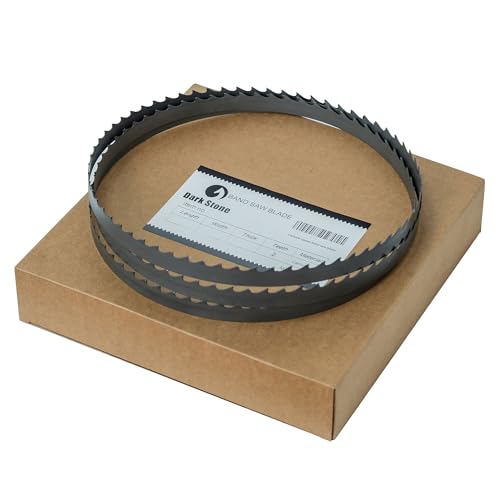
For shops that process dense hardwoods daily, the Dark Stone DS23293 eliminates the frustration of frequent blade changes. The carbide-tipped teeth stay sharp significantly longer than any carbon steel blade — users report cutting through multiple large logs and dozens of board feet of oak without noticeable dulling. The 2 TPI hook tooth geometry with deep gullets evacuates chips fast enough to allow aggressive feed rates without bogging down.
The 0.035-inch kerf is slightly thicker than carbon steel alternatives, but the trade-off is a blade body that resists drift even on 8-inch and taller stock. The precision-welded joint tracks smoothly over the wheels with minimal vibration, and the alloy steel backer handles the higher tension required for carbide blades without stretching. Many users on 14-inch Delta saws with a 6-inch riser block note that this blade cuts 11-inch cherry without stalling where their previous steel blade struggled.
Some users note that the carbide tips appear small compared to industrial-grade blades, and resharpening them is not practical with standard shop tools. If you hit a nail or abrasive inclusion, the blade is essentially a replaceable item rather than a resharpenable one.
Why it’s great
- Carbide edge lasts far longer than carbon steel in abrasive woods
- Deep gullet chip clearance supports fast feed rates
- Stable cut on tall stock up to 8 inches and beyond
Good to know
- Carbide tips are not easily resharpened at home
3. Dark Stone 105″ Carbide-Tipped Resaw Bandsaw Blade
The DS23295 is the same carbide-tipped 2 TPI design as the 93.5-inch model but built for larger bandsaws that use a 105-inch blade path, such as larger Grizzly, Rikon, and Jet saws. The 3/4-inch width provides the beam strength necessary for resawing 8-inch to 11-inch stock, and the carbide teeth handle abrasive woods like quarter-sawn oak without dulling during long production runs. One professional user resawed over 80 linear feet of quarter-sawn oak into 1/4-inch facing strips with a single blade.
The hook tooth geometry with 2 TPI works best on a saw with adequate horsepower — machines with 1 HP or less may struggle to drive the aggressive tooth profile through dense hardwoods without stalling. Users on larger saws report fast, straight cuts with less bogging than their previous steel blades. The surface finish shows saw marks that require a pass through a planer, which is typical for a 2 TPI blade.
Some users on 14-inch Grizzly saws with 1 HP motors found that the 2 TPI catches in hardwoods and makes the cut feel aggressive or jerky. For those saws, a 3 TPI carbon steel blade may offer better control. Verify that your saw can tension a 3/4-inch blade before purchasing.
Why it’s great
- Carbide edge holds up through high-volume resaw production runs
- 3/4″ width minimizes drift on tall stock
- Deep gullets prevent chip clogging in deep cuts
Good to know
- 2 TPI can feel aggressive on 14″ saws with 1 HP motors
4. Timber Wolf 3423VPC 93.5″ x 3/4″ Low Tension Resaw Blade

The entry-level Timber Wolf blade brings the same low-tension silicon steel technology as their premium model but at a significantly lower price point. The induction-hardened tooth edge is 50 percent sharper than stamped or crush-ground competitor blades, and the precision hardening extends through the tooth rather than just a surface flame treatment. This translates to a blade that stays sharp through multiple resaw projects in maple, ebony, and rosewood without the need for frequent retensioning.
Users consistently report cutting 6-inch to 8-inch walnut and cherry boards into thin strips with no blade wander, and the 3 TPI leaves a finish that requires minimal sanding. The blade runs cool even during extended cuts, thanks to the ductile steel backer that flexes without generating excessive heat. Many users note that the included tuning instructions are thorough enough to help even first-time resaw users dial in their saw.
The 0.025-inch kerf means this blade wastes minimal wood per cut, but the thin body can deflect if you push the feed rate too aggressively on very dense or figure-heavy stock. It remains the most cost-effective choice for hobbyists who resaw occasionally but demand professional-grade cut quality.
Why it’s great
- Induction-hardened teeth stay sharp significantly longer than stamped blades
- Low-tension design reduces saw wear and heat buildup
- Excellent cut quality on hardwoods up to 8 inches thick
Good to know
- Thin kerf can wander if feed rate is too aggressive
5. FOXBC 116 Inch x 3/4 Inch x 3 TPI Bandsaw Blade

The FOXBC 116-inch blade is purpose-built for Jet JWBS-14SFX and JBS-14SFV saws, but it also fits many other 14-inch saws with riser blocks that use longer blades. The 3/4-inch width and 3 TPI induction-hardened teeth provide the stiffness needed for resawing stock up to 13 inches tall. Users report cutting 13-inch sugar maple into 1.5-inch boards with straight, clean cuts comparable to name-brand blades at a lower price.
The high-carbon steel backer holds tension well during prolonged resaw sessions, and the precision-milled teeth track true on the wheels without excessive vibration. The 0.025-inch kerf keeps material waste low, and the heat-resistant steel body prevents the blade from softening during heavy cuts in dense wood. Several users note that the blade performs similarly to the Timber Wolf in their 14-inch saws.
A small number of users received blades that arrived dull or exhibited drift on the first cut, suggesting some quality control inconsistency. However, the majority of reviews indicate excellent value for the price, especially for those who need a 116-inch length and want to avoid paying premium prices for a short blade that requires custom welding.
Why it’s great
- Excellent fit for Jet 14″ saws with 116″ blade length requirement
- Cuts straight through 13-inch hardwoods with minimal drift
- Good value compared to premium brands at similar performance
Good to know
- Occasional quality control issues reported with sharpness
6. Olson Saw APG72605 1/2″ x 105-Inch All Pro PGT Band Saw Blade

The Olson All Pro PGT is the best option for smaller 6-inch bandsaws that cannot tension a full 3/4-inch blade. The 1/2-inch width still provides enough beam strength for light resawing up to about 4 to 5 inches in depth, and the Precision Ground Tooth (PGT) design cuts faster and stays sharper than standard milled blades on older Delta 6-inch saws. The carbon-rich steel strikes a good balance between strength and flexibility for smaller wheel diameters.
Users on 14-inch Delta saws who tried this blade after failing to track a 3/4-inch blade found that the 5/8-inch Olson variant worked perfectly. The 3 TPI hook tooth geometry clears chips effectively in softwoods and mild hardwoods, and the blade runs true with minimal vibration. Several users saved compared to pricier brands and reported equal performance on 11-inch maple resaw cuts.
The 1/2-inch width limits the maximum cut height you can achieve without drift. For saws that can accept wider blades, the 3/4-inch options in this guide will deliver straighter cuts on tall stock. This blade is best suited as a reliable backup or for smaller machines where 3/4-inch blades won’t fit.
Why it’s great
- Precision ground teeth provide fast, clean cuts for light resaw work
- Works well on smaller 6″ saws where 3/4″ blades won’t track
- Good value for occasional resawing on 14″ saws
Good to know
- 1/2″ width limits maximum resaw height before drift appears
7. Imachinist S93341014SS M42 Bi-Metal 93″ Bandsaw Blade
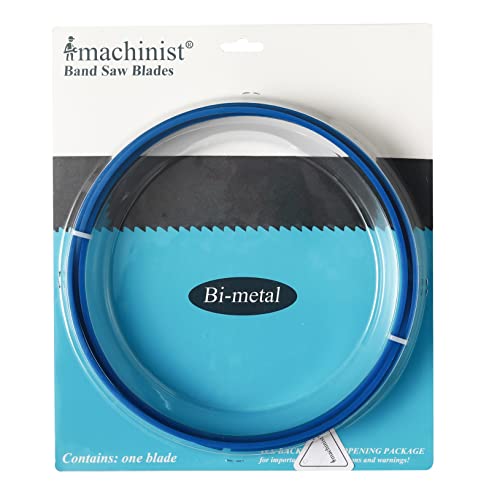
The Imachinist M42 bi-metal blade is not a resaw blade for wood, but it earns a mention for shops that need one blade for both metal cutting and very light wood resawing. The 10/14 variable TPI and 0.035-inch thick body are engineered for stainless steel, mild steel, and other ferrous metals. The M42 high-speed steel teeth welded to a flexible alloy backer provide exceptional durability when cutting through 2-inch DOM tubing or stainless bar stock.
A professional welder using these blades for 5 to 6 years reports that a single blade lasts over a year with regular use on 10/14 TPI cuts, outperforming more expensive blades from premium brands. The blade maintains accuracy even after hundreds of cuts without coolant. The weld joint is sturdy and tracks smoothly on the wheels without separation.
This blade is not ideal for dedicated wood resawing — the fine tooth pitch (10/14 TPI) will clog quickly in softwood, and the 0.035-inch thickness creates a wider kerf that wastes material. Use it exclusively for metal cutting, or keep it as a secondary blade for the rare occasion you need to cut both materials on the same saw.
Why it’s great
- M42 teeth last through heavy steel cutting without edge breakdown
- Flexible alloy backer handles small wheel diameters well
- Exceptional value for long-term metal cutting
Good to know
- 10/14 TPI is too fine for effective wood resawing
FAQ
Can I use a 3 TPI resaw blade on a 14-inch bandsaw with a 1 HP motor?
How do I know if my saw can accept a 3/4-inch wide resaw blade?
Is a carbide-tipped resaw blade worth the higher cost for occasional use?
Why does my resaw blade drift to one side even after tuning my saw?
Final Thoughts: The Verdict
For most users, the best bandsaw blade for resawing winner is the Timber Wolf 3/4″ x 93-1/2″ 3 TPI because it combines low-tension operation, a thin kerf, and a smooth finish that reduces post-cut work. If you need long-lasting carbide edge retention for heavy hardwood production, grab the Dark Stone DS23293 93.5″ Carbide-Tipped. And for smaller saws that can’t take a 3/4-inch blade, nothing beats the Olson All Pro PGT 1/2″ for dependable light resaw performance.

Mo Maruf
I created WellFizz to bridge the gap between vague wellness advice and actionable solutions. My mission is simple: to decode the research and give you practical tools you can actually use.
Beyond the data, I am a passionate traveler. I believe that stepping away from the screen to explore new environments is essential for mental clarity and physical vitality.