Our readers keep the lights on and my smoothie glass nicely filled. As an Amazon Associate, I earn from qualifying purchases.
The 27-inch monitor has become the goldilocks zone for desktop computing—large enough for immersive gaming and true multitasking, yet compact enough to fit on a standard desk without dominating it. But with panel technologies ranging from budget IPS to premium OLED and resolutions from Full HD to 4K, the choice is more nuanced than simply picking a size.
I’m Mohammad Maruf — the founder and writer behind WellFizz. I’ve spent years dissecting monitor specifications, analyzing panel uniformity, color accuracy, and refresh rate trade-offs to separate marketing claims from real-world performance.
Whether you’re a competitive gamer chasing high frame rates or a creative professional who demands color-critical accuracy, this guide delivers the clarity you need to make a confident decision. Here is my analysis of the best 27 inch monitor choices available right now.
How To Choose The Best 27 Inch Monitor
The right 27-inch monitor depends entirely on how you use it. A graphic designer and a competitive FPS gamer have almost opposite needs. Before you start comparing models, focus on three core pillars: resolution, panel type, and refresh rate.
Resolution at 27 Inches: 1080p, QHD, or 4K?
At 27 inches, pixel density becomes a critical factor. Full HD (1920×1080) at this size yields roughly 82 PPI, which results in a noticeably softer image and visible pixel structure—fine for budget gaming where frame rates are the priority, but not for text work. QHD (2560×1440) hits the sweet spot at about 109 PPI, offering sharp text and excellent gaming detail without the heavy graphics card demand of 4K. 4K UHD (3840×2160) delivers a stunning 163 PPI, ideal for photo editing, video production, and immersive single-player gaming, but requires a powerful GPU to run at high frame rates.
Panel Technology: IPS vs. VA vs. OLED
IPS (In-Plane Switching) panels dominate the market for their wide viewing angles and color accuracy, making them the default choice for creative work and general use. VA (Vertical Alignment) panels offer superior native contrast ratios (often 3000:1 vs IPS’s 1000:1), producing deeper blacks and better dark-room performance, but they suffer from slower response times and color shift off-angle. OLED panels deliver per-pixel lighting, infinite contrast ratios, and the fastest response times (0.03ms GtG), but they carry a price premium and require careful management to prevent burn-in over years of static desktop use.
Refresh Rate and Response Time: What Matters to You?
For office productivity and content creation, a 60Hz to 120Hz monitor with a standard 5ms response time is perfectly adequate—the smoothness gain from 60Hz to 120Hz is real even for cursor movement and scrolling. For competitive gaming, 144Hz or 165Hz is the baseline, while 240Hz and above becomes perceptible to experienced players. Response time (measured in GtG, Gray-to-Gray) must be considered alongside refresh rate—a 0.3ms or 1ms rating ensures minimal ghosting, while 4ms or 5ms panels can show blur in fast-paced titles.
Quick Comparison
On smaller screens, swipe sideways to see the full table.
| Model | Category | Best For | Key Spec | Amazon |
|---|---|---|---|---|
| ASUS TUF Gaming VG27AQM5A | Mid-Range | Competitive Gaming | 300Hz / 0.3ms GtG | Amazon |
| LG 27GS93QE OLED | Premium | High-End Gaming & HDR | 240Hz / 0.03ms GtG | Amazon |
| Dell UltraSharp U2725QE | Premium | Professional Creative Work | 4K 120Hz / Delta E < 1.5 | Amazon |
| Samsung ViewFinity S8 S80D | Mid-Range | Office & Productivity | 4K UHD / Ergonomic Stand | Amazon |
| Alienware AW2725DM | Mid-Range | All-Round Gaming | 180Hz / DCI-P3 95% | Amazon |
| AOC Q27G4XN | Budget | Value QHD Gaming | 180Hz / 1ms GtG | Amazon |
| KTC H27P27 | Budget | Entry-Level 4K | 4K IPS / HDR400 | Amazon |
| Acer Nitro KG271U | Budget | Console Gaming | 180Hz / 0.5ms GtG | Amazon |
| ASUS TUF Gaming VG277Q1A | Budget | Entry-Level High Refresh Rate | 165Hz / VA Panel | Amazon |
In‑Depth Reviews
1. ASUS TUF Gaming VG27AQM5A
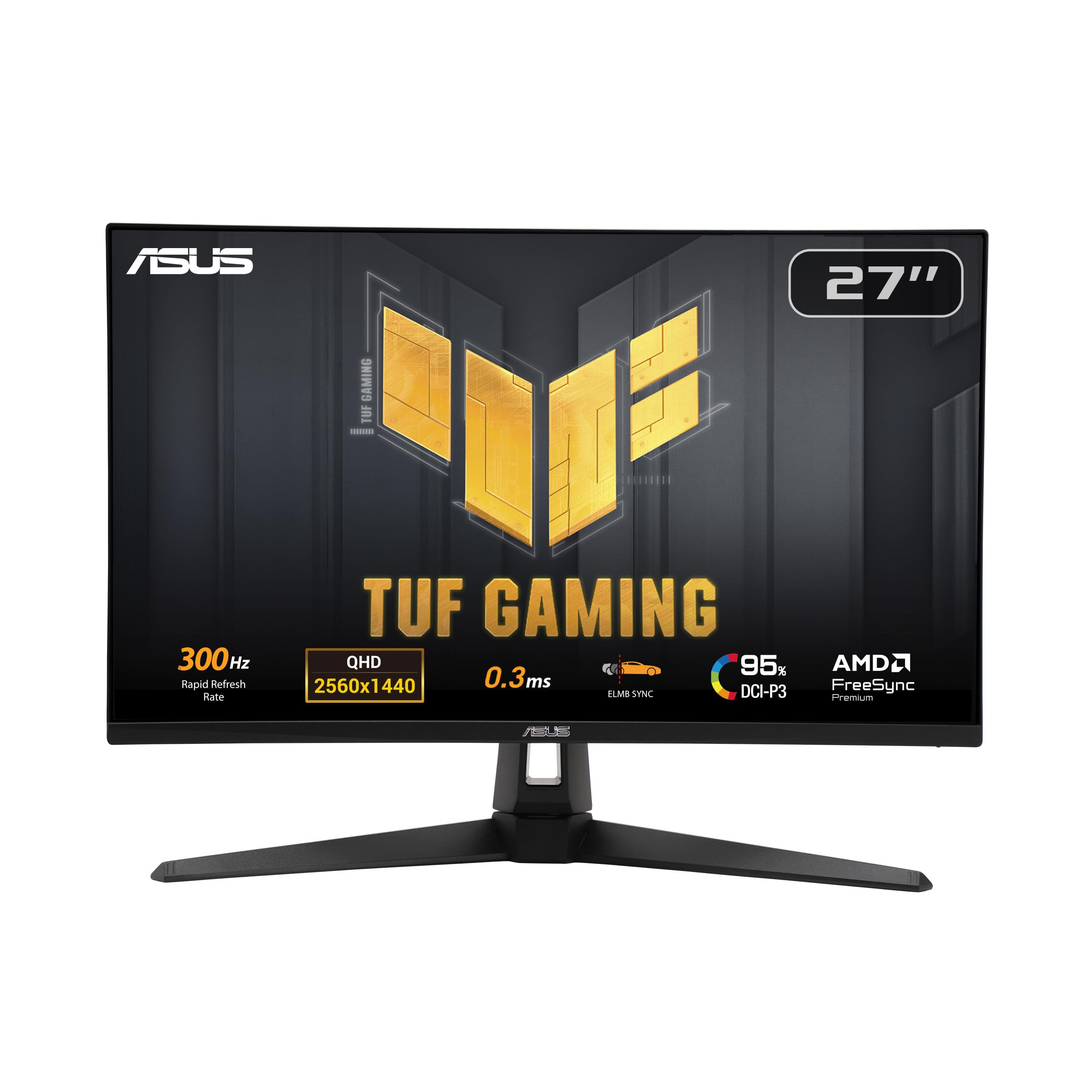
The VG27AQM5A is built for one thing: eliminating motion blur at the highest competitive levels. Its Fast IPS panel delivers a 300Hz refresh rate paired with a 0.3ms GtG response time, a combination that makes even 240Hz monitors feel slightly pedestrian. The ELMB Sync technology allows variable refresh rate and motion blur reduction to run simultaneously, a rare feature that eliminates both tearing and ghosting without trade-offs.
Color performance is strong for a gaming-focused display, covering 95% of DCI-P3 out of the box. The QHD 1440p resolution at 27 inches offers an excellent 109 PPI for sharp visuals without demanding the GPU horsepower required by 4K. The DisplayWidget Center software lets you adjust monitor settings with a mouse rather than fumbling with OSD buttons, which is a genuine quality-of-life improvement for frequent tweakers.
The built-in speakers are best described as functional—fine for system sounds but inadequate for immersive gaming or content consumption. HDR performance is decent but not transformative, typical for a mid-range IPS monitor with no full-array local dimming. If your goal is raw speed and buttery-smooth motion in competitive shooters and racing titles, this ASUS is a top-tier pick at its price point.
Why it’s great
- Industry-leading 300Hz refresh rate with 0.3ms GtG response time.
- ELMB Sync eliminates tearing and ghosting simultaneously.
- Excellent 95% DCI-P3 color coverage for a gaming monitor.
Good to know
- Built-in speakers are weak and lack bass.
- HDR brightness is moderate; not suitable for true HDR content.
- Stand is functional but not as premium as the panel itself.
2. LG 27GS93QE Ultragear OLED
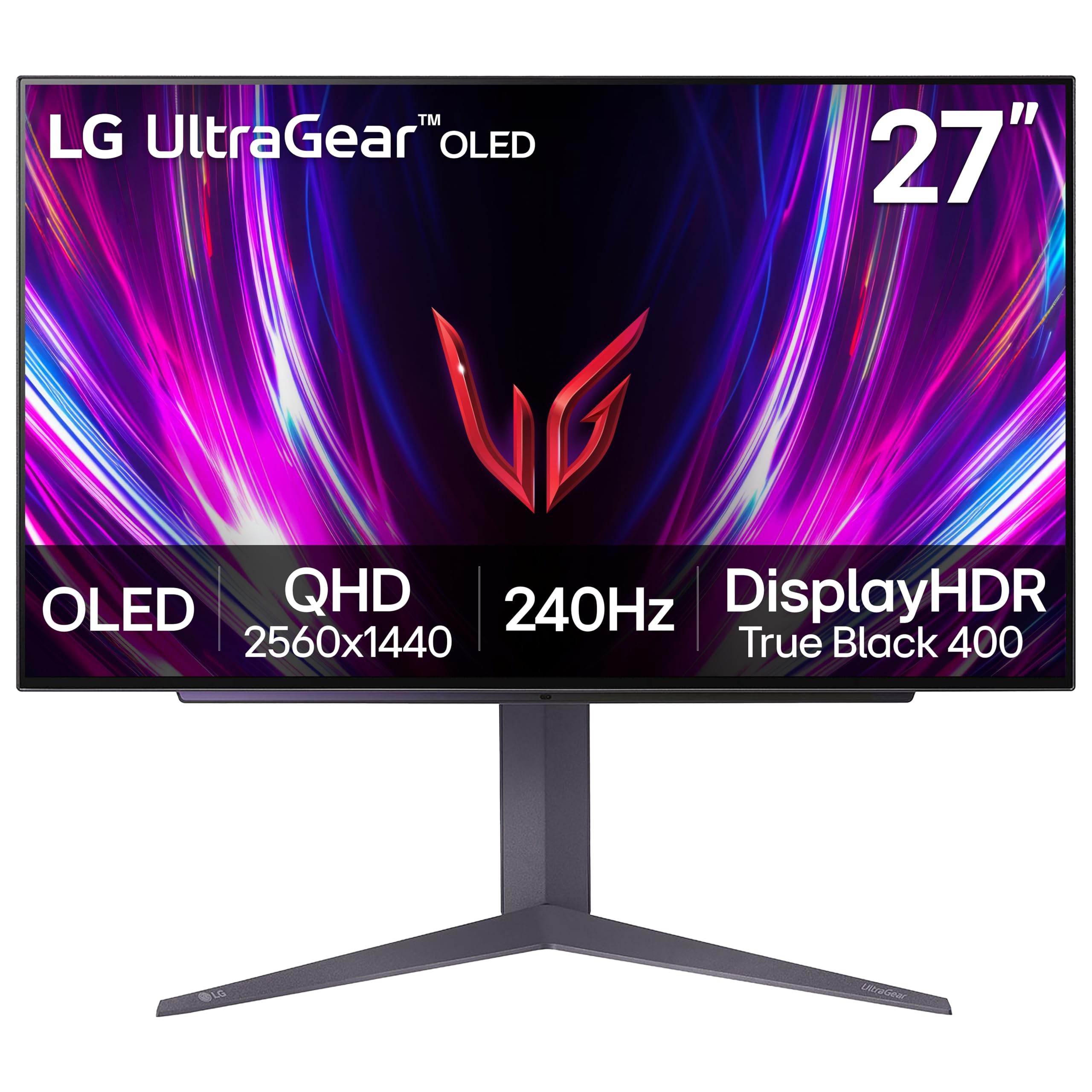
The LG 27GS93QE represents the current pinnacle of gaming monitor technology at 27 inches. Its WOLED panel delivers per-pixel lighting with a 1.5M:1 contrast ratio, producing blacks that are truly infinite and highlights that pop without blooming. The 0.03ms GtG response time is effectively instant—there is no perceivable ghosting or motion blur even in the fastest-paced scenes.
VESA DisplayHDR True Black 400 certification ensures that HDR content looks markedly better than on any IPS or VA panel in this size. The anti-glare/low reflection coating is a thoughtful addition for bright rooms, maintaining near-OLED contrast without the purple tint issues that can affect QD-OLED panels. Color coverage hits 98.5% DCI-P3, delivering vibrant, accurate imagery for both gaming and content consumption.
The monitor includes HDMI 2.1 ports, making it fully compatible with PlayStation 5 and Xbox Series X at 1440p 120Hz. A two-year warranty covers the OLED panel specifically, addressing the primary concern buyers have about OLED longevity. The auto-input switching is not HDMI-CEC, so you may need to use the included remote to switch sources manually—a minor annoyance on an otherwise exceptional display.
Why it’s great
- Infinite contrast ratio with true blacks and no blooming.
- Instantaneous 0.03ms response time for zero motion blur.
- Excellent color accuracy with 98.5% DCI-P3 coverage.
Good to know
- Brightness is lower than high-end IPS panels; best in a dimmer room.
- Requires care to avoid burn-in with static desktop elements.
- Auto-input switching does not support HDMI-CEC standard.
3. Dell UltraSharp U2725QE
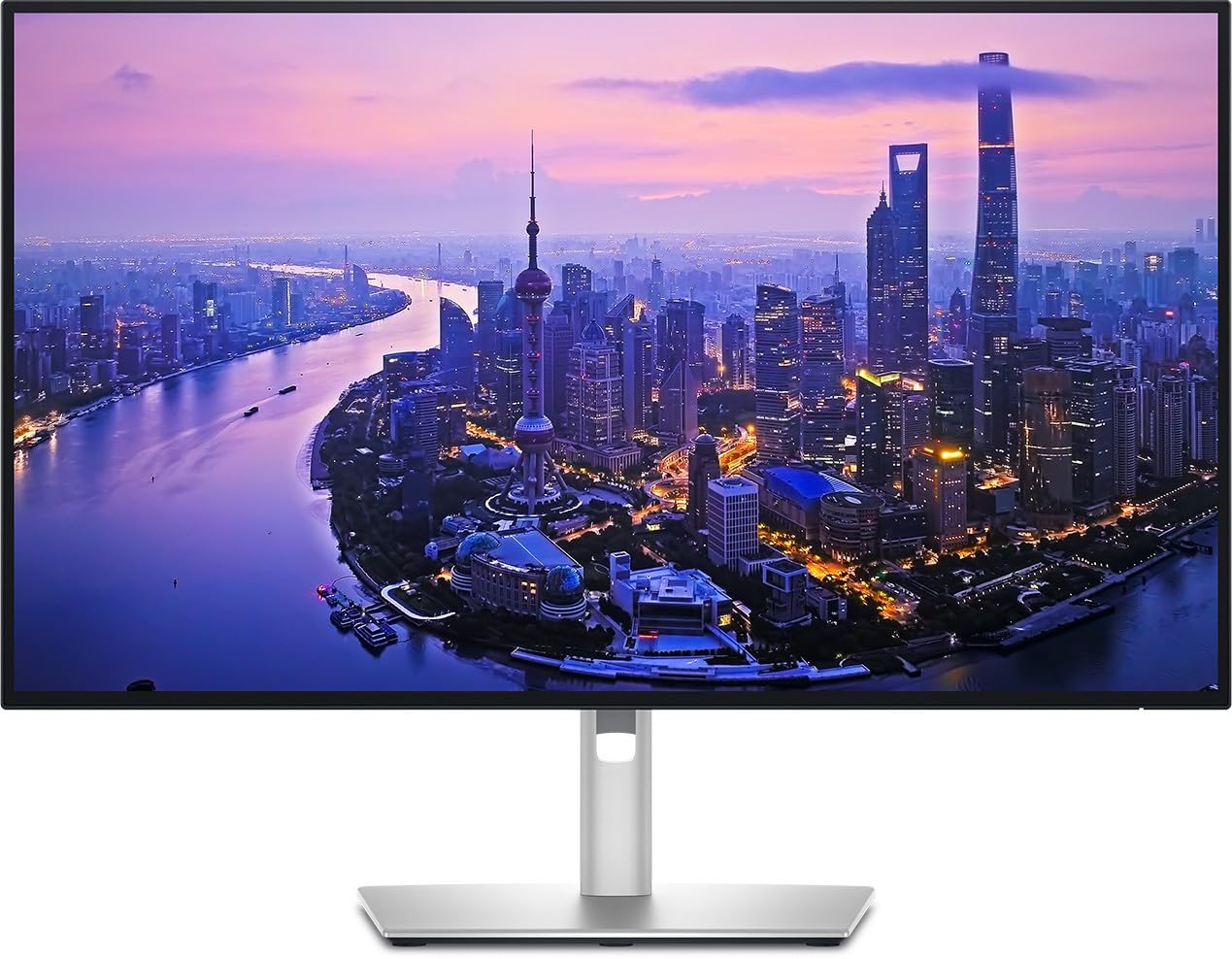
The Dell UltraSharp U2725QE is the professional creative’s workstation monitor, period. Its 4K UHD IPS Black panel delivers a 2000:1 contrast ratio—double that of standard IPS—while maintaining the wide viewing angles and color accuracy that Dell’s UltraSharp line is known for. Factory calibration to Delta E less than 1.5 means you get accurate color out of the box, a critical advantage for photo editors and video colorists who can’t afford to second-guess their display.
The 120Hz refresh rate is a meaningful upgrade from the 60Hz standard on previous UltraSharp models, making cursor movement and window dragging feel fluid without sacrificing color fidelity. Connectivity is exceptional: Thunderbolt 4 delivers up to 140W charging to a connected laptop, while also handling video and data over a single cable, and supporting daisy-chaining to a second 4K monitor. The full ergonomic stand offers height, tilt, swivel, and pivot adjustment, plus an ambient light sensor for automatic brightness adjustment.
This is not a gaming monitor. The 5ms response time and lack of G-Sync or FreeSync support mean you will notice ghosting in fast-moving games. The anti-glare coating is effective for office lighting but can make the image look slightly grainy compared to glossy panels. If your priority is professional-grade color accuracy and a future-proof dock built into your monitor, this Dell is the clear choice, but Mac users should verify compatibility before purchasing, as some units have reported compatibility errors.
Why it’s great
- Factory-calibrated Delta E < 1.5 for professional color work.
- Thunderbolt 4 with 140W power delivery and daisy chain support.
- IPS Black panel delivers 2000:1 contrast ratio for deeper blacks.
Good to know
- 5ms response time and no VRR support limit gaming use.
- Anti-glare coating can appear slightly grainy to some users.
- Compatibility issues reported with certain Mac configurations.
4. Samsung ViewFinity S8 S80D
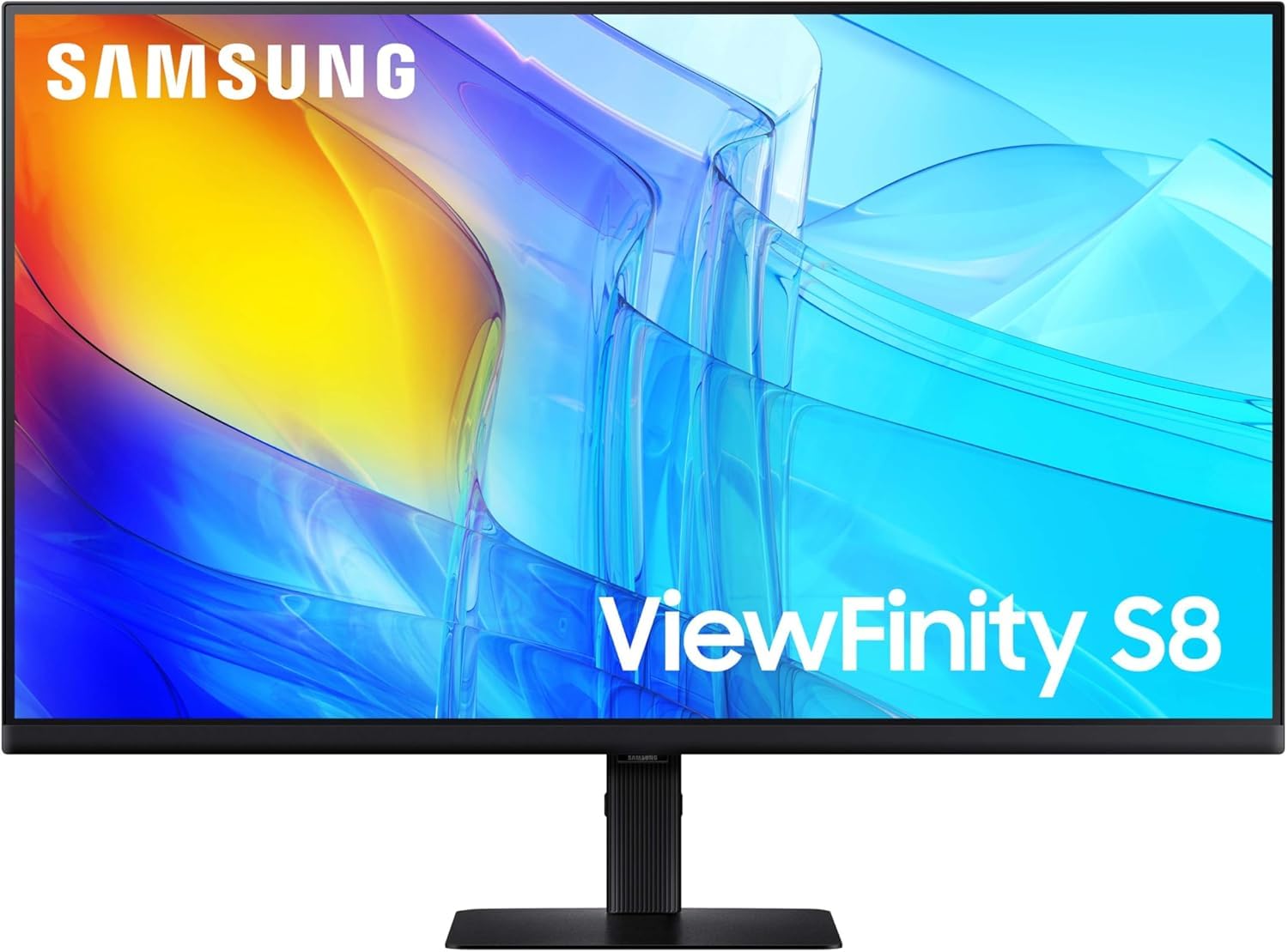
The Samsung ViewFinity S8 S80D is built for the productivity user who prioritizes ergonomics and screen real estate over gaming performance. Its 4K UHD 3840×2160 resolution on a 27-inch panel delivers a crisp 163 PPI, making text look razor-sharp and giving you ample room for multiple windows. The HDR10 support provides a boost in dynamic range for video content, though the 350-nit peak brightness is modest compared to dedicated HDR displays.
The standout feature here is the stand. The Easy Setup Stand requires no tools and allows full height adjustment, tilt, swivel, and a 90-degree pivot for vertical document reading. The monitor also includes a USB hub with USB-A and USB-B ports, plus HDMI and DisplayPort inputs, making it a functional docking station for a laptop setup. TÜV-certified Eye Saver Mode with automatic brightness adjustment makes this a strong candidate for all-day office work.
The lack of built-in speakers is a notable omission for a productivity monitor at this price point, though a headphone jack is included. Some users have reported that the single-button OSD control is frustrating to navigate. For a dedicated office or creative productivity monitor with a premium stand and sharp 4K resolution, this Samsung delivers excellent value, but gamers should look elsewhere.
Why it’s great
- Superb 4K UHD resolution with 163 PPI for sharp text.
- Full ergonomic stand with height, tilt, swivel, and pivot adjustment.
- Built-in USB hub and Eye Saver Mode for comfortable work.
Good to know
- No built-in speakers; headphone jack only.
- Single-button OSD menu is unintuitive and slow to navigate.
- 60Hz refresh rate limits smoothness for fast-paced tasks.
5. Alienware AW2725DM

The Alienware AW2725DM strikes a near-ideal balance between price, performance, and build quality for gamers who want a premium experience without breaking into OLED territory. Its QHD IPS panel delivers a 180Hz refresh rate with a 1ms GtG response time, providing smooth, responsive gameplay across shooters, RPGs, and strategy titles. The VESA DisplayHDR 400 certification and 95% DCI-P3 color coverage produce vibrant, punchy visuals that look excellent in both games and media.
Build quality is a clear step above most monitors in its class. The stand is sturdy and fully adjustable with height, tilt, swivel, and pivot—a rarity at this price point. The anti-glare screen is effective, and the hardware-based low blue light solution reduces eye strain without washing out colors, unlike software-based blue light filters. The monitor supports both NVIDIA G-Sync and AMD FreeSync, ensuring compatibility with virtually any GPU.
There are no built-in speakers or headphone jack, which is a notable omission for console gamers who may not have a separate audio solution. To achieve the full 180Hz refresh rate, you must use DisplayPort—HDMI caps out at 144Hz. The IPS glow is present but manageable, especially if you keep brightness at a moderate level. For a well-rounded gaming monitor that looks and feels premium, the Alienware AW2725DM is a compelling choice.
Why it’s great
- Premium build quality with full ergonomic stand adjustments.
- Excellent 95% DCI-P3 color coverage and VESA DisplayHDR 400.
- Supports both G-Sync and FreeSync for any GPU setup.
Good to know
- No built-in speakers or headphone jack.
- HDMI limited to 144Hz; use DisplayPort for full 180Hz.
- IPS glow visible in dark scenes at higher brightness levels.
6. AOC Q27G4XN

The AOC Q27G4XN is the budget champion for QHD gaming, offering a 2560×1440 resolution with a 180Hz refresh rate and 1ms GtG response time at a price that undercuts most competitors. The VA panel delivers a 400-nit peak brightness and a 127.8% sRGB color gamut, producing vibrant, punchy colors that are great for game visuals and media consumption. The 1000:1 contrast ratio is typical for a modern monitor, but the VA panel handles dark scenes better than budget IPS alternatives.
Adaptive-Sync support ensures tear-free gameplay with both AMD and NVIDIA graphics cards, and the 3-sided frameless design makes multi-monitor setups feel seamless. The height-adjustable stand is a welcome feature at this price point, providing tilt and height adjustment for ergonomic comfort. The package includes a DisplayPort cable and an HDMI cable, so you can start using the monitor immediately.
There are no built-in speakers, and the VA panel exhibits some dark-level ghosting in fast transitions—a known trait of VA technology that may bother competitive gamers. The OSD menu is functional but lacks the polish of higher-end monitors. For budget-conscious gamers who want a genuine QHD 180Hz experience with decent color and a usable stand, this AOC is hard to beat.
Why it’s great
- Exceptional value for QHD 180Hz gaming performance.
- High 400-nit brightness and wide sRGB color gamut.
- Height-adjustable stand with frameless design for multi-monitor setups.
Good to know
- No built-in speakers; requires external audio.
- VA panel shows some dark-level ghosting in fast transitions.
- OSD menu is basic and less intuitive than competitors.
7. KTC H27P27

The KTC H27P27 is the most affordable route to a 4K 27-inch IPS monitor with credible specs. Its 3840×2160 UHD resolution on an IPS panel delivers the sharp text and wide viewing angles that make 4K worthwhile for productivity and media consumption. The 1.07 billion color support and 95% DCI-P3 color gamut provide excellent color coverage for light photo editing and design work.
HDR400 support is present and does improve contrast in HDR content, but the 400-nit brightness is only adequate—you won’t get the visual punch of a true HDR display. The 60Hz refresh rate is standard for office and creative use, but gaming enthusiasts should note the lack of high refresh rates. The stand is tilt-adjustable only, but VESA 100x100mm mount support lets you use a monitor arm for better positioning.
Included accessories are generous: HDMI cable, power adapter, and even a screwdriver for VESA mounting. The plug-and-play experience is seamless with MacBooks via USB-C or Thunderbolt adapters. For anyone who wants a 4K display for productivity, coding, or media consumption on a tight budget, the KTC H27P27 delivers surprising quality without demanding a premium price.
Why it’s great
- Cheapest genuine 4K IPS panel with 95% DCI-P3 color coverage.
- 1.07 billion color support for accurate, natural-looking images.
- Includes screwdriver and accessories for easy setup.
Good to know
- 60Hz refresh rate limits gaming and fast-paced workflow smoothness.
- Stand is tilt-only with no height adjustment.
- HDR400 provides limited HDR experience; moderate brightness.
8. Acer Nitro KG271U
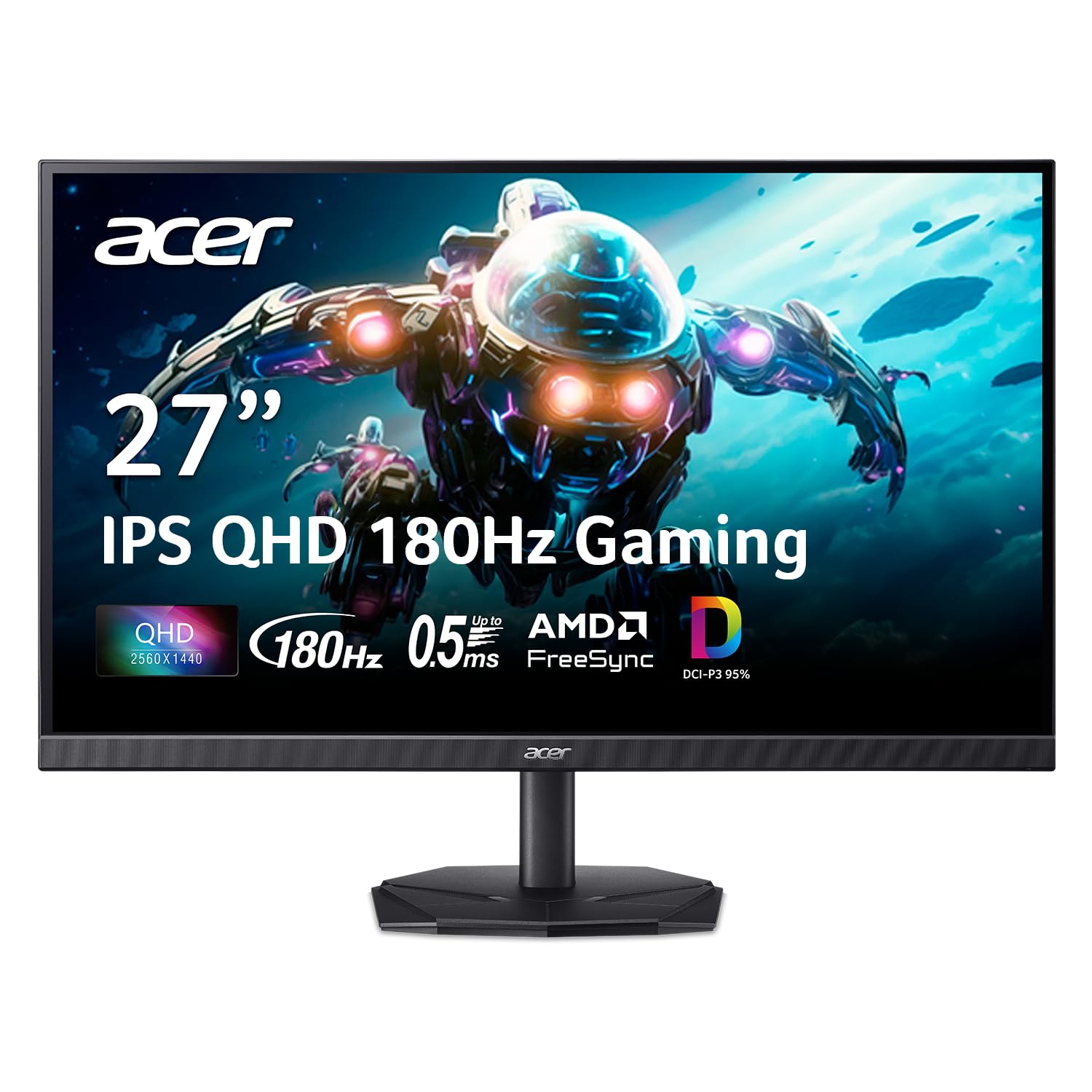
The Acer Nitro KG271U targets console gamers who want QHD resolution with a high refresh rate. The 27-inch IPS panel delivers sharp 2560×1440 visuals with a 180Hz refresh rate over DisplayPort and 120Hz over HDMI, making it a strong match for PlayStation 5 and Xbox Series X owners who can take advantage of 120Hz output at 1440p. The 0.5ms GtG response time keeps motion crisp in fast-paced shooters and racing games.
AMD FreeSync eliminates screen tearing when used with compatible graphics cards or Xbox consoles. The DCI-P3 95% color coverage produces vibrant, accurate colors that look great in both games and streaming content. Built-in speakers are included and are serviceable for casual use, saving desk space by eliminating the need for dedicated desktop speakers.
The stand is the biggest compromise here: it is flimsy and non-adjustable beyond tilt, causing noticeable monitor wobble on standard desks. Most buyers will want to invest in a VESA monitor arm for a stable setup. There have been isolated reports of units developing white lines after a few months of use, though Acer’s customer service has addressed these promptly with replacements. For the price, this is a strong console-focused gaming monitor with excellent color and responsiveness.
Why it’s great
- Excellent QHD resolution with 180Hz/120Hz HDMI support for consoles.
- Fast 0.5ms response time for smooth, blur-free motion.
- Built-in speakers and 95% DCI-P3 color coverage.
Good to know
- Stand is flimsy and causes monitor wobble; recommend a mount.
- Only tilt adjustment; no height, swivel, or pivot.
- Some quality control issues reported with panel defects.
9. ASUS TUF Gaming VG277Q1A

The ASUS TUF Gaming VG277Q1A is the entry-level high refresh rate monitor that prioritizes speed over resolution. Its Full HD 1920×1080 VA panel runs at 165Hz (with DisplayPort) and boasts a 1ms MPRT response time, making it a viable option for budget-conscious competitive gamers who need maximum frame rates. The VA panel delivers a strong 3000:1 contrast ratio, producing deeper blacks than IPS alternatives in this price range.
ASUS Shadow Boost technology brightens dark areas in games without washing out bright spots—a genuine competitive advantage in games like Escape from Tarkov or Rainbow Six Siege. The ELMB (Extreme Low Motion Blur) technology further reduces perceived motion blur, though it cannot run simultaneously with Adaptive-Sync. The monitor supports FreeSync Premium and is compatible with NVIDIA G-Sync, covering both major ecosystems.
The main trade-off is the 1080p resolution. At 27 inches, the 82 PPI results in a noticeably softer image compared to QHD or 4K panels, and text lacks sharpness for productivity work. The stand is tilt-only, and the monitor sits relatively low on a standard desk, which may require a riser or monitor arm for comfortable viewing. For a pure budget gaming monitor that delivers smooth, tear-free performance at high frame rates, the VG277Q1A earns its place.
Why it’s great
- Affordable 165Hz gaming with 3000:1 VA contrast ratio.
- Shadow Boost enhances visibility in dark game scenes.
- Supports FreeSync Premium and is G-Sync compatible.
Good to know
- 1080p at 27 inches yields low pixel density; text looks soft.
- Stand is tilt-only and sits low; may need a riser or arm.
- ELMB cannot run simultaneously with Adaptive-Sync.
FAQ
Is 1080p resolution acceptable on a 27-inch monitor?
What monitor specs do I need for the PlayStation 5 or Xbox Series X?
How much does the monitor stand matter for a 27-inch display?
Are OLED monitors worth the higher price compared to IPS?
Final Thoughts: The Verdict
For most users, the 27 inch monitor winner is the Alienware AW2725DM because it delivers premium build quality, a fully adjustable stand, excellent 95% DCI-P3 color coverage, and a smooth 180Hz refresh rate at a price that doesn’t require saving up for months. If you want the absolute best motion clarity and contrast for high-end gaming, grab the LG 27GS93QE OLED. And for professional creative work requiring factory-calibrated color accuracy and Thunderbolt 4 connectivity, nothing beats the Dell UltraSharp U2725QE.

Mo Maruf
I created WellFizz to bridge the gap between vague wellness advice and actionable solutions. My mission is simple: to decode the research and give you practical tools you can actually use.
Beyond the data, I am a passionate traveler. I believe that stepping away from the screen to explore new environments is essential for mental clarity and physical vitality.