Our readers keep the lights on and my smoothie glass nicely filled. As an Amazon Associate, I earn from qualifying purchases.
Cleaning an infected wound feels like a catch-22: you need an antiseptic strong enough to kill bacteria, but the burning and stinging can be so intense you dread the next application. The wrong choice can delay healing, while the right one works silently in the background, letting your body repair itself without unnecessary pain.
I’m Mohammad Maruf — the founder and writer behind WellFizz. I’ve spent years analyzing wound care research and dissecting the chemical formulations that separate hospital-grade antiseptics from consumer-grade irritants.
This guide cuts through the marketing noise to identify the most effective, evidence-based options available today. After comparing active ingredients, bacterial kill rates, and user-reported outcomes, I’ve narrowed the field down to the five best candidates for your medicine cabinet — the antiseptic for infected wounds that actually works without making you wince.
How To Choose The Best Antiseptic For Infected Wounds
Not all antiseptics are created equal. An infected wound requires a formula that balances potent antimicrobial action with gentle tissue tolerance. Here are the critical factors to consider before buying.
Active Ingredient Matters Most
Povidone-iodine, chlorhexidine gluconate, and hypochlorous acid each kill bacteria through different mechanisms. Iodine-based solutions like Betadine offer broad-spectrum coverage but can sting and stain tissue, making them better for pre-surgical prep than open wounds. Chlorhexidine (4%) provides persistent antimicrobial activity lasting up to 48 hours on skin — ideal for surgical sites. Hypochlorous acid sprays like Anasept and BerbereX offer gentle, sting-free cleansing that supports the body’s natural healing response, making them the top choice for sensitive, infected wounds.
Delivery System and Application
A pressurized spray that works in any direction allows you to clean awkward wound locations — like the back of a knee or a scalp incision — without touching the wound. Pour bottles can introduce bacteria if the cap touches contaminated surfaces. Look for sterile, sealed nozzles and finger-sprayer designs that maintain a clean barrier between you and the wound bed.
Residual Activity and Biofilm Penetration
Infected wounds often contain biofilms — bacterial communities that resist standard cleaning. Chlorhexidine has the longest residual activity, offering protection hours after application. Hypochlorous acid disrupts biofilms effectively and is gentle enough for daily use on chronic wounds such as diabetic ulcers or pressure sores. Alcohol-based antiseptics evaporate too quickly and can damage granulating tissue.
Quick Comparison
On smaller screens, swipe sideways to see the full table.
| Model | Category | Best For | Key Spec | Amazon |
|---|---|---|---|---|
| BerbereX Antimicrobial Wound Cleanser | Antimicrobial Spray | Chronic and infected wounds | 4 oz bottle, hypochlorous acid formula | Amazon |
| Anasept Skin and Wound Cleanser | Medical-Grade Spray | Post-surgical incision care | 12 oz bottle with finger sprayer | Amazon |
| ARM & HAMMER Simply Saline Wound Care | Saline Spray | Sting-free irrigation | 7.4 oz, alcohol-free, with aloe | Amazon |
| Betadine Skin Cleanser | Iodine Cleanser | Hand hygiene pre-procedure | 4 oz, 7.5% povidone-iodine | Amazon |
| 4% Chlorhexidine Gluconate Surgical Scrub | Surgical Scrub | Pre-surgical skin prep | 4 oz bottle, 4% CHG concentration | Amazon |
In‑Depth Reviews
1. BerbereX Antimicrobial Wound Cleanser

BerbereX is the outlier that delivers on its boldest claims. A hypochlorous acid formulation, it kills bacteria without the stinging or staining that iodine and alcohol produce. Real-world reports describe chronic venous ulcers that had been unhealed for months finally closing within a week of regular application — a testament to its biofilm-penetrating ability. Diabetic patients and post-surgical users consistently note that it calms redness and inflammation rather than exacerbating them.
The 4 oz bottle size is smaller than some competitors, but the concentrated active ingredient means a few spritzes go a long way. The spray nozzle produces a fine, even mist that covers the wound bed without pooling or running. It is non-irritating enough for daily use on pressure sores and surgical incisions alike, making it a versatile first aid kit staple.
Healthcare professionals recommend this formula for chronic wounds that have stalled in the healing process. The clinical research backing its efficacy against multi-drug resistant organisms gives it an edge over standard saline or iodine wipes. For anyone managing a stubborn infected wound, this is the most effective gentler option on the market.
Why it’s great
- Clinically proven to close chronic wounds faster than standard cleansers
- No stinging or burning on open tissue, even with daily use
- FDA registered and doctor recommended for diabetic ulcers
Good to know
- Bottle size is smaller than some competitors at 4 oz
- Premium pricing compared to basic saline sprays
- Need a prescription-level approach? This is the one
2. Anasept Skin and Wound Cleanser
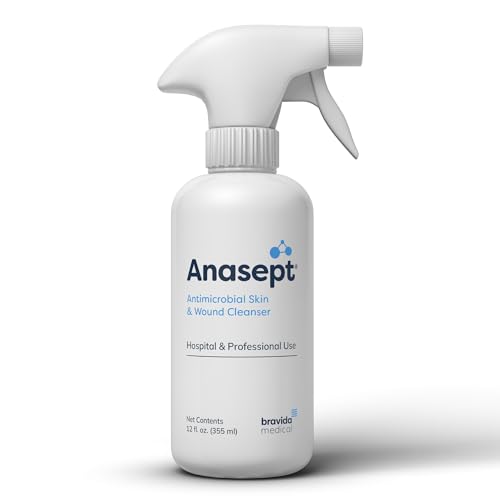
Anasept is the exact product many surgeons send their patients home with after reconstructive procedures. Its 12 oz bottle with a dedicated finger sprayer delivers a sterile rinse directly to the wound bed without requiring cotton swabs or gauze. The hypochlorous acid base is gentle enough for facial incisions yet effective enough to prevent infection in deeper surgical sites.
Users recovering from facial reconstructive surgery and back incisions report that it never stings, even on fresh wounds. The sprayer produces a consistent stream that dislodges debris without causing trauma to granulating tissue. It also has no fragrance, making it suitable for anyone with chemical sensitivities or open wounds near the nose and mouth.
For hospital and professional use, Anasept provides the largest volume of any medical-grade spray in this comparison. The 12 oz bottle lasts longer than smaller alternatives, reducing the need for frequent reorders during extended recovery periods. If your doctor has recommended a specific wound cleanser, this is likely the one they mean.
Why it’s great
- Surgeon recommended for post-surgical incisions and wounds
- Large 12 oz bottle provides extended use for recovery
- Sterile finger sprayer reduces contamination risk during application
Good to know
- Primarily a cleanser; does not have the same residual activity as chlorhexidine
- No antimicrobial persistence beyond the initial cleaning
- Best paired with an antibiotic ointment for infected wounds
3. ARM & HAMMER Simply Saline Wound Care 3-in-1
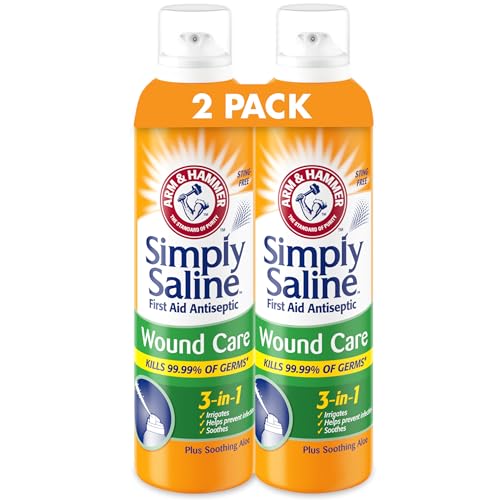
ARM & HAMMER Simply Saline is the easiest recommendation for anyone who dreads the burn of traditional antiseptics. This 3-in-1 spray irrigates, cleans, and soothes wounds using only purified water, salt, aloe vera, and baking soda. The pressurized dispenser works in any direction — even upside down — which is invaluable for hard-to-reach areas like the back of the leg or under a bandage.
Post-surgical patients specifically call out this spray for cleaning incisions without the sting that iodine or alcohol causes. The two-pack provides excellent value, and the 7.4 oz cans last through multiple dressing changes. Because it is alcohol-free, it won’t dry out the surrounding skin, which helps maintain the moisture balance needed for proper wound healing.
The formula kills 99.99% of germs commonly associated with minor skin infections, making it suitable for everyday cuts, scrapes, and burns. However, for deep or already-infected wounds with biofilm formation, the saline base lacks the residual antimicrobial activity that hypochlorous acid or chlorhexidine provides. Pair it with an antibacterial ointment for maximum protection.
Why it’s great
- Completely sting-free and burn-free on open wounds
- Pressurized can sprays in any orientation for awkward wound locations
- Contains soothing aloe vera to reduce inflammation
Good to know
- No residual antimicrobial activity after application
- Saline base does not penetrate biofilms effectively
- Best used as a gentle irrigant before applying a stronger antiseptic
4. Betadine Skin Cleanser

Betadine has been a hospital staple for over four decades, and its 7.5% povidone-iodine concentration remains the gold standard for pre-surgical skin preparation. The Skin Cleanser variant is designed as an antiseptic hand wash and body cleanser that reduces bacteria on intact skin before a procedure. It kills germs promptly and has a long track record of safety and efficacy in clinical settings.
Some users have found it effective as a facial cleanser when mixed with gentle soap, and others report that it eliminates underarm odor when used as a deodorant replacement — though this is not its intended use. The orange color can stain clothing and light-colored surfaces, so it requires careful application and thorough rinsing.
For infected wounds, Betadine’s iodine can be too harsh on open granulating tissue compared to hypochlorous acid or saline. It also stings when applied to raw wounds, which limits its comfort during daily dressing changes. Reserve this for cleaning intact skin around the wound rather than the wound bed itself.
Why it’s great
- Trusted hospital-grade povidone-iodine formula with decades of clinical use
- Broad-spectrum bactericidal activity against gram-positive and negative organisms
- Versatile as a hand wash and skin cleanser beyond wound care
Good to know
- Stings on open wounds and can delay healing on granulating tissue
- Orange color stains clothing and surfaces
- Not recommended for direct application to infected wound beds
5. Antiseptic Surgical Scrub 4% Chlorhexidine Gluconate

This 4% chlorhexidine gluconate scrub is a pharmaceutical-grade product designed for pre-surgical skin preparation. Unlike alcohol, which evaporates in seconds, CHG remains active on the skin for up to 48 hours after application — a critical advantage for preventing infection around a surgical site. Users preparing for surgery report that it provides lasting protection without the immediate sting of alcohol-based products.
The consistency is thicker than standard liquid soaps, which makes it easy to lather and spread across large areas. It is gentle enough for frequent use, though some users note that it can be drying if used excessively. The 4 oz bottle is compact and convenient for pre-operative home care or packing in a hospital bag.
A minority of buyers have repurposed it as a deodorant or body odor treatment, citing its ability to eliminate underarm bacteria for days. While this speaks to its efficacy, the primary intended use remains medical scrubbing. For direct wound application, the high CHG concentration can be too aggressive; it is best used on intact skin surrounding the wound.
Why it’s great
- 48-hour residual antimicrobial activity versus seconds for alcohol
- Thicker consistency provides easy, even application for surgical prep
- Minimal burning sensation compared to iodine on intact skin
Good to know
- 4 oz bottle is small and may not last through prolonged recovery
- Can be drying with repeated daily use
- Too strong for direct application to open wound beds
FAQ
Can I use Betadine directly on an infected wound?
How often should I clean an infected wound with antiseptic spray?
What is the difference between saline and hypochlorous acid for wound care?
Final Thoughts: The Verdict
For most users, the antiseptic for infected wounds winner is the BerbereX Antimicrobial Wound Cleanser because it combines hospital-grade efficacy with sting-free application, making it suitable for both acute and chronic wounds. If you want a larger volume and medical-grade sprayer for post-surgical recovery, grab the Anasept Skin and Wound Cleanser. And for a budget-friendly, sting-free daily irrigant, nothing beats the ARM & HAMMER Simply Saline Wound Care.

Mo Maruf
I created WellFizz to bridge the gap between vague wellness advice and actionable solutions. My mission is simple: to decode the research and give you practical tools you can actually use.
Beyond the data, I am a passionate traveler. I believe that stepping away from the screen to explore new environments is essential for mental clarity and physical vitality.