Our readers keep the lights on and my smoothie glass nicely filled. As an Amazon Associate, I earn from qualifying purchases.
The best street photography camera isn’t the one with the most megapixels or the fastest burst rate — it’s the one that disappears from your mind the instant you raise it to your eye. Every veteran shooter knows that the decisive moment is missed not because of slow autofocus, but because the camera was too big, too loud, or too distracting to stay in the flow. The real battle is fought in split seconds, against harsh contrast shadows, unpredictable light, and the need to blend into the urban environment rather than announce your presence.
I’m Mohammad Maruf — the founder and writer behind WellFizz. I’ve spent thousands of hours analyzing camera specifications, focusing systems, and form-factor trade-offs specifically within the context of candid, fast-paced street photography, where silent operation and compact size matter more than any lab-tested dynamic range chart.
This guide breaks down the models that genuinely reward the street shooter, cutting through the marketing noise to reveal which cameras deliver the responsive handling, discreet profiles, and image quality that turn ordinary sidewalks into compelling frames. We’ve identified the best camera for street photography by prioritizing autofocus speed, viewfinder responsiveness, and real-world portability over spec-sheet bragging rights.
How To Choose The Best Camera For Street Photography
Street photography demands a specific set of trade-offs that differ from portraiture, landscape, or sports. The ideal body balances three conflicting priorities: it must be small enough to carry daily, fast enough to capture motion instinctively, and quiet enough to never draw attention. Understanding how each technical specification impacts these three goals will prevent you from overpaying for features you will never use on the pavement.
Form Factor and Viewfinder Type
A compact body with a central viewfinder — either optical rangefinder-style or a high-quality electronic viewfinder (EVF) — lets you shoot with one eye on the scene and one on the composition. Bulky prism humps and protruding grips make a camera conspicuous. For street work, an EVF with low blackout time and high refresh rate (120 fps or above) keeps you locked on the action even during rapid panning. Fixed-lens compacts like the Ricoh GR IIIx eliminate the need for lens changes entirely, reducing hesitation.
Autofocus Performance and Silent Shutter
Phase-detection autofocus (PDAF) with subject tracking — especially eye/face detection — is critical for candid shots where the subject is moving. Cameras that rely solely on contrast detection may hunt in low light, causing missed frames. A fully silent electronic shutter (whether mechanical or completely electronic) allows you to shoot in churches, museums, or crowded markets without disturbing anyone. The absence of mirror slap also reduces internal vibration at slower shutter speeds.
In-Body Image Stabilization and Low-Light Handling
Street photography often happens at dusk or in shadowed alleys. In-body image stabilization (IBIS) provides three to six stops of compensation, letting you shoot at 1/15th or 1/8th of a second handheld. This is a decisive advantage over models without IBIS, especially when paired with lenses that lack optical stabilization. A larger sensor (APS-C or full-frame) with good high-ISO performance — clean files up to ISO 6400 — will give you latitude to push shutter speeds higher without introducing visible noise.
Quick Comparison
On smaller screens, swipe sideways to see the full table.
| Model | Category | Best For | Key Spec | Amazon |
|---|---|---|---|---|
| Ricoh GR IIIx | Fixed Compact | True pocketable candid shooting | APS-C 24.2MP / 40mm equiv. f/2.8 | Amazon |
| Canon EOS R8 | Full-Frame Mirrorless | Ultra-light full-frame walkaround | 24.2MP / Dual Pixel AF II | Amazon |
| Fujifilm X100VI | Fixed Lens Compact | Out-of-camera JPEGs & film sims | 40.2MP / 23mm f/2 (35mm equiv.) | Amazon |
| Sony a7 III | Full-Frame Mirrorless | Battery life and low-light AF | 24.2MP BSI / 693 PDAF points | Amazon |
| Sony a7 IV | Full-Frame Mirrorless | Hybrid stills/video street work | 33MP / BIONZ XR / 4K 60p 10-bit | Amazon |
| Canon EOS R7 | APS-C Mirrorless | Fast action street and burst shooters | 32.5MP / 30 fps electronic / 651 AF | Amazon |
| Fujifilm X-E5 | Rangefinder-style Mirrorless | Interchangeable lens in compact body | 40.2MP / 7‑stop IBIS / X‑Trans 5 HR | Amazon |
| Panasonic LUMIX S9 | Full-Frame Compact | Social media street content creators | 24.2MP / IBIS / Open Gate video | Amazon |
| Nikon Z50 II | APS-C Mirrorless | Two-lens kit for varied street focal lengths | 20.9MP DX / 231 AF / Picture Controls | Amazon |
| OM System E-M10 IV | Micro 4/3 Mirrorless | Ultra-portable with selfie screen | 20MP / 4.5‑stop IBIS / 121 AF points | Amazon |
| Panasonic LUMIX G85 | Micro 4/3 Mirrorless | Budget entry with weather sealing | 16MP / Duel I.S. 2 / 4K video | Amazon |
In‑Depth Reviews
1. Ricoh GR IIIx

The Ricoh GR IIIx is the quintessential street tool, engineered from the ground up for speed and invisibility. Its 40mm equivalent f/2.8 lens (a 26.1mm physical focal length) fits seamlessly into the pocket of any jacket, and the startup time of roughly 0.8 seconds means you never fumble for the decisive moment. The 24.2MP APS-C sensor combined with the GR Engine 6 delivers image quality that rivals much larger mirrorless bodies, with a characteristically sharp central resolution that handles high-contrast pavement shadows without blowing highlights.
Street shooters will appreciate the snap focus mode — a feature that lets you pre‑set the focus distance and shoot instantly without waiting for autofocus to lock. The hybrid AF system, while not the fastest in continuous tracking, is reliable for the stopped‑down apertures typical of zone focusing (f/5.6 to f/8). The in‑body image stabilization (IBIS) provides a genuine safety net at 1/15th second in dim alleyways. The absence of a viewfinder takes adjustment, but the rear LCD’s outdoor visibility is better than most pocket compacts.
The single biggest consideration for street use is battery life: a single battery will struggle past 200 shots if you chimp frequently, so picking up two or three spares is non‑negotiable. The lens is fixed — no zoom — which forces you to move your feet. That constraint is exactly what many street photographers credit for improving their composition and anticipation. Dust ingress is a known risk on the sensor, but a simple filter adapter ring largely mitigates it. For uncompromising image quality in a jacket pocket, the GR IIIx is in a class of its own.
Why it’s great
- Truly pocketable APS-C body with a sharp 40mm equivalent prime
- IBIS enables handheld shots at 1/15th second in low light
- Snap focus mode removes autofocus lag for pre‑visualized street frames
Good to know
- Battery life requires daily charging and spare cells for extended outings
- No built‑in flash or electronic viewfinder (both sold separately)
2. Canon EOS R8

Canon’s lightest full‑frame RF‑mount body, the EOS R8, tips the scales at just 461 grams (body only) — barely heavier than many APS‑C alternatives. The 24.2MP CMOS sensor paired with the DIGIC X processor delivers the same core image quality found in the much more expensive R6 Mark II, with exceptional color science and low‑noise files up to ISO 6400. For street photographers who want the depth‑of‑field control and low‑light margin of a full‑frame sensor without carrying a brick, the R8 is a compelling contender.
The Dual Pixel CMOS AF II covers 100% of the frame with 1,053 zones, and the deep‑learning subject detection locks onto people, animals, and vehicles with eerie precision. In practice, this means you can point the camera from the hip and trust autofocus to grab a face even in cluttered backgrounds. The 0.39‑inch OLED EVF runs up to 120 fps, making tracking a cyclist or a running child feel natural with zero blackout. The vari‑angle touchscreen is useful for discreet low‑angle compositions on the pavement.
The trade‑offs are real but manageable: there is no in‑body image stabilization, so you must rely on lens‑based IS (the kit 24‑50mm lens is stabilized). Battery life is below average — expect around 350 shots per charge, so a spare battery is essential for a full day of roaming. The single UHS‑II card slot may worry event shooters, but for street photography the risk is minor. The mechanical shutter maxes at 6 fps, but the electronic shutter hits 40 fps with full AF, enabling you to freeze fast street action cleanly.
Why it’s great
- Full‑frame sensor in a sub‑500g body — excellent weight‑to‑image‑quality ratio
- Dual Pixel AF II with eye detection locks onto faces instantly even in crowds
- 4K 60p video oversampled from 6K for hybrid street creators
Good to know
- No IBIS — you need stabilized lenses for handheld low‑light shots
- Battery life is short; carry at least one spare for a full day’s shoot
3. Fujifilm X100VI

The Fujifilm X100VI has become the defining street camera of its generation, and not merely because of its retro aesthetic. The sixth iteration brings a 40.2MP X‑Trans 5 HR sensor and five‑axis IBIS (up to 6 stops) to the fixed‑23mm f/2 lens (35mm equivalent), addressing the two largest criticisms of the X100V — mediocre resolution and the lack of stabilization. The built‑in 4‑stop neutral density filter lets you shoot wide open in broad daylight, a genuine advantage for isolating subjects against busy backgrounds in harsh sun.
The hybrid optical/electronic viewfinder is the X100VI’s signature feature for street work. You can compose optically, with no blackout and a clear, bright frame that feels like a classic rangefinder, then flick a lever to see a full EVF preview of your exact exposure and film simulation. The 20 Film Simulation modes — including the new REALA ACE — produce out‑of‑camera JPEGs that require zero editing, a massive time saver for shooters who share directly from the camera or phone. The tactile shutter speed and ISO dials encourage deliberate, zone‑focused shooting.
The lens is the same 23mm f/2 found in the X100V, and while its center sharpness is very good, the autofocus motors are starting to show their age against the new 40MP sensor’s resolving power. Fast subjects can outrun the focus in continuous mode. Battery life is modest at roughly 350 shots per charge. The fixed lens means no zoom range — the two‑step digital teleconverter (1.4x and 2x) is a software crop that cuts resolution. For photographers who prize a discrete, film‑like shooting experience above all else, the X100VI remains the benchmark.
Why it’s great
- Hybrid OVF/EVF allows zero‑lag optical composition or precise EVF framing
- Film simulations produce stunning JPEGs straight out of camera
- IBIS and built‑in ND filter make it a true all‑day street companion
Good to know
- Autofocus motors struggle with fast action on the 40MP sensor
- Fixed 35mm equivalent lens limits creative flexibility
4. Sony a7 III

The Sony a7 III has aged remarkably well as a street photography workhorse. The 24.2MP back‑illuminated full‑frame sensor offers 15 stops of dynamic range, excellent high‑ISO performance up to ISO 12,800, and the kind of latitude that lets you recover shadows in high‑contrast urban scenes without banding. The 693 phase‑detection points cover 93% of the frame, and in practice the autofocus is fast and tenacious — it sticks to a subject’s eye even through cluttered foregrounds like moving traffic or crowds.
Battery life is where the a7 III undeniably leads: the NP‑FZ100 can push 700 shots or more per charge, meaning you can shoot a full weekend without swapping cells. The silent electronic shutter mode is genuinely silent and does not introduce the rolling shutter artifacts that plague some earlier models. The lens ecosystem is vast, with compact primes like the Sony 35mm f/1.8 or the Sigma 45mm f/2.8 creating a balanced street kit that weighs under 800 grams total.
The body is not as small as the Ricoh GR or Fujifilm X100VI — you will feel it in a jacket pocket — and the menu system is famously dense, though the custom buttons help bypass that complexity after a learning curve. The kit 28‑70mm f/3.5‑5.6 lens is functional but optically pedestrian; upgrading to a fast prime dramatically improves the street shooting experience. The 4K video is solid but lacks the oversampling and color science of newer cameras. For photographers who want full‑frame depth and a proven AF system without paying premium pricing, the a7 III delivers exceptional resilience.
Why it’s great
- Industry‑leading battery life — 700+ shots per charge for all‑day shooting
- BSI sensor offers outstanding dynamic range for high‑contrast street scenes
- 693‑point PDAF provides reliable subject tracking in crowded environments
Good to know
- Body is larger than compact street cameras — not a pocketable option
- Menu system is complex and requires time to customize
5. Sony a7 IV

The Sony a7 IV pushes the full‑frame street formula further with a 33MP Exmor R sensor and the BIONZ XR processing engine that is eight times faster than the a7 III generation. The resolution bump gives you meaningful cropping latitude — useful when you cannot physically get closer to a subject — without sacrificing dynamic range. The real‑time Eye AF for humans, animals, and birds is among the most reliable in the industry, tracking a moving face through 80% of the frame even when the subject is partially obscured by passing pedestrians.
Video specifications are a step into professional territory: 4K 60p in 10‑bit 4:2:2 with full pixel readout in all formats, and a 7K oversample for 4K 30p. The S‑Cinetone profile is a genuine asset for street videographers who want a cinematic look without grading. The body adds a fully articulating touchscreen — a clear improvement over the a7 III’s tilt‑only screen for waist‑level or overhead street compositions. The 1,053,000‑dot OLED EVF has a 120 fps refresh rate with low latency, keeping you connected to the scene during rapid panning.
The trade‑offs are subtle but worth noting: the SL‑style body shape with the large EVF hump makes it larger than compact street cameras, and at 658 grams (body only) it is not light. Battery life is strong at over 500 shots, but video recording drains it faster. The card slot system supports CFexpress Type A, which adds cost if you want maximum speed for bursts. The 33MP files are large — expect to invest in faster storage and more hard drive space. For street photographers who want a professional hybrid tool that handles both stills and video without compromise, the a7 IV delivers on nearly every front.
Why it’s great
- 33MP sensor offers generous cropping flexibility for tight street compositions
- Reliable real‑time Eye AF with excellent subject tracking in busy frames
- 4K 60p 10‑bit video with S‑Cinetone for cinematic street videography
Good to know
- Body is bulkier than compact street cameras — not discreet in tight spaces
- 33MP RAW files demand faster cards and more storage capacity
6. Canon EOS R7

Canon’s EOS R7 is built for speed, making it an unexpected but formidable street tool for high‑energy urban environments like skate parks, protest marches, or street performers. The 32.5MP APS‑C sensor with the DIGIC X processor enables a 30 fps electronic shutter with full AF tracking — a burst rate that captures micro‑expressions and fast gestures that slower cameras miss. The 651 AF zones cover the entire frame, and the Dual Pixel CMOS AF II with subject detection locks onto people, animals, and vehicles with the same reliability as the full‑frame R6 Mark II.
The 5‑axis IBIS provides up to 7 stops of shake compensation, a major advantage when shooting moving subjects at slower shutter speeds in fading light. The magnesium alloy body is weather‑sealed, giving you the confidence to shoot in light rain or dusty urban environments. The dual UHS‑II SD card slots offer redundancy — a rare feature at this price point — and the 15 fps mechanical shutter is fast enough for most street scenarios without the rolling shutter artifacts that can appear in electronic mode.
The primary drawback for street photography is body size. The R7 is not large by DSLR standards, but it is noticeably bulkier than rangefinder‑style compacts like the Fujifilm X‑E5, especially when paired with a native RF‑S zoom. The crop sensor (APS‑C) means your lenses are effectively 1.6x longer — a 35mm lens behaves like a 56mm lens, which can be either an advantage or a limitation depending on your preferred street focal length. Battery life is decent at around 400 shots per charge, but the LP‑E6NH packs enough endurance for a full day’s shooting with moderate use.
Why it’s great
- 30 fps electronic shutter with full AF captures fast street action effortlessly
- 7‑stop IBIS provides excellent low‑light handheld capability
- Weather‑sealed body offers reliable performance in adverse conditions
Good to know
- Body is bulkier than typical street cameras — less discreet
- APS‑C crop factor changes effective focal lengths, requiring lens adjustment
7. Fujifilm X-E5
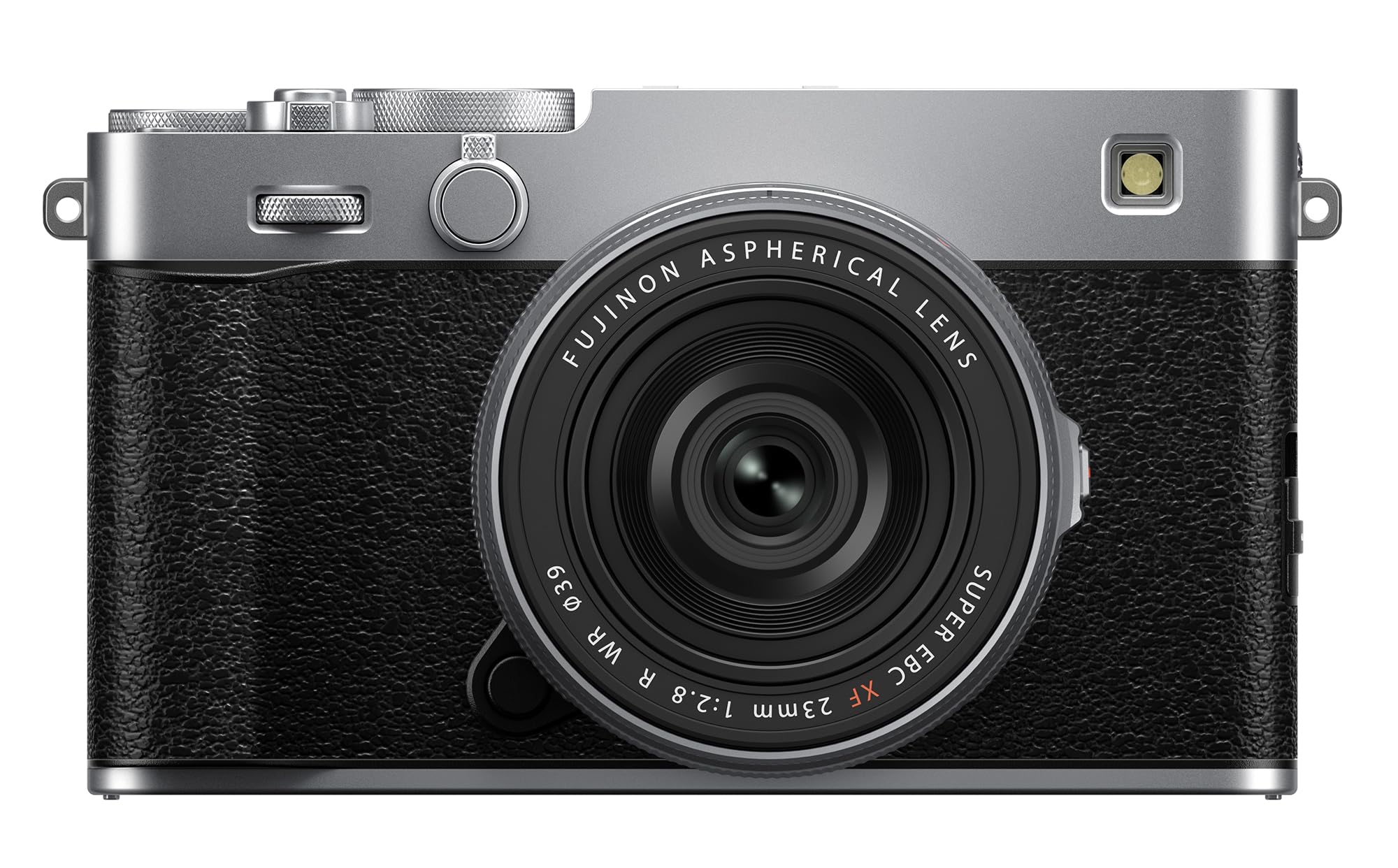
The Fujifilm X‑E5 brings the same 40.2MP X‑Trans 5 HR sensor and 7‑stop IBIS found in the larger X‑T5 into a true rangefinder‑style body. The machined aluminum top plate and analog shutter speed/ISO dials provide a tactile, deliberate shooting experience that many street photographers prefer over menu‑heavy modern cameras. The new XF 23mm f/2.8 R WR pancake lens combines with the body to create a compact package that rivals the X100VI in portability while offering the flexibility to swap lenses.
The customizable Film Simulation dial — placed under the top plate with a circular window — gives you instant access to Fujifilm’s color science without diving into menus. The deep‑learning AI subject detection AF recognizes people, animals, birds, and vehicles, and the 425 phase‑detection points cover a wide area of the frame. The lower base ISO of 125 provides additional flexibility for shooting wide open in bright conditions, and the two‑step digital teleconverter (1.4x and 2x) lets you crop into the 40MP sensor for tighter compositions without changing lenses.
The X‑E5 is not fully weather‑sealed, so caution is needed in rain or dusty environments. The battery life is adequate but not exceptional — expect around 300 shots per charge — and the film simulation dial is not lockable, making it easy to accidentally change your simulation while the camera is in a bag. The neck strap supplied with the body is plasticky and could be improved. For photographers who want the 40MP resolution and IBIS of a modern Fujifilm body in a compact, lens‑switching body, the X‑E5 is a near‑perfect street companion.
Why it’s great
- 40.2MP sensor with IBIS delivers high‑res, shake‑free images in a compact body
- Analog dials provide tactile control ideal for zone focusing and street work
- Interchangeable lens system allows customization of focal length for different street scenarios
Good to know
- Not weather‑sealed — needs care in rain or dusty environments
- Film simulation dial is not lockable, making accidental changes possible
8. Panasonic LUMIX S9
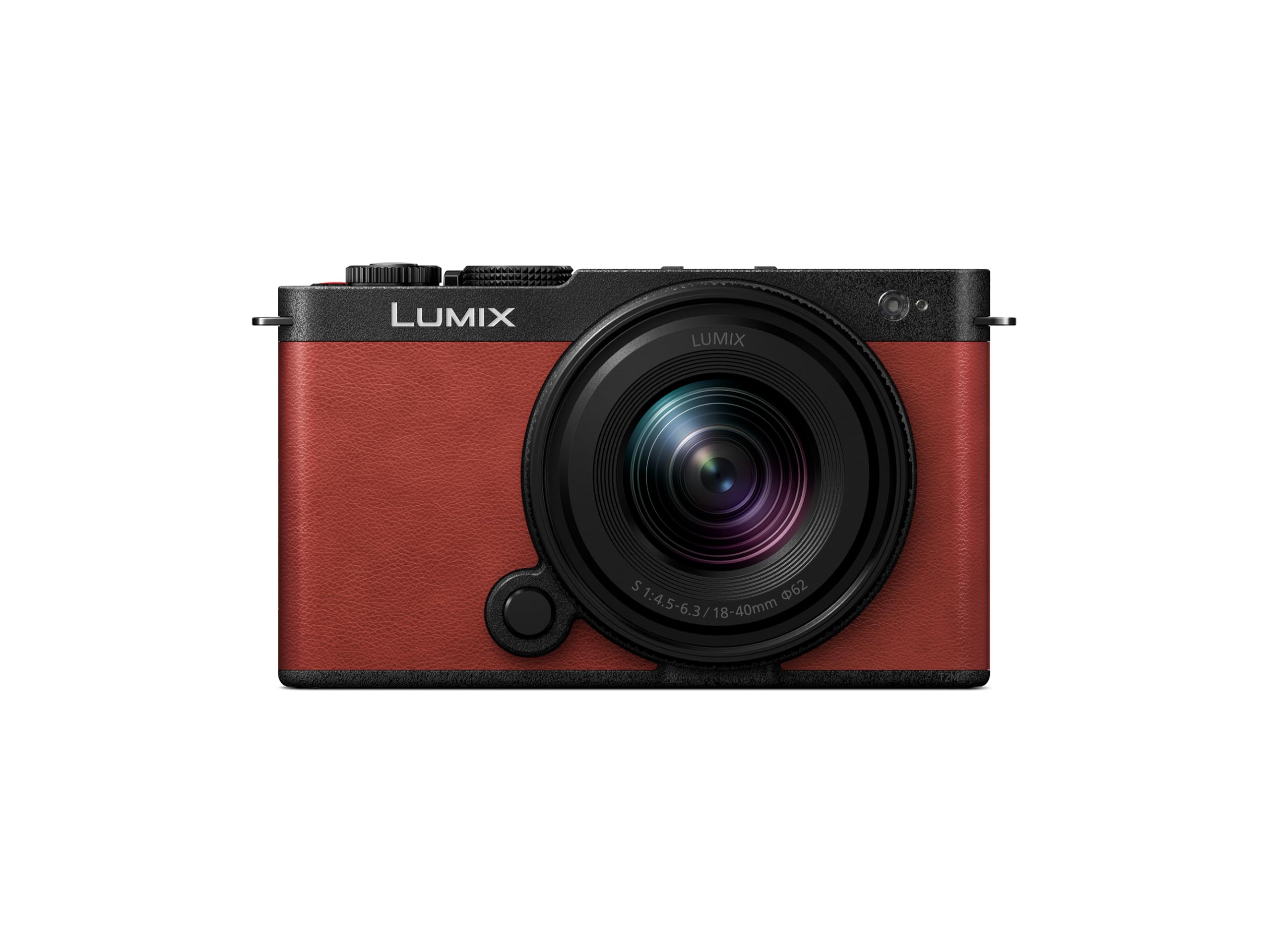
Panasonic’s LUMIX S9 is a purpose‑built compact full‑frame camera designed for the social‑media‑native street shooter. The 24.2MP full‑frame sensor is paired with in‑body image stabilization, and the body is one of the smallest full‑frame interchangeable‑lens cameras on the market. The LUMIX Lab app connects via ultra‑fast Wi‑Fi, pushing images directly to your phone library for near‑instant sharing — a workflow that eliminates the cable‑tether hassle common to other full‑frame systems.
The Open Gate recording mode is a standout feature: it captures the entire sensor area, letting you extract vertical or horizontal aspect ratios (9:16, 1:1, 4:3) from a single shot, a genuine time‑saver for creators who repurpose content across multiple platforms. The Real Time LUT feature allows you to apply custom color grading presets in‑camera, producing finished‑looking JPEGs and video without post‑processing. The 18‑40mm collapsible kit lens is remarkably slim when retracted, making the S9 able to slip into a small bag or large coat pocket.
The most significant limitation for street photographers is the lack of a hot shoe — the top plate has only a cold shoe, meaning you cannot mount an external flash or electronic viewfinder. There is no built‑in flash either. The body grip is minimal, especially with larger lenses, and an aftermarket grip is recommended for one‑handed street shooting. The 4K 60p video has a crop, and the rolling shutter is more pronounced than in Panasonic’s higher‑end S‑series bodies. For shooters who prioritize portability and social‑media integration over flash capability, the S9 is a unique and compelling option.
Why it’s great
- Extremely compact full‑frame body with IBIS and collapsible kit lens
- Open Gate recording enables flexible aspect ratio extraction for social platforms
- LUMIX Lab app provides ultra‑fast Wi‑Fi transfer for immediate sharing
Good to know
- No hot shoe — cannot mount an external flash or EVF
- Body grip is minimal and benefits from an aftermarket addition
9. Nikon Z50 II

Nikon’s Z50 II is the follow‑up to the popular Z50, retaining the compact APS‑C body while adding the EXPEED 7 processor from the Z9 lineup. The 20.9MP DX sensor is optimized for low‑light performance, producing clean files up to ISO 6400 that retain good color depth — ideal for dusk street photography. The 231 phase‑detection AF points cover a wide area, and the subject detection system automatically identifies and tracks people, dogs, cats, birds, and vehicles with reliable accuracy.
The Z50 II includes 31 built‑in Picture Control presets that can be applied in real time, allowing you to craft a specific look directly in the camera. The two‑lens kit — covering 16‑50mm and 50‑250mm — gives the street photographer enormous flexibility, from wide environmental portraits to compressed telephoto street details. The built‑in flash is a bonus for fill light in harsh shadow scenes. Nikon’s SnapBridge app transfers images to your phone in seconds, which is faster and more reliable than many competitors.
The Z50 II is not as small as rangefinder‑style bodies, and the electronic viewfinder is functional but not best‑in‑class — its refresh rate can feel sluggish when panning quickly. The included kit lenses are optically decent but not exceptional; upgrading to the NIKKOR Z 28mm f/2.8 or 40mm f/2 primes dramatically improves image quality and low‑light capability for street work. The battery life is good at around 400 shots per charge, and the lightweight design makes it comfortable for long walking sessions. For photographers who want a versatile two‑lens starter kit that produces great out‑of‑camera JPEGs, the Z50 II is a solid choice.
Why it’s great
- Two‑lens kit (16‑50mm + 50‑250mm) offers wide creative flexibility for street
- 31 built‑in Picture Control presets deliver great JPEGs straight from the camera
- Built‑in flash is useful for fill light in high‑contrast situations
Good to know
- EVF refresh rate feels slower than competitors during rapid panning
- Kit lenses are optically decent but upgrading to primes improves street performance
10. OM System E-M10 IV

The OM System E‑M10 IV (formerly Olympus) is an exceptionally compact and lightweight Micro Four Thirds camera that prioritizes portability without sacrificing image quality. The 20MP Live MOS sensor captures good detail, and the 5‑axis in‑body image stabilization provides up to 4.5 shutter speed steps of compensation — enough to shoot sharp handheld images at 1/8th second in dim interiors. The flip‑down monitor includes a dedicated selfie mode, an unconventional but genuinely useful feature for street self‑portraits or discrete waist‑level shooting.
The E‑M10 IV supports 121 contrast‑detection AF points. While not as fast as phase‑detection systems for tracking fast movement, the autofocus is accurate and snappy in most street scenarios, especially with stationary or slow‑moving subjects. The 16 Art Filters — including a new Instant Film effect — provide creative in‑camera looks that can save editing time. The Micro Four Thirds lens system is one of the most extensive in the industry, with compact primes like the 17mm f/1.8 or 25mm f/1.8 creating a truly pocketable street kit.
The sensor’s smaller size means you get more depth of field at equivalent apertures — less background separation than APS‑C or full‑frame, but also easier zone focusing. The 121 AF points are contrast‑only, so low‑light performance can struggle in very dim conditions. The included rechargeable battery has no external charger in the box, which is frustrating for shooters who want a second battery ready. The kit lens (14‑42mm EZ) is compact but not particularly sharp in the corners. For photographers who prioritize a tiny, lightweight body and are willing to trade some low‑light performance, the E‑M10 IV is a delightful street companion.
Why it’s great
- Extremely compact and lightweight body ideal for all‑day street carry
- 4.5‑stop IBIS provides excellent handheld low‑light capability
- Extensive Micro Four Thirds lens system offers many compact prime options
Good to know
- Contrast‑only AF can struggle in very low light
- No external battery charger included; requires USB charging
11. Panasonic LUMIX G85

The Panasonic LUMIX G85 remains a compelling entry‑level option for street photographers who want weather‑sealing and 5‑axis in‑body stabilization without a premium price tag. The 16MP Micro Four Thirds sensor uses no low‑pass filter, which extracts about 10% more fine detail than earlier 16MP M4/3 sensors — a meaningful improvement for resolving textures like brickwork and fabric in street scenes. The 12‑60mm Power O.I.S. kit lens is also weather‑sealed, providing a rugged package for shooting in light rain or dusty city air.
The magnesium alloy body feels substantially built, and the large grip provides secure handling for extended shooting sessions. The Dual I.S. 2 technology combines in‑body and lens‑based stabilization, producing remarkably stable handheld footage even at long focal lengths. The 4K Photo mode allows you to extract 8MP stills from 30 fps video bursts — a technique that helps capture fleeting expressions that a single shutter press might miss. The OLED live viewfinder (2,360K dots) is clear and responsive, with minimal lag during rapid composition.
The 16MP sensor struggles against higher‑resolution APS‑C competitors in terms of cropping flexibility and low‑light performance — ISO 3200 is usable, but ISO 6400 shows noticeable grain. The contrast‑detection AF system can hunt in low light or when tracking moving subjects, especially in 4K video. Battery life is below average at roughly 300 shots per charge. The body is heavier than some competitors, approaching the weight of a small full‑frame body. For the budget‑conscious street photographer who needs weather protection and stabilization, the G85 delivers robust value.
Why it’s great
- Weather‑sealed body and kit lens provide reliable all‑weather performance
- 5‑axis IBIS plus lens‑based OIS creates excellent handheld stability
- 4K Photo mode enables capturing fleeting moments from 30 fps video bursts
Good to know
- 16MP sensor limits cropping flexibility and low‑light performance
- Contrast‑detect AF struggles in dim conditions or with fast‑moving subjects
FAQ
Do I need a full‑frame sensor for street photography?
What is the ideal focal length for street photography?
Final Thoughts: The Verdict
For most users, the best camera for street photography winner is the Ricoh GR IIIx because it eliminates every barrier between the shooter and the moment — true pocketability, instant startup, and a sharp 40mm equivalent lens that forces you to compose deliberately. If you want full‑frame image quality in a lightweight body and prefer interchangeable lenses, grab the Canon EOS R8. And for the timeless out‑of‑camera JPEG shooting experience with a hybrid viewfinder that works in bright sun, nothing beats the Fujifilm X100VI.

Mo Maruf
I created WellFizz to bridge the gap between vague wellness advice and actionable solutions. My mission is simple: to decode the research and give you practical tools you can actually use.
Beyond the data, I am a passionate traveler. I believe that stepping away from the screen to explore new environments is essential for mental clarity and physical vitality.