Our readers keep the lights on and my smoothie glass nicely filled. As an Amazon Associate, I earn from qualifying purchases.
Belt drive turntables isolate the motor from the platter using an elastic belt, which filters out motor vibrations that direct-drive decks can transmit into your records. That mechanical decoupling is the reason audiophiles often prefer belt drive for its quieter noise floor and smoother sound reproduction, especially at mid-range and premium price points. The belt also reduces wow and flutter — the audible pitch waver that plagues lesser tables.
I’m Mohammad Maruf — the founder and writer behind WellFizz. Over the last decade I’ve analyzed hundreds of turntable spec sheets, from motor tolerances and tonearm geometry to cartridge compliance and platter resonance damping, comparing what actually translates to audible improvement versus marketing hype.
We evaluated nine models across a wide price range, comparing tracking accuracy, build materials, and real-world noise isolation. This guide identifies the best belt drive turntable for your budget and listening priorities, whether you value warm analog tone, upgradeability, or starter simplicity.
How To Choose The Best Belt Drive Turntable
The core advantage of belt drive is noise isolation, but not all belt-drive decks execute that isolation equally. You need to weigh the motor type, platter mass, tonearm precision, and cartridge quality — each component influences the final sound more than the belt itself. Below are the critical decision points for belt-drive buyers.
Platter Material & Mass
A heavier platter acts as a flywheel, smoothing out rotational speed variations (wow and flutter) that cause pitch instability. Acrylic platters — like the grooved acrylic on the U-Turn Orbit Plus — add mass while damping resonance better than basic aluminum. Die-cast aluminum platters with rubber mats (Audio-Technica AT-LPW40WN) offer a strong value balance. The highest-tier option, a high-density acrylic platter on the Fluance RT85N, further tightens bass response and clarifies the midrange by absorbing micro-vibrations.
Tonearm & Anti-Skate Precision
The tonearm’s bearings, effective mass, and anti-skate mechanism determine how accurately the stylus tracks the groove walls. A gimbal-bearing tonearm (U-Turn Orbit Plus, Pro-Ject Debut Carbon EVO) provides lower friction and more precise tracking than basic pivoted designs. Adjustable counterweights are non-negotiable for proper vertical tracking force (VTF) — fixed-weight arms limit cartridge upgrade options. Look for an anti-skate control that matches your stylus type and VTF setting to prevent channel imbalance and inner-groove distortion.
Motor Isolation & Speed Control
The belt itself reduces motor vibration, but the motor’s own quality matters. DC motors (Yamaha TT-S303, Audio-Technica AT-LPW40WN) tend to run quieter than AC motors when paired with a speed-sensor feedback loop that maintains platter velocity within tight wow/flutter tolerances (0.07% on the Fluance RT85N). External belt-drive designs (U-Turn Orbit Plus) move the motor farther from the platter for extra isolation, while internal belt-drive decks (Pro-Ject Debut EVO 2) rely on precision machining and damped mounts to kill noise. If you play records that require exact pitch — classical piano, vocal harmonics — prioritize models with reported wow/flutter below 0.15%.
Quick Comparison
On smaller screens, swipe sideways to see the full table.
| Model | Category | Best For | Key Spec | Amazon |
|---|---|---|---|---|
| Fluance RT85N | Premium | Acrylic platter + Nagaoka cartridge warmth | Wow/Flutter 0.07% | Amazon |
| Pro-Ject Debut Carbon EVO | Premium | Carbon fiber tonearm + Sumiko Rainier | Signal/Noise 68dB | Amazon |
| Pro-Ject Debut EVO 2 | High-End | True balanced output + Pick it MM EVO cartridge | 1.7kg TPE-damped platter | Amazon |
| Audio-Technica AT-LP7 | High-End | J-shaped tonearm + switchable MC/MM preamp | VM520EB Dual Moving Magnet | Amazon |
| Audio-Technica AT-LPW40WN | Mid-Range | WM60 walnut finish + carbon-fiber tonearm | Speed-sensor DC motor | Amazon |
| U-Turn Orbit Plus (Gen 2) | Mid-Range | Grooved acrylic platter + built-in Pluto preamp | OA3 gimbal tonearm | Amazon |
| YAMAHA TT-S303 | Mid-Range | Piano black finish + Yamaha brand reliability | Signal/Noise 67dB | Amazon |
| Crosley C100A-SI | Entry-Level | Adjustable counterweight + Audio-Technica cartridge | Aluminum tonearm with cue lever | Amazon |
| DIGITNOW M487 | Budget | Built-in speakers + Bluetooth streaming | AT3600L diamond stylus | Amazon |
In‑Depth Reviews
1. Fluance RT85N Reference High Fidelity Turntable

The Fluance RT85N earned the New York Times Wirecutter best turntable recommendation for good reason: it combines a high-density acrylic platter with the Nagaoka MP-110 cartridge, a pairing that delivers balanced tonal accuracy and deeper bass extension than anything in its direct price tier. The heavy acrylic platter (around 3 pounds) damps resonance, producing a quieter background and tighter imaging than the aluminum platters found on many comparably priced decks. The specified wow and flutter of 0.07% confirms the speed-sensor DC motor maintains pitch stability — essential for piano and vocal-centric vinyl.
The high-mass MDF plinth with real wood veneer sits on adjustable resonance-damping feet, which isolate the table from footsteps and floor vibrations better than fixed rubber nubs. The 16.76-pound overall weight discourages acoustic feedback even when placed near speakers. Setup is straightforward thanks to a pre-installed headshell, bubble-level tool, and clear instructions, though you’ll need an external phono preamp — the RT85N does not include one. Semi-automatic stop lifts the tonearm at the record’s end, a welcome convenience.
For users seeking a reference-grade belt-drive experience without jumping to kilobuck territory, the RT85N offers a clear upgrade path: the Nagaoka MP-110’s elliptical stylus is affordable to replace, and the tonearm accepts other high-output moving-magnet cartridges. The only real compromise is the lack of a built-in preamp, but that also means you avoid a compromised onboard stage. This is the stand-out choice for serious listeners who want warmth and detail from a single well-engineered package.
Why it’s great
- Acrylic platter reduces wow/flutter to 0.07% for rock-solid speed stability
- Nagaoka MP-110 cartridge delivers warm, detailed sound with tight bass
- Heavy MDF plinth and adjustable feet provide excellent vibration isolation
Good to know
- No built-in phono preamp — requires an external stage or receiver with phono input
- Manual tonearm operation; only semi-automatic stop at the record’s end
2. Pro-Ject Debut Carbon EVO with Sumiko Rainier

The Debut Carbon EVO is a benchmark entry into true audiophile belt-drive territory. Its one-piece carbon-fiber tonearm is lighter and stiffer than aluminum arms of similar length (218.5 mm effective length), reducing resonance and improving transient response. The low-noise synchronous AC motor is mounted on a decoupled sub-chassis and drives the belt via a precision pulley, yielding a signal-to-noise ratio of 68dB — the quietest in this group at its price point. The included Sumiko Rainier moving-magnet cartridge tracks with detail and a slightly forward presentation that suits rock, jazz, and vocals.
The EVO’s three-point isolation feet allow precise leveling on uneven surfaces, and the 4.5-inch chassis height keeps the profile low. Speed changes between 33 and 45 RPM require moving the belt to a different pulley groove, a manual process that is quick but not as convenient as electronic switching. The dust cover hinges are known to be tight; some users add small spacers to prevent stress on the plinth. The platter itself is a heavy 1.7 kg anti-magnetic die-cast aluminum with TPE damping for vibration absorption.
At this level, the EVO expects you to bring your own phono preamp (there is no built-in stage), which keeps the signal path pure but adds to total system cost. The manual tonearm operation and belt-speed change are trade-offs audiophiles accept for the improved isolation. If you value a silent noise floor and the upgradeability of a carbon-fiber tonearm, the Debut Carbon EVO is the logical step up before high-end territory.
Why it’s great
- Carbon-fiber tonearm provides low mass and high stiffness for precise tracking
- 68dB signal-to-noise ratio means exceptionally quiet background
- TPE-damped platter and decoupled motor reduce mechanical noise
Good to know
- Manual belt speed change between 33 and 45 RPM
- Dust cover hinges may require spacer adjustment
3. Pro-Ject Debut EVO 2 Turntable
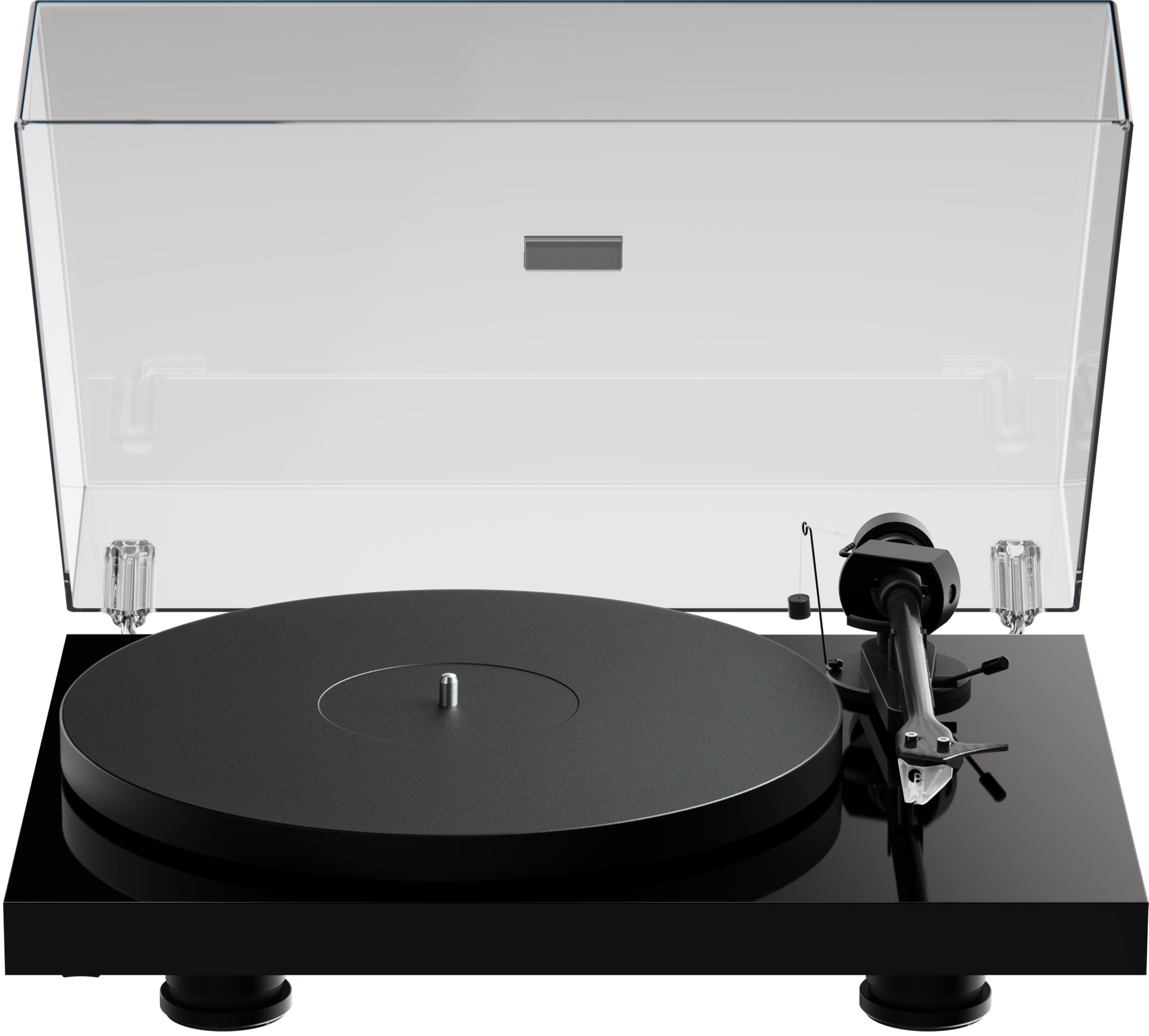
The Debut EVO 2 builds directly on the Carbon EVO platform with meaningful refinements: a new Pick it MM EVO cartridge that outperforms the Sumiko Rainier in channel separation and dynamic range, and the option to run true balanced output when paired with a Pro-Ject balanced phono stage — a feature usually reserved for turntables costing over two thousand dollars. The 1.7 kg TPE-damped aluminum platter remains, but the tonearm wiring is fully shielded and the motor controller is updated for tighter speed regulation.
Setup time is under 30 minutes, though dialing in the anti-skate weight and VTF requires patience — the anti-skate weight can detach if bumped, a minor inconvenience. The walnut veneer (or high-gloss black) plinth is real wood, not vinyl wrap, and the overall build quality feels denser than the previous generation. Users upgrading from the Debut Carbon EVO report immediately noticeable improvements in instrument separation and low-level detail retrieval, especially with acoustic recordings.
This deck is for the buyer who intends to keep a turntable for a decade and values future-proofing. The balanced output path eliminates ground loop noise and halves the signal chain’s impedance, and the EU guarantees 25 years of spare parts availability. The only downside is the lack of a built-in phono stage, but at this performance tier, an external preamp should already be part of your system. The EVO 2 is the sensible upgrade for someone who wants to extract every detail from their vinyl without chasing after boutique modifications.
Why it’s great
- True balanced output reduces noise floor and improves signal integrity
- Pick it MM EVO cartridge offers excellent channel separation and dynamic range
- 25 years of spare parts availability ensures long-term serviceability
Good to know
- No built-in phono preamp; requires external stage
- Anti-skate weight can detach if accidentally touched during operation
4. Audio-Technica AT-LP7 Fully Manual Belt-Drive Turntable
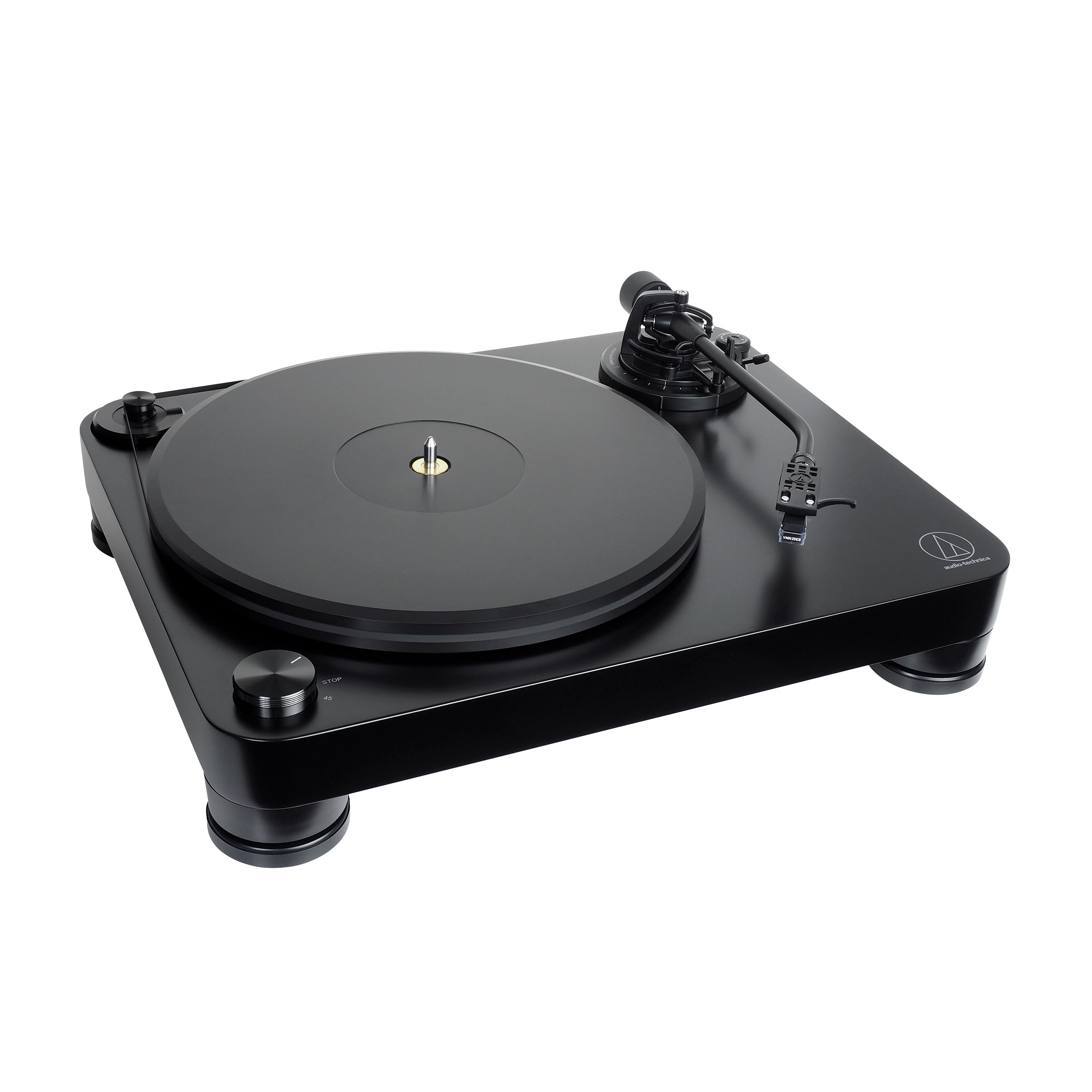
The AT-LP7 signals that Audio-Technica can play in audiophile territory without cutting corners. Its J-shaped tonearm — a design reminiscent of vintage high-end arms — reduces tracking error across the record’s radius, and the gimbal suspension system with precision bearings provides near-frictionless lateral movement. The included VM520EB dual moving-magnet cartridge offers outstanding channel separation and an extended frequency response (20-27,000 Hz), and the switchable MM/MC phono preamp accommodates both moving-magnet and moving-coil cartridges, eliminating a separate upgrade purchase for MC enthusiasts.
The 22-pound weight comes from the dense engineered wood plinth, which kills resonance far better than the plastic bases found on some competing decks at this level. The belt-drive DC motor uses a speed-sensor feedback loop to maintain accuracy, though the table omits a pitch control slider — a non-issue for most listeners, as the rotational speed is dead-on out of the box. The Delrin (acetal) platter provides 25% more mass than a standard aluminum platter, further stabilizing rotation. Users who upgraded from the SL-1500C have noted the AT-LP7’s quieter background and better bass articulation.
At this price, the AT-LP7 represents a complete package: preamp, quality cartridge, and a high-mass chassis. The switchable phono stage is genuinely good — one reviewer rated it comparable to a thousand-dollar external unit. The J-shaped tonearm with interchangeable headshell also simplifies cartridge swaps if you later want to experiment with microline or shibata styli. The only operational note is that the table is fully manual — no auto stop or lift — so you must lift the tonearm at the end of each side.
Why it’s great
- Switchable MM/MC phono preamp rivals external units for noise and clarity
- J-shaped tonearm reduces tracking error angle for lower inner-groove distortion
- High-mass plinth and Delrin platter provide excellent resonance control
Good to know
- Fully manual operation; no auto-stop or tonearm lift at end of record
- No pitch control for adjusting speed manually
5. Audio-Technica AT-LPW40WN Fully Manual Belt-Drive Turntable

The AT-LPW40WN strikes a strong mid-range balance between aesthetic appeal and measurable performance. The walnut veneer over engineered wood gives it a warmer, furniture-grade look than typical black boxes, and the carbon-fiber tonearm provides stiffness without adding mass. The built-in switchable phono preamp allows direct connection to powered speakers or a receiver’s line input, and the speed-sensor DC motor holds platter rotation accurately across both speeds. The included AT-VM95E cartridge is a solid moving-magnet performer with an upgradeable stylus path (VM95 series includes elliptical, microlinear, and shibata variants).
The die-cast aluminum platter with rubber mat provides adequate mass for this price bracket, though it is not as dense as acrylic or Delrin alternatives. The anti-skate control is adjustable via a dial, and the carbon-fiber tonearm uses a gimbal bearing suspension for smooth cueing. Users consistently note the quiet noise floor — no motor hum or electronic buzz reaches the stylus. The manual operation is straightforward, with a dampened cue lever for gentle lowering. Speed selection is electronic via a rocker switch, a convenience over manual belt-changing models.
For newcomers who want a table that looks as good as it sounds and doesn’t require an immediate external preamp purchase, the AT-LPW40WN is an excellent entry point. The walnut finish draws attention on any shelf, and the sound is balanced and neutral without being clinical. The cartridge upgrade path means you can grow into a better stylus later without replacing the table. The only compromise is the platter material — if ultimate speed stability is your priority, the acrylic-pattered alternatives higher up offer marginal improvements.
Why it’s great
- Built-in switchable phono preamp works directly with powered speakers
- Carbon-fiber tonearm reduces resonance for cleaner midrange and treble
- AT-VM95E cartridge is stylus-upgradeable to microline or shibata
Good to know
- Aluminum platter does not match acrylic damping performance of higher-tier models
- Fully manual — no auto-return or auto-stop
6. U-Turn Orbit Plus (Gen 2) with Built-in Preamp

The U-Turn Orbit Plus Gen 2 is the only model in this roundup with a grooved acrylic platter as standard — the grooves physically align the belt and simplify speed changes, a design innovation that also improves speed consistency by maintaining even belt tension. The external belt-drive layout places the motor in a separate enclosure behind the platter, maximizing isolation. The OA3 precision gimbal tonearm uses a one-piece magnesium armtube for low mass and high rigidity, and the integrated Pluto preamp includes a bypass switch for those who prefer an external phono stage.
The Ortofon OM5E cartridge with elliptical diamond stylus delivers well-balanced sound with clear treble articulation and a controlled low end, though it does not have the refinement of the Nagaoka MP-110 or Sumiko Rainier found on pricier decks. Speed selection is manual (move the belt between motor pulley grooves), which requires a tactile understanding of the belt position — not as convenient as electronic switching, but reliable once learned. The white finish (also available in other colors) and minimalist aesthetic appeal to users who value desktop design.
The built-in preamp is better than typical all-in-one stages; it outputs a clean signal without audible noise injection. The felt slipmat works fine but swapping to a rubber or cork mat can further reduce static. This turntable is best for listeners who prioritize simplicity and visual elegance alongside solid belt-drive isolation, and who do not mind the manual belt speed change. The cartridge is easy to upgrade, and the gimbal tonearm’s internal anti-skate means one fewer adjustment to calibrate.
Why it’s great
- Grooved acrylic platter improves speed consistency and simplifies belt changes
- External belt-drive motor maximizes mechanical isolation from the platter
- OA3 gimbal tonearm with magnesium armtube provides accurate tracking
Good to know
- Manual belt speed change requires moving belt between grooves
- Included felt mat may benefit from a static-reducing upgrade
7. YAMAHA TT-S303 Hi-Fi Vinyl Belt Drive Turntable
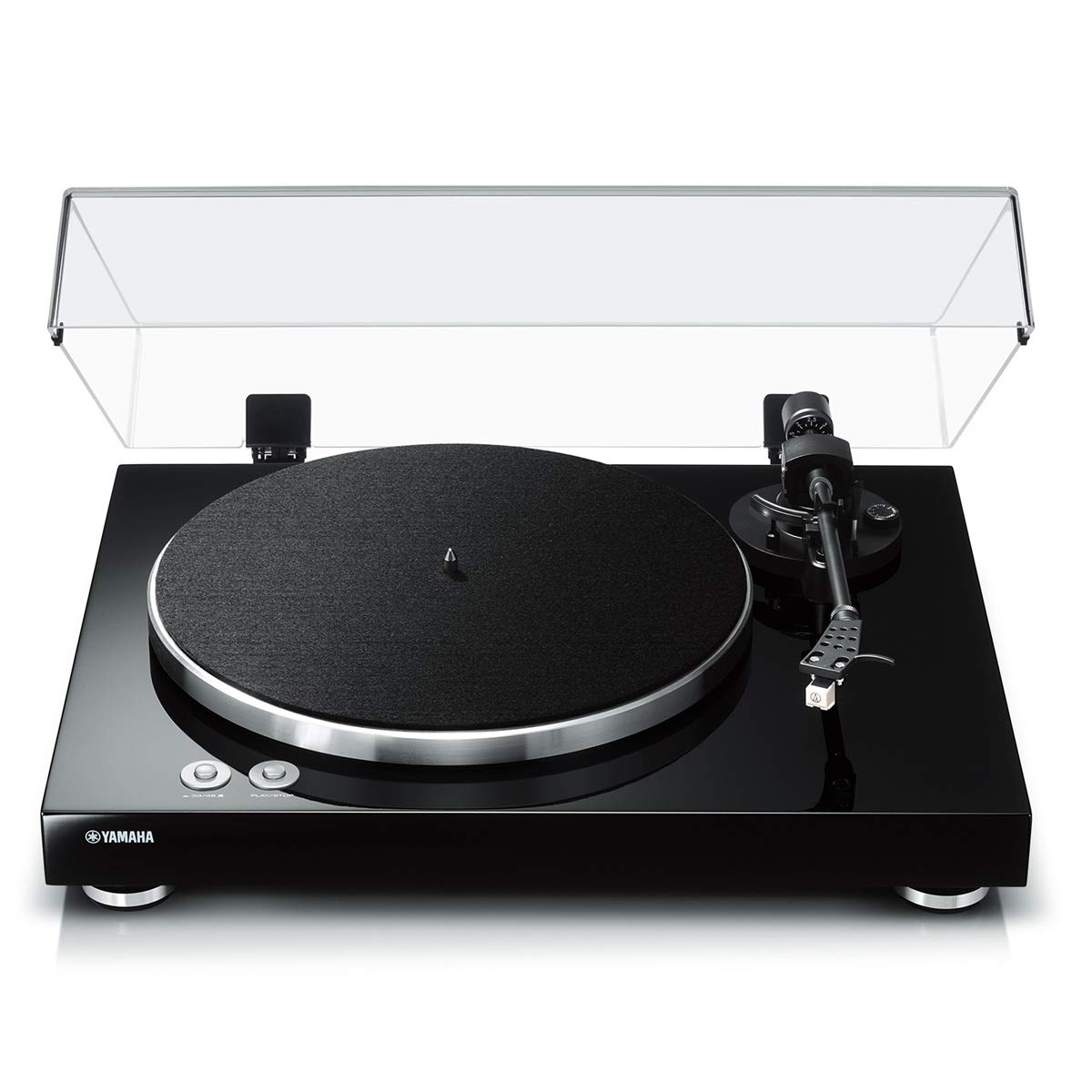
Yamaha brings its hi-fi engineering heritage to the TT-S303, a belt-drive table that prioritizes stable rotation and a quiet noise floor. The static-balanced straight tonearm uses a precision gimbal bearing designed for low friction, and the high-inertia platter is belt-driven by a DC motor that reduces cogging torque pulses. The piano black (or silver) finish is durable and attractive, though the cabinet is a rigid plastic material rather than wood or MDF — still sufficient for internal damping due to the large internal loss structure.
The built-in phono preamp includes both line and phono output options, so you can connect directly to an integrated amplifier’s line input or bypass the preamp for an external stage later. The signal-to-noise ratio is rated at 67dB, which is competitive for this price tier. Users note that the stock cartridge is functional but benefits from an upgrade to an Ortofon Red or better — this is the one area where Yamaha economized. The speed adjustment is accessible via an underside screw if rotational accuracy drifts, a feature not found on all mid-range belt-drive decks.
Where the TT-S303 falls short is convenience: there is no auto-return or auto-stop, and the tonearm does not lift when the record ends. The motor continues spinning indefinitely unless you power it down manually. For listeners who build a dedicated listening ritual, this is a minor inconvenience, but for casual or multi-tasking use it may become annoying. If you already own a Yamaha receiver and want a visually cohesive system, this deck integrates seamlessly. The sound with an upgraded cartridge is spacious and transparent, with zero motor hum reported.
Why it’s great
- Quiet DC motor with high-inertia platter yields stable pitch and low wow
- Built-in phono preamp with bypass switch offers system flexibility
- Underside speed adjustment screw allows fine-tuning of rotational accuracy
Good to know
- No auto-return or auto-stop; manual tonearm lift required
- Stock cartridge is entry-level; budget for an upgrade to reach full potential
8. Crosley C100A-SI Belt-Drive Turntable

The Crosley C100A-SI is the best entry-level turntable with an actual adjustable counterweight and anti-skate control — rare features at this price point that allow you to set the correct vertical tracking force (typically 2.0g for the included Audio-Technica AT3600L cartridge). The belt-drive motor is a low-vibration synchronous type mounted on resonance-dampening feet, and the aluminum strobe-pattern platter with adjustable pitch control ensures the speed stays accurate even after years of belt wear. The included slipmat and 45 RPM adapter round out the package.
The aluminum tonearm with cueing lever gives beginners a safe way to lower the stylus without accidental drops, and the removable headshell allows cartridge upgrades down the line. The built-in switchable phono preamp means you can plug directly into powered speakers or a receiver’s line input, making this a true starter kit. Users consistently praise the sound quality for the price, noting it outperforms suitcase-style players by a wide margin — the Audio-Technica cartridge tracks well, and the anti-skate control minimizes inner-groove distortion when properly dialed in.
The trade-offs are typical for budget models: the plinth is lightweight (plastic/aluminum composite) compared to MDF or wood alternatives, which means less mass to absorb floor vibrations. The tonearm lift lever reportedly grazes the record surface on some units, requiring a thinner mat adjustment. There is no auto-stop or auto-return, so you must manually lift the arm at the side’s end. For the price-conscious buyer who refuses to buy a cheap suitcase player and wants the core hifi features — adjustable tracking force, anti-skate, good cartridge, and preamp — the C100A-SI is the logical entry point into belt-drive performance.
Why it’s great
- Adjustable counterweight and anti-skate for proper tracking force calibration
- Audio-Technica AT3600L cartridge delivers reliable sound for the price
- Built-in switchable preamp allows direct connection to powered speakers
Good to know
- Lightweight plinth provides less vibration damping than heavier alternatives
- No auto-stop; manual tonearm lift required at end of record
9. DIGITNOW Vinyl Record Player with Magnetic Cartridge
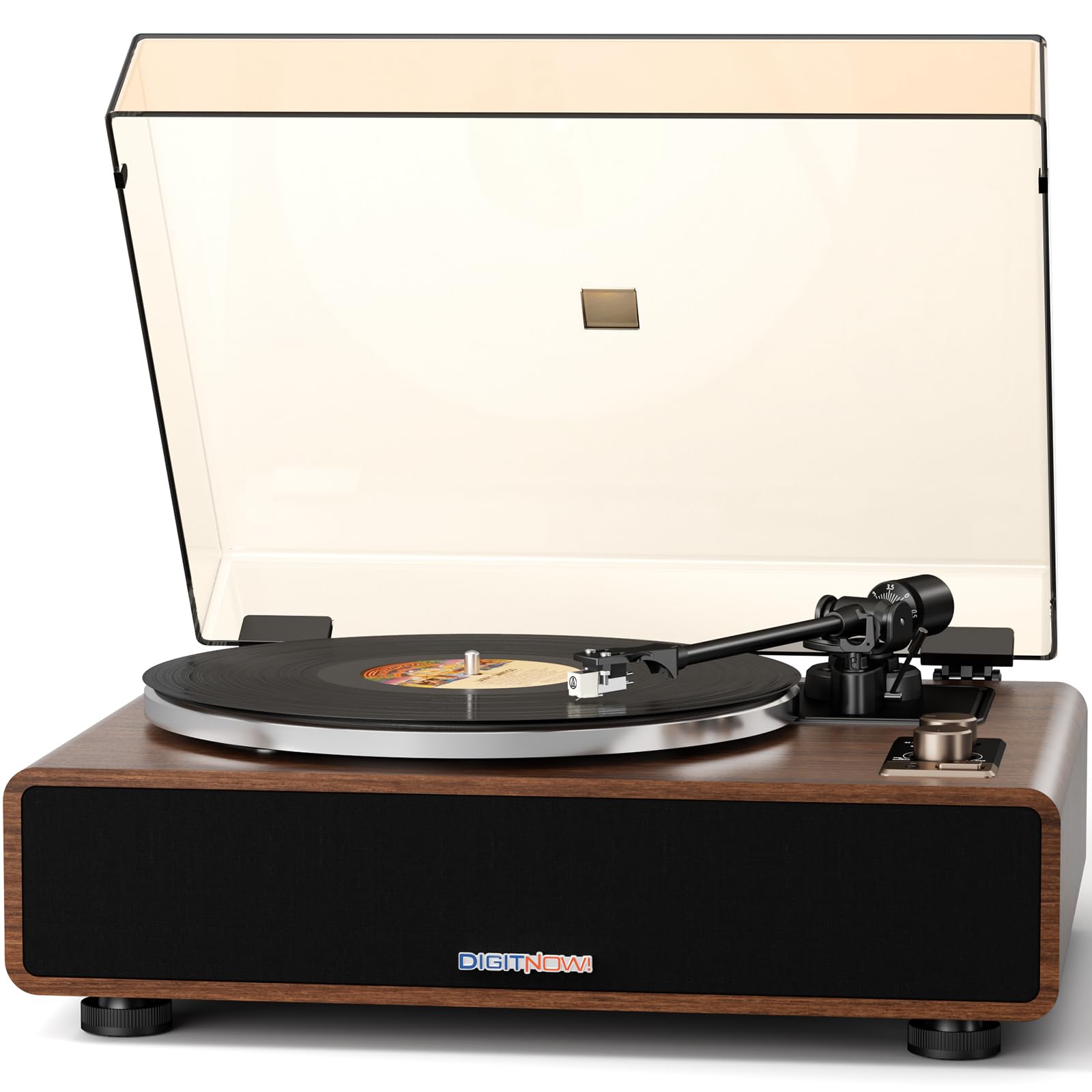
The DIGITNOW M487 is the most feature-packed budget belt-drive turntable in this list, offering built-in speakers, Bluetooth streaming to/from the unit, and an Aux-in port — all for a price that undercuts traditional entry-level tables. The AT3600L diamond-tipped stylus and magnet-type cartridge with adjustable counterweight are the same components found on more expensive entry decks, delivering warm, authentic sound when used with the built-in speakers or external powered speakers via the integrated amplifier output. The wood-and-metal design with curved edges gives it a distinct mid-century modern look.
Operation includes a power button that must be held to turn on, then pressed again to start platter rotation — a slight learning curve. The belt-drive motor is an AC synchronous type, and the turntable supports both 33 and 45 RPM speeds (the 45 RPM adapter is included). Anti-skate control is present, and the RCA outputs allow connection to a stereo receiver if you outgrow the built-in speakers. The 28-watt power consumption is modest, and the overall weight suggests solid construction for the price tier.
The trade-offs are clear: the built-in speakers are acceptable for casual listening but lack the full-range definition of a dedicated amp-and-speaker system. The adjustable counterweight is present, but the tonearm is not gimbal-mounted — it uses a basic universal hinge. This is not a deck for critical audiophile listening; it is a gateway turntable for someone who wants to dip into vinyl without buying an amplifier and speakers. For families, dorm rooms, or secondary setups, the convenience of built-in speakers and Bluetooth outweighs the sonic limitations.
Why it’s great
- Built-in speakers and Bluetooth mean no additional audio system required to start playing records
- AT3600L diamond stylus and magnetic cartridge provide better sound than ceramic alternatives
- Adjustable counterweight allows proper tracking force for reduced distortion
Good to know
- Built-in speakers are adequate for casual listening but lack full-range detail
- Basic tonearm hinge lacks gimbal precision — upgrade path limited without replacing table
FAQ
What is the actual audible difference between belt drive and direct drive?
Can I upgrade the cartridge on a belt-drive turntable?
Does a built-in phono preamp degrade sound quality?
Final Thoughts: The Verdict
For most users, the best belt drive turntable winner is the Fluance RT85N because its acrylic platter and Nagaoka MP-110 cartridge deliver reference-grade speed stability and warm, detailed sound without requiring an immediate cartridge upgrade. If you want the upgradeability and true balanced output of a higher-end audiophile platform, grab the Pro-Ject Debut EVO 2. And for space-conscious listeners who value the simplicity of a built-in preamp and grooved acrylic platter, nothing beats the U-Turn Orbit Plus (Gen 2).

Mo Maruf
I created WellFizz to bridge the gap between vague wellness advice and actionable solutions. My mission is simple: to decode the research and give you practical tools you can actually use.
Beyond the data, I am a passionate traveler. I believe that stepping away from the screen to explore new environments is essential for mental clarity and physical vitality.