Our readers keep the lights on and my smoothie glass nicely filled. As an Amazon Associate, I earn from qualifying purchases.
A TFCC tear turns every twist of the doorknob, every push-up, and every golf swing into a sharp gamble. Standard wrist braces lock the whole joint down, but the real problem is the ulnar side — that specific spot on the pinkie edge where the triangular fibrocartilage complex lives. The right brace isolates that zone with targeted compression or a counterforce pad, letting the rest of your hand move naturally while the tear stabilizes.
I’m Mohammad Maruf — the founder and writer behind WellFizz. I’ve spent hundreds of hours cross-referencing orthopedic rehab protocols, analyzing pad geometry and velcro track layouts, and reading through thousands of verified customer reviews to separate the braces that actually offload the ulnar head from those that just squeeze the wrist.
After filtering for build quality, adjustability, and real-world pain relief, two designs consistently outperformed the rest: the compression-ring style and the foam-booster style. This guide breaks down the top five contenders so you can match the right mechanism to your specific injury pattern. Whether you’re recovering from a gymnast’s impact or a repetitive strain, the brace for tfcc tear that fits your anatomy determines how fast you get back to daily life without surgery.
How To Choose The Best Brace For Tfcc Tear
Choosing the wrong brace for a TFCC tear is worse than wearing none — a generic wrist wrap can compress the wrong structures and aggravate the injury. You need a brace that addresses the specific anatomy of the triangular fibrocartilage complex: the ligaments and cartilage that connect the ulna to the carpal bones on the pinkie side of the wrist.
Compression Ring vs. Counterforce Pad
The two dominant mechanisms are a embedded silicone or foam ring that sits directly over the ulnar head, and a foam booster cushion placed over the pisiform bone to create a counterforce effect. A compression ring works best for DRUJ instability and mild tears where you need gentle, constant pressure. A counterforce pad is preferred for ECU tendonitis, post-fracture pain, or midcarpal instability because it actively realigns the carpal bones during movement.
Size, Hand Orientation, and Strap Configuration
Unlike a general wrist brace, a TFCC-specific brace demands a precise fit. Measure your wrist circumference at the joint line — most braces divide into S/M (5.5–6.75 inches) and L/XL (7–8.5 inches). Some models are hand-specific (right or left), while others fit both. The strap layout matters: two straps wrapping in opposite directions provide superior biomechanical stabilization compared to a single velcro band.
Material Breathability and Daily Wear
TFCC recovery often requires wearing the brace 8–12 hours a day, including during sleep. Perforated neoprene (1/16 inch or 2mm) with a terry cloth or suede lining wicks moisture and prevents skin maceration. Avoid thick, non-breathable neoprene if you plan to wear it during workouts or warm weather. Also check for latex-free and DEHP-free construction if you have contact allergies.
Quick Comparison
On smaller screens, swipe sideways to see the full table.
| Model | Category | Best For | Key Spec | Amazon |
|---|---|---|---|---|
| WristWidget | Counterforce | All-day healing, surgery avoidance | One size fits 14–22cm circumference | Amazon |
| Comfort Cool Ulnar Booster | Counterforce | Post-surgery & pisiform protection | 2mm perforated neoprene, right hand | Amazon |
| JOMECA TFCC Brace | Compression Ring | Repetitive use & sports recovery | Built-in bionic O-ring pad, S/M | Amazon |
| Feamero Ulna Wrist Brace | Compression Ring | Golf, typing, everyday activity | Silicone compression gasket, S/M | Amazon |
| Aider Daily Grip Zero | Slip-On Stabilizer | Quick on/off, small wrists | Slip-on design, nylon/polyurethane | Amazon |
In‑Depth Reviews
1. WristWidget Wrist Brace for TFCC Tears

The WristWidget is the gold standard for non-surgical TFCC management — it supports the radius and ulna independently, creating a counterforce that offloads the torn complex while allowing full wrist mobility. Its single-size design fits circumferences from 14cm to 22cm, covering most adult wrists without needing to guess between S/M or L/XL. The velcro strap system lets you manually adjust slack to match your specific ulnar variance, which is critical for both positive and negative ulnar variants.
Built in a solar-powered, zero-waste facility in Hawaii, the brace is latex-free, DEHP-free, and MRI-safe — a detail that matters if you need imaging without removing the device. Multiple verified buyers report wearing it 24/7 for four months to avoid surgery, and several note it allowed pain-free golf swings and weightlifting after years of discomfort. The thick velcro material can feel scratchy against sensitive skin, and some users experienced temporary bruising from wearing it very snug, but the trade-off is effective healing.
A small portion of customers feel the price is high for a single brace, especially since the product ships as one unit. However, the lifetime guarantee and proven track record (over a decade on the market) make it a long-term investment that outlasts cheaper alternatives. For anyone serious about rehabbing a TFCC tear without going under the knife, this is the brace that earns its reputation.
Why it’s great
- Independent radius/ulna support proven to avoid surgery in many cases.
- Lifetime guarantee and MRI-safe construction.
- Fits both left and right wrists with manual slack adjustment.
Good to know
- Thick velcro material can feel scratchy against bare skin.
- Very snug fit may cause temporary bruising or swelling during initial wear.
- Only one brace included — no option for a pair at this price.
2. Comfort Cool Ulnar Booster Wrist Brace
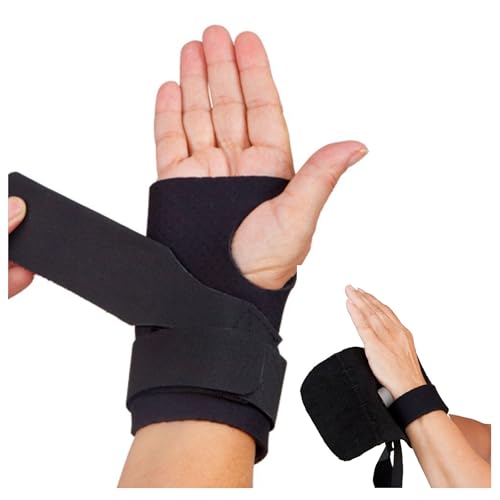
The Comfort Cool Ulnar Booster is not a general wrist brace — it is a targeted medical device engineered specifically for ulnar-sided pain, including TFCC tears, ECU tendonitis, midcarpal instability, and post-fracture discomfort. The key feature is a removable foam boosting cushion placed over the pisiform bone, which creates a counterforce effect that realigns the carpal bones and depresses the ulnar head during movement. Unlike compression-ring designs that apply constant pressure, this pad dynamically adjusts its force as you grip and rotate.
Two adjustable straps wrap in opposite directions around the wrist, providing biomechanically correct stabilization that single-strap braces cannot match. The 2mm perforated neoprene with a terry cloth liner keeps the skin cool and dry during extended wear, and the foam pad can be trimmed for a personalized fit. Post-surgery patients, including those who had pisiform removal or ligament debridement, report that this brace quieted pain completely after four other braces failed. It is hand-specific — you must select the correct side and size (wrist circumference 6.25 to 7.25 inches for medium).
The main drawback is the learning curve: the strapping scheme is complex and the instructions use medical anatomical terms without clear illustrations, making initial application frustrating. Some users find the booster pad positioning awkward until they experiment with placement. It is also non-returnable once opened, so accurate sizing is essential. Despite these friction points, for specific post-surgical recovery and pisiform-related pain, no other brace delivers this level of targeted counterforce.
Why it’s great
- Removable foam booster creates precise counterforce for pisiform and ulnar head realignment.
- Biomechanically correct dual-strap design stabilizes midcarpal instabilities.
- Thin, breathable neoprene with moisture-wicking terry cloth liner.
Good to know
- Complex strapping system with poor instructional diagrams.
- Hand-specific — must pick right or left orientation.
- Non-returnable after opening, so sizing must be exact.
3. JOMECA TFCC Wrist Brace with Built-in Ring Pad

The JOMECA TFCC brace employs a bionic O-ring pad that sits directly over the ulnar head, delivering constant, gentle compression to the distal radial ulnar joint. This is the same mechanism as the Feamero but with a slightly more rigid velcro strap system that some users find holds position better during typing and office work. Physical therapists frequently recommend this model for repetitive-use injuries from tennis, golf, and archery because the ring pad does not shift during rotational movements.
The perforated, skin-friendly fabric and minimal seam construction reduce chafing, which is a common complaint with neoprene braces in hot climates. It fits both left and right hands in S/M size (best for 5.5–6.75 inch wrists), though the velcro strap length can be tight if your wrist measures at the upper end of that range. Several verified buyers noted significant improvement in ulnar wrist pain after the first day, especially during prolonged computer work, and one reviewer specifically avoided surgery thanks to this brace.
On the downside, a minority of users found that the brace did not relieve their pain at all, and the sizing can be tricky — if your wrist circumference falls between sizes, consider sizing up to ensure the velcro reaches. It is slightly more expensive than the Feamero, but the construction feels denser and the ring pad is more pronounced. For active individuals who need the ring to stay locked over the ulnar head during dynamic sports, this is a reliable mid-range workhorse.
Why it’s great
- Bionic O-ring pad provides focused compression directly over the ulnar head.
- Perforated fabric and minimal seams reduce chafing during extended wear.
- Effective for sports like golf, tennis, and archery where rotation is frequent.
Good to know
- Velcro strap may be too short for wrists at the upper end of S/M range.
- Not effective for all pain presentations — some users reported no relief.
- No hand-orientation option; one brace is meant for both sides.
4. Feamero TFCC Wrist Brace with Compression Ring Pad

The Feamero brace integrates a silicone compression gasket that is molded into the fabric rather than sitting as a separate pad, giving it a lower profile and a more integrated feel against the skin. Designed in collaboration with physiotherapists, the gasket aligns with the ulnar styloid and applies pressure circumferentially around the DRUJ, which helps stabilize the joint without the bulk of a traditional splint. The suede lining wicks moisture effectively, making it comfortable for all-day wear at work, during sleep, or while playing golf.
One verified reviewer who had undergone ORIF wrist surgery with prominent DRUJ reported that this strap eliminated ECU tendon snagging and delivered a pain-free golf swing for the first time in 20 years. The adjustable compression system lets you fine-tune pressure as swelling changes throughout the day, which is useful during the acute phase of a tear. The neoprene body offers moderate warmth that can soothe stiff joints without overheating.
The primary complaint comes from users with small or boney wrists — the brace can slip out of position if your wrist circumference is under 5.5 inches, and there is no smaller size available. A few users noted that the velcro attachment points could be stronger, especially after repeated daily adjustments. For average to larger wrists needing a comfortable, low-profile compression ring, the Feamero offers the best balance of price and comfort in the ring-style category.
Why it’s great
- Integrated silicone gasket provides smooth, targeted compression without a bulky pad.
- Suede lining wicks moisture and reduces skin irritation during long wear.
- Fine-tune pressure adjustment system adapts to changing swelling levels.
Good to know
- Tends to slip on small or boney wrists; no extra-small size option.
- Velcro attachment points may weaken with frequent daily adjustments.
- Not suitable for positive ulnar variance where a counterforce pad is needed.
5. Aider Daily Grip Zero Wrist Brace

The Aider Daily Grip Zero breaks away from the velcro-strap paradigm with a slip-on design that takes about two seconds to put on. It is made from a blend of nylon, plastic, and polyurethane that provides moderate stabilization without the rigid compression of neoprene. Developed by physical therapists with over 17 years of experience, it aims to support TFCC tears, ulnar wrist pain, and tendonitis while preserving full wrist flexibility — a feature that appeals to kitchen workers, mechanics, and anyone who needs to wash their hands frequently throughout the day.
Multiple verified users with small wrists report that the one-size-fits-all design actually works for their anatomy, unlike the Feamero or JOMECA which can slip. The breathable, sweat-resistant fabric keeps the wrist cool during hot kitchen environments or outdoor workouts, and the brace dries quickly after hand washing. One reviewer who works in a kitchen noted it held up well after two weeks of continuous use and frequent washing cycles. The hook-and-loop closure adds an extra security layer for those who want it snugger than the slip-on provides.
The major concern is durability: the tightening component is glued onto the brace body, and some users experienced glue failure within the first few weeks of use. Others felt the material seems cheap given the price point, especially since only one brace is included. For those who prioritize speed of application and have smaller wrists, the Aider is a convenient option, but it does not offer the same level of ulnar-specific compression or counterforce as the ring or booster designs above.
Why it’s great
- Ultra-fast slip-on design — no velcro straps to fumble with.
- Fits small wrists well where other braces slip off.
- Breathable, sweat-resistant fabric dries quickly after washing.
Good to know
- Glued tightening component can fail after weeks of use.
- Material feels less robust than neoprene-based competitors.
- Only one brace per purchase — no pair option at this cost.
FAQ
What is the difference between a compression ring and a counterforce pad for TFCC tears?
Can I wear a TFCC brace on both hands at the same time?
How tight should a TFCC brace be for proper healing?
How do I know which size TFCC brace to order for my wrist?
Can I sleep with a TFCC brace on?
Final Thoughts: The Verdict
For most users, the brace for tfcc tear winner is the WristWidget because it provides the most versatile counterforce support for both daily activities and sports, with a proven track record of helping people avoid surgery. If you want a foam booster for precise post-surgical recovery, grab the Comfort Cool Ulnar Booster. And for a budget-friendly compression ring that works for average to larger wrists during repetitive tasks and golf, nothing beats the Feamero TFCC Brace.

Mo Maruf
I created WellFizz to bridge the gap between vague wellness advice and actionable solutions. My mission is simple: to decode the research and give you practical tools you can actually use.
Beyond the data, I am a passionate traveler. I believe that stepping away from the screen to explore new environments is essential for mental clarity and physical vitality.