Our readers keep the lights on and my smoothie glass nicely filled. As an Amazon Associate, I earn from qualifying purchases.
Water crossings, loose scree, sudden downpours, and sharp granite edges define the hiking experience. A camera that can’t handle those elements becomes dead weight in your pack. The right companion for the trail is sealed against moisture, rated to survive a drop onto rock, and small enough to grab from a hip belt pocket without breaking stride.
I’m Mohammad Maruf — the founder and writer behind WellFizz. My research focuses on the intersection of outdoor durability and imaging performance, analyzing waterproof ratings, lens specifications, and stabilization systems that differentiate trail-ready cameras from fragile alternatives.
After evaluating shockproof construction, battery endurance, and optical zoom ranges across the latest rugged compacts and action cameras, I’ve identified the models that earn a spot in your pack. This guide breaks down the cameras for hiking that balance portability, toughness, and image quality for the backcountry.
How To Choose The Best Cameras For Hiking
Hiking puts unique stress on camera gear. Constant vibration from footfalls, sudden weather shifts from canyon floor to ridge line, and the need to operate with gloves or wet fingers all influence which camera will actually be used — and which will stay in the pack. Prioritize the four factors below before comparing sensor resolution or video frame rates.
Waterproof Depth and Shockproof Height Ratings
A camera rated to 33 feet (10 meters) is fine for shallow stream crossings, but an IP68 action camera or a rugged compact rated to 50 feet (15 meters) provides more margin for unexpected submersion. Shockproof ratings (measured as drop height onto a hard surface like plywood) of 1.6 to 2.1 meters cover the most common waist-height fumbles onto rock. Cameras without these ratings require separate waterproof housings that add bulk and reduce quick-draw capability.
Optical Zoom Range vs. Action Camera Field of View
Rugged point-and-shoots typically offer 4x to 5x optical zoom (roughly 28-140mm equivalent), allowing you to frame distant peaks or a marmot without moving closer. Action cameras feature ultrawide fixed lenses (typically 12-19mm equivalent) that excel at immersive POV and sweeping landscapes but require digital zoom for reach — often degrading image quality. If wildlife sightings or compressed landscape perspective matter, choose optical zoom. For first-person trail documentation and hands-free chest-mount video, choose an action camera.
Battery Endurance for Multi-Day Trails
Backcountry refueling is rare. An action camera that records 1 hour at 4K high bitrate may need two spare batteries per full day. A rugged compact shooting stills with an optical viewfinder can often run for 200-300 shots per charge. For trips longer than a single day, check the battery life in minutes at standard video resolution, and compare the ease of USB-C recharging from a power bank — some cameras support pass-through charging while recording.
Stabilization for Unsteady Terrain
Micro-jitter from trekking poles and breathing rhythm introduces camera shake that ruins both stills and video. Action cameras with gimbal-grade electronic stabilization (HyperSmooth or HorizonSteady) smooth footage to drone-like levels. Rugged compacts rely on lens shift or digital stabilization that helps stills but does less for video. If you plan to shoot handheld video while hiking, prioritize a camera with six-axis or horizon-leveling stabilization.
Quick Comparison
On smaller screens, swipe sideways to see the full table.
| Model | Category | Best For | Key Spec | Amazon |
|---|---|---|---|---|
| Sony RX100 VII | Premium Compact | All-purpose hiking photography | 24-200mm f/2.8-4.5 optical zoom | Amazon |
| OM System Tough TG-7 | Rugged Compact | Underwater and macro adventure | Waterproof to 15m, 4x optical zoom | Amazon |
| Insta360 X5 | 360 Action Cam | Full-scene capture and reframing | 8K 360° video, IP68 waterproof | Amazon |
| DJI Osmo Action 5 Pro | Action Camera | All-day battery and low-light video | 4h battery life, 1/1.3″ sensor | Amazon |
| GoPro HERO13 Black | Action Camera | High-res 5.3K video with lens mods | 5.3K60fps, HyperSmooth 6.0 | Amazon |
| Canon PowerShot V10 | Compact Vlog Camera | Ultra-portable vlogging on the trail | 19mm wide-angle, flip-screen | Amazon |
| PENTAX WG-90 | Rugged Compact | Macro and close-up field work | Waterproof to 14m, 6-LED macro ring | Amazon |
| Ricoh WG-80 | Rugged Compact | Budget-friendly rugged shooting | Waterproof to 14m, 5x optical zoom | Amazon |
| GoPro Hero (2024) | Entry Action Cam | Budget-friendly trail POV video | 4K30fps, HyperSmooth stabilization | Amazon |
In‑Depth Reviews
1. Sony RX100 VII
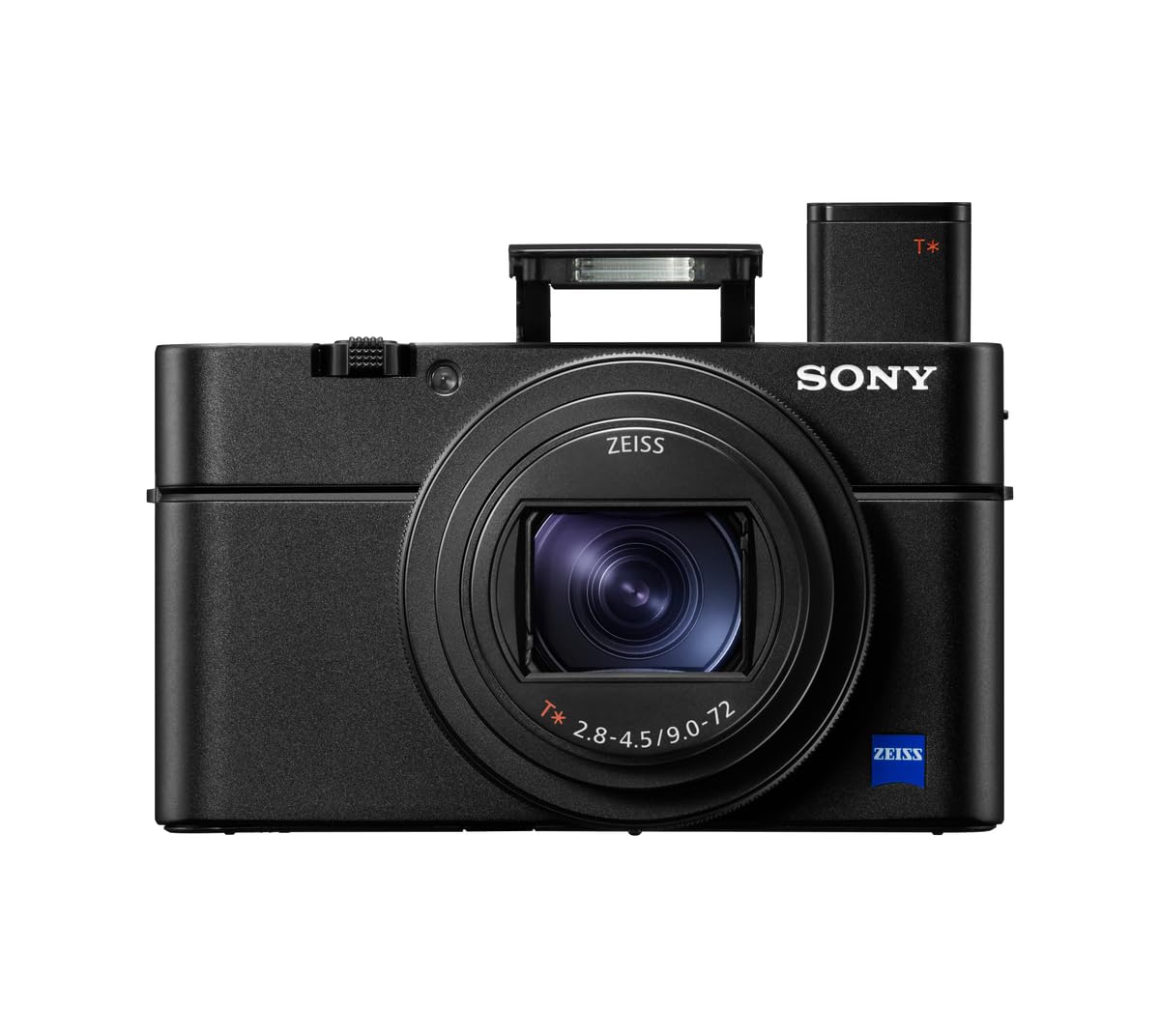
The Sony RX100 VII packs a 1-inch stacked CMOS sensor into a palm-sized chassis that slides into any hip belt pocket. Its 24-200mm f/2.8-4.5 Zeiss zoom covers everything from sweeping alpine vistas to distant wildlife without requiring a lens change — and at 20 frames per second with blackout-free shooting, you won’t miss the moment a ptarmigan flushes from cover.
Real-time Eye AF for both humans and animals means focus stays locked on a running dog or a moving subject across a rocky field. The pop-up electronic viewfinder is critical for bright summit days when the rear LCD washes out, and the active mode image stabilization makes handheld 4K video usable during a fast descent.
It lacks the dust-proofing and waterproofing of a true rugged compact, so a lightweight dry bag or padded case is mandatory for creek crossings or steady rain. But for the hiker who values image quality over invincibility, the RX100 VII is the most capable pound-for-pound camera on the trail.
Why it’s great
- Best-in-class 20MP 1-inch sensor for hiking landscapes
- 24-200mm optical zoom covers wide and telephoto without lens swaps
- Real-time Eye AF for animals and humans works reliably
Good to know
- No weather sealing — requires a dry bag for wet trails
- Grip is smooth; a stick-on pad helps with sweaty hands
- Battery life is moderate; carry one spare for all-day shooting
2. OM System Tough TG-7

The TG-7 is the direct successor to the legendary TG-6 and inherits the same battle-hardened DNA: waterproof to 15 meters, shockproof from a 2.1-meter drop, crushproof to 100 kgf, and freezeproof to -10°C. This is the camera you can hand to a kid, drop in a river, or stash in a dusty pack pocket without a second thought. The f/2.0 maximum aperture lets in enough light for shaded forest trails without needing a flash.
Five underwater shooting modes and a variable macro system that focuses as close as 1 centimeter from the lens tip make this the best choice for stream-side macro photography and snorkeling on summit lakes. The 4K video at 30 fps and 120 fps high-speed recording are serviceable for quick clips, and the built-in GPS logs your photo locations — handy for route recall after a multi-day traverse.
The small 1/2.3-inch sensor produces images that fall short of a 1-inch compact in low light, and the rear screen can be hard to see in direct sun. But for the hiker whose priority is zero-worry durability, the TG-7 is the undisputed king of rugged point-and-shoots.
Why it’s great
- Waterproof to 15m and shockproof from 2.1m — no housing needed
- Macro modes focus at 1cm for insect and detail photography
- Five underwater scene modes optimize color for snorkeling
Good to know
- Small sensor struggles in deep forest or twilight light
- Screen glare reduces visibility in bright sun
- Battery life is adequate but dies without warning; carry spares
3. Insta360 X5

The Insta360 X5 captures everything around you in 8K 360° video using dual 1/1.28-inch sensors and a triple AI chip that crushes noise in dim forest light and at dusk. The invisible selfie-stick effect lets you create third-person hiking footage that looks like a drone shot — framing your whole party against a ridge line without needing a separate camera operator.
FlowState stabilization plus full 360° Horizon Lock keeps the horizon perfectly level even when you’re scrambling over boulders or jogging down a trail. The new replaceable lens system is a major upgrade for hikers: if you scratch a lens on granite, you swap it in seconds instead of sending the whole camera for repair. The 4-mic array with Wind Guard delivers clear audio for wind-blown summits.
360° file sizes are massive — a full day of shooting at 8K will eat over 200GB of storage, so carry an extra microSD card. The workflow also requires Insta360 Studio or the mobile app for reframing, which means post-trip editing time is longer than a standard action camera. For hikers who love creative flexibility and don’t mind editing, the X5 is unmatched.
Why it’s great
- 8K 360° capture lets you reframe shots after the hike
- Replaceable lenses prevent trail damage from ending the trip
- Full 360° Horizon Lock stays level during any movement
Good to know
- Requires editing software to reframe — not a point-and-shoot
- File sizes are enormous; plan for 200GB+ per full day
- Steep learning curve for beginners unfamiliar with 360° workflow
4. DJI Osmo Action 5 Pro
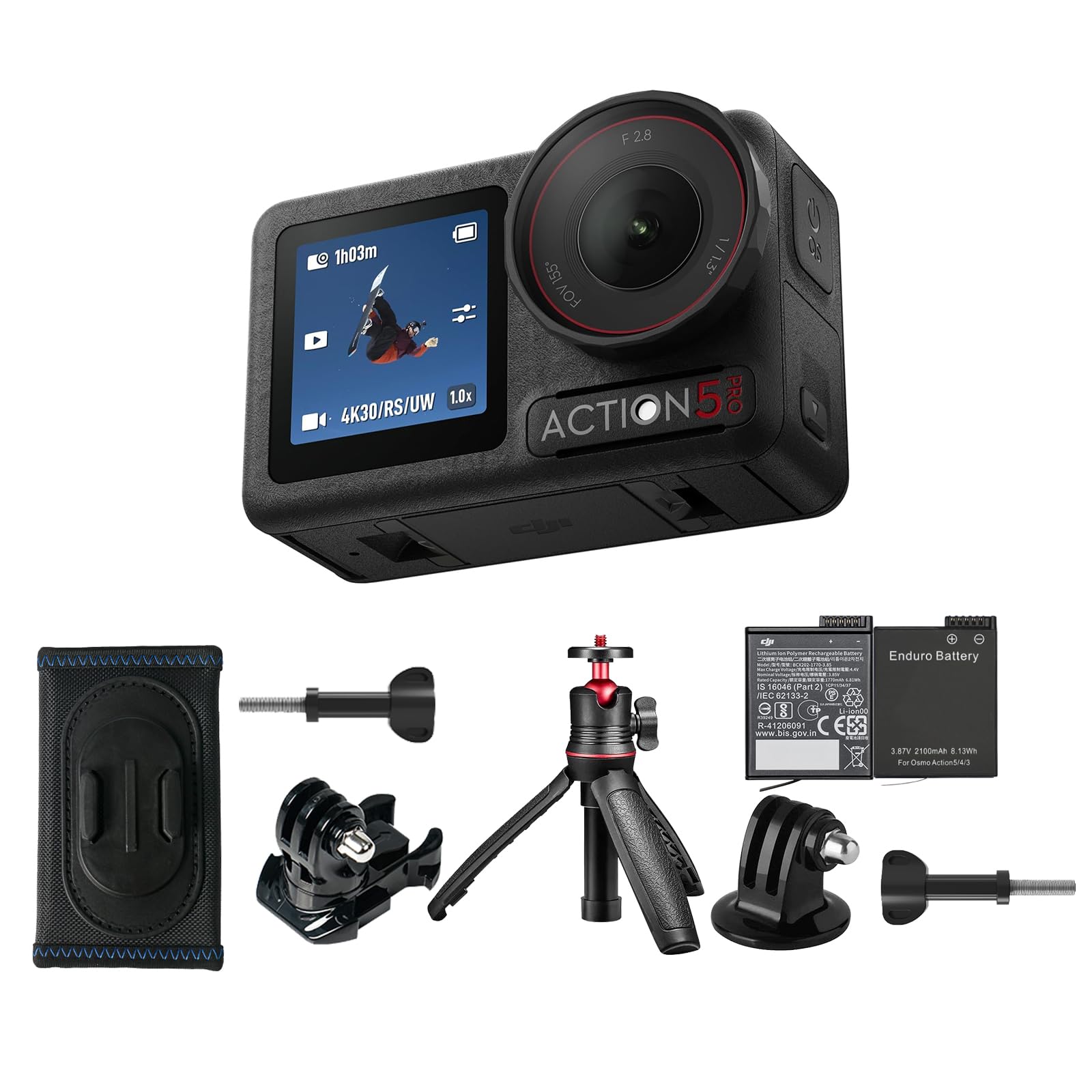
The Action 5 Pro combines a 1/1.3-inch sensor with 2.4 µm pixels and a 13.5-stop dynamic range — figures that rival some mirrorless cameras. The result is hiking footage with rich shadow detail in overcast canyons and natural highlight roll-off in full-sun ridge shots. The 1950mAh battery delivers up to 4 hours of continuous recording, which means a single charge covers a full day hike without swapping.
HorizonSteady stabilization eliminates all roll-axis shake, making rough descents on talus look like they were shot on a gimbal. The dual OLED touchscreens are visible even in direct sunlight, and the voice control feature works reliably up to one meter away — useful when your hands are full with trekking poles.
The acoustic windscreen on the bundled mic extension rod helps, but the built-in mics still pick up wind noise above treeline without a deadcat cover. The combo bundle includes an extra battery and a backpack strap mount, both of which are essential for multi-day trips. The zoom is digital-only, so distant subjects lose resolution.
Why it’s great
- 4-hour battery life covers full-day hikes on one charge
- Large 1/1.3″ sensor with 13.5-stop dynamic range
- HorizonSteady eliminates roll jitter on rough terrain
Good to know
- Digital zoom only — distant peaks lack sharpness
- Wind noise above treeline is noticeable without a windscreen
- Bundled accessories in combo vary in quality compared to branded gear
5. GoPro HERO13 Black

The HERO13 Black records 5.3K video at 60 fps with 91% more resolution than 4K, producing footage that stays crisp even when you crop in for a tighter composition. The HB-Series lens system — especially the Ultra Wide Lens Mod for sweeping canyon shots and the Macro Lens Mod for detail work — makes this the most versatile action camera for hikers who want cinematic flexibility without swapping bodies.
Burst Slo-Mo slows action down to 13x normal speed, turning a scramble across a boulder field into a dramatic slow-motion sequence. HyperSmooth stabilization has reached a level where handheld running footage looks gimbal-stabilized, and the waterproof rating to 33 feet means you can dunk it in a creek without a second thought.
The Enduro battery lasts about 79 minutes at 5.3K high bitrate — better than older GoPros but still short for a full-day hike without swapping. The camera also runs warm during extended 5.3K recording, which can be noticeable in summer conditions. For hikers who prioritize the highest possible video quality, the HERO13 is the clear choice.
Why it’s great
- 5.3K60fps video with 91% more resolution than 4K
- HB-Series lens mods add ultra-wide or macro capability
- HyperSmooth 6.0 stabilization is best-in-class for action
Good to know
- 79-minute battery at highest setting needs spares for all-day trips
- Camera runs warm during extended 5.3K recording in summer
- Premium price point with additional cost for lens mods
6. Canon PowerShot V10

The PowerShot V10 is an ultra-compact vlogging camera with a 19mm wide-angle equivalent lens and a 1-inch back-illuminated CMOS sensor that captures clean 4K at 30 fps. The built-in stand folds out from the body, allowing hands-free tabletop recording at shelters or viewpoints without carrying a separate tripod. At roughly the size of a deck of cards, it disappears into a pack’s hip pocket.
The stereo microphones with a third noise-reducing mic capture clear audio for on-trail narration, and the flip-up front-facing screen makes self-framing easy. Image stabilization has three modes (Off, On, and Enhanced) that handle moderate walking shake, though it won’t match an action camera’s gimbal-grade stabilization during a fast descent.
Battery life is limited to roughly 50-60 minutes of continuous 4K recording, so a USB-C power bank is essential for full-day hikes. The lens is fixed at 19mm, so you cannot zoom in on distant peaks or wildlife — everything relies on cropping in post. For hikers who focus on vlogging and short clips rather than still photography, the V10 is a surprisingly capable travel companion.
Why it’s great
- Incredibly compact with built-in stand for hands-free recording
- 1-inch sensor delivers good image quality in low light
- Flip-up front screen simplifies solo vlogging on the trail
Good to know
- Fixed 19mm lens offers no optical zoom for distant subjects
- Battery lasts ~50-60 minutes of recording; pack a USB-C bank
- No weather sealing — protect from rain and dust
7. PENTAX WG-90
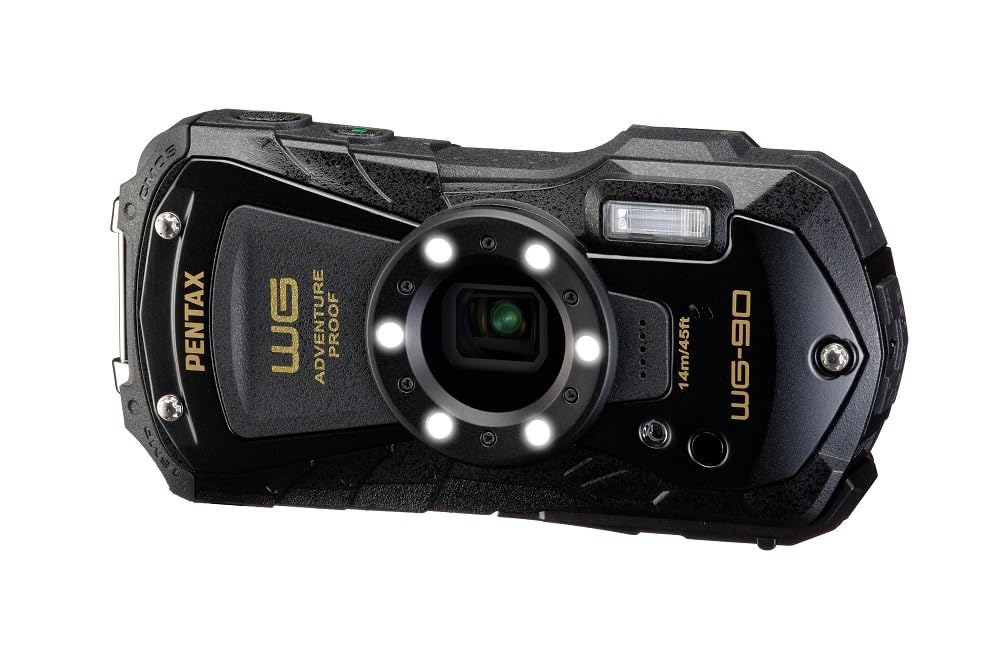
The WG-90 is built for hikers who pause to photograph the small stuff alongside the big views. Six LED macro lights encircle the lens barrel, providing shadow-free illumination for subjects as close as 1 centimeter — ideal for capturing a flower’s stamen, a beetle on bark, or the texture of a lichen-encrusted rock. The Digital Microscope mode takes this further, producing images you couldn’t get with a typical action camera.
Waterproof to 14 meters, shockproof from 1.6 meters, and freezeproof to -10°C, the WG-90 is ready for river beds, alpine snow, and dusty singletrack. The 5x optical zoom lens (28-140mm equivalent) provides genuine reach for landscape shots, and the Underwater Movie mode optimizes color balance for shallow reef or creek documentation.
The 2.7-inch LCD has an anti-reflective coating that improves visibility in bright conditions compared to older models, but it still struggles under direct alpine sun. Image quality from the 16MP back-illuminated CMOS sensor is solid up to ISO 1600, but beyond that noise becomes noticeable. For the hiker whose pack has room for a dedicated rugged camera, the WG-90 offers unique macro capabilities unmatched by action cameras.
Why it’s great
- Six LED macro lights illuminate close-up subjects without flash
- 5x optical zoom provides real reach for landscapes
- Rugged to 14m waterproof, 1.6m shockproof
Good to know
- LCD screen visibility is poor in direct alpine sunlight
- Image noise increases noticeably above ISO 1600
- Some users report battery door seal issues over time
8. Ricoh WG-80

The WG-80 is the more affordable sibling to the WG-90, sharing the same 14-meter waterproof rating, 2.1-meter shockproof rating, and a 5x optical zoom lens (28-140mm equivalent). It uses the same back-illuminated 16MP CMOS sensor and six-LED macro light array, making it nearly as capable for close-up field photography at a lower entry point.
The Underwater shooting mode adjusts color balance for snorkeling in lakes and shallow coastal waters, and the freezeproof construction down to -10°C ensures operation during shoulder-season and winter hikes. The macro stand accessory allows consistent 1-centimeter focus distance for extended observation — useful for documenting soil samples, fungi, or insect specimens on the trail.
Autofocus is slower than modern action cameras, with a 1-point contrast detection system that hunts in dim light. Image quality in well-lit scenes is acceptable for social media and casual printing, but the sensor shows its age in low-contrast lighting. The WG-80 is a straightforward choice for budget-conscious hikers who need drop-and-water protection and don’t demand high-frame-rate video or bleeding-edge sensor performance.
Why it’s great
- Same 14m waterproof and 2.1m shockproof ratings as premium models
- 5x optical zoom and six-LED macro lights included at lower cost
- Freezeproof to -10°C for winter hiking use
Good to know
- Autofocus is slow and hunts in low light
- Image quality shows age compared to newer sensors
- No built-in flash on this model
9. GoPro Hero (2024)

The entry-level GoPro Hero captures 4K video at 30 fps and 12MP stills with HyperSmooth stabilization — the same stabilization engine found in higher-end GoPros. Waterproof to 33 feet without a housing, it’s ready for stream crossings, rain showers, and muddy trail sections. At just 3 ounces, it’s the lightest camera in this list and fits comfortably in a running vest pocket.
Voice control with 8 commands in 11 languages allows hands-free operation when you’re wearing gloves or steadying yourself on a scramble. The bundled 64GB microSD card and 50-in-1 accessory kit (including a head strap mount, chest mount, and extension arm) cover most first-time action camera needs without separate purchases.
The 1-hour battery life at highest video settings is the weakest link — you’ll need to carry spare batteries or a USB-C power bank for any hike longer than a half-day. There’s no front-facing screen for self-framing, and the 12MP still resolution is lower than dedicated cameras. For the hiker new to action cameras who wants a reliable, waterproof POV recorder at a friendly entry point, the Hero delivers solid value.
Why it’s great
- HyperSmooth stabilization produces steady footage on rough trails
- Ultra-light 3oz body fits in any pocket or running vest
- Waterproof to 33 feet without extra housing
Good to know
- 1-hour battery life requires spares or a power bank for full-day hikes
- No front-facing screen for framing self-shots
- 12MP stills are adequate but not high-resolution
FAQ
Can I use a regular compact camera for hiking if I keep it in a dry bag?
What is the difference between shockproof and crushproof ratings on these cameras?
Final Thoughts: The Verdict
For most hikers, the cameras for hiking winner is the Sony RX100 VII because it delivers the highest image quality in a body small enough to pocket, with a 24-200mm zoom that covers trail staples from landscapes to wildlife. If you need zero-worry durability for snorkeling, scrambling, or family adventures, grab the OM System Tough TG-7. And for immersive first-person POV video that captures the entire trail experience with gimbal-grade stabilization, nothing beats the DJI Osmo Action 5 Pro.

Mo Maruf
I created WellFizz to bridge the gap between vague wellness advice and actionable solutions. My mission is simple: to decode the research and give you practical tools you can actually use.
Beyond the data, I am a passionate traveler. I believe that stepping away from the screen to explore new environments is essential for mental clarity and physical vitality.