Our readers keep the lights on and my smoothie glass nicely filled. As an Amazon Associate, I earn from qualifying purchases.
The first few weeks with a newborn are a fog of feeding, diapers, and very little sleep. The last thing you need is a breast pump that hurts, leaks, or takes forever to get a session done. Your pump needs to work with your body, not against it, and match the rhythm of a brand-new eater who feeds every two hours. A pump that makes you dread the next session is a broken tool right out of the box.
I’m Mohammad Maruf — the founder and writer behind WellFizz. I’ve spent countless hours cross-referencing clinical suction measurements, flange sizing guides, and real-world feedback to identify which pumps actually deliver on their promises for a newborn’s delicate feeding window.
Finding a reliable breast pump for newborn feeding sessions means prioritizing gentle initiation modes, hospital-grade suction that won’t overdo it, and a design that keeps up with a sleep-deprived schedule. The right pick makes every session feel like a small win.
How To Choose The Best Breast Pump For Newborn
Selecting a pump for a newborn is distinct from choosing one for an established nursing toddler. A newborn has a shallow, irregular latch and a small mouth, so the pump must initiate gentle letdown and ramp up gradually. Forcing high suction from the start can damage delicate areolar tissue and reduce milk production over time. Understanding the pump’s ability to mimic a newborn’s natural suck-swallow pattern is the first step to a sustainable pumping journey.
Flange Fit is Non-Negotiable
The flange (the funnel that fits over your breast) determines comfort and output. A too-large flange pulls in areola tissue, causing pain and edema. A too-small flange chafes the nipple and restricts milk flow. Most pumps ship with 24mm and 28mm flanges, but many women need 19mm, 21mm, or 17mm inserts. If you feel pinching or see your nipple rubbing against the tunnel walls, stop and resize. Pumps with adjustable or multiple flange sizes included in the box save you a separate purchase and a week of guesswork.
Closed System vs. Open System
A closed system pump has a physical barrier (usually a membrane or diaphragm) that prevents milk from entering the tubing and motor. This is critical for newborns because milk residue in the tubing can harbor mold and bacteria. Open system pumps require meticulous cleaning of the tubes, and they are not recommended for sharing between mothers. Look for “closed system” or “hygienic anti-backflow” in the specs — it directly affects the safety of your stored breast milk.
Suction Strength and Cycle Spectrum
Hospital-grade strength (260–300 mmHg) is not about force — it is about maintaining consistent vacuum without dropping off as the session progresses. Newborns trigger quick, shallow sucks during letdown followed by slower, deeper draws. Pumps that offer at least two distinct phases (stimulation and expression) with separate cycle speeds allow you to follow your baby’s cue. A pump that only has one speed and one suction level is a poor match for a newborn’s evolving feeding pattern.
Noise and Mobility in the Sleep-Deprived Zone
Newborns sleep lightly, and a loud pump motor can wake a baby mid-session. Decibel ratings under 50 dB are considered quiet — think refrigerator hum rather than vacuum cleaner. Wearable pumps offer the advantage of pumping while holding your baby, but they often have smaller motors and shorter battery life. A traditional pump with a rechargeable battery (like the Spectra S1) gives you the portability without compromising suction power. Evaluate your daily scenario: are you pumping in a nursery next to a sleeping baby, or multitasking around the house?
Quick Comparison
On smaller screens, swipe sideways to see the full table.
| Model | Category | Best For | Key Spec | Amazon |
|---|---|---|---|---|
| Spectra S1 Plus | Traditional + Rechargeable | Max output & nighttime sessions | Rechargeable, 2-phase cycling | Amazon |
| Annabella Single | Tongue-Simulation | Mimicking baby’s suckling pattern | Tongue-simulating motor | Amazon |
| eufy S1 Heated | Wearable + Heated | Clog-prone moms & app control | HeatFlow, 300 mmHg suction | Amazon |
| Medela Sonata Smart | Hospital Grade Smart | Hospital-level power at home | 2.5 lbs, USB rechargeable | Amazon |
| Momcozy M6 | Wearable Double | Hands-free multitasking | 295 mmHg, 9 levels | Amazon |
| Medela Pump in Style | Wearable Hybrid | In-bra cups & classic pump combo | MaxFlow microvibrations | Amazon |
| Lansinoh Discreet Duo | Wearable Double | Insurance-friendly wearable | 100 min battery, 45 dB | Amazon |
| Zomee Z2 | Alternating Dual | Time efficiency & portability | Alternate-mode breast switching | Amazon |
| Philips Avent Double | Plug-In Traditional | Gentle suction on a budget | 270 mmHg, silicone shield | Amazon |
In‑Depth Reviews
1. Spectra Baby S1 Plus Premier Rechargeable Breast Pump

The Spectra S1 sits on the gold standard pedestal for a reason — its Natural Nursing Technology cycles through a letdown phase (70 cycles per minute) and an expression phase (38–54 cycles per minute) that mirrors a newborn’s feeding pattern better than almost any other traditional pump. The rechargeable battery gives you freedom from an outlet without sacrificing the motor power that full-time pumpers rely on. The built-in nightlight and silent operation make it a natural choice for 2 a.m. sessions when you are trying not to wake the baby.
Its closed system design prevents milk from ever touching the tubing or motor, which means zero mold risk and easy cleaning. Users consistently report emptying faster with the S1 than with plug-in hospital-grade units. The included 24mm and 28mm flanges are standard, but you will likely need to buy a 20mm or smaller flange separately — a minor inconvenience given how well the pump performs.
For a newborn mom who plans to pump multiple times a day for months, the Spectra S1 is the most reliable workhorse available. It is not a wearable, so you need a pumping bra and both hands free, but the suction quality and battery longevity (3+ hours) outweigh that trade-off. It holds its resale value and often outlasts multiple children.
Why it’s great
- Two-phase cycling precisely mimics newborn suckling rhythm
- Long-lasting rechargeable battery for cordless travel
- Quiet motor and dim nightlight preserve sleep environment
Good to know
- Comes only with 24mm and 28mm flanges; smaller sizes sold separately
- Requires a hands-free pumping bra for true portability
2. Annabella Single Breast Pump

The Annabella is the first pump in this list to use a patented tongue-simulation mechanism that moves in a wave-like pattern against the areola — not just suction. This tactile stimulation triggers the same oxytocin and prolactin release as a newborn’s actual suckle, and clinical data shows users increased milk output by up to 50%. For mothers struggling with low supply or delayed letdown in the early weeks, this mechanical cue can be a game-changer.
The silicone shield adjusts between 18mm and 24mm in real-time, meaning you can fine-tune the fit mid-session without swapping parts. The nine suction levels and multiple tongue-height settings give you granular control over stimulation intensity. The integrated nightlight ring makes late-night setup easier, and the rechargeable battery lasts about two hours of active pumping. However, the pump is heavier than a traditional single and has more crevices to clean — the oscillating tongue mechanism requires thorough rinsing to prevent milk residue buildup.
This pump is best for mothers who need a physiological trigger to start flowing, or those who find standard pulsation uncomfortable. If you are exclusively pumping for a newborn who struggles to latch, the tongue-simulating motion can bridge the gap between baby and machine more naturally than standard suction cycles.
Why it’s great
- Tongue-simulating action boosts letdown and overall output
- Adjustable flange from 18-24mm fits multiple nipple sizes without inserts
- Quiet operation with helpful nightlight ring
Good to know
- Motor unit is bulkier than standard singles
- Complex assembly with many parts to clean
3. eufy Security Heated Breast Pump S1
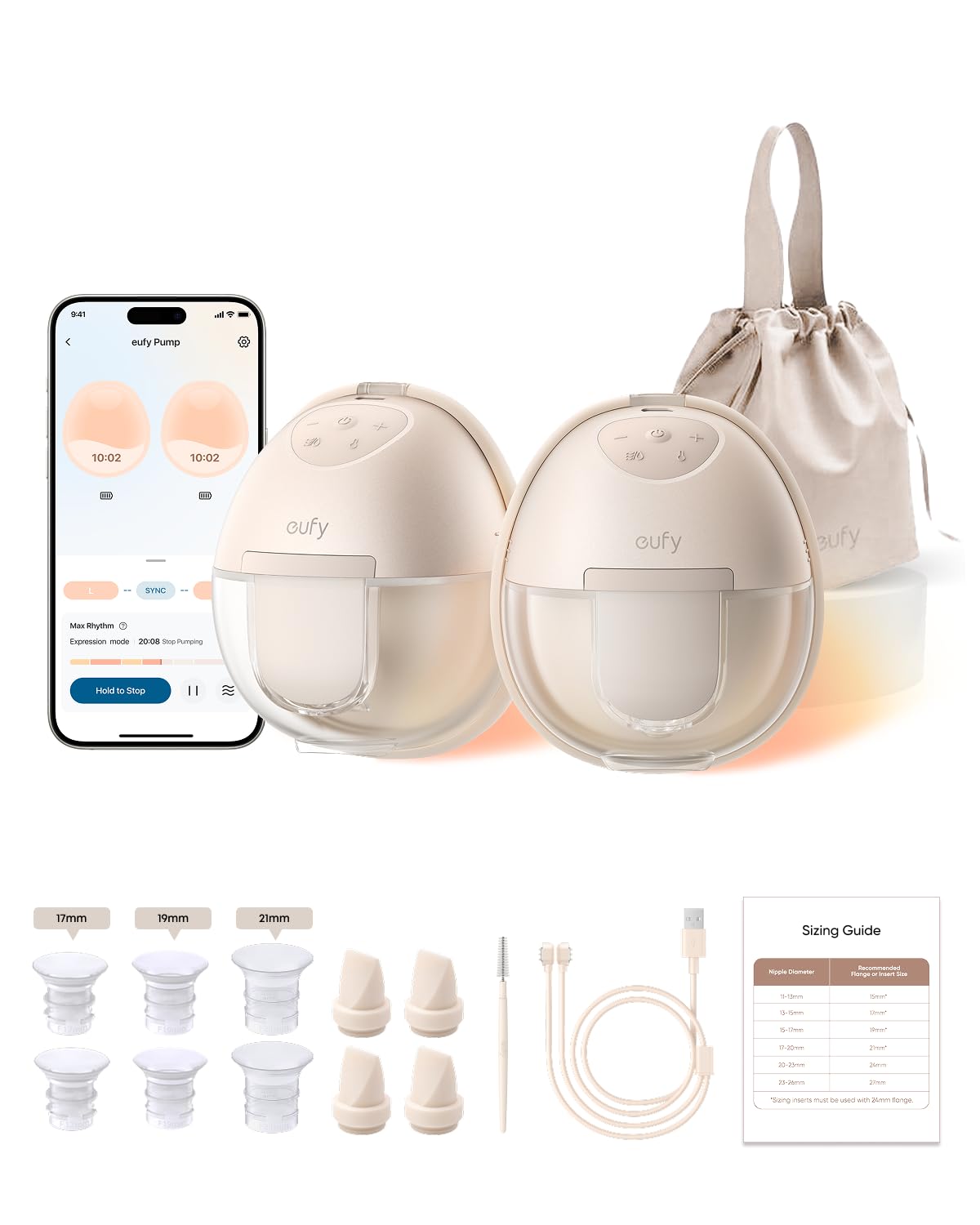
The eufy S1 introduces HeatFlow technology — a gentle warming plate in the flange that maintains a consistent temperature throughout the pumping session. This warmth helps dilate milk ducts, preventing clogs and making letdown faster, especially for mothers prone to engorgement or mastitis. The 300 mmHg motor is among the strongest in the wearable category, and the app lets you customize cycle speed and suction level with precision that most wearables lack.
The pump fits into a standard nursing bra and operates at 46 dB, quiet enough to use during a conference call or while the baby sleeps on your chest. The 105° ergonomic shield angle reduces the need to lean forward, and the double-seal design is leakproof when properly assembled. Both 17mm and 24mm inserts are compatible, though the standard kit fits 24mm nipples directly. The battery lasts about 1.5 hours with heat on, or longer without heat, covering multiple sessions between charges.
For a mother dealing with early-stage clogged ducts or simply wanting the most comfortable wearable experience, the eufy S1 stands alone. The heat function makes a measurable difference in milk flow volume, and the app-based rhythm profiles let you dial in a pattern that works for your specific anatomy. Just be prepared to troubleshoot occasional app pairing and know that the heat function drains the battery noticeably faster.
Why it’s great
- Heated flange reduces clog risk and speeds letdown
- 300 mmHg suction with custom app control
- Ultra-quiet and leakproof design
Good to know
- Heat function uses battery faster
- App interface can be glitchy with session sync
4. Medela Sonata Smart Breast Pump
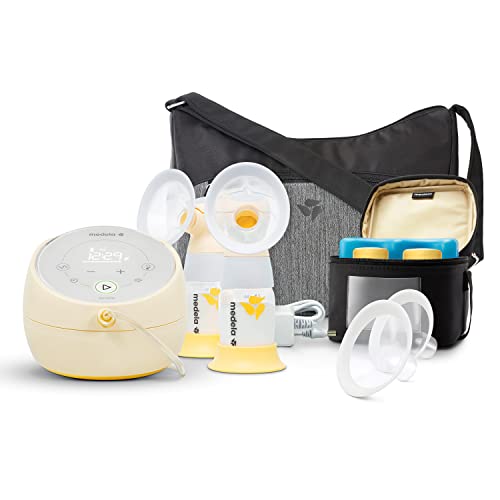
The Medela Sonata is essentially the home version of the hospital-grade Symphony found in NICUs. It uses Medela’s tried-and-true 2-Phase Expression technology — rapid, light sucks to initiate letdown, then slower, deeper pulls to remove milk — all within a compact, 2.5-pound machine. The touchscreen interface shows session time and suction level, and the rechargeable battery powers about 90 minutes of pumping, enough for a full day of sessions if you charge nightly.
The Flex breast shields feature a 105° opening that reduces pressure on milk ducts while keeping the nipple centered, which translates to more comfortable expression and 11.8% more milk according to Medela’s internal testing. The closed system prevents milk from entering the tubing, and the four main parts (shield, connector, valve, bottle) are dishwasher-safe. The Sonata connects to the Medela Family app for tracking, though the app itself is basic and primarily useful for logging session volumes.
This pump excels for mothers who pumped in the hospital with a Medela and want continuity at home, or those who want a rechargeable unit without going to a wearable. It does not come with a car adapter or a dedicated tote in all packages, and some users report firmware glitches (occasional “CALL” error) that resolve by resetting the unit. But the suction consistency and shield comfort are top-tier.
Why it’s great
- 2-Phase Expression matches hospital-grade Symphony performance
- 105° Flex shields reduce duct compression
- Compact, quiet, and rechargeable for on-the-go use
Good to know
- Occasional software glitches require reset
- Basic app with limited tracking functionality
5. Momcozy M6 Wearable Breast Pump

The Momcozy M6 is a wearable double pump that manages to deliver hospital-level suction (295 mmHg) in a lightweight, in-bra form factor. Its 2nd Gen motor operates with three modes — Stimulation, Expression, and a Mixed mode that cycles between both within a single session. The Mixed mode is particularly useful for newborns, who often switch between suckling and resting mid-feed. Users report that the M6 empties the breast as thoroughly as the Spectra S1, which is high praise for a wearable.
The DoubleFit flange uses a dual-seal design — soft silicone against the breast and a harder outer rim for structural support — which reduces slipping and improves comfort for elastic nipples. The stand-up milk bowl design lets you pump directly into collection cups that pour cleanly into storage bags. The motor holds a charge for about 100 minutes, and the whole assembly fits inside a standard pumping bra without obvious bulging.
This pump is ideal for mothers who need to pump while caring for an older child or doing household tasks. It is not fully leakproof when bent over — the milk bowl seal depends on an upright orientation — so bending down to pick up a baby can cause a spill. You also need a fairly tight pumping bra to keep the motor in place. But for hands-free convenience with real suction power, the M6 is hard to beat in the wearable arena.
Why it’s great
- 295 mmHg suction rivals traditional hospital-grade pumps
- Mixed mode cycles stimulation and expression for natural rhythm
- Stand-up milk bowl design simplifies pouring
Good to know
- Not spill-proof if leaning forward sharply
- Requires a firm pumping bra to stay seated
6. Medela Pump in Style with Wearable Collection Cups
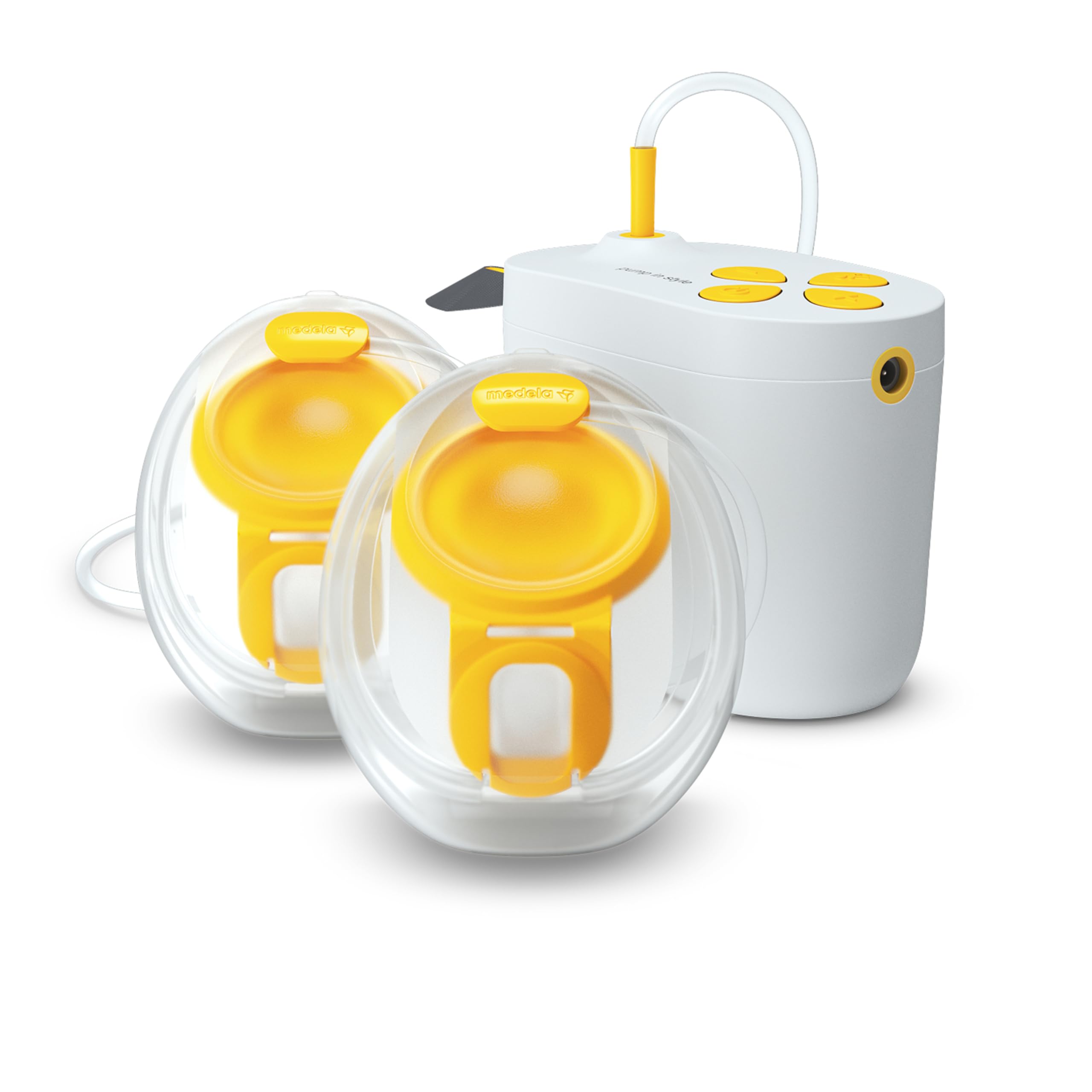
The Medela Pump in Style bridges the gap between a traditional console pump and a wearable. It includes both standard bottle collection and in-bra collection cups, giving you the option to pump hands-free when needed. The MaxFlow feature uses microvibrations at the nipple to stimulate stronger letdown, and the 2-Phase technology auto-switches from stimulation to expression once milk starts flowing. This makes it forgiving for mothers whose letdown reflex is still establishing in the first weeks.
The anatomically shaped breast shields feature a 105° angle that Medela claims reduces compression by 30%, allowing for more milk removal per session. The system is closed-loop and dishwasher-safe. However, the battery pack requires 8 AA batteries and only runs for about 20 minutes before cutting out — most users just keep the pump plugged in. The plastic locking tabs on the collection cups are also known to crack after a few weeks of regular use, which is disappointing for a premium-priced pump.
This pump works well for mothers who want a wearable option but prefer Medela’s proven suction mechanics over newer, unverified wearables. The dual cup and bottle compatibility means you can switch from hands-free pumping to traditional bottle feeding without transferring milk. Just budget for replacement cup parts around the four-month mark.
Why it’s great
- Includes both wearable cups and standard bottles
- MaxFlow microvibrations enhance letdown response
- Comfortable 105° shield reduces breast compression
Good to know
- Battery pack is underpowered with short runtime
- Collection cup locking tabs can break with frequent use
7. Lansinoh Discreet Duo Wearable Breast Pump
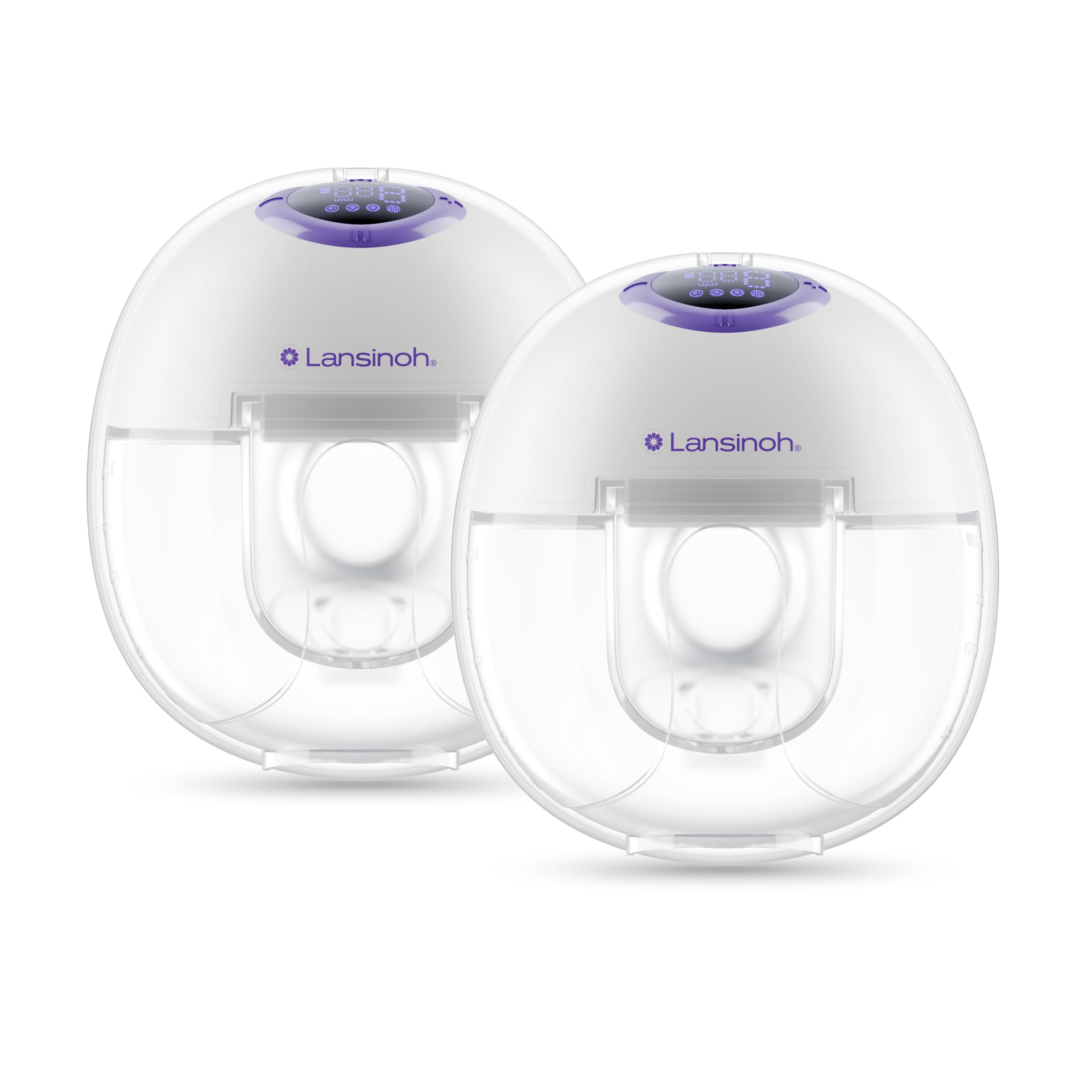
The Lansinoh Discreet Duo is a no-frills wearable that focuses on reliability over flashy features. It offers four pumping modes (Stimulation, Expression, Combination, and Massage) with nine suction levels each, plus a 20-minute auto shut-off timer to prevent over-pumping. The motor operates at under 45 dB — quieter than most competitors — and the battery delivers up to 100 minutes of runtime, enough for three full sessions per charge.
It comes with 24mm and 21mm flanges and includes silicone inserts for smaller sizes. The closed system ensures no milk travels into the motor, and the few parts (four per cup) make cleaning quick. Users note that the pump is audible during quiet office use but not disruptive. The auto-shutoff at 20 minutes is a built-in safety feature that some love and some find restrictive when they need a longer session.
For a mid-range wearable that does most things right without gimmicks, the Discreet Duo is a smart pick. It is often available through insurance, which brings the cost down dramatically. The only functional downside is that it does not empty as completely as the Spectra S1 for some users, making it a better secondary pump for daytime convenience rather than a primary overnight pump for maximum supply.
Why it’s great
- Very quiet motor (under 45 dB) for public use
- Includes 21mm and 24mm flanges plus inserts
- Often covered by insurance plans
Good to know
- Not as efficient at emptying as top-tier traditional pumps
- 20-minute auto shutoff may cut sessions short
8. Zomee Z2 Double Electric Breast Pump

The Zomee Z2 uses a unique Alternate-Mode technology that rhythmically switches suction between the left and right breast, mimicking the way a baby nurses from one side and then the other. This alternating pattern is thought to stimulate more natural letdown and reduce the sensation of being “double-teamed” by simultaneous suction. Many users find this approach more comfortable for early postpartum days when the breasts are tender and the areola is sensitive.
The pump offers three modes — Stimulation (rapid, light), Expression (slower, stronger), and 2-Phase (auto cycle between the two) — each with nine suction levels. The LCD screen has a warm nightlight, and the rechargeable battery lasts about two hours. The bottles hold 140 ml (4.7 oz), which is slightly smaller than standard 5 oz or 8 oz bottles, so you may need to transfer milk mid-session if you produce heavily. The pump is closed-system and uses food-grade silicone parts without BPA or phthalates.
This pump is a strong contender for mothers who find simultaneous pumping uncomfortable. The alternating suction feels less jarring and can lead to better milk removal in the same amount of time. The two-year warranty is reassuring, and the USB-C charging means you can top up from a laptop or power bank. The flange size options only go down to 19mm standard, so smaller nipples will need third-party inserts.
Why it’s great
- Alternating mode reduces overstimulation of both breasts
- Two-year warranty and USB-C charging
- Portable design with quiet operation
Good to know
- Standard bottles hold only 4.7 oz each
- Small flange sizes require separate purchase of inserts
9. Philips Avent Double Electric Breast Pump

The Philips Avent Double Electric Pump uses Natural Motion technology, which pairs suction with gentle massage from a soft silicone shield that flexes during pumping. This design replicates the way a baby compresses the areola with its gums, not just the vacuum effect. The result is a pump that feels noticeably softer than hard-plastic flange pumps, making it a good match for mothers with very sensitive nipples in the first weeks of breastfeeding.
It offers 8 stimulation levels and 16 expression levels — an unusually wide range that allows micro-adjustments during a session. The pump operates at up to 270 mmHg suction, which is solidly in the hospital-grade range, but the motor is not portable — it must be plugged into a wall outlet at all times. There is no rechargeable battery option, which limits mobility. The kit includes two 4 oz Avent bottles with natural-flow nipples that convert the pump parts into a feeding bottle directly, minimizing milk transfer steps.
For a mother who pumps at a dedicated station and prioritizes comfort over portability, the Philips Avent delivers a gentle, effective experience. The silicone shield adapts to slight movements, so you can shift position without breaking the seal. It is also one of the easiest pumps to assemble and clean, with only a few parts. The lack of a battery is the dealbreaker for anyone who wants to pump in a car or while moving around.
Why it’s great
- Soft silicone flange minimizes nipple pain and irritation
- 16 expression levels allow precise suction tuning
- Bottles transition directly to feeding with included nipples
Good to know
- Must be plugged into wall outlet; no battery option
- Single motor unit requires outlet nearby for sessions
FAQ
Can I use a breast pump for a newborn who is also nursing?
What flange size does a newborn mother typically need?
How many times a day should I pump for a newborn?
Should I get a wearable pump or a traditional pump for a newborn?
Final Thoughts: The Verdict
For most users, the breast pump for newborn winner is the Spectra S1 Plus because its rechargeable battery, two-phase cycling, and closed system provide the best combination of comfort, output, and long-term reliability for frequent newborn sessions. If you want a wearable that offers hospital-grade suction and app customization, grab the eufy S1 Heated. And for an innovative tongue-simulating pump that can boost supply in the early weeks, nothing beats the Annabella Single.

Mo Maruf
I created WellFizz to bridge the gap between vague wellness advice and actionable solutions. My mission is simple: to decode the research and give you practical tools you can actually use.
Beyond the data, I am a passionate traveler. I believe that stepping away from the screen to explore new environments is essential for mental clarity and physical vitality.