Our readers keep the lights on and my smoothie glass nicely filled. As an Amazon Associate, I earn from qualifying purchases.
The moment your RV roof AC kicks on and drowns out the campsite sounds, you know you paid for raw cooling power, not peace and quiet. Most standard rooftop units treat decibels as an afterthought, rattling the rig and ruining conversation. But the market has shifted: variable-speed compressors, inverter technology, and low-profile designs now let you chill a 30-foot trailer without waking the kids or draining your battery bank by morning. Choosing the right unit means balancing BTU output, noise level, power draw, and whether you need a heat pump for shoulder-season camping — because a cheap blower that shakes the roof isn’t a bargain, it’s a mistake you’ll hear for years.
I’m Mohammad Maruf — the founder and writer behind WellFizz. I spend my days analyzing hardware specifications, cross-referencing real customer durability reports, and mapping BTU-to-square-foot ratios so you don’t have to guess when it’s 98°F outside and your old unit can’t keep up.
With this guide, you’ll get a straight comparison of the strongest, quietest, and most efficient options available today to help you find the perfect ac unit for rv that fits your rig and your camping style.
How To Choose The Best AC Unit For RV
Picking the wrong rooftop air conditioner means either sweating through summer nights or listening to a compressor that sounds like a lawnmower. Focus on the specs that actually affect comfort and electrical load.
BTU Rating vs. RV Size
British Thermal Units measure cooling capacity. A 13,500 BTU unit handles RVs up to about 30 feet in moderate heat. Step up to 15,000 BTU for rigs 30-35 feet, and 18,000 BTU for larger trailers or desert climates. Oversizing causes short cycling; undersizing means the compressor runs constantly without reaching your target temperature.
Noise Level and Compressor Type
Standard rotary compressors produce 60-70 dB of noise — as loud as a vacuum cleaner. Inverter or variable-speed compressors ramp up and down smoothly, maintaining 40-55 dB. The difference matters when the AC is mounted directly above the bed. Look for decibel ratings in the spec sheet, not just marketing claims.
Power Source: 120V vs. 12V
Most RV roof ACs run on 120V shore power or a generator. If you boondock or rely on solar, a 12V DC unit with an inverter compressor draws 200-600 watts and can run on battery power overnight. Standard 120V units pull 1,200-1,800 watts and typically require a 2,000+ watt generator or 30-amp shore hookup.
Heat Pump Functionality
A built-in heat pump provides electric resistance or reverse-cycle heating for chilly mornings without burning propane. It’s not a replacement for a furnace in freezing conditions, but it extends your camping season into early spring and late fall without extra fuel consumption.
Ducted vs. Non-Ducted
Non-ducted units blow air directly into the room from the ceiling vent — simpler to install and less restrictive airflow. Ducted units distribute cool air through ceiling channels to multiple rooms. If your RV already has ductwork, stick with a ducted-compatible model. Retrofitting is possible but labor-intensive.
Quick Comparison
On smaller screens, swipe sideways to see the full table.
| Model | Category | Best For | Key Spec | Amazon |
|---|---|---|---|---|
| TOSOT 16K BTU | Premium | Ultra-quiet all-season cooling | 43 dB noise / 16,000 BTU | Amazon |
| Furrion Chill Cube 18K | Premium | High-efficiency variable speed | 18,000 BTU / R32 refrigerant | Amazon |
| Dometic Penguin II 13.5K | Premium | Low-profile aerodynamic design | 13,500 BTU / R410A refrigerant | Amazon |
| RecPro 15K | Mid-Range | Ducted/non-ducted versatility | 15,000 BTU / 55.4 dB noise | Amazon |
| Coleman Mach 15 (08-0080) | Mid-Range | Maximum cooling output | 15,000 BTU / 5,600 BTU heat | Amazon |
| Outequip 12V 10K (w/heater) | Mid-Range | Off-grid battery-powered camping | 10,000 BTU / 12V DC / 43 lbs | Amazon |
| Outequip 12V 10K (cool only) | Mid-Range | Battery-powered quiet cooling | 10,000 BTU / 54 dB / 45 lbs | Amazon |
| Dometic FreshJet 3 13.5K | Mid-Range | Lightweight plug-and-play upgrade | 13,500 BTU / 64 lbs / e-coated coils | Amazon |
| Coleman Mach 3 Plus 13.5K | Mid-Range | Reliable 13.5K replacement | 13,500 BTU / 320 CFM airflow | Amazon |
| ASA Advent Air 13.5K | Budget | Budget-friendly 13.5K upgrade | 13,500 BTU / 3 fan speeds | Amazon |
| Coleman Mach 15 (48204 Series) | Mid-Range | High-performance medium-profile | 15,000 BTU / 1.25 tons | Amazon |
In-Depth Reviews
1. TOSOT 16,000 BTU RV Air Conditioner

The TOSOT 16,000 BTU unit delivers the highest cooling capacity in our roundup while maintaining a whisper-quiet 43 dB — quieter than a normal conversation. The built-in 12,500 BTU heat pump covers shoulder-season mornings without lighting the propane furnace, and the inverter-style compressor modulates power draw smoothly instead of slamming on and off. Owners report keeping their trailer at 70°F even when the thermometer hits 105°F outside, and the Gree+ app lets you precool the rig before you arrive.
Installation is straightforward for a non-ducted 14.25 x 14.25-inch roof opening, and the low-profile white shroud looks modern compared to boxy older units. The unit ships in two packages, so verify both arrive before starting. At 13500-16000 BTU depending on conditions, it’s overkill for a pop-up but perfect for a 20-25 foot travel trailer or Class C motorhome.
Noise-conscious campers will appreciate the variable-speed fan that stays audible but never intrusive, and the remote control includes a timer and sleep mode. Some early units had seal issues after a year, so inspect the rooftop gasket during installation and consider adding a secondary seal for peace of mind.
Why it’s great
- Industry-leading 43 dB noise level
- 16,000 BTU cooling plus heat pump
- Wi-Fi control via Gree+ app
- Non-ducted fits standard roof openings
Good to know
- Reports of rooftop seal leaks after extended use
- Ships in two separate boxes
- Customer service responsiveness varies
2. Furrion Chill Cube 18K BTU

The Furrion Chill Cube pushes boundaries with an 18,000 BTU variable-speed compressor that runs continuously rather than cycling on and off. This eliminates the jarring startup amp draw that taxes generators and solar setups — owners report pulling around 850 watts steady-state, roughly half the energy of a comparable fixed-speed unit. The R32 refrigerant is more efficient and environmentally friendlier than R410A, and the aerodynamic top shroud reduces wind drag during travel.
Weighing 72.4 pounds, it’s lighter than many 15,000 BTU competitors, making solo roof installation slightly less miserable. The Chill Cube is designed for ducted systems and requires a separate ADB (air distribution box) for full functionality. On turbo mode, it cools a 37-foot fifth wheel rapidly, and on low fan, the noise drops enough to sleep directly under it without earplugs.
One quirk: the variable-speed compressor can produce a low-frequency hum at certain RPMs that some sensitive owners find intrusive. Also, there is no heat strip option available despite some listings implying otherwise. Overall, this is the most energy-efficient high-BTU option for owners committed to ducted setups.
Why it’s great
- Variable speed compressor reduces power draw to ~850W
- 18,000 BTU for large rigs and hot climates
- R32 refrigerant is efficient and eco-friendly
- Lightweight at 72.4 lbs for the class
Good to know
- ADB sold separately — no installation hardware included
- Compressor may produce low-frequency vibration
- No heat pump or heat strip available
3. Dometic Penguin II 13.5K BTU

Dometic’s Penguin II is the benchmark for low-profile rooftop ACs. Its EPP foam housing trims weight and improves insulation, and the rib-reinforced base pan resists flexing during travel. The unit works with both ducted and non-ducted systems using CCC2 or CT thermostats, giving you flexibility if you upgrade your rig later. At 13,500 BTU, it’s the right fit for mid-size trailers up to 30 feet.
Owners praise the aerodynamic shape that reduces wind noise and drag while driving. The R410A refrigerant cools efficiently, and the high-performance motor delivers strong airflow without rattling. Installation requires a separate control assembly, so factor that into your budget — this is the upper unit only, and you’ll need a compatible thermostat and wiring kit to make it run.
Noise levels are moderate — not as quiet as inverter units but a clear step above older Dometic Briskair models. Some buyers received units with cosmetic damage from shipping, so inspect the shroud immediately upon delivery. If you want the lowest possible roof profile and don’t need a heat pump, the Penguin II remains a top-tier choice.
Why it’s great
- Low-profile design reduces wind resistance
- Works with ducted or non-ducted setups
- EPP foam housing is lightweight and insulated
- R410A refrigerant is efficient
Good to know
- Upper unit only — separate thermostat required
- Moderate noise level, not whisper-quiet
- Shipping damage reported on some units
4. RecPro 15K BTU RV Air Conditioner
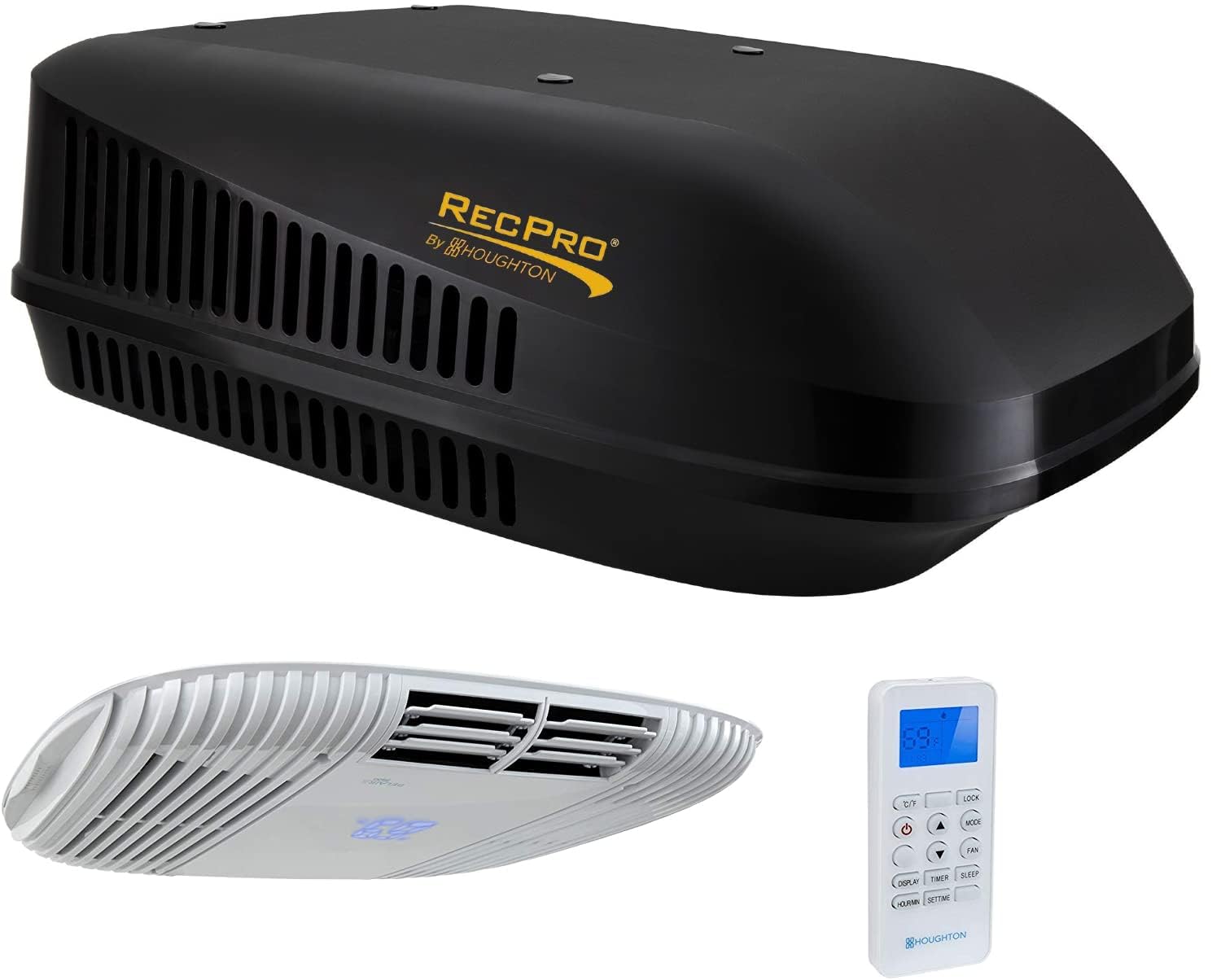
The RecPro 15,000 BTU unit marries a built-in heat pump with dual compatibility — it runs in both ducted and non-ducted configurations out of the box. The low amp draw design lets you run multiple appliances without tripping breakers, and the 55.4 dB noise level is comparable to gentle rain rather than a window shaker. The LED touch display and remote control give you full access to cool, dry, fan, sleep, and timer modes.
Construction quality stands out: the scroll compressor is housed in a UV-resistant plastic shell with sleeved pipes to prevent vibration wear. Owners transitioning from old Dometic units consistently describe the RecPro as dramatically quieter and more efficient. At 80 pounds, it’s on the heavier side, so plan for two-person roof installation or a pulley system.
The heat pump adds genuine value for four-season campers — it won’t replace a furnace in sub-freezing temps, but it takes the edge off 40°F mornings without burning propane. Some users report minor cosmetic cracking in the top shell plastic after a season, but performance remains unaffected.
Why it’s great
- Works with ducted and non-ducted systems
- Integrated heat pump for cool weather
- 55.4 dB noise level is genuinely quiet
- Scroll compressor is robust and efficient
Good to know
- Heavy at 80 lbs — two people needed for install
- Plastic top shell may develop hairline cracks
- Fan runs continuously even when compressor cycles
5. Coleman Mach 15 (08-0080) 15,000 BTU

Coleman’s Mach 15 (model 08-0080) is the upper unit for those who already have a compatible lower control box. It delivers 15,000 BTU of cooling and 5,600 BTU of electric heat, with a 1/3 HP fan motor and scroll compressor. The two-piece shroud makes future service access easier, but the plastic itself is fragile — handle carefully during installation.
Owners with 33-foot Class A motorhomes report this single unit keeps the interior frigid even in South Florida summers. The compressor is nearly silent compared to older Mach 3 models, and the pre-installed foam seal creates a watertight fit without additional caulking. Wiring is straightforward with hot, neutral, and ground connections.
This is an upper unit only — no control panel, thermostat, or installation hardware is included. If you’re replacing an older Coleman Mach, it’s a direct swap. If building from scratch, budget for the corresponding lower assembly. The unit stands several inches taller than older models, so measure your ceiling shroud clearance before committing.
Why it’s great
- 15,000 BTU with 5,600 BTU electric heat
- Quieter compressor than older Mach models
- Pre-installed foam seal for easy waterproofing
- Reliable scroll compressor
Good to know
- Upper unit only — lower control box sold separately
- Taller profile may not fit all roof shrouds
- Plastic shroud is fragile
6. Outequip 12V 10,000 BTU (with Heater)
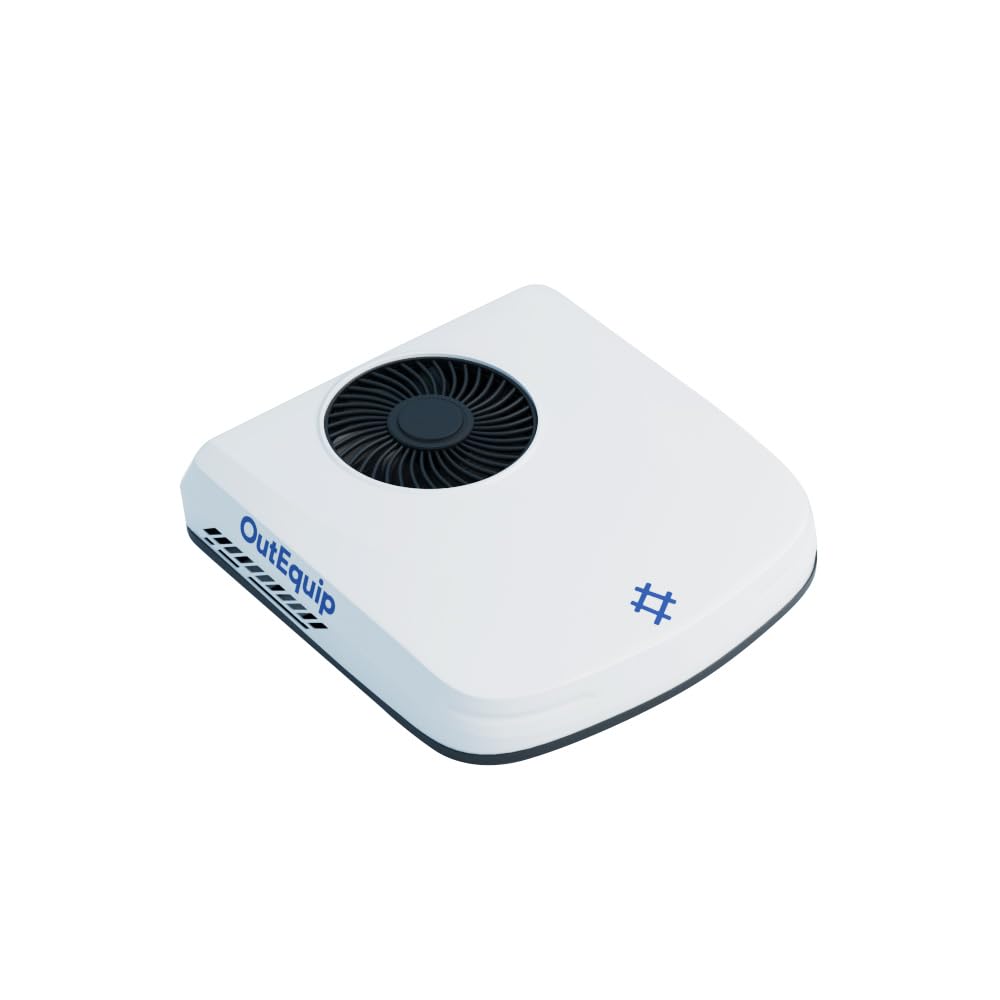
The Outequip 12V unit is built for off-grid freedom. Running directly from your battery bank, it draws around 16 amps on eco mode with a variable-speed inverter compressor — a fraction of what a 120V unit pulls. The 4,500 BTU PTC heater provides supplementary warmth for mild evenings, though it’s not designed for deep cold. At 43 pounds and only 6 inches tall, it’s one of the lightest and lowest-profile rooftop ACs available.
Installation uses the standard 14×14-inch roof opening, and customers with VW buses, Ram ProMasters, and pop-up campers report cooling from 89°F to 79°F in about 25 minutes. The brushless copper motor keeps noise to around 40-50 dB, and the eco mode stretches run time to 6-7 hours on a 360Ah battery bank. Remote control and temperature monitoring add convenience.
The included heat pump is a nice bonus but marginal — it’s effective only down to about 45°F ambient. The screws are difficult to remove during installation, and the lid connectors are fragile. For dry campers and van lifers who chase sun and want quiet, solar-friendly AC, this is the top contender.
Why it’s great
- Runs on 12V battery — no generator or shore power needed
- Very low 16A draw on eco mode
- Weighs only 43 lbs for easy install
- Includes PTC heater for cool mornings
Good to know
- Heat pump limited to mild temperature use
- Screws can strip during installation
- Not designed for large RVs over 20 ft
7. Outequip 12V 10,000 BTU (Cool Only)
This cooler-only variant of the Outequip 12V unit strips out the heat pump to focus entirely on efficient battery-powered cooling. It still delivers the same 10,000 BTU of cooling power, 45-pound weight, and whisper-quiet operation. The brushless copper motor and spring-supported mounts keep vibration to a minimum, and owners consistently measure noise around 54 dB on high and notably lower on eco mode.
For van dwellers and boondockers, the real story is battery runtime. With a 600Ah lithium bank, expect 10+ hours of intermittent cooling. The unit draws 55 amps on high but drops to 20-30 amps once the interior reaches target temperature. The remote includes eco, sleep, and turbo modes, and the Bluetooth app adds temperature monitoring.
Installation requires sealing the condenser area to prevent water ingress — a step some owners missed initially. The unit fits 14×14-inch openings and comes with an indoor panel set and outdoor unit. If you already have a separate heating source and want maximum cooling efficiency from your battery bank, this is the leaner, slightly cheaper alternative to the heat pump version.
Why it’s great
- Ultra-efficient 12V operation for off-grid use
- 45 lbs — one of the lightest rooftop units available
- Multiple modes: eco, sleep, turbo
- Bluetooth app for temperature monitoring
Good to know
- No heating function
- Water ingress risk if condenser area not sealed
- Best suited for vans and small campers
8. Dometic FreshJet 3 Series 13.5K BTU

Dometic’s FreshJet 3 Series weighs just 64 pounds — 14% lighter than their previous lightest unit — while delivering 13% higher cooling capacity and 15% more airflow than the Briskair line. The e-coated evaporator coils use an epoxy polymer that resists corrosion far better than bare aluminum, a genuine advantage for coastal campers or anyone parking near salt air.
The 350 CFM blower system moves air quietly, and owners upgrading from older Dometic units report a noticeable drop in noise — the FreshJet is 4 dB quieter than the Briskair II. Backward compatibility with existing ADB controllers means most installations are plug-and-play with no new wiring. The unit uses 28% less refrigerant than predecessors, which reduces environmental impact and operating pressure.
Some units arrived with broken mounting tabs or damaged shrouds from shipping — inspect immediately and file claims promptly. One owner reported a burned compressor wire after two months, though this appears to be an isolated manufacturing defect. For those already in the Dometic ecosystem, this is the most refined and efficient upgrade path.
Why it’s great
- Lightest Dometic unit at 64 lbs
- E-coated coils resist corrosion
- Plug-and-play with existing Dometic controllers
- Reduced refrigerant charge
Good to know
- Fragile packaging — inspect for shipping damage
- Occasional reports of compressor wiring defects
- No pre-installed controls — requires ADB or controller
9. Coleman Mach 3 Plus 13.5K BTU

The Coleman Mach 3 Plus is a proven 13,500 BTU rooftop AC that’s been cooling RVs for years. It delivers 320 CFM of airflow and runs on standard 115VAC with a 13.1 amp draw. The rotary scroll compressor is basic but reliable — no inverter tech, no variable speed, just consistent performance at a reasonable price point.
Installation is straightforward for anyone who has replaced a roof AC before, though the unit is heavy at 75 pounds and requires two people or a hoist system. The two-piece shroud design makes future filter access and maintenance easier. Owners report that it cools a mid-size RV well even in 100°F humidity, and the noise level is comparable to most standard rooftop units — the fan is audible but not deafening.
The printed manual has been criticized for missing pages and upside-down diagrams, but YouTube guides fill the gap. Some units arrived with damaged coil fins or loose internal components, so inspect thoroughly before installation. The heat element is not included despite some listing confusion — verify you’re ordering the version with heat if you need it.
Why it’s great
- Proven reliability with simple rotary compressor
- 320 CFM airflow for this class
- Two-piece shroud for easy maintenance
- Widely available parts and service
Good to know
- Heavy at 75 lbs — two-person install recommended
- Heat element sold separately
- Quality control issues on some units
10. ASA Electronics ACM135 Advent Air 13.5K BTU

ASA Electronics’ Advent Air 13,500 BTU unit is the entry-level champion for budget-conscious RV owners. It features a rigid metal base pan, a thick watertight gasket with six foam support pads, and three fan speeds. The unit is a direct replacement for many Dometic upper assemblies — owners report plug-and-play compatibility with older Dometic lower control boxes.
At 50 pounds, it’s lighter than most competitors, making solo roof installation feasible. The washable filter and simple remote control keep operation low-maintenance. Owners with vans and pop-up campers praise the airflow and cooling performance for the price, noting that the noise level is acceptable — not silent, but not objectionable.
The most significant caveat: this is the roof unit only. It does not include a ceiling assembly, wiring diagram, mounting bracket, or air divider. Some buyers received units with crushed covers or defective motors. If you’re replacing an existing roof unit with a compatible control box and don’t want to overspend, this is a solid choice — just budget for any missing components and inspect immediately upon arrival.
Why it’s great
- Budget-friendly price point
- Lightweight at 50 lbs
- Direct replacement for many Dometic units
- Washable air filter
Good to know
- Roof unit only — no ceiling assembly or wiring included
- Shipping damage reported (crushed covers, defective motors)
- Mounting screws may be too short for some roofs
11. Coleman Mach 15 Medium-Profile (48204 Series)
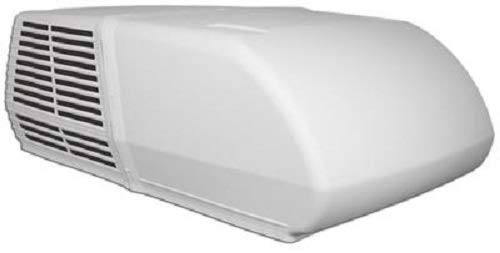
The Coleman Mach 15 Medium-Profile (48204 Series) delivers the highest cooling output in its form factor with 15,000 BTU packed into a textured white shroud that’s less bulky than full-height units. The rotary scroll compressor is rated at 1.25 tons, and the unit includes a pre-filter for basic dust protection. Owners with 31-foot Airstreams and 1990s Fleetwood trailers report excellent cooling performance even in 98°F conditions.
Installation took about 2 hours for experienced DIYers, with the hardest part being the lift — three people on separate ladders is the recommended method. The non-ducted design works well in single-room configurations, and the medium profile means it clears most existing roof shrouds. The instruction manual is clear, and wiring connections are straightforward for anyone comfortable with 115VAC.
Quality control is inconsistent: one owner reported a unit with two of three compressor mounts unattached and stripped bolt threads. The shroud plastic feels flimsy to some, though it holds up fine once installed. This unit lacks a heat pump option — it’s strictly cool-only. If raw cooling capacity in a medium-profile package is your priority and you accept the QC gamble, the Mach 15 delivers.
Why it’s great
- 15,000 BTU in a medium-profile shroud
- Proven scroll compressor design
- Clear installation instructions
- Strong cooling output for hot climates
Good to know
- Quality control issues — inspect all mounting hardware
- No heat pump or heating element
- Shroud plastic feels thin
FAQ
What size AC unit do I need for a 30-foot RV?
Can I run a 12V RV AC on my existing battery and solar setup?
Is a heat pump worth it in an RV air conditioner?
Can I install a rooftop AC myself?
Why does my RV AC trip the breaker after a few minutes?
Final Thoughts: The Verdict
For most users, the ac unit for rv winner is the TOSOT 16,000 BTU because it combines the highest cooling capacity with market-leading 43 dB silence and a heat pump — all at a price that undercuts premium competitors. If you want raw variable-speed efficiency and have a ducted system, grab the Furrion Chill Cube 18K for its 850-watt steady draw and R32 refrigerant. And for boondockers and van lifers who need battery-friendly 12V operation, nothing beats the Outequip 12V 10,000 BTU with heater for weight, noise, and off-grid endurance.

Mo Maruf
I created WellFizz to bridge the gap between vague wellness advice and actionable solutions. My mission is simple: to decode the research and give you practical tools you can actually use.
Beyond the data, I am a passionate traveler. I believe that stepping away from the screen to explore new environments is essential for mental clarity and physical vitality.