Our readers keep the lights on and my smoothie glass nicely filled. As an Amazon Associate, I earn from qualifying purchases.
Your laptop, camera, or CPAP machine drains battery mid-trip because standard USB power banks lack the 110V sine wave output they need. An AC outlet power bank solves this by packing a pure sine wave inverter into a portable battery, letting you plug in wall-powered gear anywhere without searching for a wall socket.
I’m Mohammad Maruf — the founder and writer behind WellFizz. I’ve spent years analyzing portable power station specifications, inverter efficiency curves, and battery chemistry trade-offs to separate real-world performers from overpriced bricks.
After comparing capacity ratings, AC inverter wattage, port selection, and build quality across seven models, this guide highlights the best ac outlet power bank choices for travel, emergencies, and off-grid work sessions.
How To Choose The Best AC Outlet Power Bank
Not all portable power banks with AC outlets are created equal. The key is matching the battery capacity, inverter wattage, and physical size to your specific load. Here is what separates a reliable backup from a frustrating paperweight.
Capacity in Watt-Hours (Wh) vs. Milliamp-Hours (mAh)
Milliamp-hour ratings assume a 3.7V internal cell voltage, but AC inverters (110V) change the draw dynamic. Watt-hours (Wh) give you a direct energy picture: a 288Wh unit can run a 60W laptop for roughly 4.8 hours. Airlines cap carry-on batteries at 100Wh, so anything under that (like 86Wh or 99Wh) is travel-friendly.
Continuous AC Wattage vs. Peak Surge
The continuous AC rating tells you what the inverter can sustain. A 120W continuous unit runs a laptop and a phone simultaneously, but a 68W coffee maker or 200W mini fridge will trip it. Some models advertise peak surge (e.g., 150W peak) for motor-start loads, but continuous wattage is the spec that matters for daily use.
Port Selection and Power Delivery (PD) Passthrough
A USB-C PD input at 65W or higher lets you fast-charge the power bank itself in under 2 hours. Multiple AC outlets, USB-A QC3.0, and DC barrel ports add versatility. Check if the bank supports pass-through charging (charging itself while powering devices) — a must for emergency kits.
Quick Comparison
On smaller screens, swipe sideways to see the full table.
| Model | Category | Best For | Key Spec | Amazon |
|---|---|---|---|---|
| HOWEASY 135W | Premium | Multi-device simultaneous charging | 135W AC / 98Wh | Amazon |
| GENSROCK H120 | Premium | Budget-friendly 150W peak | 120W AC / 88Wh | Amazon |
| ZeroKor G120 | Mid-Range | Two AC outlets in compact size | 120W AC / 97.6Wh | Amazon |
| SinKeu HP500S Pro | Mid-Range | Lightweight travel (under 100Wh) | 65W AC / 86.58Wh | Amazon |
| powkey 24K | Mid-Range | Green camping/outdoor companion | 65W AC / 88.8Wh | Amazon |
| Anker Prime Fusion | Budget | Wall charger + power bank hybrid | 65W PD / 9600mAh | Amazon |
| BLUETTI Elite 30 V2 | Premium | High-wattage home backup (600W) | 600W AC / 288Wh | Amazon |
In-Depth Reviews
1. HOWEASY Portable Power Station 135W
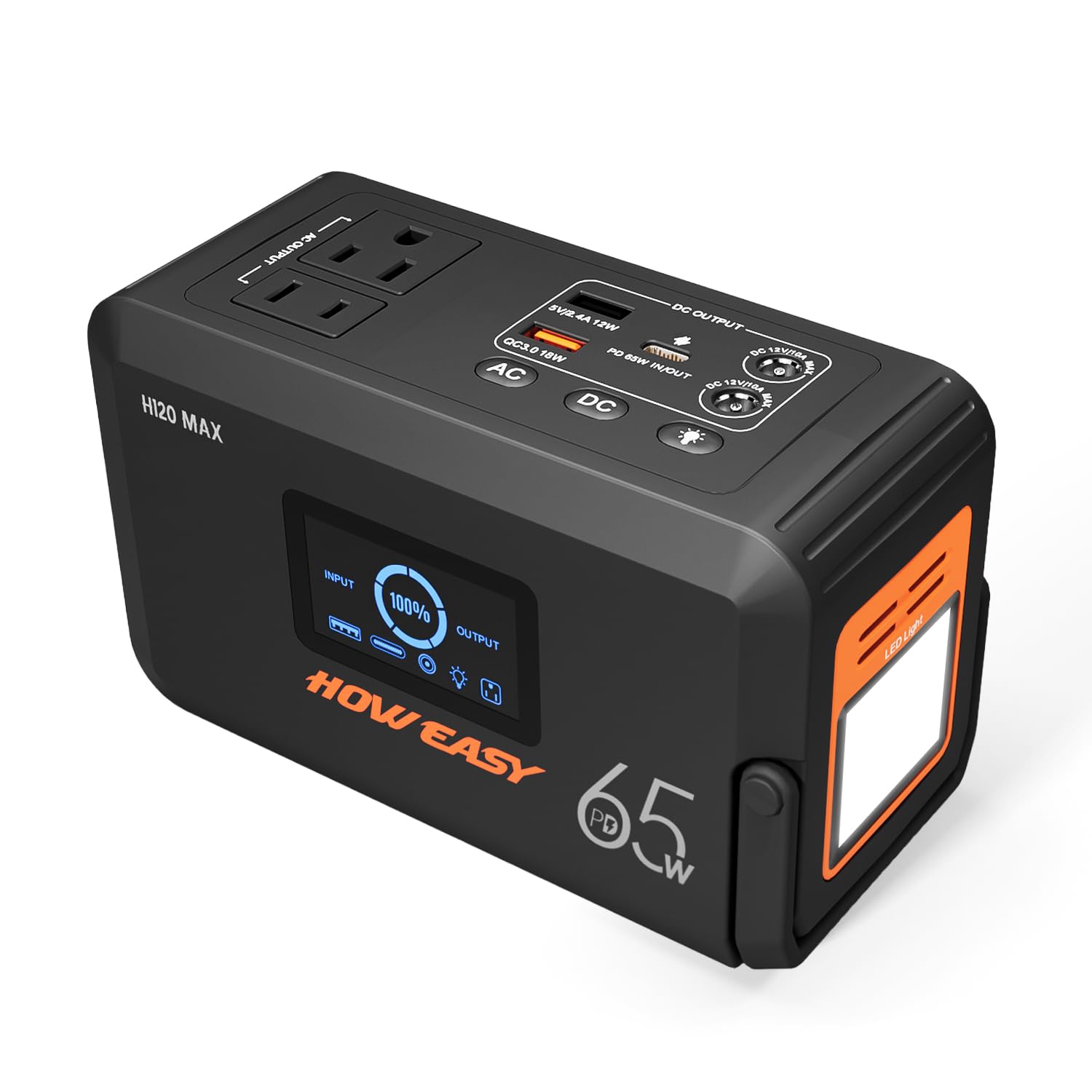
The HOWEASY 135W packs dual AC outlets, a 65W USB-C PD port, and a 98Wh LiFePO4 battery into a 2.3lb chassis. Its 135W continuous inverter handles laptops, drones, and mini projectors without tripping, and the 60Hz pure sine wave output keeps sensitive electronics safe. The built-in BMS with six-fold protection actively monitors temperature and load, while the 4-mode LED flashlight adds emergency utility.
Real-world testing shows the 65W PD port recharges a MacBook Pro from empty to 80% in roughly one hour, and the pass-through charging works when using the AC wall adapter simultaneously. The cooling fan is audible at full load but automatic; it kicks in only during sustained high-draw use. The 99Wh capacity stays within FAA carry-on limits, making it a strong travel companion for remote work or off-grid stays.
Users praise its reliability for emergency kits, with one reviewer reporting it survived a deer season trip powering a laptop and lights for multiple nights. The lack of a dedicated on/off switch is a minor inconvenience — the DC button serves double duty, and the fan noise during heavy loads draws mixed feedback. Overall, the HOWEASY strikes the best balance of wattage, weight, and safety features in the mid-capacity tier.
Why it’s great
- Dual 135W AC outlets with pure sine wave
- 65W PD input recharges bank in ~1.5 hours
- LiFePO4 chemistry for longer cycle life
- FAA-friendly 98Wh capacity
Good to know
- Cooling fan can be loud during heavy load
- No dedicated power switch (uses DC button)
- Not powerful enough for small appliances like hair dryers
2. GENSROCK Portable Power Bank 120W

The GENSROCK H120 packs 8 output ports — two 120W AC outlets (150W peak), two QC3.0 USB-A, one USB-C PD, and two DC barrel ports — all inside a 2.3lb frame. Its 88.8Wh (24000mAh) lithium-ion battery provides enough juice to charge a Samsung Galaxy Ultra from 0% to full in under 30 minutes using the high-watt PD cable, and it holds standby charge for months between uses.
The LED digital display shows real-time battery percentage and output status, and the built-in BMS covers overvoltage, short circuit, and thermal protection. The unit supports three recharging modes: AC wall adapter, car 12V, and solar panel (not included). User reports confirm it can run a Samsung TV for about two hours, though it draws well below the 150W peak — a hair dryer will immediately trip the overload.
Frequent travelers appreciate the slim 6.6 x 4 x 3-inch footprint, and the green color variant adds some personality. The DC ports run at 12V/10A max, which works for car accessories and USB-powered mattress pumps. Some users noted the included AC adapter charges the bank in about 4 hours, but a high-watt USB-C charger cuts that time to under 2 hours.
Why it’s great
- 8-port setup covers AC, USB-C, QC3.0, and DC
- 150W peak handles motor-start loads like mini fans
- Ultra-slim profile fits in carry-on bag
- Months-long standby charge retention
Good to know
- AC adapter charges slowly (4+ hours)
- 120W continuous can’t run high-draw kitchen gear
- No dedicated passthrough while charging via USB-C
3. ZeroKor G120 Portable Power Station

The ZeroKor G120 stands out with two 120W AC outlets (no sacrificing one port for another) and a 97.6Wh/26400mAh lithium-ion pack that weighs just 2.2lbs. The built-in LED flashlight with reading and SOS modes adds practical emergency use, and the LCD screen displays remaining battery, AC status, and DC output at a glance. Its compact 5.7 x 4.4 x 4.1-inch shape fits snugly in a backpack side pocket.
The dual AC outlets let you power a laptop and a small desk lamp simultaneously without unplugging anything. The cooling fan automatically activates when the internal temperature rises — a welcome feature during sustained AC draw.
On the downside, some users found the USB-C and USB-A ports output only 5V/2.4A max, which means they charge phones at standard speed rather than fast-charge rates. The solar charging input is also slow, requiring days to fully replenish from a panel. For the AC-focused user who needs two outlets in a sub-100Wh package, this unit delivers solid value.
Why it’s great
- Two dedicated 120W AC outlets
- Ultra-light 2.2lbs at 97.6Wh capacity
- LED flashlight with SOS mode
- Fast AC self-charge under 2 hours
Good to know
- USB-A and USB-C limited to standard 5V charging
- Solar recharge is extremely slow
- Not compatible with devices over 120W (no coffee makers)
4. SinKeu Laptop Power Bank HP500S Pro
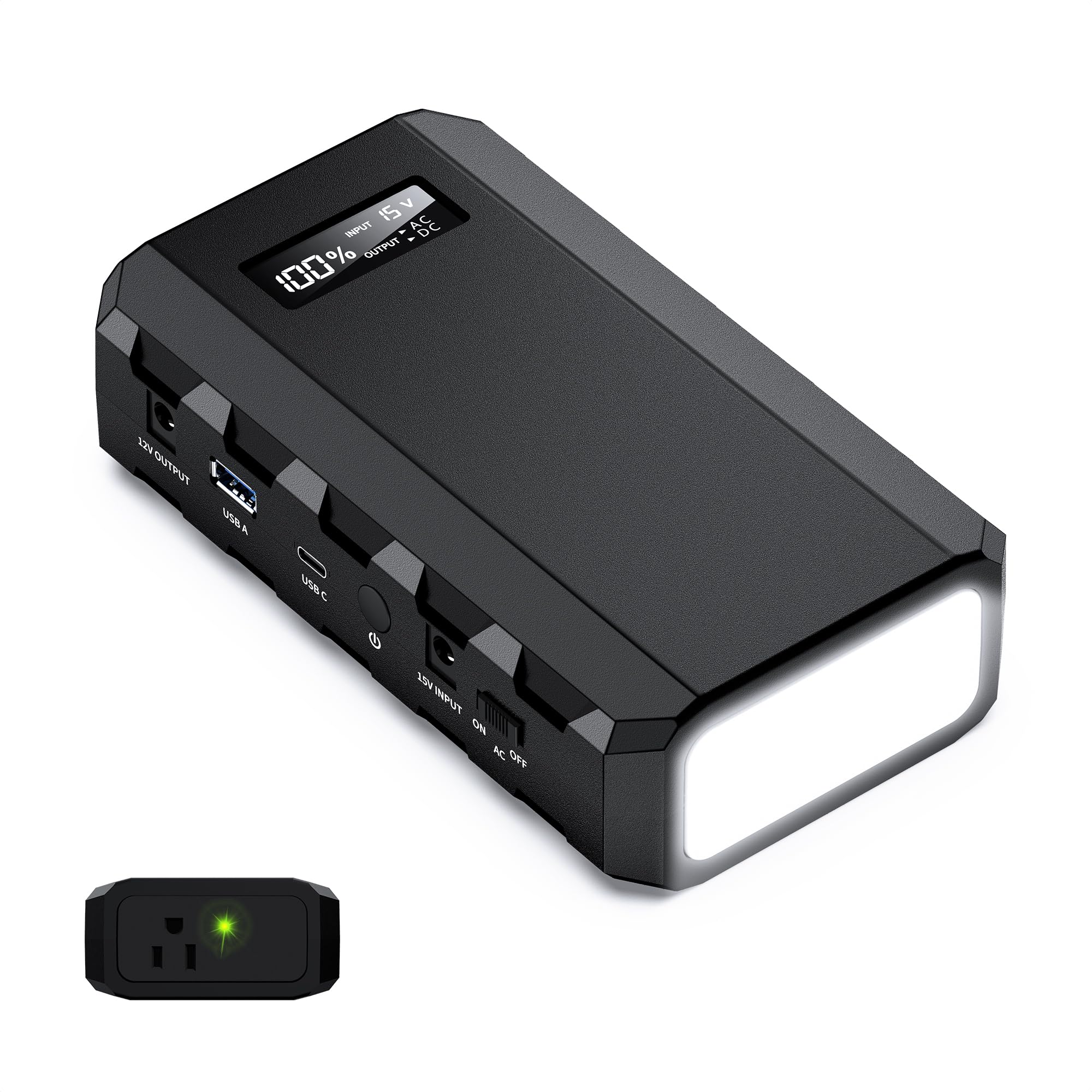
The SinKeu HP500S Pro is purpose-built for air travel, with a 86.58Wh capacity under the 100Wh FAA limit. It delivers a 120V/65W AC outlet via a pure sine wave inverter, plus a QC3.0 USB-A port and a USB-C port that handles both input and output. The LED digital display shows remaining capacity to the hundredth of a watt-hour, and the unit weighs only 1.3lbs — one of the lightest AC power banks in this roundup.
Customer feedback highlights its ability to hold charge for months when stored, with one user reporting their unit still had 45% battery after being unplugged for two months. It charged a Surface laptop from 30% to 86% in under 2 hours, draining 99% of the bank’s capacity — a realistic performance for a 65W load. The included car charger and cigarette lighter adapter make it RV-friendly, and the DC port supports 9-12.6V/10A output for devices like CPAP machines.
A small subset of users experienced battery drain issues after a few cycles, but the manufacturer’s responsive customer support replaced units promptly. The AC outlet is limited to 65W, so it won’t run larger electronics like monitors or portable fridges. For a lightweight, travel-safe solution that keeps a laptop and phone running during a flight delay or remote work session, the SinKeu delivers exactly what it promises.
Why it’s great
- FAA-friendly 86.58Wh fits in carry-on
- 1.3lbs is among the lightest AC banks
- Excellent long-term charge retention
- Responsive customer service for warranty issues
Good to know
- 65W AC insufficient for larger appliances
- Some early units had battery defect (quick drain)
- DC “smart power” may not activate certain USB pumps
5. powkey 24000mAh Portable Power Station

The powkey 24K is visually distinct with its lime green casing and glow-in-the-dark accent — a deliberate design for outdoor visibility. It packs a 65W/110V AC outlet, two USB outputs (QC3.0 and 5V/3A), and a DC 9-12.6V/10A port into a 1.3lb chassis. The built-in handle makes it easy to grab from a tent or RV, and the LED display shows battery percentage in clear digits.
Users report the AC outlet powers a Microsoft Surface tablet to full in about an hour, consuming roughly 80% of the bank’s capacity. The car charger replenishes the bank from 10% to full in about 3.5 hours, and the unit can power a cat cam for 12 hours using only 40% of its charge. It is ideal for emergency kits where you need to keep phones, a fan, or a small lamp running during a power outage.
Some units, however, have shown reliability issues — a few customers reported the AC outlet stopped working after 2-3 uses, and the manufacturer’s instructions explicitly state the battery must be kept above 30% and recharged every 3 months to avoid degradation. The 65W continuous limit means it won’t run anything more demanding than a laptop or small TV (50W or less). For the price, the powkey offers a visually fun and functional emergency companion.
Why it’s great
- Glow-in-the-dark shell for visibility in tents
- Compact 1.3lbs with carry handle
- Charges Surface tablet fully in ~1 hour
- Car recharge completes in under 4 hours
Good to know
- 65W AC limit restricts device compatibility
- Battery degrades if stored below 30% charge
- Some units had early AC outlet failure
6. Anker Prime Power Bank 9,600mAh
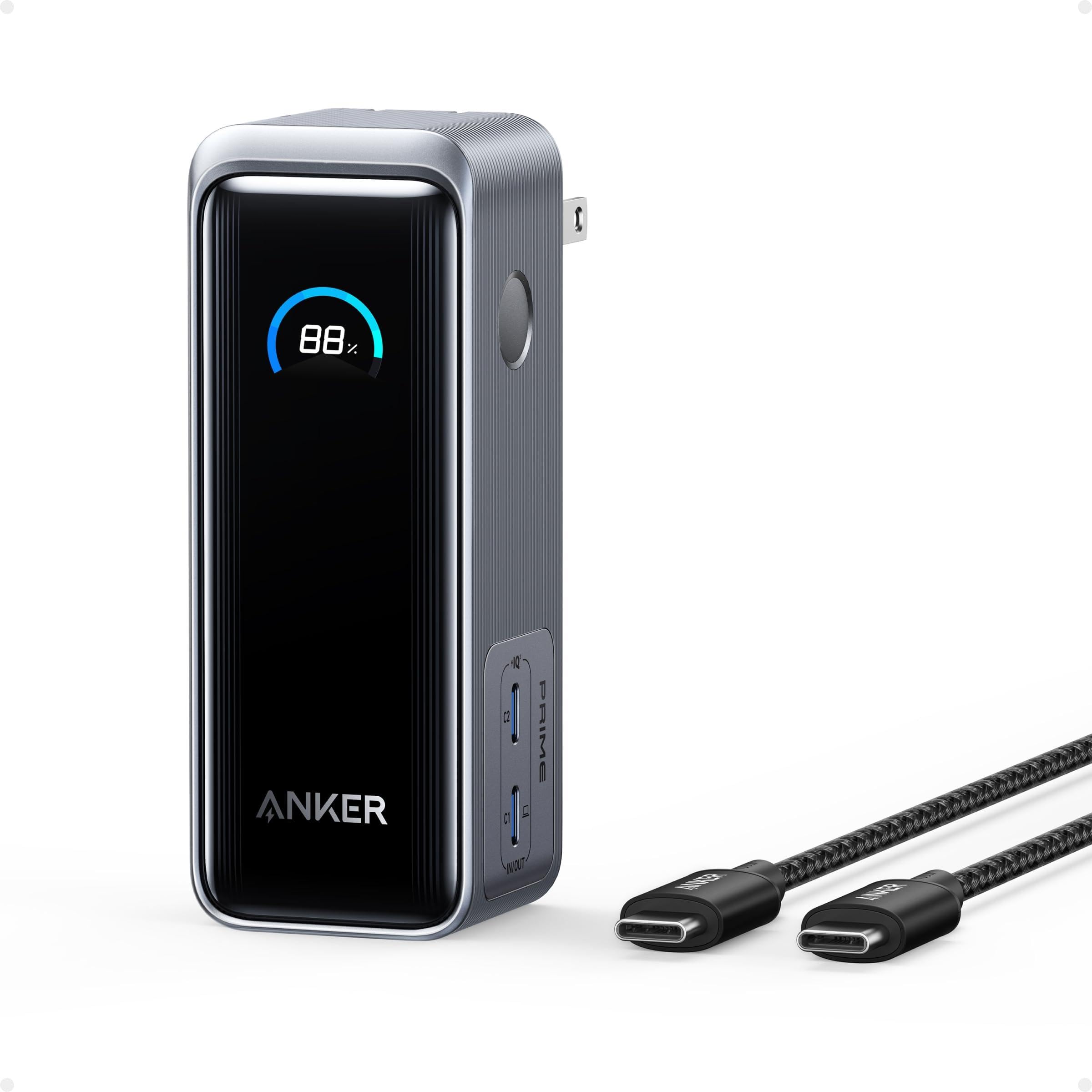
The Anker Prime blurs the line between wall charger and power bank — it is a 9,600mAh (10.76oz) battery with foldable prongs that plug directly into a wall outlet. When docked, it functions as a 65W GaN wall charger; when removed, it becomes a portable battery with two USB-C ports (45W + 20W max) and a 1.3-inch smart LCD display showing real-time wattage and percentage down to the hundredth.
Charging an iPhone 12 mini from 15% to 100% took roughly 45 minutes and consumed only 16% of the bank’s capacity. The built-in wall charger recharges the bank from empty to full in about 2 hours — significantly faster than any cable-only power bank. The included braided 100W USB-C cable and travel pouch add premium feel, and the adjustable display timer lets you set the screen to turn off after 10, 30, or 60 seconds.
This is not a true AC outlet power bank — it outputs USB-C PD only, no 110V inverter. For users who exclusively charge phones, tablets, and USB-C laptops, the Anker Prime eliminates the need to carry a separate wall plug. However, if you need a standard AC socket for a camera battery charger, lamp, or CPAP machine, look to the other models in this guide. The Anker Prime excels as a minimalist travel companion for USB-C ecosystems.
Why it’s great
- 2-in-1 design: wall charger + power bank
- 65W PD fast charges laptops and phones
- Informative LCD shows real-time wattage
- Ultra-compact at 10.76oz
Good to know
- No AC outlet (USB-C only)
- 9,600mAh capacity lower than dedicated AC banks
- Glass exterior prone to scratches
- Cannot charge battery via USB while plugged into wall
7. BLUETTI Elite 30 V2 600W
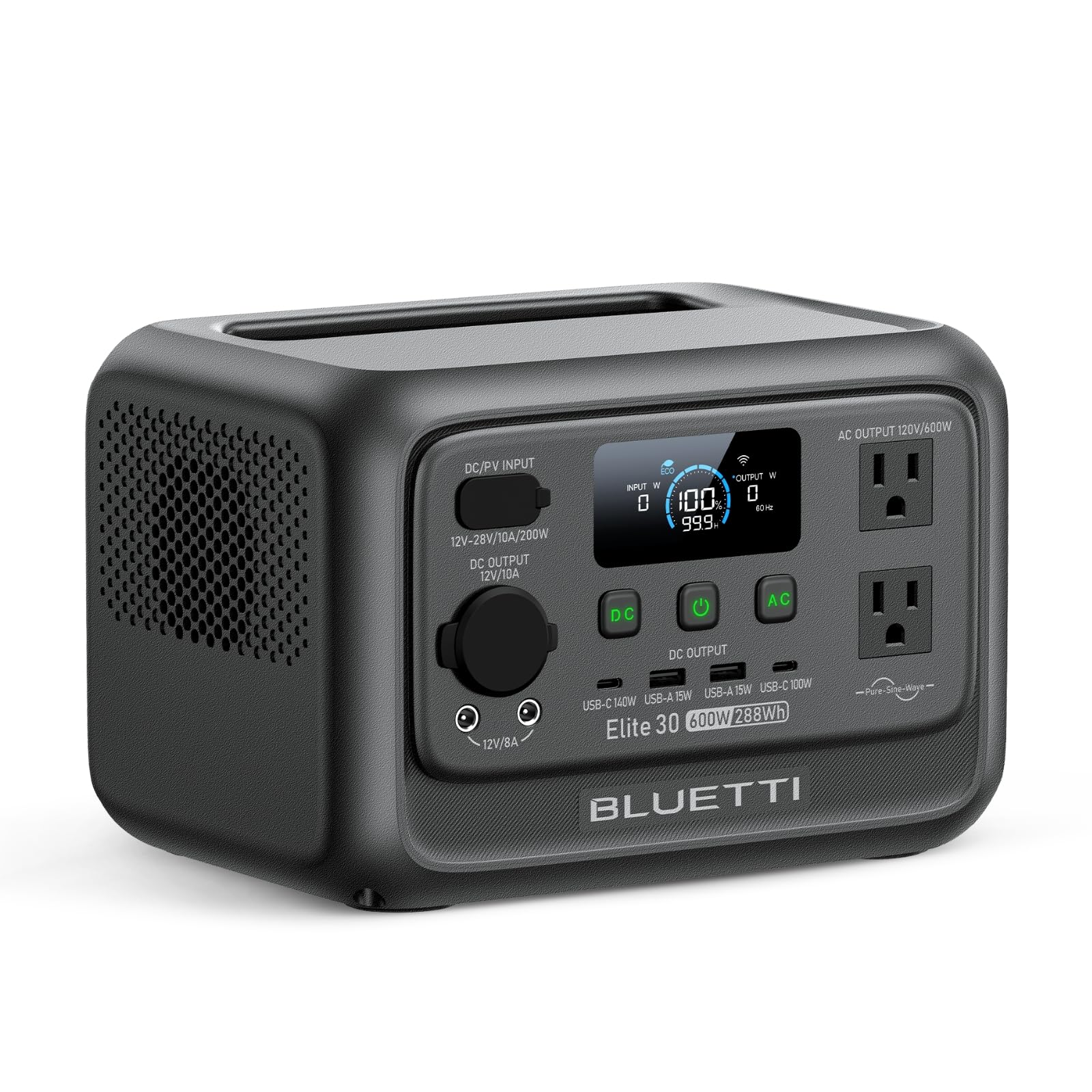
The BLUETTI Elite 30 V2 jumps to the top of the power chain with a 600W continuous AC inverter (1500W surge in Power Lifting Mode) and a 288Wh LiFePO4 battery. It weighs 9.4lbs, making it the heaviest unit here, but the trade-off is the ability to run small appliances like a kettle, toaster, or CPAP machine during a storm. The 10ms UPS switchover keeps desktop computers and routers online through brief grid fluctuations.
Charging from empty to 80% takes just 45 minutes via the 380W wall adapter, and the unit supports an impressive 8 charging modes including solar (up to 200W), car, and lead-acid. The companion app provides remote monitoring of battery status and output settings. User reports confirm the Elite 30 V2 holds charge for months, runs a DC diesel heater off the 12V port, and easily powers a Starlink Gen 2 terminal via the AC outlet.
The 288Wh capacity is above the 100Wh FAA limit, so it cannot be carried onto aircraft — it is strictly for car camping, RV use, and home backup. The cooling fan, though efficient, is audible during heavy loads. For users who need more than just phone and laptop charging, the BLUETTI replaces a traditional gas generator for a weekend off-grid trip without the fumes or noise.
Why it’s great
- 600W AC runs kettles, toasters, and CPAP machines
- 1500W Power Lifting mode for motor startup
- 10ms UPS switch protects sensitive electronics
- 380W fast recharge (0-80% in 45 minutes)
Good to know
- 9.4lbs — not for backpack carry
- Too large for airline carry-on (288Wh > 100Wh)
- Cooling fan is audible on AC load
- Premium investment above mid-range competition
FAQ
Can I run a CPAP machine on an AC outlet power bank?
Why does my AC power bank stop charging when I plug in a hair dryer or kettle?
How often should I recharge my AC power bank for storage?
Can I charge the power bank and power devices at the same time (pass-through)?
Final Thoughts: The Verdict
For most users, the best ac outlet power bank winner is the HOWEASY 135W Portable Power Station because it combines dual AC outlets, 65W PD fast charging, LiFePO4 battery chemistry, and FAA-friendly 98Wh capacity in a 2.3lb package that handles laptops, drones, and camping gear without fuss. If you need high continuous wattage to run a CPAC machine, kettle, or small appliance during a storm, grab the BLUETTI Elite 30 V2 (600W/288Wh). And for a minimalist USB-C travel companion that doubles as a wall charger, nothing beats the Anker Prime 9,600mAh.

Mo Maruf
I created WellFizz to bridge the gap between vague wellness advice and actionable solutions. My mission is simple: to decode the research and give you practical tools you can actually use.
Beyond the data, I am a passionate traveler. I believe that stepping away from the screen to explore new environments is essential for mental clarity and physical vitality.