Our readers keep the lights on and my smoothie glass nicely filled. As an Amazon Associate, I earn from qualifying purchases.
Finding a sunscreen that actually protects your skin without triggering breakouts can feel like an impossible trade-off. Heavy formulas clog pores, while chemical irritants cause redness and congestion, leaving acne-prone skin exposed and vulnerable. The market is saturated with options that either feel like paste or leave a ghostly white cast, but a handful of formulas have cracked the code on lightweight, non-comedogenic protection.
I’m Mohammad Maruf — the founder and writer behind WellFizz. I specialize in analyzing skincare formulations and filtering through the marketing noise to find products that deliver measurable protection without compromising skin barrier health.
After weeks of cross-referencing ingredient decks, customer feedback on irritation and texture, and independent SPF testing data, I’ve narrowed the field to the five most reliable options. This is the definitive guide to the best acne sunscreen for anyone who refuses to choose between sun safety and clear skin.
How To Choose The Best Acne Sunscreen
Acne-prone skin is uniquely sensitive to occlusive agents, fragrance, and high-alcohol formulas. A sunscreen that works for normal skin can trigger closed comedones or inflammatory pustules within days. Here are the four most critical filters to apply before buying.
Non-Comedogenic Verification
A label claiming “non-comedogenic” is not regulated — it’s a marketing claim. Look for formulas that explicitly list low-comedogenic ingredients like zinc oxide, titanium dioxide, or newer-generation chemical filters. Avoid high-concentration coconut derivatives, shea butter, and isopropyl myristate, which rank high on the comedogenic scale irrespective of the label.
SPF Level and Spectrum
For daily indoor-commute wear, SPF 30 is adequate if applied correctly. For outdoor activity, choose SPF 50 or higher. Broad-spectrum protection — covering both UVA and UVB — is essential because UVA rays contribute to inflammation and hyperpigmentation, both of which worsen acne scarring. The margin between SPF 30 and SPF 50 is meaningful for reactive skin.
Texture and Finish Profile
Acne-prone and oily skin types benefit from gel or ultra-light fluid textures that dry down quickly without a tacky film. Cream-based sunscreens containing occlusive waxes can trap sebum against the follicle opening. A matte or natural finish prevents midday shine that makes oily skin look greasier — but avoid high-silica powders that can migrate into pores throughout the day.
Fragrance and Irritant Screening
Fragrance — both natural essential oils and synthetic blends — is a common trigger for perioral dermatitis and acneiform eruptions. Alcohol denat in high concentration (often listed in the top-five ingredients) strips the skin barrier, causing rebound oiliness. Stick to fragrance-free, oxybenzone-free, and alcohol-free formulas when managing active breakouts.
Quick Comparison
On smaller screens, swipe sideways to see the full table.
| Model | Category | Best For | Key Spec | Amazon |
|---|---|---|---|---|
| Neutrogena Clear Face Serum SPF 60 | Chemical Hybrid | Oily to combination skin | 80-min water resistance | Amazon |
| PURITO Daily Sunscreen SPF 50 | Chemical Gel | Sensitive & reactive skin | Oil-free, vegan formula | Amazon |
| Eucerin Sun Advanced Hydration SPF 50 | Chemical Fluid | Dry, dehydrated acne skin | Hyaluronic acid & humectants | Amazon |
| Proactiv Clear Skin SPF 30 | Mineral Hybrid | Active acne treatment users | Oil-free matte finish | Amazon |
| ISNTREE Hyaluronic Acid Sun Gel SPF 30 | Chemical Gel | Daily indoor/commute wear | 10 types of hyaluronic acid | Amazon |
In‑Depth Reviews
1. Neutrogena Clear Face Serum Sunscreen SPF 60
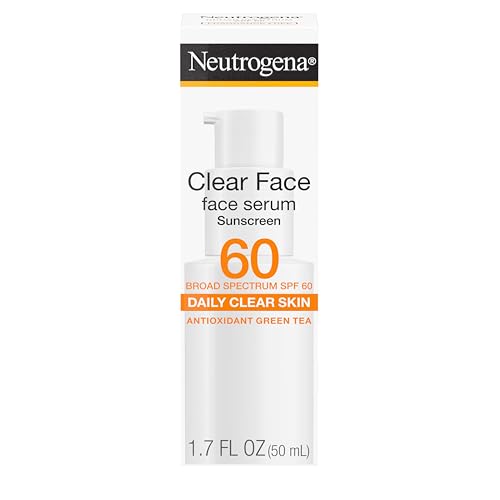
This formula from the #1 dermatologist-recommended sun care brand strikes a rare balance between high SPF and a lightweight serum texture. At SPF 60 with Helioplex Technology, it delivers broad-spectrum UVA/UVB protection that actually holds up during outdoor activity — backed by 80-minute water resistance. The serum consistency is noticeably thinner than traditional face sunscreens, which helps it absorb quickly without leaving the greasy tack film that so often triggers breakouts on oily and combination skin.
Multiple reviewers with oily, acne-prone complexions reported zero new breakouts after a week of daily use, which is a strong signal that the non-comedogenic claim holds up in practice. The formula is free of oxybenzone, parabens, and fragrance, removing three common irritants that inflame reactive skin. It applies invisible on all skin tones with no white cast, making it a functional primer under makeup — though you should apply it immediately after moisturizer to prevent pilling, as some users noted.
Where this product outpaces most competitors in its bracket is the raw SPF ceiling combined with skin barrier preservation. The serum format includes moisture-retaining ingredients that prevent the tight, dehydrated feeling typical of high-SPF chemical sunscreens. The 1.7 fl oz bottle is standard for the price tier, but the efficacy-per-dollar is hard to beat given the SPF 60 rating and dermatologist backing.
Why it’s great
- SPF 60 with Helioplex delivers strong UV defense that resists breakdown during sweat
- Serum texture absorbs rapidly on oily skin without leaving a greasy residue
- Zero white cast and rubs in invisible on all skin tones
Good to know
- Can pill if applied too long after moisturizer — apply immediately
- Slight eye sting reported with contact lens wearers if rubbed in near lash line
2. PURITO Daily Sunscreen SPF 50

PURITO’s offering distinguishes itself through rigorous irritation testing — the formula is clinically tested for skin irritation, non-comedogenic properties, and hypoallergenic compatibility. That triple-testing matters for anyone whose skin reacts to sunscreen with immediate redness or delayed breakouts. The SPF 50 protection uses an advanced chemical filter system that glides on with an ultra-smooth texture and absorbs almost instantly, leaving a naturally radiant finish rather than a flat matte or sticky sheen.
The oil-free formula is designed specifically to avoid the heaviness that plagues many high-SPF sunscreens. Users with sensitive skin, including those prone to fungal acne and perioral dermatitis, reported no irritation or congestion after consistent use. It layers cleanly under makeup without pilling, and the lack of white cast makes it functional for deeper skin tones. The one practical limitation is the absence of water resistance labeling — this is a daily-use sunscreen for commuting and incidental sun exposure, not for swimming or heavy outdoor sports.
At 1.69 fl oz, the tube is compact and the price per ounce sits above drugstore options, but the ingredient transparency and clinical testing justify the premium. The vegan and cruelty-free certification adds appeal for ingredient-conscious buyers. If your skin has a history of reacting to sunscreen with clogged pores or irritation, this formula’s clean safety profile and gliding texture make it a strong daily candidate.
Why it’s great
- Triple clinically tested for irritation, non-comedogenic, and hypoallergenic properties
- Ultra-light, oil-free texture absorbs instantly with zero white cast
- Layers well under makeup without pilling or greasiness
Good to know
- Not water-resistant — unsuitable for swimming or heavy outdoor activity
- Small tube size at 1.69 oz may require frequent repurchase for daily users
3. Eucerin Sun Advanced Hydration Ultra-Lightweight SPF 50
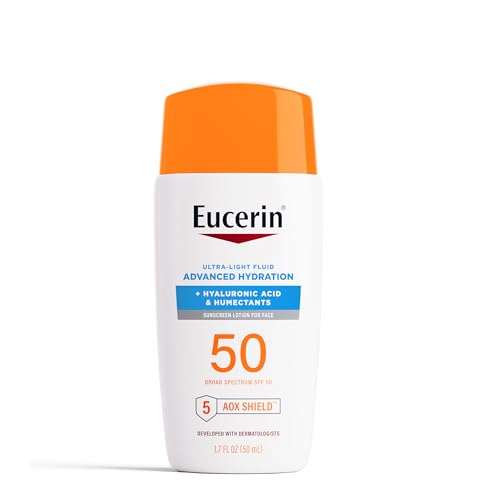
Eucerin addresses a specific pain point often overlooked in the acne-sunscreen conversation — dehydrated, barrier-compromised skin that still breaks out. The 5 AOX Shield formula combines SPF 50 protection with an advanced antioxidant complex that goes beyond neutralizing free radicals to actively guard against environmental stress. Hyaluronic acid and humectants are woven into the base, so this product functions as a moisturizer-plus-sunscreen hybrid, simplifying routines for those who want to minimize layering.
The ultra-light fluid texture is noticeably watery compared to cream sunscreens, which helps it spread thin and absorb with minimal friction. It is non-comedogenic and hypoallergenic, developed with dermatologists, and completely free of fragrance, dyes, PABA, phthalates, octinoxate, and oxybenzone. Users with reactive skin appreciated that it didn’t cause stinging or peeling, though some with oilier complexions found it left a slight dewy shine after drying — acceptable for normal-to-dry acne types but potentially glossy for very oily skin.
The 1.7 fl oz bottle is compact and the formula is unscented, which reduces the risk of olfactory-triggered reactions. A few users noted the bottle empties faster than expected given the watery consistency, so daily full-face application may require repurchasing every three to four weeks. For anyone whose acne is compounded by dryness, flaking, or compromised barrier function, this dual-action hydrating sunscreen delivers protection without exacerbating those underlying issues.
Why it’s great
- Hyaluronic acid and humectants provide real hydration without clogging pores
- Unscented and free of common irritants including oxybenzone and octinoxate
- Ultra-light fluid texture absorbs quickly and layers invisibly under makeup
Good to know
- Can leave a dewy shine on oily skin types — may require powder
- Watery consistency causes faster product consumption than thicker sunscreens
4. Proactiv Clear Skin Face Sunscreen Moisturizer SPF 30
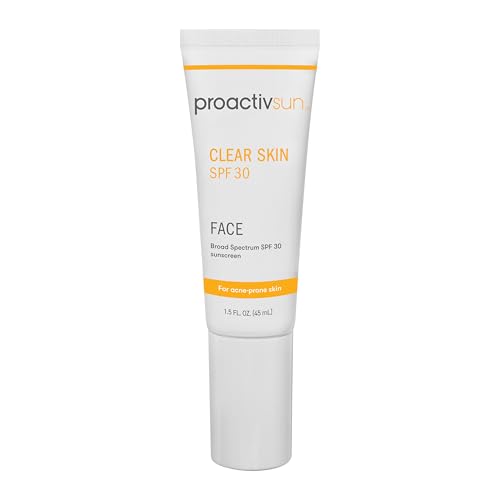
Proactiv’s Clear Skin Sunscreen has a two-decade-long track record among users who started the brand’s acne system in adolescence and never switched. The formula is designed specifically to pair with active acne treatments — it won’t interfere with benzoyl peroxide or salicylic acid routines. The SPF 30 broad-spectrum protection is adequate for daily incidental exposure, and the oil-free base dries to a matte finish that controls shine without stripping the barrier.
Long-term users consistently report zero breakouts and zero white cast, which is remarkable for a mineral-hybrid sunscreen in this price tier. The 1.5 oz bottle is compact but the formula’s spreadability means a small amount covers the full face. It absorbs quickly enough to function as a morning step without significant wait time. The main trade-off is the SPF ceiling — SPF 30 is appropriate for commuting and office environments but may fall short for extended outdoor activity on fair or medicated skin.
Because this is designed by a brand whose entire identity revolves around acne management, the formulation philosophy prioritizes pore breathability over cosmetic elegance. It doesn’t have the gliding texture of Korean gel sunscreens, but it reliably won’t cause congestion. For anyone currently using an active acne regimen — especially those on prescription retinoids or benzoyl peroxide — this sunscreen offers a predictable, non-reactive safety net that has been validated by decades of real-world use.
Why it’s great
- Proven compatibility with active acne treatments like benzoyl peroxide and retinoids
- Oil-free matte finish controls shine without clogging pores
- No white cast and no reported breakouts from long-term users
Good to know
- SPF 30 only — insufficient for prolonged direct sun exposure
- Texture is functional rather than luxurious; less cosmetically elegant than gel options
5. ISNTREE Hyaluronic Acid Daily Sun Gel SPF 30

ISNTREE’s Daily Sun Gel incorporates 10 types of hyaluronic acid into a lightweight gel base, making it one of the most hydrating sunscreens available without crossing into pore-clogging territory. The SPF 30 broad-spectrum protection is suited for daily indoor/commute wear, and the Korean-formulated gel texture is one of the thinnest in this category — it spreads effortlessly and leaves no visible residue on any skin tone. The unscented formula registers as gentle even on sensitive or eczema-prone skin.
User feedback highlights a near-universal appreciation for the “glass skin” finish — a subtle, hydrated glow that looks naturally healthy rather than greasy. Multiple reviewers with oily, acne-prone skin reported no breakouts and no irritation, with several noting that their skin texture actually improved during use. The one caveat is that the gel’s moisturizing profile can feel heavy for very oily skin during the first hour after application, so it’s best suited for normal-to-dry or combination acne types rather than severely oily complexions.
The 1.69 fl oz tube is average for this category, and the price per ounce is competitive among K-beauty options. It lacks water resistance, so it’s strictly a daily-use sunscreen for controlled environments. For anyone seeking a sunscreen that doubles as a hydrating step and layers seamlessly under makeup or alone, the ISNTREE gel delivers a comfortable, invisible wear experience that supports barrier health without triggering congestion.
Why it’s great
- Lightweight gel texture melts into skin with zero white cast for a natural glass-skin glow
- Infused with 10 types of hyaluronic acid for sustained daytime hydration
- Unscented and gentle enough for sensitive and reactive skin types
Good to know
- Can feel heavy on very oily skin during the first hour of wear
- Not water-resistant — unsuitable for swimming or sweaty outdoor activities
FAQ
Can acne sunscreen cause breakouts if I have oily skin?
Is SPF 30 enough for acne-prone skin or should I use SPF 50?
Can I use acne sunscreen with retinol or benzoyl peroxide in my routine?
Final Thoughts: The Verdict
For most users, the best acne sunscreen winner is the Neutrogena Clear Face Serum SPF 60 because it achieves the highest SPF rating in this selection while maintaining a lightweight serum texture that doesn’t clog pores. If you want maximum irritation-free protection with a cosmetically elegant finish, grab the PURITO Daily Sunscreen SPF 50. And for dehydrated acne skin that needs hydration without congestion, nothing beats the Eucerin Sun Advanced Hydration SPF 50.

Mo Maruf
I created WellFizz to bridge the gap between vague wellness advice and actionable solutions. My mission is simple: to decode the research and give you practical tools you can actually use.
Beyond the data, I am a passionate traveler. I believe that stepping away from the screen to explore new environments is essential for mental clarity and physical vitality.