Our readers keep the lights on and my smoothie glass nicely filled. As an Amazon Associate, I earn from qualifying purchases.
3D printing creates microscopic plastic particles and volatile organic compounds that hang in the air long after your print finishes. A standard room purifier won’t touch the ultrafine particles and styrene fumes that come off a heated nozzle or a curing resin vat. You need a machine built to capture both particulate and chemical vapor simultaneously — something most home purifiers simply aren’t designed to do.
I’m Mohammad Maruf — the founder and writer behind WellFizz. I’ve spent hundreds of hours analyzing filter media specs, CADR ratings for sub-micron particles, and carbon bed density to understand which machines actually handle the unique pollutant load of an additive manufacturing workspace.
After evaluating nine models on their HEPA grade, carbon filter depth, airflow rate, and real-world VOC capture claims, I’ve narrowed the field to the machines that deliver measurable air quality improvement in a printing environment. This is the best air purifier for 3d printing list, built specifically for the emissions your printer creates.
How To Choose The Best Air Purifier For 3D Printing
Selecting a purifier for a 3D printing environment is different from picking one for general allergies or dust. The pollutant profile includes ultrafine particles under 0.1 microns and volatile organic compounds that require a deep carbon bed to adsorb. Understanding three key filter stages and airflow requirements will keep your print room air safe without overspending.
True HEPA vs. HEPA-Type vs. H13 Medical Grade
True HEPA filters capture 99.97% of particles at 0.3 microns, but 3D printing generates many particles smaller than that. H13 medical-grade HEPA filters capture particles as small as 0.1 microns at the same 99.97% efficiency. For resin printing especially, an H13 or higher rated filter provides an extra safety margin against ultrafine aerosolized resin droplets.
Carbon Filter Mass and Type
The carbon filter is the part that attacks VOCs — the styrene, acetone, and VOC mix released during printing. A thin carbon sheet coated onto a foam backing adsorbs very little before saturating. Look for a carbon filter that uses granular activated carbon with a minimum depth of at least half an inch. The heavier the carbon load, the longer the filter lasts against continuous fume output from a running printer.
CADR and Room Size Matching
Clean Air Delivery Rate (CADR) tells you how quickly the machine filters smoke, dust, and pollen. For a print room, a smoke CADR of at least 100 CFM is a reasonable baseline for a 150 square foot room. Larger rooms or multiple printers require proportionally higher CADR. Oversizing slightly is smarter than undersizing because the machine can run on a lower, quieter speed while still cycling the room volume adequately.
Quick Comparison
On smaller screens, swipe sideways to see the full table.
| Model | Category | Best For | Key Spec | Amazon |
|---|---|---|---|---|
| Resiners Purair | Dedicated Resin/VOC | Resin fume & VOC removal | H13 HEPA + VOC-sensing Auto Mode | Amazon |
| Nuwave OxyPure ZERO | Washable Filter Premium | Zero replacement cost long-term | Dual 4-Stage washable filters | Amazon |
| BLUEAIR Blue Signature | Large Room Smart | Open-plan print shops | HEPASilent up to 3,385 sq ft | Amazon |
| Alen BreatheSmart 35i | Medical-Grade HEPA | Bedroom-adjacent print setup | H13 HEPA + Odor Neutralizer filter | Amazon |
| SIESEAN AP-400 | High CADR Dual-Intake | Fast particle turnover speed | 235 CFM CADR, dual-sided airflow | Amazon |
| Winix 5520 | Carbon Filter Specialist | Odor-heavy printing (ABS) | High Deodorization Carbon Filter | Amazon |
| LEVOIT Vital 100S-P | Smart WiFi Budget | Control via app while printing | WiFi + Auto Mode + Pet Mode | Amazon |
| DBFIT AP300 | Dual Intake Budget | Small print room on a budget | Dual-sided intake, washable pre-filter | Amazon |
| LEVOIT Core 300-P | Compact Entry Level | Single printer on a desk | 56W motor, 143 CFM CADR | Amazon |
In‑Depth Reviews
1. Resiners Purair Air Purifier

The Resiners Purair is one of the only purifiers on the market that was designed specifically for the fume profile of epoxy resin and 3D printing work. SGS testing shows it removes 83.59% of VOCs from resin fumes, which is a number no standard home purifier publishes. The H13 HEPA filter captures 99.97% of particles down to 0.3 microns while the dedicated carbon layer attacks the chemical side of the pollutant load.
The real-time VOC sensor is the standout feature for a print room. It changes from green to red the moment a print starts emitting, and auto mode ramps the fan to match the contamination level. Users report it detecting rubbing alcohol spills and clearing epoxy smell from an entire upstairs floor. The internal power cable requires remembering to plug it in after filter installation, but that is a minor setup quirk.
With a 360-degree intake and a 45-degree angled outlet, it circulates air in spaces up to 158 square feet. That makes it ideal for a dedicated resin printing enclosure or a small workshop desk. The filter replacement reminder keeps maintenance on schedule, and the compact 8.27-inch footprint leaves room for your printer next to it.
Why it’s great
- Specifically engineered and SGS-tested for resin and 3D printing VOCs
- Real-time VOC sensor with auto fan adjustment
- Compact footprint fits next to a printer on a desk
Good to know
- VOC-focused; room coverage is limited to 158 sq ft
- Internal power cable must be manually connected after filter installation
2. Nuwave OxyPure ZERO Smart Air Purifier

The Nuwave OxyPure ZERO eliminates one of the biggest recurring costs of running a purifier in a 3D printing environment: filter replacements. Its dual 4-stage filtration uses stainless-steel pre-filters and Bio-Guard filters that you wash with water and reuse indefinitely. The ozone emission removal filter is the only consumable, and it is rated to last years rather than months.
For a print shop running multiple printers, the 2,002 square foot coverage means one unit can handle the entire room’s air. The adjustable 30°, 60°, and 90° outlet vents let you direct airflow exactly where the fumes originate — directly over the printer bed or enclosure exhaust. Users consistently mention how shocked they are by the amount of particulate captured after just three hours in a smoking room, which directly translates to what a running printer produces.
At 22 pounds and with built-in wheels, it is the heaviest unit in this list but also the most self-contained. The app connectivity allows remote monitoring and control so you can check air quality from across the house while a print runs overnight. The sleep mode drops to 21.41 dB, making it acceptable for a bedroom-adjacent workspace.
Why it’s great
- Washable filters mean zero recurring replacement cost
- Adjustable air vents direct flow to the printer
- Covers very large spaces up to 2,002 sq ft
Good to know
- Heavy unit at 22 pounds; needs floor or sturdy cart placement
- Highest fan speed is loud enough to interfere with nearby conversation
3. BLUEAIR Blue Signature Air Purifier
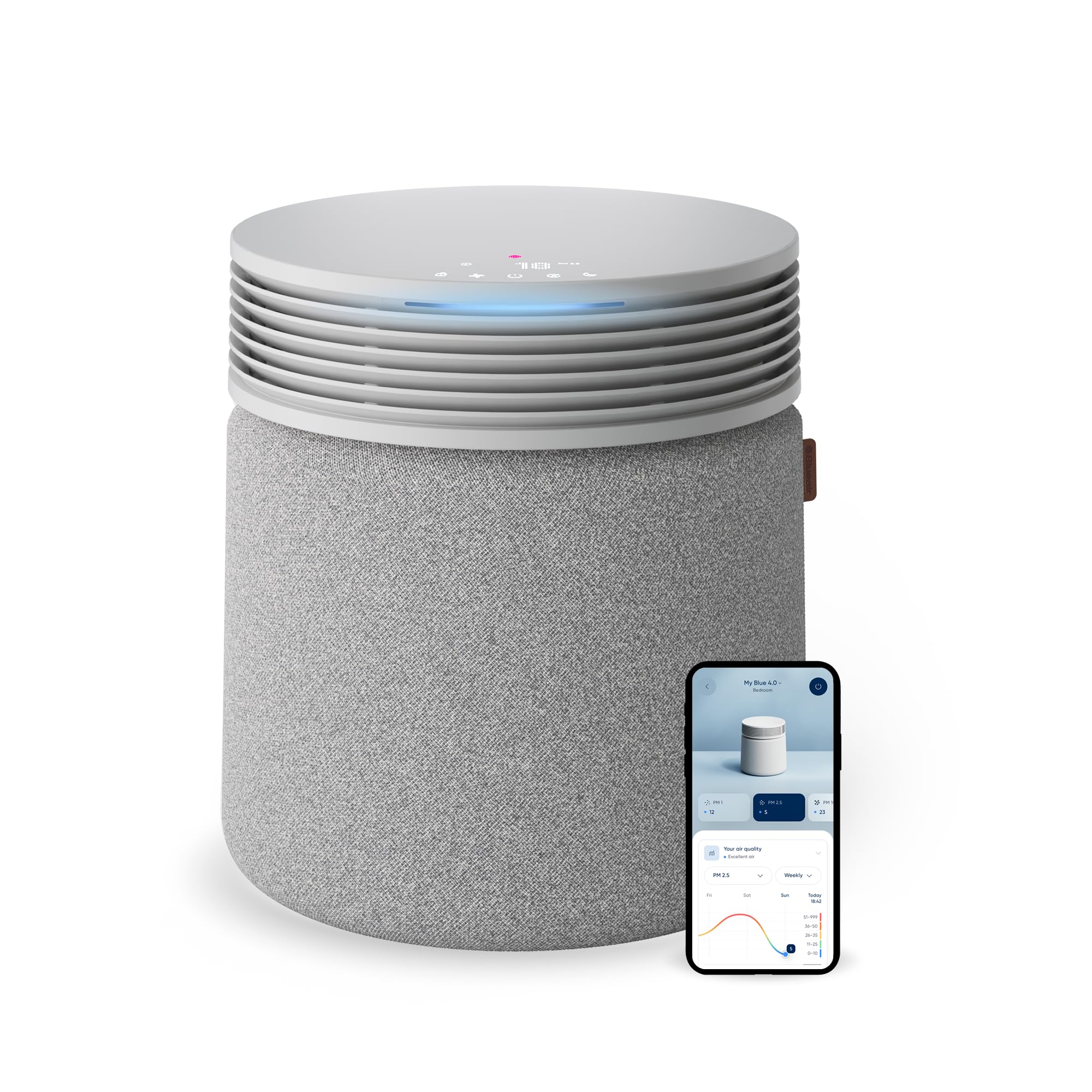
The BLUEAIR Blue Signature uses a proprietary HEPASilent filtration technology that combines electrostatic charging with mechanical filtration to capture particles while maintaining very low airflow resistance. This means it moves more air with less noise compared to traditional HEPA-only designs. In a large print shop or open-concept makerspace, that airflow efficiency matters because you are covering up to 3,385 square feet in one hour.
The unit doubles as a side table, which is a practical feature for a workshop where every surface counts. The smart sensors monitor air quality and auto-adjust the fan, and WiFi connectivity through the Blueair app gives you remote visibility into the air quality while a print is running unattended. Users consistently note how quiet it is even on higher speeds, making it suitable for a residential garage or basement print studio.
The main trade-off is filter cost — replacement filters are on the premium side, and because the unit is designed for large spaces, running it in a small enclosure may feel like overkill. But if your print room is an open-concept living area or a large garage, the Blue Signature moves enough air to keep the entire space safe without sounding like a vacuum cleaner.
Why it’s great
- Exceptionally quiet for the airflow volume it delivers
- Covers very large open spaces up to 3,385 sq ft
- Furniture-style design doubles as a usable side table
Good to know
- Replacement filters are premium-priced
- Overkill for a small dedicated print enclosure under 100 sq ft
4. Alen BreatheSmart 35i Air Purifier
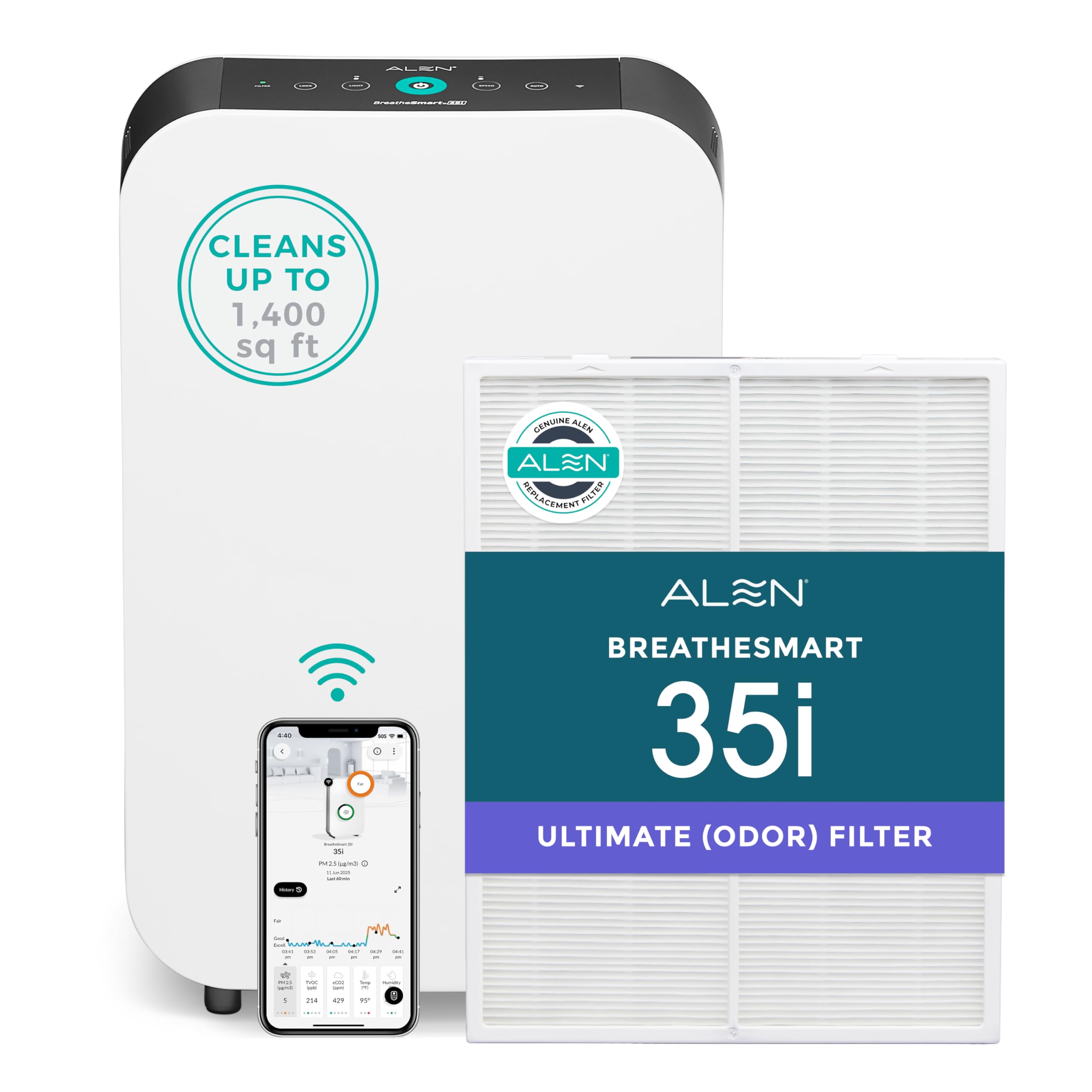
The Alen BreatheSmart 35i brings medical-grade H13 HEPA filtration into a package that is exceptionally quiet, generating pink noise that some users find sleep-enhancing. For a 3D printer running in a bedroom or a home office where you also sleep, that noise profile makes a real difference. The Odor Neutralizer filter option is specifically designed for heavy household odors and chemical fumes, which maps directly to ABS and resin printing off-gassing.
The SmartSensor provides color-coded air quality feedback through blue and purple rings, and the auto mode adjusts fan speed accordingly. Users report it detecting cooking smells, painting fumes, and pet odors, then ramping up to clear them. The child lock feature prevents accidental setting changes, which is useful if the purifier sits near a printer on a shared desk where you might bump buttons while reaching for a print.
Coverage is rated at 1,000 square feet, which puts it in the mid-range for a larger home print studio. The filter life averages around four months under continuous use, and replacement filters are moderately priced compared to the BLUEAIR. The unit lacks WiFi control, so you cannot monitor air quality remotely, but the auto mode handles adjustment without app interaction.
Why it’s great
- Medical-grade H13 HEPA captures 0.1 micron particles
- Pink noise profile is genuinely quiet for sleep-adjacent setups
- Odor Neutralizer filter handles chemical fumes effectively
Good to know
- No WiFi or app for remote monitoring
- Filter life around four months with continuous heavy use
5. SIESEAN AP-400 Air Purifier
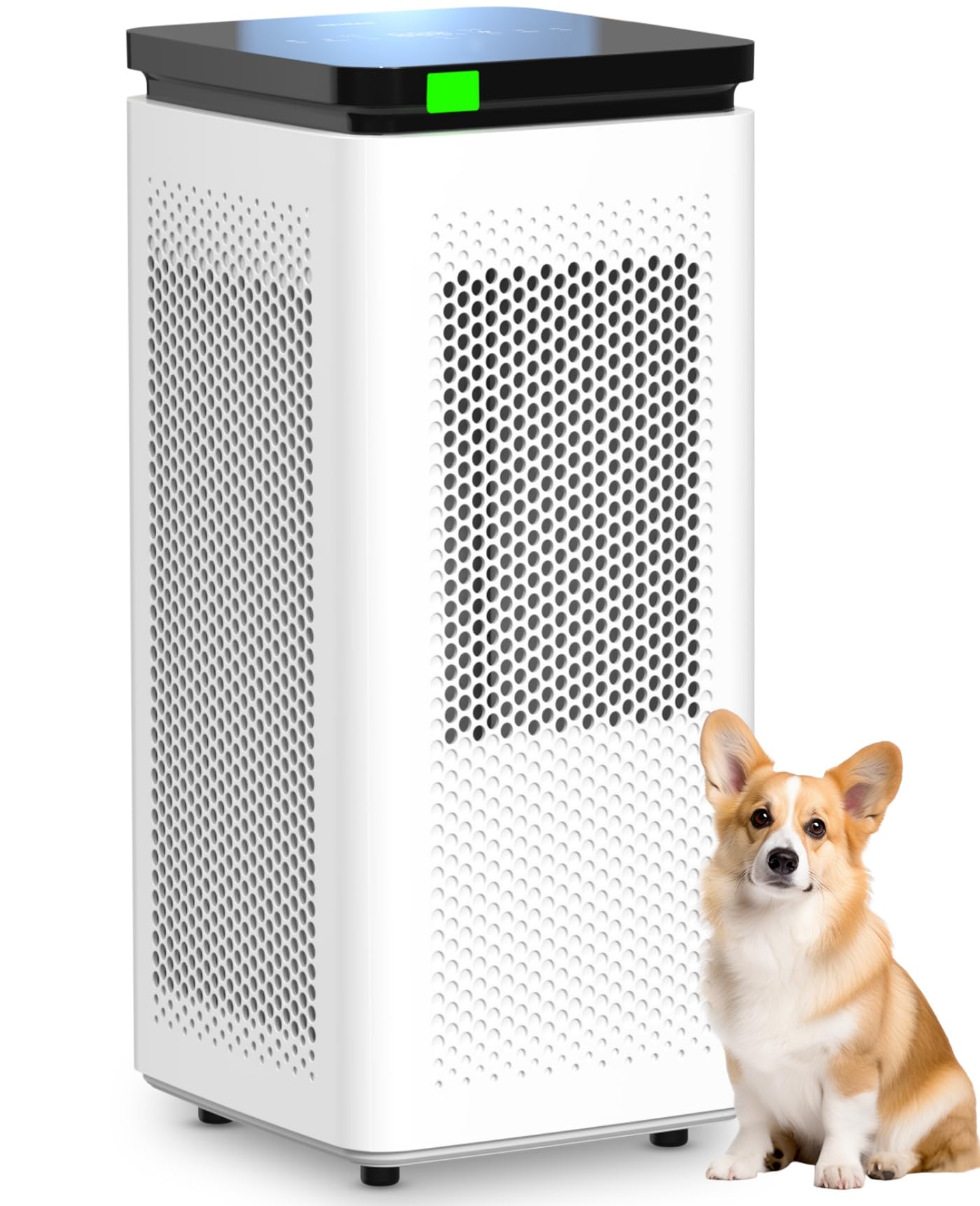
The SIESEAN AP-400 delivers a 235 CFM CADR rating with a dual-inlet airflow design that cycles air twice as fast as single-intake units. In a print room where you want the air turned over rapidly to keep VOC and particle concentration low, that speed matters. The H13 True HEPA filter captures 0.1-micron particles at 99.97% efficiency, and the dual activated carbon filters provide a substantial carbon mass for VOC adsorption.
The PM2.5 digital display and auto mode give real-time feedback on air quality changes. Users report the display detecting a room full of cooking smoke almost instantly and ramping the fan to clear it within minutes. The 30dB sleep mode combined with a dimmable panel makes it usable overnight without light pollution. The tower-style floor-standing design with a 10-inch square footprint fits neatly next to a workbench or printer stand.
Coverage extends to 3,500 square feet, which is overkill for a small room but means the unit can run on lower speeds and still keep a large makerspace safe. Dual H13 HEPA filters and dual carbon filters mean replacement costs are higher, but the filter replacement indicator ensures you only swap when needed. Users with three other purifiers reported this one outperformed all of them combined in a 120-square-foot test room.
Why it’s great
- Very high 235 CFM CADR for fast room turnover
- Dual-sided intake with four total filters for heavy particle load
- PM2.5 display with responsive auto mode
Good to know
- Replacing four filters costs more than single-filter units
- Oversized for a small desk or enclosure setup
6. WINIX 5520 Air Purifier
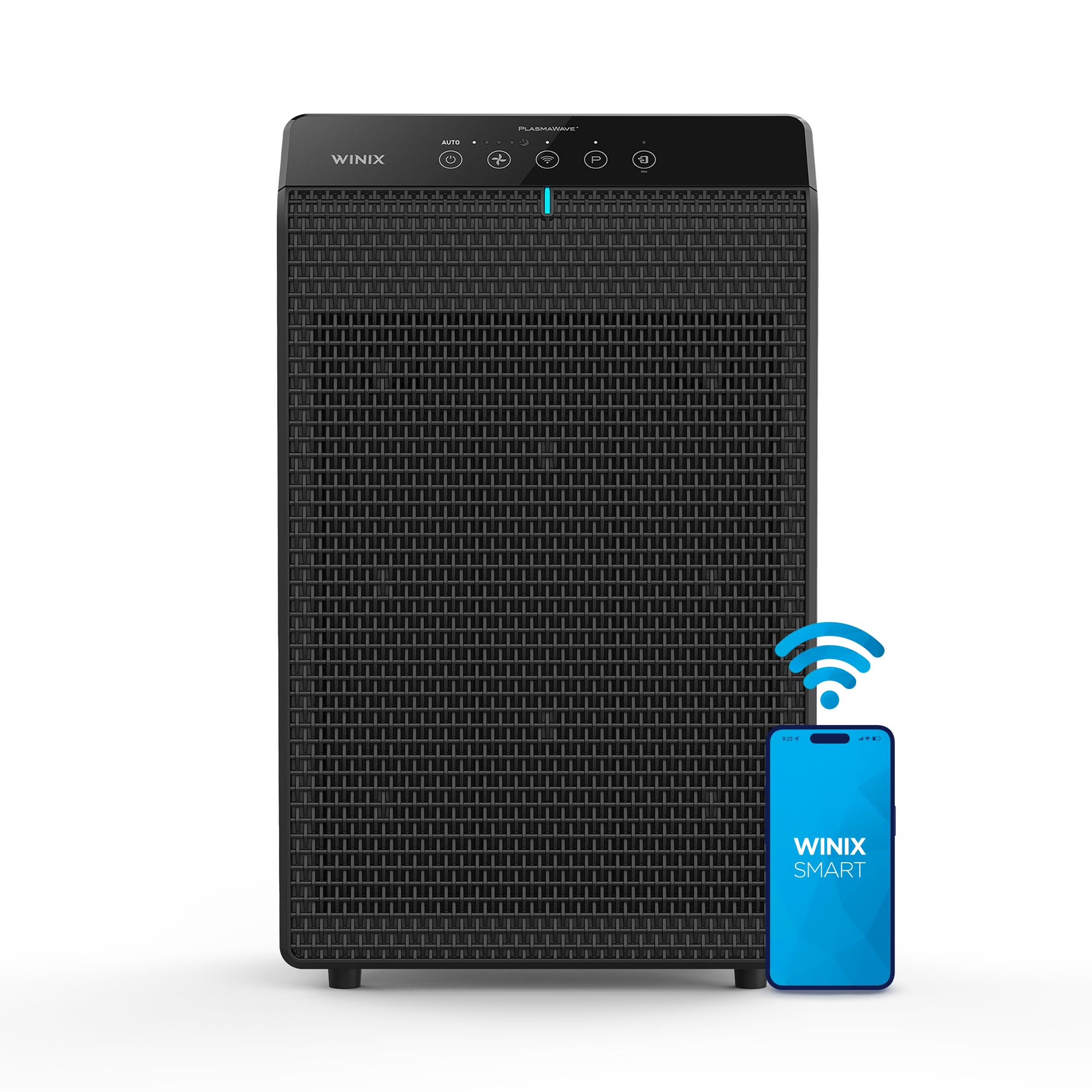
WINIX has a long track record in the air purification space, and the 5520 model continues that with a dedicated High Deodorization Carbon Filter that goes beyond what a thin carbon pad can achieve. This filter is designed specifically for VOCs and household odors, which directly targets the chemical off-gassing from ABS filament and resin curing. The True HEPA stage captures 99.99% of particles as small as 0.01 microns, which is tighter than standard HEPA specifications.
The smart sensors combined with auto mode adjust fan speed in real time, and the Light Automated Sleep Mode uses an ambient light sensor to switch to quiet, dark operation when the room goes dark. Users report the auto mode detecting stove gas and alcohol fumes, indicating the sensor is sensitive enough to pick up 3D printing emissions. The washable fine mesh pre-filter catches larger particles and extends the life of the main HEPA and carbon filters.
Coverage is AHAM Verified at 392 square feet, with the ability to clean up to 1,882 square feet in one hour. That puts it in a sweet spot for a dedicated print room or a larger home office with a printer corner. The replacement filters are relatively affordable compared to premium brands, and the included AOC carbon filter is easy to swap. The lack of a PM2.5 digital readout means you get color-coded LED feedback rather than a numerical display.
Why it’s great
- High Deodorization Carbon Filter handles ABS and resin VOCs
- Washable pre-filter reduces long-term filter costs
- Automated sleep mode uses ambient light sensor for dark rooms
Good to know
- No digital PM2.5 readout, only color-coded LED lights
- Auto mode is effective but reactive rather than predictive
7. LEVOIT Vital 100S-P Air Purifier

LEVOIT’s Vital 100S-P brings WiFi connectivity and VeSync app control to the mid-range price tier, letting you schedule the purifier to start running 15 minutes before a print job begins and shut off after the air clears. The washable pre-filter captures large particles like pet hair and visible dust, but in a print room it also catches loose filament strands and debris before they reach the main HEPA filter, extending its service life.
The AHAM VERIFIDE certification confirms a CADR of 143 CFM for smoke, 153 CFM for dust, and 167 CFM for pollen. For a standard print room around 200 square feet, that provides 4.8 air changes per hour. The Pet Mode is a marketing label, but it essentially runs the fan at a speed optimized for continuous odor and dander capture, which translates well to continuous fume management during multi-hour prints.
Sleep Mode drops to 23dB, making it quiet enough for a bedroom setup. The light sensor automatically dims the display in dark environments, so there is no glowing panel to disturb sleep. Users consistently report noticeable reductions in cooking odors, dust accumulation on surfaces, and allergy symptoms — all of which indicate the unit is moving and filtering air effectively. The filter replacement indicator takes the guesswork out of maintenance.
Why it’s great
- WiFi scheduling lets you sync purifier runtime with print jobs
- Washable pre-filter extends main filter life in dusty print rooms
- AHAM VERIFIDE with verified CADR numbers
Good to know
- Standard carbon filter is adequate but not as dense as dedicated VOC models
- Replacement filters are moderately priced
8. DBFIT AP300 Air Purifier
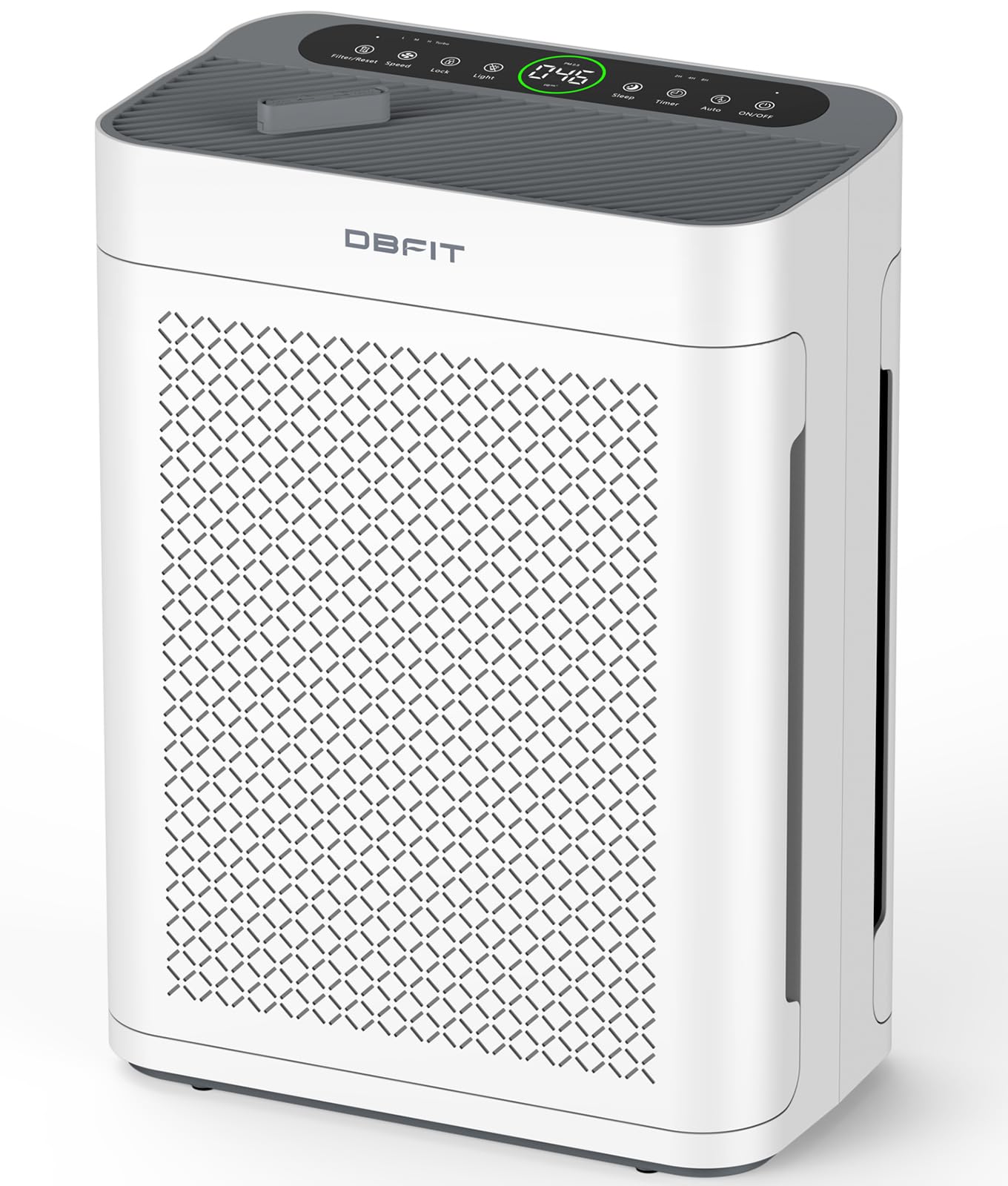
The DBFIT AP300 uses a dual-sided air intake design that pulls air from both sides simultaneously, effectively doubling the intake surface area compared to single-inlet units. This design allows it to refresh a 533-square-foot room in 10 minutes while operating quietly enough that the sleep mode registers at 15 dB — practically silent. For a small print room or a single-printer desk setup, this provides more than enough airflow without sounding like a workshop fan.
The PM2.5 air quality display and auto mode give real-time feedback, and the 6 fan speeds including Sleep, Auto, Low, Med, High, and Turbo give granular control over noise versus purification speed. The washable pre-filter and dual-layer activated carbon filter with 112.5% more carbon particles than standard filters make it surprisingly capable for VOC reduction at this price tier. Users report using it successfully for pet odors and smoke, which suggests meaningful carbon adsorption.
The built-in essential oil diffuser is a bonus for those who want a scented workspace, though it is not relevant to 3D printing performance. The child lock prevents accidental button presses from curious fingers or bumping into the unit. The filter replacement reminder ensures you know when the carbon is saturated, which is critical for maintaining VOC removal effectiveness over time.
Why it’s great
- Dual-sided intake refreshes room air quickly
- 15 dB sleep mode is virtually silent
- Enhanced carbon filter with 112.5% more carbon than standard
Good to know
- Essential oil diffuser is irrelevant to VOC filtration
- No WiFi connectivity for remote monitoring
9. LEVOIT Core 300-P Air Purifier

The LEVOIT Core 300-P is the smallest and most affordable unit in this list, but its 56W high-torque motor delivers a respectable 143 CFM CADR for its size. In a compact print enclosure or on a desk next to a single FDM printer, it provides meaningful air turnover without dominating the workspace. The 3-in-1 filter includes a pre-filter, HEPA-grade media, and activated carbon, covering the basic needs for particulate and light fume capture.
The QuietKEAP Technology brings sleep mode down to 24 dB, which is barely audible in a quiet room. The ability to turn off all display lights and set a timer for 2, 4, 6, or 8 hours makes it practical for overnight prints. The modular filter design allows you to swap in specialized filters — the Toxin Absorber Filter for VOCs or the Smoke Remover Filter for heavy smoke — which effectively upgrades the unit for 3D printing use without buying a completely new machine.
The 8.7-inch cylindrical footprint and 7.9-pound weight make it easy to move between the printer desk and a bedroom. AHAM VERIFIDE certification and CARB compliance confirm it meets official performance and safety standards. Users report noticeable improvements in air clarity and odor reduction within days, and the filter life extends well with regular pre-filter vacuuming. It is not heavy-duty enough for a multi-printer farm, but for a single printer on a home desk, it gets the job done.
Why it’s great
- Compact size fits on a desk directly next to a printer
- Interchangeable filter options include a Toxin Absorber for VOCs
- AHAM VERIFIDE and CARB compliant at an accessible price
Good to know
- Standard filter carbon layer is thin; upgrade to Toxin Absorber for better VOCs
- Not sufficient for multiple printers or large rooms
FAQ
Can a regular HEPA air purifier handle 3D printer fumes?
How often should I replace the filter when printing daily?
Is a purifier enough, or do I still need an enclosure?
What CADR do I need for a small print room?
Final Thoughts: The Verdict
For most users, the best air purifier for 3d printing winner is the Resiners Purair because it is the only unit specifically SGS-tested for resin and 3D printing VOCs with a dedicated VOC sensor that auto-adjusts to match your print’s fume output. If you want zero filter replacement costs and the ability to cover a larger workshop, grab the Nuwave OxyPure ZERO. And for a compact desk setup next to a single printer, nothing beats the LEVOIT Core 300-P with its Toxin Absorber filter upgrade option.

Mo Maruf
I created WellFizz to bridge the gap between vague wellness advice and actionable solutions. My mission is simple: to decode the research and give you practical tools you can actually use.
Beyond the data, I am a passionate traveler. I believe that stepping away from the screen to explore new environments is essential for mental clarity and physical vitality.