Our readers keep the lights on and my smoothie glass nicely filled. As an Amazon Associate, I earn from qualifying purchases.
A loaf pan that warps in the oven or refuses to release your carefully crafted sourdough is a direct hit to your baking confidence. The right bread baking pan does more than hold batter — it conducts heat evenly, releases every crumb cleanly, and survives hundreds of cycles without rusting or losing its non-stick properties. The difference between a perfect crust and a burnt bottom often comes down to the material and coating of the pan itself.
I’m Mohammad Maruf — the founder and writer behind WellFizz. I have spent years analyzing the material science and thermal engineering behind bakeware, focusing on how gauge thickness, coating composition, and rim design affect real-world baking results.
Whether you are baking a weekly sandwich loaf or an occasional banana bread for a friend, choosing the best bread baking pan means understanding the trade-offs between carbon steel, aluminized steel, ceramic, and porcelain constructions — and how each one handles the oven’s heat.
How To Choose The Best Bread Baking Pan
Every bread pan looks similar from a distance, but the material, coating, and construction details determine whether your loaf rises evenly or burns on the bottom. Focus on these three factors to find a pan that fits your baking style and budget.
Material and Heat Conductivity
Carbon steel and aluminized steel heat up quickly and distribute temperature evenly, producing a golden crust without scorched edges. Porcelain and ceramic pans heat more slowly but retain temperature longer, which works well for quick breads but may require extended bake times for lean yeast loaves. Heavy-gauge steel pans resist warping better than thin aluminum alternatives that buckle under high heat.
Non-Stick Coating and Release
PTFE-based non-stick coatings offer the most reliable release for delicate loaves and are the easiest to clean, but require avoidance of metal utensils and high heat above 500°F. Ceramic non-stick coatings are PTFE-free and scratch-resistant but may lose release performance over time. Uncoated steel or glass pans require greasing and flouring every time — they are workhorses but not the most convenient for frequent bakers.
Size and Capacity
A standard 9×5-inch pan holds roughly 1.5 pounds of dough and fits most yeast and quick bread recipes. Larger 2-pound pans measuring around 9.5×5.5 inches accommodate bigger loaves and are better for larger families or weekly meal prep. Smaller 1-pound pans work well for gift loaves or scaled-down recipes. Always check the external dimensions as well — your pan must fit inside your oven without touching the walls.
Quick Comparison
On smaller screens, swipe sideways to see the full table.
| Model | Category | Best For | Key Spec | Amazon |
|---|---|---|---|---|
| OXO Good Grips Non-Stick Pro Ceramic | Mid-Range | Even browning with no greasing | Aluminized steel, 1.2mm gauge | Amazon |
| Wrenbury Large 2lb Loaf Pan | Premium | Large family loaves and meal prep | 2lb capacity, 1mm carbon steel | Amazon |
| Wisenvoy Ceramic Loaf Pan | Premium | Table-to-oven serving and aesthetics | Porcelain ceramic, hand-painted | Amazon |
| Perracotta Bread Loaf Pans (2-Pack) | Mid-Range | Budget-friendly set for variety bakers | 0.8mm carbon steel, two pans | Amazon |
| Farberware Nonstick Loaf Pan | Value | Entry-level durability and color | Steel core, 450°F safe | Amazon |
In‑Depth Reviews
1. OXO Good Grips Non-Stick Pro Ceramic Coated Metal Bakeware 1Lb Loaf Pan – Storm Blue
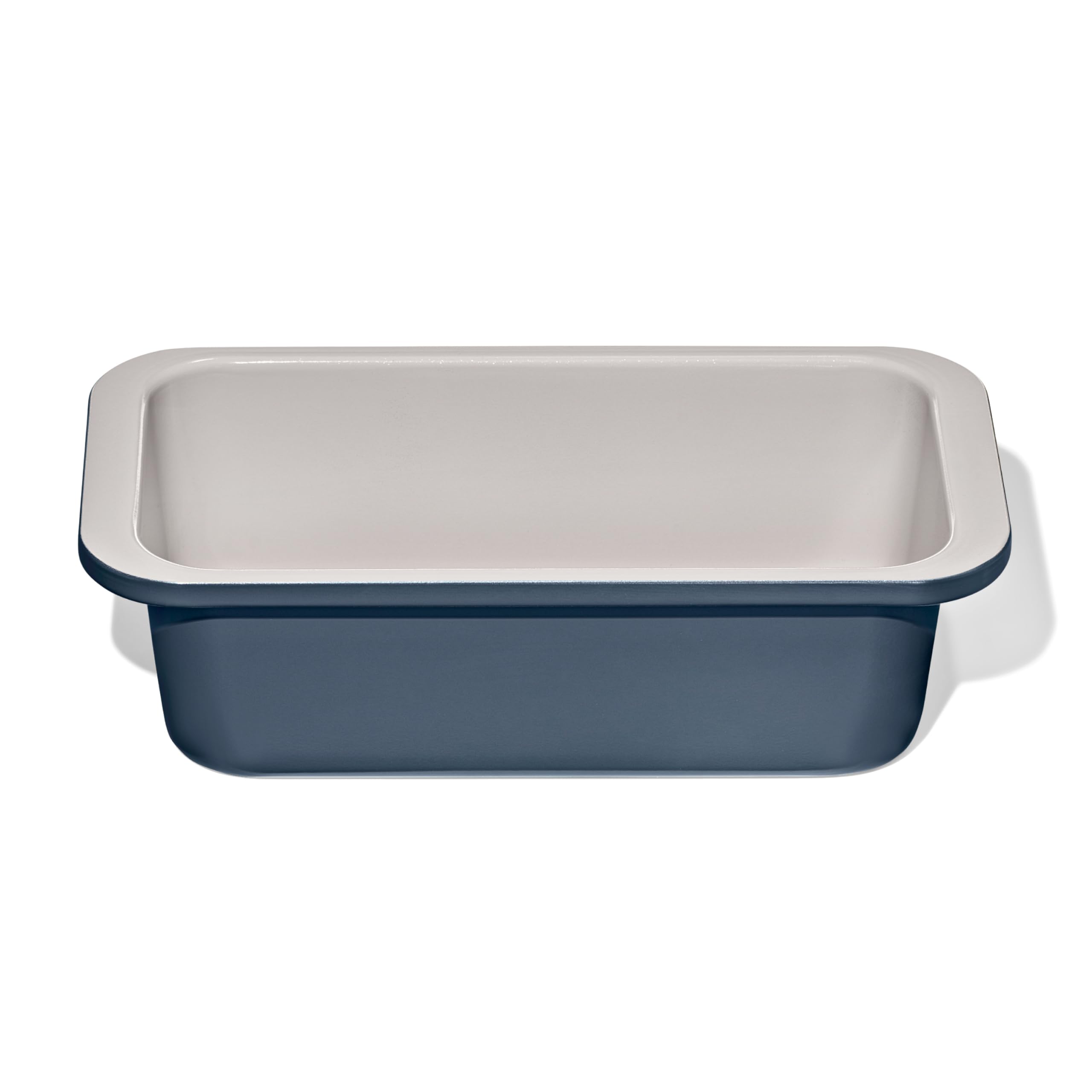
The OXO Good Grips loaf pan delivers the most balanced performance I have seen in a mid-range bread baking pan. Its heavy-gauge aluminized steel body resists warping even after repeated 450°F bakes, and the ceramic non-stick coating releases no-knead loaves and quick breads without a trace of sticking. The rounded interior corners eliminate the crevices where burnt crumbs typically hide, making cleanup genuinely effortless.
Multiple long-term users report replacing three or four previous pans after settling on this one — it bakes evenly without over-darkening the bottom crust, and the storm blue color with dimension markings on the rim adds a thoughtful touch for serious bakers. The expanded rim handles provide a secure grip even with bulky oven mitts, which reduces the risk of accidental drops when transferring a hot pan.
For home bakers who want consistent golden crusts without greasing or parchment paper, this pan is the sweet spot. It is not the cheapest option, but the combination of warp-resistant steel, reliable non-stick performance, and dishwasher-safe convenience makes it the most well-rounded choice for weekly bread baking.
Why it’s great
- Heavy aluminized steel resists warping and distributes heat evenly
- Ceramic non-stick coating releases loaves without any greasing
- Rounded corners and expanded rim handles simplify cleaning and handling
Good to know
- Slightly narrower than standard 9×5 — check your recipe’s expected loaf width
- Not suitable for metal utensils that can scratch the ceramic coating
2. Wrenbury Large 2lb Loaf Pan for Baking Bread – Non Stick Carbon Steel 9.5 Inch
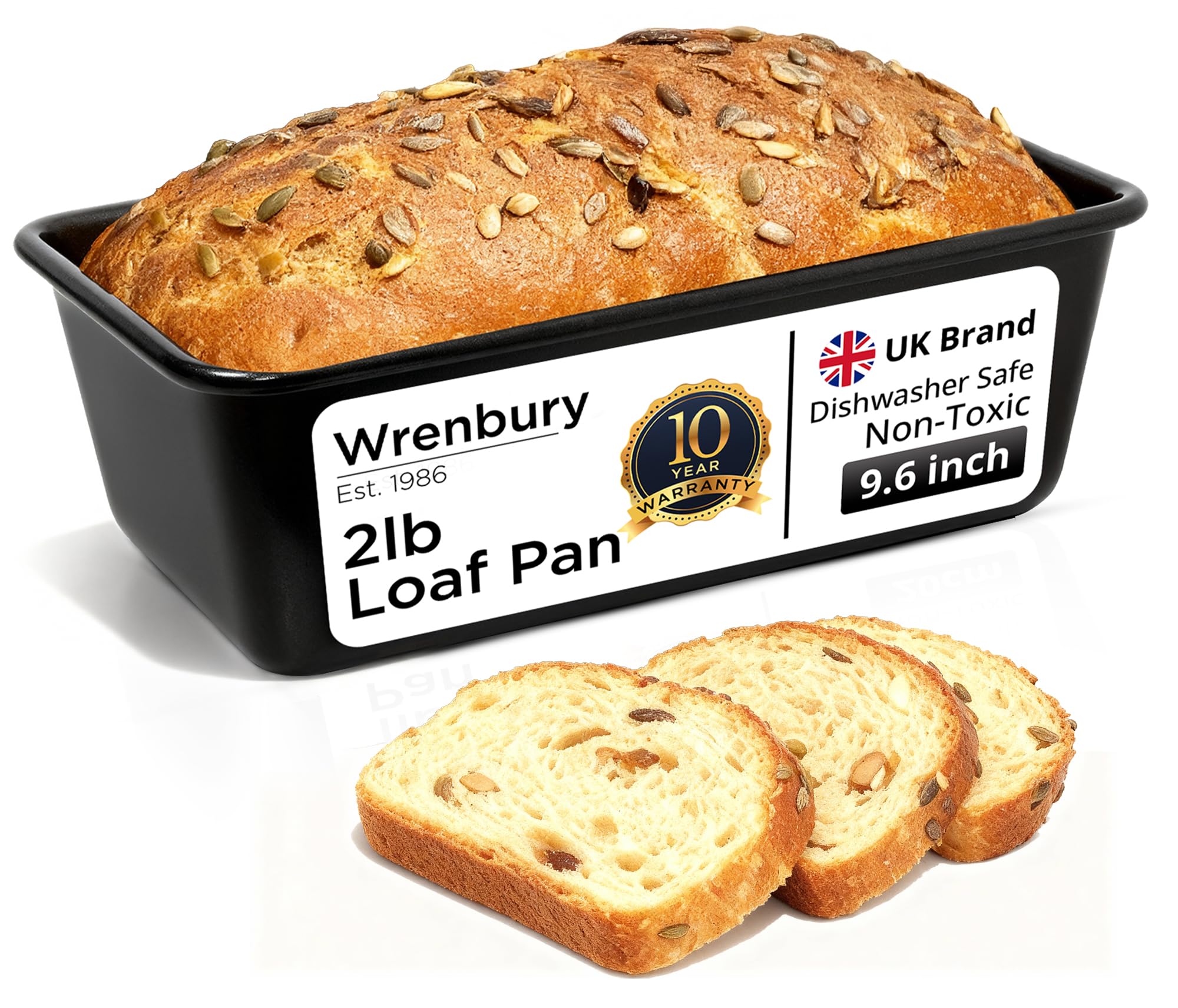
The Wrenbury 2lb loaf pan is the right choice for households that bake large loaves for sandwiches or weekly meal prep. Its carbon steel construction is thicker than most budget pans, which helps eliminate the hot spots that cause over-browned edges and raw centers. Multiple bakers confirm that their loaves fall out cleanly on the first attempt without any greasing or parchment, saving prep time every bake.
The 9.5 x 5.8 x 2.8 inch interior accommodates standard bread slicers, which is a detail most 1lb pans miss. The reinforced rolled edges add structural rigidity even after hundreds of thermal cycles, and the BPA/PTFE-free coating provides peace of mind for health-conscious families. I especially appreciate the rust-resistant formulation — carbon steel pans from lesser brands often develop pitting after repeated dishwasher use, but the Wrenbury holds up well under regular cleaning.
One trade-off: the pan is slightly thinner than premium restaurant-grade bakeware, so very dark loaves may show minor bottom browning if baked at high temperatures without a baking sheet underneath. For most home bakers, this is not a practical concern, but perfectionists may want to add an extra minute of preheating to the oven rack itself.
Why it’s great
- 2lb capacity fits standard bread slicers and yields large family portions
- PTFE-free non-stick coating releases every loaf cleanly
- Rust-resistant carbon steel with reinforced rolled edges prevents warping
Good to know
- Coating may show minor wear after heavy dishwasher use — hand washing recommended
- Some users note the pan is not as thick as commercial-grade options
3. Wisenvoy Loaf Pan – Ceramic Porcelain Bread Pan, 9.8 x 5.5 x 3.2 Inches, Blue Green

The Wisenvoy ceramic loaf pan is purpose-built for bakers who want a single vessel that goes from oven to table without transferring to a serving dish. The hand-painted blue green pattern is genuinely attractive, and the porcelain construction is lead-free, non-toxic, and scratch-resistant. With a 9.8 x 5.5 x 3.2 inch interior, it holds generous portions of banana bread, meatloaf, or side dishes like roasted vegetables.
Ceramic behaves differently from steel — it heats more slowly but retains temperature longer, which can produce a softer crust on quick breads and a more evenly cooked meatloaf. The pan is microwave-, oven-, freezer-, and dishwasher-safe, which is rare for any bread baking pan at this price point. Users consistently praise its beauty and durability, noting that the glaze does not craze or discolor even after repeated dishwasher cycles.
The main downside is weight — at nearly 1.3 kilograms, it is significantly heavier than a steel pan, which can be unwelcome for bakers with limited hand strength. Additionally, ceramic does not brown the bottom crust as aggressively as steel, so lean yeast breads may require a longer bake to achieve the same level of caramelization. This is a trade-off that matters more for sourdough enthusiasts than for casual quick-bread bakers.
Why it’s great
- Beautiful hand-painted design doubles as a serving dish
- Lead-free porcelain resists staining, chipping, and odors
- Safe for microwave, freezer, oven, and dishwasher
Good to know
- Heavy — nearly three times the weight of a comparable steel pan
- Ceramic heats slowly and may require longer bake times for lean doughs
4. Perracotta Bread Loaf Pans – 9×5 Inch Carbon Steel Non-Stick, 2-Pack

The Perracotta 2-pack delivers exceptional value for bakers who want multiple pans for simultaneous baking or batch freezing. Each 9x5x2.75 inch pan is formed from 0.8mm carbon steel with a light gray non-stick coating and a perracotta-toned bottom. The two-pan set costs less than many single premium pans, making it an easy recommendation for bakers on a budget or those building their bakeware collection from scratch.
Users consistently report that bread slides out cleanly without sticking, and the coating holds up well against regular use. The carbon steel conducts heat effectively, producing evenly browned loaves without burnt edges. The 446°F max temperature is sufficient for nearly all home baking, though it falls short of the 500°F occasionally used for dark crust artisan loaves. One clever user discovered that stacking two pans together creates a makeshift cloche for a perfectly domed loaf — a trick that speaks to the pans’ versatility.
At 0.8mm, the steel is thinner than premium pans in this guide, which means it can warp slightly if exposed to rapid temperature changes such as placing a hot pan directly on a cold countertop. Let the pans cool gradually before washing, and they will serve you well for years. The fun perracotta color adds a cheerful note to any kitchen without sacrificing function.
Why it’s great
- Two pans for the price of one mid-range model — unbeatable value
- Non-stick coating releases loaves without residue or sticking
- Light gray coating prevents the over-browning common with dark pans
Good to know
- 0.8mm gauge is thinner than premium options — avoid thermal shock
- Maximum safe temperature is 446°F, not suited for ultra-high-heat baking
5. Farberware Nonstick Bakeware Meatloaf/Bread Loaf Pan – 9 x 5 Inch, Rose Gold
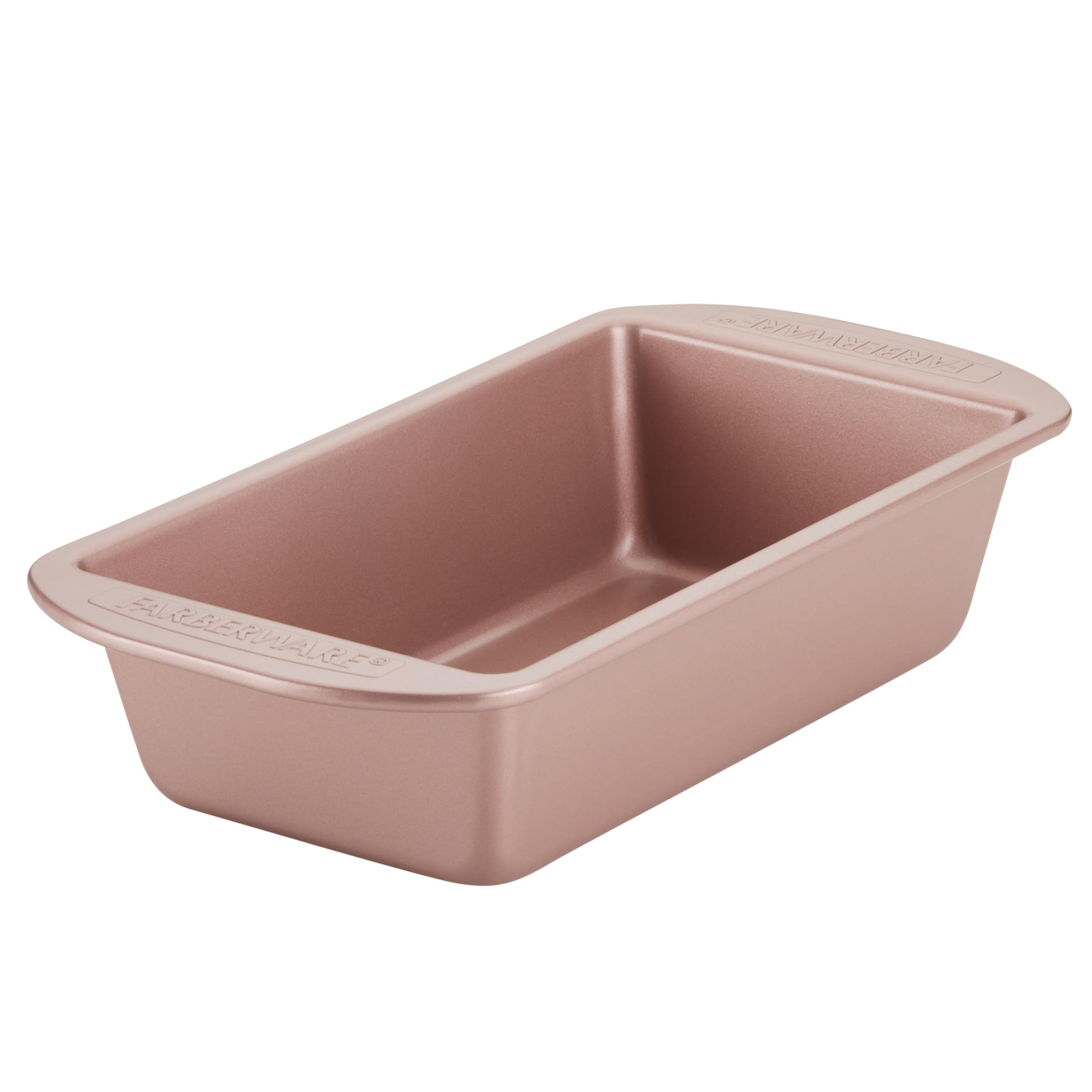
The Farberware nonstick loaf pan is a solid entry-level choice for bakers who want a reliable pan without spending much. Its heavy-duty steel construction provides decent heat distribution, and the non-stick coating on both the interior and exterior makes cleanup straightforward. The rose gold color adds a playful touch that many givers and receivers appreciate — multiple users have purchased this as a gift for new bakers specifically because of its aesthetics.
Baking performance is good for the price: loaves come out cleanly, the pan resists scratching from nylon utensils, and the 450°F max temperature covers the vast majority of home baking recipes. Users note that the lighter interior coating helps prevent the bottom crust from burning, a common complaint with darker non-stick pans. The 9×5 inch size matches standard bread and meatloaf recipes without adjustment.
Where this pan falls short of higher-tier options is long-term durability. Some users report the non-stick coating degrading after a year of heavy use, which is consistent with its price point. It is also not dishwasher-safe, despite some users testing it — hand washing is required to preserve the coating. For someone baking once a week, this pan will provide reliable service; for daily bakers, upgrading to a thicker pan with a more robust coating is worth considering.
Why it’s great
- Lighter interior coating prevents bottom crust burning
- Good weight and heat distribution for the price
- Attractive rose gold color makes a great gift for new bakers
Good to know
- Not dishwasher-safe — hand washing extends coating life
- Coating may show wear after a year of frequent use
FAQ
Should I choose a dark or light colored loaf pan?
Can I use a metal loaf pan in a glass or ceramic casserole for the two-pan method?
How do I prevent my bread from sticking to a non-stick pan over time?
Final Thoughts: The Verdict
For most users, the best bread baking pan winner is the OXO Good Grips Non-Stick Pro because its aluminized steel body and ceramic coating deliver even browning, reliable release, and warp resistance at a mid-range price that outlasts cheaper alternatives. If you want a large 2-pound capacity for family loaves and weekly meal prep, grab the Wrenbury 2lb Loaf Pan. And for bakers who prioritize aesthetics and oven-to-table serving, nothing beats the Wisenvoy Ceramic Loaf Pan.

Mo Maruf
I created WellFizz to bridge the gap between vague wellness advice and actionable solutions. My mission is simple: to decode the research and give you practical tools you can actually use.
Beyond the data, I am a passionate traveler. I believe that stepping away from the screen to explore new environments is essential for mental clarity and physical vitality.