Our readers keep the lights on and my smoothie glass nicely filled. As an Amazon Associate, I earn from qualifying purchases.
Choosing an APS-C mirrorless camera means deciding between a compact body that travels well and a sensor large enough to deliver professional-grade depth of field and dynamic range. The market now offers everything from entry-level bodies with guided shooting modes to 40-megapixel beasts that challenge full-frame cameras in resolving power, making the decision more about your specific use case than ever before.
I’m Mohammad Maruf — the founder and writer behind WellFizz. I’ve spent hundreds of hours analyzing camera specs, autofocus systems, rolling shutter performance, and real-world image quality across the APS-C segment to understand exactly where each model excels and where it cuts corners.
This guide breaks down the critical differences between the best options today so you can confidently pick the best aps-c mirrorless camera for your photography style.
How To Choose The Best APS-C Mirrorless Camera
APS-C sensors are the sweet spot between portability and image quality, but not every camera in this class serves the same shooter. The lens mount you buy into determines your future system, the autofocus system dictates your keeper rate with moving subjects, and the video specifications separate casual recorders from serious hybrid creators. Understanding these three pillars will prevent the most common buying mistakes.
Lens Mount Ecosystem
The camera body is a temporary investment — the lenses are permanent. Sony’s E-mount has the deepest third-party support from Tamron and Sigma, offering budget-friendly primes and zooms without compromising optical quality. Canon’s RF-S mount is newer with fewer native APS-C lenses, but the RF full-frame glass works with an adapter. Fujifilm’s X-mount is a mature system with exceptional prime lenses and a unique film-simulation look that reduces post-processing time. Choose the ecosystem that matches your lens budget and preferred focal lengths.
Autofocus Performance
Phase-detection autofocus is table stakes, but real-world performance varies wildly. Sony’s Real-Time Eye AF for humans, animals, and birds sets the benchmark for reliability, especially in low-contrast scenes and backlit conditions. Canon’s Dual Pixel CMOS AF II offers near-silent, smooth tracking for video and stills, with 651 zones covering the full sensor. Fujifilm’s latest X-Processor 5 cameras have closed the gap significantly, but their tracking still trails Sony in fast-action scenarios. A high AF point count alone doesn’t guarantee accuracy — the algorithm matters more than the raw number.
Video Capabilities and Rolling Shutter
If you shoot video, look for 4K oversampled from a 6K or higher readout to avoid soft, pixel-binned footage. Bit depth matters: 10-bit 4:2:2 internal recording gives you far more color grading flexibility than 8-bit. Rolling shutter is the hidden enemy — cameras without a fast sensor readout produce jello-like distortion when panning. Sony’s ZV-E10 and a6400 are notorious for severe rolling shutter, while the Fujifilm X-H2 and Canon R7 manage it much better thanks to their faster processors.
Quick Comparison
On smaller screens, swipe sideways to see the full table.
| Model | Category | Best For | Key Spec | Amazon |
|---|---|---|---|---|
| Canon EOS R7 | Premium Hybrid | Action & Wildlife | 32.5MP, 30fps e-shutter | Amazon |
| Fujifilm X-H2 | High-Resolution | Detail & Video Pro | 40MP, 8K 30p video | Amazon |
| Sony A6600 | Stabilized Premium | Run-and-Gun Hybrid | 5-axis IBIS, FZ100 battery | Amazon |
| Sony ZV-E10 II | Content Creator | Vlogging & Streaming | 26MP BSI, AI AF | Amazon |
| Canon EOS R10 | Mid-Range Action | Fast Action Stills | 24.2MP, 15fps mech | Amazon |
| Sony a6400 | Reliable Hybrid | Photo & Video Mix | 0.02s AF, 11fps burst | Amazon |
| Canon EOS R50 | Entry-Level Plus | Beginners & Vloggers | 6K oversampled 4K | Amazon |
| Sony a6100 | Budget Starter | First Camera | 24.2MP, 4K oversampled | Amazon |
| Sony ZV-E10 | Vlog Favorite | YouTube Beginners | 6K oversampled 4K | Amazon |
| Sony a6000 | Classic Value | Budget Photography | 24MP, 11fps burst | Amazon |
| Canon EOS R100 | Entry Level | First-Time Buyer | 24.1MP, 4K 24fps | Amazon |
In‑Depth Reviews
1. Canon EOS R7

The Canon EOS R7 is the most well-rounded APS-C body on the market today, combining a 32.5-megapixel sensor with the flagship-grade DIGIC X processor inherited from Canon’s full-frame R3. Its 30-frames-per-second electronic shutter with pre-release RAW burst mode captures action sequences that rival much more expensive sports cameras, while the 15 fps mechanical shutter operates silently enough for church ceremonies and wildlife blinds. The 5-axis in-body image stabilization delivers a five-stop advantage, making handheld telephoto shooting feasible down to 1/15 second.
Dual Pixel CMOS AF II covers the entire frame with 651 zones and tracks subjects tenaciously — birds in flight, race cars, and erratic pets all lock on without hunting. Users report near-perfect keeper rates in good light, and the eye-detection works reliably even through branches or partial obstructions. The body is weather-sealed and includes a deep grip, dual UHS-II SD card slots, and a fully articulating touchscreen that flips out for vlogging or overhead angles.
Video recording reaches 4K 60p oversampled from 7K, with 10-bit 4:2:2 internal capture via HDR PQ. The Clog-3 profile offers 12+ stops of dynamic range for serious grading, and the in-body stabilization smooths handheld walking shots effectively. Battery life exceeds CIPA ratings significantly in real-world use, with the LP-E6NH pack lasting a full day of mixed shooting. The only real compromise is the lack of native RF-S ultra-wide zoom options, requiring an adapter for EF-S glass. It is hands-down the most capable hybrid APS-C body Canon makes.
Why it’s great
- Industry-leading burst rate with pre-buffer for action
- Excellent IBIS stabilizes any adapted lens
- Dual memory card slots for professional backup
Good to know
- Limited native RF-S lens lineup
- Requires fast UHS-II cards for full buffer speed
2. Fujifilm X-H2

The Fujifilm X-H2 is a statement camera — the world’s first APS-C body with a 40-megapixel back-illuminated X-Trans CMOS 5 HR sensor. This resolution advantage is real; landscape and studio photographers can crop aggressively without losing detail, and Pixel Shift Multi-Shot mode composits 160-megapixel DNG files for archival-grade color fidelity. The X-Processor 5 drives a brisk 15 fps mechanical burst and 20 fps electronic burst, though the high-resolution sensor demands fast lenses and good technique to avoid motion blur at slower speeds.
Video quality sets a new APS-C benchmark with internal 8K 30p 10-bit 4:2:2 Apple ProRes recording to CFexpress Type B cards. The 13+ stop F-Log2 dynamic range rivals many full-frame cinema cameras, and the full-size HDMI Type A port feeds 12-bit ProRes RAW or Blackmagic RAW to external recorders. The 7-stop IBIS algorithm has been retuned for panning detection, making smooth gimbal-like footage achievable handheld with proper technique.
The body is larger and heavier than typical Fujifilm X-series cameras, but the deep grip and customizable button layout satisfy professional handling needs. The electronic viewfinder is one of the brightest and highest-resolution in the class, with a 5.76M-dot OLED panel and 120Hz refresh rate. Fujifilm’s film simulations reduce post-processing significantly for JPEG shooters, and the latest firmware updates have improved autofocus reliability for tracking to near-Sony levels. The main barrier is price — it sits at the top of the APS-C range — but for those who need maximum resolution and 8K capability in a compact system, it is unmatched.
Why it’s great
- 40MP with Pixel Shift produces 160MP stills
- Internal 8K 30p ProRes recording
- 13+ stops dynamic range with F-Log2
Good to know
- High price places it near full-frame territory
- Demands premium lenses for full resolution benefit
3. Sony A6600

The Sony A6600 solves the two biggest criticisms of the a6400 — no IBIS and poor battery life — by adding a 5-axis in-body stabilization system rated for a five-stop advantage and upgrading to the larger NP-FZ100 battery pack. This combination transforms the a6600 into a genuinely capable run-and-gun camera for both stills and video. The 24.2-megapixel Exmor sensor with front-end LSI delivers clean files up to ISO 6400, and the 425-point phase-detection autofocus system is the same Real-Time Eye AF found in Sony’s full-frame bodies.
Real World performance is excellent: the eye-tracking for humans and animals feels sticky and confident in low-contrast light, and the 11 fps burst with full AF/AE tracking captures decisive moments without dropping frames. The external 3.5mm mic and headphone jacks enable professional audio monitoring, a rarity in this segment. The tilting screen flips up for vlogging, though it does not fully articulate for vertical framing. Users consistently praise the larger grip compared to the a6400, which improves balance with heavier zoom lenses.
Video recording is limited to 4K 30p from a 6K oversampled readout with no pixel binning, producing sharp footage. There is no recording limit in the European firmware variant. The 8-bit internal codec is the main limitation — colorists will miss the 10-bit depth offered by the Fujifilm X-H2 or Canon R7. Rolling shutter remains moderate, smoother than the a6400 but not as clean as newer competition. The Sony E-mount ecosystem, with deep third-party support from Sigma and Tamron, makes the a6600 a compelling long-term investment for photographers who want stabilization without switching systems.
Why it’s great
- Effective IBIS for handheld low-light shots
- Excellent battery life with NP-FZ100
- Strong third-party lens support via E-mount
Good to know
- 8-bit video only; no 10-bit internal recording
- Articulating screen does not fully articulate
4. Sony ZV-E10 II
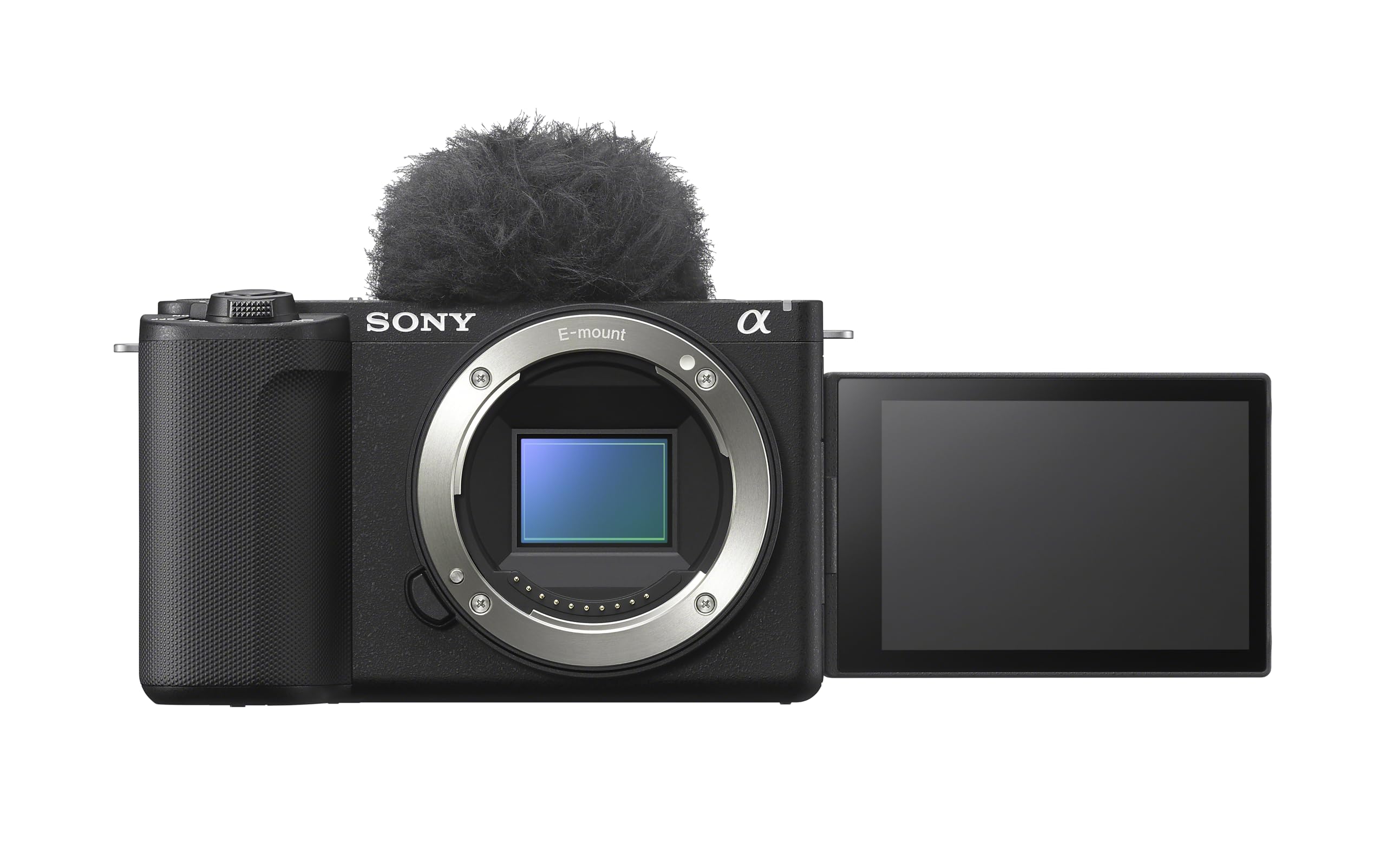
The ZV-E10 II is Sony’s second-generation content creation camera, built explicitly for YouTubers, vloggers, and solo video producers who prioritize ease of use and AI-driven autofocus over traditional camera ergonomics. The back-illuminated 26-megapixel Exmor R sensor is a meaningful upgrade over the original ZV-E10, offering better low-light performance and reduced read noise. The BIONZ XR processor enables Real-Time Eye AF for humans, animals, and birds with remarkable precision, even during rapid head turning or partial occlusion.
The dedicated Product Showcase mode transitions focus from the creator’s face to an object held near the lens in under a second, making product reviews and unboxings seamless. The Background Defocus button instantly opens and closes the aperture for a cinematic look without fiddling with manual exposure. Creative Look presets allow in-camera color grading with 10 base looks, each customizable, which reduces the need for post-processing for quick social media uploads. The fully articulating touchscreen is crisp and responsive, and the built-in directional microphone with windscreen captures usable audio without an external mic.
Video specs are impressive for the price point: 4K 60p oversampled from a 6K readout, with S-Log3 and HLG gamma curves for grading. The 11 fps electronic shutter burst with continuous AF suffices for action stills, though the camera is clearly video-first in design. There is no built-in flash, no traditional viewfinder, and the body lacks IBIS — relying instead on digital stabilization that crops into the frame. The ZV-E10 II is not a hybrid camera for stills enthusiasts; it is a purpose-built tool for creators who want the best autofocus and color science in a compact, streamable package. The battery life is excellent with the NP-FZ100 pack.
Why it’s great
- Best-in-class Real-Time Eye AF for video
- Product Showcase and Background Defocus buttons save time
- Large battery life with NP-FZ100
Good to know
- No IBIS; relies on crop-heavy digital stabilization
- No built-in viewfinder or flash
5. Canon EOS R10

The Canon R10 packs the same DIGIC X processor found in Canon’s pro R3 body into a compact, -class camera, and the result is blistering autofocus performance that punches far above its weight. The 24.2-megapixel APS-C CMOS sensor shoots at 15 frames per second with the mechanical shutter and 23 fps with electronic first curtain, both with full AF/AE tracking. The subject detection system covers people, animals, and vehicles, and it maintains focus reliably during erratic motion — ideal for youth sports, pets, and birding.
The Dual Pixel CMOS AF II system uses 651 zones covering the entire sensor area, and focus acquisition is near-instant even in dim indoor lighting. The articulated touchscreen pairs well with the guided user interface that explains shooting modes to beginners without dumbing down the advanced controls. The RF-S 18-45mm kit lens is compact but optically modest — the real value is the body itself, which pairs beautifully with Canon’s excellent RF 35mm f/1.8 or the RF 100-400mm for wildlife.
Video capabilities reach 4K 60p with a 1.56x crop, or 4K 30p oversampled from 6K with the full sensor width. The 10-bit HDR PQ output is a welcome inclusion for video enthusiasts. The LP-E17 battery is smaller than the competition, yielding around 450 shots per charge, which is manageable with a spare. The R10 is a balanced mid-range hybrid that gives beginners a clear upgrade path within the RF mount system without overwhelming them with menus.
Why it’s great
- Excellent subject tracking for action shots
- User-friendly interface for beginners
- 10-bit HDR video output
Good to know
- Kit lens is optically mediocre
- Small battery needs spare for all-day shoots
6. Sony a6400

The Sony a6400 remains a compelling choice years after its launch because its core strengths — the 0.02-second autofocus acquisition speed and 425 phase/425 contrast detection points covering 84% of the sensor — still rival newer cameras. Real-Time Eye AF for humans and animals is reliable in most conditions, and the 11 fps burst with AF tracking captures fast-moving subjects effectively. The 24.2-megapixel sensor delivers excellent color science with rich, natural tones straight out of camera, reducing post-processing for event photographers.
The tiltable 180-degree LCD screen is one of the few in this class that flips fully toward the subject for self-recording, making it a popular choice for vloggers. The 3.5mm mic input allows external microphone use, and the camera supports 4K 30p oversampled from 6K with no pixel binning, producing very sharp video. Sony’s E-mount lens ecosystem is the deepest in the APS-C market, with budget-friendly Sigma f/1.4 primes and Tamron zooms available at a wide range of focal lengths.
The a6400 has well-documented limitations: no in-body stabilization, no headphone jack, and 8-bit internal recording only. The rolling shutter in 4K mode is severe — panning at moderate speeds produces visible jello distortion. The touchscreen is resistive, not capacitive, making it less responsive than modern competitors. Battery life with the NP-FW50 is modest, typically lasting a few hours of mixed use. Despite these compromises, the a6400 offers the best autofocus for the money in Sony’s lineup, and the lens ecosystem alone makes it worth considering for budget-conscious photographers who plan to grow their kit over time.
Why it’s great
- Blazing fast autofocus with reliable eye tracking
- Deep E-mount lens ecosystem
- 4K oversampled from 6K for sharp video
Good to know
- No IBIS or headphone jack
- Severe rolling shutter in 4K mode
7. Canon EOS R50
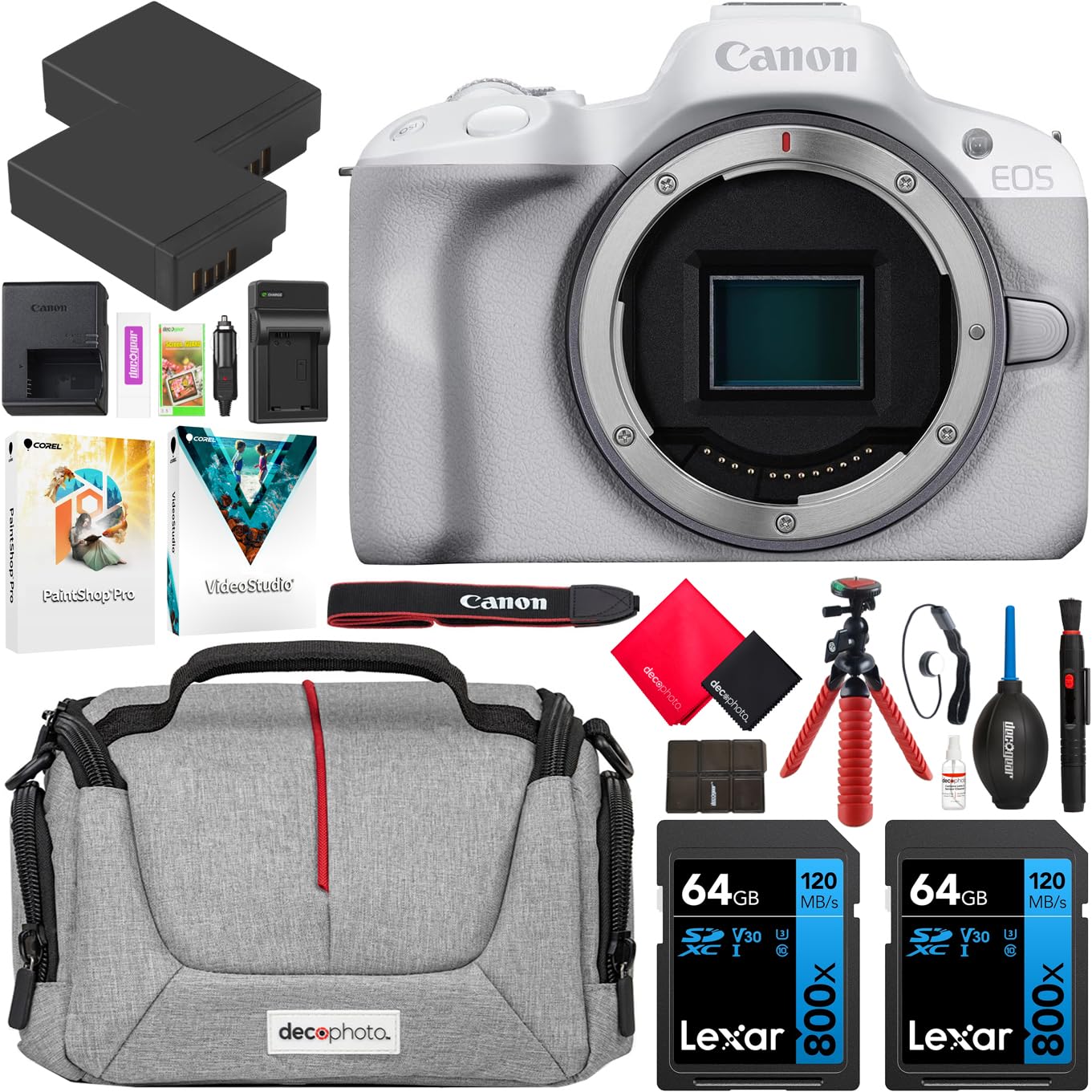
The Canon EOS R50 is the best entry-level camera for users who want an intuitive path to great images without studying manuals. The Advanced A+ Assist mode evaluates the scene and automatically selects the appropriate exposure, focus, and color settings from an expanded array of compatible scenes, producing well-balanced JPEGs with minimal effort. The Guided UI explains each mode in plain language on the touchscreen, so beginners understand why a specific setting works better for a particular situation.
Despite its approachable interface, the R50 is genuinely capable. The 24.2-megapixel APS-C sensor combined with the DIGIC X processor delivers image quality that rivals the R10, with crisp detail up to ISO 3200. The Dual Pixel CMOS AF II system uses 651 zones for reliable face and eye detection, and continuous shooting reaches 12 fps with the electronic first curtain and 15 fps with the electronic shutter. The 4K video at 30 fps is oversampled from 6K, offering a sharp, detailed picture with minimal moiré.
The white color option of this particular bundle adds a distinct aesthetic appeal for users who want a camera that looks as modern as it performs. The digital stabilization for video introduces a crop but smooths handheld footage effectively for casual vlogging. The LP-E17 battery is small, yielding around 440 shots, and the lack of IBIS means you need steady hands or a tripod for long exposure work. The R50 is a thoughtfully designed first camera that grows with the user, offering manual modes and raw capture for when the training wheels come off.
Why it’s great
- Excellent guided interface for new photographers
- 6K oversampled 4K video
- Compact and lightweight body
Good to know
- No IBIS; digital stabilization crops video
- Small battery life; spare recommended
8. Sony a6100
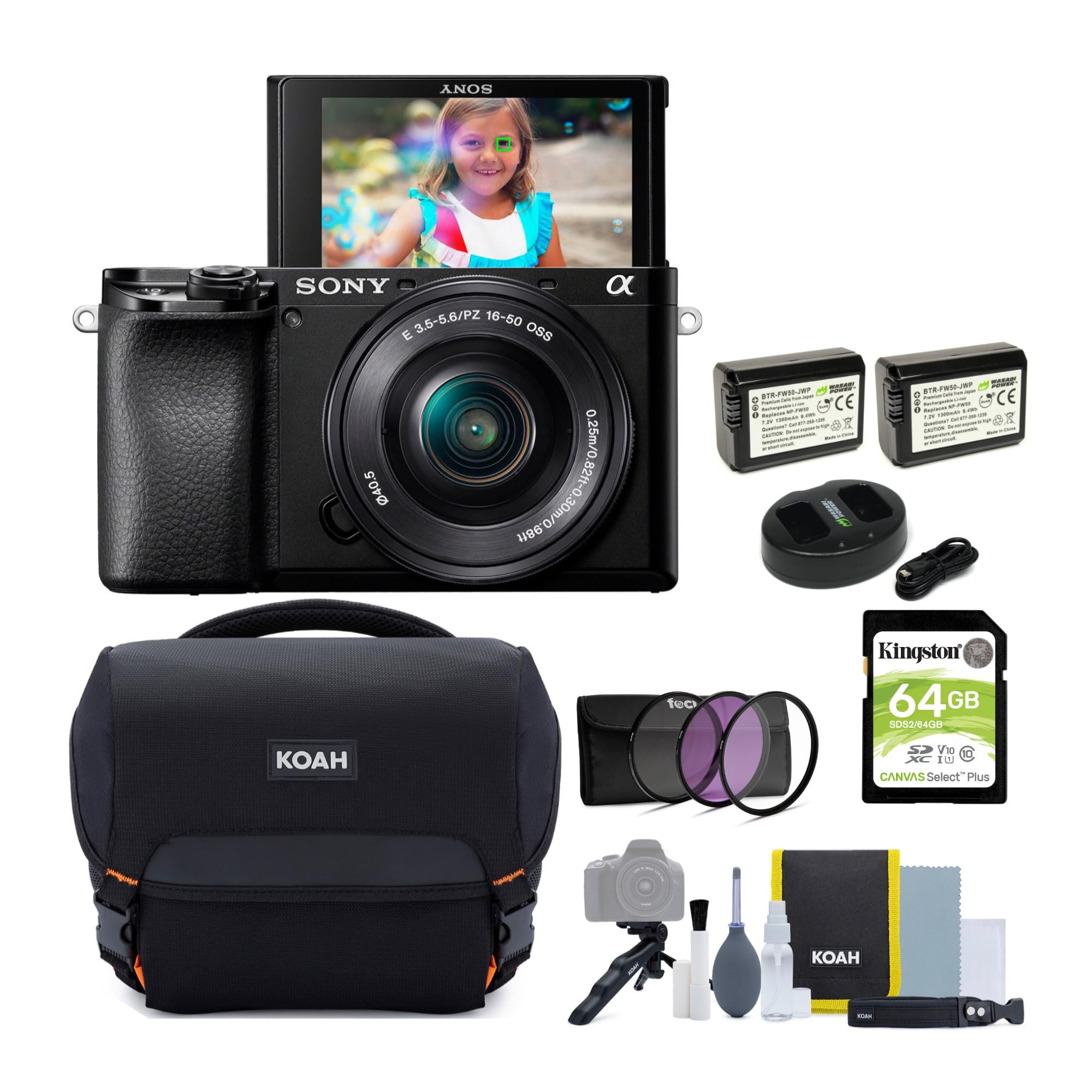
The Sony a6100 is the affordable gateway into the Sony E-mount system, offering the same 24.2-megapixel APS-C sensor and BIONZ X processor found in the more expensive a6400. The 4D FOCUS autofocus system delivers 179 phase-detection points and lightning-fast acquisition speeds that lock onto subjects quickly in good light. Continuous shooting at 8 fps with AF tracking is slightly slower than its siblings but still competitive for capturing casual action like kids playing or pets running.
Video capabilities include 4K 30p oversampled from the full sensor width, which produces sharp, detailed footage suitable for YouTube and social media. The camera supports silent electronic shutter shooting, which is useful for quiet environments like libraries or ceremonies. The kit bundle offers excellent value for beginners, including two batteries, a dual charger, a tripod grip, memory cards, and a camera bag — everything needed to start shooting immediately without additional purchases.
The a6100 has notable omissions compared to the a6400: the autofocus tracking algorithm is less sophisticated, the touchscreen is limited to touch-to-focus rather than full touch operation, and the LCD does not flip fully upward for vlogging. Battery life with the NP-FW50 is below average. There is no microphone input, so external audio recording requires a separate device. For pure stills photography on a tight budget, the a6100 delivers excellent image quality and access to Sony’s vast lens library, but video creators should look to the ZV-E10 instead.
Why it’s great
- Fantastic image quality for the price
- Access to Sony’s deep E-mount lens library
- Generous bundle includes all starter gear
Good to know
- No microphone input
- LCD does not flip fully upward for selfie
9. Sony ZV-E10
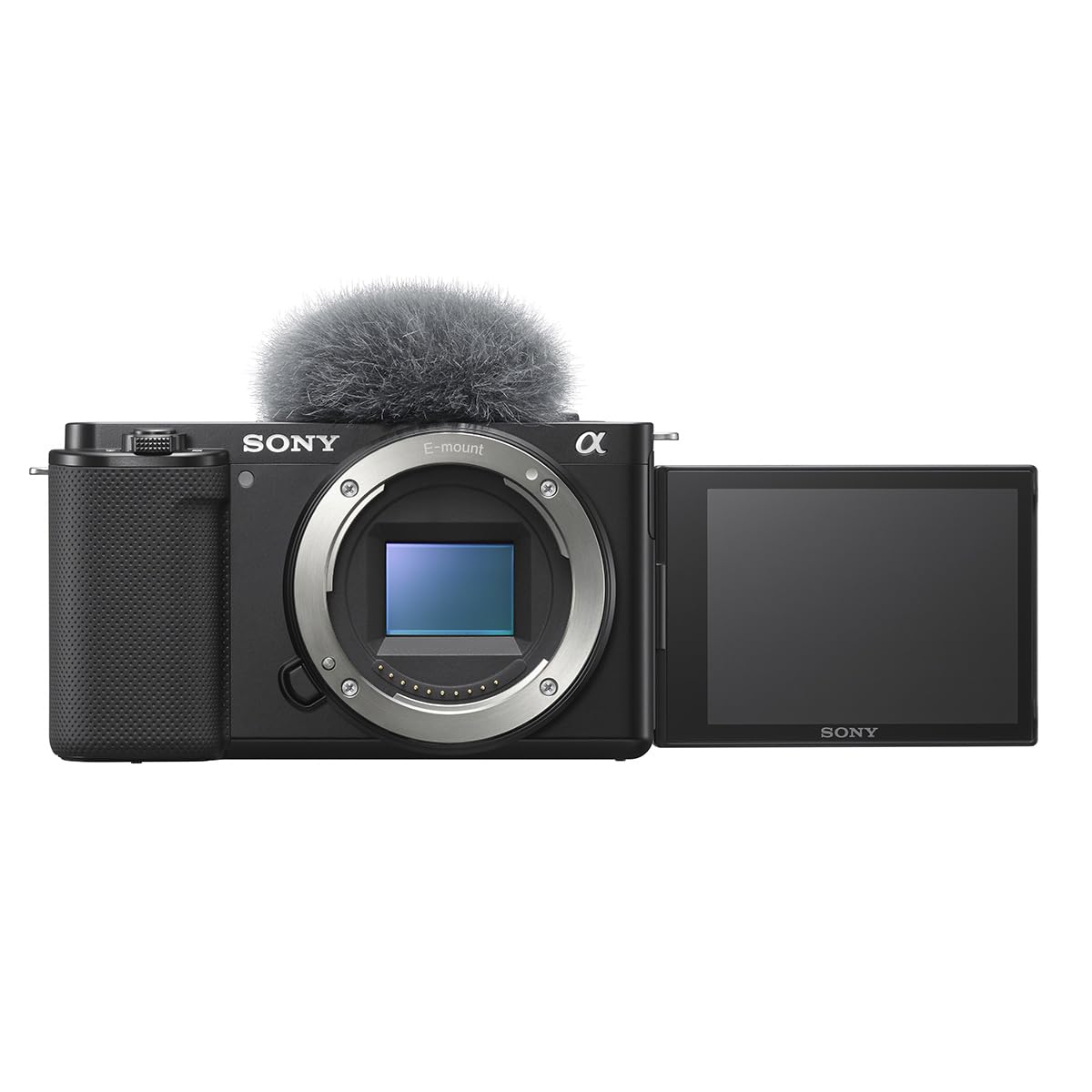
The original Sony ZV-E10 remains a staple in the vlogging community for good reason: it delivers sharp 4K video from a 6K oversampled readout with subject tracking that stays locked on a moving face even as the creator turns their head talking to camera. The dedicated Product Showcase Setting transitions focus smoothly from the presenter’s face to an item held in front of the lens, making it the go-to camera for unboxing and review channels. The Background Defocus button provides a one-touch cinematic bokeh toggle that non-technical creators appreciate.
The 24.2-megapixel APS-C Exmor CMOS sensor captures high-quality stills at 11 fps, and the camera supports S-Log2/3 and HLG profiles for color grading flexibility. The built-in directional microphone with a windscreen captures usable audio for casual projects, and the 3.5mm mic input allows upgrading to a lavalier or shotgun microphone. The fully articulating flip-out screen is essential for self-recorded content, and the camera is lightweight enough to hold at arm’s length for extended takes without fatigue.
Professional videographers note several caveats: the ZV-E10 has severe rolling shutter in 4K mode that creates jello distortion during quick pans, and there is no IBIS, so digital stabilization introduces a crop that tightens the frame. The NP-FW50 battery lasts only about 25 minutes of continuous 4K recording before needing a swap. The tiny LCD is hard to review critical focus. For entry-level YouTube and vlog use, the ZV-E10 is a proven formula; for hybrid shooters who need both stills and stable video, newer alternatives like the Canon R50 or ZV-E10 II are better choices.
Why it’s great
- Excellent 4K from 6K oversampling
- Product Showcase and Bokeh Switch for creators
- Flip-out screen and mic input built in
Good to know
- Severe rolling shutter in 4K mode
- Poor battery life; requires multiple spares
10. Sony a6000

Released over a decade ago, the Sony a6000 is now a budget-class option that remains relevant because of its 24.3-megapixel APS-C CMOS sensor and 11 fps continuous shooting speed with phase-detection autofocus. The contrast-detect points are only 25 in number, and the hybrid autofocus system lacks the eye-tracking sophistication of modern Sonys, but for static portraits, landscapes, and well-lit street photography, the a6000 still produces sharp, color-accurate images. The 3-inch tilting LCD has 921,000 dots and works for waist-level or overhead shooting.
The camera is exceptionally compact and lightweight at 344 grams with the kit lens, making it the most portable option in this list for travel and daily carry. The 16-50mm power zoom lens collapses when powered off, reducing bulk further. The bundled refurbs often include two batteries and a charger, offsetting the weak NP-FW50 battery life. The a6000 supports Wi-Fi and NFC for instant transfer to a phone, which is useful for social media sharing on the go.
There is no 4K video — the a6000 tops out at 1080p 60fps, which looks dated on modern screens. The electronic viewfinder is small and low resolution by current standards, and the bundled kit lens is optically soft at the edges. The autofocus struggles in low contrast and dim light, hunting more than modern cameras. The a6000 is not a serious contender for today’s APS-C buyer unless the budget is extremely tight and you prioritize stills-only photography with no video requirement.
Why it’s great
- Very affordable entry into E-mount system
- Compact and lightweight body
- Decent stills image quality for the price
Good to know
- No 4K video; limited to 1080p 60fps
- Aging autofocus struggles in low light
11. Canon EOS R100

The Canon EOS R100 is the smallest and lightest camera in the EOS R series, weighing just 356 grams with the RF-S 18-45mm kit lens attached. It targets first-time mirrorless buyers who want the image quality of a 24.1-megapixel APS-C CMOS sensor without the bulk and complexity of larger cameras. The DIGIC 8 processor provides reliable basic autofocus via Dual Pixel CMOS AF with 143 zones and human face/eye detection, sufficient for portraits and everyday family photography.
The camera shoots 4K video at 24 fps and Full HD at 60 fps, with 120 fps HD capture available for slow-motion effects. The built-in flash standard on the hotshoe helps in low-light situations without needing an external unit. The guided user interface explains shooting modes, making the R100 a gentle learning tool for beginners. The RF-S 18-45mm kit lens includes optical image stabilization rated at 4 stops, helping reduce camera shake at longer telephoto focal lengths.
There are significant compromises to reach this price point: the autofocus is the older Dual Pixel CMOS AF, not the AF II system found in the R50 and R10, so tracking is less reliable with moving subjects. The 4K video is limited to 24 fps and crops the sensor, reducing field of view. The battery charger is not included in the box. The R100 lacks a touchscreen, relying on physical buttons and the directional pad for menu navigation. For a beginner who wants to learn photography on a mirrorless platform with Canon’s color science and lens compatibility, the R100 is an affordable starting point, but serious shooters will outgrow it quickly.
Why it’s great
- Lightest and most compact EOS R body
- Good image quality for beginner photography
- Built-in flash for low-light scenarios
Good to know
- No touchscreen or guided AF II
- 4K video is cropped and limited to 24fps
FAQ
Is 24 megapixels enough for an APS-C camera in 2024?
Does IBIS make a significant difference for stills photography?
Can I use Canon EF-S lenses on RF-S mount cameras?
Final Thoughts: The Verdict
For most users, the best aps-c mirrorless camera winner is the Canon EOS R7 because it delivers professional-grade burst speed, reliable autofocus, excellent IBIS, and high-resolution video in a well-rounded body. If you need extreme resolution and 8K video capability, grab the Fujifilm X-H2. And for a stabilized, run-and-gun hybrid with the deepest lens ecosystem, nothing beats the Sony A6600.

Mo Maruf
I created WellFizz to bridge the gap between vague wellness advice and actionable solutions. My mission is simple: to decode the research and give you practical tools you can actually use.
Beyond the data, I am a passionate traveler. I believe that stepping away from the screen to explore new environments is essential for mental clarity and physical vitality.