Our readers keep the lights on and my smoothie glass nicely filled. As an Amazon Associate, I earn from qualifying purchases.
Bed bugs don’t wait, and neither should your treatment plan. A single pregnant female can seed an infestation of hundreds within weeks, turning your bed into a nightly stress zone. The wrong product wastes time, allows resistance to build, and lets the colony dig in deeper—so choosing a formula that kills at every life stage is non-negotiable.
I’m Mohammad Maruf — the founder and writer behind WellFizz. I’ve spent years analyzing chemical formulations, application methods, and real-world efficacy data across the pest control market to separate products that actually break the breeding cycle from those that just mask the problem.
After combing through test results, EPA registrations, and thousands of verified buyer experiences, the only list that matters is this curated guide to the best bed bug treatment options that deliver measurable knockdown and lasting residual protection for your home.
How To Choose The Best Bed Bug Treatment
Bed bug infestations demand a strategic approach, not a single spray-and-hope solution. The most effective treatments combine fast contact kill with a long residual layer that continues working after the product dries. Understanding the three core pillars below will help you pick the right weapon for your specific infestation level.
Contact Kill vs. Residual Activity
A product that kills bed bugs on contact in under 10 minutes is excellent for immediate knockdown, but if it leaves no active residue, any bugs that hatch from hidden eggs in the following days will survive. Look for formulations that explicitly state residual protection lasting 14 to 30 days—this doubles as a barrier that intercepts newly hatched nymphs before they can bite.
Application Format: Spray, Dust, or Trap
Liquid concentrates and ready-to-use aerosols coat surfaces and penetrate cracks, making them the primary choice for treating baseboards, bed frames, and furniture seams. Dust insecticides like Tempo are ideal for wall voids and electrical boxes where moisture damages liquids. Passive interceptors never kill on contact, but they serve as a critical early-warning system and a mechanical barrier that climbing bugs cannot cross.
Resistance Management
Many bed bug populations have developed resistance to common pyrethroid insecticides. Treatments formulated with non-repellent active ingredients—like those in the Crossfire line—prevent bugs from detecting the treated zone and fleeing. This “non-repellent” property is often the deciding factor when a home has already tried store-bought sprays without success.
Quick Comparison
On smaller screens, swipe sideways to see the full table.
| Model | Category | Best For | Key Spec | Amazon |
|---|---|---|---|---|
| Crossfire Liquid Concentrate | Liquid Concentrate | Comprehensive whole-home treatment | 13 fl oz concentrate, 2-week residual | Amazon |
| Crossfire Aerosol | Aerosol Spray | Spot treatment & mattress seams | 17 oz foam, non-repellent | Amazon |
| Harris 5 Minute Spray | Ready-to-Use Spray | Quick direct-hit applications | 32 oz, kills eggs included | Amazon |
| Tempo Dust | Insecticide Dust | Wall voids & hard-to-reach cavities | 1 lb covers 1000 sq ft | Amazon |
| Bed Bug Interceptor Traps | Passive Monitor | Early detection & furniture protection | 8-pack, universal furniture leg fit | Amazon |
In‑Depth Reviews
1. Crossfire Liquid Concentrate 13 oz

The Crossfire Liquid Concentrate is the most complete solution in this roundup, combining a patented non-repellent technology with rapid knockdown and long residual control. The formulation is approved for direct application onto mattresses, meaning you can treat the primary harborage zone without fear of staining or repellency that drives bugs deeper into walls. Each 13 fl ounce bottle mixes with water in a standard sprayer to cover a significant area, and the active chemistry remains lethal to bed bugs for weeks after drying.
Verified buyers consistently report a single thorough treatment—combined with mattress encasement and high-heat laundry—eliminates mild to moderate infestations. One reviewer noted that after drenching the mattress, box spring, curtains, carpet, and baseboards, the product took roughly two days to dry completely, and no bites appeared after a second follow-up application ten days later. The kit includes a pair of USA Supply protective gloves, a small but welcome safety addition.
Where this concentrate truly separates itself is its effectiveness against pyrethroid-resistant bed bug strains. Standard pyrethroid-based sprays often fail because resistant bugs detect the chemical and avoid treated surfaces. Crossfire’s non-repellent platform solves that behavioral loophole, making it the top choice for homes where previous treatments have already been tried and failed.
Why it’s great
- Kills all life stages including eggs
- Non-repellent formula prevents avoidance
- Long residual control after drying
- Approved for direct mattress use
Good to know
- Requires a separate pump sprayer for application
- Drying time can be 24-48 hours depending on coverage
2. Crossfire Aerosol

The Crossfire Aerosol brings the same non-repellent, non-staining technology from the concentrate into a ready-to-use 17 oz can, making it ideal for targeted spot treatments and furniture seams where precision matters. The foam expansion helps the formula cling to vertical surfaces and crevices, ensuring the active ingredient stays in contact with hiding bugs longer than a standard spray mist would. Like the concentrate, this aerosol is also approved for direct mattress application and kills pyrethroid-resistant bed bug strains at all life stages.
Customer feedback is emphatic: one reviewer described it as a “one and done” solution after struggling with DE, rubbing alcohol, and other cheap methods for months. The consensus among users is that this aerosol performs best when applied to baseboards, crown molding, bed frames, and couches in combination with a comprehensive clean-up routine. Multiple reviews highlight that the foam can be messy if over-applied, so a controlled, even coat is the key to avoiding excess cleanup.
For renters or homeowners who do not want to mix chemicals with water and prefer a grab-and-go can, the Crossfire Aerosol offers the same active chemistry in a more accessible format. The included gloves and USA Supply pest identification card add practical value, though the per-ounce cost is higher than the concentrate, making it best suited for smaller infestations or quick follow-up treatments.
Why it’s great
- Ready-to-use foam for precision application
- Non-repellent design defeats resistant bugs
- Kills bed bug eggs on contact
- Includes protective gloves
Good to know
- Foam can be messy if applied too heavily
- Higher cost per ounce than concentrate form
3. Harris 5 Minute Kill Time Bed Bug Killer Spray

The Harris 5 Minute Kill Time Spray is built for speed and simplicity. The ready-to-use formula is EPA registered for indoor use and kills bed bugs at all life stages—including eggs—within five minutes of direct contact. The water-based solution is completely odorless and dries clear, so there is no lingering chemical smell or staining risk on mattresses, upholstery, or fabrics. Each 32 oz bottle provides enough volume to treat baseboards, bed frames, cracks, and crevices across a single room.
Long-term users report that the 30-day residual protection helps suppress re-infestation when applied on a consistent schedule. One reviewer who battled an allergic reaction to bites for six months noted that Harris was the only product that stopped the cycle after other treatments failed, ultimately saving over a thousand dollars in professional exterminator fees. However, the residual effect appears weaker than the Crossfire line—some users in multi-unit housing found the spray controlled but did not fully eliminate a neighboring infestation without frequent reapplication.
At this tier, the value proposition is clear: you get a legitimate, fast-acting spray from a brand with a century of pest control heritage. It is not the strongest option for advanced, pyrethroid-resistant colonies, but as a first-line defense or a rotation product between stronger treatments, the Harris spray fills a reliable middle-ground role.
Why it’s great
- Kills bed bugs in under 5 minutes
- Odorless and non-staining formula
- Provides up to 30 days of residual protection
- Trusted brand with long history in pest control
Good to know
- Residual effectiveness may weaken in heavy infestations
- Less effective against pyrethroid-resistant strains
4. Tempo Dust Insecticide Powder
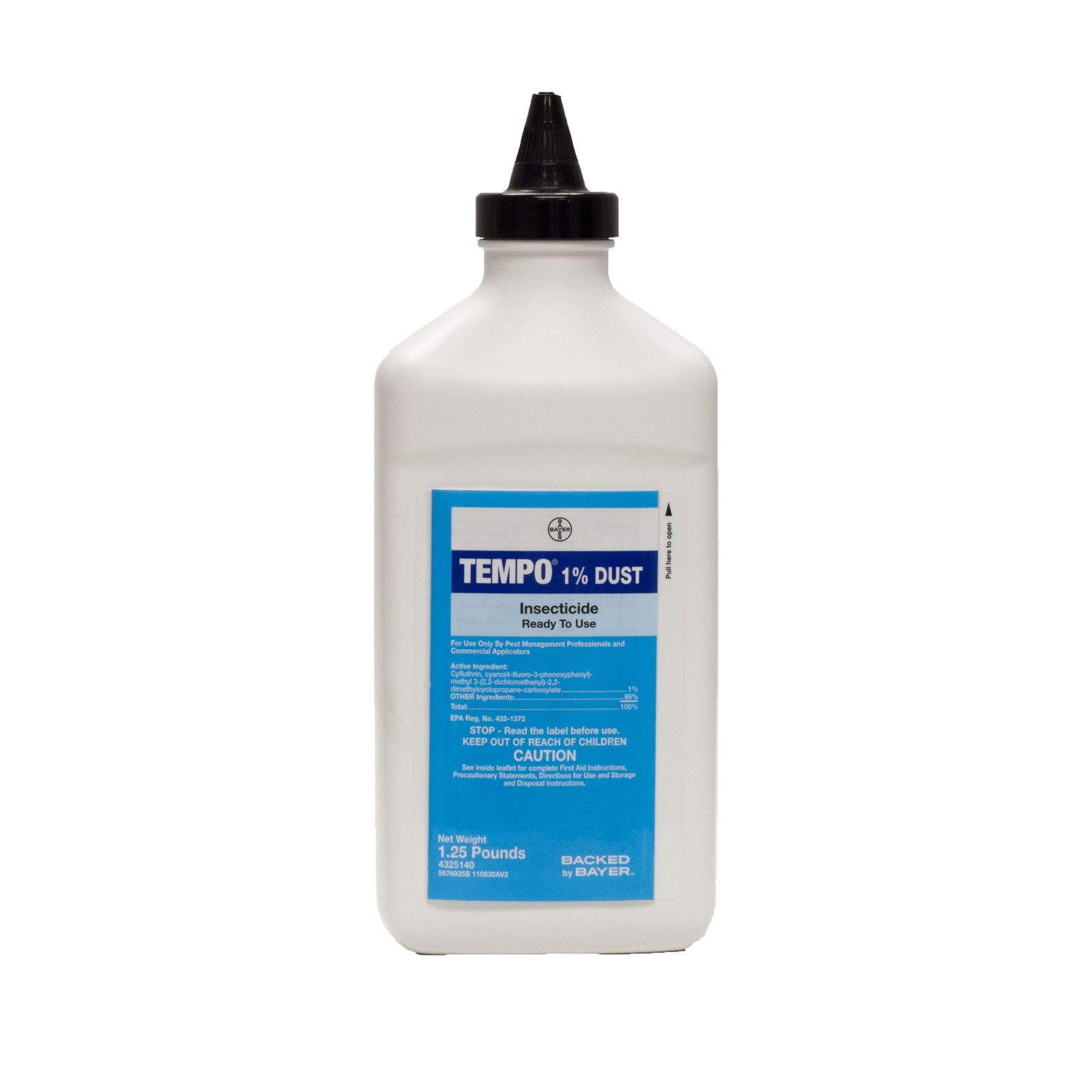
Tempo Dust is not a spray—it is a fine insecticide powder containing 1% Cyfluthrin, designed to be applied into wall voids, electrical boxes, and other hidden harborages that liquid sprays cannot reach effectively. When used with a bulb duster, the powder distributes as a thin, even layer that bed bugs, roaches, and other crawling insects pick up as they move through treated zones. Each pound covers approximately 1,000 square feet, making this one of the most cost-efficient options for large-scale structural treatments.
While the customer reviews for this specific variant focus heavily on carpenter bees, yellow jackets, and wasps, the label explicitly lists bed bugs as a target species. The dust stays active for months when kept dry, and it does not degrade in the same way liquid residues do. For homes with inaccessible spaces behind walls or under flooring, Tempo Dust provides a set-and-forget layer of protection that no spray can replicate.
A critical constraint is that Tempo Dust is restricted in several states including California, New York, South Carolina, and Connecticut. Buyers outside those regions will find it an excellent complementary tool, especially when paired with a liquid treatment for exposed surfaces. Use it in combination with the Crossfire concentrate for a truly comprehensive barrier: liquid on open areas, dust in the voids.
Why it’s great
- Ideal for wall voids and inaccessible crevices
- Very economical coverage per square foot
- Long-lasting residual when kept dry
- Works on multiple crawling pests
Good to know
- Requires a duster for proper application
- Not available for sale in CA, NY, SC, CT
5. Bed Bug Interceptor Traps – White 8-Pack
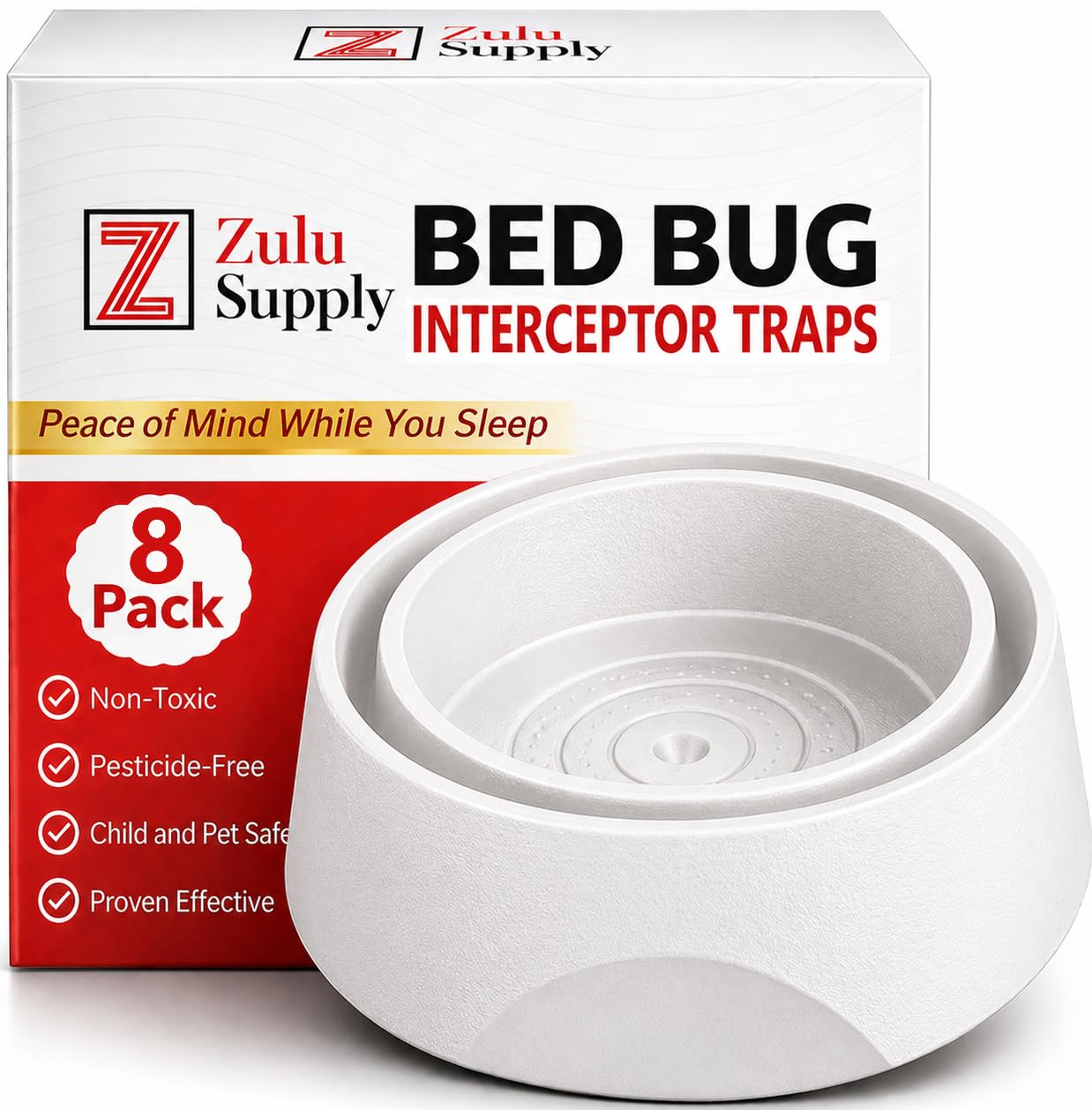
Interceptor traps are the only product in this guide that does not rely on insecticides. These passive plastic cups sit under bed legs and furniture posts, creating a smooth-walled pit that climbing bed bugs cannot escape once they fall in. The 8-pack covers all four legs of two beds, providing constant 24/7 monitoring and a mechanical barrier that stops bugs from reaching your sleeping area without introducing any chemicals into your home.
User feedback confirms the traps work exactly as designed for early detection. One reviewer who had already encased their mattress reported that the interceptors caught no bugs, which was actually good news—it signified the infestation was caught early enough that bed bugs had not yet established a pathway from the floor to the bed. Another reviewer saw immediate results, with the smooth walls preventing any climb-out after the bugs entered the cup. The polypropylene material withstands cleaning and reuse, making this a one-time purchase that keeps working indefinitely.
While interceptors alone will not eliminate an established infestation, they are an indispensable part of any integrated bed bug management plan. Use them alongside a chemical treatment like Crossfire to confirm the active product is working and to catch stray bugs migrating from adjacent rooms. For prevention in apartments, dorms, or hotels, these traps are the lowest-effort insurance you can deploy.
Why it’s great
- No chemicals or pesticides needed
- Reusable polypropylene construction
- Universal fit for standard furniture legs
- Provides early-warning detection
Good to know
- Does not kill bugs—only traps them
- Not a standalone solution for active infestations
FAQ
Can I use a bed bug spray directly on my mattress?
How long does residual protection actually last on fabric surfaces?
Final Thoughts: The Verdict
For most users, the best bed bug treatment winner is the Crossfire Liquid Concentrate because it combines non-repellent chemistry, mattress approval, and multi-week residual control in a single concentrate. If you want a grab-and-go aerosol without mixing, grab the Crossfire Aerosol. And for early detection or chemical-free prevention, nothing beats the Bed Bug Interceptor Traps as a permanent monitoring layer under every bed leg in your home.

Mo Maruf
I created WellFizz to bridge the gap between vague wellness advice and actionable solutions. My mission is simple: to decode the research and give you practical tools you can actually use.
Beyond the data, I am a passionate traveler. I believe that stepping away from the screen to explore new environments is essential for mental clarity and physical vitality.