Our readers keep the lights on and my smoothie glass nicely filled. As an Amazon Associate, I earn from qualifying purchases.
Starting your running journey is exciting, but picking your first watch can feel overwhelming. You need a tool that tracks distance and pace without burying you in complex analytics or draining your motivation. The right watch simplifies every run, giving you clear feedback so you can focus on building the habit, not fiddling with menus.
I’m Mohammad Maruf — the founder and writer behind WellFizz. I’ve spent years analyzing GPS chipset accuracy, heart-rate sensor architectures, and battery optimization algorithms across hundreds of wearable models to help new runners make confident first purchases.
This guide breaks down the essential features of a beginner running watch, compares nine top contenders across real-world specs, and helps you find the perfect partner for your first mile.
How To Choose The Best Beginner Running Watch
Before you buy, understand what actually matters for a new runner. You don’t need advanced metrics like vertical oscillation or ground-contact time. Focus on these four criteria to get a watch that grows with you without overwhelming you.
GPS Accuracy And Satellite Systems
A beginner watch should lock onto GPS quickly and hold the signal through tree cover or urban canyons. Multi-band or dual-band GPS watches track more satellites simultaneously, giving you accurate distance and pace without mile-long discrepancies. Look for support for at least two global navigation systems like GPS plus GLONASS or Galileo.
Wrist-Based Heart Rate Sensor Quality
Optical heart rate sensors vary wildly in quality. Newer sensors using multiple LEDs and algorithms filter out arm swing noise for cleaner data. You don’t need chest-strap accuracy as a beginner, but a watch with a well-reviewed sensor prevents frustrating HR spikes or dropouts during intervals.
Battery Life In GPS Mode
Daily-use battery numbers are misleading — always check the GPS mode runtime. A watch that lasts 20 hours in GPS mode can handle long weekend runs and weeklong trips without a charger. For a beginner who runs 30 minutes a day, even 10 hours of GPS life provides weeks between charges.
Training Features And Ease Of Use
Beginner-friendly watches offer structured training plans, daily suggested workouts, or coach programs. These remove guesswork: the watch tells you exactly what to run today. Physical buttons are valuable for sweaty fingers. Touchscreens are nice but can lag with wet hands. A mix of both works best.
Quick Comparison
On smaller screens, swipe sideways to see the full table.
| Model | Category | Best For | Key Spec | Amazon |
|---|---|---|---|---|
| COROS PACE 4 | Premium | Serious training progression | 41 hours GPS battery | Amazon |
| Garmin Forerunner 165 | Premium | Daily coaching & AMOLED display | 19 hours GPS battery | Amazon |
| Samsung Galaxy Watch 7 | Premium | Ecosystem integration | BioActive sensor array | Amazon |
| Amazfit Active 3 | Premium | Offline maps & structured training | 4GB onboard storage | Amazon |
| Garmin Forerunner 55 | Mid-Range | Pure running simplicity | 20 hours GPS battery | Amazon |
| SOUYIE 2026 DA GPT | Mid-Range | Smart features & style | 1000-nit AMOLED display | Amazon |
| Mibro GS Pro2 | Mid-Range | Dual-band GPS on a budget | 20 days daily battery | Amazon |
| Fitbit Inspire 3 | Entry-Level | All-day wellness & simplicity | 10 days daily battery | Amazon |
| Amazfit Active 2 | Entry-Level | Feature-packed budget starter | 5 satellite positioning | Amazon |
In‑Depth Reviews
1. COROS PACE 4 Ultralight Sport GPS Watch
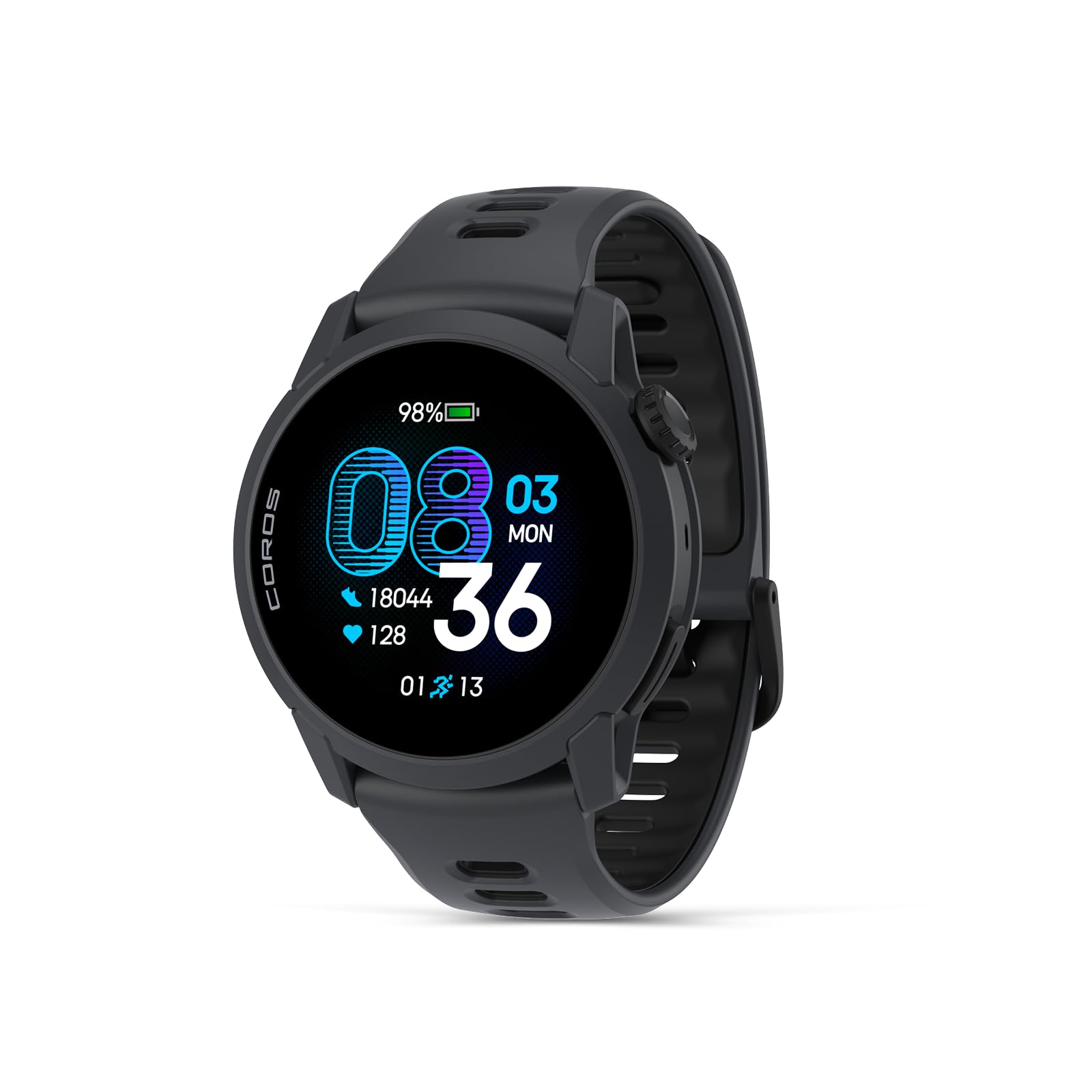
The COROS PACE 4 redefines what a premium running watch can weigh — at just 32 grams with the nylon band, it feels like nothing on your wrist during long runs. Its 1.2-inch AMOLED touchscreen delivers 164% higher resolution than the previous generation, and the auto-adjusting brightness keeps stats readable in direct sun. The dual-frequency GPS locks quickly and holds through tree cover, so your mile splits stay honest.
Battery life is the headline: 41 continuous hours in full GPS mode means you can train all week and still have juice for the weekend long run. The voice control feature lets you set alarms or create target workouts hands-free, and the voice recording tool captures notes about how each run felt. These thoughtful touches make it feel like a coach on your wrist, not just a data collector.
For beginners who plan to stick with running long-term, the PACE 4 offers room to grow — advanced metrics like recovery time, HRV tracking, and training load analysis appear as you need them. The combination of a digital crown, two buttons, and touchscreen gives you multiple ways to interact, which is useful when fingers get sweaty or gloved. It’s an ultralight powerhouse that won’t hold you back.
Why it’s great
- 41-hour GPS battery trounces most competitors
- Ultralight design at 32g won’t fatigue your wrist
- Voice control and voice notes add coaching context
Good to know
- Premium price point may feel steep for absolute beginners
- No music storage or onboard maps
2. Garmin Forerunner 165
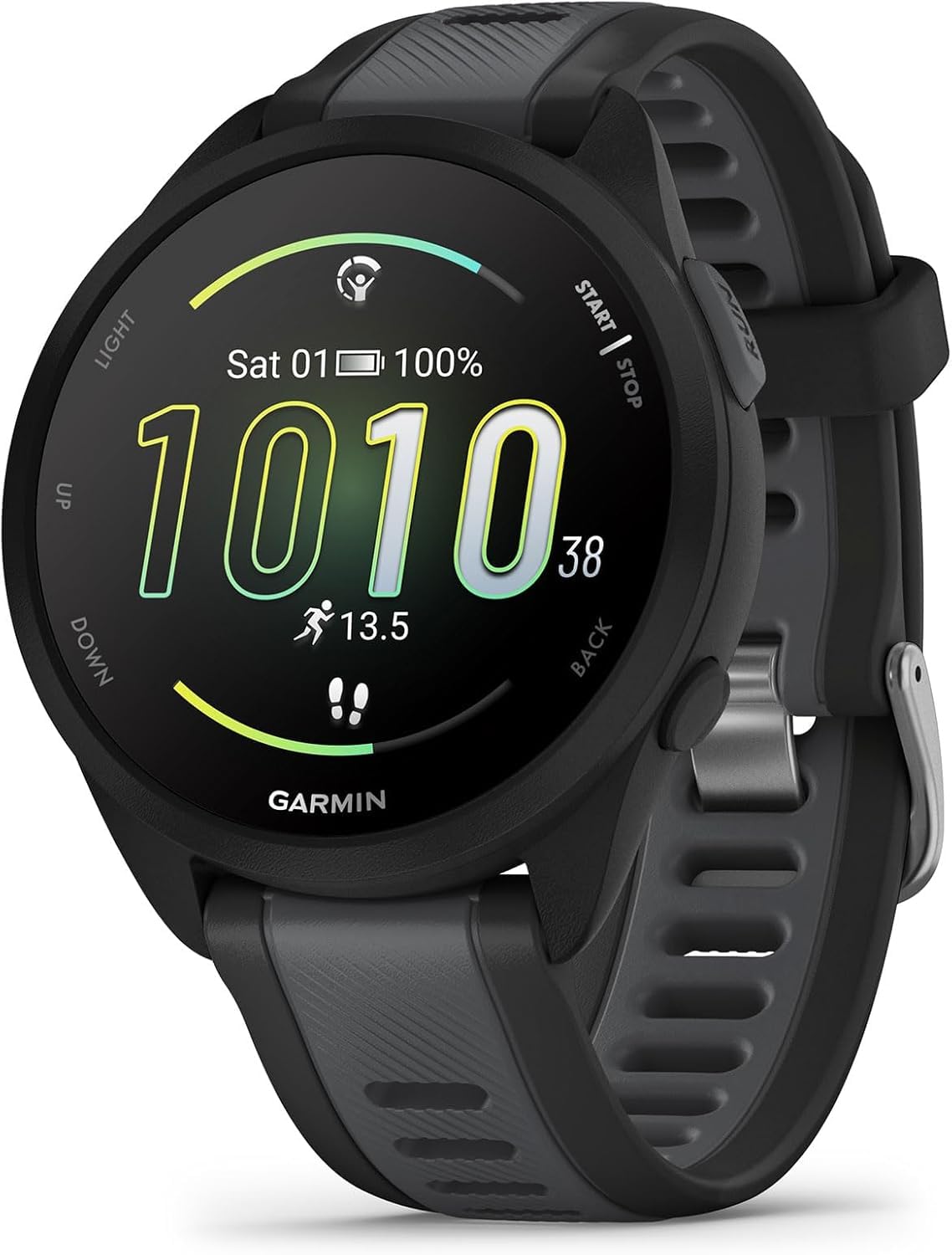
The Garmin Forerunner 165 brings the brand’s legendary running DNA into a bright AMOLED touchscreen package, making it one of the most enjoyable beginner watches to interact with. The 43mm case is lightweight and comfortable for all-day wear, and the combination of touchscreen plus five physical buttons means you can scroll through menus or press through a sweaty finish line. Up to 11 days of smartwatch battery and 19 hours in GPS mode keep you running without cable anxiety.
Garmin Coach adaptive training plans are a standout feature for new runners: you pick a goal (5K, 10K, half marathon) and the watch adjusts workouts based on your performance and recovery. The morning report gives you a quick snapshot of sleep quality, HRV status, and training outlook, so you know whether to push or rest. 25+ activity profiles cover everything from HIIT to pool swim, making this a versatile companion beyond running.
Safety features including incident detection and Assistance messaging add peace of mind for solo runners. Garmin Pay contactless payments let you leave your phone at home during short runs. The Forerunner 165 strikes a rare balance between beginner-friendly coaching and the depth more experienced runners eventually want, all wrapped in a vivid display that makes data a pleasure to read.
Why it’s great
- Garmin Coach adaptive plans guide beginners perfectly
- AMOLED display with touchscreen plus physical buttons
- Incident detection and Garmin Pay add daily utility
Good to know
- Renewed unit — verify warranty terms before purchase
- No built-in music storage or offline maps
3. Samsung Galaxy Watch 7 40mm

The Samsung Galaxy Watch 7 40mm is the best choice for Android users who want a full smartwatch experience alongside their running data. Its 1.5-inch Super AMOLED display is beautiful, and the sapphire crystal glass resists scratches from daily wear. The BioActive sensor combines optical heart rate, electrical heart signal, and bioelectrical impedance analysis into one chip, delivering accurate readings even during high-intensity intervals.
Galaxy AI powers features like the Energy Score, which calculates your physical readiness based on yesterday’s activity, and Wellness Tips that provide personalized suggestions. The sleep tracking algorithm detects moderate to severe sleep apnea, adding a health-monitoring dimension most running watches lack. It runs Wear OS, so you get access to Google Maps, Spotify, and thousands of third-party apps directly on your wrist.
The tradeoff is battery life: you’ll charge every 1.5 to 2 days with typical use, and GPS mode drains faster. The 40mm size fits smaller wrists but the screen remains highly readable. For beginners deeply invested in Samsung’s ecosystem who want a watch that does everything — from texts to treadmill runs — this is a compelling package.
Why it’s great
- Stunning Super AMOLED display with sapphire glass durability
- BioActive sensor delivers accurate heart rate and body composition data
- Full Wear OS app ecosystem for music, maps, and messaging
Good to know
- Battery life requires daily charging for most users
- Best experience limited to Samsung phone owners
4. Amazfit Active 3 Premium GPS Running Smart Watch
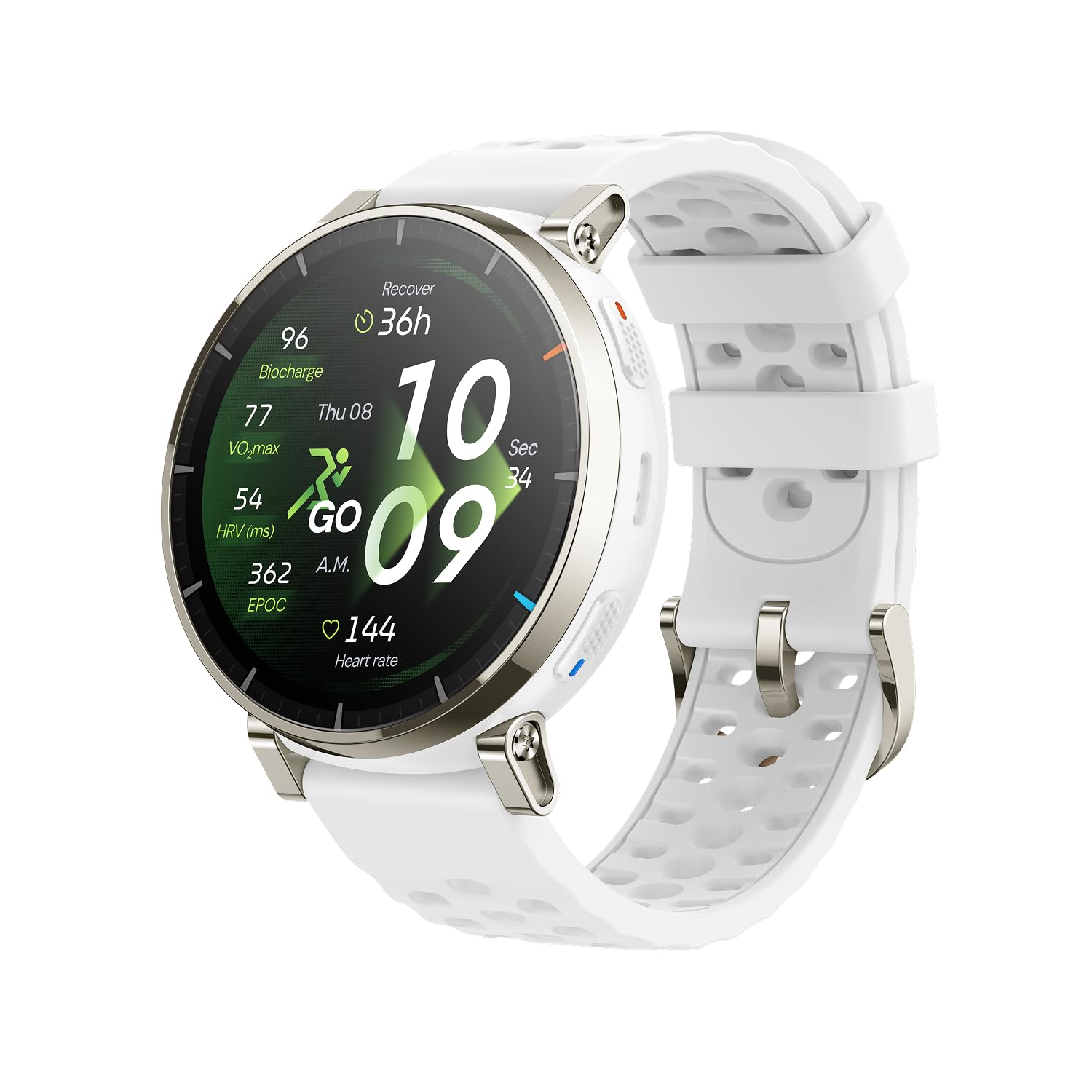
The Amazfit Active 3 packs premium materials — stainless steel frame and sapphire glass — into a lightweight runner’s watch that costs significantly less than equivalent Garmin or COROS models. The 1.32-inch AMOLED display is crisp and bright enough for outdoor use, and the six satellite positioning systems deliver fast, accurate GPS lock even in challenging environments. The standout feature here is offline maps with turn-by-turn directions and automatic rerouting, letting you explore new routes without carrying your phone.
Structured training plans from Zepp Coach guide you from 5K to full marathon, and the watch tracks advanced running metrics like power, lactate threshold, and ground contact time. These metrics are usually reserved for premium Garmin units. The BioTracker sensor monitors heart rate, SpO2, stress, and sleep quality, and the Zepp App provides clean performance trend analysis without hidden subscription fees.
Battery life reaches 12 days with typical use, and you can make Bluetooth calls and send speech-to-text replies directly from the watch. The 4GB onboard storage allows music playback without a phone, which is rare at this tier. For beginners who want to explore trails and grow into serious training without upgrading hardware, the Active 3 is a smart investment.
Why it’s great
- Offline maps with turn-by-turn navigation for route exploration
- Premium sapphire glass and stainless steel build at a mid-range price
- Advanced running power and lactate threshold metrics for growth
Good to know
- Zepp App ecosystem smaller than Garmin Connect
- Brightness may appear lower than advertised in direct sunlight
5. Garmin Forerunner 55 (Renewed)

The Garmin Forerunner 55 is the quintessential beginner running watch — it does exactly what a new runner needs and nothing they don’t. Physical buttons mean no fumbling with touchscreens during sprints, and the 37-gram weight disappears on your wrist. GPS locks quickly and tracks distance accurately, with PacePro offering GPS-based pace guidance for race-day strategy. Battery life reaches 20 hours in GPS mode and up to two weeks in smartwatch mode, so you can train a full marathon block between charges.
Daily suggested workouts take the guesswork out of training: the watch adjusts intensity based on your recovery and fitness level. Garmin Coach provides free adaptive plans for 5K, 10K, and half marathon distances. Advanced wellness features like intensity minutes, fitness age, and all-day respiration give context to your overall health without overwhelming the interface.
The MIP display is less vibrant than AMOLED but stays perfectly readable in direct sunlight and sips battery. As a renewed unit, this is the most affordable entry point into the Garmin ecosystem. For runners who want a dedicated training tool without smartwatch distractions, the Forerunner 55 delivers proven reliability.
Why it’s great
- Physical buttons work perfectly with sweaty or wet hands
- Garmin Coach adaptive plans are excellent for goal-setting beginners
- 20-hour GPS battery supports marathon training cycles
Good to know
- Renewed unit — verify condition and warranty before purchase
- MIP display lacks the vivid colors of modern AMOLED panels
6. SOUYIE 2026 DA GPT Smart Watch
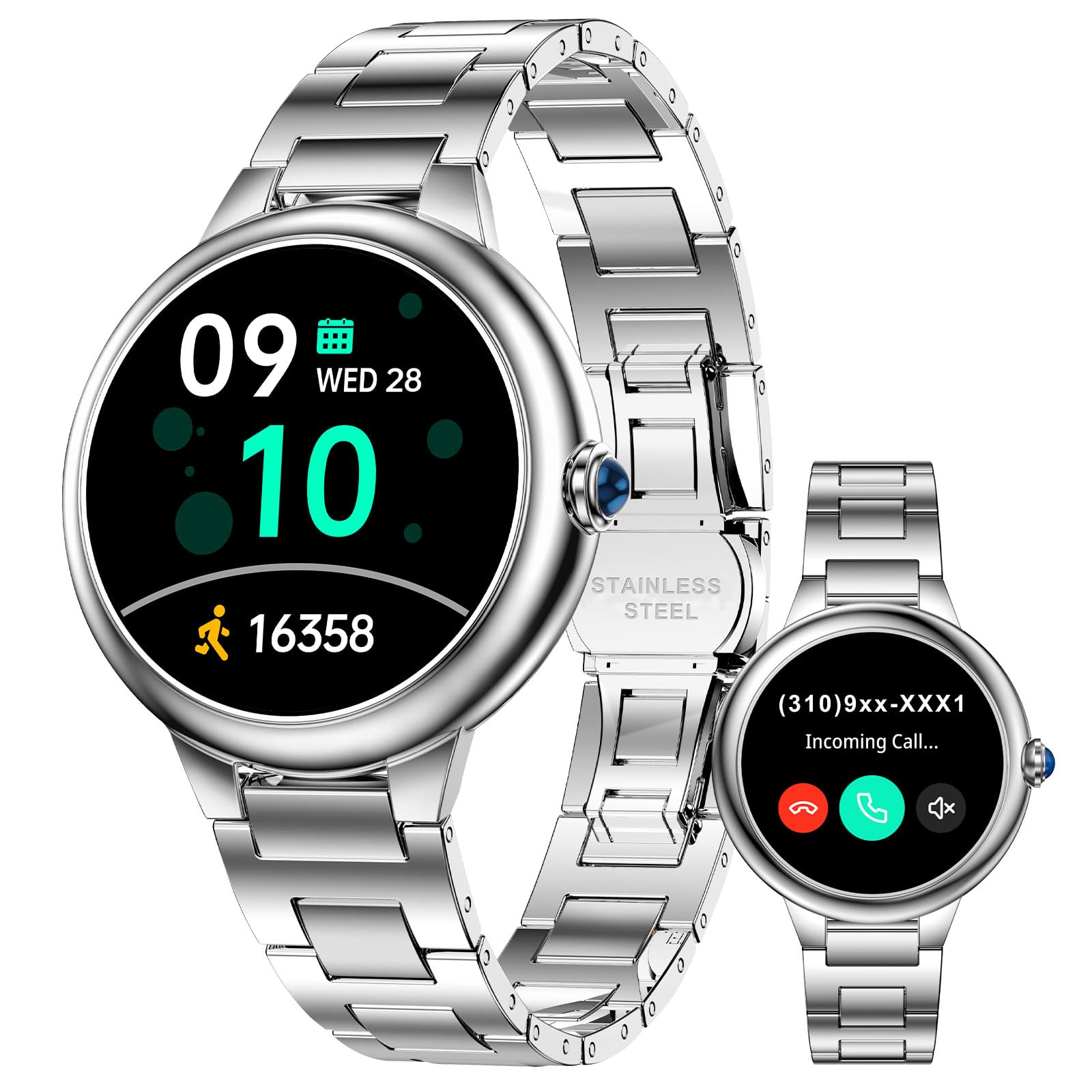
The SOUYIE 2026 DA GPT Smart Watch bridges the gap between a stylish everyday accessory and a capable fitness tracker. Its 1.19-inch AMOLED display hits 1000 nits of brightness, making it readable in direct sunlight, and the Panda Glass with Mohs 8 hardness resists scratches from keys and bags. The H-link stainless steel band gives it a dress-watch feel that transitions from office to gym without looking out of place.
Health monitoring is surprisingly thorough for the price: TruSeen 5.5+ optical heart rate sensor claims ±2 bpm accuracy, dual-ring SpO2 sensor checks blood oxygen, and the sleep apnea risk alert adds a layer of awareness. The built-in DA GPT integration allows AI voice control for setting alarms, checking weather, and previewing schedules. 107 sports modes cover most activities, and the 16-bit gravity sensor auto-detects exercise postures.
Battery life reaches up to 14 days with moderate use, and the 3-year quality guarantee provides long-term confidence. The Bluetooth connectivity can occasionally drop and require re-pairing, and blood pressure readings should be taken as rough estimates rather than medical data. For beginners who want a feature-rich smartwatch that also tracks runs, this is a versatile choice.
Why it’s great
- Elegant stainless steel design suitable for daily wear beyond exercise
- AI voice control and customizable watch faces add smart functionality
- Comprehensive health monitoring including sleep apnea alerts
Good to know
- Bluetooth connection can drop and require re-pairing
- Blood pressure readings are estimates, not medical-grade
7. Mibro GS Pro2 GPS Running Watch
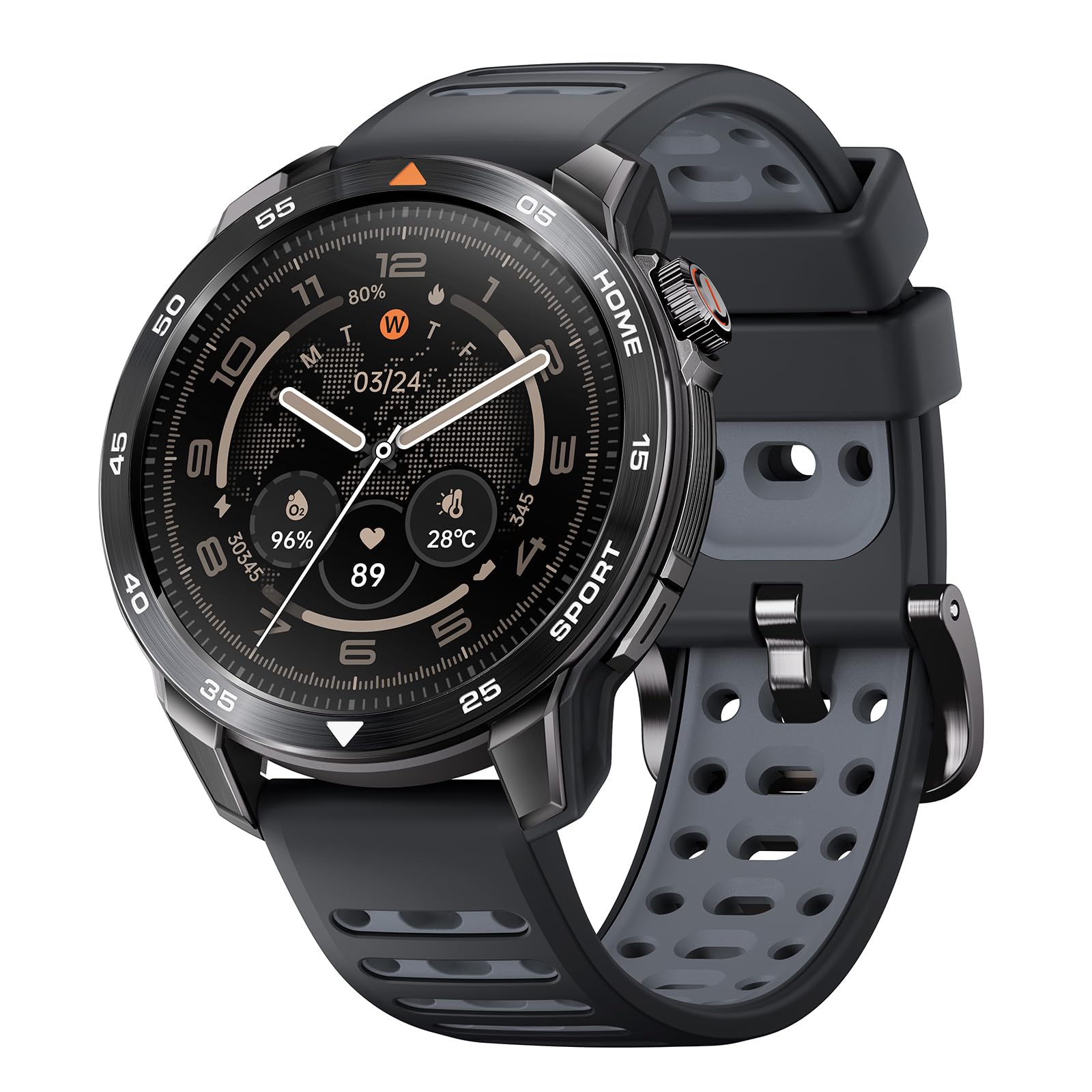
The Mibro GS Pro2 proves dual-band GPS technology doesn’t have to cost a fortune. This watch locks onto satellites faster than many single-band competitors and maintains accurate tracking through dense tree canopy and urban corridors. The 1.43-inch AMOLED display is large and vibrant, and the combination of a silicone and nylon strap gives you two wearing options out of the box. At 99.99, it undercuts most dual-band GPS watches by a significant margin.
The Mibro Coach feature creates personalized training plans based on your running history and tracks metrics like pace, cadence, and stride length in real time. Post-workout analysis includes training load and recovery time, helping you understand when to push and when to rest. 150+ workout modes cover everything from pool swimming (5ATM water resistance) to cycling, making it a capable multi-sport tool.
Battery life is exceptional: 20 days in daily use and 20 hours in continuous GPS mode. The nylon strap runs slightly short for larger wrists, so bigger users may want to order an extended band. For budget-conscious beginners who refuse to compromise on GPS accuracy, the GS Pro2 delivers outstanding value.
Why it’s great
- Dual-band GPS at a price point that beats most single-band competitors
- 20-day battery life means charging once every three weeks
- Personalized Mibro Coach training plans for goal-oriented runners
Good to know
- Included nylon strap may be too short for larger wrists
- Mibro app ecosystem less developed than Garmin or COROS
8. Fitbit Inspire 3 Health & Fitness Tracker

The Fitbit Inspire 3 strips away complexity to focus on the fundamentals: steps, heart rate, sleep, and stress. It’s the lightest and most comfortable device in this lineup, with a slim resin case that you forget you’re wearing. The 10-day battery life means you charge it two to three times per month, which dramatically reduces friction for building a consistent tracking habit. 40+ exercise modes cover running, walking, yoga, and more, with automatic exercise detection for common activities.
Wellness features outshine run-specific metrics. The Daily Readiness Score tells you whether to push harder or take a recovery day, and the Stress Management Score combines heart rate variability and activity data to gauge your strain. Sleep tracking is a strong point: automatic detection of sleep stages, a nightly Sleep Score, and a smart wake alarm that vibrates during light sleep. The included 3-month Google Health Premium membership unlocks deeper analytics and personalized coaching.
The tradeoff is the lack of built-in GPS — you must carry your phone for pace and distance tracking. The small color touchscreen is functional but not as spacious as purpose-built running watches. For beginners who care more about overall wellness and habit formation than advanced running metrics, the Inspire 3 is an excellent entry point.
Why it’s great
- Ultra-lightweight and comfortable for 24/7 wear
- Excellent sleep and stress tracking for holistic wellness
- 10-day battery charges only 2-3 times per month
Good to know
- No built-in GPS — requires phone for pace and distance
- Small screen limits data display during runs
9. Amazfit Active 2 Sport Smart Watch

The Amazfit Active 2 proves you don’t need to spend a lot for a capable running companion. The 1.32-inch AMOLED display is bright and responsive, the stainless steel case adds a touch of premium feel, and five satellite positioning systems deliver fast GPS lock. Battery life reaches 10 days with typical use, and the included silicone strap is comfortable for both daily wear and sweaty runs.
BioTracker technology monitors heart rate and sleep with improved accuracy over earlier generations, and the Zepp App is free with no hidden subscription fees. 160+ workout modes cover everything from HYROX racing to yoga, and the 50-meter water resistance lets you swim with confidence. Speech-to-text message replies work for Android users, adding convenience without requiring a phone on every run.
Free downloadable maps with turn-by-turn directions are a rare find at this price level, and the barometer adds value for hikers and trail runners. Sleep tracking is less refined than Fitbit’s offering, and the stock band feels basic. For newcomers who want maximum features for minimum investment, the Active 2 is the best value in the budget tier.
Why it’s great
- Five satellite systems ensure fast and accurate GPS lock
- Free offline maps with turn directions at an entry-level price
- No hidden subscription fees in the Zepp App
Good to know
- Sleep tracking accuracy trails dedicated wellness trackers
- Stock silicone band feels less premium than the watch case
FAQ
Do I need built-in GPS or can I use my phone’s GPS?
How accurate is wrist-based heart rate for interval training?
Should I choose AMOLED or MIP display for outdoor running?
What training metrics actually matter for a beginner?
Final Thoughts: The Verdict
For most users, the beginner running watch winner is the COROS PACE 4 because it combines ultralight comfort, exceptional 41-hour GPS battery, and a clean interface that grows with your running journey. If you want structured coaching and a brilliant AMOLED display, grab the Garmin Forerunner 165. And for the best entry-level value without compromising on GPS accuracy, nothing beats the Mibro GS Pro2.

Mo Maruf
I created WellFizz to bridge the gap between vague wellness advice and actionable solutions. My mission is simple: to decode the research and give you practical tools you can actually use.
Beyond the data, I am a passionate traveler. I believe that stepping away from the screen to explore new environments is essential for mental clarity and physical vitality.