Our readers keep the lights on and my smoothie glass nicely filled. As an Amazon Associate, I earn from qualifying purchases.
That sharp, burning ache under the ball of your foot with every step isn’t something you have to live with. Whether it’s from metatarsalgia, a neuroma, or just long hours on your feet, the right pad can redistribute pressure and let you move without wincing.
I’m Mohammad Maruf — the founder and writer behind WellFizz. I’ve spent years digging into foot health products, analyzing materials, adhesive engineering, and real user feedback to separate the inserts that actually offload pressure from those that flatten into uselessness.
This guide cuts through the marketing to help you find the best ball of foot pain insoles based on material durability, thickness, adhesion quality, and the specific condition you’re treating.
How To Choose The Best Ball Of Foot Pain Insoles
Ball of foot pain isn’t a one-size-fits-all problem. The wrong choice — too thick, too sticky, or not dense enough — can make your symptoms worse or ruin your favorite shoes. Here are the critical factors to weigh before you buy.
Material: Felt vs. Gel vs. Foam
Wool felt pads (typically 1/4-inch thick) provide firm, lasting support and stay put when placed in the shoe. They’re ideal for Morton’s neuroma and metatarsalgia because they don’t compress fully under body weight. Gel pads (around 1/8-inch) excel at shock absorption and are reusable, but they can squirm out of position in loose shoes. Foam insoles like the Dr. Scholl’s Tri-Comfort offer broad coverage but less targeted metatarsal lift.
Adhesion Strategy: Skin vs. Shoe vs. Insole
Placing a pad directly on your foot guarantees precise positioning, but strong medical-grade adhesive can irritate or tear skin upon removal, especially in sweaty conditions. Sticking the pad to your shoe’s insole is safer for your skin and allows repositioning, but the pad may shift if the insole surface is textured. Some users split the difference by attaching the pad to a sock or a removable orthotic.
Thickness and Footwear Compatibility
A 1/4-inch felt pad effectively offloads the metatarsal heads, but it can crowd the toe box in low-profile shoes like flats or dress shoes. A 1/8-inch gel pad fits better in tight footwear but provides less dramatic pressure relief. Always consider the volume of your shoe — a pad that works in a sneaker may be unwearable in a loafer.
Quick Comparison
On smaller screens, swipe sideways to see the full table.
| Model | Category | Best For | Key Spec | Amazon |
|---|---|---|---|---|
| Fit Geno Plantar Fasciitis Insoles | Full-Length Orthotic | Heavy-duty support and arch & metatarsal pain | Poron foam + TPU arch plate | Amazon |
| Mars Wellness Premium Gel Cushions | Reusable Gel Pad | Shock absorption and fat pad atrophy | 1/8-inch clear medical gel | Amazon |
| Dr. Scholl’s Tri-Comfort Insoles | 3/4-Length Insole | Everyday all-day comfort in casual shoes | 3/4-length, no-trim, soft foam | Amazon |
| Temiart Metatarsal Felt Pads 18-Pack | Disposable Felt Pad | Neuroma and targeted metatarsal relief | 1/4-inch wool felt | Amazon |
| Wellsfoot Metatarsal Felt Pads 18-Pack | Value Felt Pad | Budget-friendly forefoot cushioning | 1/4-inch wool felt, bulk pack | Amazon |
In‑Depth Reviews
1. Fit Geno Plantar Fasciitis Insoles
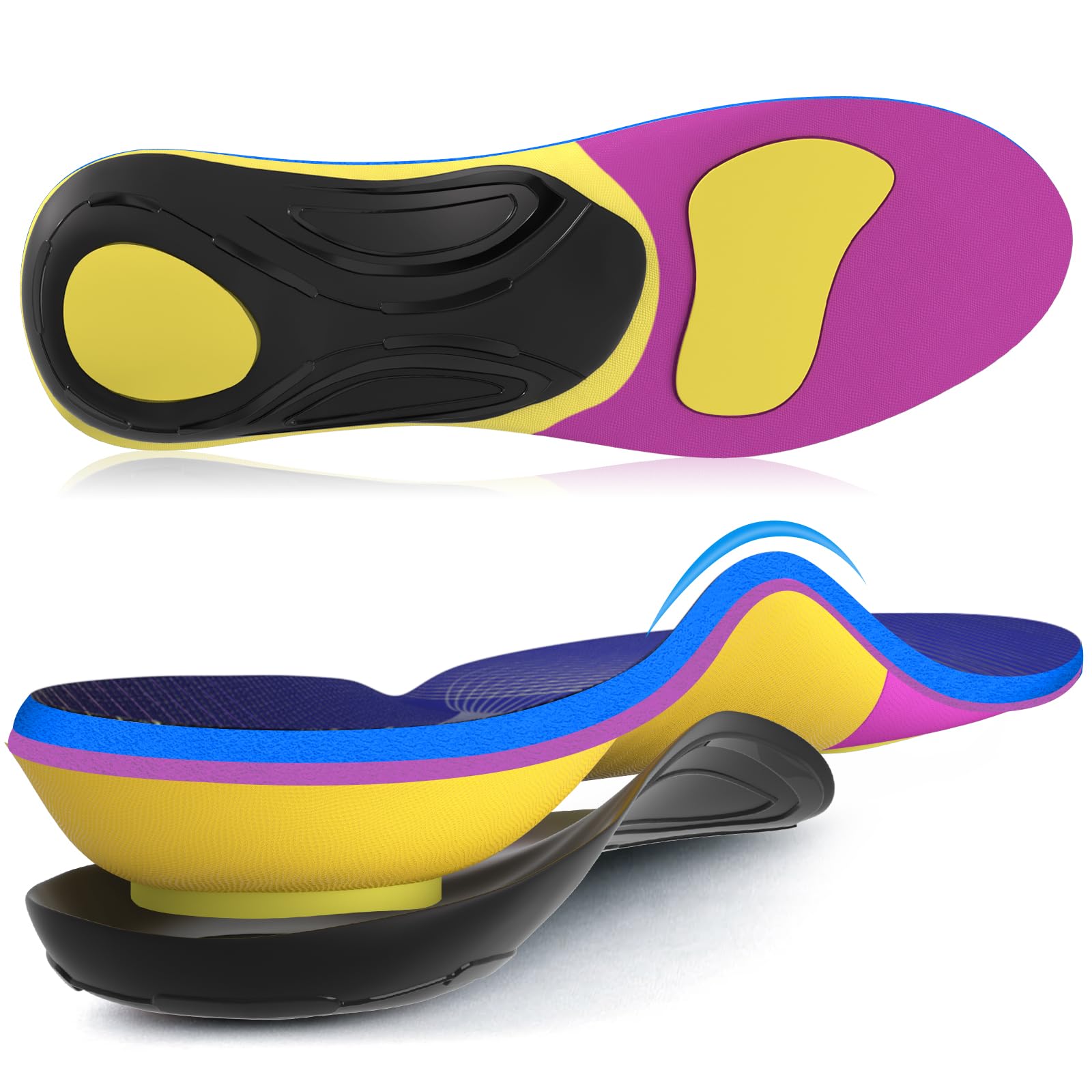
These full-length orthotics stand apart because they address ball of foot pain through the foundation — a rigid arch support paired with a deep heel cup that realigns the entire foot structure. The Poron foam layer at the forefoot absorbs impact directly under the metatarsal heads, while the removable TPU arch plate lets you dial in stiffness. This is not an afterthought pad; it’s a structural corrective device.
Users weighing over 220 pounds report that the dense foam doesn’t bottom out, even through 12-hour shifts on concrete floors. The trim-to-fit design accommodates work boots, running shoes, and some dress shoes, though the rigid arch takes a few days of adjustment in previously unsupported feet. One reviewer on a walking-heavy Paris trip found the plastic brace too aggressive for Hokas but appreciated the forefoot cushioning when removed.
For anyone suffering from combined arch collapse and ball of foot pain, this insole provides dual-action relief that single-position pads cannot match. The heavy-duty build means you aren’t replacing them every month, and the breathable fabric top layer keeps odor manageable during long workdays.
Why it’s great
- Rigid arch support offloads metatarsal pressure by preventing foot collapse.
- Poron foam retains its bounce through extended wear, unlike cheaper EVA.
- Trim-to-fit sizing works in boots, sneakers, and even some dress shoes.
Good to know
- The hard TPU arch plate may feel too aggressive in already-cushioned shoes like Hokas.
- Full-length design adds noticeable volume — tight shoes may feel cramped.
2. Mars Wellness Premium Gel Ball of Foot Cushions

At just 1/8-inch thick, these gel cushions are the go-to option when you need shock absorption without adding noticeable bulk inside your shoe. The medical-grade gel is softer and more pliable than felt, making it ideal for fat pad atrophy where the natural padding under your metatarsal heads has thinned out. Users report immediate relief from the burning sensation associated with neuromas and post-surgery forefoot sensitivity.
The self-adhesive backing allows placement directly on your foot or inside the shoe, and the clear design makes them nearly invisible in open-backed footwear. One reviewer kept a single pad functional for six months by washing it with soapy water and reapplying the plastic backing sheet. However, the gel’s flexible nature means it does not provide the same firm, structural lift that felt pads deliver for Morton’s neuroma — this is a cushion, not a splint.
Adhesion longevity varies dramatically based on wear conditions. In dry, socked environments, the pads stick for weeks. In sweaty sandals or direct skin contact, the gel can lose grip within two weeks, requiring cleaning or a dab of superglue to re-secure. The trade-off between reusability and adhesion strength is the defining consideration here.
Why it’s great
- Ultra-low profile (1/8-inch) fits easily into flats and narrow shoes.
- Gel material provides excellent shock absorption for fat pad atrophy.
- Washable and reusable — one pair can last months with care.
Good to know
- Adhesive degrades faster in sweaty environments or with direct skin contact.
- Gel doesn’t provide the firm metatarsal lift that felt pads offer.
3. Dr. Scholl’s Tri-Comfort Insoles

Dr. Scholl’s Tri-Comfort is a 3/4-length insole that targets cushioning at the heel, arch, and ball of foot without crowding your toes. It strikes a balance between a full orthotic and a single-position pad — you get foam padding across the entire forefoot zone rather than a small raised button. This makes it effective for diffuse forefoot discomfort rather than a localized neuroma or metatarsal head pain.
The adhesive backing keeps it from sliding around inside your shoe, and the low-profile design fits into dress shoes and casual sneakers without altering your gait. Users transitioning from worn-out insoles find the FlexiSpring arch support provides a noticeable lift without the rigidity of a full orthotic. For someone on their feet eight hours a day in retail or office environments, it offers a meaningful upgrade over the factory insole.
Where this insole falls short is in treating specific, acute ball of foot conditions. The soft foam compresses over time, and the arch support is mild — not enough to correct a collapsed arch driving metatarsal overload. One reviewer with persistent forefoot pain reported little to no relief, calling the cushioning insufficient for anything beyond mild fatigue. It’s a comfort insole, not a therapeutic device.
Why it’s great
- 3/4-length design avoids toe box crowding and fits most shoe styles.
- Soft foam cushioning and flexible arch support are comfortable out of the box.
- Adhesive back keeps the insole from shifting during movement.
Good to know
- Foam compresses over time and isn’t heavy-duty enough for severe pain.
- Arch support is mild — not suitable for correcting pronation-driven pain.
4. Temiart Metatarsal Felt Pads (18-Pack)

This 18-count pack of 1/4-inch wool felt pads delivers the firm, non-compressible lift that neurologists and podiatrists often recommend for Morton’s neuroma. The felt is dense enough to spread the metatarsal heads apart, relieving the pinched nerve that causes that sharp, shooting pain. Unlike gel, felt maintains its shape under body weight, offering consistent offloading throughout the day.
The strong adhesive is a double-edged sword. When placed on the shoe’s insole, it grips tenaciously — users report the pads staying put inside work boots and daily sneakers for five days or longer. But applying the pad directly to bare skin carries a real risk: the glue can rip the top layer of skin upon removal, as several reviewers noted. The recommendation is to stick the pad to your sock or the shoe lining, not your foot.
One limitation is that the felt compresses slightly after a week of use, and the adhesive is not designed for repositioning — once placed, it’s permanent. The 18-pack ensures you have replacements on hand, but the per-pad cost is low enough that disposability isn’t a downside. For targeted, doctor-recommended metatarsal support at a reasonable price, this is the standard.
Why it’s great
- 1/4-inch wool felt provides firm, lasting lift for neuroma and metatarsalgia.
- Strong adhesive holds in boots and sneakers through full workdays.
- 18-pack delivers excellent value for regular replacement.
Good to know
- Adhesive can tear skin if applied directly to bare foot — use on shoe or sock.
- Felt compresses slightly over days and cannot be repositioned once placed.
5. Wellsfoot Metatarsal Felt Pads (18-Pack)
The Wellsfoot felt pads are structurally nearly identical to the Temiart 18-pack — same 1/4-inch wool felt construction, same 18-count bulk packaging, and same intended use for forefoot pain, metatarsalgia, and neuromas. The key differentiator here is price positioning within the felt category, making it the most accessible entry point for someone wanting to test metatarsal pad therapy without a significant investment.
User feedback highlights that these pads effectively prevent ball-of-foot tenderness when placed correctly — slightly behind the metatarsal heads, not directly under them. The wool felt material breathes better than synthetic alternatives and doesn’t create a sweaty environment inside the shoe. One reviewer noted that a single pair lasted over five days with nightly removal, which is typical for felt pads of this grade.
The adhesive performance is the primary area of variability. While many users report excellent stick, others found the glue failed after just two days, especially in high-moisture conditions or when worn during hiking. The adhesive is also unforgiving — the pad cannot be repositioned once pressed down, and removal can leave sticky residue on smooth insoles. If you’re willing to apply a small amount of extra adhesive for demanding wear, these pads offer the lowest cost-per-pair in this guide.
Why it’s great
- Lowest cost-per-pad among felt options for testing metatarsal therapy.
- 1/4-inch wool felt provides effective pressure redistribution for neuromas.
- Breathable felt material reduces moisture buildup compared to synthetic pads.
Good to know
- Adhesive adhesion is inconsistent in high-moisture or high-activity conditions.
- Single-use design and cannot be repositioned once applied.
FAQ
Should I place a metatarsal pad on my foot or in my shoe?
How long does a felt metatarsal pad typically last before needing replacement?
Can ball of foot insoles help with Morton’s neuroma specifically?
Final Thoughts: The Verdict
For most users, the best ball of foot pain insoles winner is the Fit Geno Plantar Fasciitis Insoles because they combine a rigid arch support with Poron forefoot cushioning, addressing both the structural cause and the direct pain site simultaneously. If you want a reusable, ultra-low-profile shock absorber for fat pad atrophy, grab the Mars Wellness Premium Gel Cushions. And for targeted, budget-friendly relief from Morton’s neuroma or metatarsalgia, nothing beats the Temiart Metatarsal Felt Pads in bulk.

Mo Maruf
I created WellFizz to bridge the gap between vague wellness advice and actionable solutions. My mission is simple: to decode the research and give you practical tools you can actually use.
Beyond the data, I am a passionate traveler. I believe that stepping away from the screen to explore new environments is essential for mental clarity and physical vitality.